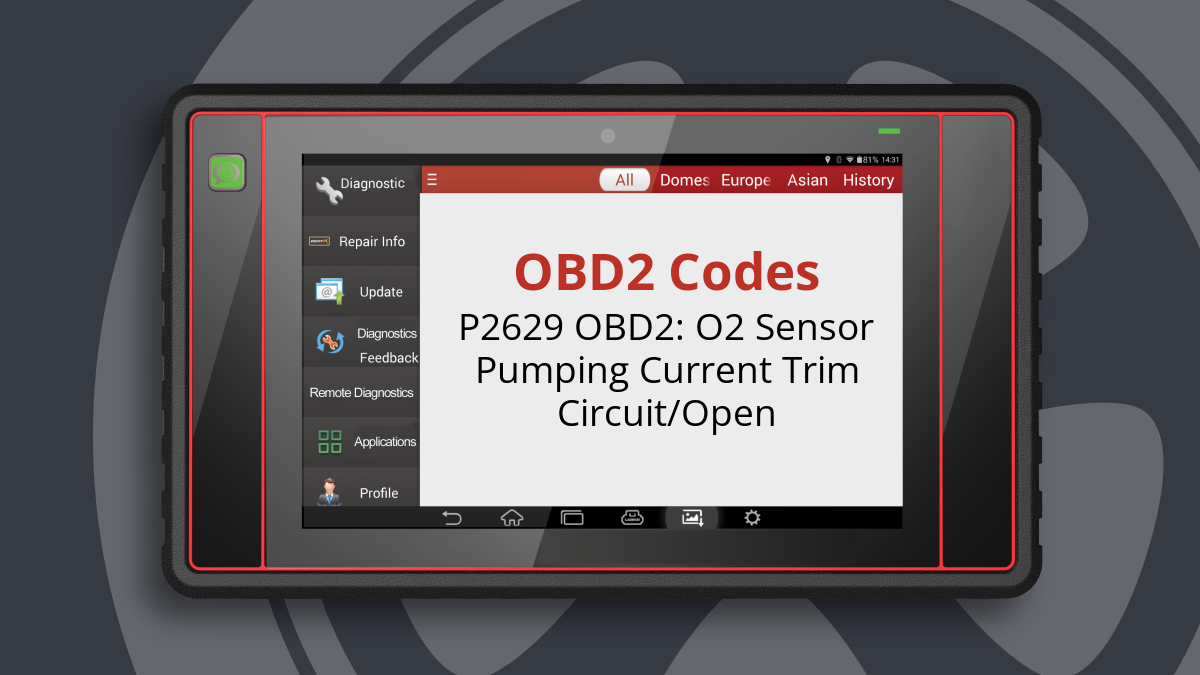
What Does the P2629 Code Mean?
The P2629 code is an OBD-II diagnostic trouble code that indicates an issue with the oxygen sensor pumping current trim circuit. This code is set when the Powertrain Control Module (PCM) detects a malfunction in the oxygen sensor or its circuit.
What Causes the P2629 Code?
Several factors can trigger the P2629 code, including:
- Exhaust leak
- Oxygen sensor failure
- Powertrain Control Module (PCM) failure
- Wiring issue
What Are the Symptoms of the P2629 Code?
Drivers may experience the following symptoms when the P2629 code is present:
- Decreased engine performance
- Increased fuel consumption
How Serious Is the P2629 Code?
The P2629 code has a moderate severity rating. While it may not immediately threaten the vehicle’s safety or functionality, it is essential to have it diagnosed within a reasonable time frame to ensure optimal vehicle performance.
How to Diagnose the P2629 Code
For accurate diagnosis of the P2629 code, follow these steps:
- Use an OBD-II scanner to confirm the presence of the P2629 code.
- Inspect the wiring and connections related to the oxygen sensor for any damage or disconnection.
- Check for exhaust leaks that may affect the oxygen sensor’s readings.
- Test the oxygen sensor’s functionality using a multimeter.
- If necessary, inspect the Powertrain Control Module (PCM) for faults.
Common Repairs for the P2629 Code
To address the P2629 code, the following repairs may be needed:
- Oxygen Sensor Replacement
How Much Does It Cost to Fix the P2629 Code?
The cost to fix the P2629 code can vary widely based on the underlying issue. Generally, the price for oxygen sensor replacement can range from $100 to $300, including parts and labor.
Can I Fix the P2629 Code Myself?
While some experienced DIYers may be able to replace an oxygen sensor themselves, it is recommended to consult a professional mechanic for diagnosis and repair to avoid further complications.