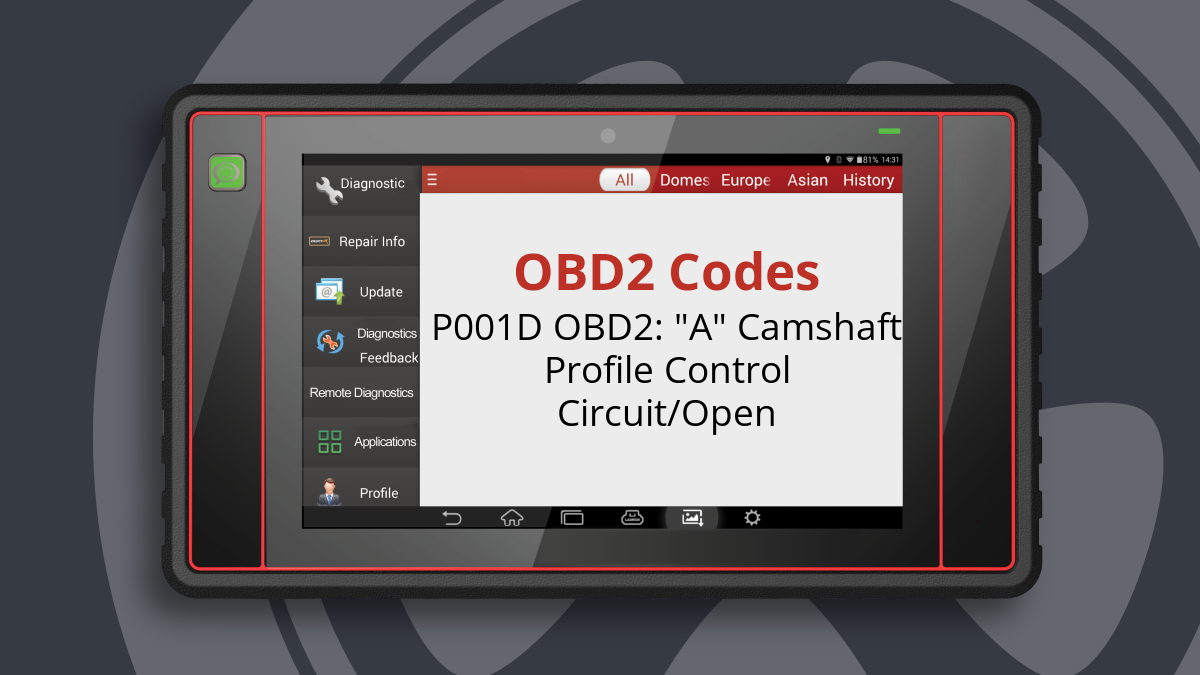
What Does the P001D Code Mean?
The P001D code indicates a problem with the “A” camshaft profile control circuit. It typically means that the engine control module (PCM) has detected an issue with the camshaft timing mechanism, which is crucial for optimal engine performance.
What Causes the P001D Code?
This code can be triggered by several factors, including:
- Camshaft variable timing solenoid failure
- Engine oil level being too low
- Engine oil that does not meet the manufacturer’s specifications
- Variable valve timing actuator failure
What Are the Symptoms of the P001D Code?
Drivers may notice symptoms such as:
- Decreased engine performance
- Increased fuel consumption
How Serious Is the P001D Code?
The P001D code is classified as urgent. It indicates that immediate action is necessary, as neglecting this issue could lead to severe damage to the vehicle or pose safety risks to the driver and passengers.
How to Diagnose the P001D Code
Diagnosing the P001D code involves a thorough inspection of the vehicle, including:
- Checking the engine oil level and quality
- Inspecting the camshaft variable timing solenoid and actuator
- Using an OBD-II scanner to verify the code and check for other related codes
Common Repairs for the P001D Code
To fix the P001D code, common repairs may include:
- Oil and filter change
- Replacing the camshaft variable timing solenoid
- Repairing or replacing the variable valve timing actuator
How Much Does It Cost to Fix the P001D Code?
The cost to repair the P001D code can vary widely based on the underlying issue. Generally, repairs can range from $100 to $1,500, depending on whether it’s a simple oil change or a more extensive engine repair.
Can I Fix the P001D Code Myself?
While some basic maintenance tasks, like changing the oil and filter, can be done by yourself, diagnosing and fixing the P001D code may require professional expertise. It’s crucial to understand the implications of the code and properly assess the vehicle to avoid unnecessary repairs.