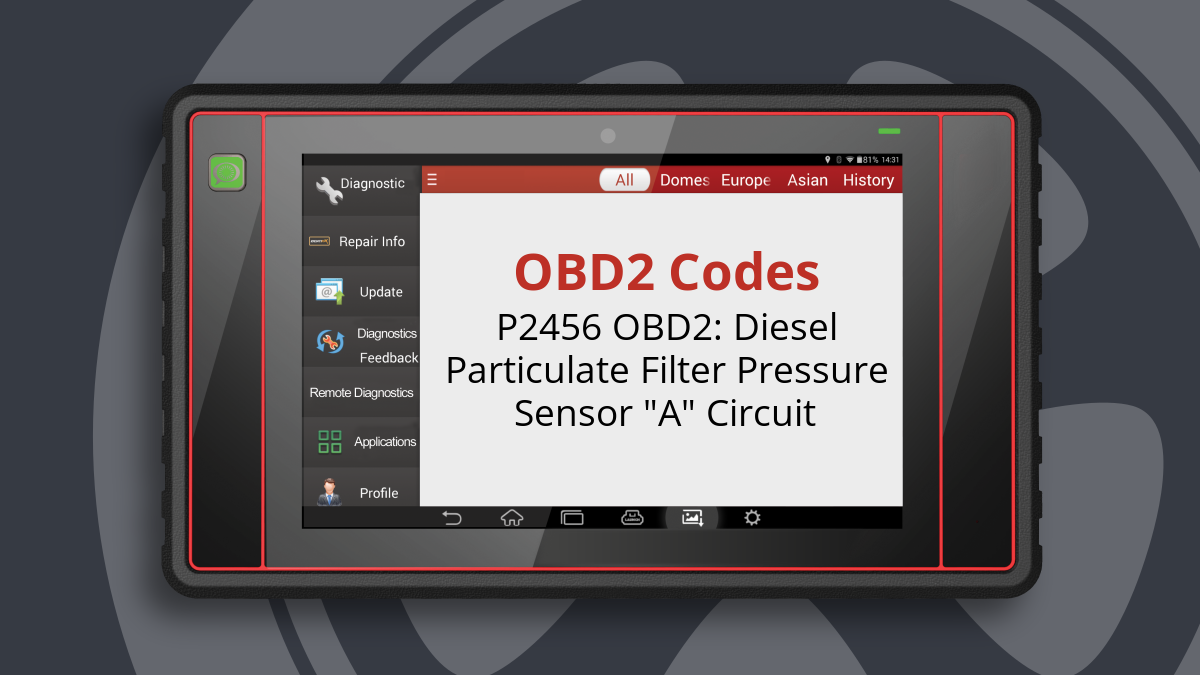
What Does the P2456 Code Mean?
The P2456 code refers to a problem with the Diesel Particulate Filter (DPF) pressure sensor “A” circuit. This code is generated when the engine control module (ECM) detects an implausible signal from the exhaust pressure sensor, which is responsible for measuring the exhaust pressure entering and exiting the DPF.
What Causes the P2456 Code?
Several factors can trigger the P2456 code, including:
- Exhaust leak
- Exhaust pressure sensor failure
- Restriction in the exhaust system
What Are the Symptoms of the P2456 Code?
Symptoms associated with the P2456 code may include:
- Clean exhaust filter message appearing on the instrument cluster
- Reduced engine performance
- Increased emissions
How Serious Is the P2456 Code?
The P2456 code is classified as an urgent issue. It indicates significant malfunctions that can lead to severe damage to the vehicle or pose risks to driver and passenger safety. Immediate attention is advised.
How to Diagnose the P2456 Code
Diagnosing the P2456 code involves a few steps:
- Use an OBD-II scanner to confirm the P2456 code and check for any additional codes.
- Inspect the exhaust system for leaks or restrictions.
- Test the exhaust pressure sensor and its wiring for faults.
- Check the Diesel Exhaust Fluid (DEF) system for proper operation.
Common Repairs for the P2456 Code
Repairs for the P2456 code can include:
- Replacing the exhaust pressure sensor
- Repairing or replacing damaged wiring or connectors
- Fixing exhaust leaks
- Clearing restrictions in the exhaust system
How Much Does It Cost to Fix the P2456 Code?
The cost to fix the P2456 code can vary widely based on the underlying cause. On average, repairs may range from $100 to $600, depending on parts and labor.
Can I Fix the P2456 Code Myself?
While some DIY enthusiasts may be able to handle minor repairs, such as replacing a sensor or fixing wiring issues, proper diagnosis is crucial. If you’re not experienced with automotive diagnostics, it’s recommended to seek professional assistance to avoid further complications.