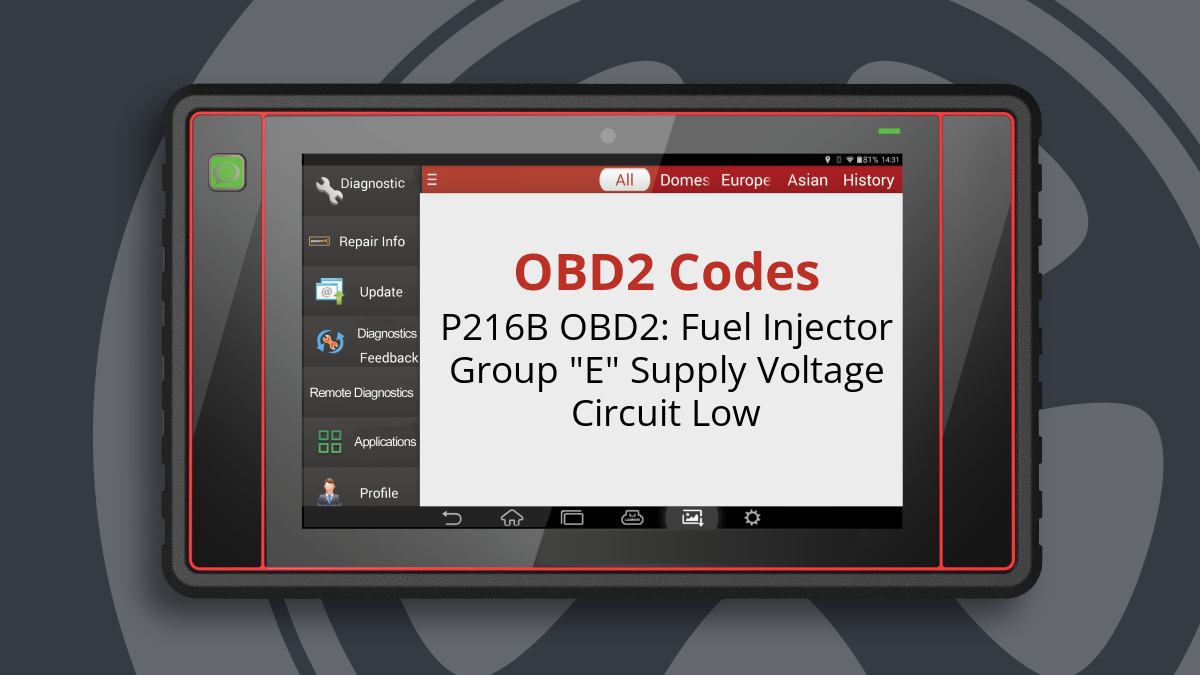
What Does the P216B Code Mean?
The P216B OBD-II code indicates a problem with the fuel injector group “E” supply voltage circuit. This code is triggered when the Powertrain Control Module (PCM) detects that the voltage to the fuel injectors in this group is lower than expected, which can lead to poor engine performance.
What Causes the P216B Code?
- Fuel injector failure
- Powertrain Control Module (PCM) failure
- Wiring issues related to the fuel injector circuit
What Are the Symptoms of the P216B Code?
- Engine may run rough
- Reduced engine performance
- Difficulty starting the engine
How Serious Is the P216B Code?
The P216B code is classified as urgent, indicating that immediate action is necessary. Ignoring this code can lead to severe damage to the vehicle’s engine or other components, potentially endangering the driver and passengers.
How to Diagnose the P216B Code
Diagnosing the P216B code requires a thorough inspection of the fuel injector circuit, including:
- Checking the wiring and connectors for damage or corrosion
- Testing the fuel injectors for proper functionality
- Using an OBD-II scanner to confirm the code and check for any related trouble codes
- Inspecting the PCM for potential failure
Common Repairs for the P216B Code
- Repairing or replacing damaged wiring or connectors
- Replacing faulty fuel injectors
- Reprogramming or replacing the PCM if necessary
How Much Does It Cost to Fix the P216B Code?
The cost of repairs for the P216B code can vary widely depending on the underlying issues. Basic repairs, such as fixing wiring, may cost around $100 to $300, while replacing fuel injectors or the PCM can range from $300 to $1,500 or more.
Can I Fix the P216B Code Myself?
If you have experience with automotive repairs and diagnostics, you may be able to address some issues related to the P216B code yourself, especially if it involves checking wiring and connectors. However, for more complex problems or if you’re unsure, it’s recommended to seek professional help to avoid further damage.