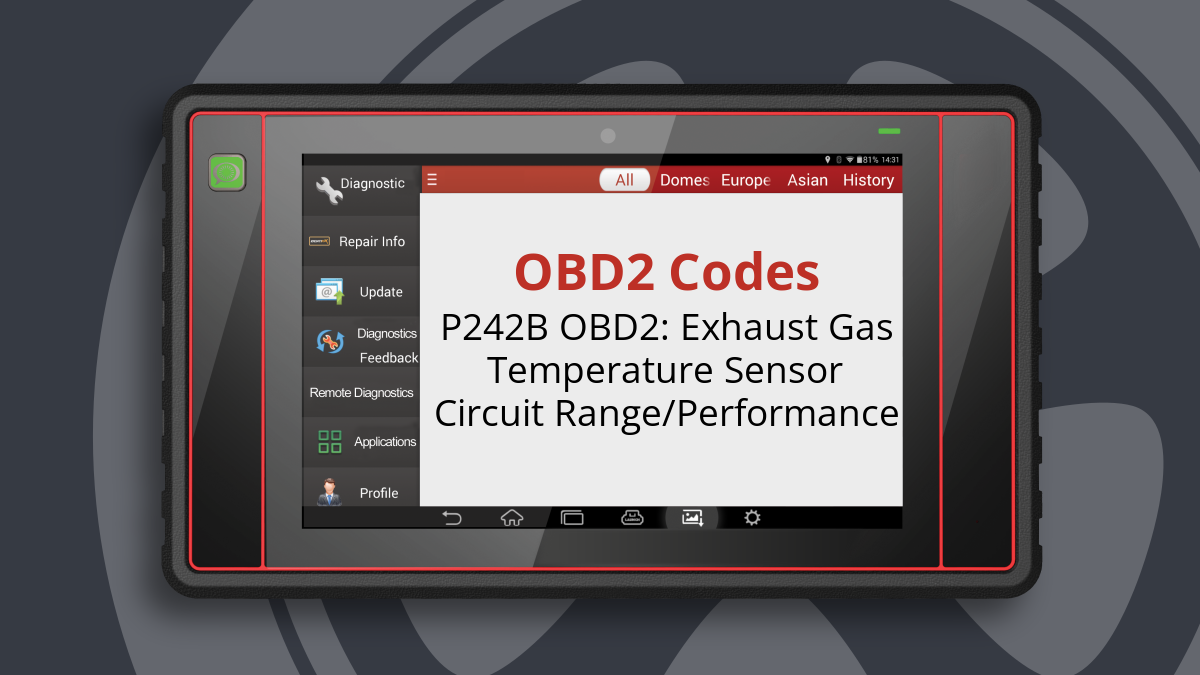
What Does the P242B Code Mean?
This code is triggered when the Powertrain Control Module (PCM) detects an implausible signal from the EGT sensor, which measures the temperature of exhaust gases entering and exiting the Selective Catalytic Reduction (SCR) system. The PCM relies on accurate readings from this sensor to optimize engine performance and emissions control.
What Causes the P242B Code?
- Exhaust Gas Temperature (EGT) sensor failure
- Powertrain Control Module (PCM) failure
- Wiring issues, such as shorts or breaks in the circuit
What Are the Symptoms of the P242B Code?
- Check Engine Light illuminated
- Possible decrease in engine performance
- Increased emissions due to improper exhaust temperature readings
How Serious Is the P242B Code?
The P242B code is considered to have moderate severity. While it may not pose an immediate threat to vehicle safety or functionality, it is essential to address it promptly to prevent further damage and ensure optimal vehicle performance.
How to Diagnose the P242B Code
A proper diagnosis should be performed using specialized OBD-II diagnostic tools. A certified technician will check:
- The EGT sensor and its wiring for any faults
- PCM functionality
- Any related fault codes that may provide additional context
Common Repairs for the P242B Code
- Replacing a faulty Exhaust Gas Temperature (EGT) sensor
- Repairing or replacing damaged wiring or connectors
- Reprogramming or replacing the Powertrain Control Module (PCM) if necessary
How Much Does It Cost to Fix the P242B Code?
The cost to repair the P242B code can vary widely based on the root cause of the issue. Typical repair costs can range from $100 to $600, depending on whether a sensor replacement or PCM reprogramming is required.
Can I Fix the P242B Code Myself?
If you have experience with automotive repairs and access to diagnostic tools, you may be able to troubleshoot and fix the issue yourself. However, for most vehicle owners, it’s advisable to seek help from a professional mechanic to ensure the problem is accurately diagnosed and repaired.