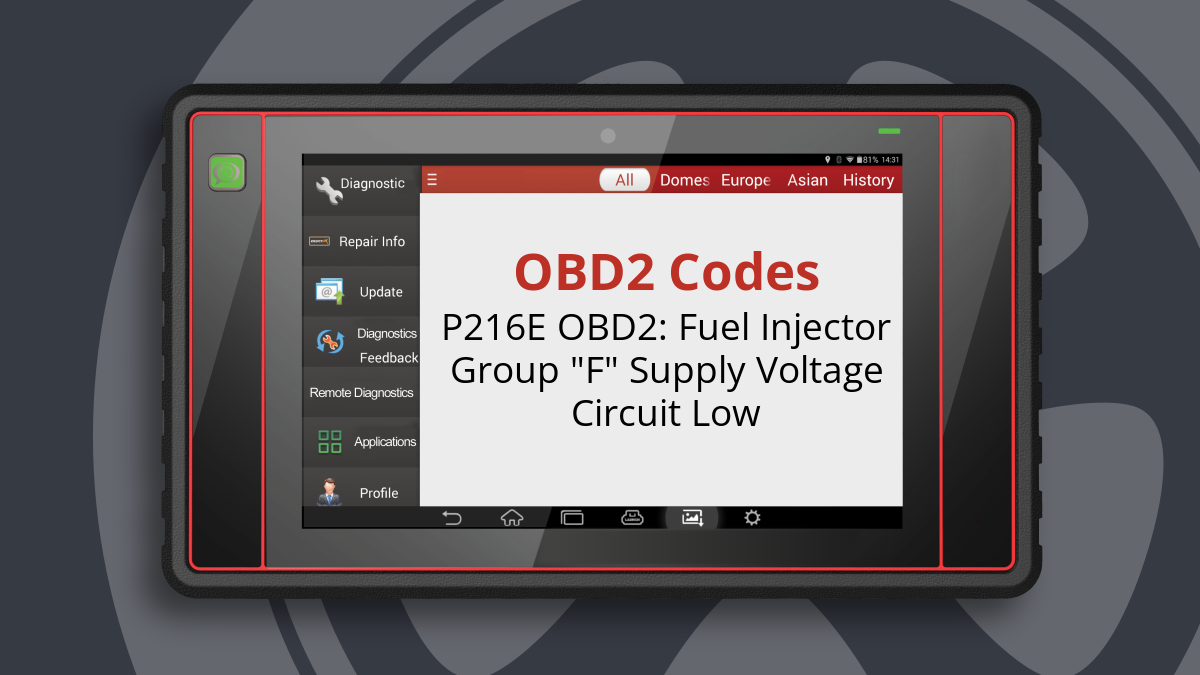
What Does the P216E Code Mean?
The P216E code indicates a malfunction in the fuel injector group “F” supply voltage circuit, which is detected by the engine’s Powertrain Control Module (PCM). When the PCM identifies that one or both fuel injectors in this group are not receiving the proper voltage, it triggers this OBD-II code.
What Causes the P216E Code?
- Fuel injector failure
- Powertrain Control Module (PCM) failure
- Wiring issues related to the fuel injectors
What Are the Symptoms of the P216E Code?
- The engine may run rough
- Reduced engine performance
- Possible stalling
How Serious Is the P216E Code?
This code is classified as urgent. It indicates a significant malfunction that could potentially lead to severe damage to the vehicle or present a safety risk for the driver and passengers. Immediate action is recommended.
How to Diagnose the P216E Code
- Use an OBD-II scanner to confirm the P216E code.
- Inspect the wiring and connectors related to the fuel injectors for any damage or corrosion.
- Test the fuel injectors to ensure they are functioning properly.
- Check the PCM for any faults or updates that may be necessary.
Common Repairs for the P216E Code
- Repair or replace damaged wiring or connectors.
- Replace faulty fuel injectors.
- Replace or reprogram the Powertrain Control Module (PCM).
How Much Does It Cost to Fix the P216E Code?
The cost of repairing the P216E code can vary widely, depending on the underlying cause. Simple repairs such as fixing wiring issues might cost between $100 to $300, while replacing fuel injectors or the PCM could escalate the costs to $500 or more.
Can I Fix the P216E Code Myself?
While some aspects of diagnosing and repairing the P216E code can be done by a savvy DIYer, it is crucial to understand that proper diagnosis often requires specialized tools and knowledge. If you are not experienced with automotive repairs, it may be more cost-effective and safer to consult a professional mechanic.