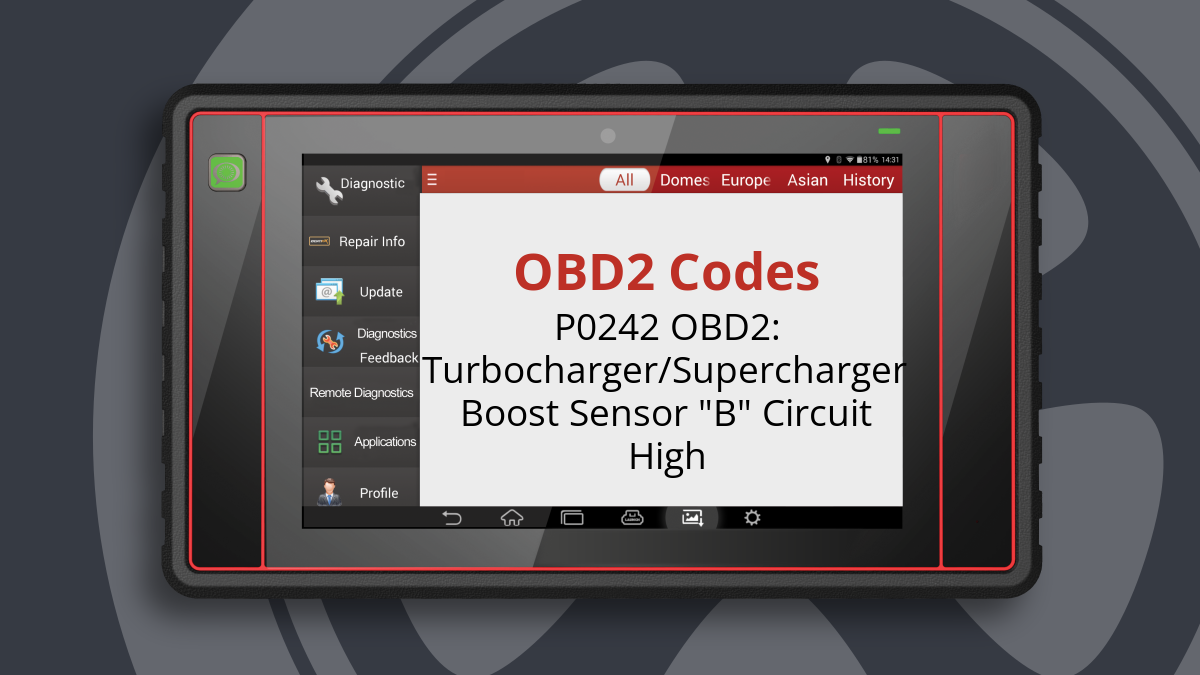
The P0242 code is a diagnostic trouble code (DTC) that indicates a problem with the turbocharger or supercharger boost sensor circuit. This code is triggered when the powertrain control module (PCM) detects a high voltage signal from the boost pressure sensor, which is responsible for monitoring the amount of boost created by the turbocharger.
What Does the P0242 Code Mean?
The P0242 code specifically refers to a situation where the turbocharger or supercharger boost sensor “B” circuit is reporting high voltage. This can lead to various engine performance issues as the PCM relies on accurate readings from this sensor to adjust fuel delivery and ignition timing.
What Causes the P0242 Code?
Several factors can trigger the P0242 code, including:
- Faulty boost pressure sensor
- Issues with the turbocharger or supercharger
- Wiring problems or short circuits in the sensor circuit
- Powertrain Control Module (PCM) malfunctions
- Exhaust leaks affecting sensor readings
- Brake booster pressure sensor failure
What Are the Symptoms of the P0242 Code?
Drivers may experience several symptoms when the P0242 code is present:
- Decreased engine performance
- Engine may enter limp home mode, leading to reduced power
- Increased fuel consumption
- Unusual engine noises related to turbocharger or supercharger operation
How Serious Is the P0242 Code?
The P0242 code is considered urgent as it can lead to significant engine performance issues and potential damage if not addressed promptly. The vehicle may enter limp home mode, which limits engine performance to prevent further damage.
How to Diagnose the P0242 Code
A professional mechanic will typically follow these steps to diagnose the P0242 code:
- Use an OBD-II scanner to confirm the presence of the P0242 code and check for any related codes.
- Inspect the boost pressure sensor and its wiring for any signs of damage or corrosion.
- Test the boost pressure sensor using a multimeter to ensure it is functioning within specifications.
- Check for exhaust leaks or other potential issues affecting boost pressure.
- Evaluate the PCM for any faults or programming issues.
Common Repairs for the P0242 Code
Common repairs to resolve the P0242 code include:
- Replacing the faulty boost pressure sensor
- Repairing or replacing damaged wiring or connectors
- Fixing any exhaust leaks
- Reprogramming or replacing the PCM if necessary
- Addressing turbocharger or supercharger issues
How Much Does It Cost to Fix the P0242 Code?
The cost to fix the P0242 code can vary significantly based on the underlying issue:
- Replacing a boost pressure sensor may cost between $100 to $300.
- Wiring repairs can range from $50 to $200, depending on the extent of the damage.
- Exhaust leak repairs might cost between $100 and $500, depending on the location and severity.
- If the PCM needs to be replaced, costs can exceed $1,000 including labor.
Can I Fix the P0242 Code Myself?
While some DIY enthusiasts may be able to tackle minor repairs related to the P0242 code, such as replacing the boost pressure sensor or repairing wiring, it is often advisable to consult a professional mechanic. Proper diagnosis is crucial to ensure all underlying issues are addressed, preventing further damage to the vehicle.