What Does the P0196 Code Mean?
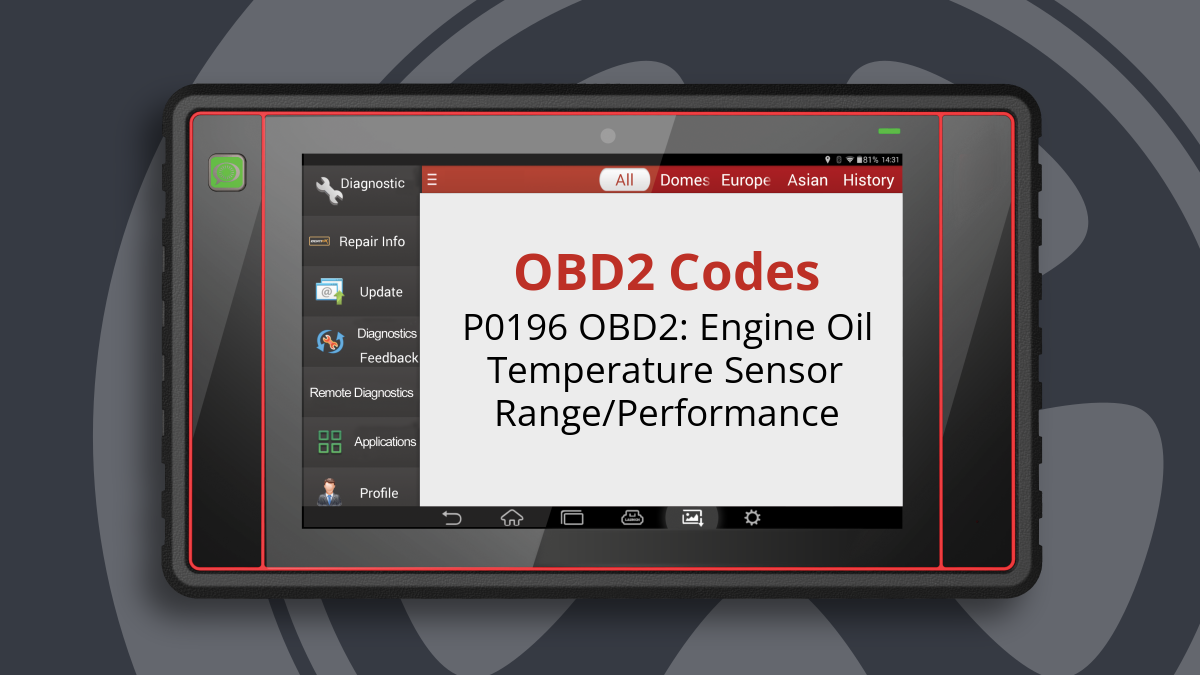
OBD-II Code P0196 is defined as Engine Oil Temperature Sensor Range/Performance. This code is triggered when the Engine Control Module (PCM) detects an incorrect signal from the Engine Oil Temperature Sensor, which is responsible for relaying the temperature of the engine oil.
What Causes the P0196 Code?
- Failure of the oil temperature sensor
- Malfunction of the Powertrain Control Module (PCM)
- Wiring issues related to the oil temperature sensor
What Are the Symptoms of the P0196 Code?
Common symptoms associated with the P0196 code include:
- Illuminated check engine light
- Incorrect engine oil temperature readings
- Potential engine performance issues
How Serious Is the P0196 Code?
The P0196 code is classified as urgent. It indicates significant malfunctions that could lead to severe damage to the vehicle if not addressed promptly. Ignoring this code could harm both the vehicle and its occupants.
How to Diagnose the P0196 Code
Proper diagnosis involves a comprehensive approach:
- Use an OBD-II scanner to confirm the P0196 code
- Inspect the wiring and connections of the oil temperature sensor
- Test the oil temperature sensor for proper functionality
- Check the PCM for any signs of failure
Common Repairs for the P0196 Code
- Replacing the faulty oil temperature sensor
- Repairing or replacing damaged wiring and connectors
- Reprogramming or replacing the PCM if necessary
How Much Does It Cost to Fix the P0196 Code?
The cost to fix the P0196 code can vary widely based on the specific issue. On average, the total expense may range from $100 to $500, depending on whether you need to replace the sensor, repair wiring, or replace the PCM.
Can I Fix the P0196 Code Myself?
While some repairs, like replacing the oil temperature sensor or fixing wiring issues, may be manageable for a DIY enthusiast, it is crucial to perform a thorough diagnosis first. Understanding the underlying issue is essential as simply replacing the sensor may not resolve the problem.