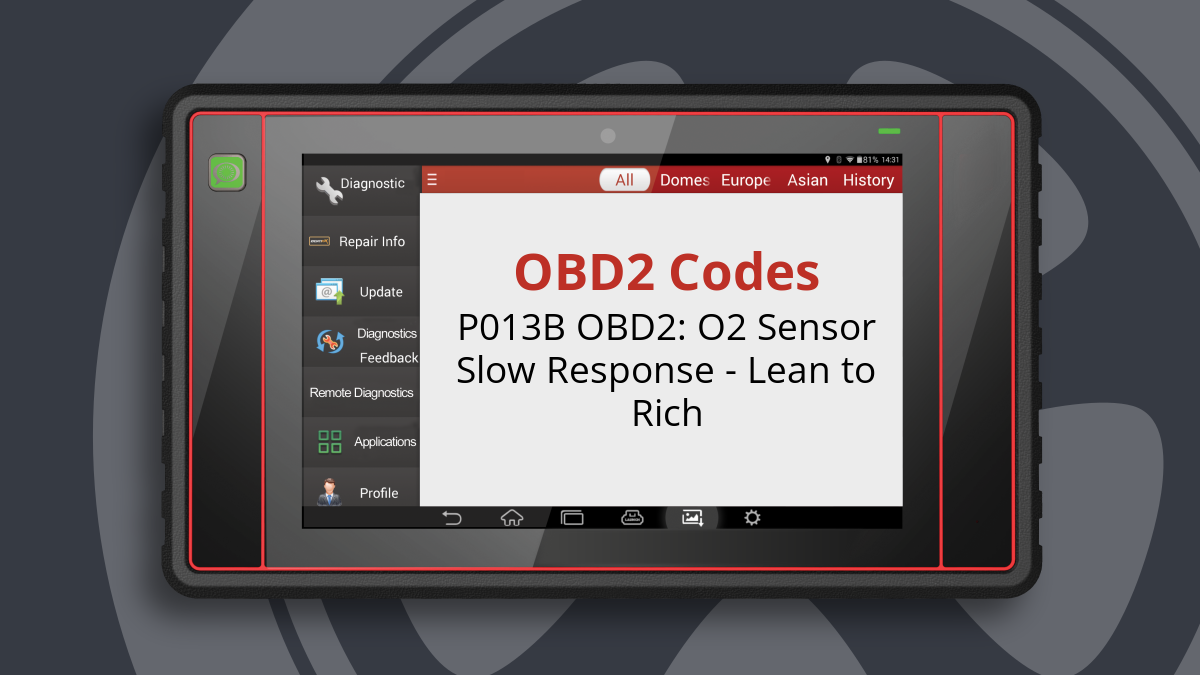
The P013B code refers to an issue with the oxygen sensor, specifically indicating a slow response from the sensor when transitioning from a lean to a rich fuel mixture. This code is part of the OBD-II system, which monitors the performance of the engine and its components.
What Does the P013B Code Mean?
The P013B code is triggered when the engine control module (PCM) detects that the oxygen sensor is not responding as quickly as it should to changes in the air-fuel mixture. The PCM relies on the oxygen sensor to make real-time adjustments to fuel delivery, and a slow response can lead to poor engine performance.
What Causes the P013B Code?
Several factors can contribute to the P013B code, including:
- Oxygen sensor failure
- Powertrain Control Module (PCM) failure
- Wiring issues affecting the oxygen sensor
What Are the Symptoms of the P013B Code?
Drivers may experience a variety of symptoms when the P013B code is present, such as:
- Decreased engine performance
- Increased fuel consumption
How Serious Is the P013B Code?
The severity of the P013B code is considered moderate. While it may not pose an immediate threat to vehicle safety or functionality, it is essential to address the issue promptly to prevent further damage and maintain optimal vehicle performance.
How to Diagnose the P013B Code
A proper diagnosis of the P013B code typically involves:
- Using an OBD-II scanner to confirm the presence of the code
- Inspecting the oxygen sensor and its wiring for damage
- Testing the oxygen sensor’s response time
- Checking the PCM for any faults
Common Repairs for the P013B Code
Common repairs that may be required to resolve the P013B code include:
- Oxygen sensor replacement
How Much Does It Cost to Fix the P013B Code?
The cost to fix the P013B code can vary depending on several factors, such as labor rates and the cost of parts. Generally, replacing an oxygen sensor can range from $100 to $300, including parts and labor.
Can I Fix the P013B Code Myself?
If you have experience working with automotive repairs, you may be able to replace the oxygen sensor yourself. However, it is essential to have the proper tools and diagnostic equipment to ensure that the issue is correctly identified and resolved. If you are unsure, it is always best to consult a professional mechanic.