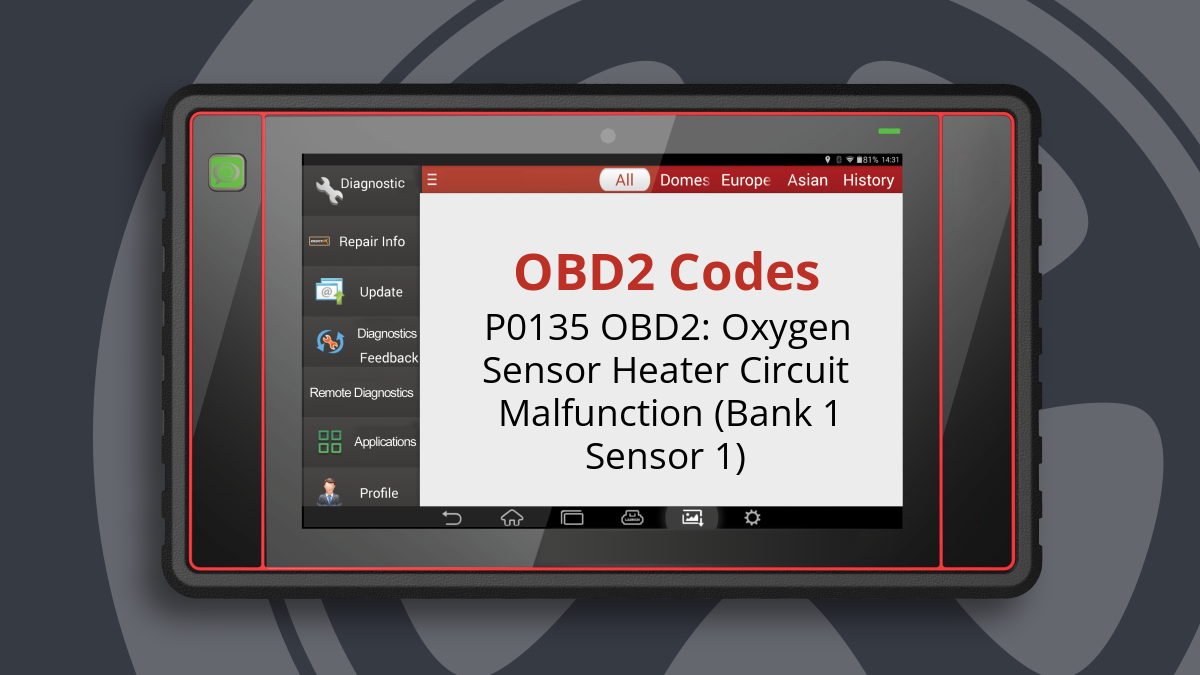
OBD-II Code P0135 is defined as an Oxygen Sensor Heater Circuit Malfunction (Bank 1, Sensor 1). This code indicates that there is an issue with the heater circuit of the oxygen sensor, which is crucial for accurate readings of the oxygen levels in the exhaust gases.
What Does the P0135 Code Mean?
When the P0135 code is triggered, it means that the Powertrain Control Module (PCM) has detected that the oxygen sensor’s heater is not functioning correctly. This can lead to inaccurate readings of the oxygen content in the exhaust, impacting fuel efficiency and emissions.
What Causes the P0135 Code?
The P0135 code can be caused by various issues, including:
- Defective Oxygen Sensor or Air Fuel Ratio Sensor
- Malfunctioning Oxygen Sensor Heater Circuit
- Exhaust System Leak
- Intake Air System Leak
- Low Fuel Pressure
- Faulty Engine Coolant Temperature Sensor
- Issues with sensor wiring or circuit
- Outdated PCM software
- Defective PCM
What Are the Symptoms of the P0135 Code?
Symptoms associated with the P0135 code may include:
- Check Engine Light illuminated
- Rough idling or operation
- Decrease in fuel economy
- Engine stalling
- Black smoke from the exhaust or a foul-smelling exhaust
- In some cases, no noticeable symptoms may be present
How Serious Is the P0135 Code?
The P0135 code is classified as a moderate severity code. While it may not pose an immediate threat to vehicle safety or functionality, it is essential to address it promptly to prevent further issues and maintain optimal vehicle performance.
How to Diagnose the P0135 Code
To diagnose the P0135 code, follow these steps:
- Record freeze frame data and replicate the code-setting conditions during a test drive.
- Perform a visual inspection of the oxygen sensor and its connections.
- Check for 12-volt heater signals and good grounds to the sensor.
- Test the resistance of the oxygen sensor heater element against factory specifications.
- Use a Digital Volt Ohm Meter (DVOM) for electrical tests.
- If necessary, clear the code and conduct further tests to duplicate driving conditions.
Common Repairs for the P0135 Code
Common repairs to address the P0135 code may include:
- Replacing the defective oxygen sensor or air fuel ratio sensor
- Repairing or replacing the oxygen sensor heater circuit
- Fixing any exhaust or intake system leaks
- Addressing low fuel pressure issues
- Replacing faulty engine coolant temperature sensors
- Updating PCM software or replacing the PCM if necessary
How Much Does It Cost to Fix the P0135 Code?
The cost to fix the P0135 code can vary widely based on your vehicle’s make and model, the specific repairs needed, and labor costs in your area. Typically, replacing an oxygen sensor can range from $100 to $300, while more extensive repairs related to wiring or circuit problems may cost more.
Can I Fix the P0135 Code Myself?
While some aspects of diagnosing and repairing the P0135 code can be done by a knowledgeable DIYer, it is recommended to have specialized tools such as a DVOM and possibly a scan tool for live data analysis. If you are not comfortable with electrical diagnostics or repairs, it is advisable to seek assistance from a certified mechanic.