


2011 Yamaha GRIZZLY / 550 (2009-2011) / 700 FI 4WD (2009-2011) / EPS / HUNTER ATV Service Repair Maintenance Overhaul Manual
What's Included?
 Lifetime Access
Fast Download Speeds
Online & Offline Access
Access PDF Contents & Bookmarks
Full Search Facility
Print one or all pages of your manual
EAS20071
IMPORTANT
This manual was produced by the Yamaha Motor Company, Ltd. primarily for use by Yamaha dealers
and their qualified mechanics. It is not possible to include all the knowledge of a mechanic in one man-
ual. Therefore, anyone who uses this book to perform maintenance and repairs on Yamaha vehicles
should have a basic understanding of mechanics and the techniques to repair these types of vehicles.
Repair and maintenance work attempted by anyone without this knowledge is likely to render the vehi-
cle unsafe and unfit for use.
This model has been designed and manufactured to perform within certain specifications in regard to
performance and emissions. Proper service with the correct tools is necessary to ensure that the vehi-
cle will operate as designed. If there is any question about a service procedure, it is imperative that you
contact a Yamaha dealer for any service information changes that apply to this model. This policy is
intended to provide the customer with the most satisfaction from his vehicle and to conform to federal
environmental quality objectives.
Yamaha Motor Company, Ltd. is continually striving to improve all of its models. Modifications and sig-
nificant changes in specifications or procedures will be forwarded to all authorized Yamaha dealers and
will appear in future editions of this manual where applicable.
TIP
• This Service Manual contains information regarding periodic maintenance to the emission control sys-
tem. Please read this material carefully.
• Designs and specifications are subject to change without notice.
EAS20081
IMPORTANT MANUAL INFORMATION
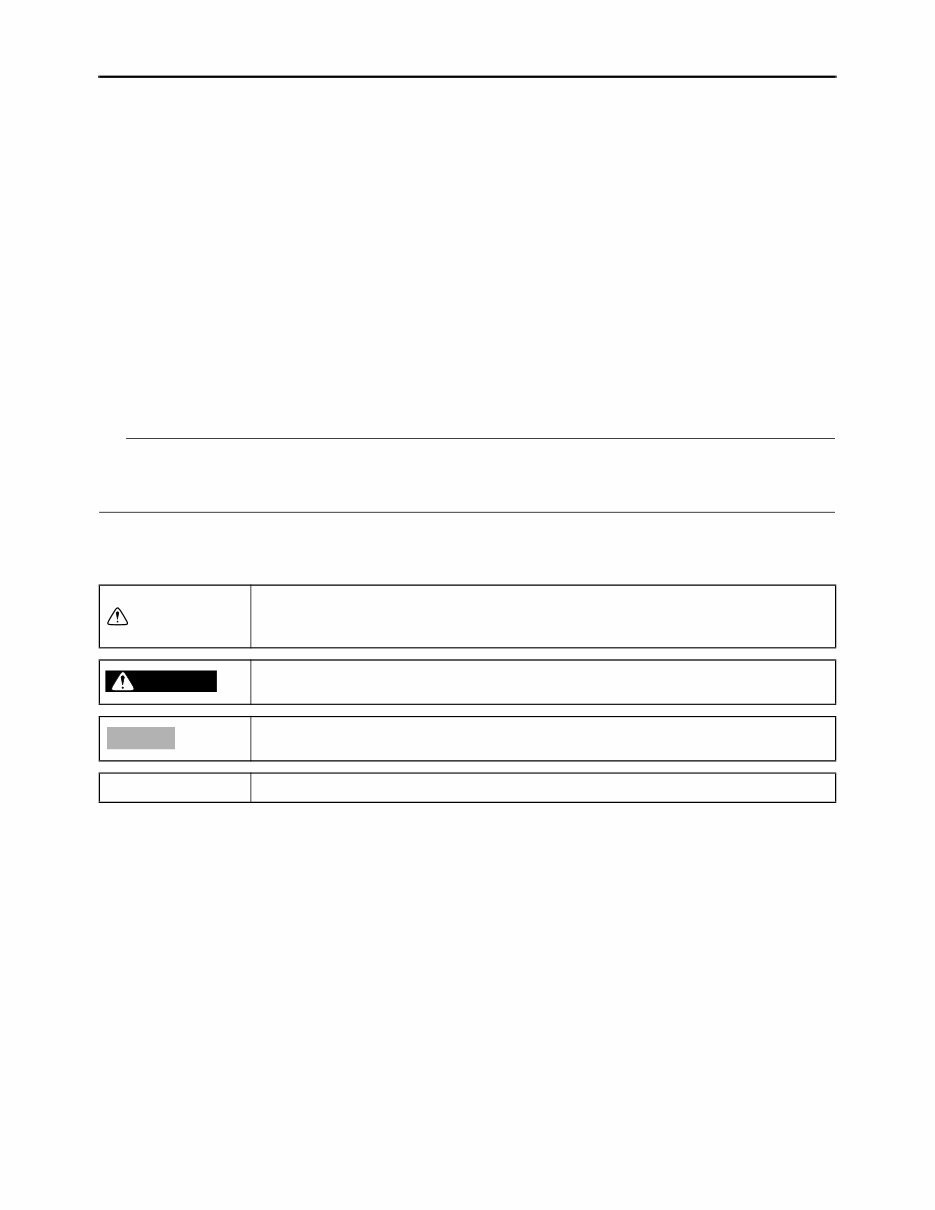
Particularly important information is distinguished in this manual by the following notations.
This is the safety alert symbol. It is used to alert you to potential person-
al injury hazards. Obey all safety messages that follow this symbol to
avoid possible injury or death.
A WARNING indicates a hazardous situation which, if not avoided, could
result in death or serious injury.
A NOTICE indicates special precautions that must be taken to avoid
damage to the vehicle or other property.
A TIP provides key information to make procedures easier or clearer.
WARNING
NOTICE
TIP
EAS20090
HOW TO USE THIS MANUAL
This manual is intended as a handy, easy-to-read reference book for the mechanic. Comprehensive
explanations of all installation, removal, disassembly, assembly, repair and check procedures are laid
out with the individual steps in sequential order.
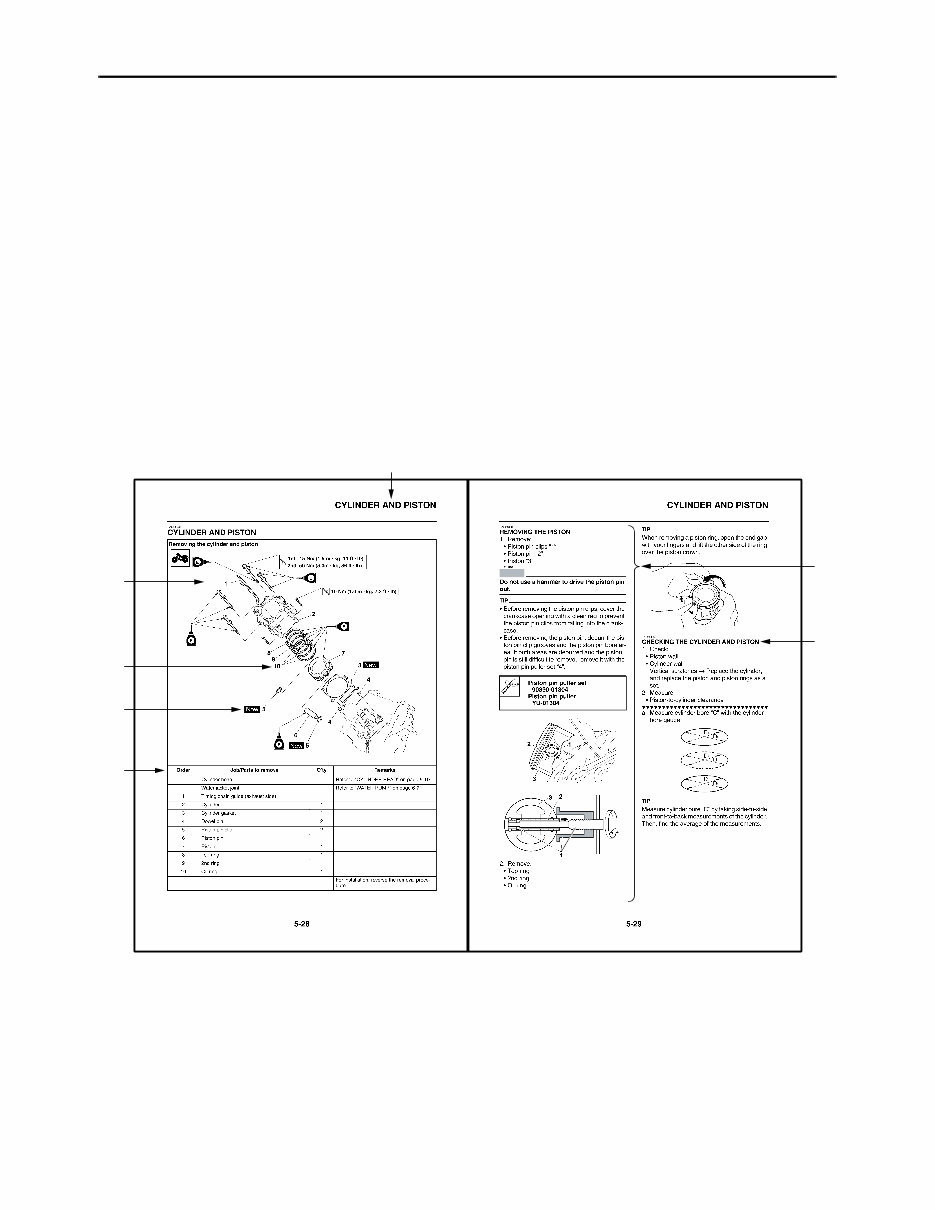
• The manual is divided into chapters and each chapter is divided into sections. The current section title
“1” is shown at the top of each page.
• Sub-section titles “2” appear in smaller print than the section title.
• To help identify parts and clarify procedure steps, there are exploded diagrams “3” at the start of each
removal and disassembly section.
• Numbers “4” are given in the order of the jobs in the exploded diagram. A number indicates a disas-
sembly step.
• Symbols “5” indicate parts to be lubricated or replaced.
Refer to “SYMBOLS”.
• A job instruction chart “6” accompanies the exploded diagram, providing the order of jobs, names of
parts, notes in jobs, etc.
• Jobs “7” requiring more information (such as special tools and technical data) are described sequen-
tially.
NOTICE
1
3
4
5
6
7
2
EAS20100
SYMBOLS
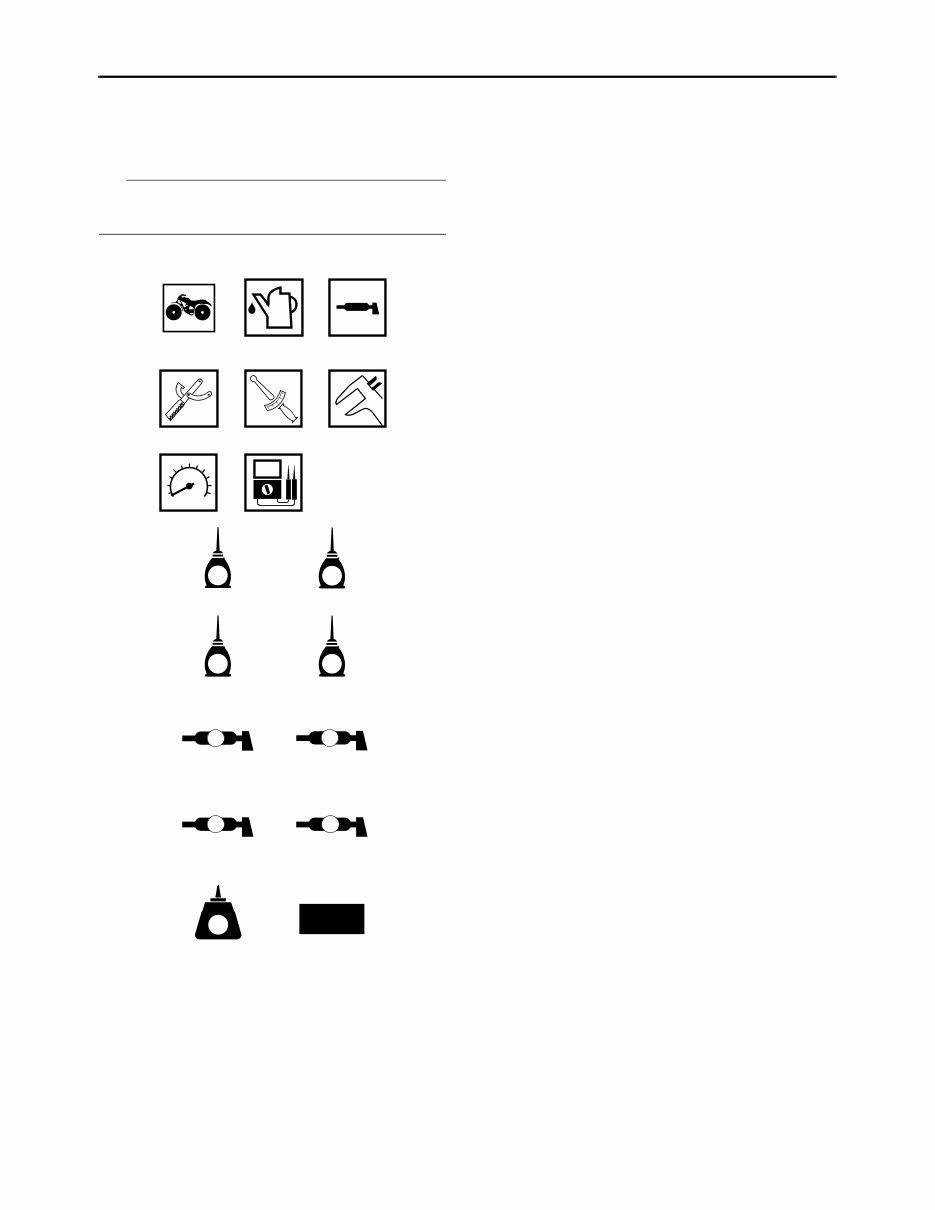
The following symbols are used in this manual
for easier understanding.
TIP
The following symbols are not relevant to every
vehicle.
G
M
E
B LS
M
9 10
11 12
13 14
15 16
17 18
LT
New
BF
S
T
R
.
.
1 2 3
4 5 6
7 8
1. Serviceable with engine mounted
2. Filling fluid
3. Lubricant
4. Special tool
5. Tightening torque
6. Wear limit, clearance
7. Engine speed
8. Electrical data
9. Engine oil
10. Gear oil
11.Molybdenum disulfide oil
12. Brake fluid
13. Wheel bearing grease
14.Lithium-soap-based grease
15.Molybdenum disulfide grease
16. Silicone grease
17.Apply locking agent (LOCTITE®).
18.Replace the part with a new one.


EAS20110
TABLE OF CONTENTS
GENERAL INFORMATION
1
SPECIFICATIONS
2
PERIODIC CHECKS AND
ADJUSTMENTS
3
CHASSIS
4
ENGINE
5
COOLING SYSTEM
6
FUEL SYSTEM
7
DRIVE TRAIN
8
ELECTRICAL SYSTEM
9
TROUBLESHOOTING
10


1
GENERAL INFORMATION
IDENTIFICATION ............................................................................................ 1-1
VEHICLE IDENTIFICATION NUMBER ..................................................... 1-1
MODEL LABEL.......................................................................................... 1-1
FEATURES ...................................................................................................... 1-2
OUTLINE OF THE FI SYSTEM ................................................................. 1-2
FI SYSTEM................................................................................................ 1-3
OUTLINE OF THE EPS (ELECTRIC POWER STEERING) SYSTEM
(YFM5FGP/YFM7FGP only) ..................................................................... 1-5
EPS (ELECTRIC POWER STEERING) SYSTEM BLOCK DIAGRAM
(YFM5FGP/YFM7FGP only) ..................................................................... 1-7
INSTRUMENT FUNCTIONS ..................................................................... 1-9
IMPORTANT INFORMATION ....................................................................... 1-11
PREPARATION FOR REMOVAL AND DISASSEMBLY......................... 1-11
REPLACEMENT PARTS......................................................................... 1-11
GASKETS, OIL SEALS AND O-RINGS .................................................. 1-11
LOCK WASHERS/PLATES AND COTTER PINS ................................... 1-11
BEARINGS AND OIL SEALS .................................................................. 1-12
CIRCLIPS ................................................................................................ 1-12
CHECKING THE CONNECTIONS ................................................................ 1-13
SPECIAL TOOLS .......................................................................................... 1-14
IDENTIFICATION
1-1
EAS20130
IDENTIFICATION
EAS20140
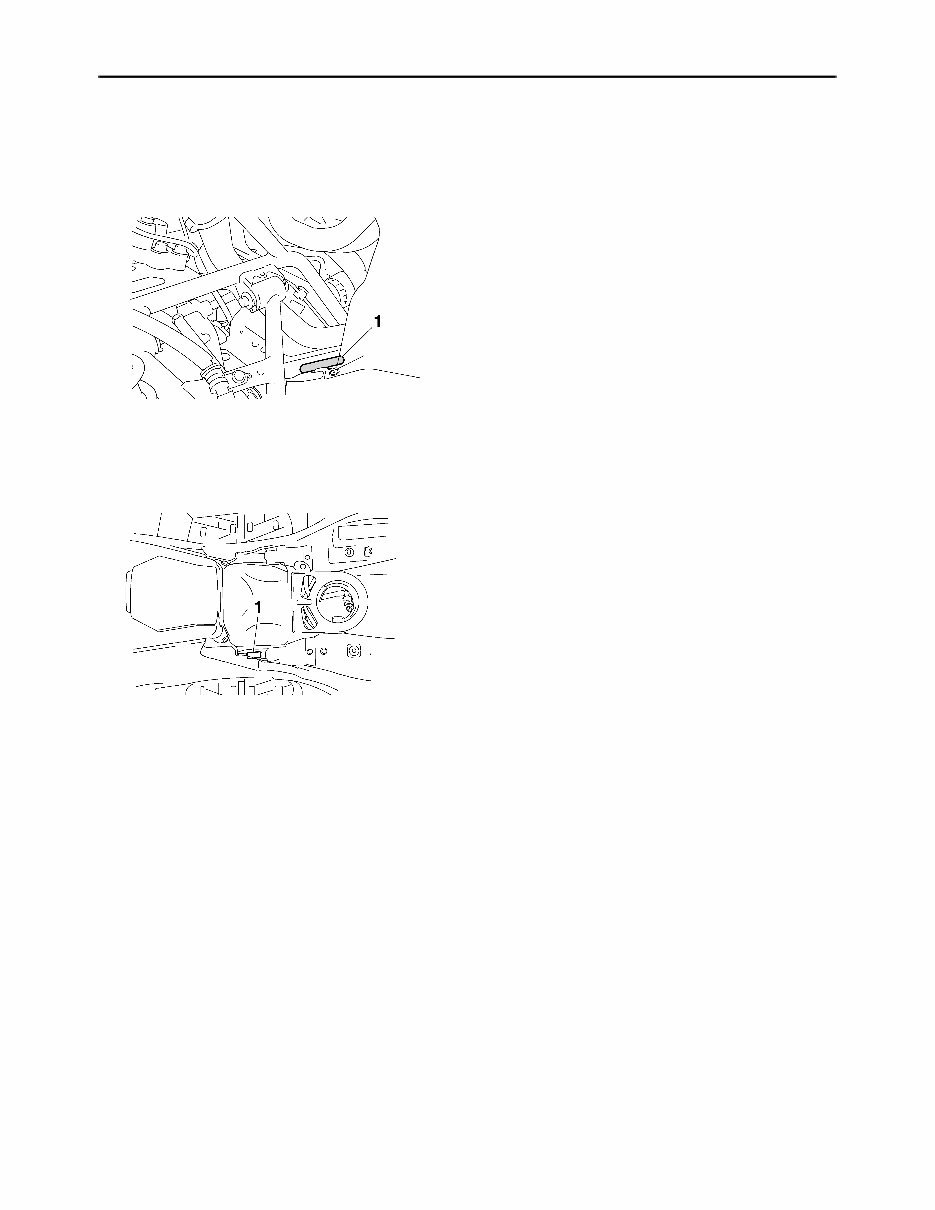
VEHICLE IDENTIFICATION NUMBER
The vehicle identification number “1” is stamped
into the front left side of the frame.
EAS20150
MODEL LABEL
The model label “1” is affixed to the location
shown in the illustration. This information will be
needed to order spare parts.
FEATURES
1-2
EAS20170
FEATURES
EAS28P1031
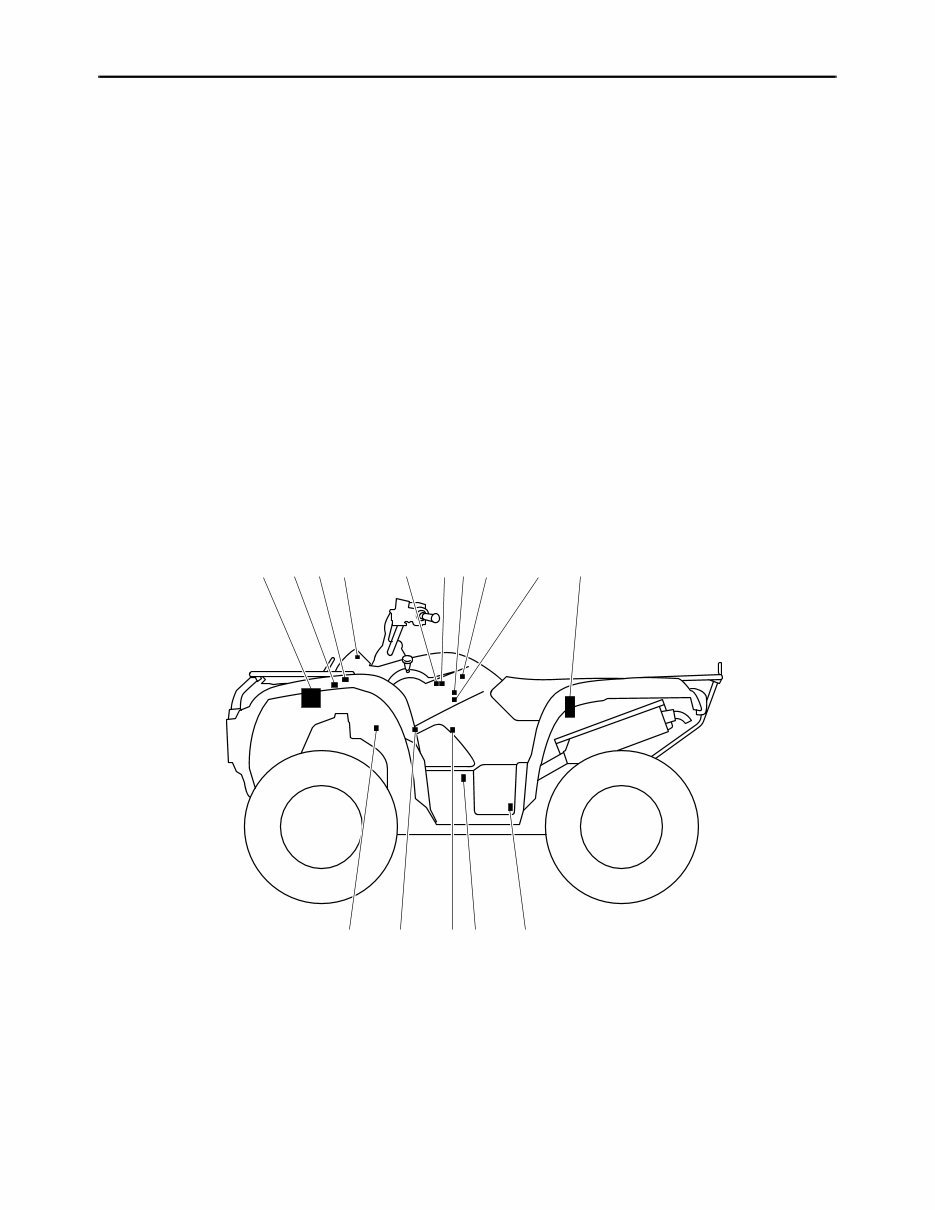
OUTLINE OF THE FI SYSTEM
The main function of a fuel supply system is to provide fuel to the combustion chamber at the optimum
air-fuel ratio in accordance with the engine operating conditions and the atmospheric temperature. In
the conventional carburetor system, the air-fuel ratio of the mixture that is supplied to the combustion
chamber is created by the volume of the intake air and the fuel that is metered by the jet used in the
respective carburetor.
Despite the same volume of intake air, the fuel volume requirement varies with the engine operating
conditions, such as acceleration, deceleration, or operating under a heavy load. Carburetors that meter
the fuel through the use of jets have been provided with various auxiliary devices, so that an optimum
air-fuel ratio can be achieved to accommodate the constant changes in the operating conditions of the
engine.
As the requirements for the engine to deliver more performance and cleaner exhaust gases increase,
it becomes necessary to control the air-fuel ratio in a more precise and finely tuned manner. To accom-
modate this need, this model has adopted an electronically controlled fuel injection (FI) system, in place
of the conventional carburetor system. This system can achieve an optimum air-fuel ratio required by
the engine at all times by using a microprocessor that regulates the fuel injection volume according to
the engine operating conditions detected by various sensors.
The adoption of the FI system has resulted in a highly precise fuel supply, improved engine response,
better fuel economy, and reduced exhaust emissions.
1 2 3 4 67 8 9 10
11 12 13 14 15
5
1. ECU (engine control unit)
2. Lean angle sensor
3. Fuel injection system relay
4. Engine trouble warning light
5. ISC (idle speed control) unit
6. Intake air pressure sensor
7. TPS (throttle position sensor)
8. Intake air temperature sensor
9. Fuel injector
10. Fuel pump
11. Speed sensor
12. Crankshaft position sensor
13.Coolant temperature sensor
14. Spark plug
15. Ignition coil
FEATURES
1-3
EAS28P1032
FI SYSTEM
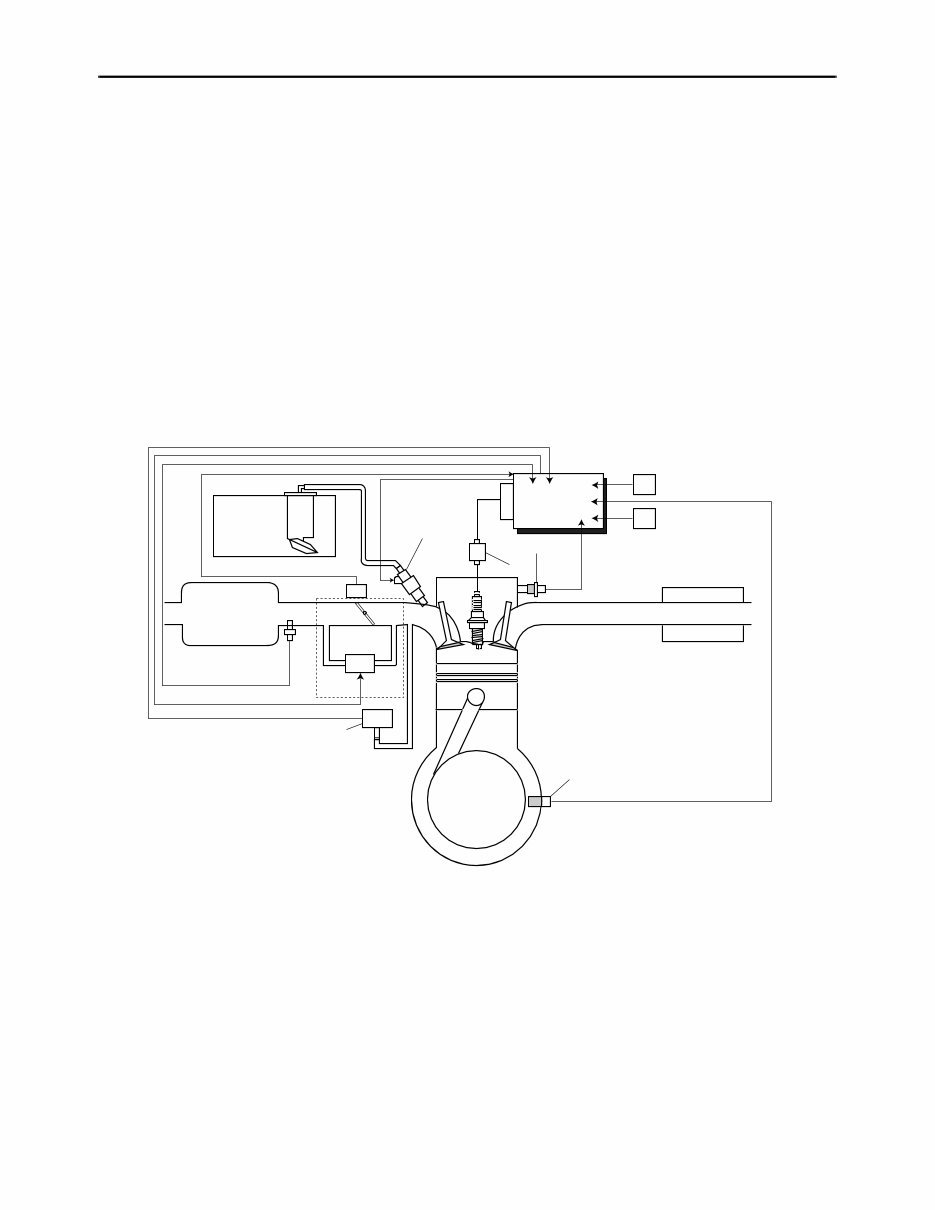
The fuel pump delivers fuel to the fuel injector via the fuel filter. The pressure regulator maintains the
fuel pressure that is applied to the fuel injector at only 324 kPa (3.24 kgf/cm², 46.1 psi). Accordingly,
when the energizing signal from the ECU energizes the fuel injector, the fuel passage opens, causing
the fuel to be injected into the intake manifold only during the time the passage remains open. There-
fore, the longer the length of time the fuel injector is energized (injection duration), the greater the vol-
ume of fuel that is supplied. Conversely, the shorter the length of time the fuel injector is energized
(injection duration), the lesser the volume of fuel that is supplied.
The injection duration and the injection timing are controlled by the ECU. Signals that are input from the
throttle position sensor, crankshaft position sensor, intake air pressure sensor, intake air temperature
sensor, coolant temperature sensor, lean angle sensor and speed sensor enable the ECU to determine
the injection duration. The injection timing is determined through the signals from the crankshaft posi-
tion sensor. As a result, the volume of fuel that is required by the engine can be supplied at all times in
accordance with the driving conditions.
Illustration is for reference only.
C
14
2
1
3
5
6
7
8
9
10
13
12
11
4
A
B
1. Fuel pump
2. Fuel injector
3. Ignition coil
4. ECU (engine control unit)
5. Speed sensor
6. Lean angle sensor
7. Coolant temperature sensor
8. Crankshaft position sensor
9. Intake air pressure sensor
10.Throttle body
11.ISC (idle speed control) unit
12.Throttle position sensor
13.Intake air temperature sensor
14. Air filter case
A. Fuel system
B. Air system
C. Control system
You're Reading a Preview
What's Included?
Lifetime Access
Fast Download Speeds
Online & Offline Access
Access PDF Contents & Bookmarks
Full Search Facility
Print one or all pages of your manual
$35.99
Viewed 92 Times Today


Secure transaction
What's Included?
Lifetime Access
Fast Download Speeds
Online & Offline Access
Access PDF Contents & Bookmarks
Full Search Facility
Print one or all pages of your manual
$35.99
Get the 2011 Yamaha GRIZZLY / 550 (2009-2011) / 700 FI 4WD (2009-2011) / EPS / HUNTER ATV Service Manual. This manual is designed for professional mechanics and DIY enthusiasts. It offers comprehensive disassembly, repair, assembly, and inspection operations in a sequential, step-by-step format. The manual includes zoomable images and text that won't blur, making it easy to use. Each chapter features exploded diagrams before disassembly sections for clear identification of procedures. Rest assured, this is the same manual used by Yamaha dealers.


