


STI-466-6
TBB Part # 85410323
SAF-T-LINER C2
SCHOOL BUS
Driver’s Manual

Introduction
This manual provides information needed to operate
and understand the vehicle and its components.
More detailed information is contained in the Owner’s
Warranty Information Manual, the vehicle’s workshop
manual, and the vehicle’s maintenance manual.
Custom-built Thomas Built Buses are equipped with
various chassis and body components. Not all of the
information contained in this manual applies to every
vehicle. For details about components in your ve-
hicle, refer to the chassis specification pages in-
cluded in all new vehicles and to the vehicle specifi-
cation decal, located inside the vehicle.
For your reference, keep this manual in the vehicle
at all times.
IMPORTANT: Descriptions and specifications in
this manual were in effect at the time of printing.
Thomas Built Buses reserves the right to dis-
continue models and to change specifications or
design at any time without notice and without
incurring obligation. Descriptions and specifica-
tions contained in this publication provide no
warranty, expressed or implied, and are subject
to revisions and editions without notice.
Environmental Concerns and
Recommendations
Whenever you see instructions in this manual to dis-
card materials, you should first attempt to reclaim
and recycle them. To preserve our environment, fol-
low appropriate environmental rules and regulations
when disposing of materials.
Event Data Recorder
This vehicle is equipped with one or more devices
that record specific vehicle data. The type and
amount of data recorded varies depending on how
the vehicle is equipped (such as the brand of engine,
if an air bag is installed, or if the vehicle features a
collision avoidance system, etc.).
Emissions and Fuel Efficiency
Compliance
This vehicle must be regularly inspected and main-
tained as indicated in the Saf-T-Liner C2 Mainte-
nance Manual, and in the Pre- and Post-Trip Inspec-
tions and Maintenance chapter in this manual, in
order to continue satisfactory performance and en-
sure coverage of the vehicle under the manufactur-
er’s warranty. Many maintenance procedures ensure
that the vehicle and engine continue to comply with
applicable emissions standards. Maintenance proce-
dures, using components engineered to comply with
greenhouse gas emissions and fuel efficiency regula-
tions, may be performed by an authorized Daimler
Trucks North America dealer, an independent outlet,
or the vehicle owner or operator.
The vehicle owner is responsible for determining the
suitability of replacement components to maintain
compliance with federal and local jurisdictional regu-
lations. Components including, but not limited to, low-
rolling resistance tires are specifically designed and
manufactured to exacting standards for regulatory
fuel efficiency and greenhouse gas emissions compli-
ance. It is important that these components are al-
ways replaced with components that meet or exceed
the performance of the originally installed compo-
nents.
Customer Assistance Center
Having trouble finding service? Call the Customer
Assistance Center at 1-800-385-4357 or 1-800-FTL-
HELP. Call night or day, weekdays or weekends, for
dealer referral, vehicle information, breakdown coor-
dination, or Fleetpack assistance. Our people are
knowledgeable, professional, and committed to fol-
lowing through to help you keep your vehicle moving.
Reporting Safety Defects
If you believe that your vehicle has a defect which
could cause a crash or could cause injury or
death, you should immediately inform the National
Highway Traffic Safety Administration (NHTSA) in
addition to notifying Daimler Trucks North America
LLC.
If NHTSA receives similar complaints, it may open
an investigation, and if it finds that a safety defect
exists in a group of vehicles, it may order a recall
Foreword
STI-466-6 (3/14)
TBB85410323
Printed in U.S.A.

and remedy campaign. However, NHTSA cannot
become involved in individual problems between
you, your dealer, or Daimler Trucks North America
LLC.
To contact NHTSA, you may call the Vehicle
Safety Hotline toll-free at 1-888-327-4236 (TTY:
1-800-424-9153); go to www.safercar.gov; or
write to: Administrator, NHTSA, 1200 New Jersey
Avenue, SE, Washington, DC 20590. You can also
obtain other information about motor vehicle safety
from www.safercar.gov.
Canadian customers who wish to report a safety-
related defect to Transport Canada, Defect Investi-
gations and Recalls, may telephone the toll-free
hotline 1-800-333-0510, or contact Transport
Canada by mail at: Transport Canada, ASFAD,
Place de Ville Tower C, 330 Sparks Street,
Ottawa, Ontario, Canada K1A 0N5.
For additional road safety information, please visit
the Road Safety website at: www.tc.gc.ca/
roadsafety.
© 2004–2014 Daimler Trucks North America LLC. All rights reserved. Daimler Trucks North America is a Daimler com-
pany.
No part of this publication, in whole or part, may be translated, reproduced, stored in a retrieval system, or transmitted
in any form by any means, electronic, mechanical, photocopying, recording, or otherwise, without the prior written per-
mission of Daimler Trucks North America LLC. For additional information, please contact Daimler Trucks North
America LLC, Service Systems and Documentation, P.O. Box 3849, Portland OR 97208–3849 U.S.A. or refer to
www.Daimler-TrucksNorthAmerica.comand www.ThomasBus.com.
Foreword

Contents
Chapter Page
Introduction, Environmental Concerns and Recommendations,
Event Data Recorder, Emissions and Fuel Efficiency Compliance,
Customer Assistance Center, Reporting Safety Defects .................... Foreword
1 Vehicle Identification ...................................................... 1.1
2 Vehicle Access .......................................................... 2.1
3 Bus Features ........................................................... 3.1
4 Instruments ............................................................. 4.1
5 Controls ................................................................ 5.1
6 Electrical Systems ....................................................... 6.1
7 Engines ................................................................ 7.1
8 Exhaust Aftertreatment Systems ............................................ 8.1
9 Drivetrain ............................................................... 9.1
10 Hydraulic and Air Brake Systems .......................................... 10.1
11 Pre- and Post-Trip Checklists ............................................. 11.1
12 Pre- and Post-Trip Inspections and Maintenance .............................. 12.1
13 Cleaning and Care ...................................................... 13.1
14 In an Emergency ....................................................... 14.1
15 Headlight Aiming ........................................................ 15.1
16 Hybrid Electric Vehicle ................................................... 16.1
17 Propane Fuel System .................................................... 17.1
18 Specifications .......................................................... 18.1
Index .................................................................. I.1

1
Vehicle Identification
Vehicle Certification Plate and Data Plate ............................................. 1.1
Federal Motor Vehicle Safety Standard Labels .......................................... 1.1
Canadian Motor Vehicle Safety Standard Labels ........................................ 1.2
Tire and Rim Information ........................................................... 1.2
Vehicle Loading .................................................................. 1.2
Emissions Labels ................................................................. 1.2
Vehicle Certification Plate and
Data Plate
NOTE: Labels shown in this chapter are ex-
amples only. Actual label locations and specifi-
cations may vary from vehicle to vehicle.
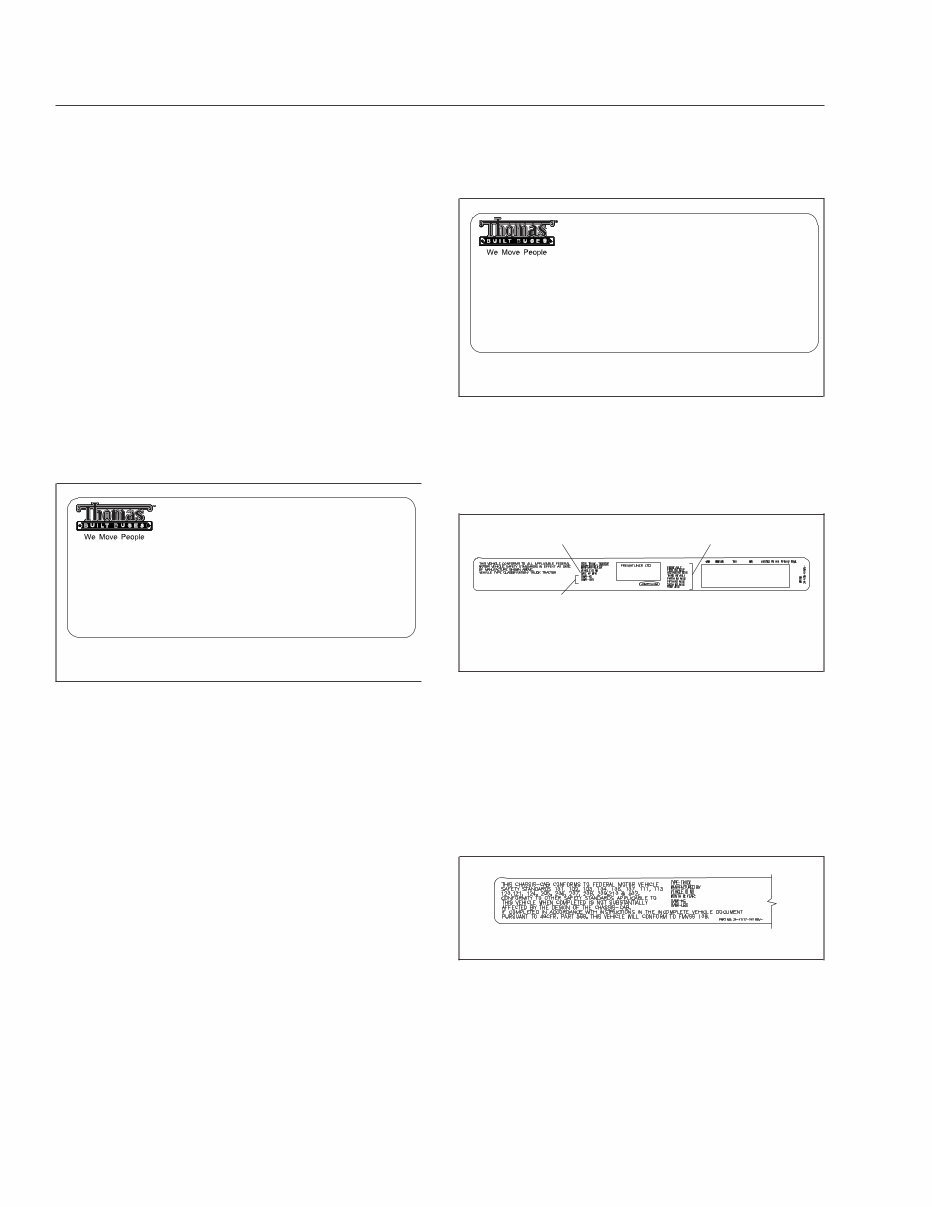
The certification plate is installed on the inside roof
liner above the driver’s window, or on the front bulk-
head. The certification plate indicates compliance
with all Federal Motor Vehicle Safety Standards
(FMVSS) at the time of manufacture, gross axle
weight rating (GAWR) front and rear, gross vehicle
weight rating (GVWR), vehicle identification number
(VIN), vehicle type, body identification, and build
date. See Fig. 1.1.
The data plate is installed on the inside roof liner
above the driver’s window, or on the front bulkhead,
and lists manufacturing information. See Fig. 1.2.
Whenever contacting parts, service, or warranty per-
sonnel regarding the vehicle, the following three
numbers will be requested:
• chassis identification number
• body identification number
• VIN
Federal Motor Vehicle Safety
Standard Labels
NOTE: Due to the variety of Federal Motor Ve-
hicle Safety Standard (FMVSS) certification re-
quirements, not all of the labels shown will apply
to your vehicle.
Buses purchased in the U.S. are marked as certified
by means of an FMVSS certification label. See
Fig. 1.3. The tire and rim information are combined
into one label. This label is located in the driver area.
Chassis built without a cargo body that are intended
for service in the U.S. have an incomplete vehicle
certification label attached by the final-stage manu-
facturer. See Fig. 1.4. This label will be attached to
the incomplete vehicle document included with the
vehicle, and certifies that the vehicle conforms to all
applicable FMVSS regulations in effect on the date of
completion.
The tire and rim portion of the FMVSS certification
label certifies suitable tire and rim combinations that
can be installed on the vehicle, for the given gross
axle weight rating. Tires and rims installed on the
vehicle at the time of manufacture may have a higher
f080137
HIGH POINT NORTH CAROLINA
MFD BY THOMAS BUILT BUSES INC.
INC VEH MFD BY:
GVWR:
GAWR FRONT:
GAWR REAR:
THIS VEHICLE CONFORMS TO ALL APPLICABLE FEDERAL MOTOR VEHICLE
SAFETY STANDARDS IN EFFECT IN:
V.I.N.:
BODY ID:
CHASSIS ID NO:
VEH. TYPE:
01/16/2009
Fig. 1.1, Certification Plate
f080136
HIGH POINT NORTH CAROLINA
MFD BY THOMAS BUILT BUSES INC.
DATE:
CHASSIS YARD NO.:
ENGINE:
TRANS:
FRONT AXLE:
INT AXLE:
REAR AXLE:
MODEL YEAR:
SER NO:
SER NO:
MOD NO:
MOD NO:
MOD NO:
02/17/2004
Fig. 1.2, Vehicle Data Plate
11/14/2001 f080118
1
2
3
1. Date of Manufacture
2. Gross Vehicle Weight Rating
3. Gross Axle Weight Rating
Fig. 1.3, Vehicle Certification Label
11/14/2001 f080120
Fig. 1.4, Incomplete Vehicle Certification Label
Vehicle Identification
1.1
load capacity than that certified by the tire and rim
label. If the tires and rims currently on the vehicle
have a lower load capacity than that shown on the
tire and rim label, then the tires and rims determine
the load limitations on each of the axles.
Canadian Motor Vehicle Safety
Standard Labels
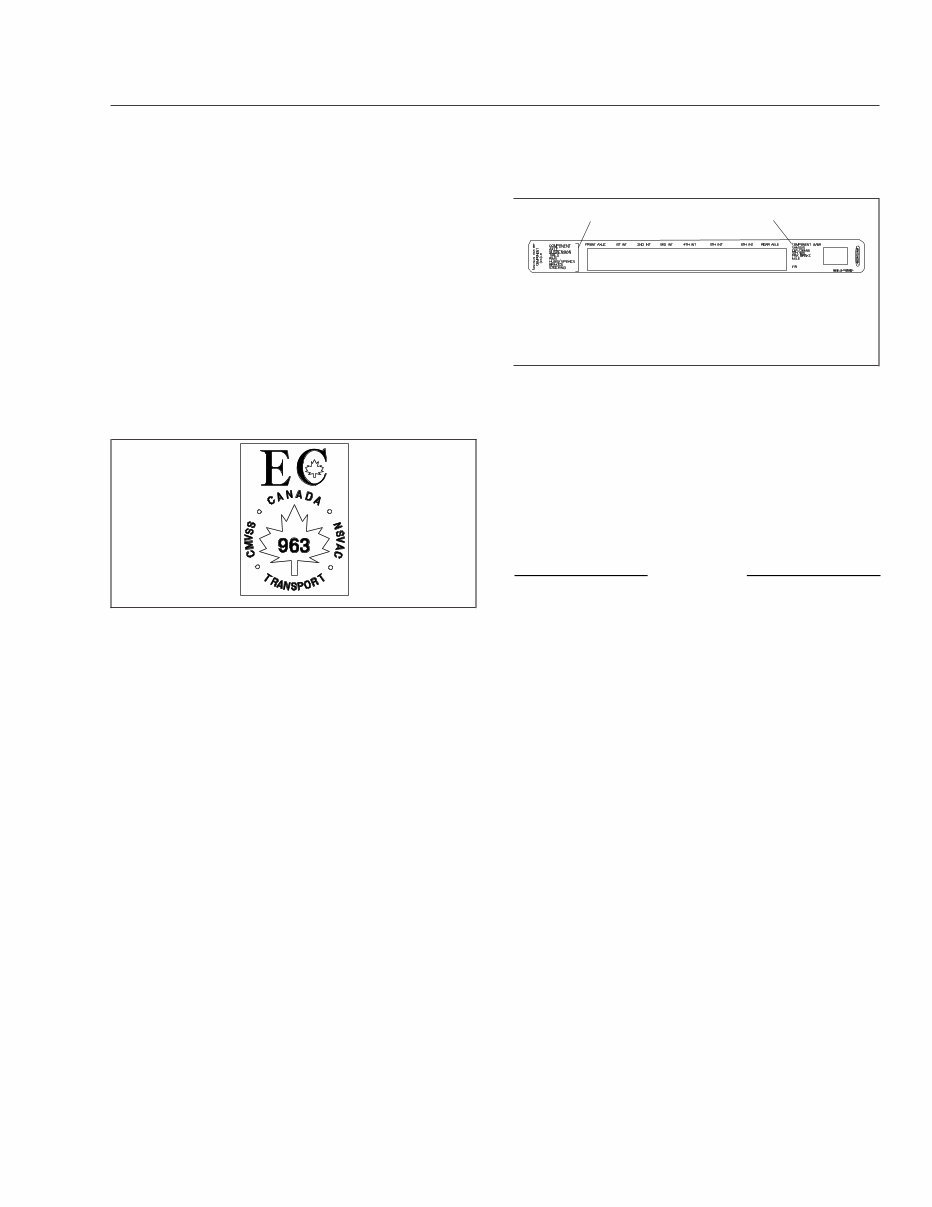
In Canada, buses are marked as certified by means
of a statement of compliance label with the Canadian
National Safety Mark, which is located in the driver
area. See Fig. 1.5.
If purchased for service in Canada, chassis built
without a body are marked as certified by a "State-
ment of Compliance" label. See Fig. 1.3. This label
must be attached by the final-stage manufacturer to
certify that the vehicle conforms to all applicable
Canada Motor Vehicle Safety Standard (CMVSS)
regulations in effect on the date of completion..
Tire and Rim Information
The tire and rim label certifies suitable tire and rim
combinations that can be installed on the vehicle for
the given gross axle weight rating. Tires and rims
installed on the vehicle at the time of manufacture
may have a higher load capacity than that certified
by the tire and rim label. If the tires and rims cur-
rently on the vehicle have a lower load capacity than
that shown on the tire and rim label, then the tires
and rims determine the load limitations on each of
the axles.
See Fig. 1.6 for U.S. and Canadian tire and rim
labels.
Vehicle Loading
The gross axle weight rating (GAWR) is the maxi-
mum weight the axle can carry. GAWR is the com-
bined capacity of the axle, brakes, tires, wheel equip-
ment, and suspension.
The gross vehicle weight rating (GVWR) is the maxi-
mum loaded weight of the vehicle. See Fig. 1.3.
NOTICE
Never load the vehicle over the GVWR. Consider-
able damage to the drivetrain may result if the
vehicle is over the GVWR.
IMPORTANT: Passenger and cargo loads
should be distributed proportionately over both
the front and rear axles, and sides of the bus.
NOTE: Actual loads on the front and rear axles
can only be determined by weighing the vehicle
at highway weigh stations or similar facilities.
Overloading the vehicle is considered misuse
and will void the vehicle warranty.
Emissions Labels
EPA Noise Emission Control Label
A vehicle noise emission control label is attached
either to the left side of the dashboard or in the
driver’s area. See Fig. 1.7.
It is the owner’s responsibility to maintain the vehicle
so that it conforms to EPA regulations.
IMPORTANT: Certain incomplete vehicles may
be produced with incomplete noise control hard-
ware. Such vehicles will not have a vehicle
noise emission control information label. For
f080024 10/10/2006
Fig. 1.5, Canadian National Safety Mark
11/14/2001 f080119
1 2
1. Gross Weight Rating By Component in Axle System
2. Gross Vehicle Weight Rating By Component in
Vehicle as a Whole
Fig. 1.6, Tire and Rim Information
Vehicle Identification
1.2
such vehicles, it is the final-stage manufactur-
er’s responsibility to complete the vehicle in
conformity to U.S. EPA regulations (40 CFR Part
205) and label it for compliance.
Aftertreatment System Indicators
Label
Engines and vehicles manufactured after December
31, 2006 and domiciled in the U.S. or Canada are
required to meet all EPA regulations effective as of
the vehicle build date, and are equipped with an
emission aftertreatment system (ATS). Vehicles do-
miciled outside of the U.S. and Canada may not
have aftertreatment equipment, depending upon local
statutory emissions guidelines. See Table 1.1.
There is a warning label (placement will vary by
bodybuilder) for important warning indicators in the
instrument cluster that pertain to the ATS.
It is a violation of U.S. federal law to alter exhaust
plumbing, ATS, or other components in any way that
would bring the engine/vehicle out of compliance with
certification requirements [Ref: 42 U.S.C. S7522(a)
(3)]. It is the owner’s responsibility to maintain the
vehicle so that it conforms to EPA regulations.
Vehicle Emission Control Information
Label
Model year 2013 and later vehicles meet additional
requirements as specified by federal greenhouse gas
and fuel efficiency regulations (GHG14). These ve-
hicles may be equipped with components, such as
low-rolling resistance tires, that increase fuel effi-
ciency and reduce GHG emissions.
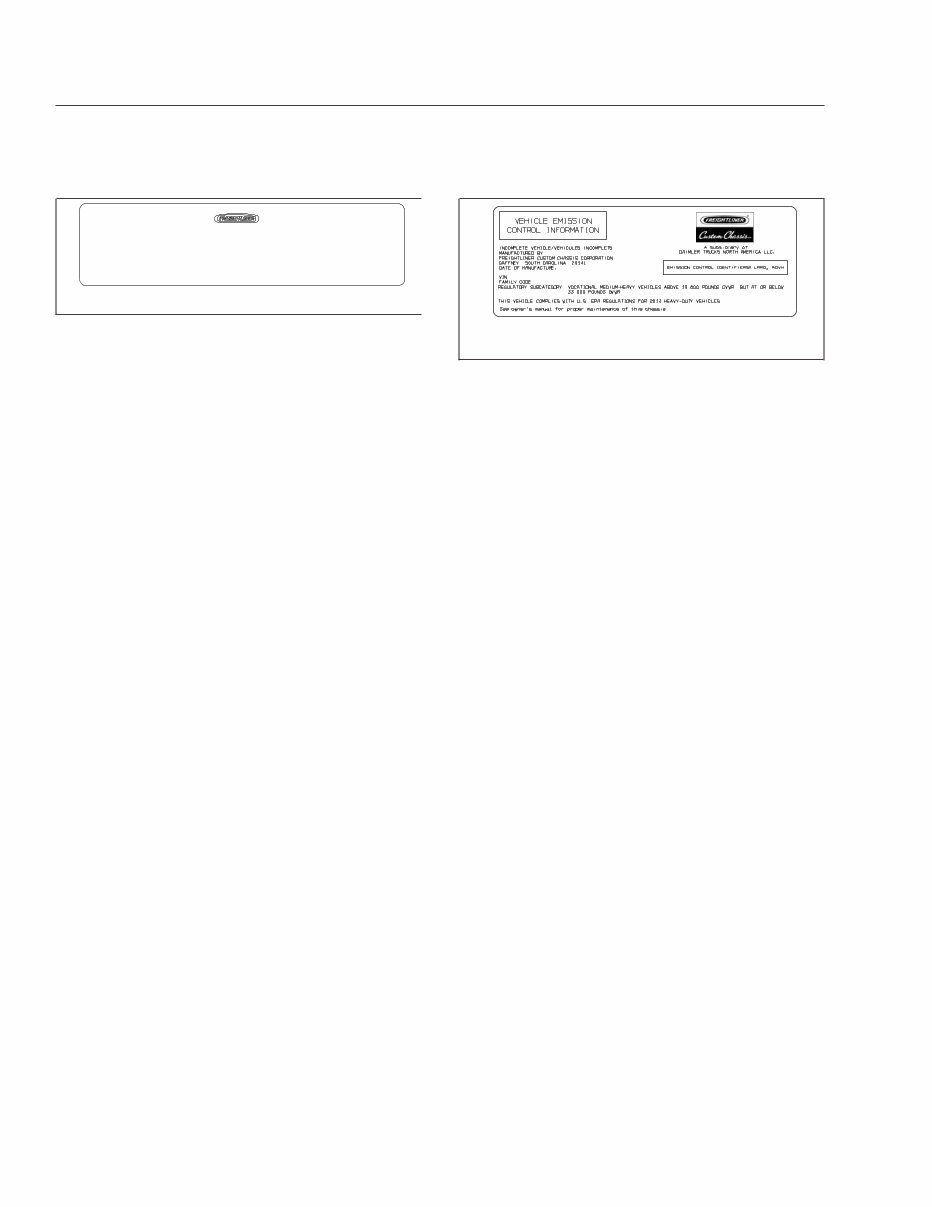
A Vehicle Emission Control Information label is lo-
cated on the fan shroud. See Fig. 1.8. It is the own-
er’s responsibility to maintain the vehicle so that it
conforms to EPA and NHTSA regulations.
10/06/98 f080026
24-00273-020
VEHICLE NOISE EMISSION CONTROL INFORMATION
FREIGHTLINER CORPORATION
THIS VEHICLE CONFORMS TO U.S. EPA REGULATIONS FOR NOISE EMISSION
APPLICABLE TO MEDIUM AND HEAVY TRUCKS.
THE FOLLOWING ACTS OR THE CAUSING THEREOF BY ANY PERSON ARE PROHIBITED BY
THE NOISE CONTROL ACT OF 1972:
A. THE REMOVAL OR RENDERING INOPERATIVE, OTHER THAN FOR PURPOSES OF
MAINTENANCE, REPAIR, OR REPLACEMENT, OF ANY NOISE CONTROL DEVICE OR
ELEMENT OF DESIGN (LISTED IN THE OWNER’S MANUAL) INCORPORATED INTO THIS
VEHICLE IN COMPLIANCE WITH THE NOISE CONTROL ACT.
B. THE USE THIS VEHICLE AFTER SUCH DEVICE OR ELEMENT OF DESIGN HAS
BEEN REMOVED OR RENDERED INOPERATIVE.
DATE OF MANUFACTURE
01/96
Fig. 1.7, Vehicle Noise Emission Control Label
03/02/2012 f080183
Fig. 1.8, Vehicle Emission Control Information Label
Vehicle Identification
1.3
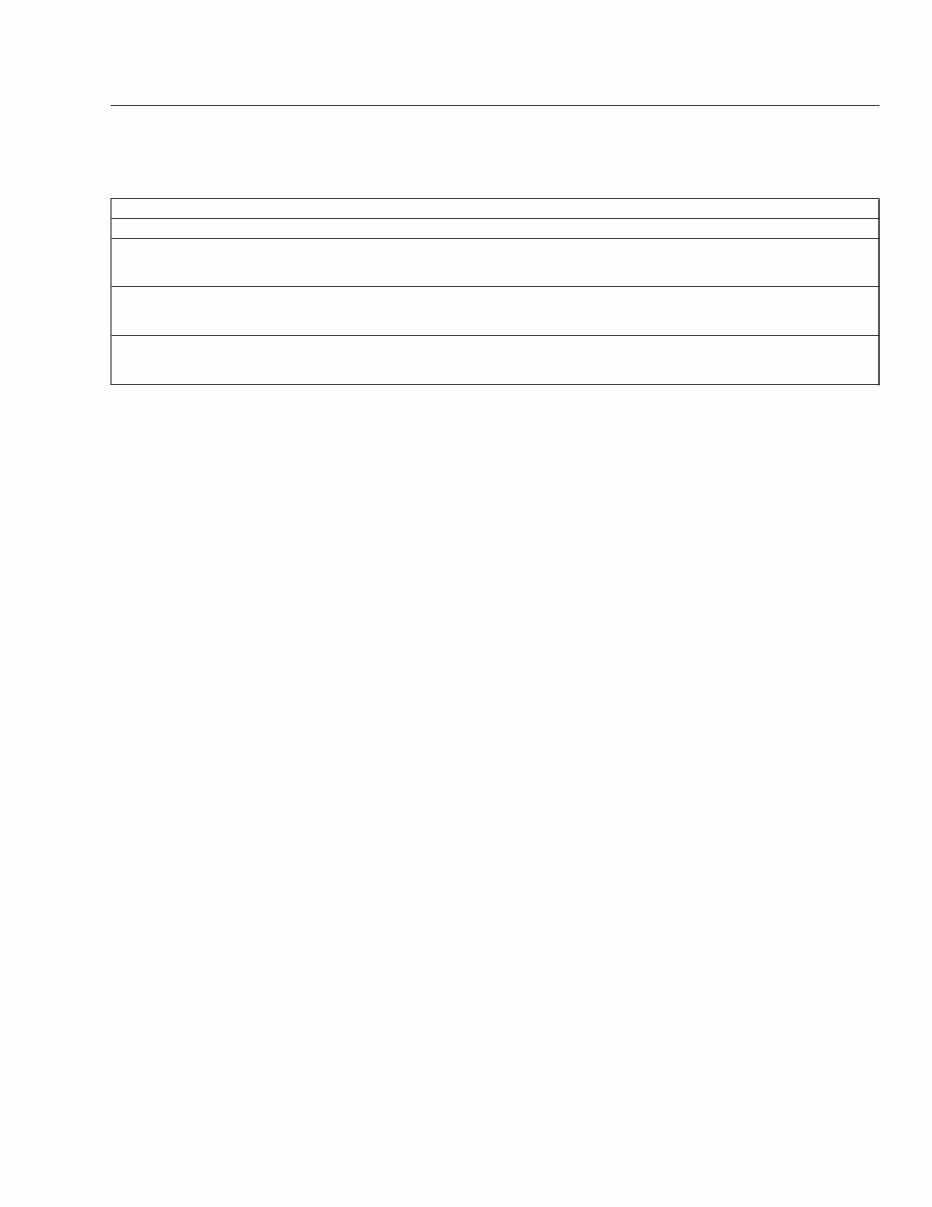
Applicable Emissions System Based on Build Date and EPA Regulations
Build Date Regulation: Emissions Components
January 1, 2007–December 31,
2009
EPA07 (reduce nitrogen oxides (NOx) emissions to 1.1 g/bhp-hr, and reduce
particulate matter emissions to 0.01 g/bhp-hr): Aftertreatment device (ATD) containing
a diesel particulate filter that traps soot and ash.
*
January 1, 2010–December 31,
2012
EPA10 (reduce NOx emissions to 0.2 g/bhp-hr): EPA07-type ATD, with additional
selective catalyst reduction (SCR) technology that utilizes diesel exhaust fluid (DEF)
to convert NOx to nitrogen and water vapor.
From March 5, 2012
GHG14: Aerodynamic and fuel efficiency components including low-rolling resistance
tires specifically designed to meet regulatory fuel efficiency and greenhouse gas
emissions standards.
* Cummins, Detroit, and Mercedes-Benz ATD’s are also equipped with a diesel oxidation catalyst to break down pollutants.
Table 1.1, Applicable Emissions System Based on Build Date and EPA Regulations
Vehicle Identification
1.4

2
Vehicle Access
Assist Rails and Access Steps ...................................................... 2.1
Entering and Exiting the Bus ........................................................ 2.1
Front Door Opening and Closing ..................................................... 2.2
Battery Access ................................................................... 2.2
Hood Opening and Closing ......................................................... 2.3
Emergency Roof Escape Hatch ...................................................... 2.4
Emergency Door .................................................................. 2.4
Emergency Window Exits .......................................................... 2.5
You're Reading a Preview
What's Included?
 Lifetime Access
Fast Download Speeds
Online & Offline Access
Access PDF Contents & Bookmarks
Full Search Facility
Print one or all pages of your manual
$31.99
Thomas SAF-T-LINER C2 School Bus Operation & Maintenance Manual
Viewed 54 Times Today

What's Included?
Lifetime Access
Fast Download Speeds
Online & Offline Access
Access PDF Contents & Bookmarks
Full Search Facility
Print one or all pages of your manual
$31.99

Secure transaction
What's Included?
Lifetime Access
Fast Download Speeds
Online & Offline Access
Access PDF Contents & Bookmarks
Full Search Facility
Print one or all pages of your manual
Description
Access the Thomas SAF-T-LINER C2 School Bus Operation & Maintenance Manual for comprehensive information on the following models:
- C2
- C2 G
- C2 HEV
This manual covers a wide range of topics including:
- General Information
- Engine
- Air Intake
- Air Compressor
- Alternators and Starters
- Engine Cooling/Radiator
- Clutch
- Transmission
- Frame and Frame Components
- Suspension
- Front Axle
- Rear Axle
- Wheels and Tires
- Driveline
- Brakes
- Steering
- Fuel
- Exhaust
- Electrical, Instruments, and Controls
- Doors
- Heater and Air Conditioner
- Hood, Grille, and Cab Fenders
- And More......
File Format: PDF
Compatibility: All Versions of Windows & Mac
Language: English
Requirements: Adobe Reader & Win
All pages are printable, allowing you to save on postage and packaging costs. Access the manual instantly without any waiting time.


