

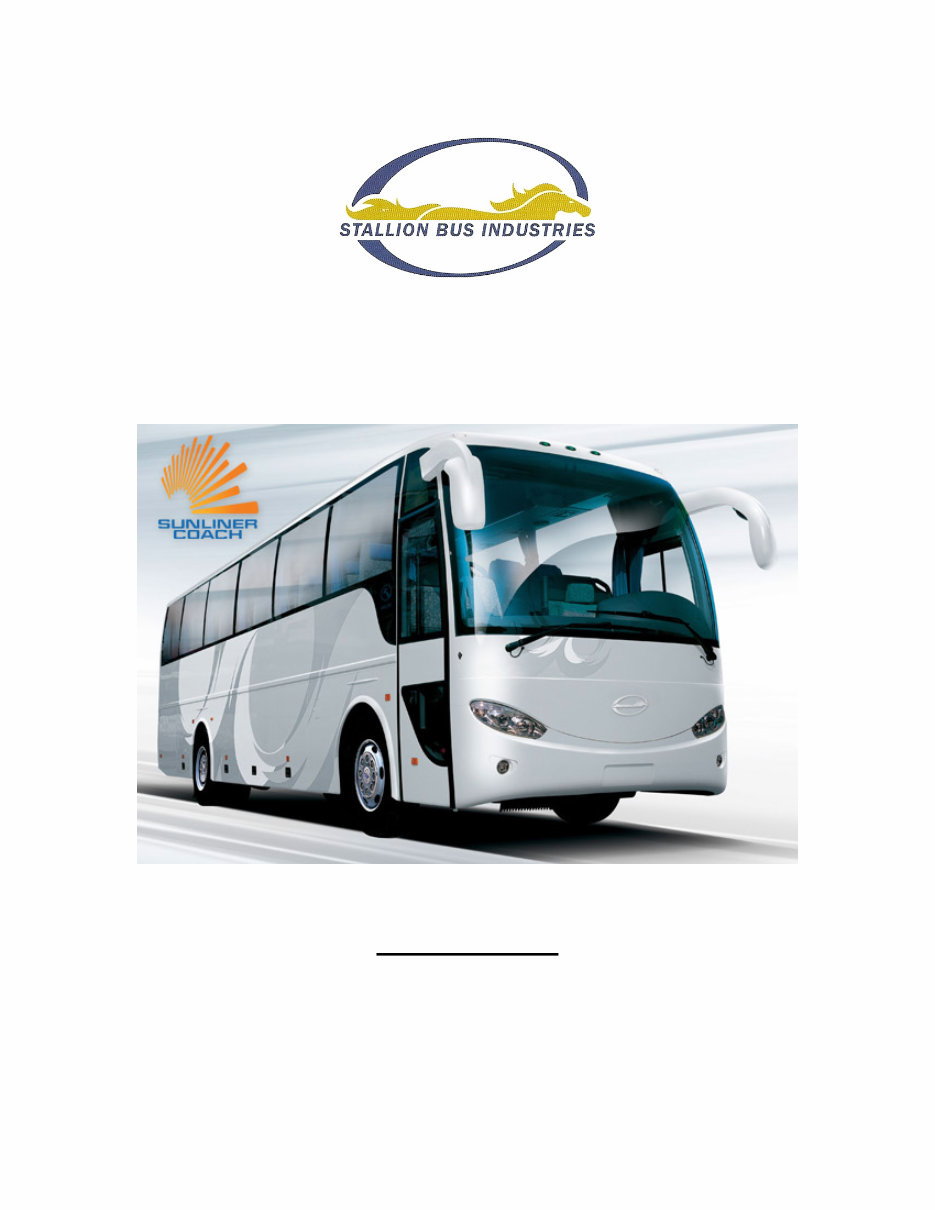
Model: SLC938
Sunliner Coach - Corona, California U.S.A.

Sunliner Coach (a Stallion Bus Industries Company) is pleased to provide you, our
customer, with the highest quality product available on the market today. We strive to
ensure that all our vehicles meet or exceed all applicable Federal, State, and Local laws
and statutes for safety and operability for varied on-the-road usage requirements.
The vehicles manufactured by Sunliner Coach are constructed with ease of operation
and economical durability in mind, for the life of the coach and its operating systems.
We take great pride in producing a cost-effective product for your use and for the safety
and comfort of your passengers.
Every component of this transportation system is vital to the safety and durability of this
vehicle and at no time should any system or part be neglected, removed, or altered in
any manner that will compromise safety or operability of the vehicle or the safety and
well-being of passengers and the operator.
It is the responsibility of the owner of this coach to maintain all systems and
components in serviceable and working condition. Always maintain and operate this
coach with parts and information provided by Sunliner Coach for many years of trouble-
free driving, and a safe and comfortable travel experience.
PLEASE READ BEFORE OPERATING THIS VEHICLE
THIS OPERATOR MANUAL MUST REMAIN WITH THE VEHICLE THROUGHOUT ITS
SERVICE LIFE, AND MUST BE TRANSFERRED TO ANY FUTURE OWNERS OR
OPERATORS AS AN IMPORTANT PART OF THIS TRANSPORTATION SYSTEM.
Stallion Bus Industries (“the manufacturer”) will, at its discretion, add to or edit this
document as needed to provide the owner with any updates required by law or with
information affecting the operation or safety of this coach. Stallion Bus Industries
reserves all rights to this document in its entirety, and any copying, duplication, or
changes to this manual are strictly prohibited, unless specific permission is granted by
the manufacturer to the licensed operator or owner of this coach. Please submit any
questions regarding this document to:
Stallion Bus Industries
1592 Jenks Dr. Corona, CA 92880
(951) 737-7777
http://www.stallionbus.com
THANK YOU FOR CHOOSING STALLION BUS PRODUCTS FOR YOUR TRANSPORTATION NEEDS.

GENERAL INFORMATION
EXTERIOR COMPONENTS
INTERIOR COMPONENTS
CONTROLS
MECHANICAL
TRANSMISSION
ELECTRICAL
ACCESSORIES / OPTIONS

1- GENERAL INFORMATION
Sunliner Coach - Corona, California U.S.A.
GENERAL INFORMATION
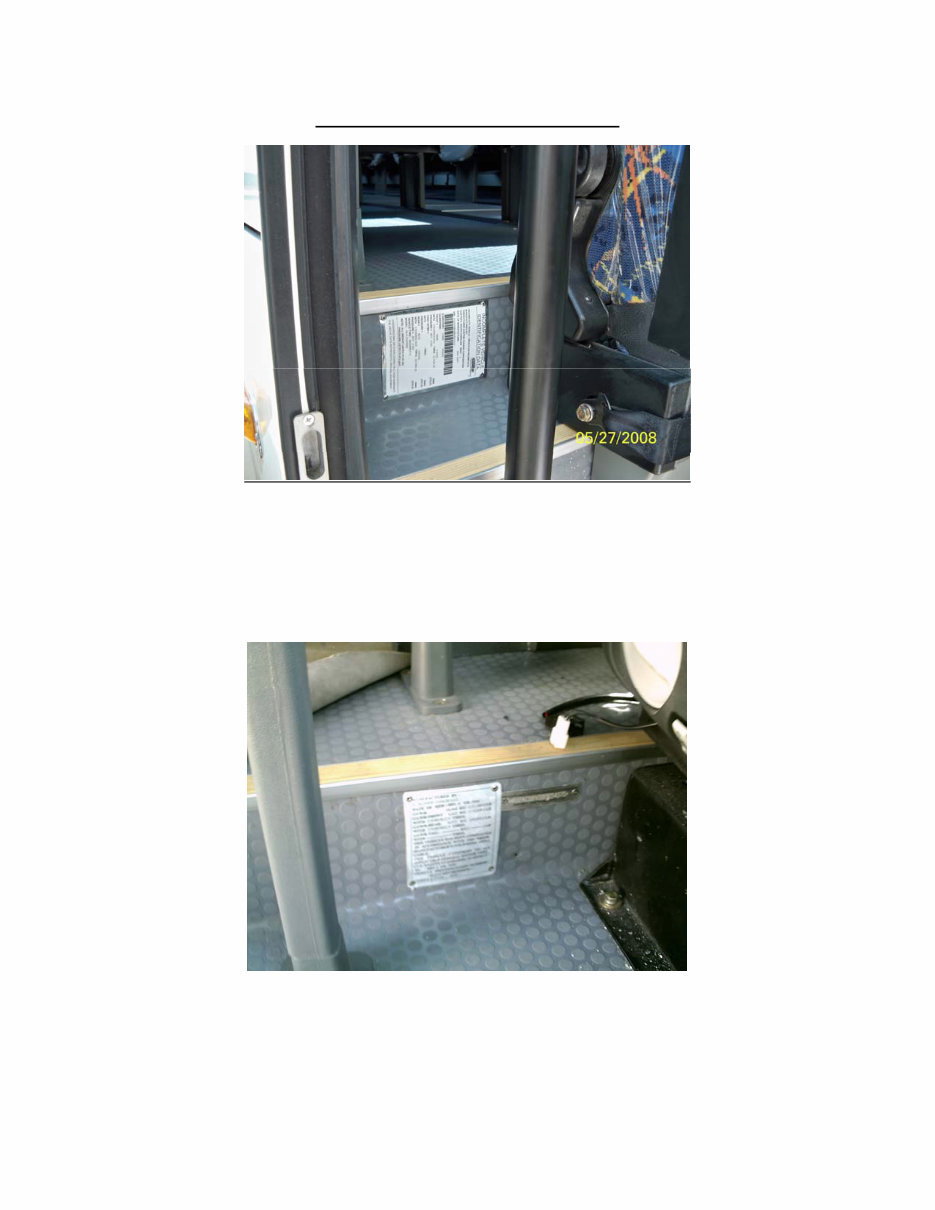
VEHICLE IDENTIFICATION NUMBER (VIN)
The Vehicle Identification Number is stamped on a plate located inside the vehicle on the upper step
adjacent to the curbside wall.
The D.O.T. Certification Plate certifies that the vehicle complies with all Federal Motor Vehicle Safety
Standards for operation of a vehicle on public roadways in effect at the time of manufacture. This plate is
located on the first step on the aisle side of the driver’s seat.
Information such as manufacturer’s name and address, date of manufacture, gross vehicle weight, tire
type and pressures, and are also on this plate. Refer to the VIN whenever requesting service parts, recall
information.

GENERAL INFORMATION
The ultimate responsibility for the safe operation of a motor vehicle is the duty of the operator. In
the case of motor coach transport, many individual lives may be endangered if certain common-
sense items are ignored or dismissed. Due to the nature of tort law and damages compensation
law, it is of the utmost importance that you, the operator, take it upon yourself to insure that your
vehicle and all of its systems are in operable condition and have been maintained to all pertinent
specifications of the manufacturer and state and federal regulations.
Before operating the vehicle, be sure to check the following:
• Tires – visually inspect for damage, low pressure, or uneven wear. If applicable per your
operating agency, check the tire pressures and adjust as required.
• Inspect underside of coach for any fluid leaks or damage. Check undercarriage for
obstructions and debris.
• Make sure that windshield, exterior mirrors, headlights, and windows are clean.
• Check all lights (interior, exterior, and instruments) for function
• Adjust exterior and interior mirrors for best view from the driver’s position
• Walk down the aisle and check for loose items on the seats, stanchions, and overhead
storage areas. Secure any loose items before travel.
• Check all emergency exits and windows
• Inspect for presence and contents of First Aid Kit.
• Visually check the fire extinguisher for service pressure and inspection date.
• Test the entertainment system and public address system for function.
• Check function of lavatory (if so equipped)
After starting the vehicle, check the following:
• Check for any service lamps or warning lights
• Listen for any unusual sounds or engine noise
• Adjust seat for best driving position and comfort
• Check function of brakes and brake system air pressure
• Test air conditioning and heating

PRE-TRIP INSPECTION CHECKLIST
DATE ________________ VEHICLE ____________________
MILEAGE: START: _________________ END: ____________________
DAILY TOTAL: _________________
INSPECT AND CHECK BELOW: NOTE DEFECTS BELOW:
MECHANICAL
1. ENGINE OIL ______________________ __________________________
2. COOLANT LEVEL _________________ __________________________
3. WASHER FLUID LEVEL ____________ __________________________
4. HYDRAULIC OIL __________________ __________________________
5. BELTS, HOSES ___________________ __________________________
6. ENGINE GENERAL ________________ __________________________
7. BRAKES _________________________ __________________________
8. STEERING _______________________ __________________________
9. TRANSMISSION ___________________ __________________________
EXTERIOR
1. TIRES __________________________ __________________________
2. MIRRORS _______________________ __________________________
3. HEADLIGHTS ____________________ __________________________
4. TAIL LIGHTS _____________________ __________________________
5. BODY DAMAGE ___________________ __________________________
6. WINDSHIELD WIPERS _____________ __________________________
7. DOORS & WINDOWS _______________ __________________________
SAFETY EQUIPMENT
1. FIRE EXTINGUISHER ______________ __________________________
2. FLARES _________________________ __________________________
3. FIRST AID KIT ____________________ __________________________
4. RADIO __________________________ __________________________
5. WHEELCHAIR LIFT ________________ __________________________
6. EMERGENCY EXITS _______________ __________________________
MAINTENANCE ITEMS: _____________________________________________________
FUEL ADDED: _______________ GAL. OIL ADDED: _______________ QT.
MILEAGE AT FUELING: ________________ OTHER MAINT.: __________________
------------------------------------------------------------ ------------------------------------------------------
DRIVER SIGNATURE MECHANIC SIGNATURE

EMERGENCY PROCEDURES
In the event of accident, if the vehicle can be moved over to the shoulder of the road or at
least out of traffic flow, DO SO IMMEDIATELY.
IF SAFE TO DO SO, request that all passengers exit the vehicle and stand away from the
vehicle until it is secured.
• Make sure that all passengers exit the vehicle in an orderly and safe manner.
• Check for injuries among the passengers
• If there are any special needs passengers (non-ambulatory, wheelchair-bound), seek help
from fellow passengers to remove them from the vehicle.
• Triage any injuries – anyone bleeding or unconscious must be attended to first.
• Radio or call for medical personnel immediately if there are any injured passengers.
• Administer first aid until professional medical help arrives.
In the event of fire, get the vehicle out of traffic IMMEDIATELY.
• Park in an open area away from underpasses or bridges if possible.
• Shut down the vehicle.
• Open the doors and make sure that all passengers exit the vehicle in an orderly and safe
manner. Direct all passengers away from the vehicle and a safe distance from the roadway.
• Call for assistance from firefighters and emergency personnel.
• DO NOT ATTEMPT TO PUT OUT AN ENGINE FIRE WITH THE PORTABLE FIRE
EXTINGUISHER. This unit is for small, localized fires only.
• If possible, turn off the electrical disconnect switch in the engine compartment. DO NOT
ATTEMPT TO OPEN THE REAR ENGINE DOOR IF THE VEHICLE IS ENGULFED IN
FLAMES.
If the vehicle has rolled over or has gone off the road, direct passengers to the doors,
emergency exit windows, or roof hatches. Assist all passengers with egress, then call for help.
As in the previous sections, triage any injuries and administer first aid until emergency
personnel arrive.

MAINTEMANCE MANUAL :
Refer to Freightliner’s Shuttle Bus Chassis Operator’s and Maintenance Manual
furnished with your Sunliner Coach. The follow maintenance operations must be
included ;
Fastener Torque Checking: Bus Body to Chassis Anchorage fasteners must be torqued
at the recommended intervals. Maintenance interval for this operation is M2.
Same procedure as 31-01 frame fastener torque checking is to follow, always be sure to
check bus frame to chassis rail anchorage at front and back of pass-through luggage
compartment.
Torque Specifications: Table 5 for ASME Thread Fasteners with dry plain threads.
Flanged Grade 8 Bolt , Grade G nut 5/8-11 : 190 lbf-ft ( 258 N-m)
Torque Specifications: Table 6 for Metric Thread Fasteners with plated threads.
Class 10.9 Bolt , Class 10 Nut M 16-2.0 : 148 lbf-ft (201 N-m)
Drive Belt Inspecting: Air Conditioner Compressor and Alternator drive belts must be
check at the recommended intervals. Maintenance interval for this operation is M1.

COACH CARE & MAINTENANCE
CLEANING
The cleaning information provided in this section is
regarded as recommended cleaning practices.
Cleaning results will vary depending on the age
and condition of the material to be cleaned and the
condition of the stain. Always clean stains promptly
to prevent setting or etching into the material.
NOTE: Never use stain protection products on new
fabrics. To prevent permanent staining of fabrics,
clean stains as soon as possible. Incorrect
treatment of stains can lead to permanent
discoloration or worse staining. Refer to a cleaning
specialist for removal of stubborn stains.
Caution: Custom fabrics and materials may
require different cleaning and maintenance
practices. Consult your dealer for specialized
cleaning requirements.
SEAT UPHOLSTERY
Firmly beat the fabric with a wood paddle or similar
blunt object to loosen superficial dust and dirt.
Vacuum the seat fabric in the direction of the
stitching using an upholstery nozzle.
Note: The abrasive nature of dirt and dust will
reduce fabric life. Always vacuum upholstery
regularly.
Removal of Stains and Marks
Use one of the two methods described below to
remove stains from wool plush fabrics:
Method One:
1. Apply a non-flammable solvent, such as dry-
cleaning solvent (Perchloroethylene) to the
stained area with a clean white rag.
2. Wipe the stain, starting at the outer edges and
working inward, frequently turning the cloth.
3. Blot the stained area frequently with a dry white
cloth to prevent stain rings from excess solvent.
Warning: Use solvents in a well-ventilated area,
away from ignition sources and open flame. Keep
all windows and doors of the vehicle being cleaned
open – use appropriate breathing apparatus or
fume masks.
Method Two:
1. Wet the stain with a solution of household
detergent and lukewarm water. Do not flood or
over-soak the stain.
2. Wipe the stain with a damp cloth, rinsing
the cloth after each application.
Caution: Do not use soap, soap powder,
ammonia, bleach, or any cleaning products
containing these ingredients.
Beverage Stains
Remove beverage stains as per method one. If the
stain persists, repeat method one using methylated
spirits (95% ethanol) in place of solvent.
Alcoholic Beverage Stains
Remove these stains by wetting the stain with
water, then cleaning per method two.
Burns
Scrape the burned area using a knife or razor
blade, the cleaning per method two. Consult an
upholstery specialist if the burned area is
extensive.
Cosmetics
Remove stains left by cosmetics by using method
one followed by method two.
Ink Stains
Remove ink stains by following method two. If stain
persists, apply a warm oxalic acid solution. Rinse
thoroughly with lukewarm water.
Blood, Urine, or Vomit
Remove by sponging or wiping away excess solid
matter first. Then clean per method two.
Copying Ink / Ball-Point Pen Ink
Treat with methylated spirits, blotting frequently to
prevent stain spread, followed by method two.
Felt-Tip Pen Ink / Permanent Marker Ink
Wipe thoroughly with a clean cloth soaked in MEK,
followed by method two.
Oil, Grease, and Paint
Remove excess using a knife. Treat per method
one followed by method two. Repeat if stain
persists.
You're Reading a Preview
What's Included?
 Lifetime Access
Fast Download Speeds
Online & Offline Access
Access PDF Contents & Bookmarks
Full Search Facility
Print one or all pages of your manual
$81.99
Sunliner Coach Stallion Bus SLC938 Service Manual we have 3000+ manuals not all are listed here on
Viewed 41 Times Today

What's Included?
Lifetime Access
Fast Download Speeds
Online & Offline Access
Access PDF Contents & Bookmarks
Full Search Facility
Print one or all pages of your manual
$81.99

Secure transaction
What's Included?
Lifetime Access
Fast Download Speeds
Online & Offline Access
Access PDF Contents & Bookmarks
Full Search Facility
Print one or all pages of your manual
Description
The Sunliner Coach Stallion Bus SLC938 Service Workshop Shop Repair Manual provides comprehensive information for the maintenance and repair of the vehicle. It covers a wide range of topics including:
- General information about the vehicle
- Exterior components
- Interior components
- Controls
- Mechanical systems
- Transmission
- Electrical systems
- Accessories and options
This manual is valuable for both professional mechanics and DIY enthusiasts, offering detailed insights into the various aspects of the Sunliner Coach Stallion Bus SLC938.


