


CESSNA 172 Training Manual2011
What's Included?
 Lifetime Access
Fast Download Speeds
Online & Offline Access
Access PDF Contents & Bookmarks
Full Search Facility
Print one or all pages of your manual

CESSNA 172 TRAINING MANUAL
CESSNA 172 CESSNA 172 CESSNA 172 CESSNA 172
TRAINING MANUAL TRAINING MANUAL TRAINING MANUAL TRAINING MANUAL
by
Oleg Roud
and
Danielle Bruckert
Published by Red Sky Ventures, Memel CATS
Copyright © 2006
by D. Bruckert & O. Roud © 2006 Page 1

CESSNA 172 TRAINING MANUAL
Contact the Authors:
We appreciate your feedback.
D Bruckert O Roud
redskyventures@gmail.com roudoleg@yahoo.com
PO Box 11288 Windhoek, Namibia PO Box 30421 Windhoek, Namibia
Red Sky Ventures Memel CATS
CreateSpace Paperback: ISBN-13: 978-1463675448; ISBN-10: 1463675445
Lulu Paperback: ISBN 978-0-557-01472-9
First Published RSV/Memel CATS © 2006
3
rd
Edition RSV/Memel CATS © 2011
More information about these books and online orders available at:
http://www.redskyventures.org
Other aircraft presently available in the Cessna Training Manual series are:
Cessna 152, Cessna 172, Cessna 182, Cessna 206.
COPYRIGHT & DISCLAIMER
All rights reserved. No part of this manual may be reproduced for commercial use in
any form or by any means without the prior written permission of the authors.
This Training Manual is intended to supplement information you receive from your
flight instructor during your type conversion training. It should be used for training
and reference use only, and is not part of the Civil Aviation Authority or FAA
approved Aircraft Operating Manual or Pilot's Operating Handbook. While every
effort has been made to ensure completeness and accuracy, should any conflict
arise between this training manual and other operating handbooks, the approved
aircraft flight manuals or pilot's operating handbook should be used as final
reference. Information in this document is subject to change without notice and
does not represent a commitment on the part of the authors, nor is it a complete
and accurate specification of this product. The authors cannot accept responsibility
of any kind from the use of this material.
ACKNOWLEDGEMENTS:
Peter Hartmann, Aviation Center, Windhoek: Supply of technical information,
maintenance manuals and CD's for authors research
Brenda Whittaker, Auckland New Zealand: Editor, Non Technical
by D. Bruckert & O. Roud © 2006 Page 2

CESSNA 172 TRAINING MANUAL
Table of Contents
Introduction....................................................................................................................................................5
History.......................................................................................................................................................5
Development of the C172.........................................................................................................................5
Terminology ................................................................................................................................................7
Useful Factors and Formulas.......................................................................................................................10
Conversion Factors..................................................................................................................................10
Formulas..................................................................................................................................................11
Pilot's Operating Handbook Information.....................................................................................................11
AIRCRAFT TECHNICAL INFORMATION..............................................................................................13
Models and Differences ..........................................................................................................................14
Type Variants..........................................................................................................................................20
Airframe.......................................................................................................................................................23
Doors ......................................................................................................................................................24
Flight Controls.............................................................................................................................................26
Elevator...................................................................................................................................................26
Rudder.....................................................................................................................................................27
Ailerons...................................................................................................................................................27
Trim System............................................................................................................................................29
Flaps........................................................................................................................................................31
Landing Gear................................................................................................................................................34
Shock Absorption....................................................................................................................................35
Hydraulic System-Retractable Landing Gear (C172RG Only)..............................................................35
Brakes......................................................................................................................................................38
Towing....................................................................................................................................................40
Engine and Propeller....................................................................................................................................41
Engine Controls.......................................................................................................................................43
Fuel Injection System (R172/FR172, C172R, C172S)...........................................................................45
Constant Speed Propellers (C172RG and R172/FR172)........................................................................46
Engine Gauges.........................................................................................................................................48
Induction System and Carb. Heat............................................................................................................50
Oil System...............................................................................................................................................52
Ignition System........................................................................................................................................54
Cooling System.......................................................................................................................................55
Fuel System..................................................................................................................................................57
Fuel Measuring and Indication................................................................................................................59
Priming System ......................................................................................................................................59
Auxiliary Pump (Fuel-injected Models FR172, R172, C172R, C172S only).........................................60
Fuel Venting............................................................................................................................................60
Fuel Drains..............................................................................................................................................60
Standard Fuel System Schematic ...........................................................................................................62
Fuel System Schematic C172RG............................................................................................................63
Fuel System Schematic Fuel Injected Models ........................................................................................64
Electrical System..........................................................................................................................................65
Battery.....................................................................................................................................................65
Electrical Power Supply..........................................................................................................................67
Electrical Equipment...............................................................................................................................67
System Protection and Distribution.........................................................................................................67
Electrical System Schematic Conventional Aircraft...............................................................................71
by D. Bruckert & O. Roud © 2006 Page 3

CESSNA 172 TRAINING MANUAL
G1000 Electrical Distribution Schematic................................................................................................72
Flight Instruments and Associated Systems ................................................................................................73
Ancillary Systems and Equipment..........................................................................................................77
Avionics Systems ...................................................................................................................................79
FLIGHT OPERATIONS..............................................................................................................................81
PRE-FLIGHT CHECK ...............................................................................................................................81
Cabin.......................................................................................................................................................82
Exterior Inspection..................................................................................................................................83
Passenger Brief........................................................................................................................................88
NORMAL OPERATIONS...........................................................................................................................89
Starting and Warm-up.............................................................................................................................89
After Start................................................................................................................................................92
Takeoff....................................................................................................................................................95
Climb.....................................................................................................................................................100
Cruise....................................................................................................................................................100
Mixture Setting......................................................................................................................................101
Descent, Approach and Landing ..........................................................................................................103
Balked Landing ....................................................................................................................................107
After Landing Checks............................................................................................................................107
Taxi and Shutdown................................................................................................................................107
Circuit Pattern.......................................................................................................................................108
Note on Checks and Checklists.............................................................................................................112
ABNORMAL AND EMERGENCY PROCEDURES..............................................................................114
Stalling and Spinning............................................................................................................................114
Emergency During Takeoff ..................................................................................................................114
Gliding and Forced Landing..................................................................................................................115
Engine Fire............................................................................................................................................117
Electrical Fire........................................................................................................................................118
Rough Running Engine.........................................................................................................................118
Magneto Faults......................................................................................................................................118
Spark Plug Faults..................................................................................................................................118
Engine Driven Fuel Pump Failure (Fuel Injected Models)...................................................................119
Excessive Fuel Vapour (Fuel Injection Models)...................................................................................119
Abnormal Oil Pressure or Temperature................................................................................................120
Landing Gear Emergencies (RG model)...............................................................................................120
PERFORMANCE .....................................................................................................................................122
Specifications and Limitations..............................................................................................................122
Ground Planning ..................................................................................................................................123
REVIEW QUESTIONS.............................................................................................................................135
NAVIGATION AND PERFORMANCE WORKSHEETS.....................................................................140
by D. Bruckert & O. Roud © 2006 Page 4

CESSNA 172 TRAINING MANUAL
Introduction
This training manual provides a technical and operational description for most
models of the Cessna 172 series aeroplane, from the C172 and C172A to the
C172SP, and includes systems descriptions for the C172RG.
The information is intended for ground reference and as an instructional aid to
assist with practical training for type transition or ab-initio training, provided by an
approved training organisation.
The book is laid out according to a typical training syllabus progression for ease of
use.
This material does not supersede, nor is it meant to substitute any of the
manufacturer’s operation manuals. The material presented has been prepared from
the information provided in the pilots operating handbook for the model series,
Cessna maintenance manuals and from operational experience.
History
The Cessna aircraft company has a long and rich history. Founder Clyde Cessna
built his first aeroplane in 1911, and taught himself to fly it! He went on to build a
number of innovative aeroplanes, including several race and award winning designs.
In 1934, Clyde's nephew, Dwane Wallace, fresh out of college, took over as head of
the company. During the depression years Dwane acted as everything from floor
sweeper to CEO, even personally flying company planes in air races (several of
which he won!).
Under Wallace's leadership, the Cessna Aircraft Company eventually became the
most successful general aviation company of all time.
Cessna first began production of two-seat light planes in 1946 with the model 120
which had an all aluminium fuselage and fabric covered wings. This was followed by
a nearly identical model the 140, with aluminium clad wings. More than 7,000
model 120-140's were sold over four years when Cessna stopped production in
order to focus on four-seat aircraft.
Development of the C172
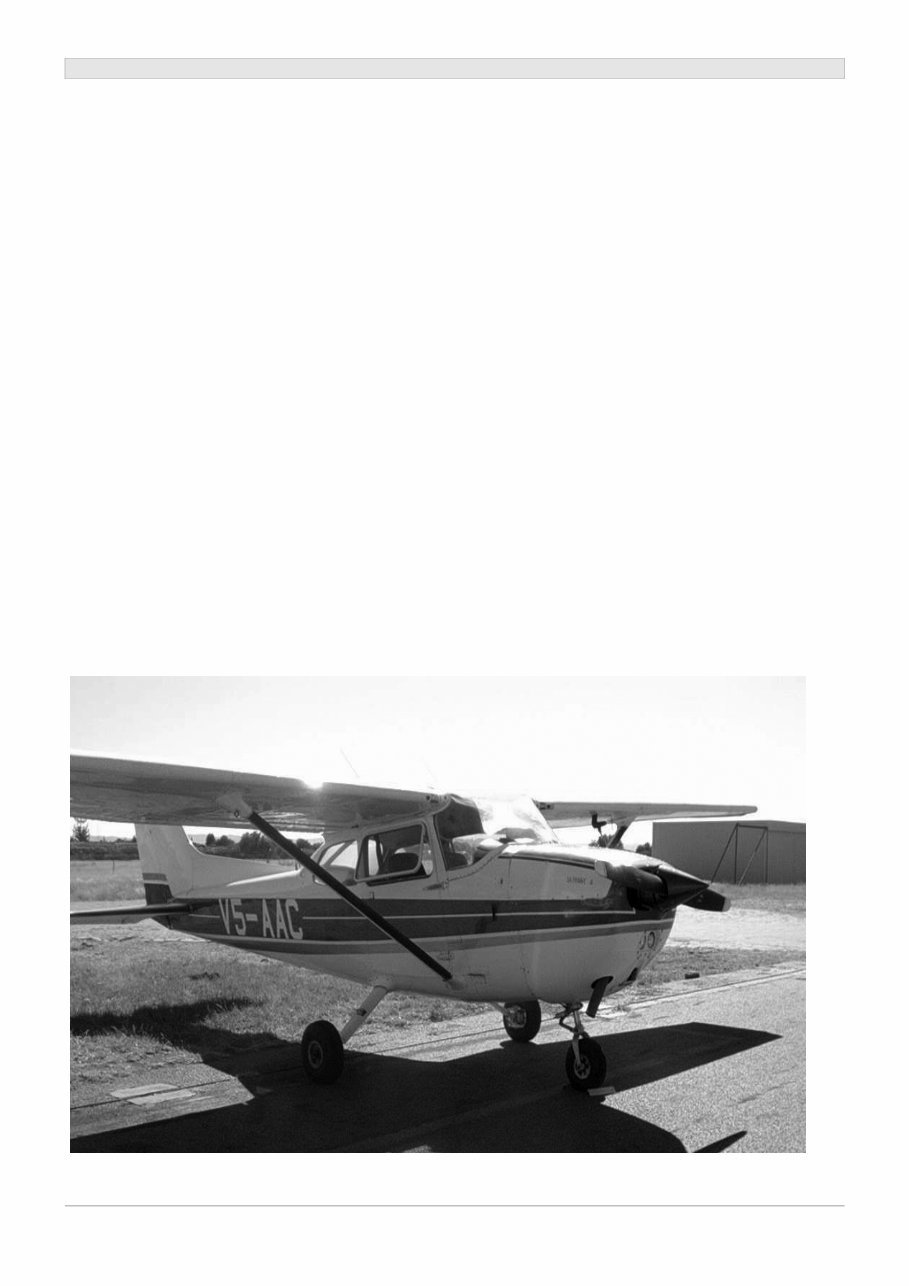
The Cessna 172 is probably the most popular flight training aircraft in the world.
The aircraft made her first flight in November 1955, the first production models
were delivered in 1957, and became an overnight sales success and over 1400
aircraft were built in its first full year of production. It is still in production in 2005,
more than 35 000 have been build.
The Cessna 172 started as a relatively simple tricycle undercarriage development of
the taildragger Cessna 170B. The airframe was basically a 170B, including the
“fastback” fuselage and effective 40º Fowler flaps. The gross weight was identical
by D. Bruckert & O. Roud © 2006 Page 5
CESSNA 172 TRAINING MANUAL
although the useful load went down 45 pounds. Later versions incorporated revised
landing gear, a lowered rear deck, and an aft window. Cessna advertised this added
rear visibility as “Omnivision”. The final structural development, in the mid-1960s,
was the sweptback tail still used today. The airframe has remained almost
unchanged since then, with updates mainly affecting avionics and engine fittings,
including the most recent the Garmin 1000 glass cockpit option. Production ended
in the mid-1980s, but was resumed in 1996 and continues at the time of writing.
The Cessna 172 evolved slowly over the years. The basic Cessna 172 remained in
production until replaced by the 172A of early 1960. The latest model of Cessna
172 introduced a new swept back tail and rudder, a shorter undercarriage and
changes of equipment. In 1961 the name "Sky Hawk" was introduced. The Cessna
172H was the last Continental powered 172. Electric flaps were introduced in 1964
with the 172E, and the 150hp Lycoming 0-320-E2D replaced the 145 hp Continental
0-300D in 1968.
In 1966 Cessna began assembly of US airframes at Reims Aviation in France. The
Cessna F172 was built by Reims Cessna through to 1971. Cessna also produced a
retractable version and most models are available as a seaplane version with
floats.
The Cessna 172 is part of a large family of high-wing, tricycle undercarriage, single
engine Cessna planes, ranging from the two-seater 150 and 152 to more advance
182 Skylane, the six-seat 206 and the turboprop Cessna 208 Caravan.
by D. Bruckert & O. Roud © 2006 Page 6

CESSNA 172 TRAINING MANUAL
Terminology
Airspeed
KIAS Knots Indicated
Airspeed
Speed in knots as indicated on the airspeed
indicator.
KCAS Knots Calibrated
Airspeed
KIAS corrected for instrument error. Note this error
is often negligible and CAS may be omitted from
calculations.
KTAS Knots True
Airspeed
KCAS corrected for density (altitude and
temperature) error.
Va Max
Manoeuvering
Speed
The maximum speed for full or abrupt control inputs.
Vfe Maximum Flap
Extended Speed
The highest speed permitted with flap extended.
Indicated by the top of the white arc.
Vno Maximum
Structural
Cruising Speed
Sometimes referred to as “normal operating range”.
Should not be exceeded except in smooth conditions
and only with caution. Indicated by the green arc.
Vne Never Exceed
speed
Maximum speed permitted, exceeding will cause
structural damage. Indicated by the upper red line.
Vs Stall Speed The minimum speed before loss of control in the
normal cruise configuration. Indicated by the bottom
of the green arc. Sometimes referred to as minimum
‘steady flight’ speed.
Vso Stall Speed
Landing
Configuration
The minimum speed before loss of control in the
landing configuration, at the most forward C of G*.
Indicated by the bottom of the white arc.
*forward centre of gravity gives a higher stall speed and so is used for certification
Vx Best Angle of
Climb Speed
The speed which results in the maximum gain in
altitude for a given horizontal distance.
Vy Best Rate of
Climb Speed
The speed which results in the maximum gain in
altitude for a given time, indicated by the maximum
rate of climb for the conditions on the VSI.
Vref Reference Speed The minimum safe approach speed, calculated as 1.3
x Vso.
Vbug Nominated
Speed
The speed nominated as indicated by the speed bug,
for approach this is Vref plus a safety margin for
conditions.
Vr Rotation Speed The speed which rotation should be initiated.
by D. Bruckert & O. Roud © 2006 Page 7

CESSNA 172 TRAINING MANUAL
Vat Barrier Speed The speed to maintain at the 50ft barrier or on
reaching 50ft above the runway.
Maximum
Demonstrated
Crosswind
The maximum demonstrated crosswind during
testing.
Meteorological Terms
OAT Outside Air
Temperature
Free outside air temperature, or indicated outside air
temperature corrected for gauge, position and ram air
errors.
IOAT Indicated
Outside Air
Temperature
Temperature indicated on the temperature gauge.
ISA International
Standard
Atmosphere
The ICAO international atmosphere, as defined in
document 7488. Approximate conditions are a sea level
temperature of 15 degrees with a lapse rate of 1.98
degrees per 1000ft, and a sea level pressure of
1013mb with a lapse rate of 1mb per 30ft.
Standard
Temperature
The temperature in the International Standard
atmosphere for the associated level, and is 15 degrees
Celsius at sea level decreased by two degrees every
1000ft.
Pressure
Altitude
The altitude in the International Standard Atmosphere
with a sea level pressure of 1013 and a standard
reduction of 1mb per 30ft. Pressure Altitude would be
observed with the altimeter subscale set to 1013.
Density
Altitude
The altitude that the prevailing density would occur in
the International Standard Atmosphere, and can be
found by correcting Pressure Altitude for temperature
deviations.
Engine Terms
BHP Brake Horse
Power
The power developed by the engine (actual power
available will have some transmission losses).
RPM Revolutions
per Minute
Engine drive and propeller speed.
Static RPM The maximum RPM obtained during stationery full
throttle operation
Weight and Balance Terms
Moment Arm The horizontal distance in inches from reference datum
line to the centre of gravity of the item concerned, or
from the datum to the item 'station'.
by D. Bruckert & O. Roud © 2006 Page 8

CESSNA 172 TRAINING MANUAL
C of G Centre of
Gravity
The point about which an aeroplane would balance if it
were possible to suspend it at that point. It is the mass
centre of the aeroplane, or the theoretical point at
which entire weight of the aeroplane is assumed to be
concentrated. It may be expressed in percent of MAC
(mean aerodynamic chord) or in inches from the
reference datum.
Centre of
Gravity Limit
The specified forward and aft points beyond which the
CG must not be located. Typically, the forward limit
primarily effects the controllability of aircraft and aft
limits stability of the aircraft.
Datum
(reference
datum)
An imaginary vertical plane or line from which all
measurements of arm are taken. The datum is
established by the manufacturer.
Moment The product of the weight of an item multiplied by its
arm and expressed in inch-pounds. The total moment
is the weight of the aeroplane multiplied by distance
between the datum and the CG.
MZFW Maximum Zero
Fuel Weight
The maximum permissible weight to prevent exceeding
the wing bending limits. This limit is not always
applicable for aircraft with small fuel loads.
BEW Basic Empty
Weight
The weight of an empty aeroplane, including
permanently installed equipment, fixed ballast, full oil
and unusable fuel, and is that specified on the aircraft
mass and balance documentation for each individual
aircraft.
SEW Standard
Empty Weight
The basic empty weight of a standard aeroplane,
specified in the POH, and is an average weight given
for performance considerations and calculations.
OEW Operating
Empty Weight
The weight of the aircraft with crew, unusable fuel, and
operational items (galley etc.).
Payload The weight the aircraft can carry with the pilot and fuel
on board.
MRW Maximum
Ramp Weight
The maximum weight for ramp manoeuvring, the
maximum takeoff weight plus additional fuel for start
taxi and runup.
MTOW Maximum
Takeoff Weight
The maximum permissible takeoff weight and
sometimes called the maximum all up weight, landing
weight is normally lower as allows for burn off and
carries shock loads on touchdown.
MLW Maximum
Landing
Weight
Maximum permissible weight for landing. Sometimes
this is the same as the takeoff weight for smaller
aircraft.
by D. Bruckert & O. Roud © 2006 Page 9

CESSNA 172 TRAINING MANUAL
Note: The correct technical is 'mass' instead of 'weight' in all of these terms, however in everyday
language and in many aircraft operating manuals the term weight remains in common use. Used in
this context there is no difference in meaning and the terms may be interchanged.
Other
AFM Aircraft Flight
Manual
These terms are inter-changeable and refer to the
approved manufacturer's handbook. General Aviation
manufacturers from 1976 began using the term 'Pilot's
Operating Handbook', early manuals were called
Owner's Manual and most legal texts use the term
AFM.
POH Pilot's
Operating
Handbook
PIM Pilot
Information
Manual
A Pilot Information Manual is a new term, coined to
refer to a POH or AFM which is not issued to a specific
aircraft.
Useful Factors and Formulas
Conversion Factors
Lbs to kg
1kg =2.204lbs kgs to lbs 1lb = .454kgs
USG to Lt
1USG = 3.785Lt lt to USG 1lt = 0.264USG
Lt to Imp Gal
1lt = 0.22 Imp G Imp.Gal to lt 1Imp G = 4.55lt
NM to KM
1nm = 1.852km km to nm 1km = 0.54nm
NM to StM to ft
1nm = 1.15stm
1nm = 6080ft
Stm to nm to ft 1 stm = 0.87nm
5280ft
FT to Meters
1 FT = 0.3048 m meters to ft 1 m = 3.281 FT
Inches to Cm
1 inch = 2.54cm cm to inches 1cm = 0.394”
Hpa(mb) to “Hg
1mb = .029536” “ Hg to Hpa (mb) 1” = 33.8mb
AVGAS FUEL Volume / Weight SG = 0.72
Litres Lt/kg kgs Litres lbs/lts Lbs
1.39 1 0.72 0.631 1 1.58
Crosswind Component per 10kts of Wind
Deg 10 20 30 40 50 60 70 80
Kts 2 3 5 6 8 9 9 10
by D. Bruckert & O. Roud © 2006 Page 10
You're Reading a Preview
What's Included?
Lifetime Access
Fast Download Speeds
Online & Offline Access
Access PDF Contents & Bookmarks
Full Search Facility
Print one or all pages of your manual
$39.99
Viewed 31 Times Today


Secure transaction
What's Included?
Lifetime Access
Fast Download Speeds
Online & Offline Access
Access PDF Contents & Bookmarks
Full Search Facility
Print one or all pages of your manual
$39.99
The Cessna 172 Factory Training Manual 2011 is a comprehensive guide for car repair, suitable for professional mechanics and DIY enthusiasts alike. This manual is available in PDF format, making it compatible with all versions of Windows, Mac, and Linux operating systems. It is also printable, allowing for easy reference in the workshop. With instant high-speed access, this manual provides detailed information on maintenance, repair, and troubleshooting for the Cessna 172 model. The only requirement to access this valuable resource is Adobe Reader.


