This quick reference guide will assist you in locating a desired topic or pro- cedure. •Bend the pages back to match the black tab of the desired chapter num- ber with the black tab on the edge at each table of contents page. •Refer to the sectional table of contents for the exact pages to locate the spe- cific topic required. Quick Reference Guide General Information 1 Periodic Maintenance 2 Fuel System (DFI) 3 Cooling System 4 Engine Top End 5 Clutch 6 Engine Lubrication System 7 Engine Removal/Installation 8 Crankshaft/Transmission 9 Wheels/Tires 10 Final Drive 11 Brakes 12 Suspension 13 Steering 14 Frame 15 Electrical System 16 Appendix 17
LIST OF ABBREVIATIONS A ampere(s) in. inch(s) ABDC after bottom dead center km/h kilometers per hour ABS antilock brake system L liter(s) AC alternating current LCD liquid crystal display Ah ampere hour LED light emitting diode ATDC after top dead center lb pound(s) BBDC before bottom dead center m meter(s) BDC bottom dead center min minute(s) BTDC before top dead center mmHg millimeters of mercury °C degree(s) Celsius mph miles per hour cmHg centimeters of mercury N newton(s) cu in cubic inch(s) oz ounce(s) DC direct current Pa pascal(s) DFI digital fuel injection PS horsepower DOHC double overhead camshaft psi pound(s) per square inch DOT department of transportation qt quart(s) ECU electronic control unit r revolution F farad(s) rpm revolution(s) per minute °F degree(s) Fahrenheit s second(s) ft foot, feet TDC top dead center g gram(s) TIR total indicator reading gal gallon(s) V volt(s) h hour(s) W watt(s) HP horsepower(s) Ω ohm(s) IC integrated circuit COUNTRY AND AREA CODES AT Austria DE Germany AU Australia EUR Europe BR Brazil IN India CA Canada SEA-B1 Southeast Asia B1 (with Evaporative Emission Control System) CAL California TH Thailand CH Switzerland US United States CO Colombia WVTA (FULL AB-2) WVTA Model (Full Power)
EMISSION CONTROL INFORMATION To protect the environment in which we all live, Kawasaki has incorporated crankcase emis- sion (1) and exhaust emission (2) control systems in compliance with applicable regulations of the United States Environmental Protection Agency and California Air Resources Board. Addi- tionally, Kawasaki has incorporated an evaporative emission control system (3) in compliance with applicable regulations of the California Air Resources Board on vehicles sold in California only. 1. Crankcase Emission Control System This system eliminates the release of crankcase vapors into the atmosphere. Instead, the vapors are routed through an oil separator to the intake side of the engine. While the engine is operating, the vapors are drawn into combustion chamber, where they are burned along with the fuel and air supplied by the fuel injection system. 2. Exhaust Emission Control System This system reduces the amount of pollutants discharged into the atmosphere by the exhaust of this motorcycle. The fuel, ignition, and exhaust systems of this motorcycle have been carefully designed and constructed to ensure an efficient engine with low exhaust pollutant levels. The exhaust system of this model motorcycle manufactured primarily for sale in California in- cludes a catalytic converter system. 3. Evaporative Emission Control System Vapors caused by fuel evaporation in the fuel system are not vented into the atmosphere. In- stead, fuel vapors are routed into the running engine to be burned, or stored in a canister when the engine is stopped. The Clean Air Act, which is the Federal law covering motor vehicle pollution, contains what is commonly referred to as the Act’s “tampering provisions”. “Sec. 203(a) The following acts and the causing thereof are prohibited. (3)(A) for any person to remove or render inoperative any device or element of design installed on or in a motor vehicle or motor vehicle engine in compliance with regulations under this title prior to its sale and delivery to the ultimate purchaser, or for any manufacturer or dealer knowingly to remove or render inoperative any such device or element of design after such sale and delivery to the ultimate purchaser. (3)(B) for any person engaged in the business of repairing, servicing, selling, leasing, or trading motor vehicles or motor vehicle engines, or who operates a fleet of motor vehicles know- ingly to remove or render inoperative any device or element of design installed on or in a motor vehicle or motor vehicle engine in compliance with regulations under this title follow- ing its sale and delivery to the ultimate purchaser...” NOTE ○ The phrase “remove or render inoperative any device or element of design” has been generally interpreted as follows. 1. Tampering does not include the temporary removal or rendering inoperative of de- vices or elements of design in order to perform maintenance. 2. Tampering could include. a.Maladjustment of vehicle components such that the emission standards are ex- ceeded. b.Use of replacement parts or accessories which adversely affect the performance or durability of the motorcycle. c.Addition of components or accessories that result in the vehicle exceeding the stan- dards. d.Permanently removing, disconnecting, or rendering inoperative any component or element of design of the emission control systems. WE RECOMMEND THAT ALL DEALERS OBSERVE THESE PROVISIONS OF FEDERAL LAW, THE VIOLATION OF WHICH IS PUNISHABLE BY CIVIL PENALTIES NOT EXCEEDING $10 000 PER VIOLATION.
TAMPERING WITH NOISE CONTROL SYSTEM PROHIBITED Federal law prohibits the following acts or the causing thereof. (1) The removal or rendering inoperative by any person other than for purposes of maintenance, repair, or replacement, of any device or element of design incorporated into any new vehicle for the purpose of noise control prior to its sale or delivery to the ultimate purchaser or while it is in use, or (2) the use of the vehicle after such device or element of design has been removed or rendered inoperative by any person. Among those acts presumed to constitute tampering are the acts listed below. • Replacement of the original exhaust system or muffler with a component not in compliance with Federal regulations. • Removal of the muffler(s) or any internal portion of the muffler(s). • Removal of the air box or air box cover. • Modifications to the muffler(s) or air intake system by cutting, drilling, or other means if such modifications result in increased noise levels.
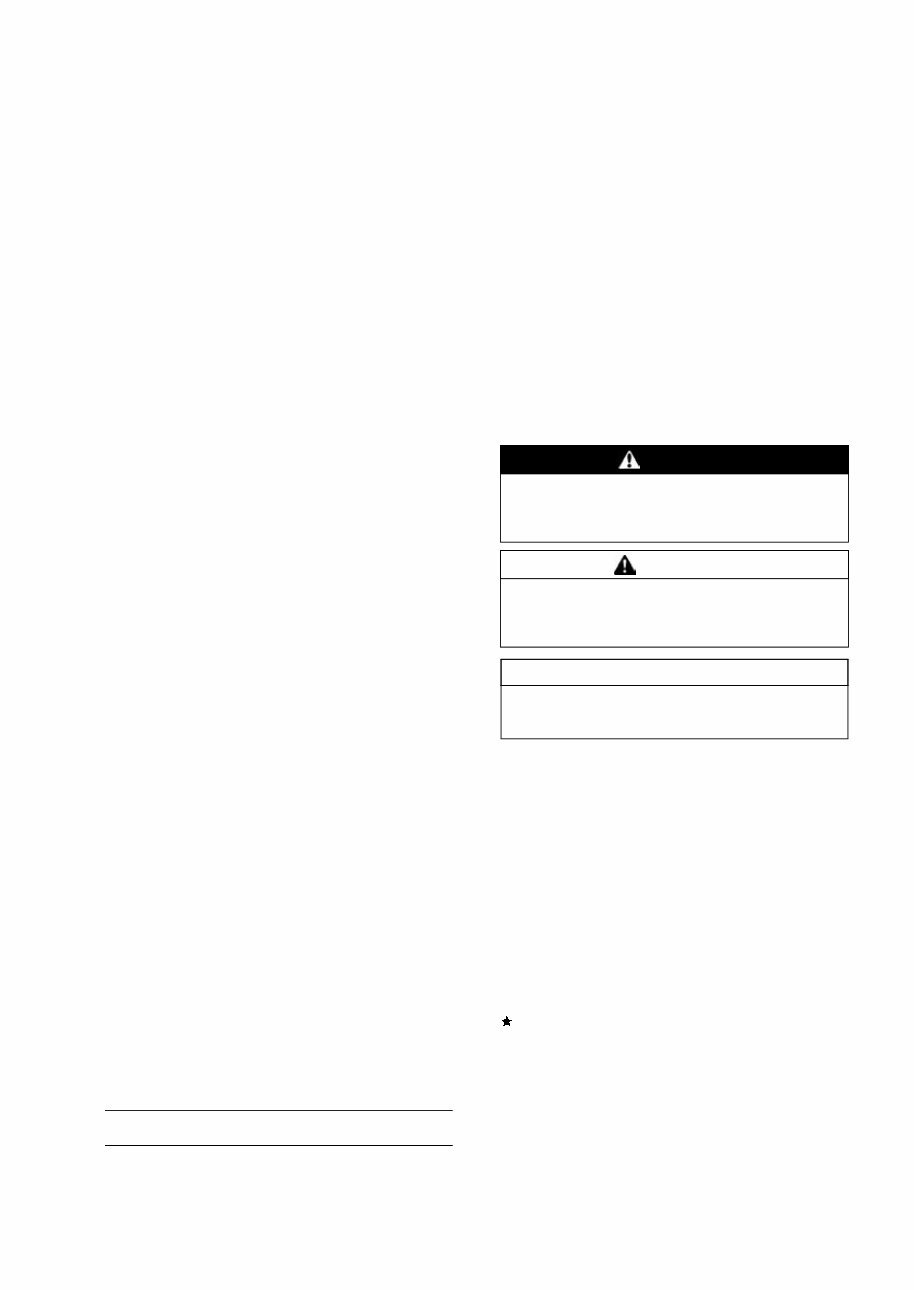
Foreword This manual is designed primarily for use by trained mechanics in a properly equipped shop. However, it contains enough detail and basic in- formation to make it useful to the owner who de- sires to perform his own basic maintenance and repair work. A basic knowledge of mechanics, the proper use of tools, and workshop proce- dures must be understood in order to carry out maintenance and repair satisfactorily. When- ever the owner has insufficient experience or doubts his ability to do the work, all adjust- ments, maintenance, and repair should be car- ried out only by qualified mechanics. In order to perform the work efficiently and to avoid costly mistakes, read the text, thor- oughly familiarize yourself with the procedures before starting work, and then do the work care- fully in a clean area. Whenever special tools or equipment are specified, do not use makeshift tools or equipment. Precision measurements can only be made if the proper instruments are used, and the use of substitute tools may ad- versely affect safe operation. For the duration of the warranty period, we recommend that all repairs and scheduled maintenance be performed in accordance with this service manual. Any owner maintenance or repair procedure not performed in accordance with this manual may void the warranty. To get the longest life out of your vehicle. • Follow the Periodic Maintenance Chart in the Service Manual. • Be alert for problems and non-scheduled maintenance. • Use proper tools and genuine Kawasaki Mo- torcycle parts. Special tools, gauges, and testers that are necessary when servicing Kawasaki motorcycles are introduced by the Service Manual. Genuine parts provided as spare parts are listed in the Parts Catalog. • Follow the procedures in this manual care- fully. Don’t take shortcuts. • Remember to keep complete records of main- tenance and repair with dates and any new parts installed. How to Use This Manual In this manual, the product is divided into its major systems and these systems make up the manual’s chapters. The Quick Reference Guide shows you all of the product’s system and assists in locating their chapters. Each chapter in turn has its own comprehensive Ta- ble of Contents. For example, if you want stick coil information, use the Quick Reference Guide to locate the Electrical System chapter. Then, use the Table of Contents on the first page of the chapter to find the Stick Coil section. Whenever you see symbols, heed their in- structions! Always follow safe operating and maintenance practices. DANGER DANGER indicates a hazardous situa- tion which, if not avoided, will result in death or serious injury. WARNING WARNING indicates a hazardous situa- tion which, if not avoided, could result in death or serious injury. NOTICE NOTICE is used to address practices not related to personal injury. This manual contains four more symbols which will help you distinguish different types of information. NOTE ○ NOTE indicates information that may help or guide you in the operation or service of the vehicle. • Indicates a procedural step or work to be done. ○ Indicates a procedural sub-step or how to do the work of the procedural step it follows. It also precedes the text of a NOTE. Indicates a conditional step or what action to take based on the results of the test or inspec- tion in the procedural step or sub-step it fol- lows. In most chapters an exploded view illustration of the system components follows the Table of Contents. In these illustrations you will find the instructions indicating which parts require spec- ified tightening torque, oil, grease or a locking agent during assembly.
You're Reading a Preview
What's Included?
Lifetime Access
Fast Download Speeds
Online & Offline Access
Access PDF Contents & Bookmarks
Full Search Facility
Print one or all pages of your manual
$27.99
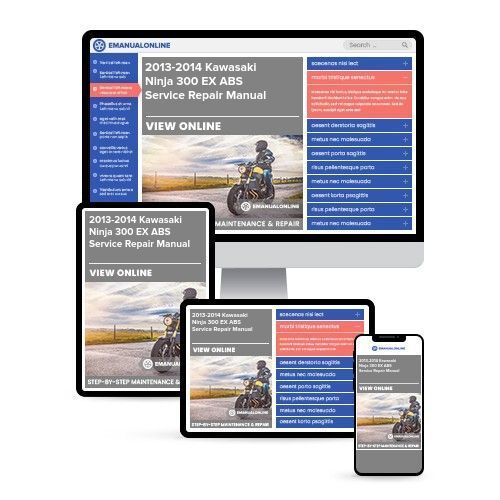
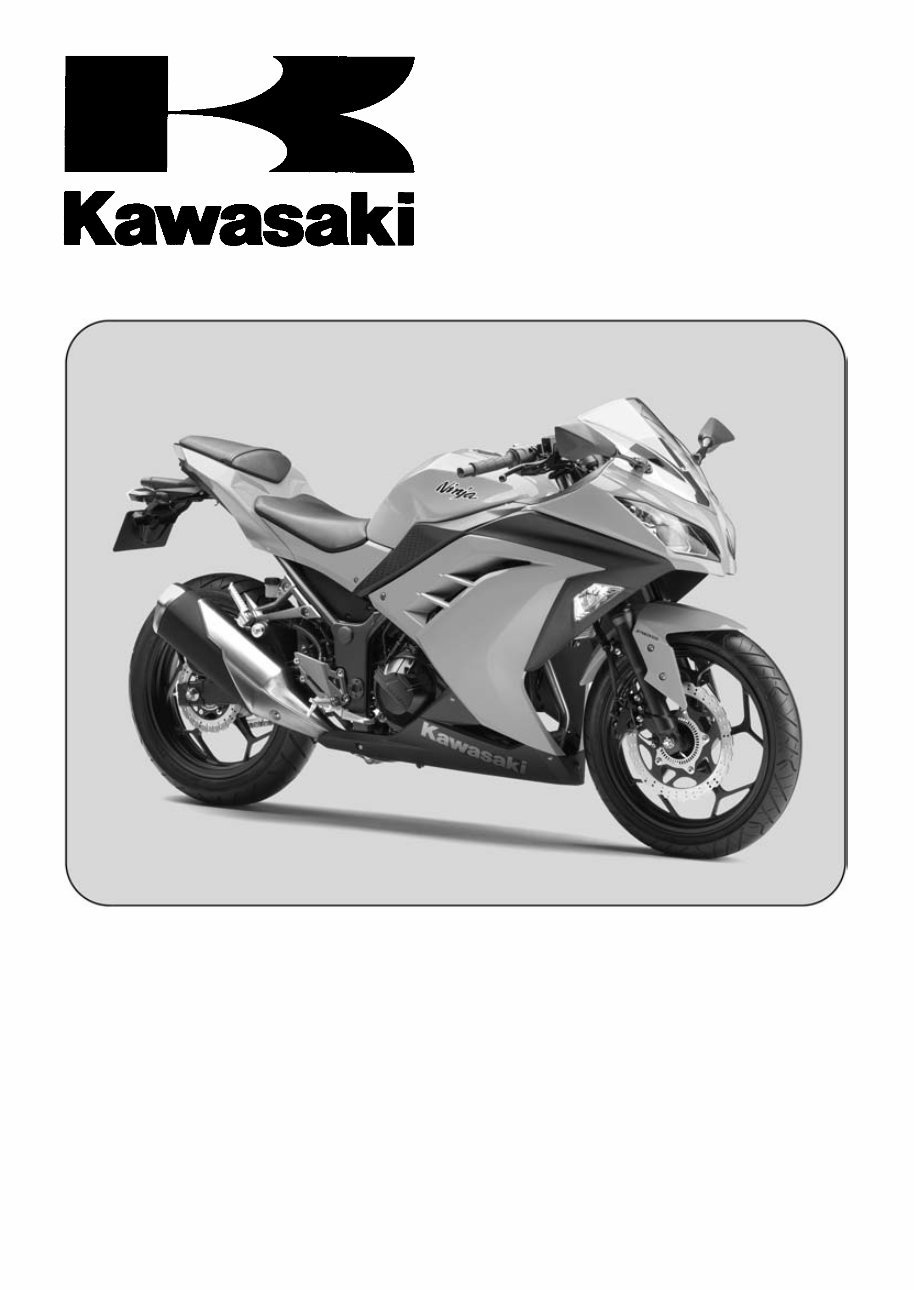
2013-2014 Kawasaki Ninja 300 EX ABS Service Repair Manual
Get your hands on the comprehensive service repair manual for the 2013-2014 Kawasaki Ninja 300 EX ABS. This manual spans over 600 pages in file format and covers every aspect of your bike, making it an invaluable resource for both professional mechanics and DIY enthusiasts.
The manual includes highly detailed information on various aspects of the bike, such as general information, specifications, maintenance, gearbox & clutch, engine removal and installation, engine fuel system, lubrication and cooling, combustion system, lubrication system, and much more.
It also provides detailed insights into the bike's transmission system, front wheel and steering system, rear wheel system, fenders and exhaust pipe, periodic checks & adjustments, chassis, cooling system, braking system, suspension, electrical system, body & fixtures, frame/body panels/exhaust system, wheels & tires, battery/charging system, ignition system, electric starter, lights/meters/switches, wiring diagrams, technical information & specifications, and troubleshooting.
This manual is available in file format (English) and offers instant delivery via email. It is printable, ensuring ease of use. Say goodbye to greasy manuals with torn and missing pages, and eliminate the wait for postal service delivery. Purchase securely via PayPal for a safe and easy transaction.
Comprehensive coverage of the 2013-2014 Kawasaki Ninja 300 EX ABS
Over 600 pages in file format
Useful for professional mechanics and DIY enthusiasts
Detailed information on various aspects of the bike
Instant delivery via email
Printable
Secure purchase via PayPal
Reviews
Q&A
Recently Viewed
5,521,897Happy Clients
2,594,462eManuals
1,120,453Trusted Sellers
15Years in Business
Price:
Actual Price:
2013-2014 Kawasaki Ninja 300 EX ABS Service Repair Manual











 Lifetime Access




