



TREMEC Gearbox T5 T56 TR 3550 TR 3650 TKO Repair Manual
What's Included?
 Lifetime Access
Fast Download Speeds
Offline Viewing
Access Contents & Bookmarks
Full Search Facility
Print one or all pages of your manual
800–1000 hp rated, LS F-body/RWD T56
Introduction
This Project shows the steps, parts, machining required to build a custom T56 6-speed,
based upon the versatile F-body LS T56 case; the Corvette 5
th
generation (C5) /
Holden-GTO / Cadillac CTS-v T56 internals with their advanced synchronizer and gear
ratio selection; and the Chevrolet SSR truck T56, with it’s 4760 pound (lb.) base curb
weight and 6050 lb. GVWR rated output shaft.
History
The stock LS F-body T56s were only available in the MM6 gear set, and the narrow
ratios proved very good for the powerful LS motor and approximately 3450 pound curb
weight. Common performance upgrades were a steel 3-4 shift fork introduced in the
Viper T56, solid metal synchronizer (synchro) keys replacing the stock stamped steel
ones, and bronze shift fork pads replacing the stock plastic ones. These upgrades
could boost the power handling and reliability of the LS F-body T56 towards a 700hp
rating. The one exception was the (small 27-spline) output shaft that was prone to twist
or break for Drag Racers and customizers installing the LS motor and T56 into classic
and muscle cars, as well as performance trucks and other (Heavy) RWD projects. A
popular upgrade (viper-spec) was developed for these uses where a Dodge Viper T56
output shaft (30-spline, 1.293” dia) and the F-body tail housing case, were machined to
retrofit into the F-body case. Since the Viper shared the same basic gear set
dimensions and the same double-cone synchros on 1-2, and single-cone synchros on
3-4, 5-6 as the F-body, no additional parts were needed for the retrofit.
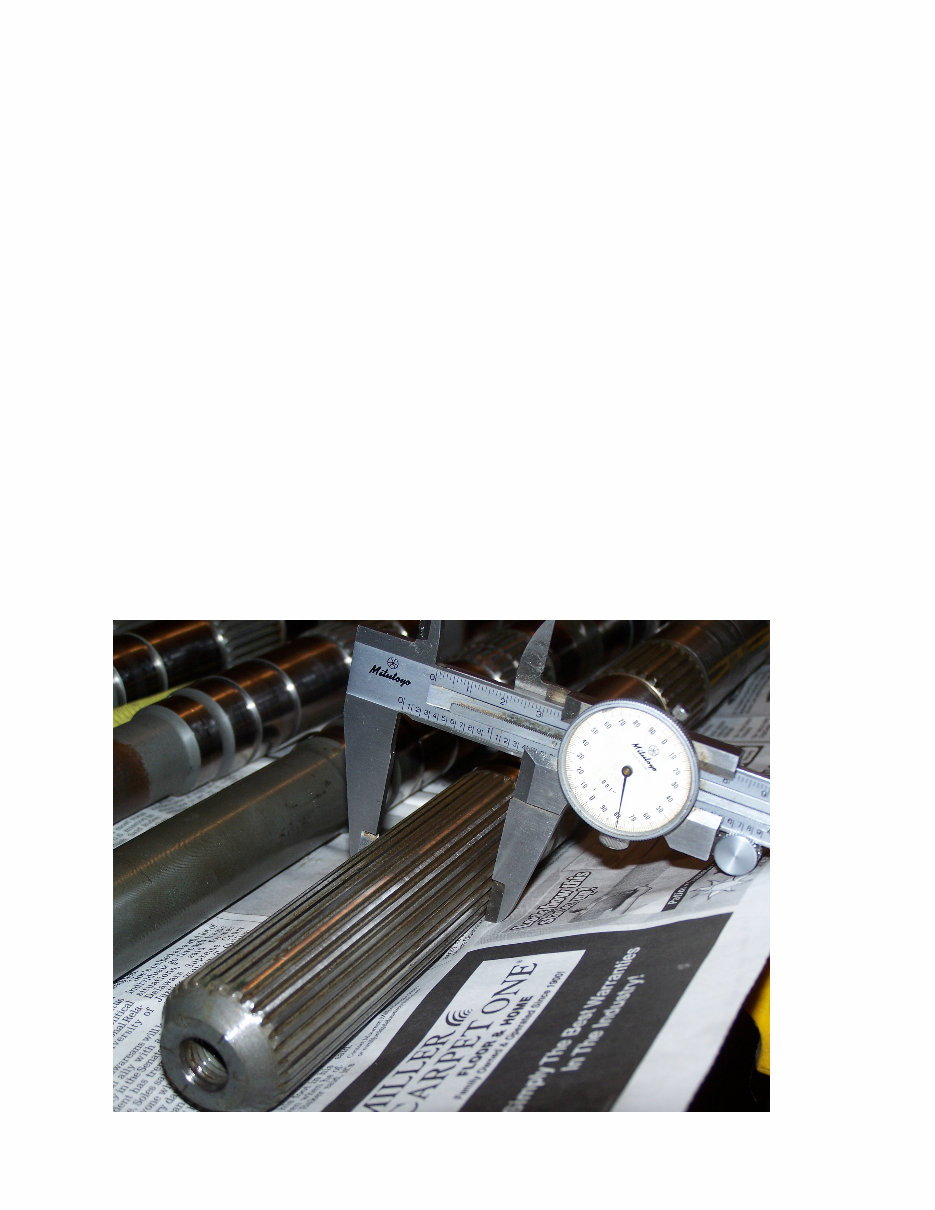
Figure 1: SSR 1.380-inch diameter output is .200 inches thicker than F-body and .090 thicker than Viper
Beginning in 1997 with the 5
th
Generation Corvette (C5), the 2004 Cadillac CTS-V, and
the 2004 Pontiac GTO, the GM T56s were fitted with power handling and reliability
upgrades to triple-cone synchros on 1-2 gears, and double-cone synchros on 3-4, and
5-6 gears. The F-body was discontinued after the 2002 model year and never saw any
of these upgrades. (The triple-cone synchro blocker rings get their name because they
have 3 cone shaped friction surfaces which block or speed match the gears during
shifts.) These synchros allow crisp shifts up to 8000 rpms, while the older
synchros are limited to less than 6500 rpms. The greater friction area, the
greater power handling capability and smoothness of shifts all make the upgrade
worthwhile in of itself.
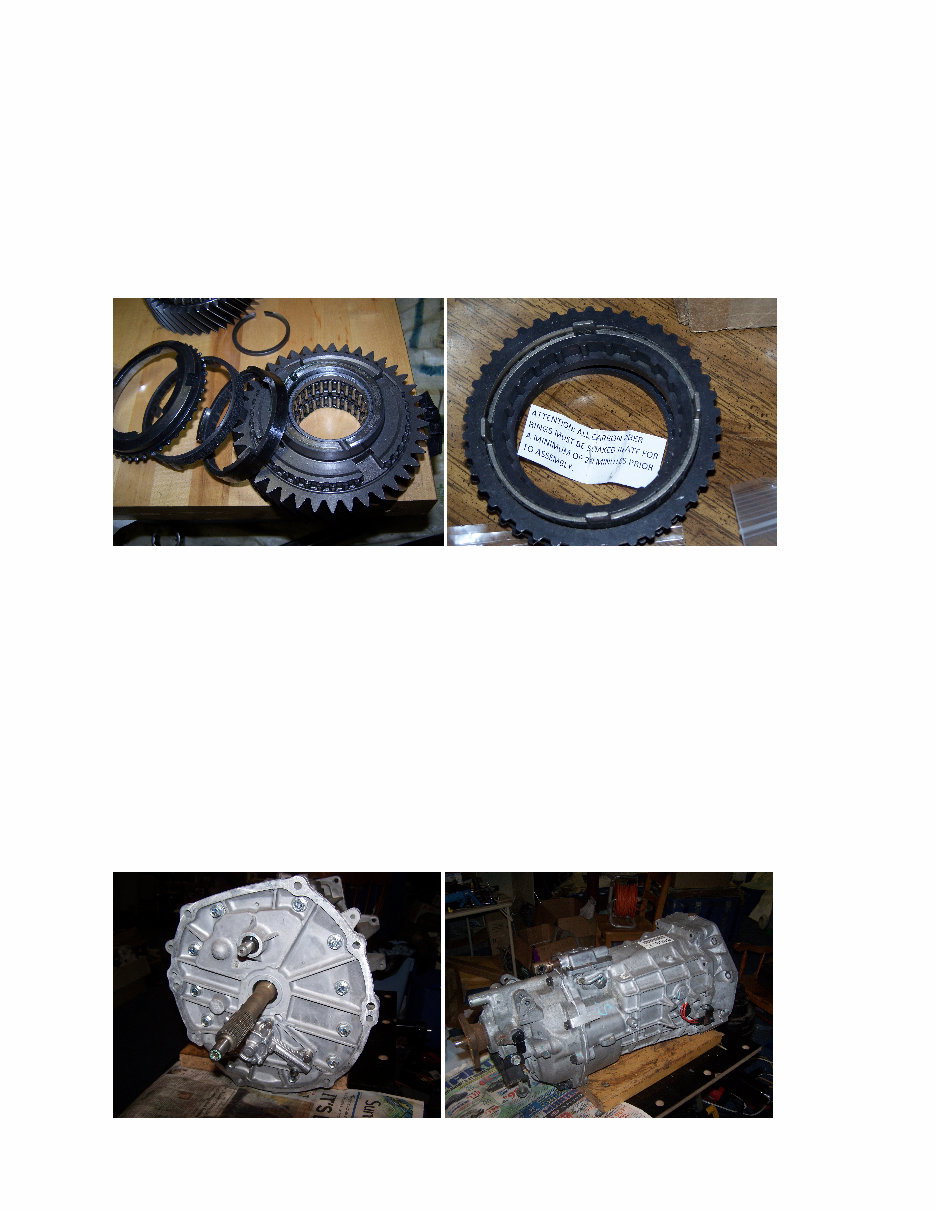
Figure 2: Triple Cone 1
st
gear Synchro blocker Figure 3: Older Double Cone 1
st
gear Synchro blocker
The GTO T56 carried the same external dimensions as the F-body T56 and became a
popular swap. The Corvette Transaxle design with remote clutch and shifter, and the
CTS-V remote shifter and flanged drive-shaft connection, made them undesirable for
use in F-body and RWD LS projects. In addition, the CTS-V and GTO weighed in with
4250 pound and 3725 pound curb weights respectively, and used a new wide ratio gear
set known as M12. First introduced in the 2001 Z06 corvette for quicker 0-60 times, the
M12 traded some strength with the higher gear ratio, but allowed the heavier cars to
accelerate quicker. This wide-ratio M12 gear set was of limited appeal to many lighter
F-body and RWD project owners, and the GTO T56 was in somewhat limited production
numbers which made that transmission harder to source. The GTO T56 used the same
sized (27-spline) output shaft as the F-body, but because of the upgraded gear set and
synchronizers, there was no Viper output shaft upgrade available for it.
Figure 4: Corvette T56 – Remote shifter & clutch Figure 5: CTSv T56 – Remote shifter & flange output
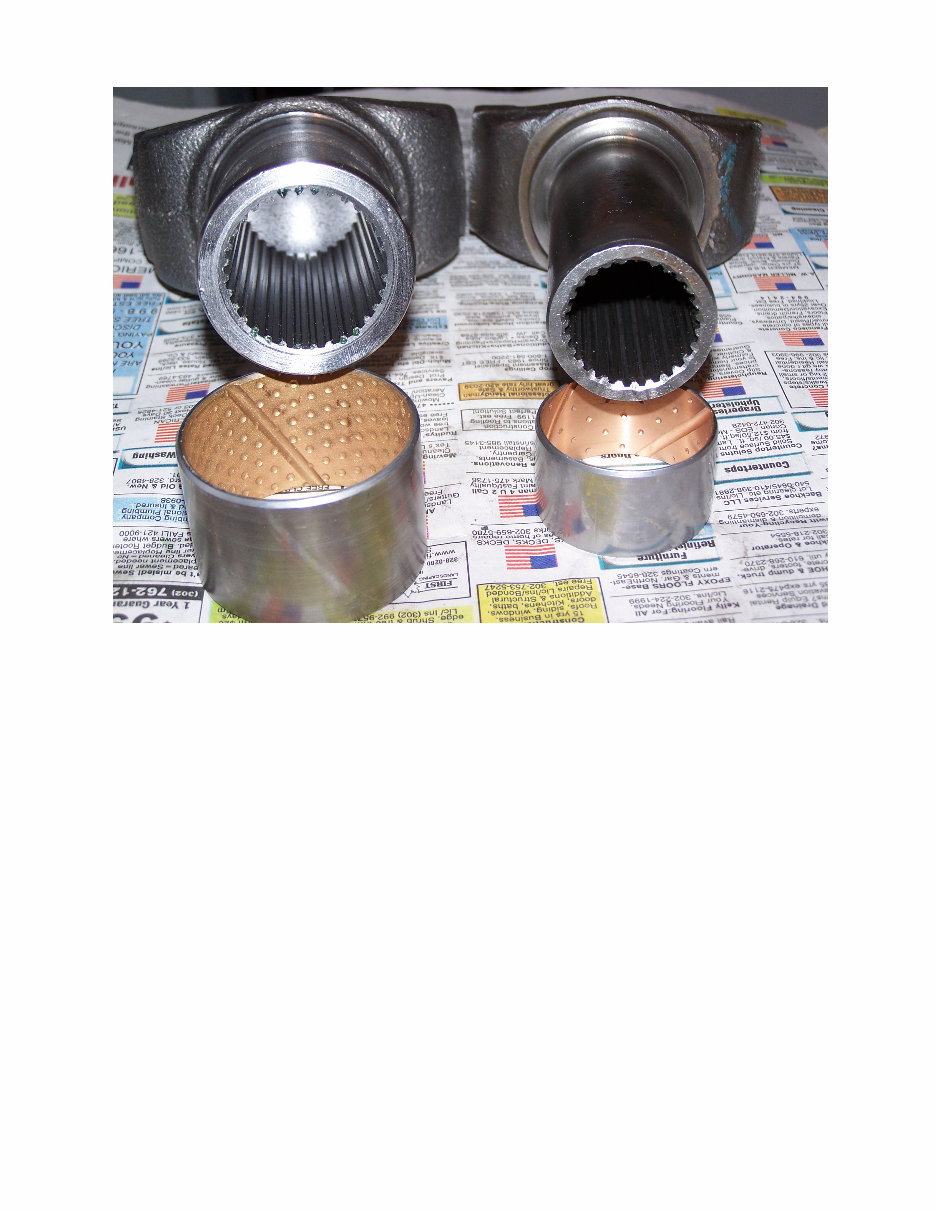
Figure 6: SSR (TH400) 32-spline yoke dwarfs F-body 27-spline yoke
Finally, between 2003 and 2006, Chevrolet marketed a retro-looking truck platform
called the SSR (Super Sport Roadster). With LS engine options, a 6050-pound GVWR
rating, and a T56 manual transmission introduced in 2005, the SSR had a number of
upgrades done to the T56 to handle its unique situation. The first was a new gear set
that included an even lower ratio 1
st
gear and wider spread than the M12. This new
gear set was known as the M10 (See Appendix C) and only about 2200 of them made it
into production. The SSR T56 featured the upgraded synchro design, a strong 1-piece
countershaft, and most important for this article, a maximum diameter (for T56 design)
32-spline output shaft. While anyone lucky enough to find one of the production M10
SSR T56s can use it with little changes in a F-body or RWD LS project, the limited
number and much less desirable gearing makes the swap difficult.
Motivation
What drives this project is to take the best of all available stock parts, and layout a plan
for creating a modern, strong, adaptable T56 RWD platform for heavy-duty service in
Drag Racing, Heavy RWD project cars, or light/medium duty performance trucks. By
combining the external case of the F-body LS T56, the triple/double-cone upgraded
synchros in the C5/CTSv/GTO T56s, the gear ratio choices of the 1997-2007 Corvettes,
and the strength of the SSR T56 output shaft, to make the most versatile RWD T56
available to the hot-rodding and performance community. [Note: The GTO T56
mainshaft can be used in much the same way as the SSR, but without any machine
work. You can transform any C5/C6/CTSv T56 into a GTO-T56 clone by following
many of the same steps detailed below. The major downside to this is that you’ll
still have a “weak” 27-spline output shaft] While some of the parts are available
through Tremec (Mfg of the T56), many parts are only available through GM as they
own the rights to them and Tremec is only under contract to produce them. Alternate
parts are suggested when known/found and machine work is kept to a minimum and
described in a much detail as possible.
Planning and Procedure
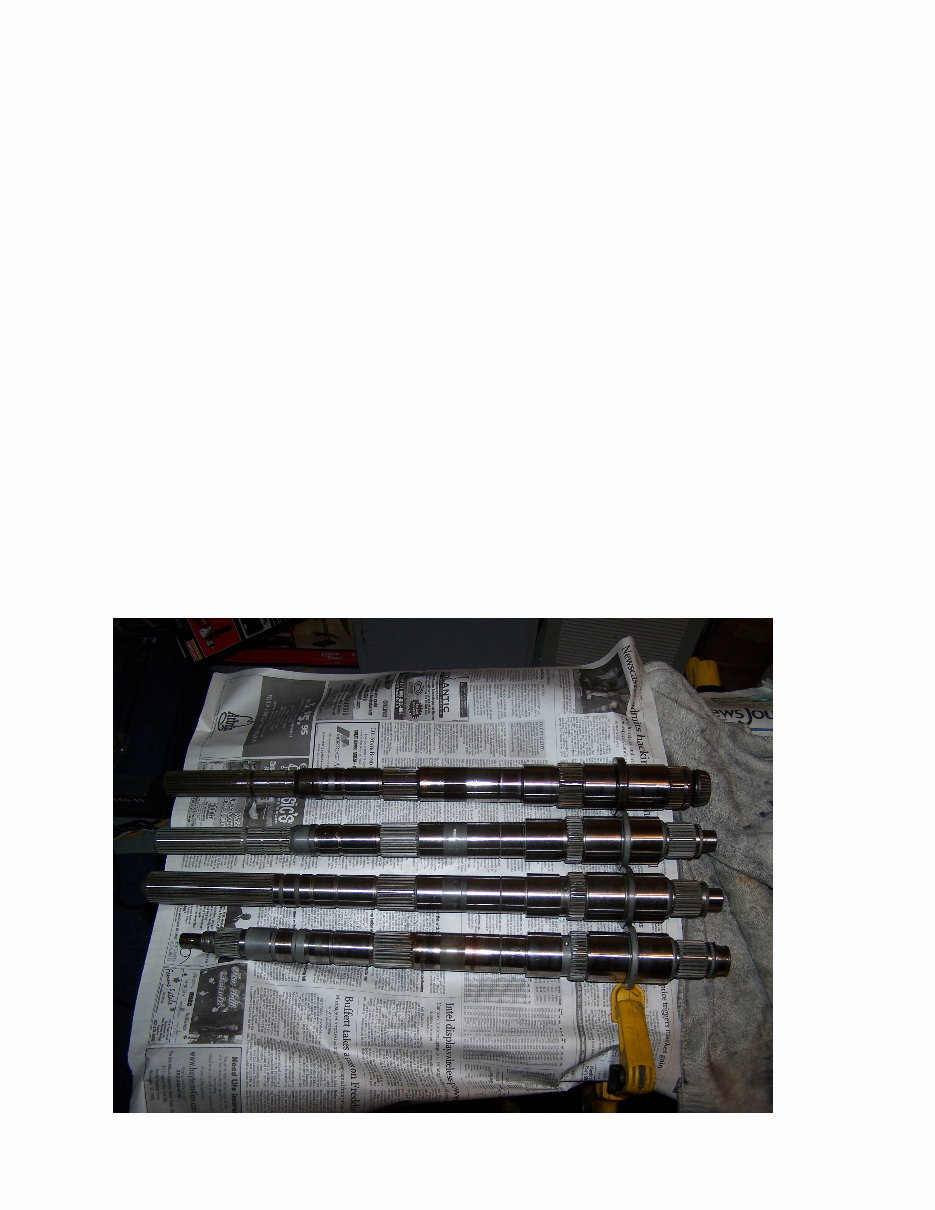
The SSR main shaft (output shaft) is the building block for the project. Four main shafts
are shown in Figure 7. From the bottom up are: 2006 CTS-V, SSR, GTO, and finally a
LS F-body at the top. Interesting features to note are
• The overall length of the SSR shaft is the same as the GTO and F-body
• The CTS-V is much shorter, and is machined on the Left for a flange to be bolted
onto it, not a slip-yoke like the others
• The output spline region of the SSR shaft doesn’t neck down like the GTO and F-
body
• From the Right-hand-side to the middle of the shaft, the machining and layout of
the CTS-V, SSR, and GTO match almost exactly. (The CTS-V shaft pictured still
has an old Bearing Race on the Right-hand end)
• The SSR and CTS-V have one groove in common, but different than the GTO
near the 2
nd
splined area from the Right. (More about this later)
• The SSR and CTS-V mount a VSS reluctor wheel on the first machined service
from the Left, after the splines end. The GTO and F-body mount a VSS reluctor
in the Left splined area where 2 snap-ring groves are machined.
Figure 7: Main shaft Comparison
The larger output shaft requires a larger slip-yoke, and bushing&seal package to
accommodate the larger size. The 32-spline output was used in the TH400 3-speed
automatic transmission used in as far back as 1964, and called into service again with
the SSR and modern HD truck/SUV automatic transmissions. The T56 case is made of
3 basic parts, the front plate (sometimes called the mid-plate) where the input shaft
protrudes from and where the clutch activation mechanism usually mounts. The middle
or main case is where the main components are housed for first through fourth gears.
The main case is basically the same in every T56 made, regardless of application. The
tail housing is on the end and is application specific depending on factors such as:
Shifter location
Drive shaft attachment
Output shaft size and length
Internal 5
th
, 6
th
, Reverse drive gear setup
The last two points are important for this project because the factory SSR included a
heavy-duty 1-piece 5/6/Rev countershaft drive gear setup, and also had the much larger
output shaft. Because of this, the project has opposing tail-housing requirements for a
retrofit, either the 2-piece countershaft 5/6/Rev setup of most T56 transmissions, or the
larger tail housing bushing/seal. A factory SSR tail housing is shown in Figures 8 and 9.
Figure 8: Factory SSR Bushing and Seal area
You're Reading a Preview
What's Included?
Lifetime Access
Fast Download Speeds
Offline Viewing
Access Contents & Bookmarks
Full Search Facility
Print one or all pages of your manual
$36.99
Viewed 59 Times Today


Secure transaction
What's Included?
Lifetime Access
Fast Download Speeds
Offline Viewing
Access Contents & Bookmarks
Full Search Facility
Print one or all pages of your manual
$36.99
This workshop service repair manual for TREMEC GEARBOX T5 T56 TR 3550 TR 3650 TKO includes the following:
- Introduction
- Description
- Troubleshooting
- On-vehicle service
- Disassembly
- Shifter/extension
- Speedometer/rotor
- Input/main shaft
- Transmission case
- Countershaft
- Lubricant
- Cleaning, inspection
- Repair procedure
- Assembly
- Maintenance
- Service bulletin
This comprehensive manual is available in PDF format and features detailed exploded views. It is a valuable resource for professional mechanics and DIY enthusiasts, providing step-by-step procedures with illustrations and diagrams for repairs, maintenance, and servicing of TREMEC GEARBOX T5 T56 TR 3550 TR 3650 TKO.


