

SERVICE MANUAL
TOYOTA 7FDF/FGF 15-35
BT Svenska AB
NAME SECTION
GENERAL
ENGINE
TRANSMISSION
0
1
2
PROPELLER SHAFT
DIFFERENTIAL
FRONT AXLE
REAR AXLE
STEERING
BRAKE
BODY
MATERIAL HANDLING SYSTEM
MAST
CYLINDER
OIL PUMP
OIL CONTROL VALVE
SAS
APPENDIX
3
4
5
6
7
8
9
10
11
12
13
14
15
16
INDEX

0-1
0
GENERAL
Page
EXTERIOR VIEWS ......................................................... 0-2
VEHICLE MODEL .......................................................... 0-3
FRAME NUMBER ........................................................... 0-4
HOW TO USE THIS MANUAL .................................... 0-5
EXPLANATION METHOD ................................................. 0-5
TERMINOLOGY ................................................................ 0-6
ABBREVIATIONS ............................................................. 0-6
OPERATIONAL TIPS .................................................... 0-7
HOISTING THE VEHICLE ............................................ 0-8
CIRCUIT TESTER .................................................. 0-9
STANDARD BOLT & NUT TIGHTENING
TORQUE ....................................................................... 0-11
BOLT STRENGTH TYPE IDENTIFICATION METHOD ...... 0-11
TIGHTENING TORQUE TABLE ........................................ 0-12
PRECOAT BOLTS ......................................................... 0-13
HIGH PRESSURE HOSE FITTING
TIGHTENING TORQUE ............................................ 0-13
WIRE ROPE SUSPENSION ANGLE LIST ............... 0-14
SAFE LOAD FOR EACH WIRE ROPE
SUSPENSION ANGLE ............................................... 0-14
COMPONENTS WEIGHT ............................................. 0-15
RECOMMENDED LUBRICANT
QUANTITY & TYPES ................................................. 0-16
SMÖRJSCHEMA ........................................................... 0-18
PERIODISKT UNDERHÅLL ........................................ 0-19
UTBYTE AV SMÖRJMEDEL
OCH DELAR ................................................................. 0-25
0-2
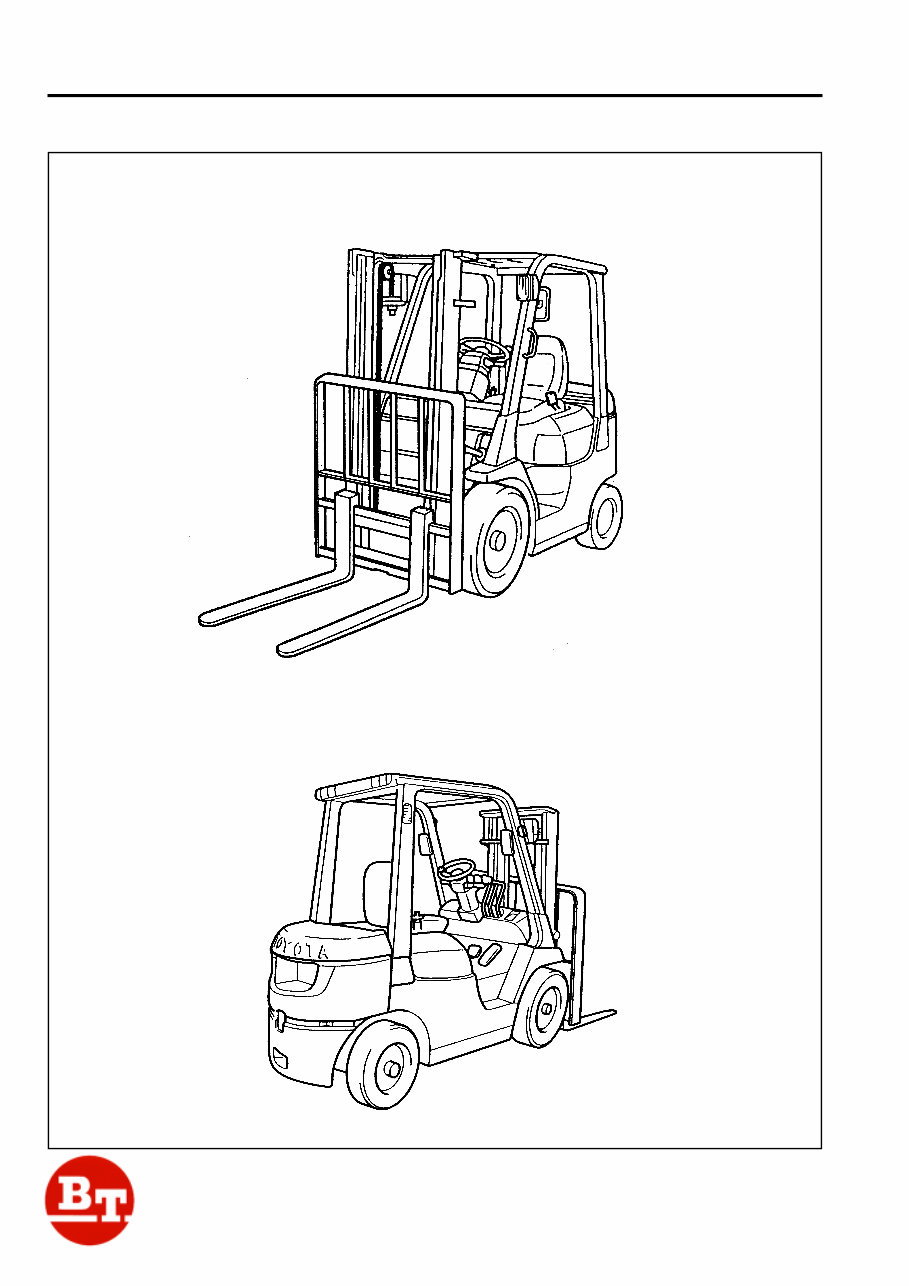
EXTERIOR VIEWS
0-3
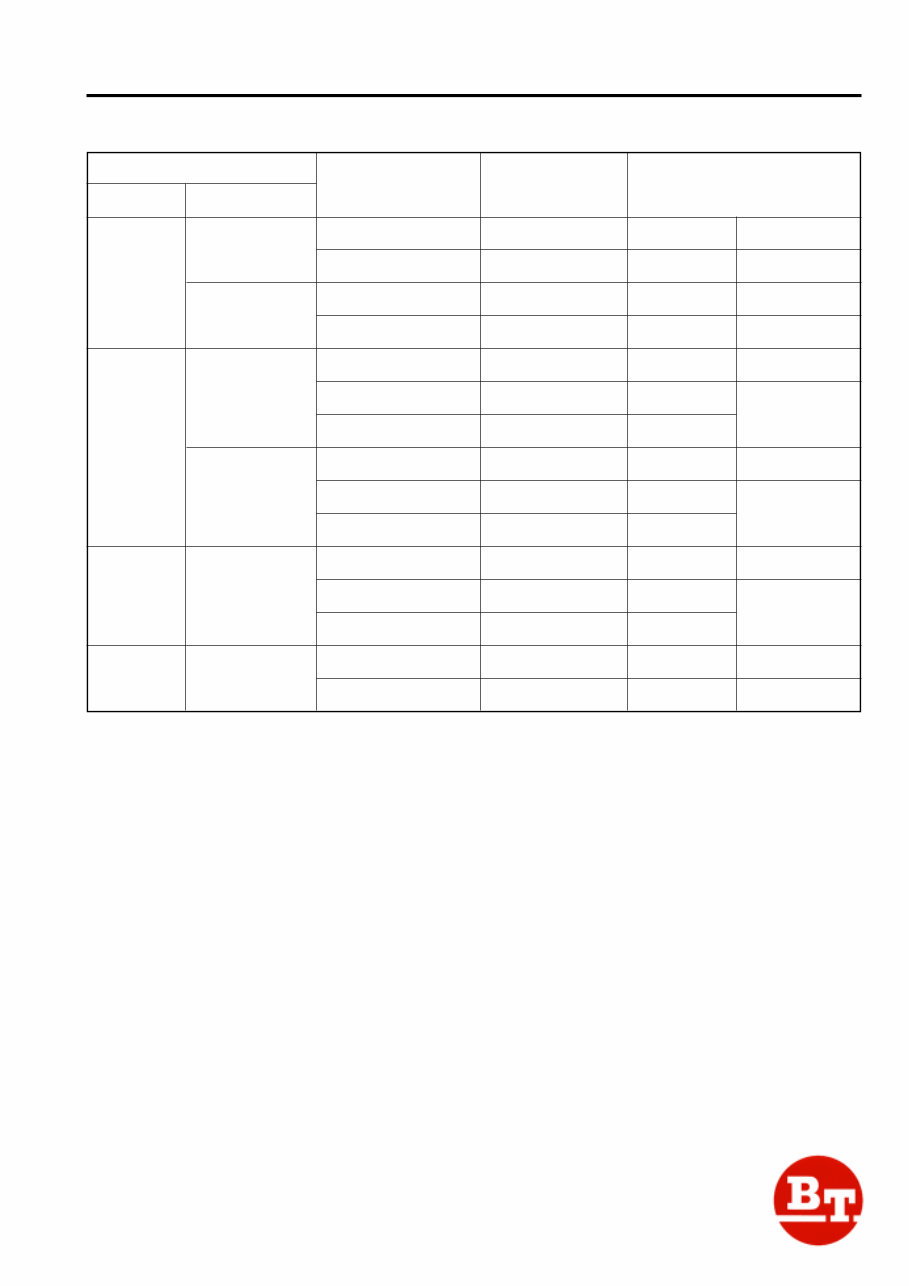
VEHICLE MODEL
42-7FGF15
02-7FDF15
42-7FGF18
02-7FDF18
42-7FGF20
62-7FDF20
02-7FDF20
42-7FGF25
62-7FDF25
02-7FDF25
02-7FGF30
62-7FDF30
02-7FDF30
02-7FGJF35
02-7FDJF35
1.5 ton model
1.75 ton model
2.0 ton model
2.5 ton model
3.0 ton model
J3.5 ton model
1 ton series
2 ton series
3 ton series
J3.5 ton
series
T/C
T/C
T/C
T/C
T/C
T/C
T/C
T/C
T/C
T/C
T/C
T/C
T/C
T/C
T/C
4Y
1DZ-II
4Y
1DZ-II
4Y
1DZ-II
2Z
4Y
1DZ-II
2Z
4Y
1DZ-II
2Z
4Y
2Z
Gasoline
Diesel
Gasoline
Diesel
Gasoline
Diesel
Gasoline
Diesel
Gasoline
Diesel
Gasoline
Diesel
Transmission Type Vehicle Model Engine
Model Series
Classification
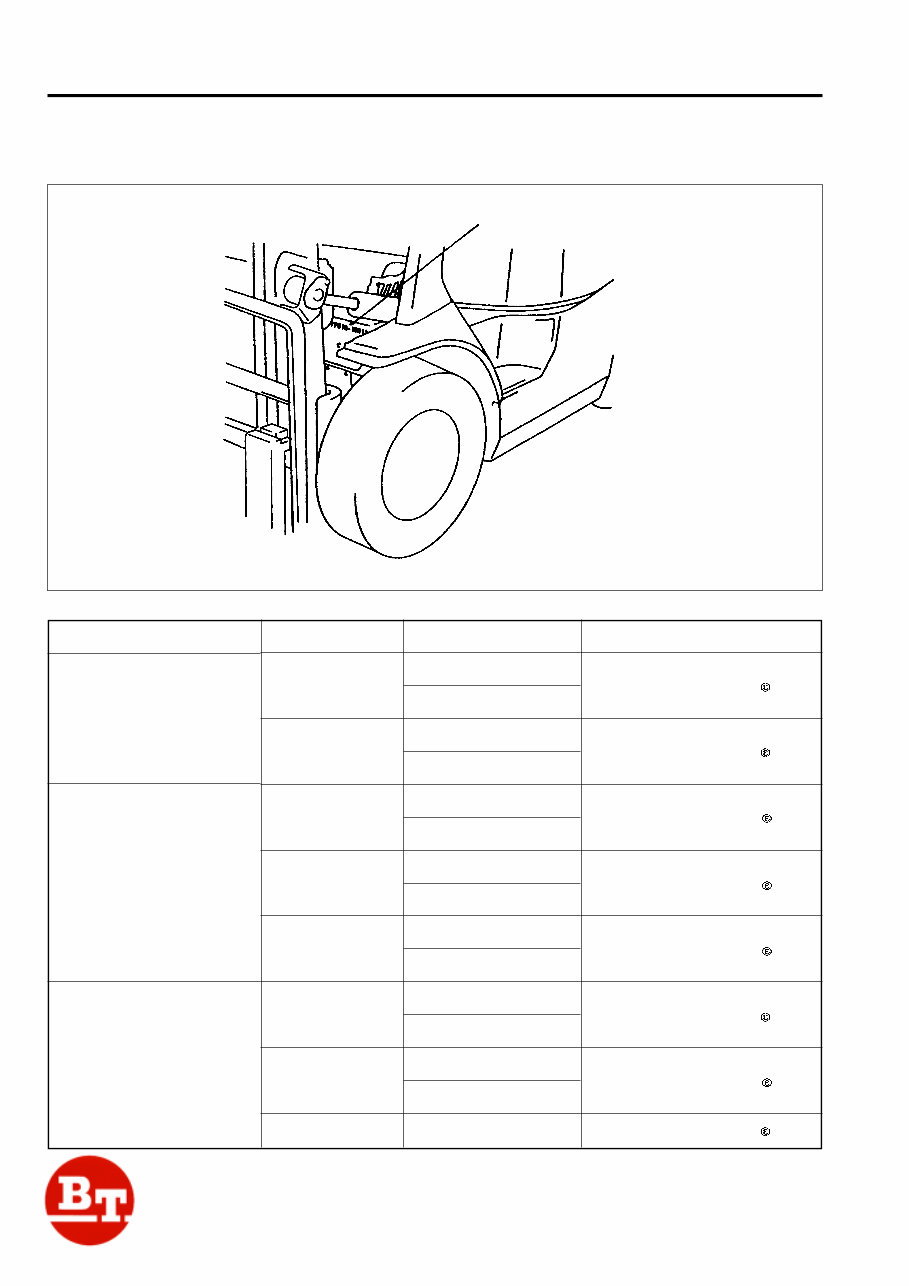
0-4
FRAME NUMBER
Frame No. Punching Position
Punching position
Series
1 ton series
2 ton series
3 ton, J3.5 ton series
Engine
4Y
1DZ-II
4Y
2Z
1DZ-II
4Y
2Z
1DZ-II
Vehicle model
42-7FGF15
42-7FGF18
02-7FDF15
02-7FDF18
42-7FGF20
42-7FGF25
02-7FDF20
02-7FDF25
62-7FDF20
62-7FDF25
02-7FGF30
02-7FGJF35
02-7FDF30
02-7FDJF35
62-7FDF30
Punching format
407FGF18 10011
7FDF18 10011
407FGF25 10011
7FDF25 10011
607FDF25 10011
7FGJF35 10011
7FDJF35 10011
607FDF30 10011
0-5
HOW TO USE THIS MANUAL
EXPLANATION METHOD
1. Operation procedure
(1) The operation procedure is described in either pattern A or pattern B below.
Pattern A: Explanation of each operation step with illustration.
Pattern B: Explanation of operation procedure by indicating step numbers in one illustration, fol-
lowed by explanation of cautions and notes summarized as point operations.
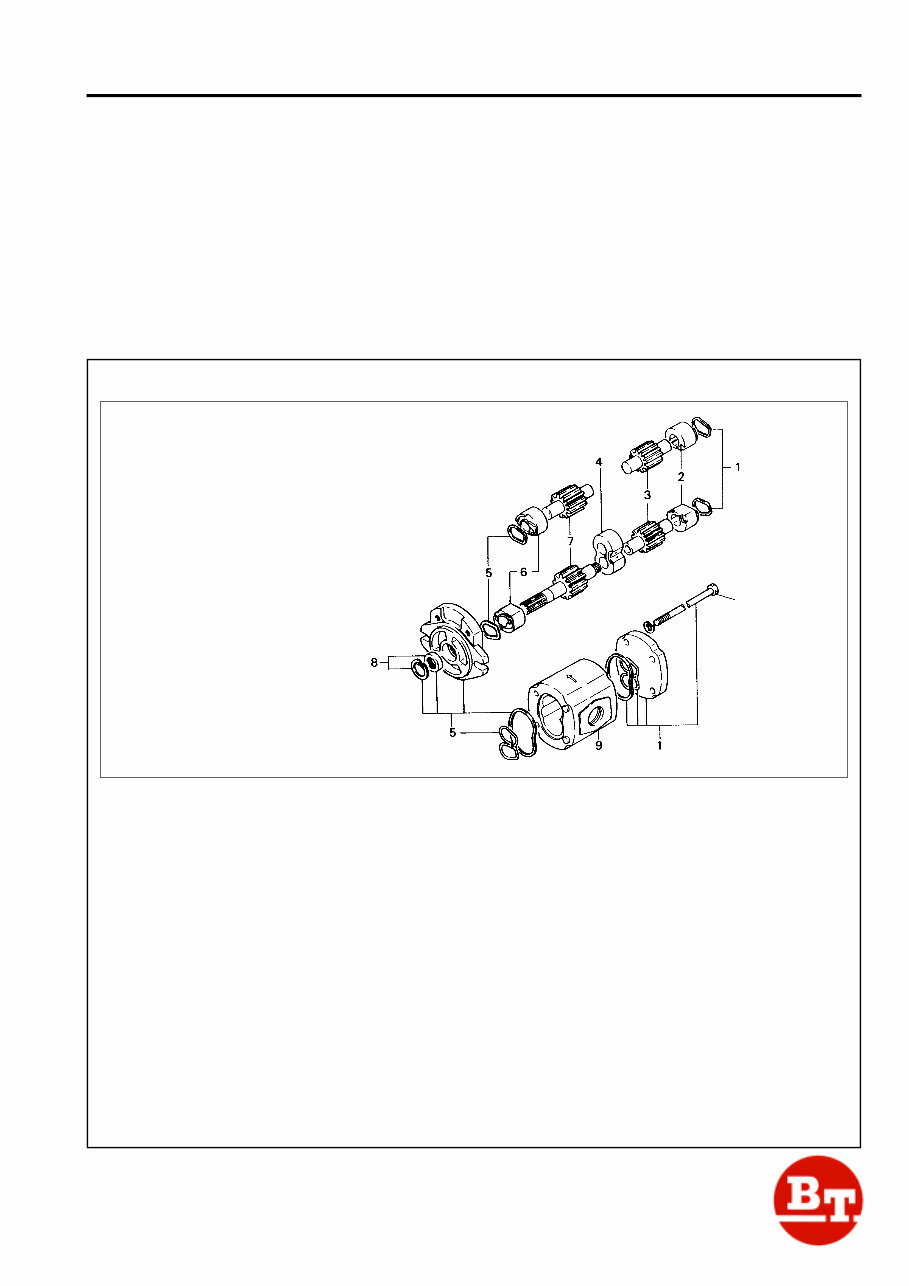
Example of description in pattern B
DISASSEMBLY·INSPECTION·REASSEMBLY Tightening torque unit T = N·m (kgf-cm) [ft-lbf]
Disassembly Procedure
1 Remove the cover. [Point 1]
2 Remove the bushing [Point 2] Operation explained later
3 Remove the gear.
Point Operations Explanation of key point for operation with an illustration
[Point 1]
Disassembly: Put a match mark when removing the pump cover.
[Point 2]
Inspection: Measure the bush inside diameter.
Limit: 19.12 mm (0.7528 in)
• Step Nos. are partially sometimes
omitted in illustrations.
• When a part requiring tightening
torque instruction is not indicated in
the illustration, the part name is de-
scribed in the illustration frame.
T = 46.1 ~ 48.1
(470 ~ 490)
[34.0 ~ 35.5]
0-6
Abbreviation (code)
ASSY
LH
LLC
M/T
NMR
OPT
O/S
PS
RH
SAE
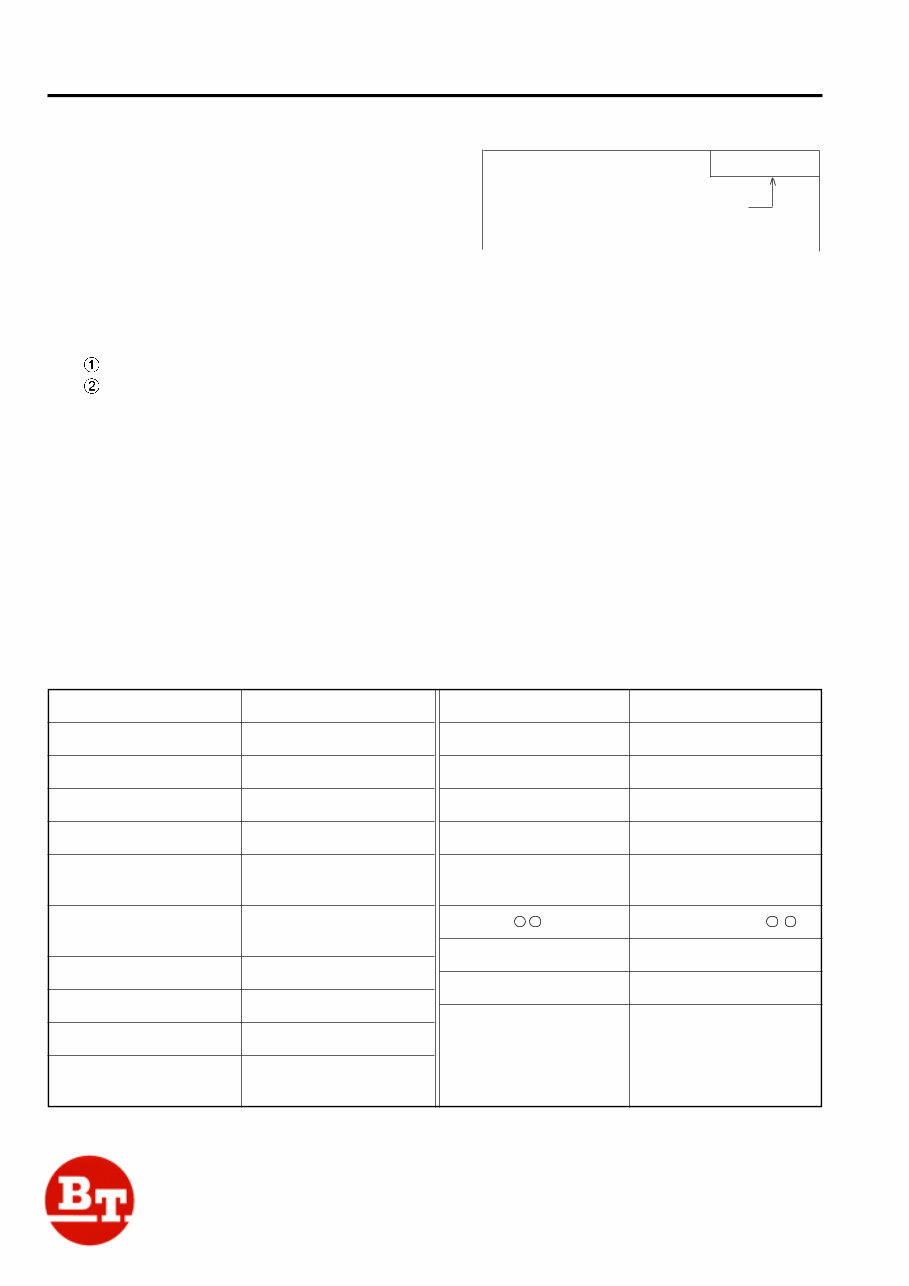
2. How to read components figures (Example)
(1) The components figure uses the illustration
in the parts catalog for the vehicle model.
Please refer to the catalog for checking the
part name.
The number at the right shoulder of each
components figure indicates the Fig. num-
ber in the parts catalog.
3. Matters omitted in this manual
(1) This manual omits description of the following jobs, but perform them in actual operation:
Cleaning and washing of removed parts as required
Visual inspection (partially described)
TERMINOLOGY
Caution:
Important matters of which negligence may cause accidents. Be sure to observe them.
Note:
Important items of which negligence may cause accidents, or matters in operation procedure
requiring special attention.
Standard: Values showing allowable range in inspection and adjustment.
Limit: Maximum or minimum allowable value in inspection or adjustment.
ABBREVIATIONS
Meaning
System of active stability
Special service tool
Standard
Tightening torque
Torque converter &
transmission
Number of teeth ( )
Undersize
With
Less
Meaning
Assembly
Left hand
Long life coolant
Manual transmission
No-load maximum
speed
Option
Oversize
Power steering
Right hand
Society of Automotive
Engineers (USA)
Abbreviation (code)
SAS
SST
STD
T =
T/C
T
U/S
W/
L/
-
FIG number in parts catalog
3201
0-7
OPERATIONAL TIPS
1. Safe operation
(1) After jacking up, always support with wooden blocks or rigid stands.
(2) When hoisting the vehicle or its heavy component, use wire rope(s) with a sufficient reserve in load
capacity.
(3) Always disconnect the battery terminal before the inspection or servicing of electrical parts.
2. Tactful operation
(1) Prepare the mechanic tools, necessary measuring instruments (circuit tester, megger, oil pressure
gauge, etc.) and SSTs before starting operation.
(2) Before disconnecting wiring, always check the cable color and wiring state.
(3) When overhauling functional parts, complicated portions or related mechanisms, arrange the parts
neatly to prevent confusion.
(4) When disassembling and inspecting such a precision part as the control valve, use clean tools and
operate in a clean location.
(5) Follow the described procedures for disassembly, inspection and reassembly.
(6) Replace, gaskets, packings and O-rings with new ones each time they are disassembled.
(7) Use genuine Toyota parts for replacement.
(8) Use specified bolts and nuts. Observe the specified tightening torque at the time of reassembly.
Tighten to the center of the specified tightening torque range.
If no tightening torque is specified, tighten the bolt or nut according to the standard tightening torque
table.
3. Grasping the trouble state
When a trouble occurs, do not attempt immediate disassembly or replacement but first check if the
trouble requires disassembly or replacement for remedying.
4. Disposal of waste fluid, etc.
When draining waste fluid from the vehicle, receive it in a container.
If any oil, fuel, coolant, oil filter, battery or other harmful substance is directly discharged or scrapped
without permission, it will either adversely affect human health or destroy the environment. Always
sort waste fluids, etc. and treat them properly by requesting disposal by specialized companies.
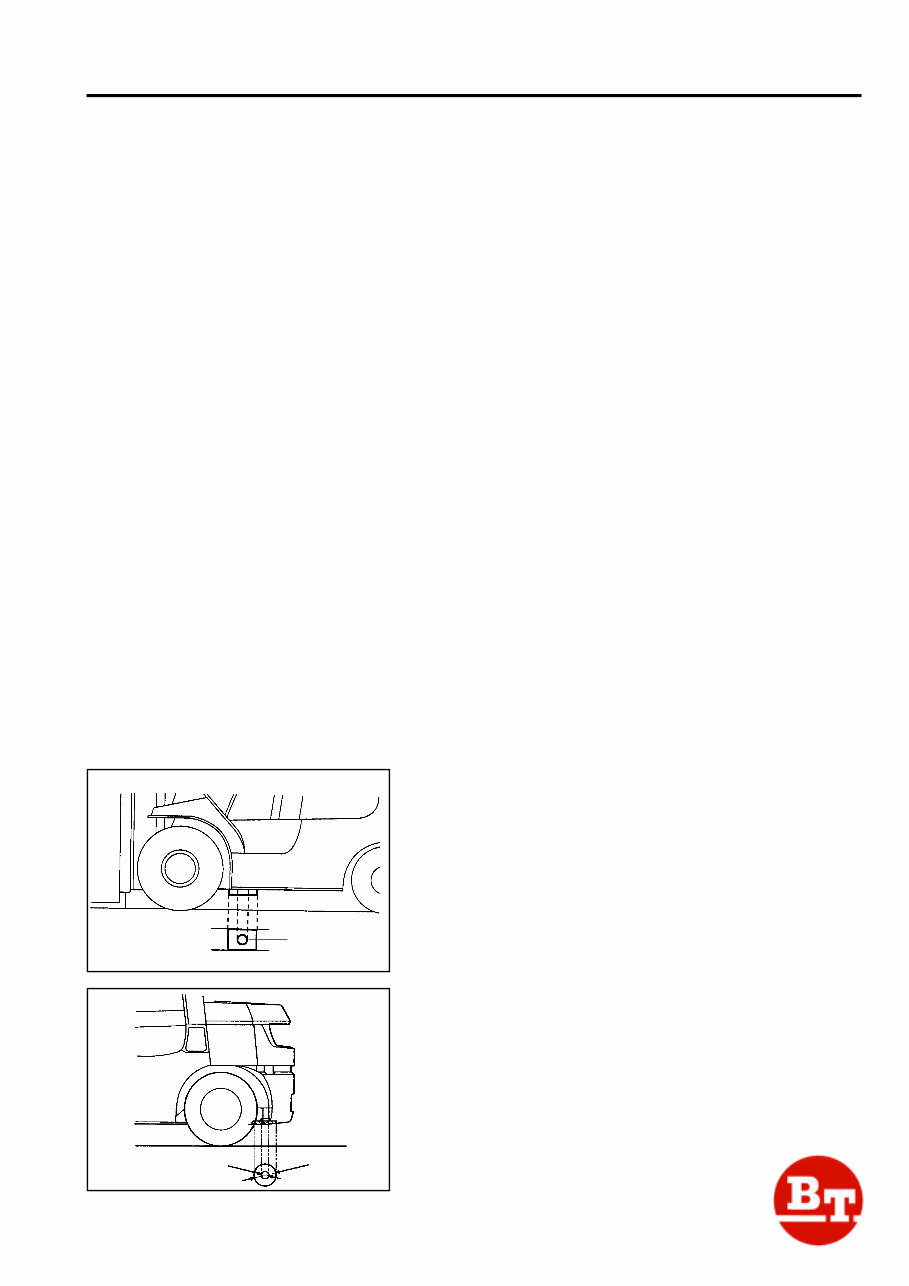
5. Jack up points
Jack up points are provided in the front and rear portions
of the vehicle. Always apply jacks at the jack up points.
Front side:
A circular groove to accept a screw jack is provided un-
der the front side of the frame.
When a garage jack is used, jack up at the bottom sur-
face of the frame.
Rear side:
A circular groove to accept a screw or garage jack is
provided at the bottom surface of the counterweight.
For screw jack
For screw jack
For garage jack
0-8
HOISTING THE VEHICLE
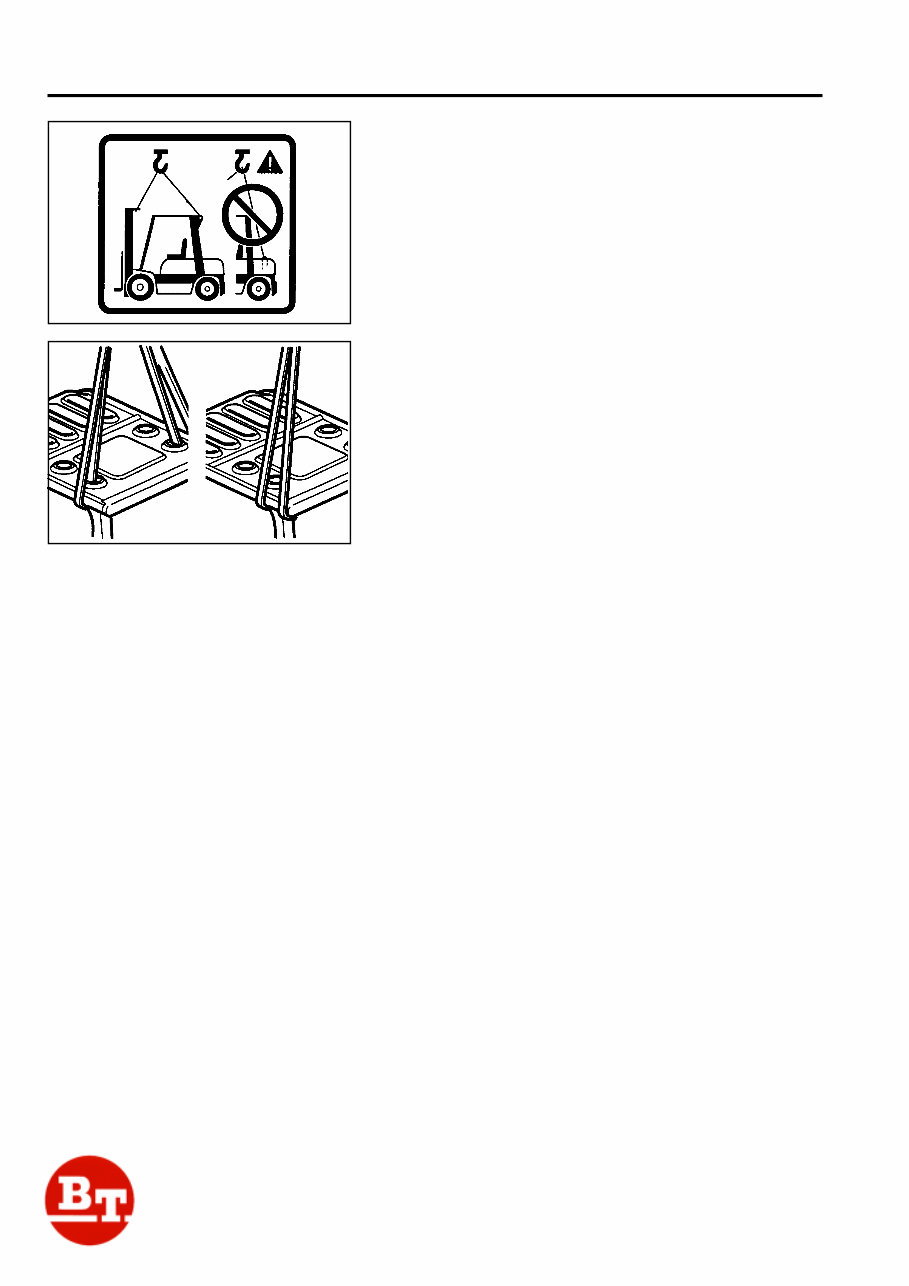
When hoisting the vehicle, sling with wire rope(s) at the mast
hook holes and the rear side of the head guard.
Slinging at the head guard is done in two ways.
Method A:
Sling after removing the head guard seat.
Method B:
Carefully sling so as not to damage rear combination lamps.
A B
0-9
CIRCUIT TESTER
Circuit testers are available in both the analog and digital types. They should be used selectively according
to the purpose of measurement.
Analog type: This type is convenient for observing movement during operation, but the measured value
should only be used for reference or rough judgement.
Digital type: Fairly accurate reading is possible, but it is difficult to observe the variation or movement.
1. Difference in measurement results with the digital type and analog type
* The result may be different between measurements with the analog type and digital type.
Always use a circuit tester according to its operation manual.
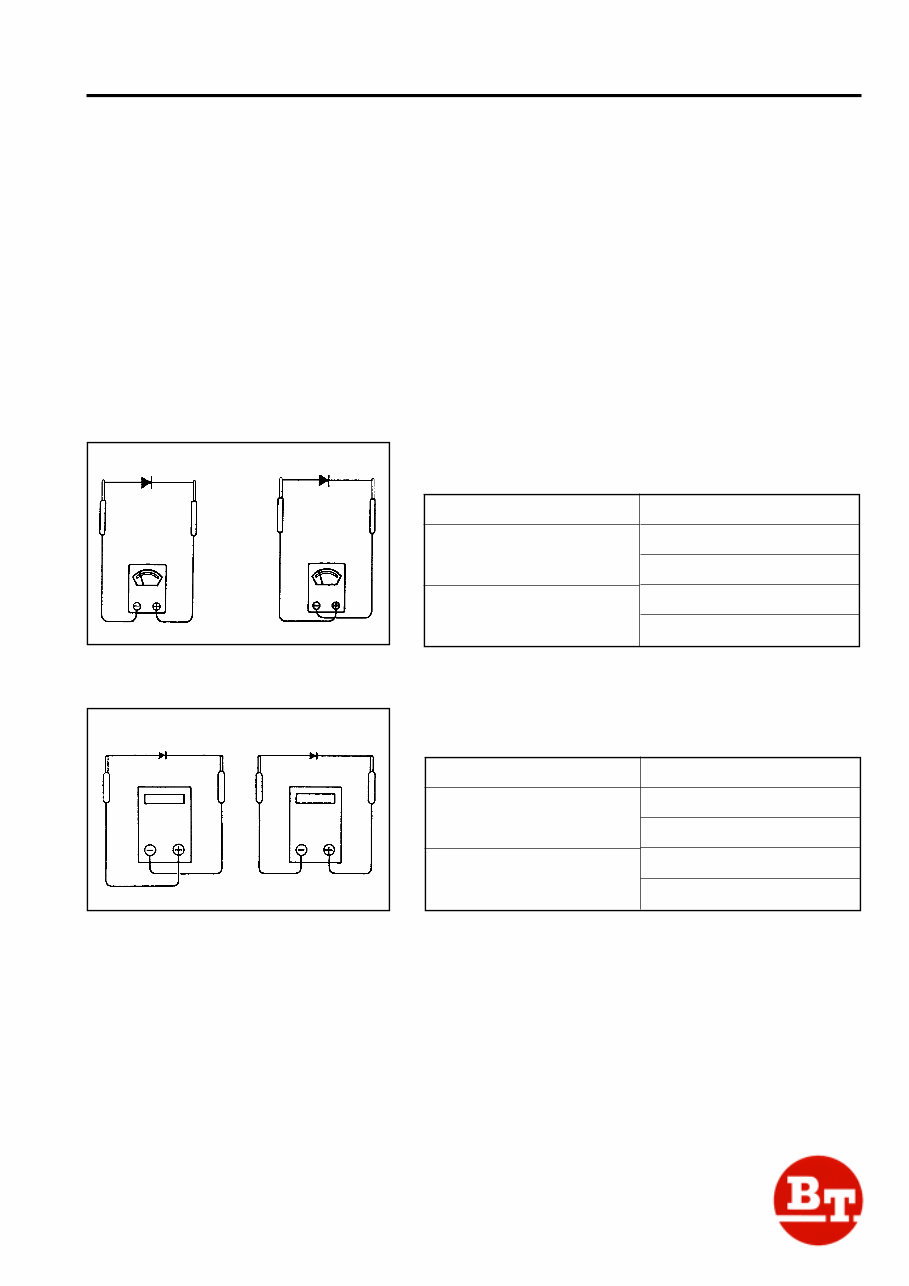
Cautions when the polarities are different between the analog type and digital type are described
below.
(1) Analog circuit tester
(2) Digital circuit tester
Measurement result example
Tester range: kΩ range
Analog type
Continuity exists
11 kΩ
No continuity
Forward
Reverse
Measurement result example
Tester range: MΩ range
Digital type
No continuity
1
Continuity exists
2 MΩ
Forward
Reverse
∞
Forward direction
Forward direction
Reverse direction
Reverse direction
You're Reading a Preview
What's Included?
 Lifetime Access
Fast Download Speeds
Online & Offline Access
Access PDF Contents & Bookmarks
Full Search Facility
Print one or all pages of your manual
$37.99
Toyota (BT) Diesel Forklift Truck 7FDF15, 7FDF18, 7FDF20, 7FDF25, 7FDF30, 7FDJ35 Workshop Service Manual
Viewed 13 Times Today

What's Included?
Lifetime Access
Fast Download Speeds
Online & Offline Access
Access PDF Contents & Bookmarks
Full Search Facility
Print one or all pages of your manual
$37.99

Secure transaction
What's Included?
Lifetime Access
Fast Download Speeds
Online & Offline Access
Access PDF Contents & Bookmarks
Full Search Facility
Print one or all pages of your manual
Description
- Illustrated Factory Workshop Service Manual for Toyota Diesel Forklift Truck Type 7FDF
- Original factory manuals for Toyota (BT) Forklift Trucks
- Contains high-quality images, circuit diagrams, and instructions
- Useful for operating, maintaining, and repairing your truck
- Printable and contains searchable text and navigation bookmarks
- Useful for professional mechanics and DIY enthusiasts
- Covered models: 7FDF15, 7FDF18, 7FDF20, 7FDF25, 7FDF30, 7FDJ35
- Format: 612 Pages
- Language: English
- Contents:
- General
- Exterior Views
- Vehicle Model
- Frame Number
- How to Use This Manual
- Explanation Method
- Terminology
- Abbreviations
- Operational Tips
- Hoisting the Vehicle
- Circuit Tester
- Standard Bolt & Nut Tightening Torque
- Bolt Strength Type Identification Method
- Tightening Torque Table
- Precoat Bolts
- High-Pressure Hose Fitting Tightening Torque
- Wire Rope Suspension Angle List
- Safe Load for Each Wire Rope Suspension Angle
- Components Weight
- Recommended Lubricant Quantity & Types
- Engine
- Engine Sectional Views
- Major Specifications
- Engine Performance Curves
- Engine Assy
- Removal/Installation
- Air Bleeding from Fuel System (Diesel Vehicle)
- Engine Speed Inspection and Adjustment
- 4Y Engine
- 1DZ-II2Z Engine
- Air Cleaner
- Specifications
- Components
- Air Cleaner Cleaning Inspection
- Clogging Warning System Inspection
- And more...


