

No. OF-2B0EE
FORKLIFT TRUCK
It is the responsibility of the operator and supervisor to read and understand this manual.
Protect the earth and be kind to your lift truck.
TCM CORPORATION
OPERATION & OPERATION &
MAINTENANCE MANUAL MAINTENANCE MANUAL
Gas. & LPG Powered Diesel powered
」
十
一一|
圃 圃 圃 圃圃 圃 圃圃 I I I I I
h
v
fh
γ
| 圃圃圃圃圃圃圃圃 I I ・
lL
十
TC ItW CORPO
1-1
OPER. & MAINT. MANUAL FG15C13 – FD35T3S
No. OF-2B0EE
d
J
E ・ E ・ E ・.-=! I I I I
ベト
十
1-¥
ベト
l -・ E ・ E ・. I I ・ ・
吋
n
量
| 二
十
¥-F
Thank you very much for your purchase of TCM’s product.
This Operation & Maintenance Manual was written to provide the owner/
operator with information about the safe operation and maintenance of the
TCM forklift truck. Read this manual thoroughly and become completely familiar
with the lift truck before using it. If you have any questions, see your dealer.
Due to improvements in design, it is possible that the description contained
herein may not completely apply to the truck delivered to you.
CAUTION
If the truck is to be leased, loaned or sold to anyone, this manual must
be with the truck.
CONTENTS
1. SAFETY
2. OPERATING
CONTROLS
3. OPERATION
4. MAIN-
TENANCE
5. SPECIFICA-
TIONS &
SERVICE DATA
IMPORTANT
The specifications and attachments of the trucks vary with different destinations.
The following symbols are used to indicate their destinations in this manual.
Code Destination
EXA North America
EXC Oceania
EXB All regions excluding North America, EU member countries, Oceania and South Africa
EXE EU member countries (excluding Scandinavia)
EXK South Africa
EXN Scandinavia
6. INDEX
Note: In this manual, trucks with manual transmission are expressed as C type , and those with automatic transmission as T type .
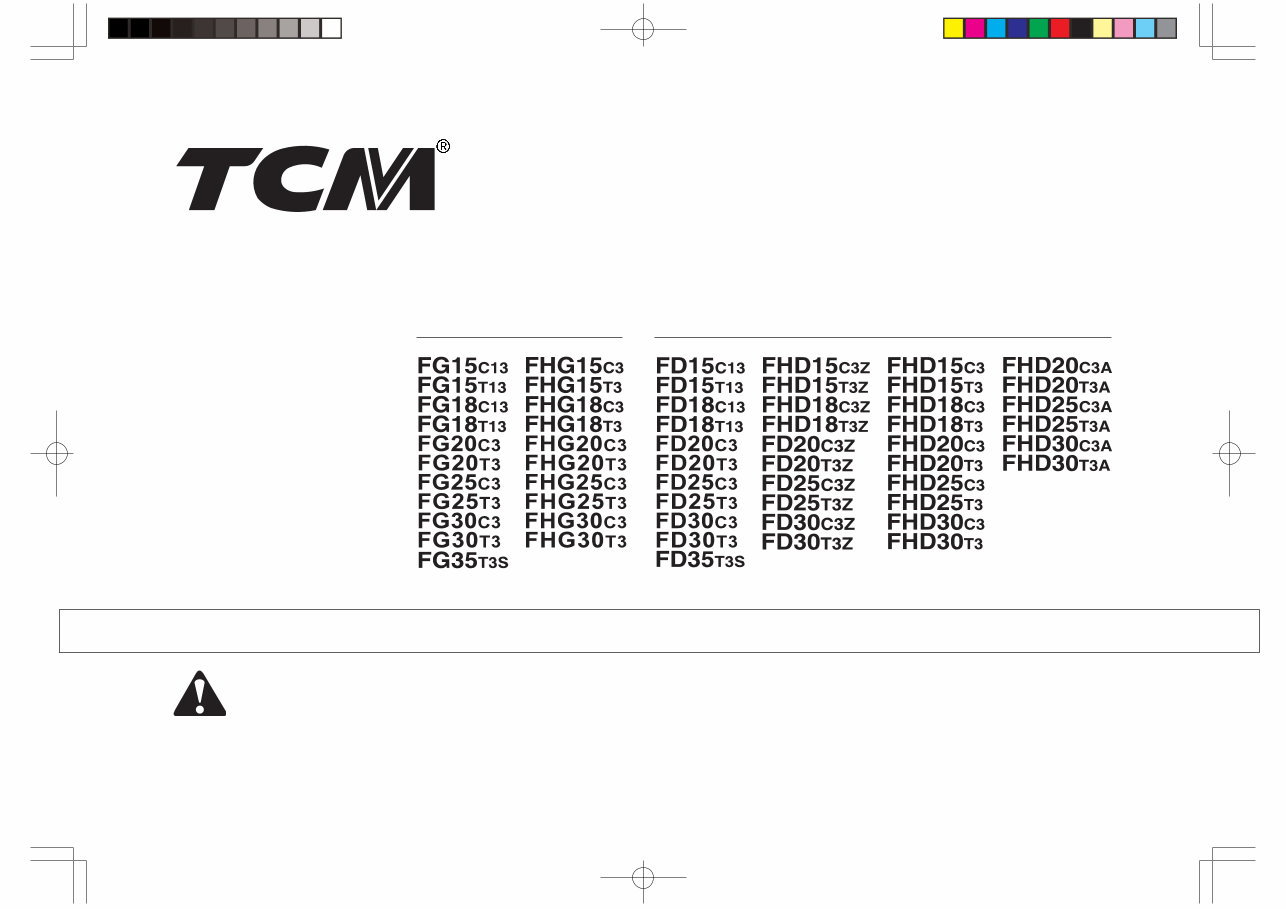
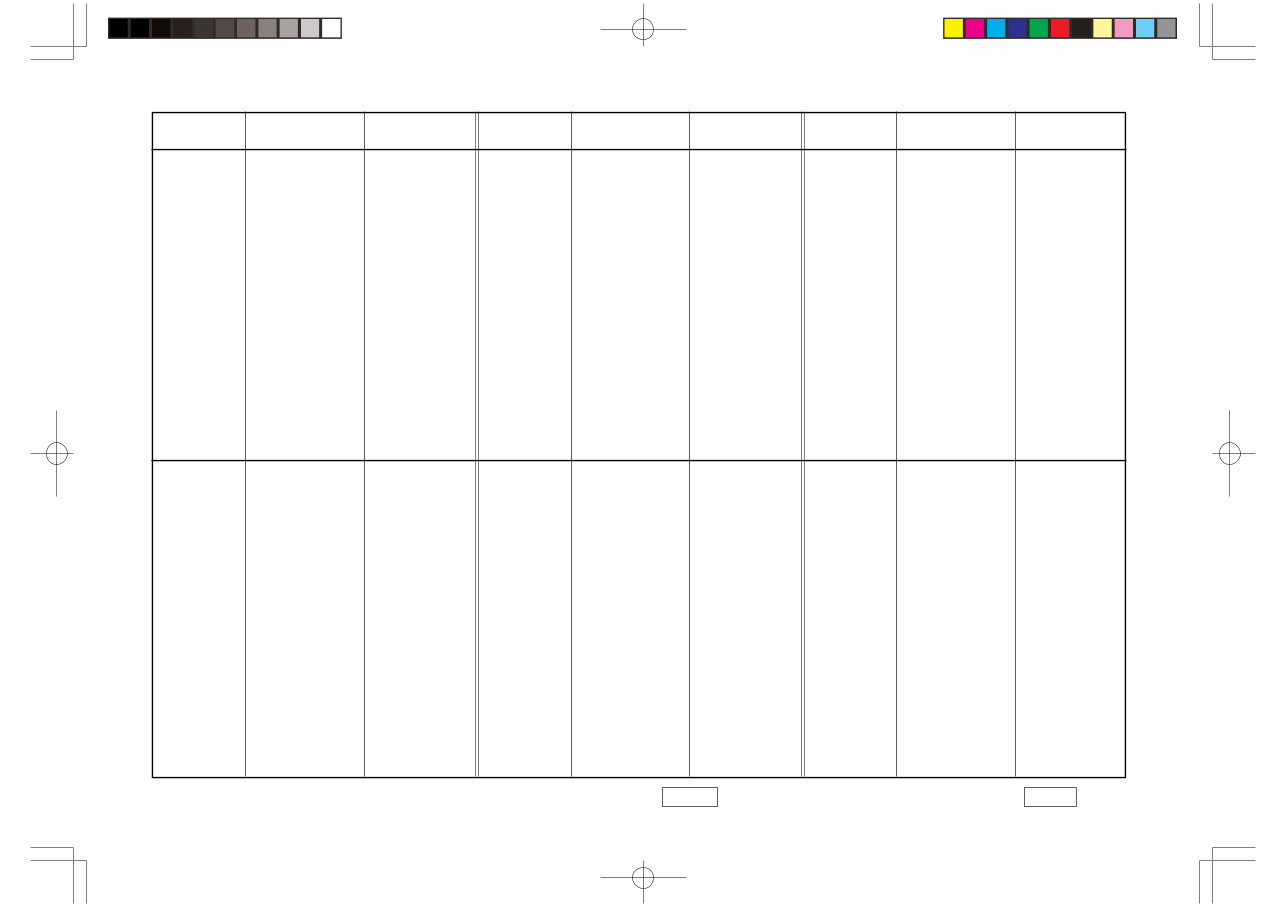
Rated load Truck model Engine model
1.5 tons FG15C13 K15
FG15T13 K15
FHG15C3 K21
FHG15T3 K21
FD15C13 D1503
FD15T13 D1503
FHD15C3Z C240
FHD15T3Z C240
FHD15C3 TD27-II
FHD15T3 TD27-II
1.75 tons FG18C13 K15
FG18T13 K15
FHG18C3 K21
FHG18T3 K21
FD18C13 D1503
FD18T13 D1503
FHD18C3Z C240
FHD18T3Z C240
FHD18C3 TD27-II
FHD18T3 TD27-II
Rated load Truck model Engine model
3 tons FG30C3 K21
FG30T3 K21
FHG30C3 K25
FHG30T3 K25
FD30C3 TD27-II
FD30T3 TD27-II
FD30C3Z C240
FD30T3Z C240
FHD30C3 V3300
FHD30T3 V3300
FHD30C3A QD32
FHD30T3A QD32
3.5 tons FD35T3S QD32
FG35T3S K25
Rated load Truck model Engine model
2 tons FG20C3 K21
FG20T3 K21
FHG20C3 K25
FHG20T3 K25
FD20C3 TD27-II
FD20T3 TD27-II
FD20C3Z C240
FD20T3Z C240
FHD20C3 V3300
FHD20T3 V3300
FHD20C3A QD32
FHD20T3A QD32
2.5 tons FG25C3 K21
FG25T3 K21
FHG25C3 K25
FHG25T3 K25
FD25C3 TD27-II
FD25T3 TD27-II
FD25C3Z C240
FD25T3Z C240
FHD25C3 V3300
FHD25T3 V3300
FHD25C3A QD32
FHD25T3A QD32

1. SAFETY
CONTENTS
FOR SUPERVISORS ....................................................... 1 - 1
QUALIFIED OPERATORS .............................................. 1 - 2
PLANNING AND WORKING AREA ........................... 1 - 3
PROPER AND IMPROPER USES ................................. 1 - 6
TYPES OF VEHICLES AND LOADS ......................... 1 - 7
INSPECTION ............................................................... 1 - 10
INSPECTION/TRANSPORTING THE LIFT
TRUCK ......................................................................... 1 - 11
TRAVELING ON PUBLIC ROADS ............................. 1 - 13
HOW THE LIFT TRUCK WORKS? ................................. 1 - 14
TRAVELING ..................................................................... 1 - 17
LOAD HANDLING ............................................................ 1 - 24
PARKING ......................................................................... 1 - 29
INSPECTION AND SERVICE ......................................... 1 - 31
CAUTION PLATES .......................................................... 1 - 41
1 - 1
FOR SUPERVISORS
Lift truck accidents cause dozens or hundreds of deaths every
year, and even greater numbers of personal injuries.
TCM has steadily improved the design and fabrication of our lift
trucks so they may be used more safely and efficiently, but many
accidents still occur due to improper use. Accidents are often the
result of more than just “bad driving”. The use of inappropriate
types of equipment, the selection of inappropriate attachments or
accessories, inappropriate operating environments, careless
designation of operators, and failure to properly train the operator
are other common causes of accidents.
It is not possible to describe all potentially hazardous situations
which may occur while operating, inspecting or servicing a forklift
truck. The warnings and cautions in this manual, including the
decals attached to the forklift, are not intended to cover all possible
working hazards.
If you operate, inspect or service the forklift in a manner not
described in this manual, please be careful because you do so at
your own risk.
This chapter covers the methods of accident prevention which
are primarily the responsibility of supervisory personnel.
• Pages 1 - 2 through 1 - 13 contain instructions which should
be enforced by the personnel supervising the operation of the
lift truck. Please make sure the operators also read these pages.
• Page 1 - 14 and the following pages contain specific precautions
directly related to the operation of the lift truck.
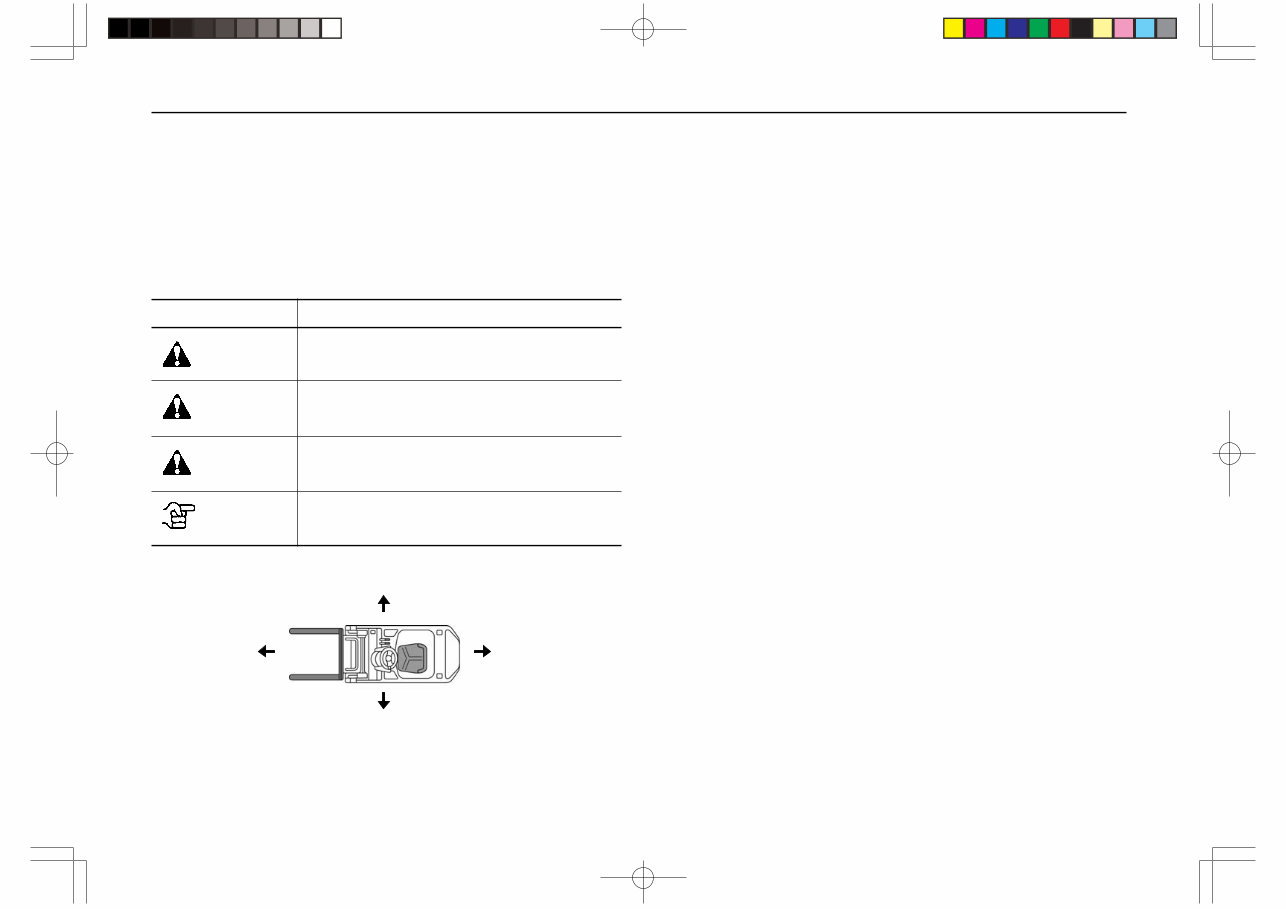
The following symbols, found throughout this manual, alert you
to potentially dangerous conditions to the owner and the
operator. Become completely familiar with the truck before
proceeding with operating, checking and servicing the truck.
This manual and the decals affixed to the truck use the following
safety alert indications.
The diagram above indicates the meanings of the terms
“forward”, “backward”, “right” and “left” used in this manual.
SIGNAL WORD
CLASSIFICATION
Failure to follow the instructions in the
message will likely cause a serious accident
or death.
Failure to follow the instructions in the
message might cause a serious accident or
death.
Failure to follow the instructions in the
message may cause personal injury or
damage to the truck or other property.
The information will help to prolong the
service life of the truck. The message is not
directly related to accident prevention.
DANGER
WARNING
CAUTION
NOTE
Right
Left
Forward
Backward
FOR SUPERVISORS QUALIFIED OPERATORS
1 - 2
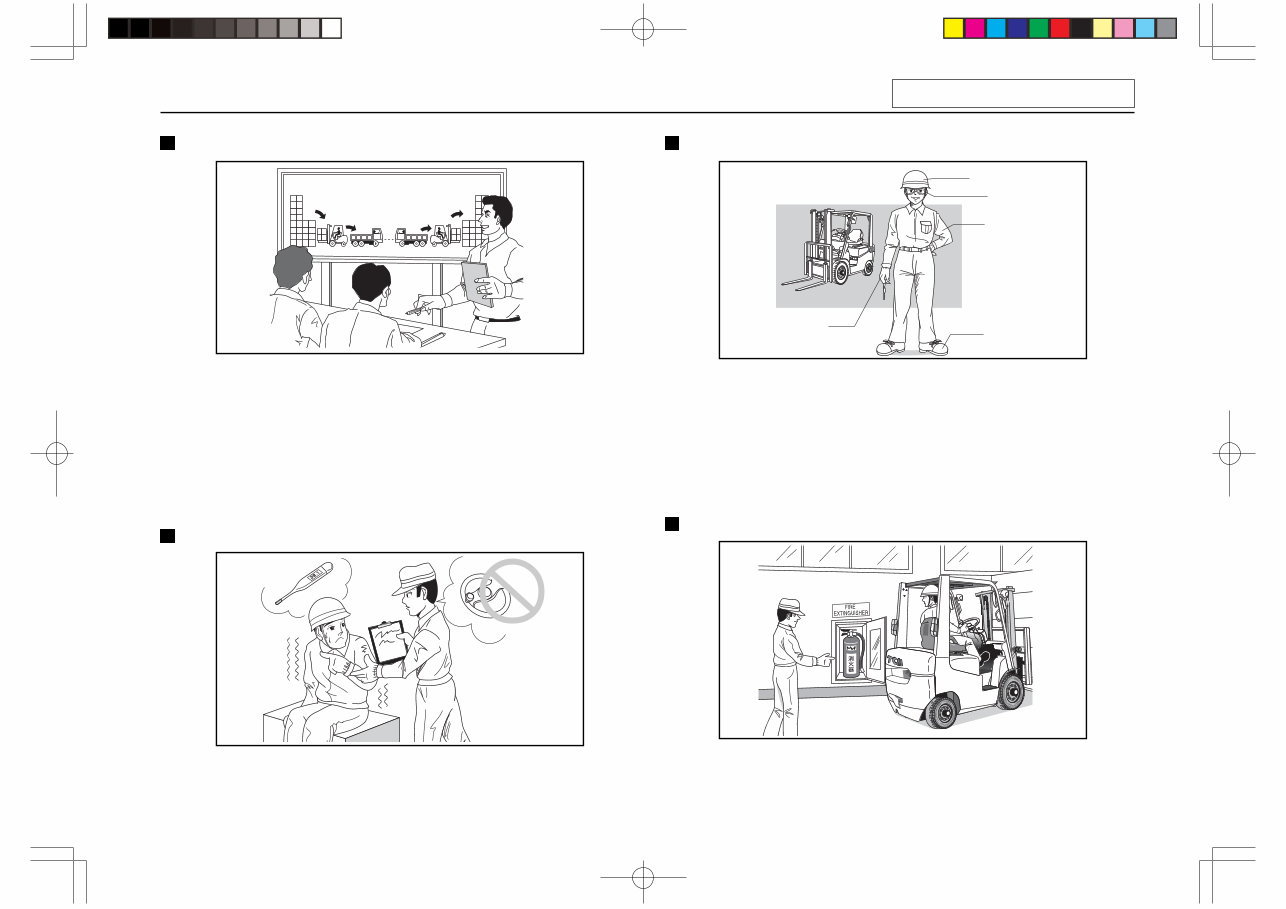
TIRED OR UNWELL? SEND THEM HOME!
Do not let people take chances. An operator who is overworked
or fatigued, an operator who is feeling unwell, or an operator
who is intoxicated must not be allowed in the driver’s seat.
WEAR PROTECTIVE GEAR
• Always wear proper work clothes for driving. Work clothes
should be designed to prevent any part from accidentally
catching on knobs or other parts of the truck or equipment.
For example, shirts and trousers should have tight cuffs.
• Always wear a hard hat and safety shoes.
• Wear other protective gear as appropriate to the conditions
of the work site, i.e., goggles or gloves.
PROVIDE AND MAINTAIN EMERGENCY EQUIPMENT
Fire extinguishers and first aid kits should be provided and
maintained for use in case of a fire or accident. All personnel
should understand the location and use of emergency equipment.
TRAIN OPERATOR TO STACK SAFELY
“Stacking” means piling up a palleted load or material directly on
top of each other, without using racks or shelves to separate them.
If stacking work is not done properly, the loads may slip or fall,
endangering the operator as well as fellow workers in the area.
Safety classes should be held to train all operators in the proper
method of stacking and unstacking loads.
(Your TCM dealer can provide information about safety stacking
training.)
Gloves
Safety
Shoes
Work
Clothes
Goggles
Hard Hat
Stacking
Unstacking
FOR SUPERVISORS PLANNING AND WORKING AREA
1 - 3
KNOW WHO TO CALL IN AN EMERGENCY
Keep information on hand to allow immediate calls for help in
case of a fire, accident or other emergency.
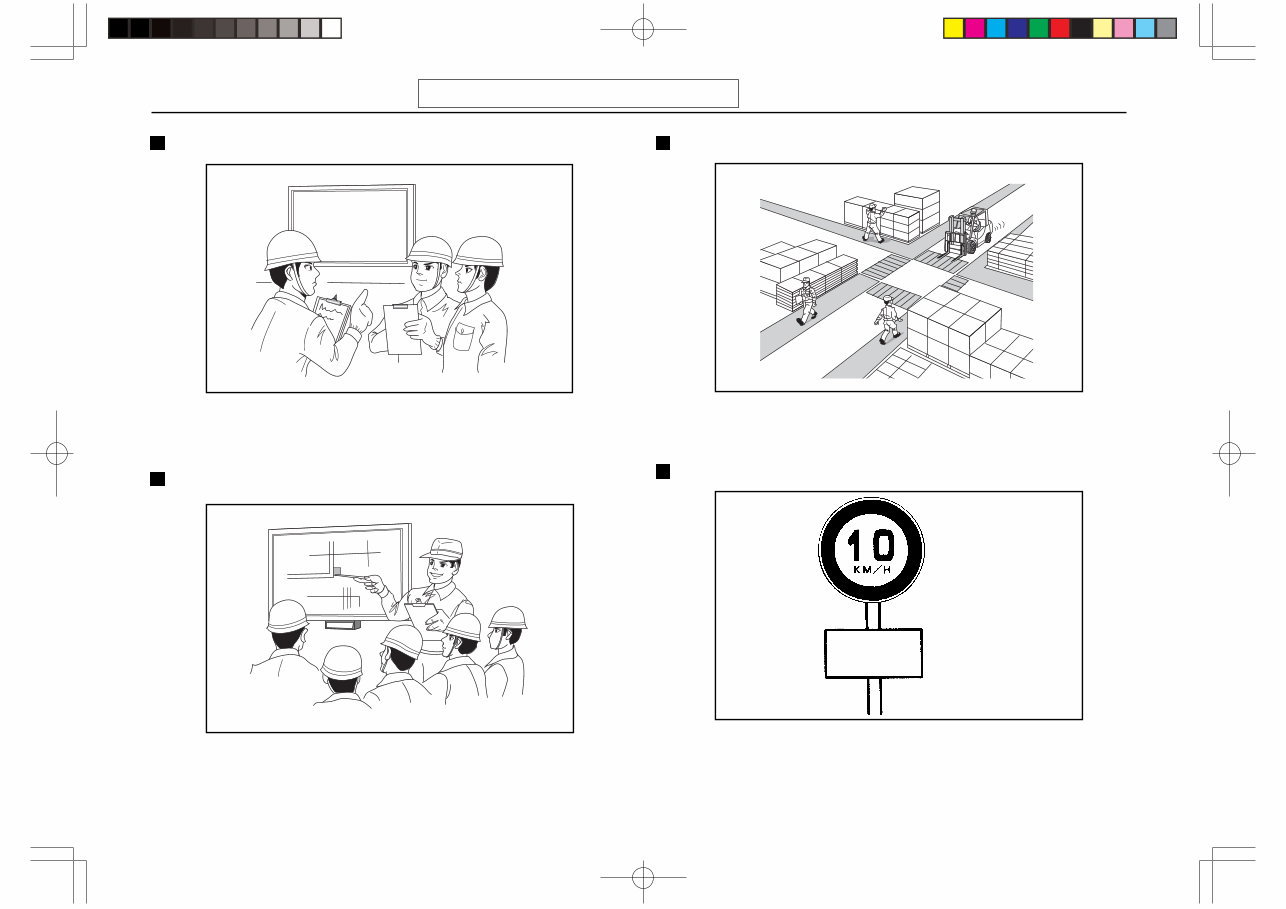
MAKE AN OPERATING PLAN AND DISCUSS IT
MARK THE TRAVEL LANES
Designate the travel lanes for the lift truck and mark them clearly,
so they will be kept free of obstruction.
SET SPEED LIMITS
Set appropriate speed limits on your company grounds, and
post signs that are clearly visible.
(Example)
Yard Speed
Limit
Before using the lift truck, plan out the travel routes and
operating procedures, and thoroughly discuss the details with
all involved personnel.
Contacts in emergency
......................................
......................................
..............................
............................
FOR SUPERVISORS PLANNING AND WORKING AREA
1 - 4
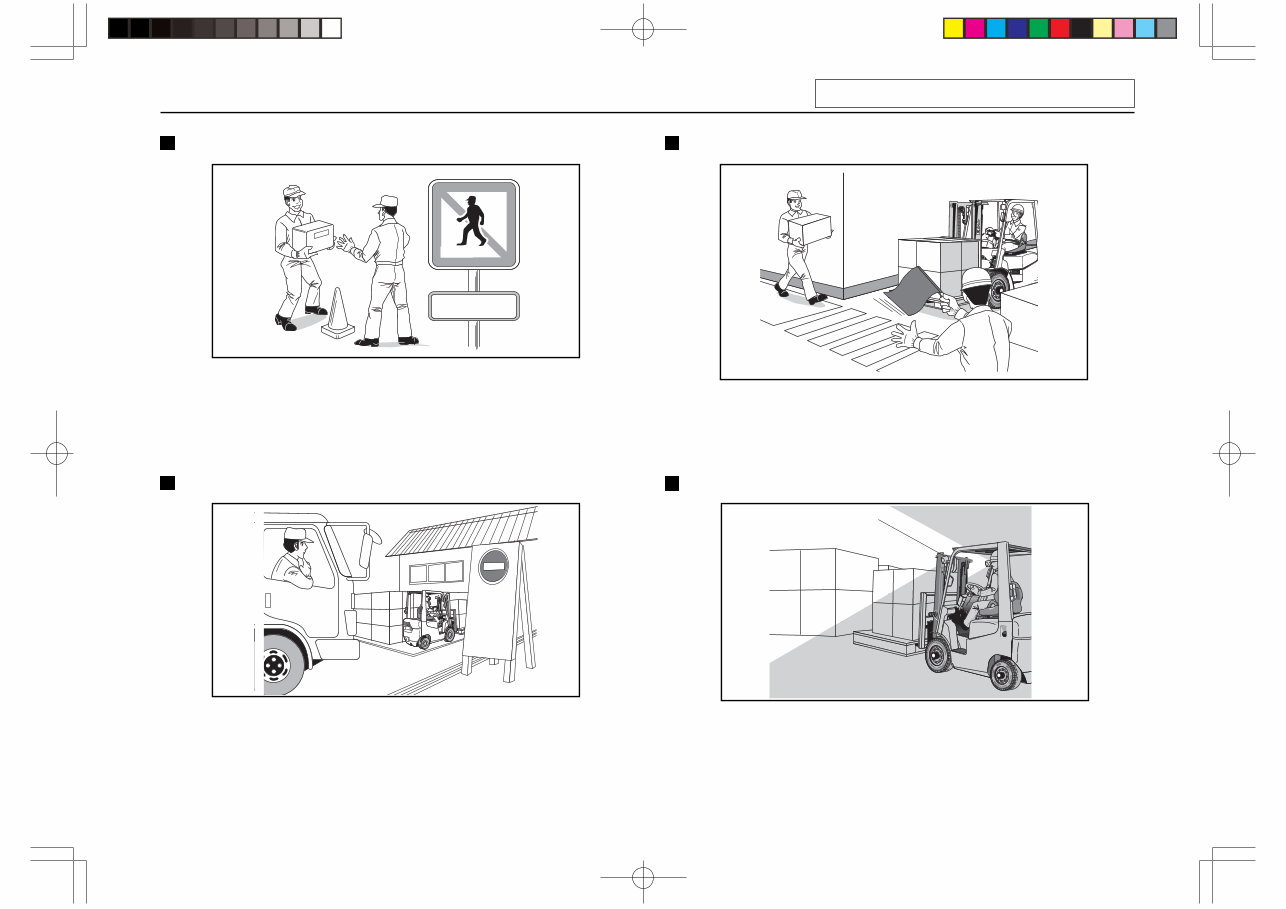
KEEP PEOPLE OUT OF THE OPERATING AREA
No other personnel should be allowed in areas where the lift
truck is used.
Where other people must be present, post a guide whose job
is to make sure people stay clear of moving vehicles.
KEEP UNAUTHORIZED VEHICLES OUT
Unauthorized vehicles must be kept out of the load handling
areas. Post signs or give signals as required.
ASSIGN TRAFFIC GUIDES TO CONGESTED AREAS
Post a traffic guide in confined or congested areas where other
people or vehicles may pass. All personnel must obey the
guide’s signals.
PROVIDE ADEQUATE LIGHTING
Safe operation requires well-lit traveling routes, so pedestrians
and obstacles can be easily seen. Use headlights, taillights,
helmet lamps or other lights as appropriate.
No
Pedestrians
Closed to
Pedestrians
No entry of
unauthorized
vehicles
You're Reading a Preview
What's Included?
 Lifetime Access
Fast Download Speeds
Online & Offline Access
Access PDF Contents & Bookmarks
Full Search Facility
Print one or all pages of your manual
$27.99
TCM FG,FHG,FD,FHD,15-30 operation manual
Viewed 68 Times Today

What's Included?
Lifetime Access
Fast Download Speeds
Online & Offline Access
Access PDF Contents & Bookmarks
Full Search Facility
Print one or all pages of your manual
$27.99

Secure transaction
What's Included?
Lifetime Access
Fast Download Speeds
Online & Offline Access
Access PDF Contents & Bookmarks
Full Search Facility
Print one or all pages of your manual
Description
TCM FG,FHG,FD,FHD,15-30 operation manual.
Please check the preview which has the opening 5 pages of this manual. It lists the models covered.
This operation and maintenance manual provides essential information with regard to the operation and maintenance of this machine. Careful handling, correct periodical inspections and maintenance. This manual should always be present with machine.


