i FOREWORD This service manual is a guide for servicing Mitsubishi Forklift Trucks. The long productive life of your forklift truck(s) depends on regular and proper servicing, servicing consistent with what you will learn by reading this service manual. Read the respective sections of this manual carefully and familiarize yourself with all of the components before attempting to start a test, repair or rebuild the forklift truck. The descriptions, illustrations and specifications contained in this manual are for forklift trucks with serial numbers in effect at the time of printing. Mitsubishi Forklift Trucks reserves the right to change specifications or designs without notice and without incurring obligations. For your convenience the instructions are grouped by systems as an easy reference. Safety related signs Meanings RWARNING Indicates a potentially hazardous situation which, if not avoided, could result in death or serious injury. RCAUTION Indicates a potentially hazardous situation which, if not avoided, may result in minor or moderate injury, or damage to your machine. NOTE Indicates a condition that can cause damage to or shorten service life of the machine. Unauthorized copying and lending are prohibited.
ii 1. Safety R WARNING - The proper and safe lubrication and maintenance for these forklift trucks, recommended by Mitsubishi Forklift Trucks, are outlined in the SERVICE MANUAL. Read and understand the SERVICE MANUAL before performing any lubrication or maintenance on these trucks. Improper performance of lubrication or maintenance procedures is dangerous and could result in injury or death. The serviceman or mechanic may be unfamiliar with many of the systems on this truck. This makes it important to use caution when performing service work. - Do not operate these trucks unless you have read and understood the instructions in the SERVICE MANUAL. Improper truck operation is dangerous and could result in injury or death. A knowledge of the system and/or components is important before the removal or disassembly of any component. Because of the size of some of the truck components, the serviceman or mechanic should check the weights noted in this Manual. Use proper lifting procedures when removing any components. Following is a list of basic precautions that should always be observed. (1) Read and understand all warning plates and decals on the truck before operating, lubricating or repairing the product. (2) Always wear protective glasses and protective shoes when working around trucks. In particular, wear protective glasses when using a hammer or sledge on any part of the truck or its attachments with a hammer or sledge. Use welders gloves, hood/goggles, apron and other protective clothing appropriate to the welding job being performed. Do not wear loose fitting or torn clothing. Remove all rings from fingers when working on machinery. (3) Do not work on any truck that is supported only by lift jacks or a hoist. Always use blocks or jack stands to support the truck before performing any disassembly. (4) Lower the forks or other implements to the ground before performing any work on the truck. If this cannot be done, make sure the forks or other implements are blocked correctly to prevent them from dropping unexpectedly. (5) Use steps and grab handles (if applicable) when mounting or dismounting a truck. Clean any mud or debris from steps, walkways or work platforms before using. Always face truck when using steps, ladders and walkways. When it is not possible to use the designed access system, provide ladders, scaffolds, or work platforms to perform safe repair operations. (6) To avoid back injury, use a hoist when lifting components which weigh 23 kg (51 lb) or more. Make sure all chains, hooks, slings, etc., are in good condition and are of the correct capacity. Be sure hooks are positioned correctly. Lifting eyes are not to be side loaded during a lifting operation. (7) To avoid burns, be alert of the hot sections and hot fluids in lines, tubes and compartments, even when idle or off. (8) Be careful when removing cover plates. Gradually remove the last two bolts or nuts located at opposite ends of the cover or device and pry cover loose to relieve any springs or other pressures, before removing the last two bolts or nuts completely. (9) Be careful when removing filler caps, breathers and plugs on the truck. Wrap a cloth around the cap or plug to prevent being sprayed or splashed by liquids under pressure. Be aware that the danger of being sprayed or splashed is ever greater if it is immediately after stopping the truck, as fluids is very hot. (10) Use tools well maintained. And use the tools in proper way. (11) Reinstall all fasteners with same part number. Do not use a lesser quality fastener if replacements are necessary. (12) If possible, make all repairs with the truck parked on a level, hard surface. Block truck so it does not roll while working on or under truck. (13) Before starting to work on truck, hang "Do not Operate" tag in the Operator Compartment. (14) Repairs, which require welding, should be performed only with the appropriate reference information and by personnel adequately trained and knowledgeable in welding procedures. Determine the type of metal and select the correct welding procedure and electrodes, rods or wire to provide a weld metal strength equivalent at least to that of parent metal. (15) Do not damage wiring during the removal process. Do not reuse the damaged wiring. Reinstall the wiring paying attention not to contact sharp corners or hot parts. Place wiring away from oil pipe. (16) Be sure all protective devices including guards and shields are properly installed and functioning correctly before starting a repair. If a guard or shield must be removed to perform the repair work, use extra caution. (17) Always support the mast and carriage to keep carriage or attachments raised when maintenance or repair work is performed, which requires the mast in the raised position. (18) Loose or damaged fuel, lubricant and hydraulic lines, tubes and hoses could cause fires. Do not bend or strike high pressure lines or install ones which have been bent or damaged. Inspect lines, tubes and hoses carefully. Do not check for leaks with your hands. Pin hole (very small) leaks could result in a high velocity oil stream that will be invisible close to the hose. This oil could penetrate the skin and cause personal injury. Use cardboard or paper to locate pin hole leaks.
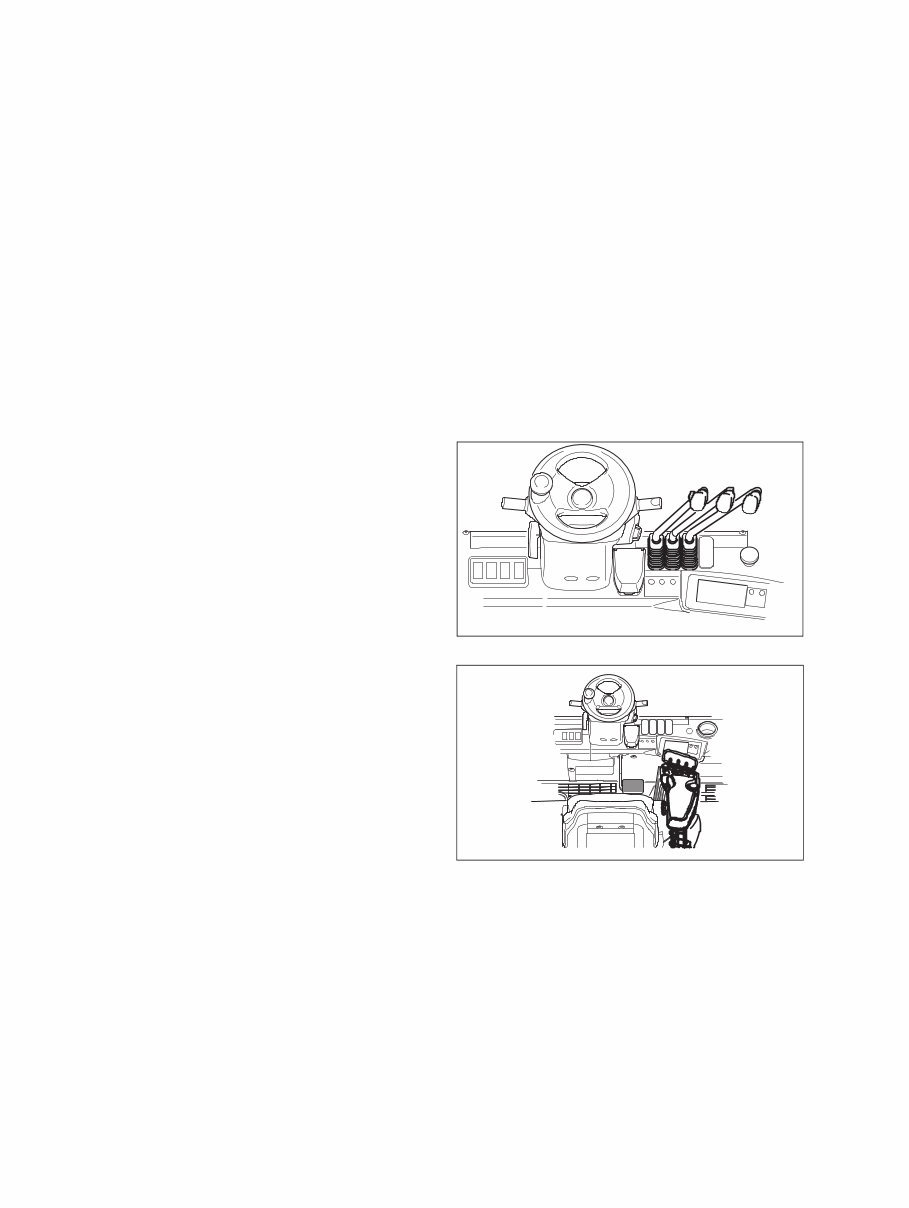
iii 2. How to Use This Manual 2.1 Truck Model (19) Tighten connections to the correct torque. Make sure that all heat shields, clamps and guards are installed correctly to avoid excessive heat, vibration or rubbing against other parts during operation. Shields that protect against oil spray onto hot exhaust components in event of a line, tube or seal failure, must be installed correctly. (20) Relieve all pressure in air, oil or water systems before any lines, fittings or related items are disconnected or removed. Place blocks to prevent a device from falling if it is in the raised position. Release the residual pressure when removing a pressurized device. (21) Do not operate a truck if any rotating part is damaged or contacts any other part during operation. Any high speed rotating component that has been damaged or altered should be checked for balance before reusing. MC Truck (Manual Control System) Mechanically controlled hydraulic system (conventional lever system) 501489 FC (Fingertip Control System) Truck This model allows a fingertip operation of lifting and tilting jobs, and may improve the job efficiency with less operation fatigue. 501490
iv 3. Symbols and Abbreviations 4. Units Symbol or abbreviation Meanings OP. Option R1/4 Taper pipe thread (external) 1/4 inch (formerly PT1/4) Rc1/8 Taper pipe thread (internal) 1/8 inch (formerly PT1/8) G1/4A Straight pipe thread (external) 1/4 inch (formerly PF1/4-A) Rp1/8 Straight pipe thread (internal) 1/8 inch (formerly PS1/8) - SI Units are used in this manual. - The following table shows the conversion of SI unit and customary unit. Item SI unit Metric unit Yard-pound unit Force 1 N 0.102 kgf 0.225 lbf Pressure 1 MPa 10.1972 kgf/cm 2 145.038 psi Torque 1 N·m 0.102 kgf·m 0.7376 lbf·ft Length 1 mm - 0.039 in. 1 m - 3.281 feet Weight 1 kg - 2.205 lb Temperature 1 °C - °F=1.8 x °C+32 Volume 1 L - 0.264 US.gal.
This workshop service repair manual is an essential resource for maintaining and repairing Mitsubishi FB13PNT, FB15PNT, FB16CPNT, FB18CPNT, FB16PNT, FB18PNT, FB20PNT, FB16CPN, FB18CPN, FB16PN, FB18PN, and FB20PN controller forklift trucks. Whether you are a professional mechanic or a DIY enthusiast, this manual provides high-quality diagrams and instructions to guide you through servicing and repairing your Mitsubishi forklift.
The manual covers a range of topics including troubleshooting for control circuits, motors, reading circuit diagrams, and circuit diagram interpretation. It is available for instant download upon secure payment, eliminating shipping costs and waiting time for delivery. Compatible with all versions of Windows and Mac, as well as various mobile devices, this manual is a valuable tool for saving on service repair and maintenance costs.












 Lifetime Access




