Chapter 20 Chapter 30 Chapter 31 Chapter 40 Chapter 00 Checks and adjustments Removal and installation of parts Masts Electrical section Chapter 10 Technical operating information Introduction
1 00 - Ed. 03/2002 • Rev. 09/2002 Series 4016 • 4017 INTRODUCTION 00.1 - GENERAL SAFETY INSTRUCTIONS. ............................................................... 2 Avoiding accidents .............................................................................................. 2 Safety instructions ............................................................................................... 2 Electrical system ................................................................................................. 5 Hydraulic system ................................................................................................. 5 Detaching and reattaching parts ......................................................................... 5 00.2 - SAFETY WARNINGS FOR OPERATING THE TRUCK. .................................... 6 Safety instructions if the truck tips over ............................................................... 6 Safety instructions for operating the truck ........................................................... 7 00.3 - LOCATION OF WARNING PLATES. ................................................................. 8 Description of the plates ...................................................................................... 9 00.4 - SAFETY DEVICES ON THE TRUCK. .............................................................. 10 Operator sensor ................................................................................................ 10 Handbrake microswitch ..................................................................................... 10 Operation sequence control .............................................................................. 10 00.5 - HOW TO USE THE SHOP MANUAL. .............................................................. 11 00.6 - TRANSPORTING AND LIFTING THE TRUCK. ............................................... 12 Transporting the truck ....................................................................................... 12 Environmental conditions for transporting and storing the truck ....................... 12 Loading and unloading the truck ....................................................................... 12 Chapter 00 CONTENTS
Ed. 03/2002 • Rev. 09/2002 - 00 2 Series 4016 • 4017 00.1 - GENERAL SAFETY INSTRUCTIONS PAY ATTENTION TO THIS SYMBOL This symbol indicates that the health and safety of people are at risk; it provides warning that safety precautions must be taken to prevent accidents. It means “ATTENTION – BE CAREFUL – YOUR SAFETY IS AT RISK” AVOIDING ACCIDENTS The majority of mishaps or accidents occur in the shop as a result of someone failing to observe the basic, simple safety precautions and standards in place. Most accidents and their consequences can be avoided by exercising the necessary caution and good sense to prevent them from happening in the first place. No matter how well a machine has been engineered or built, it is impossible to eliminate all the causes of accidents, but a careful and prudent mechanic can offer the best guarantee against mishaps. Simply observing a single, basic safety precaution with scrupulous attention is often enough to avoid many serious accidents. SAFETY INSTRUCTIONS General description Follow all maintenance and repair procedures carefully. ATTENTION Never clean, lubricate, or maintain a vehicle while the battery is still connected. • Do not wear rings, wristwatches, jewelry, or loose and dangling clothing such as ties, torn clothing, scarves, unbuttoned or unzipped jackets that could become caught in moving parts. • Wear approved, protective clothing such as hard hats, non-slip shoes, gloves, and safety glasses. • Do not service the machine if someone is in the operator’s seat unless it is a qualified technician helping with the maintenance operations. • Do not operate the machine or its equipment from anywhere except the operator’s seat. • Stop the engine and make sure that the pressure has been released from all hydraulic systems before removing caps or covers. • Refer to the appropriate instructions in this manual. • Take all the necessary precautions when performing any service operation. • Make sure that ladders and service platforms used in the shop or at the site comply with current safety standards.
3 00 - Ed. 03/2002 • Rev. 09/2002 Series 4016 • 4017 • Label all the controls to indicate that the vehicle is being serviced. Place blocks under the machine or any part that must be lifted. • Do not smoke while checking or topping up the fuel tank, hydraulic oil tank, or the battery due to the flammability of the fluids. • Stabilize the machine with blocks or other similar devices because the brakes become inactive when released manually for the purposes of servicing the machine. • Connect trailers carefully by means of the fixed hitch points only, and make sure that the pins and/or bolts are firmly in place before towing. Do not stand near tow bars, cables, or chains that are under strain. • Use a trailer or lowered flatbed truck, if available, to transport a broken down machine. • Load and unload the machine onto or from the transport vehicle on a flat area that firmly supports the wheels of the trailer or the truck. • Secure the machine firmly to the flatbed of the truck or trailer and block the wheels. • Use only ancillary sources of power that are adequately grounded to avoid electric shocks when using electric heaters, battery chargers, or other similar equipment. • Lift or transport heavy parts by means of a crane or other similar equipment that is capable of handling the weight, and make sure that no one is in the vicinity. • Be alert if people are in the vicinity. • Never pour gasoline or diesel fuel into open, wide and low containers to prevent spillage or inflammable fumes from collecting. • Never use gasoline, diesel, or other inflammable liquids as detergents. Use commercial, non-toxic, non-flammable solvents instead. • Wear wrap-around safety glasses when using compressed air to clean parts. • Limit pressure to a maximum of 2.1 bars, in accordance with current local or national regulations. • Do not smoke or use an open flame or cause sparks when working near or handling inflammable materials. • Do not use an open flame as a means of illumination when performing operations or to look for “leaks” from the machine. • Leave all the safety devices in place when operating the machine • Do not leave a machine with moving parts unattended. • Always apply the parking brake and switch off the engine before leaving the operator’s seat. Remove the ignition key. • Switch off the engine before freeing a part that has become stuck for some reason. • Move around very carefully when performing work under, on, or near the machine. • Wear appropriate safety clothing, such as hard hats, glasses, and safety shoes.
Ed. 03/2002 • Rev. 09/2002 - 00 4 Series 4016 • 4017 • Take the machine to a flat area and place blocks under the wheels if it needs to be serviced outside the shop. If servicing the machine on a slope cannot be avoided, place blocks under the wheels then move it to a flat area as soon as it is safe to do so. • Do not use dented or bent chains or cables to lift or pull machinery. Always wear safety gloves to handle this type of equipment. • Attach chains securely, making sure that the attachment is capable of supporting the load and that no one is in the vicinity of the attachment, the chains, or cables. • Keep the maintenance area clean and dry. Clean up water puddles or oil stains immediately. • Do not pile up rags soaked in grease or oil because they pose a serious fire hazard. • Keep them in a closed, metal container. • Check, adjust, and lock the operator’s seat in place before starting the machine or other equipment. • Make sure that no one is within the radius of action of the machine or equipment. • Do not carry objects in your pockets that may fall unnoticed into the machine. • Wear wrap-around glasses, hard hats, safety shoes and gloves if there is a danger of being struck by metal parts or similar objects. • Wear protective clothing such as dark glasses, hard hats, overalls, gloves and shoes when operating a welder. Even individuals who are not actually welding but are in the vicinity should also wear dark glasses. Never look at the welding arc without wearing adequate eye protection. • Always wear safety clothing, such as gloves, glasses, etc., to handle metal cables because they become frayed with use. • Handle all parts carefully. Keep hands and fingers away from cracks, gears, and similar areas. • Always wear approved safety clothing, such as safety shoes and glasses. • Use a pit or a vehicle lift that can support the weight of the truck when working underneath it. • Remove all tools from the machine after every maintenance operation; check that there are no loose parts or screws. • Check that the lights are in the correct position and working properly before driving on the road at night.
5 00 - Ed. 03/2002 • Rev. 09/2002 Series 4016 • 4017 ELECTRICAL SYSTEM Remember that when working with batteries, the ends of the cables must be connected to the terminals as follows: (+) with (+) and (-) with (-). Do not short-circuit the terminals. The fumes emitted from the battery are highly flammable. When recharging the battery, leave the battery compartment open to ventilate the area more effectively and remove the caps. Never check the status of the battery charge by the “sparks” that occur when metal objects are placed on the terminals. Avoid creating sparks or flames near the battery. Do not smoke near the battery to avoid the risk of explosions. Check for electrolyte leaks and eliminate them if necessary before performing any operation. Check for short-circuits and eliminate them if necessary before performing any operation. Do not recharge the battery in a closed environment; make sure that there is adequate ventilation to avoid accidental explosions from fumes that have accumulated while the battery is recharging. HYDRAULIC SYSTEM Fluid trickling from a tiny hole may be almost invisible and have enough force to penetrate the skin, in which case, always use a piece of cardboard to check for leaks rather than your hands. If the fluid does come into contact with the skin, seek emergency medical help immediately to prevent a possible infection or skin disease that may result. Use the appropriate instruments to check the pressure of the hydraulic system. DETACHING AND REATTACHING PARTS Lift and handle heavy parts with a lifting means that is capable of handling the weight. Use the appropriate hooks and slings to support the parts, and use the ringbolts provided for this purpose. Be alert if people are in the vicinity of the load being lifted. Handle all parts very carefully. Do not put your hands or fingers between parts. Wear approved safety clothing such as safety glasses, gloves, and shoes. Avoid twisting the chains or metal cables. Always wear safety gloves to handle the cables and chains.
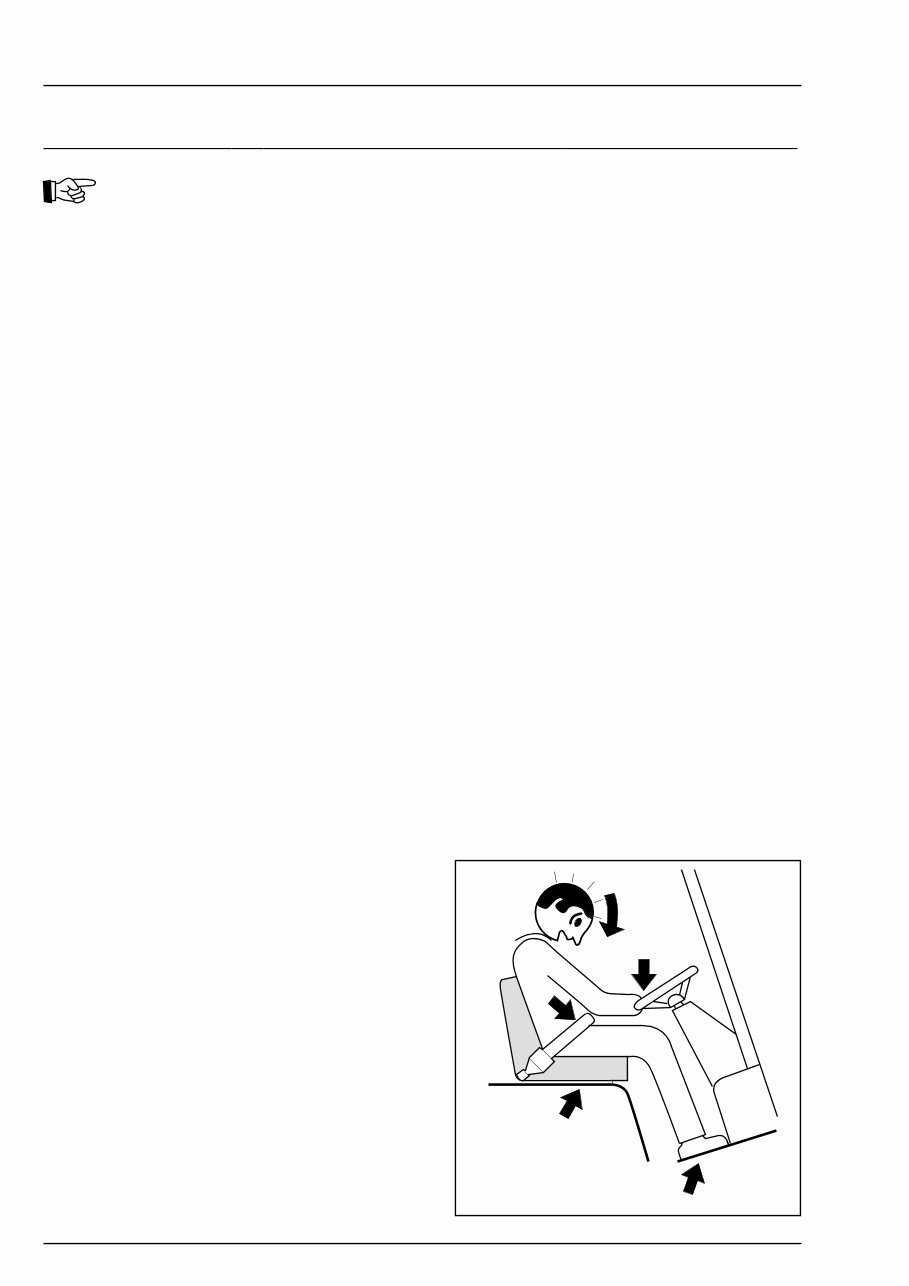
Ed. 03/2002 • Rev. 09/2002 - 00 6 Series 4016 • 4017 a b b c d OM0060 00.2 - SAFETY W ARNINGS FOR OPERA TING THE TRUCK IMPORTANT: Below is a partial list of safety instructions that must be observed. These rules form part of, and do not replace, the standards described in the “Safety Instructions for Industrial Forklift Trucks” manual provided with the truck. • Do not allow the truck to be used by unqualified, untrained, or unauthorized persons. • Do not install attachments on the truck unless they have been supplied or approved by the manufacturer. • Always maintain the truck in good condition, a prerequisite for minimizing risks. • Keep the warning notices on the truck in good condition, and replace them if they are damaged. • Carefully read and observe all the safety instructions on the truck. • Make sure that there is enough free space above the truck. • Do not park the truck in front of fire extinguishers, emergency exit stairs, or anywhere where it can block traffic. • Do not use the truck if it shows signs of damage or breakage and cannot be used safely, in which case stop the vehicle, park it, and notify the maintenance supervisor. • Pay attention to the distance that must be maintained when working near overhead high-tension wires. Observe the safe distances established by the responsible authorities. • Never lift loads with only one fork. • Lift loads by inserting the forks in the load center. Driving with off-center loads at the side or front may compro- mise the stability of the truck. • Make sure that the surface supporting the load can carry the weight. • Always use protective clothing in accordance with current regulations. • Do not drive over uneven or obstructed terrain or steps. • Do not drive with loads elevated more than 300 mm from the ground and with the mast NOT tilted backward. • Do not turn around or stack on slopes. • Do not exceed the carrying capacity limits indicated on the appropriate plates. • Always use the operator safety devices (for example, safety belt, etc.). SAFETY INSTRUCTIONS IF THE TRUCK TIPS OVER Carefully follow the instructions below if the truck starts to tip over due to incorrect maneuvers: a) Do not abandon the truck b) Remain securely in the seat, grasp the steering wheel, and keep your feet firmly on the floor. c) Bend your head forward and move your body in the opposite direction to which the truck is tilting. d) If the truck tips over, wait until it has reached a stable position before climbing out.
You're Reading a Preview
What's Included?
Lifetime Access
Fast Download Speeds
Online & Offline Access
Access PDF Contents & Bookmarks
Full Search Facility
Print one or all pages of your manual
$36.99
Komatsu 4016 Series (FB12M-2R, FB15M-2R, FB18M-2R), 4017 Series (FB15-2R, FB18-2R) Forklift Trucks Service Repair Manual
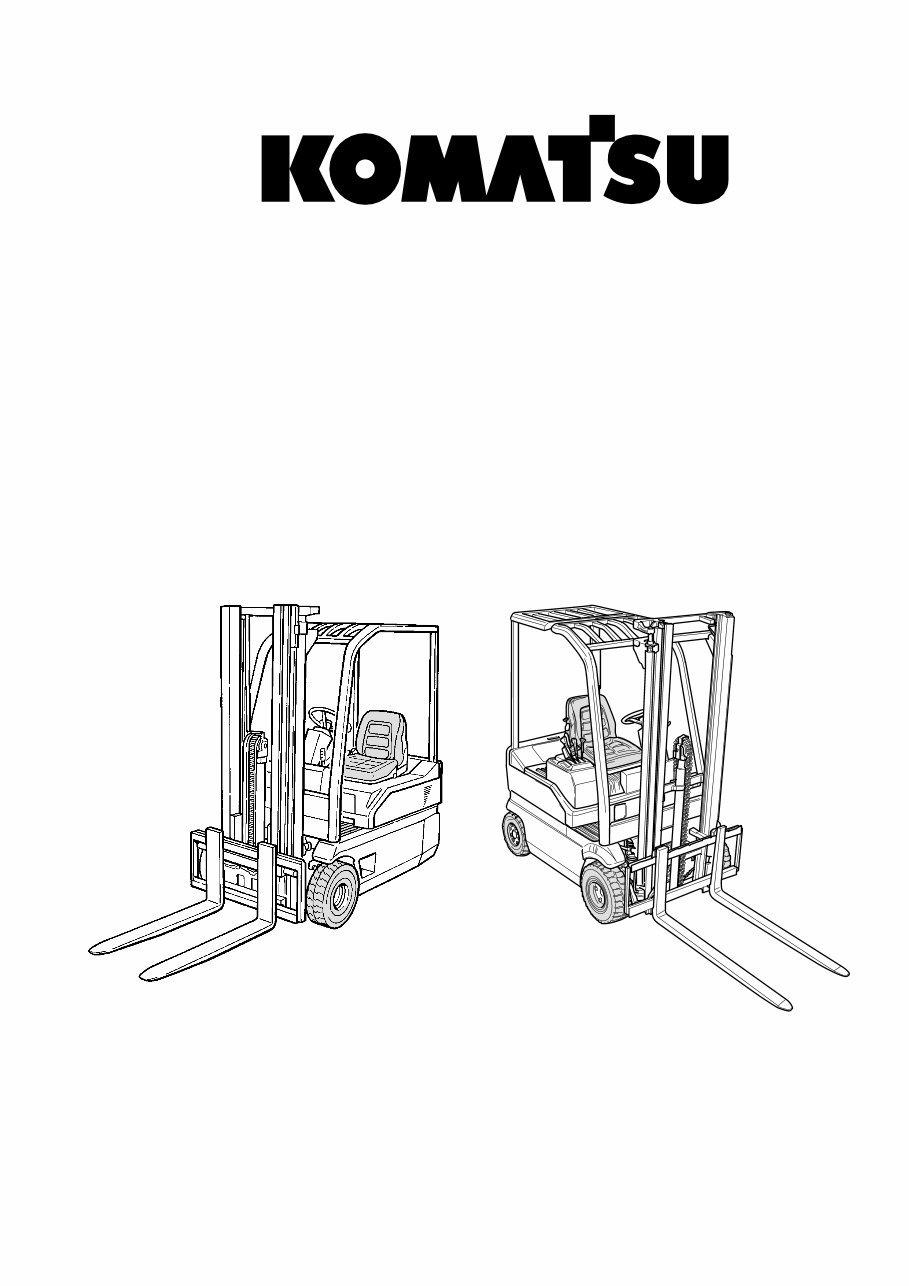
This is a complete service repair manual for the Komatsu 4016 Series (FB12M-2R, FB15M-2R, FB18M-2R) and 4017 Series (FB15-2R, FB18-2R) forklift trucks. The manual contains comprehensive information about maintenance, assembly, disassembly, and servicing of your Komatsu forklift trucks.
Models Covered:
Komatsu 4016 Series (FB12M-2R, FB15M-2R, FB18M-2R) forklift trucks
Komatsu 4017 Series (FB15-2R, FB18-2R) forklift trucks
Table of Contents:
Introduction
Technical operating information
Checks and adjustments
Removal and installation of parts
Masts
Electrical section
Model Specification: Komatsu 4016 Series (FB12M-2R, FB15M-2R, FB18M-2R), 4017 Series (FB15-2R, FB18-2R) forklift trucks
Language: English
Total Pages: 345
File Format: PDF
Requirements: Adobe Reader
Compatible: All Versions of Windows & Mac
This manual contains information, data, specifications, diagrams, actual real photo illustrations, and schemes for the specified model. It is an essential resource for diagnosing, repairing, and maintaining Komatsu machinery.
All manuals are compatible with Windows 8, Windows 7, Vista 32 and 64, XP, ME, 98, NT, 2000, and Mac operating systems.
Find it, print it, use it, and then dispose of it. The manual includes numerous pictures and diagrams for easy reference. All pages are printable, allowing you to have the necessary information in the garage or workshop. By following the step-by-step instructions, these manuals make it easy for any skill level to save money by performing their own repairs.
Reviews
Q&A
Recently Viewed
5,521,897Happy Clients
2,594,462eManuals
1,120,453Trusted Sellers
15Years in Business
Price:
Actual Price:
Komatsu 4016 Series (FB12M-2R, FB15M-2R, FB18M-2R), 4017 Series (FB15-2R, FB18-2R) Forklift Trucks Service Repair Manual









 Lifetime Access