



Service Manual
G430E/G643E Tier LP Engine
Lift Trucks
G20P-3, G25P-3, G30P-3, G32P-3, G33P-3
GC20P-3, GC25P-3, GC30P-3, GC32P-3
With G430E Tier LP Engine
G35S-2, G40S-2, G45S-2, G50C-2
G50S-2, G60S-2, G70S-2
with G643E Tier LP Engine
SB4137E00
May. 2004


1
Important Safety Information
Most accidents involving product operation, maintenance and repair are caused by failure to observe basic safety
rules or precautions. An accident can often be avoided by recognizing potentially hazardous situations before an
accident occurs. A person must be alert to potential hazards. This person should also have the necessary training,
skills and tools to perform these functions properly.
Read and understand all safety precautions and warnings before operating or performing lubrication,
maintenance and repair on this product.
Basic safety precautions are listed in the “Safety” section of the Service or Technical Manual. Additional safety
precautions are listed in the “Safety” section of the owner/operation/maintenance publication.
Specific safety warnings for all these publications are provided in the description of operations where hazards exist.
WARNING labels have also been put on the product to provide instructions and to identify specific hazards. If
these hazard warnings are not heeded, bodily injury or death could occur to you or other persons. Warnings in this
publication and on the product labels are identified by the following symbol.
WARNING
Improper operation, lubrication, maintenance or repair of this product can be dangerous and could result
in injury or death.
Do not operate or perform any lubrication, maintenance or repair on this product, until you have read and
understood the operation, lubrication, maintenance and repair information.
Operations that may cause product damage are identified by NOTICE labels on the product and in this publication.
DAEWOO cannot anticipate every possible circumstance that might involve a potential hazard. The warnings in
this publication and on the product are therefore not all inclusive. If a tool, procedure, work method or operating
technique not specifically recommended by DAEWOO is used, you must satisfy yourself that it is safe for you and
others. You should also ensure that the product will not be damaged or made unsafe by the operation, lubrication,
maintenance or repair procedures you choose.
The information, specifications, and illustrations in this publication are on the basis of information available at the
time it was written. The specifications, torques, pressures, measurements, adjustments, illustrations, and other
items can change at any time. These changes can affect the service given to the product. Obtain the complete and
most current information before starting any job. DAEWOO dealers have the most current information available.


G430E/G643E Tier LP Engine Table of contents 3
WARNING
Read this entire manual and all other publications pertaining to the work to be performed before installing,
operating, or servicing this equipment. Practice all plant and safety instructions and precautions. Failure to follow
instructions can cause personal injury and/or property damage.
The engine or other type of prime mover should be equipped with an over speed (over temperature, or
overpressure, where applicable) shutdown device(s), that operates totally independently of the prime mover
control device(s) to protect against runaway or damage to the engine or other type of prime mover with possible
personal injury or loss of life should the mechanical-hydraulic governor(s) or electric control(s), the actuator(s), fuel
control(s), the driving mechanism(s), the linkage(s), or the controlled device(s) fail.
CAUTION
To prevent damage to a control system that uses an alternator or battery-charging device, make sure the charging
device is turned off before disconnecting the battery from the system. Electronic controls contain static-sensitive
parts. Observe the following precautions to prevent damage to these parts.
Discharge body static before handling the control (with power to the control turned off, contact a grounded
surface and maintain contact while handling the control).
Avoid all plastic, vinyl, and Styrofoam (except antistatic versions) around printed circuit boards.
Do not touch the components or conductors on a printed circuit board with your hands or with conductive
devices.
IMPORTANT DEFINITIONS
WARNING—indicates a potentially hazardous situation, which, if not avoided, could result in death or
serious injury.
CAUTION—indicates a potentially hazardous situation, which, if not avoided, could result in damage to
equipment.
NOTE—provides other helpful information that does not fall under the warning or caution categories.
* This manual shows just LP fuel and engine control system for TIER- LP engine, so regarding
other ares(basic engine), please refer to the separate manual of SB4005E for G430 and SB2110E &
SB2111E for G643.


G430E/G643E Tier LP Engine Table of contents 5
Index
WORKING WITH LPG EQUIPMENT
CHAPTER 0 LPG AND LPG FUEL TANKS
LPG Fuel Supply ........................................................ 8
LPG Fuel Tanks.......................................................... 9
Installing LPG Fuel Tanks .......................................... 9
LPG Fuel Tank Components ...................................... 9
Fuel Gauge .............................................................. 10
Pressure Relief Valve ............................................... 10
Service Valve ........................................................... 10
Quick Disconnect Coupling ...................................... 11
Filler Valve................................................................ 11
CHAPTER 1 G430E & G643E ENGINE
SPECIFICATION
Indication of Engine Serial Number ......................... 12
Specifications (G430E) ............................................ 13
Specifications (G643E) ............................................ 14
CHAPTER 2 MI-04 LPG SYSTEM
OPERATIONAL OVERVIEW G430E &
G643E
MI-04 General Description ....................................... 15
MI-04 LP Fuel Filter.................................................. 18
MI-04 Fuel Lock-Off (Electric) .................................. 18
MI-04 N-2001 Regulator/Converter.......................... 19
N-2001 Theory of Operation .................................... 20
MI-04 N-CA55-500TR Mixer .................................... 21
N-CA55-500-TR Air/Fuel Mixer Theory of
Operation ................................................................. 21
MI-04 (N-CA100TR Mixer) ....................................... 23
N-CA100TR Air/Fuel Mixer Theory of Operation...... 24
MI-04 Electronic Throttle .......................................... 25
MI-04 Fuel Trim Valve .............................................. 26
Heated Exhaust Gas Oxygen Sensor (HEGO) ........ 27
MI-04 SECM (General Description) ......................... 28
MI-04 SECM (Fuel Management) ............................ 28
MI-04 SECM (Load/Speed Management) ................ 30
MI-04 Ignition management ..................................... 32
CHAPTER 3 MI- 4 MAINTENANCE
SCHEDULE
RECOMMENDED MAINTENANCE SCHEDULE.....33
Test Fuel System for Leaks ......................................33
Inspect Engine for Fluid Leaks .................................33
Inspect Vacuum Lines and Fittings...........................33
Inspect Electrical System .........................................33
Inspect Acceleration Pedal Operation ......................34
Check Coolant Level ................................................34
Inspect Coolant Hoses .............................................35
Inspect Battery System ............................................35
Inspect Ignition System ............................................35
Replace Spark Plugs ................................................36
Replace LP Fuel Filter Element ................................36
Testing Fuel Lock-off Operation ...............................37
Pressure Regulator/Converter Testing and
Inspection .................................................................38
Fuel Trim Valve Inspection (FTV) .............................38
Inspect Air/Fuel Valve Mixer Assembly.....................38
Inspect for Intake Leaks ...........................................38
Inspect Throttle Assembly ........................................39
Checking the TMAP Sensor .....................................39
Inspect Engine for Exhaust Leaks ............................39
Replace Oxygen Sensor ..........................................39
Maintenance Schedule .............................................40
CHAPTER 4 MI-04 LP BASIC
TROUBLESHOOTING
Basic Troubleshooting ..............................................42
CHAPTER 5 MI-04 LP ADVANCED
DIAGNOSTICS
Advanced Diagnostics ..............................................49
Reading Diagnostic Fault Codes ..............................49
Displaying Fault Codes (DFC) From SECM
Memory ....................................................................50
Clearing Fault (DFC) Codes .....................................50
Fault Action Descriptions ..........................................50
Fault List Definitions .................................................51
Table a. MI-04 Diagnostic Fault Codes
(Flash Codes) ...........................................................53
CHAPTER 6 MI-04 ELECTRICAL
CONNECTIONS
Resistance Checks...................................................67
Voltage Checks ........................................................68

G430E/G643E Tier LP Engine Table of contents 6
CHAPTER 7 N2001 PRESSURE
REGULATOR/CONVERTER
Removal and Installation of N2001 LP
Regulator/Converter................................................. 69
Hose Connections.................................................... 70
N2001 Removal Steps: ............................................ 72
N2001 Regulator Disassembly Steps: ..................... 73
N2001 Disassembled Service .................................. 75
CHAPTER 8 N-CA55-500TR AIR/FUEL
MIXER
Removal and Installation of the N-CA55-500TR
Mixer ........................................................................ 76
N-CA55-500TR Mixer Removal Steps: .................... 77
N-CA55-500TR Disassembly and Service ............... 78
N-CA55-500TR Disassembled Service.................... 80
Installing the Mixer/Throttle Assembly ..................... 81
CHAPTER 9 N-CA100TR AIR/FUEL MIXER
Removal and Installation of the N-CA100TR Mixer . 84
N-CA100TR Mixer Removal Steps: ......................... 85
N-CA100TR Disassembly and Service .................... 86
N-CA100TR Disassembly and Service .................... 86
N-CA100TR Disassembled Service ......................... 87
Installing the Mixer/Throttle Assembly ..................... 88
CHAPTER 10 TEST AND ADJUSTMENTS
N2001 Service Testing ............................................. 90
Primary Stage Test Hardware .................................. 91
Primary Stage Pressure Test.................................... 92
N-CA55-500TR Service AVV (Air Valve Vacuum)
Testing...................................................................... 93
N-CA100TR Service AVV (Air Valve Vacuum)
Testing...................................................................... 93
Ignition Timing Adjustment ....................................... 94
Final Timing and Idle Mixture Adjustment ................ 95
Idle Mixture Adjustment ............................................ 97
CHAPTER 11 SERVICE TOOL KIT
Service Tool Kit ........................................................ 98
G430E/G643E Tier LP Engine LPG and LPG Fuel Tanks 7
WORKING WITH LPG
EQUIPMENT
WARNING
Propane Vapor is heavier than air and can collect in
low areas when adequate ventilation or air movement
is not present to disperse it. Never check for leaks
with a flame or match. Use a leak detector solution or
an electronic detector. Make sure the container
service valve is closed when connecting or
disconnecting. If the container service valve does not
operate properly, discontinue use and contact your
propane supplier. Never insert any object into the
pressure relief valve.
WARNING
LP gas is highly flammable. To prevent personal
injury, keep fire and flammable materials away
from the lift truck when work is done on the fuel
system.
Gas vapor may reduce oxygen available for
breathing, cause headache, nausea, dizziness
and unconsciousness and lead to injury or death.
Always operate the forklift in a well ventilated
area.
Liquid propane may cause freezing of tissue or
frostbite. Avoid direct contact with skin or tissue;
always wear appropriate safety protection
including gloves and safety glasses when
working with liquid propane.
CAUTION
The regulator/converter and mixer are part of a
certified system complying with EPA and CARB 2004
requirements. Only trained certified technicians
should perform disassemble, service or replacement
of the regulator/converter or mixer.
CAUTION
LPG fueled machinery may be garaged anywhere
gasoline powered vehicles are garaged. When
machines are stored for a long period, it is advisable
to shut off the tank supply valve and run the machine
until the fuel trapped down stream of the valve is
depleted.
NOTE
NFPA (National Fire Protection Agency) 58 covers the
procedures for storage and garaging for repair
purposes, on propane powered equipment.
CAUTION
Safety is an important consideration for any repair
facility, and repairing LPG fueled machinery is no
exception. Refer to the NFPA (National Fire
Protection Agency) for the appropriate fire
extinguisher specifications and fluorescent lighting
requirements.
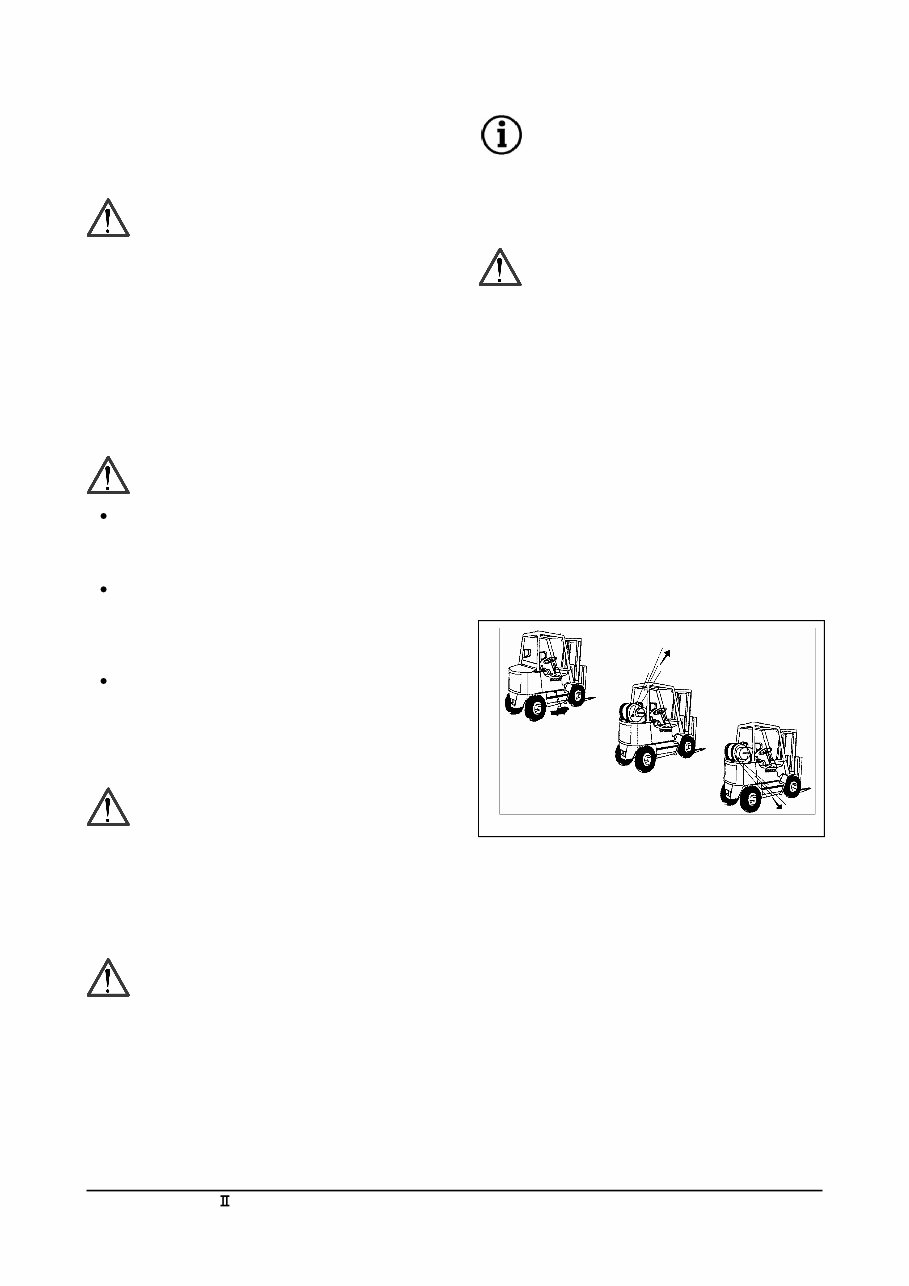
Propane has a heavier than air vapor density and will
fall if a leak occurs, while natural gas, by comparison,
will rise in the event of a leak (Figure 1).
This is an important property that technicians need to
be aware of when performing maintenance. When
repairing propane machinery, the work should be
performed in the lowest point of the facility where
possible. The tank supply should be shut off, except
when required for running equipment.
Diesel
CNG
LPG Figure 1
G430E/G643E Tier LP Engine LPG and LPG Fuel Tanks 8
CHAPTER 0 LPG AND LPG FUEL TANKS
LPG Fuel Supply
Liquefied petroleum gas (LPG) consists mainly of
propane, propylene, butane, and butylenes in various
mixtures. LPG is produced as a by-product of natural
gas processing or it can be obtained from crude oil as
part of the oil refining process. LPG, like gasoline, is a
compound of hydrogen and carbon, commonly called
hydrocarbons.
In its natural state, propane is colorless and odorless;
an odorant (ethyl mercaptan) is added to the fuel so
its presence can be detected. There are currently
three grades of propane available in the United States.
A propane grade designation of HD5 (not exceeding
5% propylene), is used for internal combustion
engines while much higher levels of propylene
(HD10) are used as commercial grade propane along
with a commercial propane /butane mixture.
APPROXIMATE COMPOSITION OF HD5
PROPANE BY VOLUME
Propane
(C3H8)
Propy
lene
Butane
(C4H10)
Iso-
Butane
Methane
(CH4)
TOTAL
90.0%
min.
5% max. 2.0% 1.5% 1.5% 100%
An advantage of LPG is the ability to safely store and
transport the product in the liquid state. In the liquid
state propane is approximately 270 times as dense
as it is in a gaseous form. By pressurizing a container
of LPG we can effectively raise the boiling point
above –44 deg. C / -42 deg. C, keeping the propane
in liquid form. The point at which the liquid becomes a
gas (boiling point) depends on the amount of
pressure applied to the container.
This process operates similarly to an engine coolant
system where water is kept from boiling by
pressurizing the system and adding a mixture of
glycol. For example water at normal atmospheric
pressure will boil at 212 deg. F / 100 deg. C. If an
engines operating temperature is approximately 230
deg. F / 110 deg. C, then the water in an open un-
pressurized cooling system would simply boil off into
steam, eventually leaving the cooling system empty
and over heating the engine. If we install a 10 PSIG
cap on the radiator, pressurizing the cooling system
to 10 PSIG, the boiling point of the water increases to
242 deg. F / 117 deg. C, which will cause the water to
remain in liquid state at the engines operating
temperature.
The same principle is applied to LPG in a container,
commonly referred to as an LPG tank or cylinder.
Typically an LPG tank is not filled over 80% capacity
allowing for a 20% vapor expansion space. Outside
air temperature effect’s an LPG tank and must be
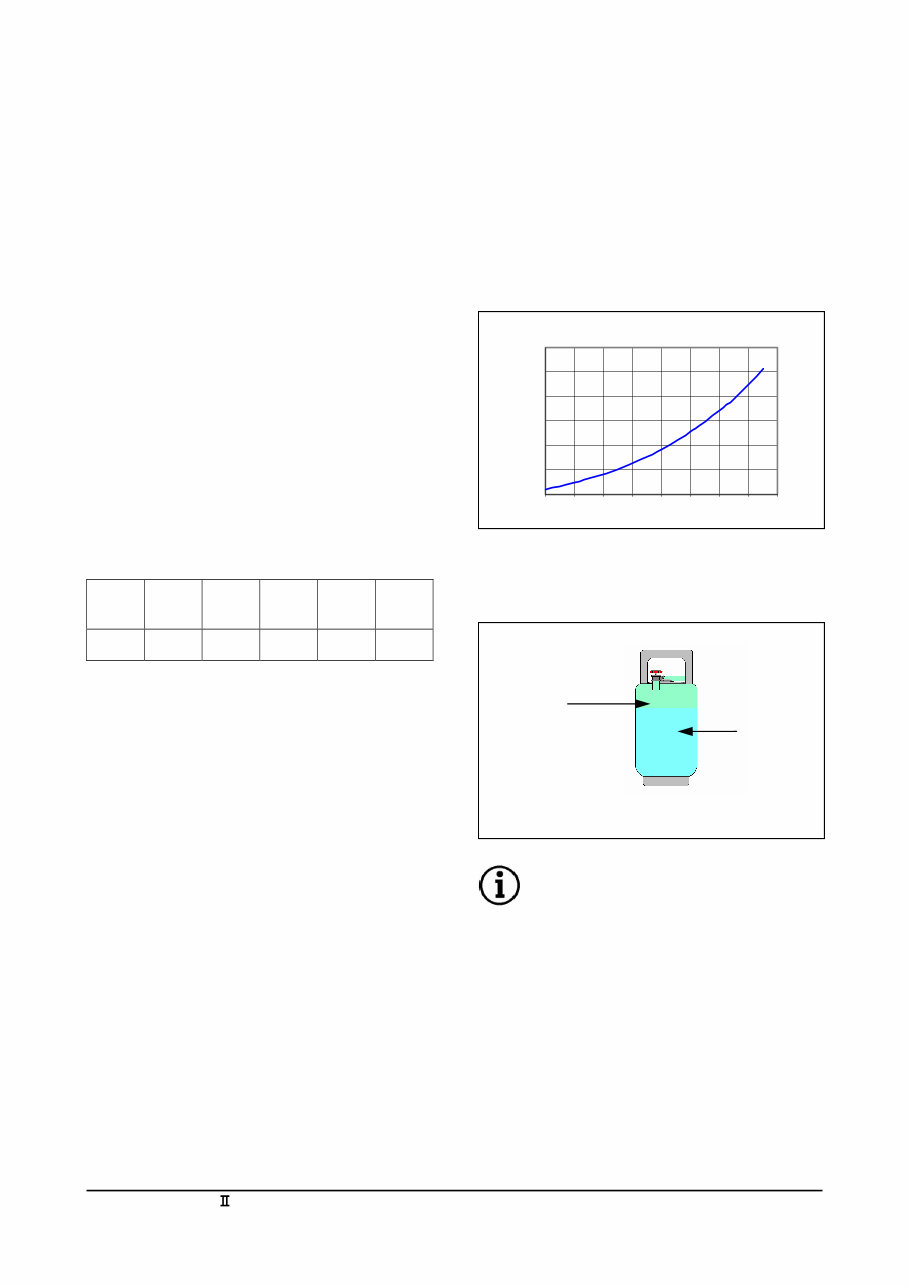
considered when using an LPG system. (Figure 2)
shows the relationship between pressure and
temperature in a LPG tank at a steady state condition.
With 128 PSIG vapor pressure acting against the
liquid propane the boiling point has been raised to
slightly more than 80 deg. F / 27 deg. C.
NOTE
Vapor pressure inside an LPG tank
depends on the ambient air temperature
outside the tank, not the amount of liquid
inside the tank. A tank that is ¾ full of
liquid propane at 80 deg. F will contain
the same vapor pressure as a tank that is
only ¼ full of liquid propane.
LPG’s relative ease of vaporization makes it an
excellent fuel for low-rpm engines on start-and-stop
operations. The more readily a fuel vaporizes the
more complete combustion will be.
Because propane has a low boiling point (-44F), and
is a low carbon fuel, engine life can be extended due
to less cylinder wall wash down and little, if any,
carbon build up.
0
50
100
150
200
250
300
-20 0 20 40 60 80 100 120 140
Temperature, deg F
Pressure, psig
LPG Tank Pressure VS Temperature
Figure 2
Compressed
Vapor
128 PSIG Liquid
Propane
LPG Tank
Figure 3
You're Reading a Preview
What's Included?
 Lifetime Access
Fast Download Speeds
Online & Offline Access
Access PDF Contents & Bookmarks
Full Search Facility
Print one or all pages of your manual
$71.99
DOOSAN G430E G643E Forklift Truck Service Workshop Shop Repair Manual G20P-3, G25P-3, G30P-3, G32P-3, G33P-3 GC20P-3, GC25P-3, G
Viewed 98 Times Today

What's Included?
Lifetime Access
Fast Download Speeds
Online & Offline Access
Access PDF Contents & Bookmarks
Full Search Facility
Print one or all pages of your manual
$71.99

Secure transaction
What's Included?
Lifetime Access
Fast Download Speeds
Online & Offline Access
Access PDF Contents & Bookmarks
Full Search Facility
Print one or all pages of your manual
Description
If you own or work on Doosan lift trucks, this comprehensive service manual is an essential resource for you. It contains all the necessary information for the G430E/G643E Tier 2 LP Engine lift trucks, including the G20P-3, G25P-3, G30P-3, G32P-3, G33P-3, GC20P-3, GC25P-3, GC30P-3, GC32P-3 with G430E Tier 2 LP Engine, and G35S-2, G40S-2, G45S-2, G50C-2, G50S-2, G60S-2, G70S-2 with G643E Tier 2 LP Engine. Whether you are a professional mechanic or a DIY enthusiast, this manual is an invaluable tool for maintaining and repairing these lift trucks. If you can't find a specific manual, feel free to ask us, as we have a vast collection of over 200,000 manuals, not all of which are listed here on tradbit.


