Technical Publications Lexington, KY 40510 www.Clarkmhc.com SM-718 ESX 12-25 Service Manual 657028 September 2007
Battery • Group 12 SM-718, August ‘07 GROUP 12, BATTERY GROUP 12 BATTERY Battery Service . . . . . . . . . . . . . . . . . . . . .Section 1
GROUP 12, BATTERY Group 12 • Battery SM-718, August ‘07
Battery Service • 12-1-1 SM-718, August ‘07 GROUP 12, BATTERY Section 1 Battery Service Contents Section 1 Battery Service Battery Handling.................................................. 2 Battery Removal ................................................... 4 Battery Maintenance .......................................... 4 Maximum Battery Life ................................... 4 Battery Vents..................................................... 5 Battery Cleaning.............................................. 5 Battery Charging ............................................. 5 Battery Electrolyte .......................................... 5 Clean Battery Compartment....................... 5 Replacement Batteries .................................. 6 Battery Installation ......................................... 6 Keeping Battery Records .............................. 6 Battery Tests .......................................................... 7 Specific Gravity Test ....................................... 7 Load Test ............................................................ 7 Connector and Static Chain Installation ..... 8 Static Chain: ..................................................... 8 Batterry: ............................................................. 8
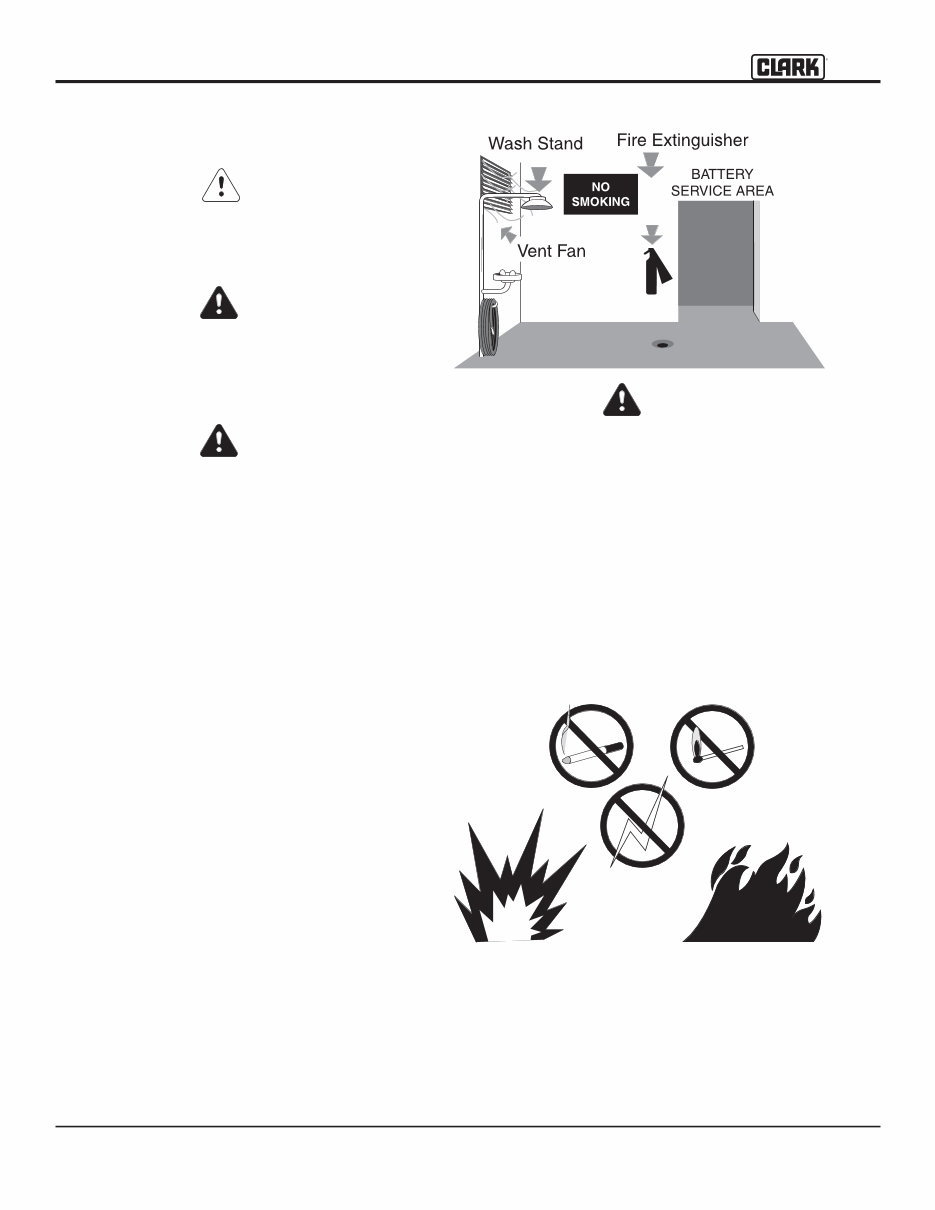
GROUP 12, BATTERY 12-1-2 • Battery Service SM-718, August ‘07 Danger Explosive gas is always present around batteries, especially when they are being charged. No smoking allowed in the charging area. Battery electrolyte must never be checked with an open flame. Open flame, sparks, or electric arcs must never be allowed in the battery charging area. The battery contains corrosive sulfuric acid which can cause injury. If acid contacts your eyes or skin, flush immediately with water and get medical assistance. • • • • Battery Handling Caution Remove all jewelry (watch, rings, bracelets, etc.) before working on electrical systems. Severe burns can result from contact with electrical cir- cuits. Warning Battery service must be done by trained person- nel. Battery acid can cause severe burns and in- jury. Do not smoke or have open flames around batteries. Warning Electric truck batteries are heavy and awkward to handle. On charge, they give off hydrogen and oxygen which, in certain concentrations, are ex- plosive. Electric truck batteries are also costly, so before you remove, service, or install a truck bat- tery, consult BATTERY MANUFACTURER for more recommendations and instructions on handling and charging batteries. Carefully read and follow recommendations and instructions. Change or service batteries only in an area designated for this purpose. Refer to page 4 for additional infor- mation. Be sure this area has provisions to flush and neutralize acid spillage. Be certain the area has proper ventilation to ventilate fumes from charging batteries. Check to see that there is fire protection. Fire extinguishers should be properly maintained and located in designated areas. • • •
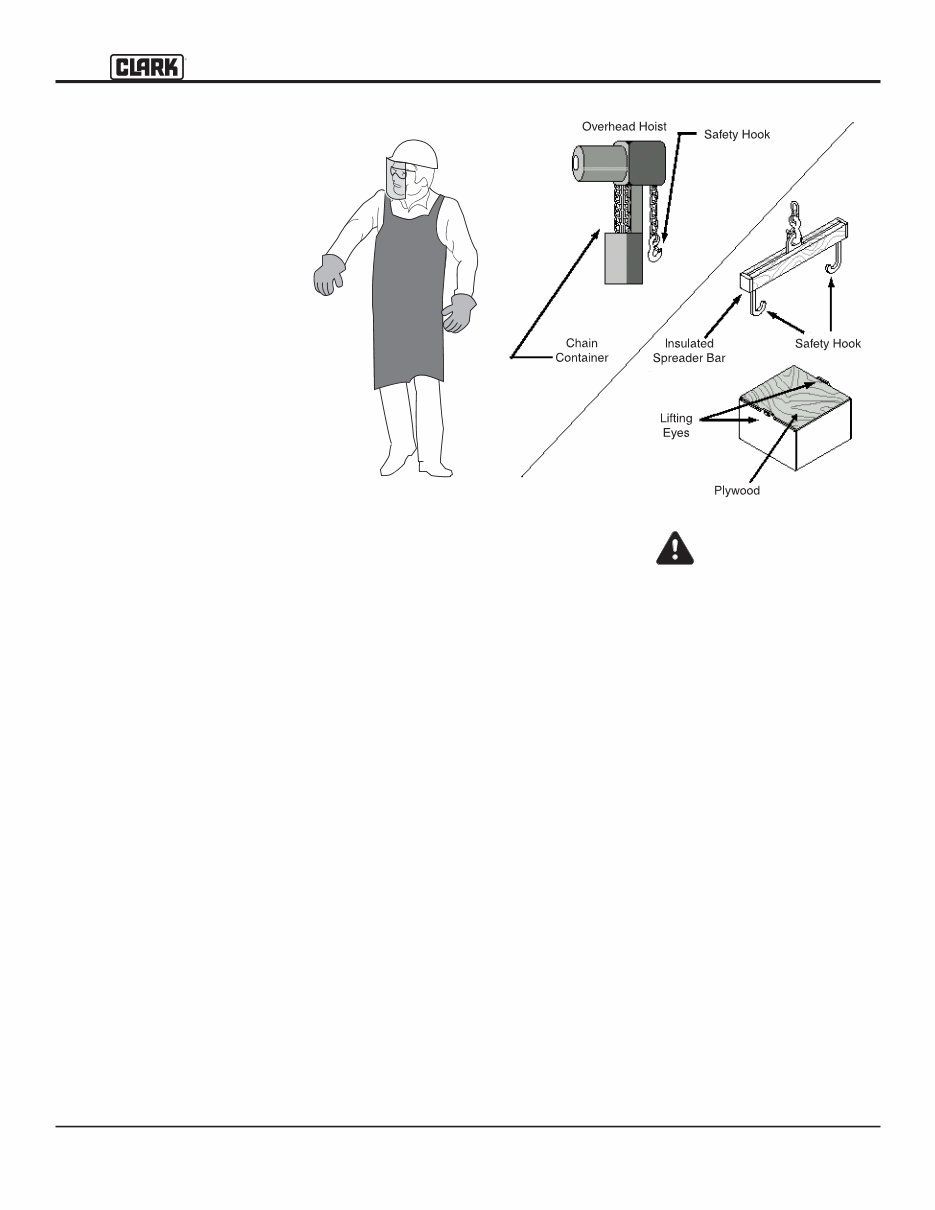
Battery Service • 12-1-3 SM-718, August ‘07 GROUP 12, BATTERY Persons maintaining batteries must wear protective clothing such as: Face and head shields Long shirt sleeves Gauntlet gloves Rubber apron Be sure the battery service area is equipped with ma- terial handling equipment designed for the purpose of removing and replacing batteries, such as a con- veyer or overhead hoist equipped with safety hooks. IMPORTANT To prevent side forces from damaging the bat- tery, the distance between the lifting hooks (of the spreader bar) must be adjusted to the same dimension as measured between the battery lift- ing eyes. Make sure the lifting hooks are the cor- rect size to fit the lifting eyes of the battery. When using an overhead hoist, be sure to use an insulated spreader bar or similar lifting device. Be sure the hoist is equipped with a chain container to accumulate excess lifting chain. When this is not possible, be sure the battery is covered with a nonconductive material, such as plywood, as shown below. If the battery does not have a cover of its own, cover it with a non-conductive material such as plywood. • • • • • • • Danger Never lay tools or other metal objects on a bat- tery. Metal objects contacting battery terminals will cause short circuits. The shorted circuits could ignite battery fumes and cause the battery to explode.
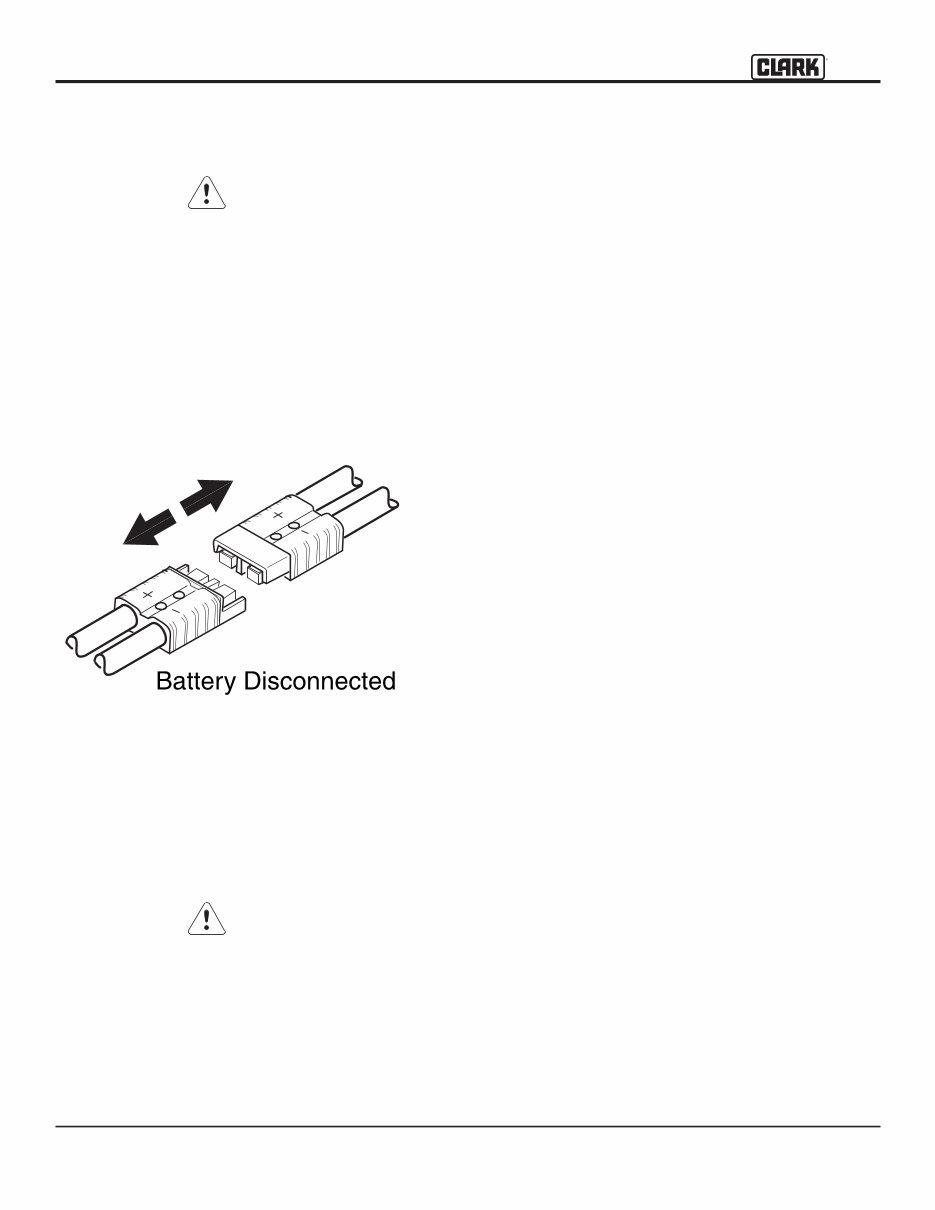
GROUP 12, BATTERY 12-1-4 • Battery Service SM-718, August ‘07 Battery Removal 1. Move truck to the designated battery service area. CAUTION SAFE PARKING. Before working on truck: Park truck on a hard, level and solid surface, such as a concrete floor with no gaps or breaks. Put upright in vertical position and fully lower the forks or attachment. Put all controls in neutral. Turn key switch OFF and remove key. Apply the park brake and block the wheels. 2. Turn key switch OFF and disconnect battery. 3. Lift and latch seat deck to access battery. 4. If the battery to be handled is uncovered, cover battery with a non-conductive material (plywood, heavy cardboard, etc.) prior to removal from truck. IMPORTANT Do not wash battery in truck. CAUTION An overhead hoist of sufficient lifting capacity (refer to “Weights” in Group 40) should be used to lift battery. The safety hooks of the insulated spreader bar should be attached to the lifting eyes provided in the battery casing. 5. Be sure battery is covered. Attach lifting device. Lift and remove battery. • • • • • Battery Maintenance Note To obtain maximum performance and battery life, follow the instructions supplied by your bat- tery vendor. Industrial batteries are used to supply the electrical power to operate an electric industrial truck. Their voltage depends on the number of individual cells they contain. There are approximately two volts for each cell in the commonly used lead-acid type bat- tery. Batteries normally range from 6 volts to 72 volts. Their capacity varies depending on the application. Only use batteries that comply with factory specifica- tions as to size and capacity. Maximum Battery Life Do not add acid to a battery. Only qualified battery representatives should determine if this is necessary. When lifting a battery, use a lifting device de- signed for this purpose. Check the electrolyte level after placing a bat- tery on charge. The electrolyte level in a bat- tery should be slightly below the lower lip of the filling hole vent. Do not overfill. Overfilling causes loss of electrolyte. Keep the battery clean, dry and in good condi- tion. Keep metal objects and tools away from the top of the battery. Short circuits will cause bat- tery damage andcould ignite battery fumes, causing the battery to explode. Maintain good battery cable connections. Check power cables and wiring for damage that can cause premature drainage of the bat- tery. Do not overcharge a battery. Do not undercharge a battery. Follow the instructions provided by the supplier(s) of the battery and battery charging equipment. Maintain accurate battery records. If battery troubles occur, these records will help you and your battery representative determine the nature of the problem. • • • • • • • • • • •
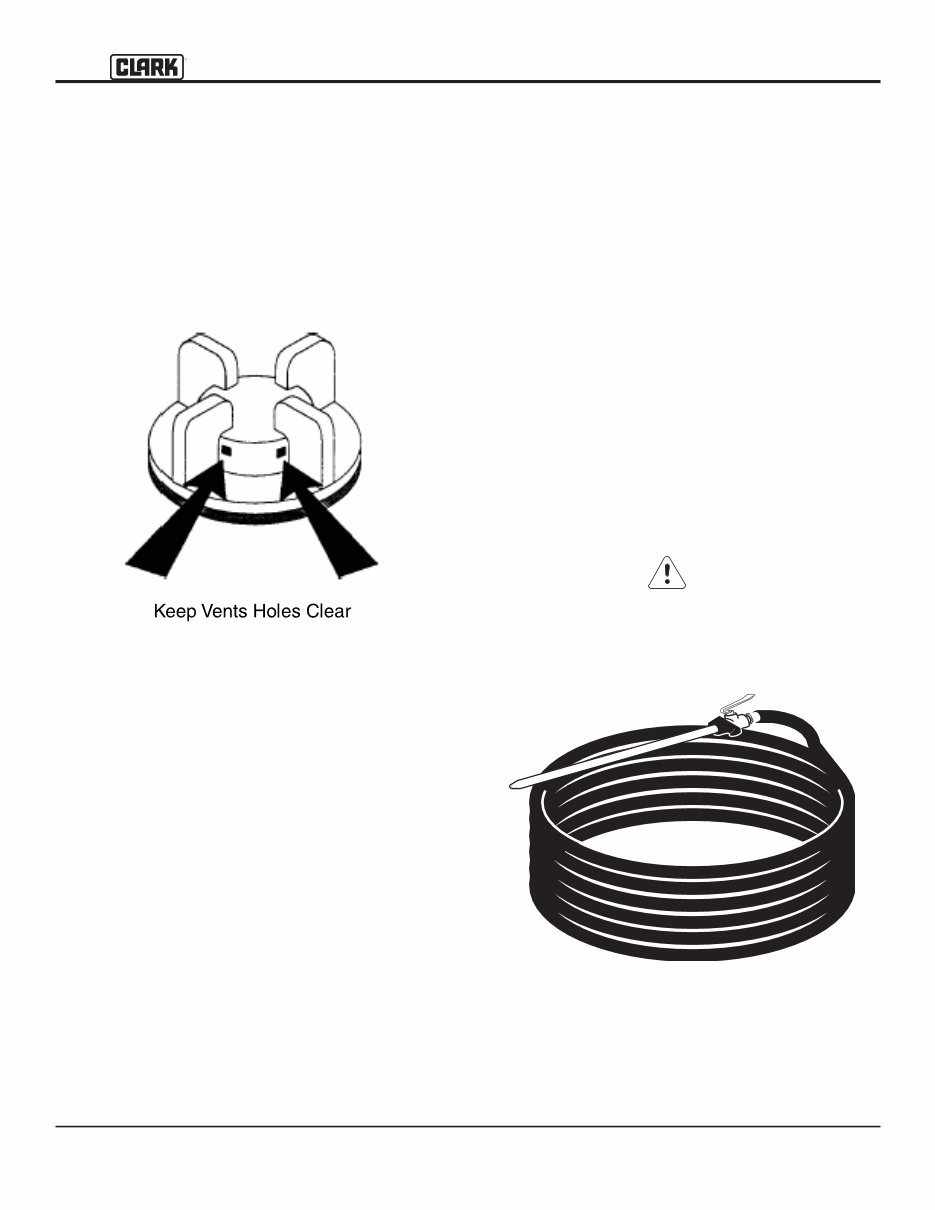
Battery Service • 12-1-5 SM-718, August ‘07 GROUP 12, BATTERY Battery Vents When Charging Batteries: The vent caps must be kept in place to avoid electrolyte spray. Care must be taken to assure that vent caps are functioning. The vents must be open to allow the battery to breathe. The battery cover must be removed/opened to dissipate heat and explosive gas. When Cleaning Batteries: The vent caps must be tightly in place. Battery Cleaning The easiest and most satisfactory method of cleaning a battery is to wash it with a low-pressure cold water spray. The battery top can also be washed with a bak- ing soda solution and rinsed with clear water. IMPORTANT Remove battery from truck before washing. Vent caps must be free of obstruction and in good condition. Battery top should be clean and free of cracks or breaks. Battery terminals must be clean and solidly mounted. Damaged batteries should be repaired or re- placed. Consult your battery vendor. Check to be sure all vent caps are tight before washing the battery. Fill a bucket with cold water. Add a box of bak- ing soda to the bucket. Stir the solution until dissolved. Keep this solution around the bat- tery service area at all times. After washing battery, thoroughly rinse with clear cold water. • • • • • • • • • • Battery Charging Follow the instructions supplied by the battery char- ger vendor. Battery Electrolyte Check with battery manufacturer’s documenta- tion before working on battery electrolyte. Always use a carboy tilter or siphon when han- dling battery electrolyte. When mixing electrolyte, always pour acid into water-NEVER pour water into acid. Pouring water into acid will cause a dangerous chemi- cal action or splash. Clean Battery Compartment Using baking soda and water solution, clean the walls and floor of the compartment. Rinse with clear water. Blow off the compartment walls and floor with an air hose. Allow to air-dry. CAUTION Wear eye protection and protective clothing when cleaning or drying with compressed air. Reduce air pressure to 207 kPa (30 psi). Debris removed with air pressure can cause injury. • • • • •
GROUP 12, BATTERY 12-1-6 • Battery Service SM-718, August ‘07 Replacement Batteries CAUTION Use a battery properly sized to the dimensions of the battery compartment. Batteries too small can shift and cause damage to the truck or injury to the operator or bystanders. Only use batteries that comply with factory recommendations as to size and capacity. Battery Installation If the battery is uncovered, cover the battery with a nonconductive material (i.e., plywood, heavy card- board, etc.) prior to installation. Using an overhead hoist and insulated spread- er bar, lift battery into battery compartment. Install battery retainer, if applicable. Remove non-conductive material from battery. Connect battery to truck. Keeping Battery Records Records should be maintained to get the best service out of your battery and truck. These records should contain: Test Date. Each test should be dated for future reference and comparison. Specific Gravity and Temperature Readings. Each battery cell should be checked and re- corded before and after charging. The specific gravity reading of the electrolyte, calculated using a multiplier to account for the ambient temperature, should not be less than 1.260. If below 1.250, the battery should be recharged and tested. Variation Between Each Cell Tested. The varia- tion in specific gravity reading between cells should not be greater than 15 points (0.015). If readings are greater, there are defective cells. NOTE The pilot cell should be changed occasionally to distribute any electrolyte loss over the battery when taking readings. • • • • • • • Load Voltage Tests should be performed and recorded indicating the condition of a battery while it is performing work. Actual Operating Hours of the Battery. Record the actual time the battery is in use before put- ting it on charger. Charging Time. Keep an accurate record of the actual time the battery is on charger. After each charge, check to see if the battery is fully charged. Test the battery before placing it back into service. Record these results. Visually Inspect for loose terminal connections or posts, a cracked case, damaged cell covers (vent caps), or excessive corrosion. This data should be noted to help determine work envi- ronment and possible trouble areas. • • • •
You're Reading a Preview
What's Included?
Lifetime Access
Fast Download Speeds
Online & Offline Access
Access PDF Contents & Bookmarks
Full Search Facility
Print one or all pages of your manual
$46.99
Clark ESX 12-25 Forklift Service Repair Workshop Manual
The Clark ESX 12-25 Forklift Service Repair Manual is a comprehensive resource for both professional mechanics and DIY enthusiasts. It provides easy-to-read text sections, high-quality diagrams, and detailed instructions for efficient repairs.
The manual covers a wide range of topics including battery, wiring, switches, sensors, schematics, electric circuit diagrams, general electrical service tips, control handle, display gauge, electrical motors, motor specifications, drive motor overhaul, pump motor overhaul, motor controls, programming, adjustments using ZAPI handset, control troubleshooting, ESX factory control settings, and sequence of operation.
It is available in a file format compatible with all versions of Windows and Mac, and is in English language. The manual can be accessed using Adobe Reader and all pages are printable, making it a valuable asset for maintaining and repairing the Clark ESX 12-25 Forklift.
Reviews
Q&A
Recently Viewed
5,521,897Happy Clients
2,594,462eManuals
1,120,453Trusted Sellers
15Years in Business
Price:
Actual Price:
Clark ESX 12-25 Forklift Service Repair Workshop Manual








 Lifetime Access




