Table of Contents • Preliminaries • Introduction • Vessel Operations • Fuel System • Propulsion System • Electrical System • Electrical Safety • Bilge Pumps • Heating / Cooling System • Fire Emergency • Corrosion Protection • Subsystems • Water System • Sanitation System • Vessel Care • Addenda • Service Numbers Directory VSC 61 FY Owner’s Manual
Owner’s Manual Corrosion Protection - 80 Viking Sport Cruiser 61FY v1.0 •••••••••••••••••••••••••••••••••••••••••••••••••••••• Corrosion Protection This chapter describes the bonding system that protects components against corrosion. Major Topics: The bonding system (overview) 81 Sacrificial zinc anodes 81 Running gear protection 82 Electrolytic corrosion 83 Stainless steel corrosion 83 Components attached to bonding system (drwg) 84 The Publisher’s Statements on page i of this Owner’s Manual apply to this chapter. Please read before proceeding.
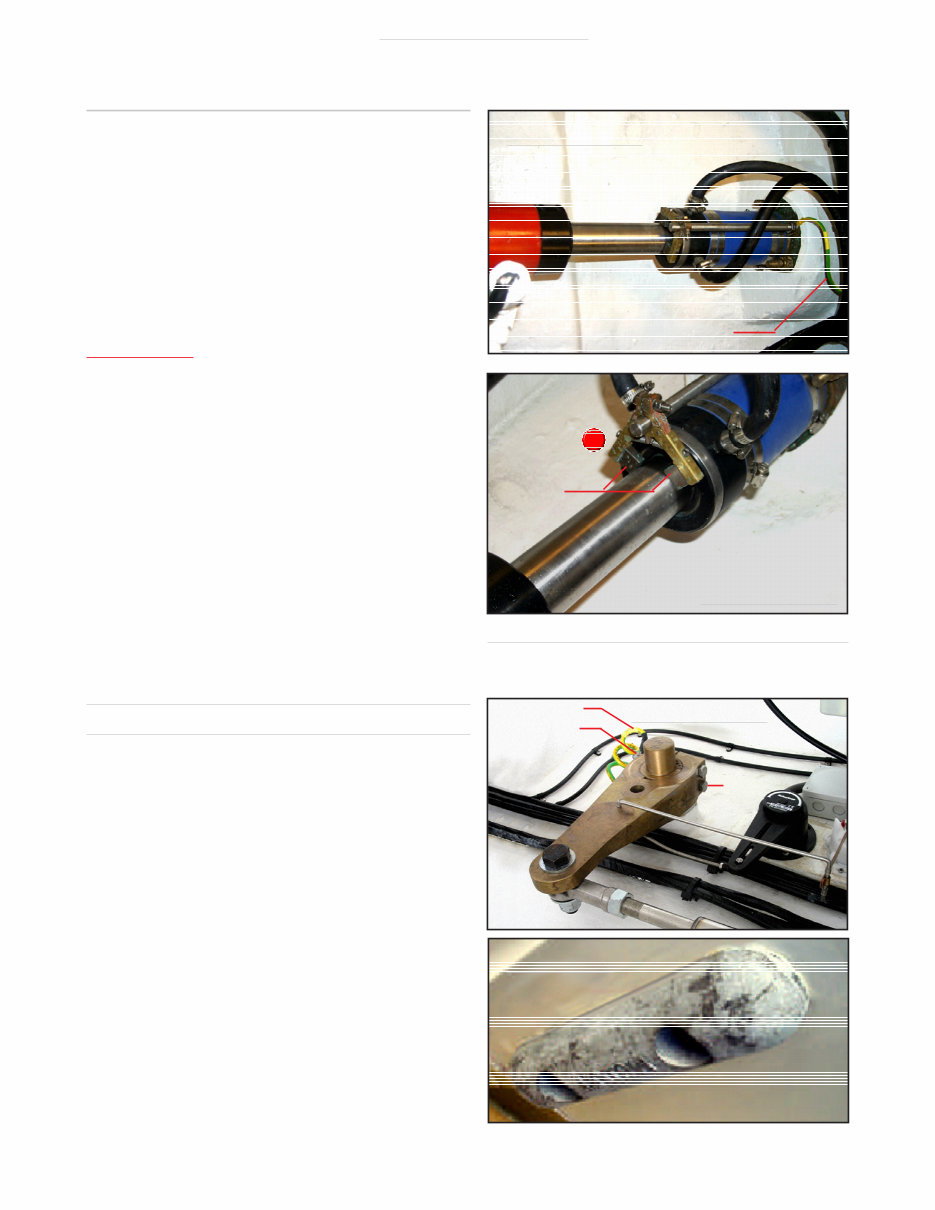
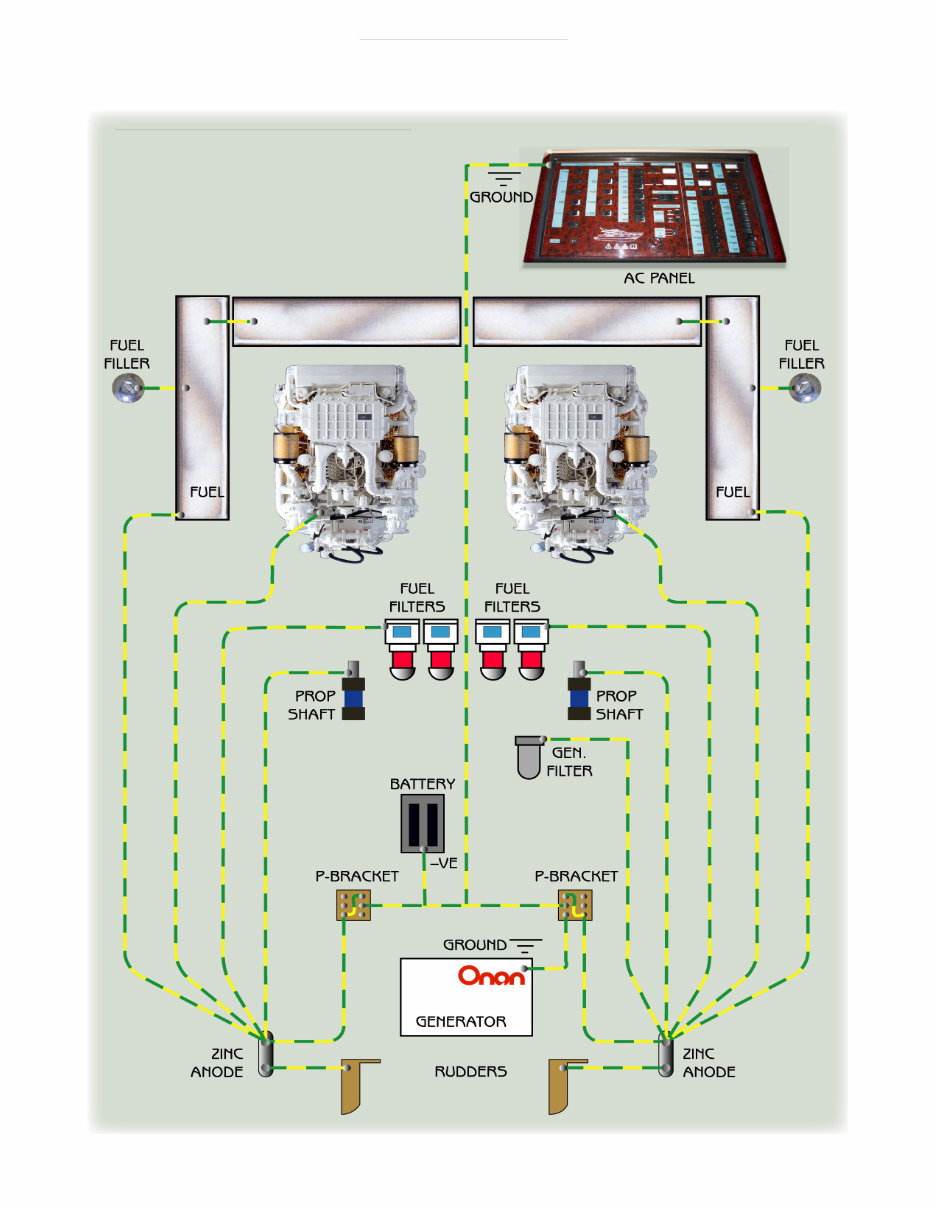
81 - Corrosion Protection Viking Sport Cruiser 61FY Owner’s Manual v1.0 •••••••••••••••••••••••••••••••••••••••••••••••••••••• The Bonding System Viking 61FY has a bonding system to protect the vessel as much as possible from severe electrolytic corrosion of propellers, shafts, rudders, fuel tanks, etc. caused by electrical currents and warm seawater. Essential to the cathodic protection system is an 8 gauge green and yellow common bonding wire connecting protected components to two sacrificial zinc anodes, port and starboard under the hull. Note:- The bonding wire must NEVER be connected to a current carrying DC ground. Metal graphite bonding brushes running on the prop shaft inside the vessel protect the propellers and shafts by con- necting them to the bonding system. The brushes must always be in good firm contact with the shaft, and running on a clean and shiny part of the prop shaft. If seawater salt deposits are under the brush there is no protection. At some marinas metal in the docks and stray electrical currents in very warm seawater can cause severe corrosion and vessels normally docked there need special attention. Inspect zincs regularly and often (once a month may be necessary in electrically active waters). Shaft zincs are not recommended. The vessel bonding system acts to reduce both galvanic and electrolytic corrosion. These processes, especially in warm seawater with elevated temperatures, quickly cause extensive corrosion to any of a vessel’s unprotected metal fittings exposed to seawater. Sacrificial zinc anodes Zinc anodes must be replaced once they are half their original thickness. In Florida they have a short life, but it is essential they be replaced, or there is no bonding and the equipment they protect is at risk. Anodes are usually in- spected and replaced by a diver unless the vessel is out of the water. Visual inspection should show signs of corro- sion or pitting – if anode corrosion is not apparent the bonding system is likely not working and must be inspected without delay. A simple continuity test inside the vessel between the prop shaft and the two studs that hold the zinc to the hull will confirm whether there is continuity. Whenever the vessel is out of the water for service check that anodes are not excessively corroded. If corroded, but not down to half-thickness, they can be somewhat reju- venated: remove the zincs, clean them with a wire brush, clean off corrosion on the bolts, and reinstall. Never use anti-seize lubricants, sealants or pipe dope to install zincs. This would isolate them electrically from the metal they protect and corrosion would result. There must be a good electrical connection to the attaching bolts, which con- nect to the bonding wire inside the vessel. Continuous green bonding wire To clean the shaft and brushes . . . Gently lift the spring loaded brush arms A. The prop shaft MUST be clean and free of seawater deposits. Zinc anode under hull. There is one port; one stb. Bonding brushes Bonding wire Bolts must be kept tight to protect the rudder Tides shaft seal Tides shaft seal Rudder bonding Zinc anode A keep tight
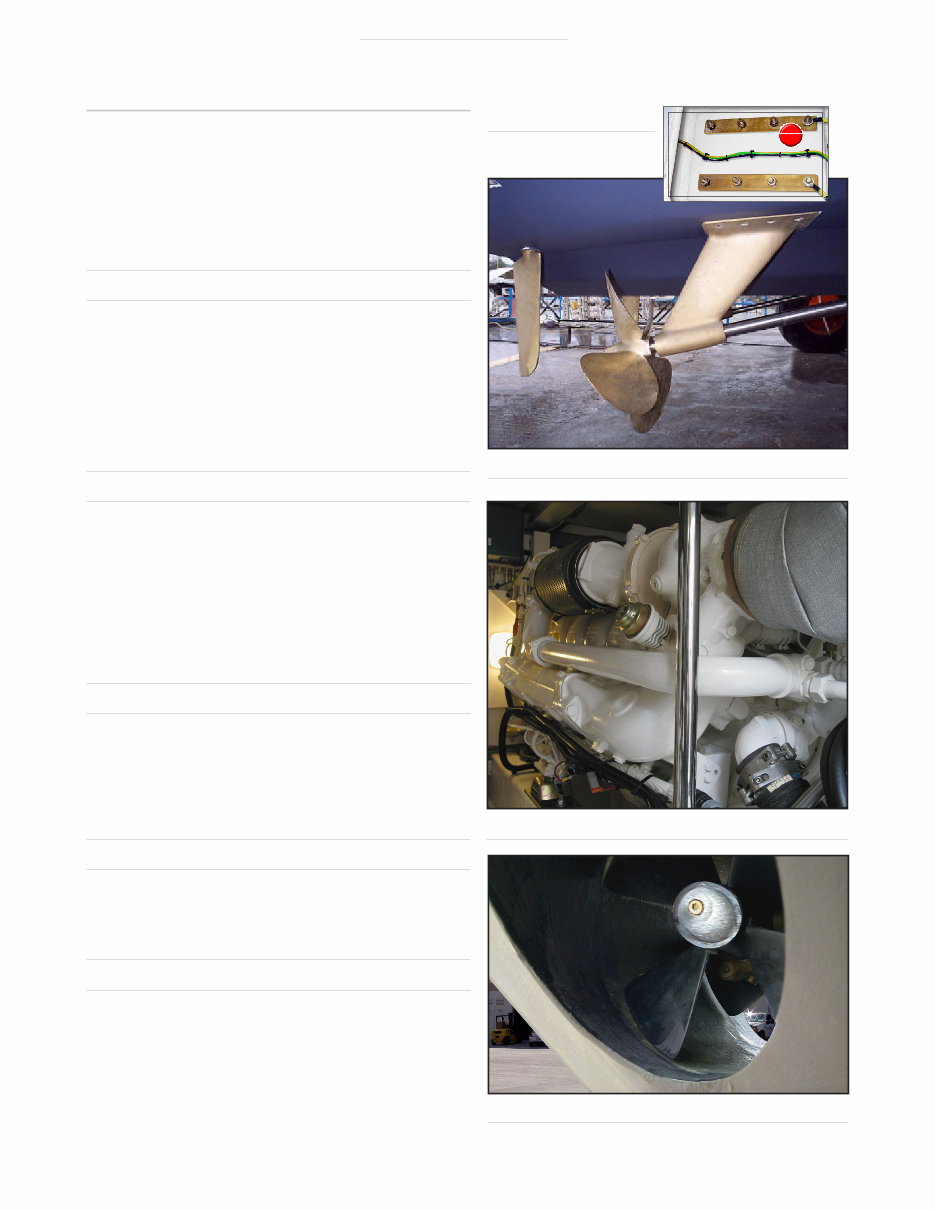
Owner’s Manual Corrosion Protection - 82 Viking Sport Cruiser 61FY v1.0 •••••••••••••••••••••••••••••••••••••••••••••••••••••• Running Gear Protection Corrosion protection for the propellers, shafts and rud- ders starts with selection of the best components and materials to stand up to the severe warm salt water envi- ronment typical of Florida, where unprotected metal is quickly destroyed. Prop shafts Prop shafts are made by Teignbridge Propulsion Group in Devon, England. They are 60 mm (2.3 in) Temet boat shafting, precise to a tolerance of 0.003 inches out of round to reduce vibration when rotating at high speed. Galvanic corrosion is minimized by use of a specially for- mulated metal that has a resistance to corrosion superior to stainless steel – ie., it is below stainless in the active and passive galvanic charts. Propellers Props are also by Teignbridge. They employ nickel- aluminium and bronze AB2, for high running speed and corrosion resistance. Props are 5-blade 30x42; shaft threads are 42x3.Struts attach to the hull with large bolts, with the nuts torqued down onto copper alloy backing plates B (also called “P brackets”). Attached to these are green bonding wires connected to the studs holding the zinc anodes on the outside of the hull. This affords corrosion protection to the running gear. Zinc pencil rods The MAN diesel engines and the Onan generator each have internal zincs which MUST be replaced as scheduled – refer to manufacturers’ manuals for details. The ZF marine gear also has zinc anodes on the oil coolers, near the seawater inlet and outlet. Check annually or at 500 hours, or if seawater leakage occurs. Tides Marine self-aligning shaft seals These comprise a simple nitrile lip seal on the shaft log that blocks seawater to keep it from entering the vessel. It is an important corrosion fighting strategy to prevent seawater entering the engine room as much as possible. Bow thruster protection The Side Power bow thruster has its own protection against electrolysis and corrosion. A zinc anode forms part of the attachment nut for the propeller. Check this for erosion whenever the vessel is out of the water, or have a diver inspect it when installing main zinc anodes on the hull. Do not ignore this anode, or corrosion will quickly attack the thruster and its propeller. Teignbridge prop and shaft Bow thruster anode Change internal zinc anodes on schedule Bow thruster zinc anode is part of this nut. B P brackets, B Struts connect to bonding through these brackets →
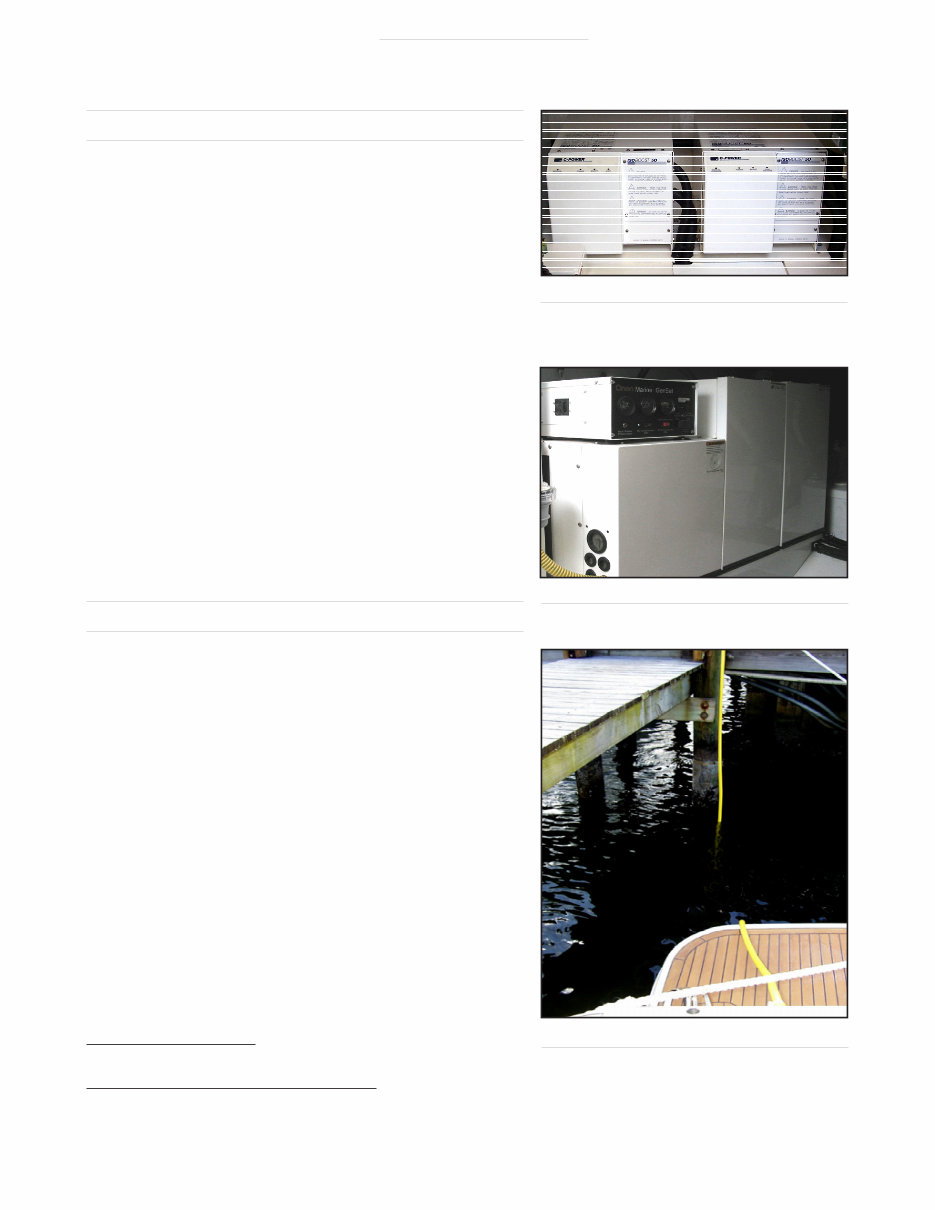
83 - Corrosion Protection Viking Sport Cruiser 61FY Owner’s Manual v1.0 •••••••••••••••••••••••••••••••••••••••••••••••••••••• Electrolytic corrosion Stray currents are present at most marinas, and near other boats. A particularly strong source is shore power cords lying in the wa- ter – they cause severe corrosion, and are a safety hazard. At the docks themselves there are often metal reinforcing rods in con- crete that lie in the water. These conduct stray currents that can cause a boat’s zincs to erode quickly. Stray current corrosion is also caused by DC or AC current leaks from other boats around you. Aluminum is particularly susceptible to this – just look at some outdrives at a marina! In the lazarette the two 15 kVA isolation transformers have a rated input of 100 amps @ 240 volts. Shore power coming aboard is isolated through the transformer windings from any direct contact with outside grounds. ONLY red, black and green are brought into the transformer. In effect, 240 volts AC ONLY goes into the pri- mary winding of each transformer. 120 volt power is produced by the transformer. This isolation protects against stray currents and electrolytic corrosion that destroys underwater fittings. In effect, the vessel has its own CLOSED CIRCUIT electrical sys- tem which also protects crew and passengers from potentially lethal electricity flowing through them to a shore ground. The engines and generator have their own internal zinc anodes for protection of their metal parts, these MUST be maintained ac- cording to manufacturers’ recommendations. Stainless steel corrosion All metals except gold, silver, titanium, and platinum corrode – some much more than others. Despite its name, stainless steel is also subject to corrosion because it is a ferrous alloy. 18/8 stainless, for example, is 67% iron, with 22% chromium and 11% of other metals added to make it more resistant to corrosion. The three types of stainless steels common in the marine industry are 302 or 18-8, used for screws; 304, used for stamped parts; and 316 or CF-8M, used for tubing, etc. Though high up on the noble chart (-30 mV for resistance to cor- rosion), stainless steel WILL rust quickly in its natural state, par- ticularly in the warm moist climate of Florida. For stainless to be corrosion RESISTANT it must be highly polished, plated, or electro- polished in a number of ways during production. Unpolished stain- less steel has iron or iron oxide sitting on the surface of the metal, but polishing brings the chromium to the surface. The more shine, the more resistance to corrosion. If stainless is scratched, or cut and not polished at the edges, corrosion will result. Thus, if a screw driver bit slips on top of a screw, it will rust. And a hole drilled in stainless steel will corrode inside the hole unless protected by a watertight sealer. When washing the vessel, never let water dry on the stainless. To avoid unsightly water spotting dry off stainless with a chamois. Stanchions and rails must be kept clean, use a wax such as Collinites 850 cleaner/wax to further protect them. A corrosion and safety hazard A shore power cord in the water is a hazard to anyone in the water. The flow of AC current inside the cable will also make the vessel more susceptible to corrosion. Isolation transformers Isolation transformers effectively give the vessel a ‘closed circuit” electrical system that is safe, and will not leak current and cause corrosion. Onan generator Internal zinc anodes must be changed on schedule. (optional model shown)
Owner’s Manual Corrosion Protection - 84 Viking Sport Cruiser 61FY v1.0 •••••••••••••••••••••••••••••••••••••••••••••••••••••• Components Attached to the Bonding System
You're Reading a Preview
What's Included?
Lifetime Access
Fast Download Speeds
Online & Offline Access
Access PDF Contents & Bookmarks
Full Search Facility
Print one or all pages of your manual
$26.99
Viking Sport Cruiser 61FY Owners Manual - Corrosion Protection
The Viking Sport Cruiser 61FY Owners Manual is a comprehensive guide designed to provide essential information for the maintenance and corrosion protection of your boat. Whether you are a professional mechanic or a DIY enthusiast, this manual equips you with the knowledge to confidently handle any maintenance task, ensuring your vessel remains in peak condition.
This manual includes crucial details on various aspects of boat maintenance, such as:
Corrosion protection and maintenance
Hull and deck maintenance
Propulsion systems
Steering and control systems
Electrical systems
Plumbing systems
Safety equipment
Boat handling
The Viking Sport Cruiser 61FY Owners Manual serves as an invaluable resource for boat owners, offering comprehensive information for the proper care and maintenance of their vessels. Whether you are a professional mechanic or a DIY enthusiast, this manual equips you with the knowledge to ensure your boat remains in top condition, allowing for years of trouble-free sailing.
Reviews
Q&A
Recently Viewed
5,521,897Happy Clients
2,594,462eManuals
1,120,453Trusted Sellers
15Years in Business
Price:
Actual Price:
Viking Sport Cruiser 61FY Owners Manual - Corrosion Protection





 Lifetime Access




