



Instruction Book
All models 2019 / 2020

2
This manual belongs to the following boat:
Yard identification Hallberg-Rassy……….
Description GRP Keel sailing yacht
Category A- Unlimited ocean voyages
Test Mode Module B + C for boats from 12 m,
Aa for boats below 12 m
CIN No.
Recommended maximum load: ………….………..kg (incl. ………...persons)
WARNING — Do not exceed the maximum recommended number of persons. Regardless of the number of persons
on board, the total weight of persons and equipment must never exceed the maximum recommended load. Always
use the seats/seating spaces provided.
The maximum recommended load includes the weight of all persons onboard, all provisions and personal effects, any
equipment not included in the light craft mass, cargo (if any) and all consumable liquids (water, fuel, etc.)
Keep portlights, windows, washboards, doors, hatches or ventilation openings closed when appropriate, e.g. in rough
weather to minimize the risk of flooding. Breaking waves are a serious stability hazard.
Any change in the disposition of the masses aboard (for example the addition of a radar, change of engine, etc.) may
significantly affect the stability, trim and performance of the craft.
We at Hallberg-Rassy always strive to improve our products. For this reason changes are always
possible and are carried out if considered appropriate. All details are given in good faith and are
believed to be correct but are not guaranteed.
Copyright Hallberg-Rassy Varvs AB 1996-2019
Revision date: 6 December, 2019

3
INDEX
PAGE PAGE
Introduction 5
Emergency exits 6 Safety with 230 V on Board 23
Man overboard recovery 6-7 Use of generator and engine when sailing 24
Engine 8-9 Water system 25-26
Propeller Shaft Seals 9 Refrigeration 27
Sailing propeller 10-11 Heating 27
Water and diesel Tanks 10-11 Toilet 28
Diesel quality 13 Holding Tank 29
Water and diesel 12-13 Manual Bilge pump 29-30
Diesel consumption and range 13 El. Bilge and drain pump 29-30
Drawing of diesel system 14-16 Anchor Windlass 31-32
Mast and rig 17 Bow Thruster 32
Back stay tensioner 17 Liquefied Petroleum Gas system 33-35
Cutter stay 17 Going to sea 35
Sails 19 Compass 35
Batteries and charging 20 Winches 36
Self discharge 21 Sprayhood 36-37
Electric system 12 and 24 v 21-23 Steering 38-40
230 V via shore connection or generator 23 Autopilot 41
230 V via inverter 23 Electronic instruments 41
Pressure water and fenders 41
Maintenance
Maintenance of the gelcoat surfaces 41 Electrolysis 43
Teak Deck 42 Adjustment of locker hinges 45-47
Oiled teak deck 43 Lifting and Supporting Ashore 48-49
Varnished teak 43 Risk of Freezing 50
Antifouling paint 43 Skin fittings 50-61
Carpets 44 Lay Up or Longer stops 63
Cleaning of tanks, pipes and pumps 44 Short list for winter preparations 64
Further data
Important measurements 64 Important addresses 65
Appendix Engine ………………. …………………
Mast and rig ………………. …………………
Heating ………………. …………………
Refrigeration ………………. …………………
Sails ………………. …………………

4
Category A: This craft is designed to operate in winds that may exceed wind force 8 (Beaufort
scale) and in significant wave heights of 4 m and above (see Note 1 below), and is largely self-sufficient.
Abnormal conditions such as hurricanes are excluded. Such conditions may be encountered on
extended voyages, for example across oceans, or inshore when unsheltered from the wind and waves for
several hundred nautical miles.
Note 1: The significant wave height is the mean height of the highest one-third of the waves, which approximately corresponds to the wave height estimated by an
experienced observer. Some waves will be double this height.
Compulsory directions according to the EU regulations
This manual has been compiled to help you to operate your craft with safety and pleasure. It contains
details of the craft, the equipment supplied or fitted, its systems and information on its operating and
maintenance. Please read it carefully, and familiarise yourself with the craft before using it.
If this is your first craft, or if you are changing to a type of craft you are not familiar with, for your own
comfort and safety, please ensure that you obtain handling and operating experience before taking
command of the craft.
Your dealer or national sailing federation or yacht club will be pleased to advise you of local sea schools,
or competent instructors.
Please keep this manual in a secure place and hand it over to the new owner if you sell the craft.
Danger and protection of the environment
In this instruction book you will find three different signs:
This sign is used where there can be danger for your life.
This sign is used where predictable danger can occur.
This sign is used where you should be extra careful.
Danger !
Warning !
Note !

5
Introduction
The delivery day is a great day, and we wish you good luck with your new Hallberg-Rassy.
The delivery day is, however, a busy day when many things are happening. Things are easily missed and
sometimes you forget what has been explained.
All sailing demands good seamanship. To describe what this means is outside the framework of
this booklet. We assume you have the knowledge to handle your boat in a way that will not
expose yourself or your crew to unnecessary risks.
If you’re changing to a type of craft you are not familiar with, please ensure that you
obtain handling and operating experience before ”taking command” of the craft.
Please remember that safety is nothing that is obtained once for ever. Each skipper continuously has
to look after and when necessary update his boat.
Read this booklet carefully! We have tried to present the essential information in a short and easily
understood way.
The yachts we build differ in size and equipment. The principles are however fairly similar. You will
quickly find out what applies to your boat. The rest you can ignore.
This is the English edition of this manual. It is also available in German and in Swedish.
Danger

6
Fire, flooding and overload
Fire on board is one of the most dangerous situations that can arise on a yacht. Take every
measurement to minimise the risk. A fire detector is mounted in the ceiling of the
saloon/galley/navigation area. Inform your crew before every departure where to find and how to
operate the fire extinguishers and the eventual permanent installed fire equipment for the engine room.
Keep exits from the accommodation free!
All boats are equipped with automatic fire extinguishing system for the engine room. The system is
activated automatically when the temperature reaches its specific temperature. As standard there is no
way to manually start this system. The fire extinguisher is placed in the engine room in a way that the
manometer that shows the working pressure can be read. If this pressure is too low, the extinguisher
must be exchanged immediately. Please follow the instructions by the manufacturer of the extinguisher.
Risk of Flooding exists if the two valves for the toilet are not kept closed.
Inform everyone on board how to operate the toilets with safety.
Generally speaking: flush valve on DRY and overboard valve CLOSED.
All other sea valves are normally kept open and are only closed when a leak or other conditions call for
it.
Overload
The recommended maximum number of persons on board is stated on the builder’s CE sign on
aluminium plate in the cockpit. Local or national regulations may stipulate other and specify life saving
equipment.
The fold out bathing platforms are designed to carry a maximum static load of 250 kg.
Emergency exits
Each boat has emergency exits labelled “Exit”. Ladder to reach aft cabin emergency exit HR 57 and HR
64 is located in the aft bed on the 57 and in the aft hanging locker on the 64. You simply erect the
folding ladder to reach the exit.
Man overboard recovery
Do anything you can to avoid that somebody is falling overboard! If that still should happen, each
Hallberg-Rassy boat has a bathing ladder on the transom to get on board again. Some models have fold
out folding platforms. If you have a powered operation, there is also an emergency button on the
transom, reachable from the water level. If you have a 40C with manual platform, you shall put the
control line over middle tube of the pushpit, and the open end down to the water in order to be able to
access the control rope from the water and consequently be able to fold down the platform from the
water in an emergency situation.
When a fold out swim platform is being folded out, keep out of the operating area if you are in the
water, to avoid being hit.
7
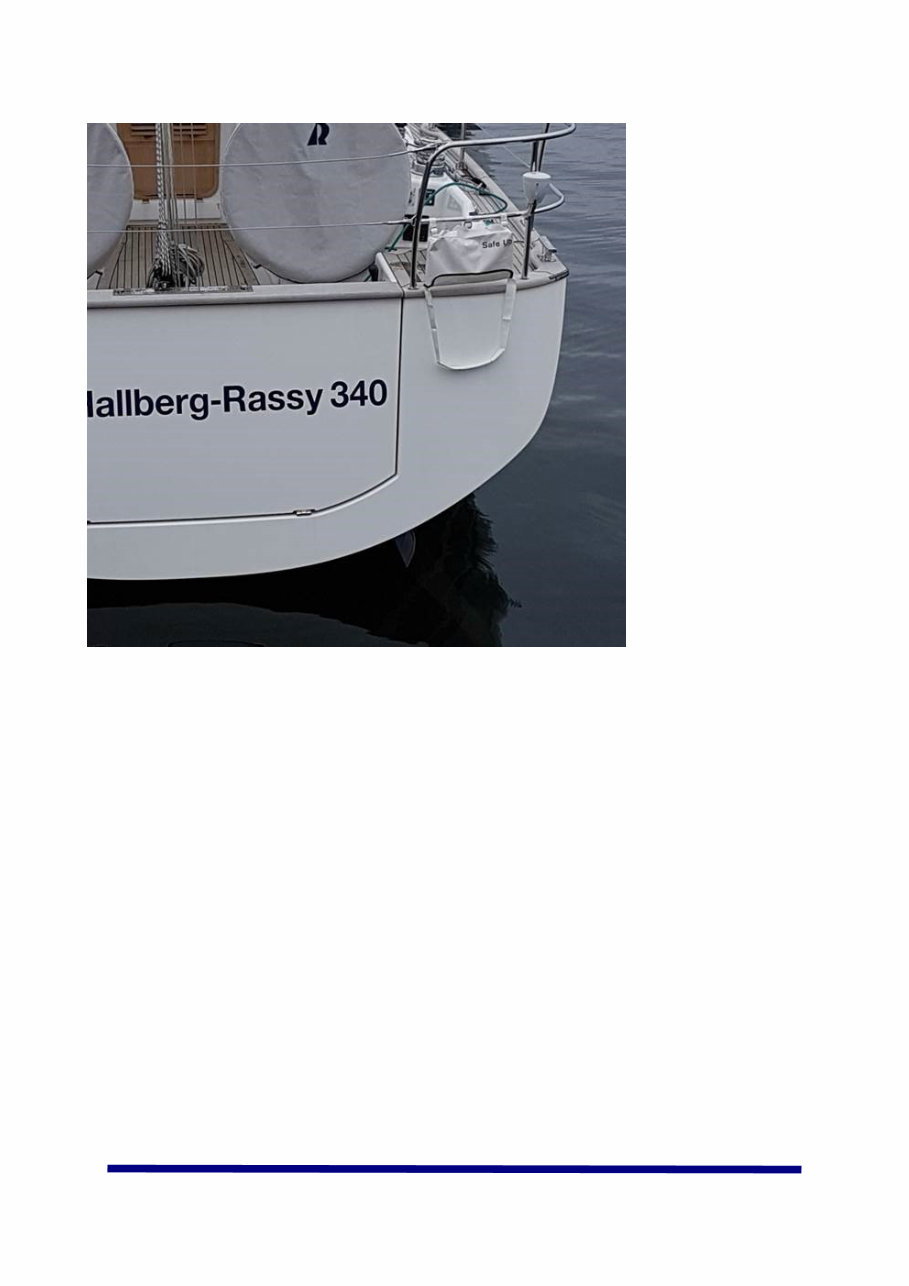
Man over board recovery for Hallberg-Rassy 340 or 44 if you have a manual fold out bathing platform
is achieved by an extra soft ladder in a bag as per the photo below.
Hooking points / jack lines
As standard you can use the windward side guardrail as hooking point or a cleat at the mast, for jack
lines on deck use the mooring cleats or if ordered separate eye bolt.
8
The engine
There are unprotected rotating parts and belts in the engine compartment.
Make sure the engine controls are at ”STOP” position before commencing
any work on the engine to minimise the risk of injury.
The engine manufacturer manual is found at the end of this book.
Engine break-in and running:
More engines are damaged by slow running and by rust caused from poor winterising at lay up than
overloading or due to many operating hours.
There is no reason to be over-cautious during the running in period. All revs between 1800 and 2600
RPM are acceptable. You can use both lower and higher RPM when called upon by the conditions but
avoid running at full speed for longer periods (more than ½ hour).
A new engine will consume more oil than normal. Be especially careful with the oil level controls
during the break-in period.
The freshwater / antifreeze coolant level in engines with dual cooling will rise and fall depending on
the temperature. This is normal.
A good routine, especially during the break-in period but also later, is to check the engine
compartment for unnatural soiling. A leak of water, oil or other can then easily be detected. An
alternator belt that isn’t properly tensioned or has started to line up, will always spread a layer of black
dust before it finally breaks.
Engines in pleasure boats are seldom worn out - they rust away. Especially if you don’t take care of the
engine.
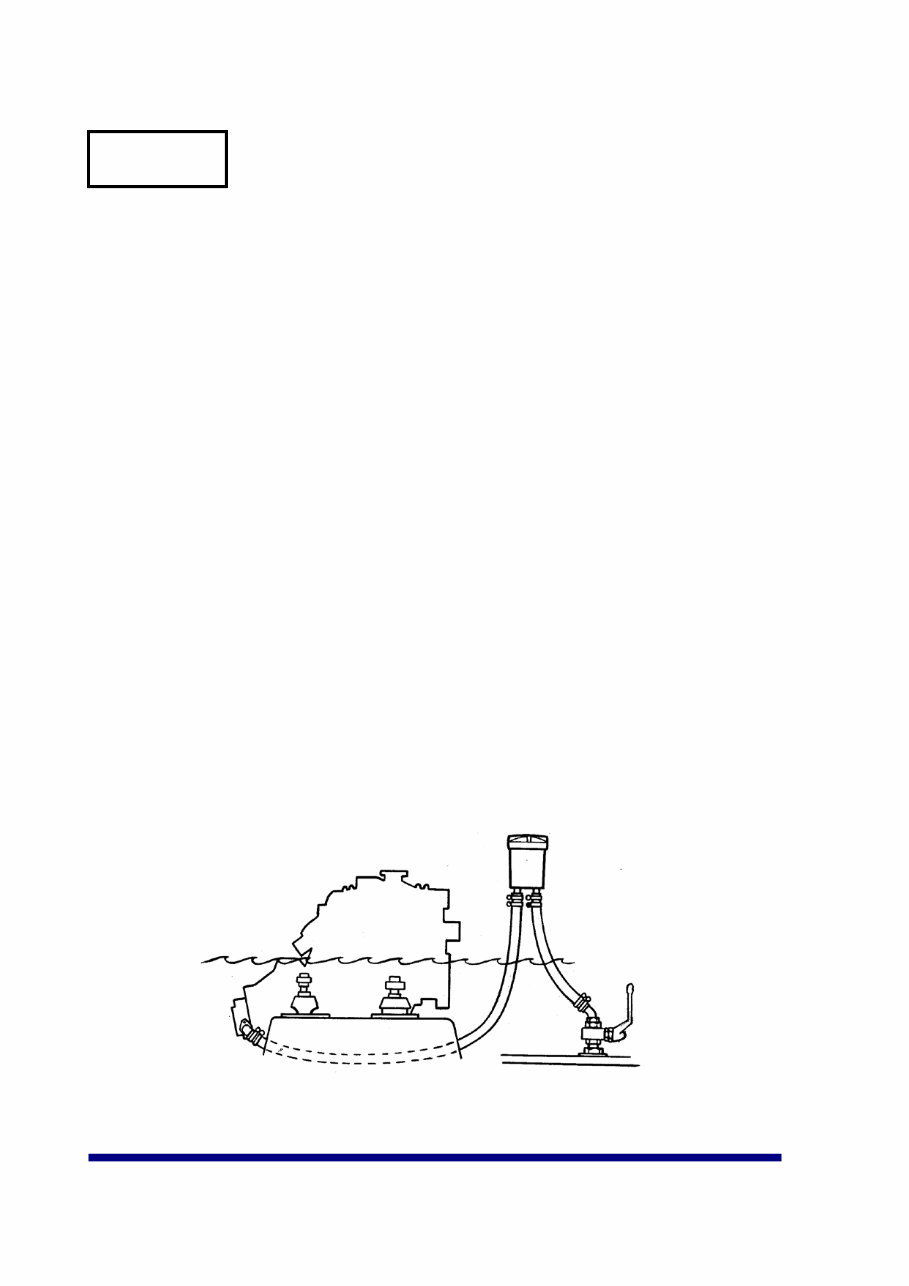
Sea water intake
HR 310, 340, 372 and HR 412 have saildrives - see the engine’s manual. The sketch is for non-
saildrive boats (shaft drive boats)
HR 40C, 44, 48,
57 and 64
Filter
Valve
Danger !
9
If the engine hasn’t been used for a long period of time, especially after the winter, keep an eye on the
cooling water pump impeller. Experience shows that failures most frequently happen after a longer
period of non-use.
It’s a good routine to "listen to the engine". Every skipper will after some time know the "sound" of the
engine. You will directly hear if the exhaust is running dry, before it’s too late and you will also hear
how the propeller works. All this contributes to safe handling in harbours.
The propeller shaft
Normally the engine’s anti-vibrators will subside a little during the first season. It is therefore important
to check the level between the engine and the propeller shaft and maybe adjust it. This should be done
by an expert.
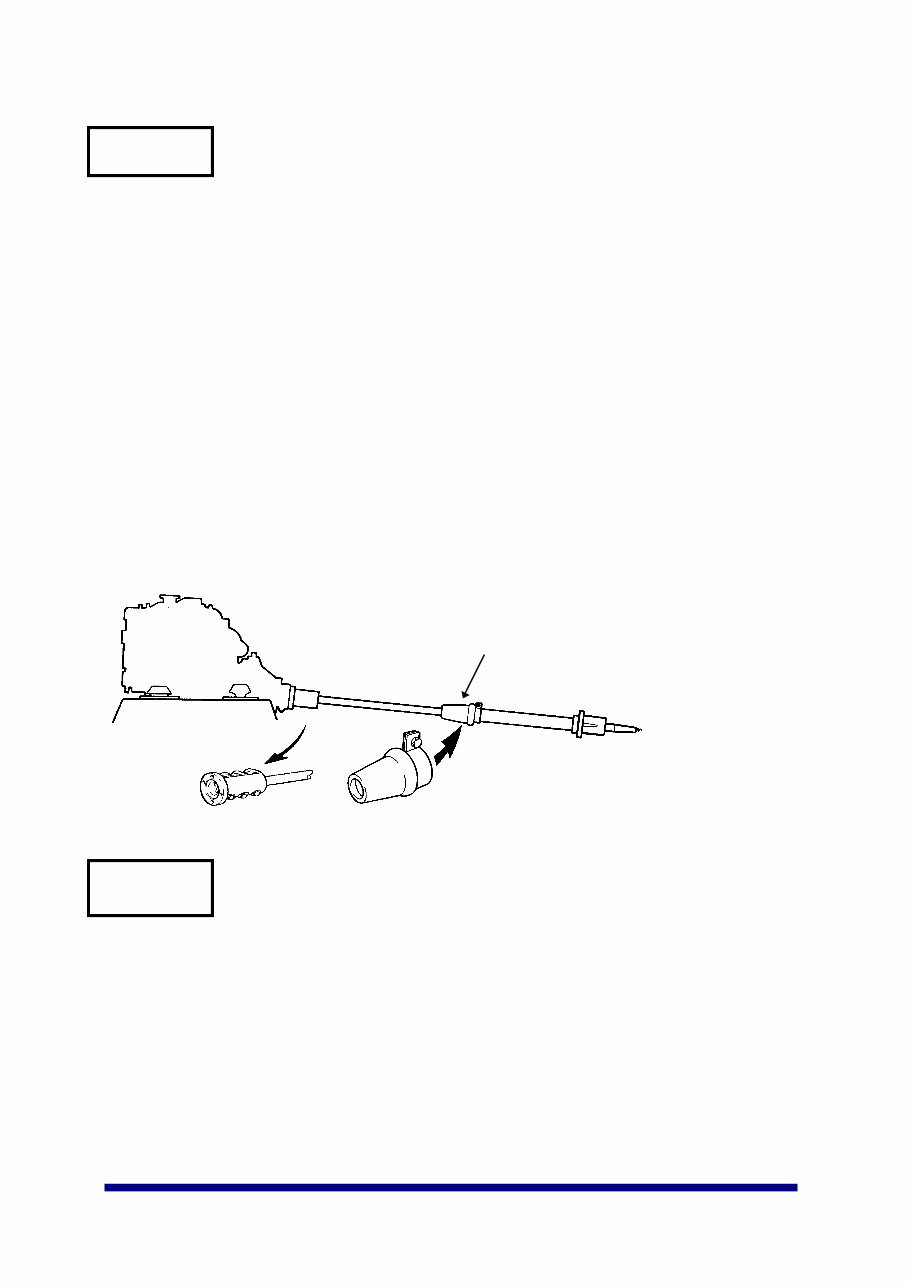
The propeller shaft seals (centre cockpit boats)
The stern gland is water lubricated and requires little maintenance. However, if the boat has been lifted
out of the water the black rubber seal has to be squeezed, to be refilled with water (all boats with shaft
drive). If forgotten it will run dry and quickly be damaged. All shaft drives: Grease once a year or after
200 hours, whatever happens first, according to the engine manufacturer’s manual enclosed.
Press here according to instructions
Note !
Note !
10
The outer propeller shaft bearing is maintenance free in general. However, in very bad water conditions
(sandy waters) there may be a need to replace the rubber bearing. In this case you have to dismount the
propeller and two retaining screws on the sides. After this the rubber bearing can be pulled out with a
suitable tool.
The propeller
Every propeller must be checked regularly, at least very 12 months, more frequently if the boat is
extensively used. You must check the nut and that there is no play. A sail propeller with movable blades
should be greased at least once every season. Check that the blades move freely. If you want to demount
the propeller, please notice that this should be done when the propeller is still wet directly out of the
water. If you let the propeller dry, it may be very tricky to demount it.
The sacrificing anode is fitted so that it is sacrificed whilst protecting the shaft and the propeller. This
is more rapid when the antifouling is new, due to copper in the paint but will slower after some time. If
the anode is eaten away to more than 50 % or covered by a hard shell it should be replaced. The zinc
anode should be checked several times each year.
In certain waters or due to earth leakage of the shore connection there is sometimes a
highly increased consumption of sacrificing anodes. In most cases it is very complicated to find a good
explanation, but a good idea is not to have the shore connection plugged in more than necessary.
If you have a Gori propeller , this one has two gears. That means you have the first gear, with higher
revolution. The second gear (overdrive) has lower revolution. The higher revolution will give slightly
faster acceleration and more power against the wind in extreme situations, but a higher noise level. The
low revolution is the normal gear to use, slightly slower acceleration but less noise and thus greater
comfort. If you want to go from low revolution (overdrive) to high revolution: When your boat is
making some knots, go to neutral and then for a short moment to reverse, without letting the boat
move backwards. Now go to neutral and to forward again and you will have the high revolution. If you
want to go from high revolution to low revolution (overdrive): When your boat is making some
knots, go to reverse and let the boat move backwards. Go forward again and you will have the low
revolution (overdrive) gear. Please read Gori’s manual for details. After using your boat for a while, you
will by instinct hear by the sound what gear you are using. When in doubt what gear you use, give full
gas when the engine is warm. By watching the RPM on the engine panel you will know which gear you
are using.
Important: If you have a Gori two geared propeller, the engine needs to be used at maximum RPMs
on the higher revolution gear (the non-overdrive) shortly now and then, at least once a month. Also,
you must not overload the engine in overdrive mode, by using higher RPM in Overdrive than stated
on the next page. If you don’t follow those two things, your engine will be overloaded and damaged.
That will for example result in that the engine creates black smoke and/or the turbo charger stop
working. The engine warranty is not valid if the above is not followed.
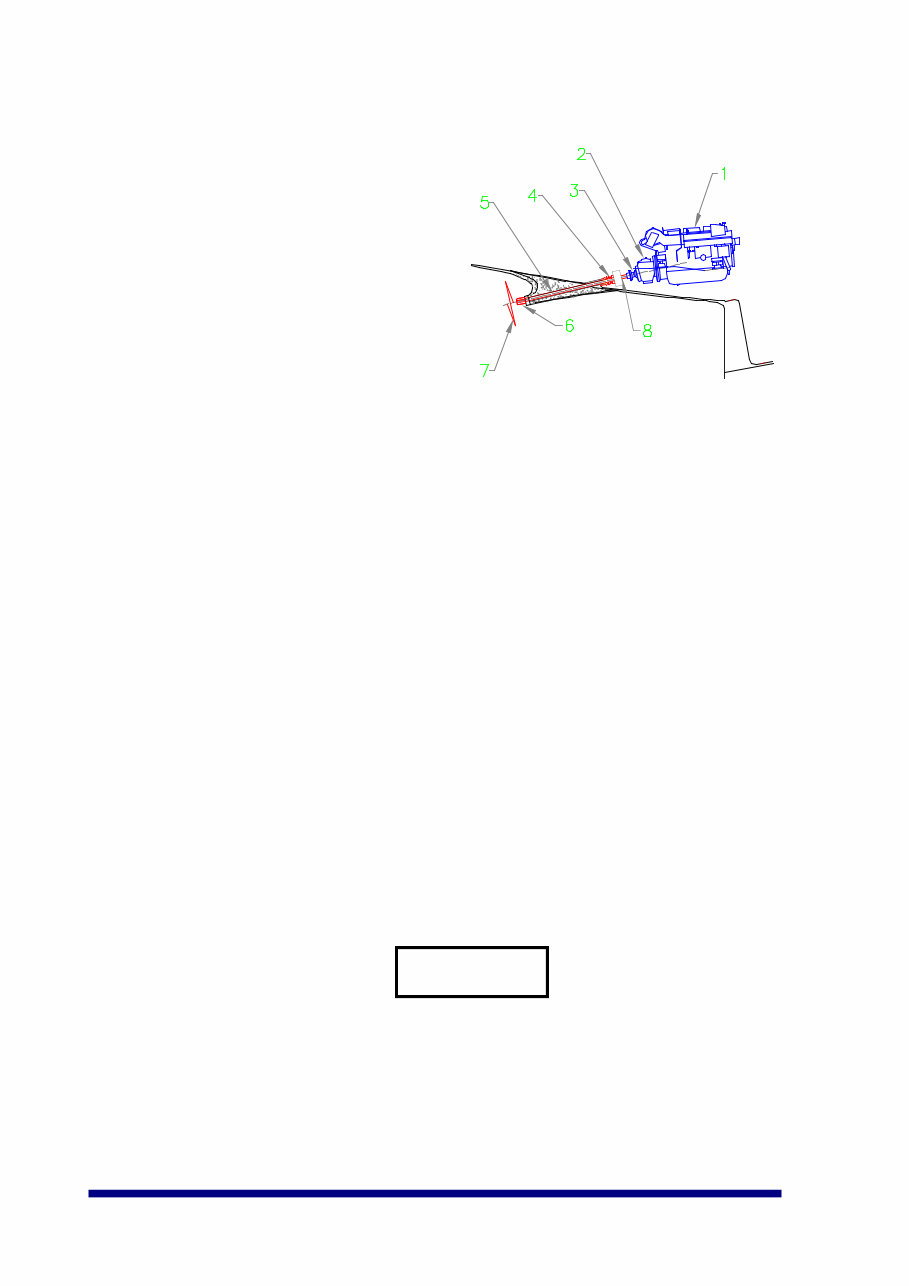
1= Engine
2= Gearbox
3= Shaft coupling clamp
4= Stuffing box
5= Shaft sleeve
6= Stern bearing
7= Propeller
8= Propeller shaft
Warning !
You're Reading a Preview
What's Included?
 Lifetime Access
Fast Download Speeds
Online & Offline Access
Access PDF Contents & Bookmarks
Full Search Facility
Print one or all pages of your manual
$26.99
2019-2020 Hallberg-Rassy All Models Instruction Book
Viewed 45 Times Today

What's Included?
Lifetime Access
Fast Download Speeds
Online & Offline Access
Access PDF Contents & Bookmarks
Full Search Facility
Print one or all pages of your manual
$26.99


Secure transaction
What's Included?
Lifetime Access
Fast Download Speeds
Online & Offline Access
Access PDF Contents & Bookmarks
Full Search Facility
Print one or all pages of your manual
Description
- This manual is a valuable resource for Hallberg Rassy yacht owners, providing easy-to-follow instructions and detailed diagrams for all models from 2019 to 2020.
- It covers a wide range of information including boat support, accessories, engines, specifications, security, maintenance, and inspections.
- Whether you are a professional mechanic or a DIY enthusiast, this manual is essential for maximizing your yacht's performance and safety.
- From general safety advice to specific rigging diagrams and engine information, this manual offers the latest guidance for maintaining and operating Hallberg Rassy yachts.
- Designed with a user-friendly layout, it allows for quick access to the necessary information, and also includes downloadable updates for the most current instructions.
- For sailboat owners, the Hallberg Rassy All models 2019 / 2020 Instruction Book is an indispensable resource for ensuring a safe and enjoyable sailing experience.


