CONTENTS Chapter 1: Welcome Aboard! Dimensions & Tank Capacities 1 Warranty Information 1 Dealer Service 1 Qualified Maintenance 1 Boating Experience 2 Special Care for Moored Boats 2 Structural Limitations 2 Engine & Accessory Guidelines & Literature 3 Propeller 3 Safety Standards 4 Boat Lifting 5 Carbon Monoxide (CO) 6 CO Facts 6 Factors that Increase the Effects of CO Poisoning 6 Where & How CO Can Accumulate 7 How to Protect Yourself & Others From CO 7 CO Checklists 8 CO Monitor 8 More Information 8 Warnings & Warning Labels 9 Chapter 2: Locations Exterior Views 11 Hull Views 11 Deck Views 12 Helm 13 Component Locations 14 Chapter 3: Propulsion & Related Systems Engine 27 Bilge Blower System 27 Fuel System 28 Fuel Fill & Vent 28 Fuel Filters 29 Anti-siphon Valve 29 Quick Oil Drain System 30 Chapter 4: Controls & Gauges Steering 31 Shift/Throttle Controls 31 Power Trim & Tilt 31 Trim Tabs 31 Gauges 32 Cleaning the Gauges 32 Gauge Fogging 32 Radio Transmission Interference 32 Fuel Gauge 32 Chapter 5: Navigation & Communication Equipment Compass 33 Depth Finder (If Equipped) 33 VHF Radio (If Equipped) 33 Radar (If Equipped) 34 Global Positioning System (GPS) (If Equipped) 34 Chapter 6: Plumbing Bilge Pumps 35 Bilge Pump Testing 36 Autofloat Switches 36 Seawater Systems 37 Seacocks 37 Seawater Strainers 37 Seawater Washdown (If Equipped) 38 Freshwater System 39 Transom Shower (If Equipped) 39 Freshwater System Winterization 40 Water Heater 41 Winterizing the Water Heater 42 Preparing Water Heater for Use After Boat Storage 43 Drain Systems 44 Deck Drains 44 Gray Water Gravity Sink Drains 44 Sump Pump System 44 Sump Box Cleaning 44 Sump System Winterization 44 Marine Head & Holding Tank 45 Manual Flush Head (If Equipped) 45 Electric Flush Head (If Equipped) 46 Macerator (If Equipped) 47 Air Conditioner (If Equipped) 48
Chapter 7: Deck Equipment Cleats & Bow/Stern Eyes 49 Windlass (If Equipped) 49 Windlass Pre-wiring (If Equipped) 50 Canvas & Vinyl Tops & Enclosures (If Equipped) 51 Camper Top 51 Vinyl Curtains 52 Canvas Care 53 Clear Vinyl Care 54 Chapter 8: Appliances & Entertainment Systems Refrigerator 55 Audio & Visual Equipment 55 Alcohol/110-Volt Electric Stove 56 Chapter 9: Convertible Seats, Beds, & Tables Dinette to Sleeping Berth Conversion 57 Chapter 10: Lights Care & Maintenance 58 Interior & Exterior Lights 58 Navigation Lights 58 Spotlight (If Equipped) 58 Chapter 11: Electrical System 12-Volt DC System 60 Batteries 60 Battery Switch 60 Battery Switch Positions 60 Fuses & Fuse Blocks 61 12-Volt DC Accessory Outlets 61 Alternator 62 Battery Charger (If Equipped) 62 110-Volt AC System 63 Shore Power 64 Connecting to Shore Power 65 Parallel Switch (Only if Equipped with Dual Shore Power) 65 Electrical Routings 66 12-Volt DC Hull Harness 66 12-Volt DC Deck Harnesses 67 Battery Cable Routings 68 12-Volt DC Hardtop Harness 69 110-Volt AC Hull Harness 69 Important Records 70 Float Plan 71
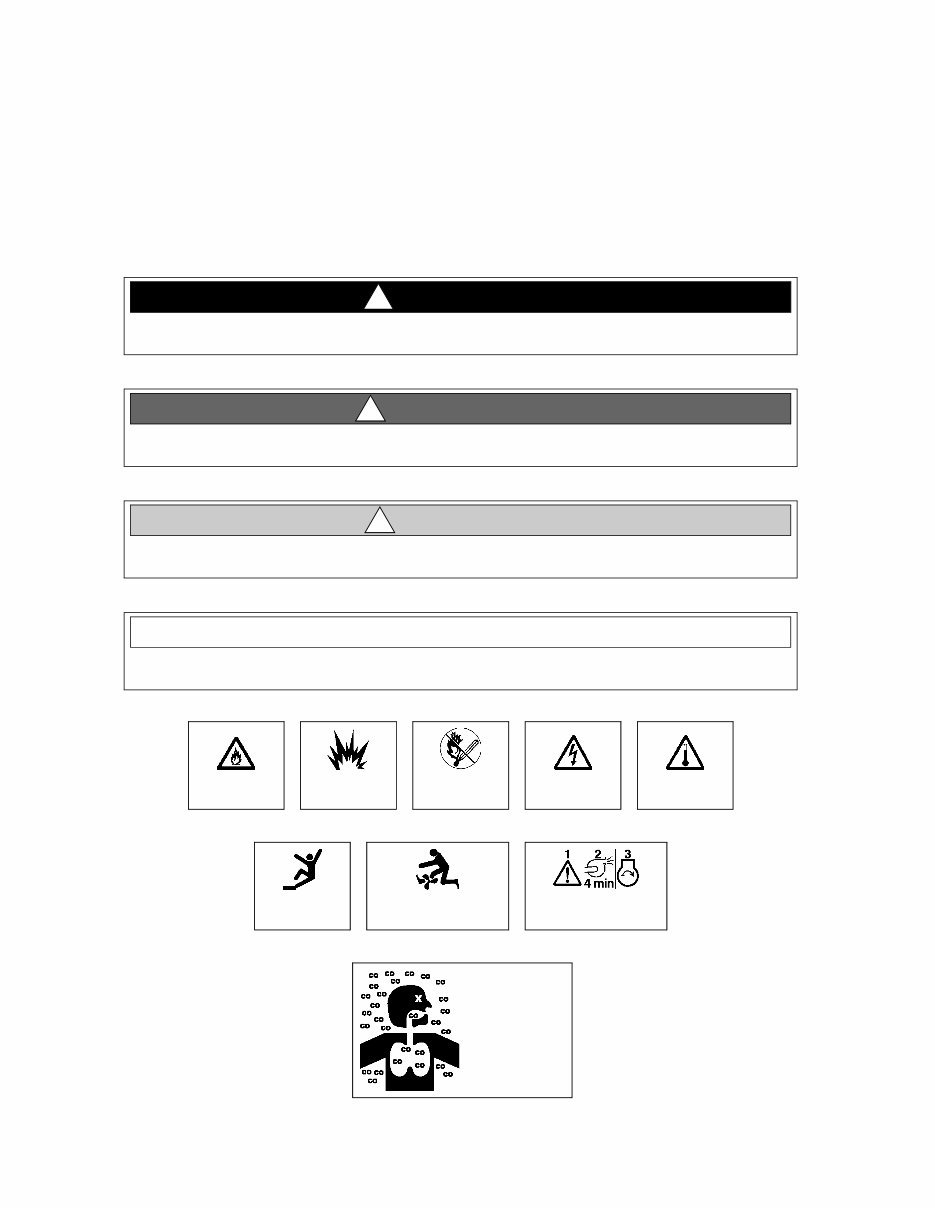
Hazard Boxes & Symbols The hazard boxes and symbols shown below are used throughout this supplement to call attention to potentially dan- gerous situations which could lead to either personal injury or product damage. Read all warnings carefully and fol- low all safety instructions. This box alerts you to immediate hazards which WILL cause severe personal injury or death if the warning is ignored. DANGER! ! This box alerts you to hazards or unsafe practices which COULD result in severe personal injury or death if the warning is ignored. WARNING! ! This box alerts you to hazards or unsafe practices which COULD result in minor personal injury or cause product or property damage if the warning is ignored. CAUTION ! This box calls attention to installation, operation or maintenance information, which is impor- tant to proper operation but is not hazard related. NOTICE CO POISONING HAZARD! EXPLOSION HAZARD! NO OPEN FLAME! HOT HAZARD! ROTATING PROPELLER HAZARD! FALLING HAZARD! ELECTRICAL HAZARD! FIRE HAZARD! RUN BILGE BLOWERS FOR 4 MINUTES!
1 246 • Owner’s Manual Supplement Chapter 1: Welcome Aboard! • This Owner’s Manual Supplement provides specific information about your boat that is not covered in the Cruiser & Yacht Owner’s Manual. • The Cruiser & Yacht Owner’s Manual contains general information about safe operating practices, general boat- ing regulations, and general maintenance techniques. Information that is more specific to your particular boat is found in this Owner’s Manual Supplement. • Before using your boat, study this Owner’s Manual Supplement, the Cruiser & Yacht Owner’s Manual, and all engine and accessory literature carefully. If similar instructions are found in more than one manual, always refer to the specific manufacturer’s manual (such as the engine manual) for the most complete and accurate information. • Keep this Owner’s Manual Supplement and the Cruiser & Yacht Owner’s Manual on your boat in a secure, yet readily available place. Dimensions & Tank Capacities Warranty Information • Bayliner offers a Limited Warranty on each new Bayliner purchased through an authorized Bayliner dealer. • A copy of the Limited Warranty was included in your owner’s packet. • If you did not get a copy of the Limited Warranty, please contact your Bayliner dealer or call 360-435-8957 for a copy. Dealer Service • Your dealer is your key to service. • Ask your dealer to explain all systems before taking delivery of your boat. • Contact your dealer if you have any problems with your new boat. • If your dealer cannot help, call our customer service hotline: 360-435-8957 or send us a FAX: 360-403-4235. • Buy replacement parts from any authorized Bayliner dealer. • You can access on-line parts catalogs, links to vendor websites, and other helpful features by logging on to http://www.baylinerparts.com . Qualified Maintenance • Failure to maintain your boat’s systems (listed in the warning above) as designed could violate the laws in your jurisdiction and could expose you and other people to the danger of bodily injury or accidental death. • Follow the instructions provided in the Cruiser & Yacht Owner’s Manual, this supplement, the engine owner’s manual, and all accessory literature. Overall Length Length Rigged Bridge Clearance Beam Draft (Hull) Draft (Maximum) Fuel Capacity Freshwater Capacity Holding Tank Capacity 25' 8" 26' 6" 8' 9" 8' 6" 1' 9" 3' 3" 81 Gallons 20 Gallons 20 Gallons To maintain the safety of your boat, allow ONLY trained personnel to work on, or change, in any way, the: • Steering system • Propulsion system • Engine control system • Fuel system • Environmental control system • Electrical system • Navigation system WARNING! !
Chapter 1: Welcome Aboard! 246 • Owner’s Manual Supplement 2 Boating Experience If this is your first boat or if you are changing to a type of boat you are not familiar with, for your own comfort and safety, get handling and operating experience before assuming command of your boat. Take one of the boating safety classes offered by the U.S. Power Squadrons or the U.S. Coast Guard Auxiliary. For more course information, including dates and locations of upcoming classes, contact the organizations directly: • U.S. Power Squadrons: 1-888-FOR-USPS (1-888-367-8777) or on the Internet at: http://www.usps.org • In Canada, for the CPS courses call 1-888-CPS-BOAT. • U.S. Coast Guard Auxiliary: 1-800-368-5647 or on the Internet at: http://www.cgaux.org Outside the United States, your selling dealer, national sailing federation, or local boat club can advise you of local sea schools or competent instructors. Special Care for Moored Boats • Whether moored in saltwater or freshwater, your boat will collect marine growth on its hull bottom. • This will detract from your boat’s beauty, greatly affect its performance, and may damage the gel coat. • Periodically haul your boat out of the water and scrub the hull bottom with a bristle brush and a solution of soap and water. Structural Limitations The swim platform extension is designed to be lightweight for proper boat balance. The load limit for the swim plat- form extension is 30 pounds per square foot, evenly distributed. CONTROL HAZARD! An experienced operator MUST be in control of your boat at ALL times. Do NOT operate your boat while under the influence of alcohol or drugs. WARNING! ! • To help seal the hull bottom and reduce the chance of gel coat blistering while your boat is moored, apply an epoxy barrier coating. • The barrier coating should be covered with several coats of anti-fouling paint. • Many states regulate the chemical content of bottom paints in order to meet environmental standards. Check with your local dealer about recommended bottom paints, and about the laws in effect in your area. NOTICE
246 • Owner’s Manual Supplement Chapter 1: Welcome Aboard! 3 Engine & Accessory Guidelines & Literature • Your boat’s engine and accessories were selected to provide optimum performance and service. • Installing a different engine or adding accessories may affect your boat’s running trim. • If you choose to install a different engine or add accessories that may affect your boat’s running trim, have a trained marine technician perform a safety inspection and handling test before using your boat again. • The engine and accessories on your boat have their own manuals. Read these manuals before using the engines and accessories. Unless noted otherwise, all engine and accessory literature referred to in this Owner’s Manual Supplement is included in your owner’s packet. While the topics listed below may be included in this Owner’s Manual Supplement and in the Cruiser & Yacht Owner’s Manual, always refer to the engine manual first for specific information on these important subjects: Propeller • Keep the propeller in good repair and at the correct pitch for your particular situation. • A slightly bent or nicked propeller will adversely affect the performance of your boat. BEFORE starting or working on your engine(s), read the engine manual. NOTICE BEFORE using the accessories on your boat, read the accessory manuals. NOTICE BEFORE storing your boat, refer to your engine and accessory manuals for storage/winteriza- tion instructions. NOTICE Certain modifications to your boat WILL result in cancellation of your warranty protection. ALWAYS check with your dealer BEFORE making any modifications to your boat. NOTICE • Engine Break-in Procedure • Starting the Engine • Gear Shifting • Stopping the Engine • Fuel and Oil Recommendations • Engine Storage/Winterization ENGINE DAMAGE HAZARD! The factory standard propeller may not be the best for your particular boat and load condi- tions. Refer to the engine manual for engine RPM ratings. The engine should reach, but not exceed its full rated RPM when full-throttle is applied. Immediately contact your local Bayliner dealer if: • The engine cannot reach its full rated RPM when full-throttle is applied, or; • The engine exceeds its full rated RPM when full-throttle is applied. CAUTION !
Chapter 1: Welcome Aboard! 246 • Owner’s Manual Supplement 4 Safety Standards • Your boat’s mechanical and electrical systems were designed to meet safety standards in effect at the time it was built. • Some of these standards were mandated by law, and all of them were designed to insure your safety and the safety of other people, vessels and property. Read this supplement, the Cruiser & Yacht Owner’s Manual, and all accessory instructions for important safety stan- dards and hazard information. FALLING and ROTATING PROPELLER HAZARD! • NEVER allow anyone to ride on parts of your boat NOT designed for such use. • Sitting on seat-backs, lounging on the forward deck, bow riding, gun- wale riding or occupying the transom platform while underway is especially hazardous and WILL cause personal injury or death. DANGER! ! FALLING, ROTATING PROPELLER and CARBON MONOXIDE POISONING HAZARD! • NEVER allow anyone to occupy, or hang from, the back deck or swim platform while the engine is running. • Teak surfing, dragging, or water skiing within 20 feet of a moving watercraft can be fatal. DANGER! ! PERSONAL SAFETY HAZARD! • ALWAYS secure the anchor and other loose objects BEFORE getting underway. • The anchor and other items that are NOT properly secured can come loose when your boat is moving and cause personal injury or death. DANGER! ! A wide variety of components used on this vessel contain or emit chemicals known to the State of California to cause cancer and birth defects and other reproductive harm. Examples Include: • Engine and generator exhaust • Engine and generator fuel, and other liquids such as coolants and oil, especially used motor oil • Cooking fuels • Cleaners, paints, and substances used for vessel repair • Waste materials that result from wear of vessel components • Lead from battery terminals and from other sources such as ballast or fishing sinkers To Avoid Harm: • Keep away from engine, generator, and cooking fuel exhaust fumes. • Wash exposed skin thoroughly with soap and water after handling the substances above. WARNING! !
This manual is a comprehensive guide for the 2009 Bayliner 246 Discovery, offering detailed information on boat operation and maintenance. It includes instructions on starting the Auxiliary engine, operating external components, using safety devices, and normal maintenance procedures. With over 100 pages of technical information, this well-illustrated guide is suitable for both professional mechanics and DIY enthusiasts, providing the necessary skills, understanding, and confidence to operate the boat safely and effectively.
The manual covers the following model:
2009 Bayliner 246 Discovery
It is a valuable resource for boat owners and is available in digital format for instant access upon purchase. Whether you are a professional or a DIY enthusiast, this manual is designed to help you understand and maintain your Bayliner 246 Discovery boat.



 Lifetime Access