


LG WT5170HW Service Manual & Repair Guide
What's Included?
 Lifetime Access
Fast Download Speeds
Online & Offline Access
Access PDF Contents & Bookmarks
Full Search Facility
Print one or all pages of your manual

WASHING MACHINE
SERVICE MANUAL
READ THIS MANUAL CAREFULLY TO DIAGNOSE
PROBLEMS CORRECTLY BEFORE SERVICING THE UNIT.
CAUTION
MODEL : WT5170H*

SAFETY PRECAUTION!
IMPORTANT SAFETY NOTICE!
2
This service information is intended for individuals possessing adequate backgrounds of
electrical, electronic, and mechanical experience. Any attempt to repair this appliance may result
in personal injury or property damage. The manufacturer or seller can not be responsible for the
interpretation of this information, nor can it assume any liability in connection with its use.
WARNING: To reduce the risk of fire, electric shock, or personal injury when using this
appliance, follow basic precautions, including the following:
·Wear gloves when working.
Failure to do this can result in serious injury.
·The appliance is heavy. Two or more people is
required when moving the appliance.
There is a risk of serious back injury or other injuries.
·Certain internal parts are intentionally not
grounded and may present a risk of electric
shock only during servicing. Service personnel -
Do not contact the following parts while the
appliance is energized: Pump bracket, rotor, and
heater.
To reduce the risk of fire, electric shock, or personal injury when using this appliance, follow basic precautions,
including the following.
·Disconnect this appliance from the power
supply before servicing. Turning the controls to
the off position does not disconnect this
appliance from the power supply.
Failure to do this can result in shock.
·Reconnect all grounded devices after servicing.
Failure to do this can result in shock.
CONTENTS
1. Specifications ............................................ 3
2. Installation Instructions
2-1. How to Adjust Level ............................4
2-2. Connecting Water Supply Hose ........ 6
2-3. Connect the Drain Hose .................... 7
3. Operating Instructions
3-1. Identification of Parts ......................... 8
3-2. Before Starting to Wash .................... 9
3-3. Function of Each BUTTON ............. 16
3-4. Washing Programs ......................... 18
3-5. Care and Maintenance .................... 20
4. Service Information
4-1. Disassembly Instruction ................... 21
4-2. Wiring Diagram ................................ 28
4-3. Test Running Without Water ............ 29
4-4. Troubleshooting By Common
Washing Problems .......................... 30
4-5. Troubleshooting Summary ................31
4-6. Troubleshooting with Error Code .......32
4-7. Other Troubleshooting .......................37
5. Component Testing Information ................39
5-1. Filter Assembly (Line Filter) ...............39
5-2. Door Lock Switch Assembly ..............40
5-3. Stator Assembly ................................42
5-4. Pump Motor Assembly ......................45
5-5. Inlet Valve Assembly .........................46
5-6. Heater Assembly ...............................47
5-7. Thermistor Assembly .........................48
6. Exploded View ........................................ 50
.
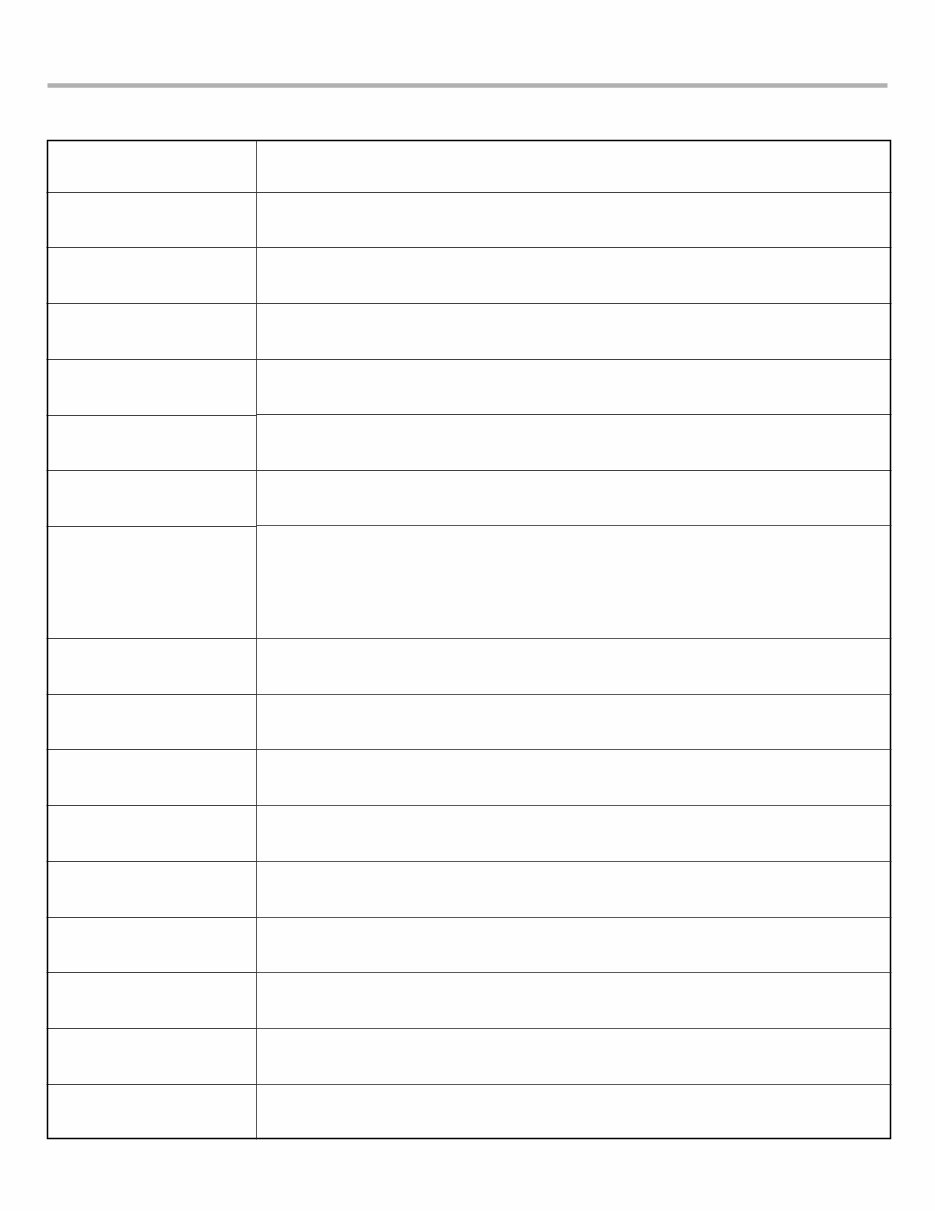
1. SPECIFICATIONS
3
Model
Electrical
Inner Tub
Inlet Water Pressure
Rating of Fuse
Spin Speed
Weight
Cycles
Time Delay
Lid Interlock Switch
Control Lock
Softener Dispenser
Detergent Dispenser
Bleach Inlet
Auto Power Off
Smart Rinse™with Jet Spray
Heater
WT5170H*
120VAC@60Hz.
Stainless
14.5 ~ 116 PSI (100 ~ 800 kPa)
120V/60Hz
1100±50
145.5 lbs (66kg)
Cotton/Normal, Perm.Press Casual, Heavy Duty, Bulky/Bedding, Bright Whites ™ , Tub Clean, Sanitary,
Delicates, Wool, Speed Wash, Pure Color ™, Sports Wear, Baby Wear, Towels, Rinse & Spin, Spin Only
1 – 19 Hr
Magnet Sensor
Yes
Yes
Yes
Yes
Yes
Yes
Yes
4
2. INSTALLATION INSTRUCTIONS
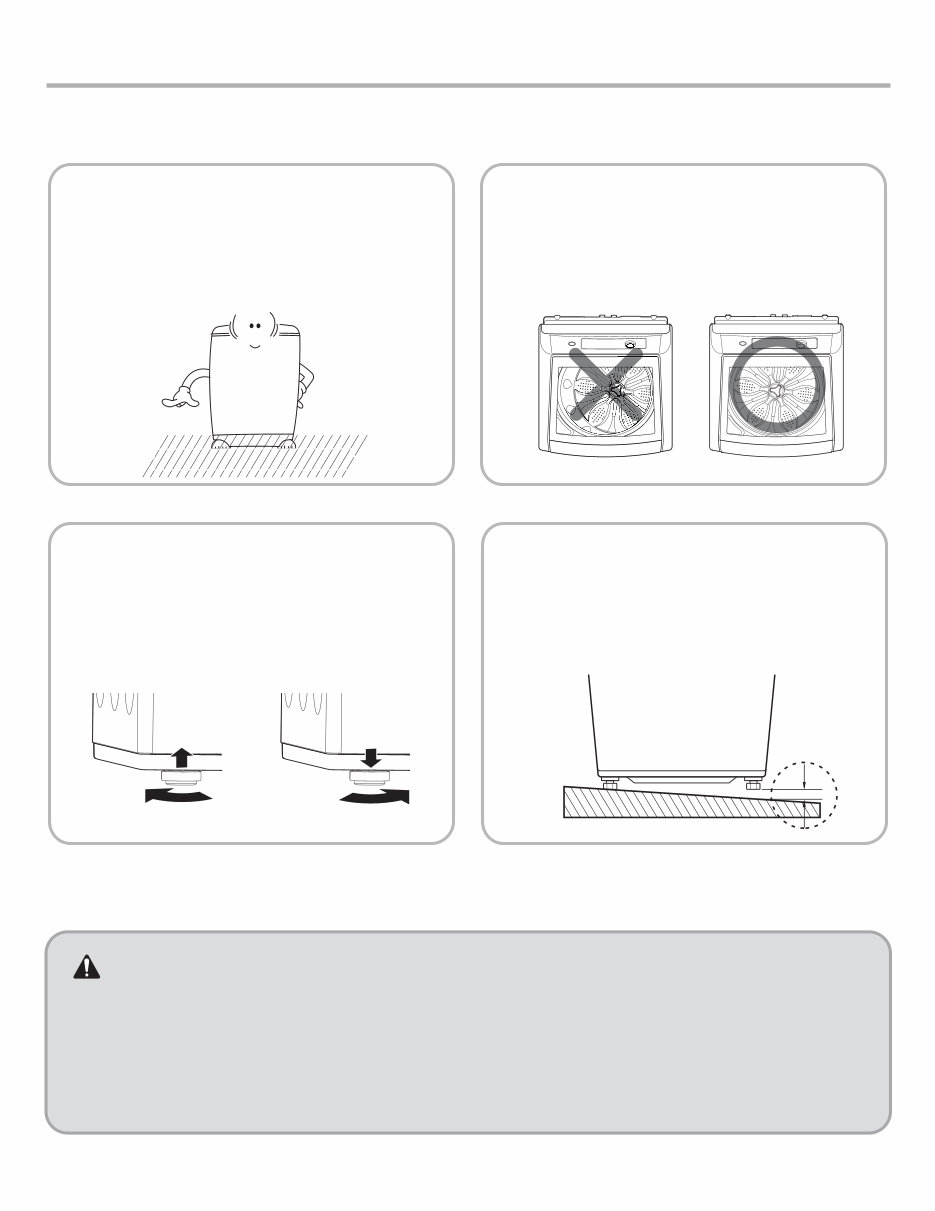
2-1. HOW TO ADJUST LEVEL
4
Raise Lower
CAUTION
• The ventilating openings in the base area must not be obstructed by carpeting.
• Install the washing machine on a level and firm surface. There should be no more than 1° of variation.
• Wooden floors may need reinforcing to prevent the normal vibration which occurs
with an unbalanced load.
• Do not install the washer on an inclined floor.
Improper installation of the washer may cause noise and malfunctioning.
1
Installation area
• Install the washer on a firm, flat
surface.
• If the washer is installed on an
unsuitable floor, it could make
considerable noise and vibrate.
2
3
Checking level
• Open the lid, check if the washer is
correctly leveled by looking down
from the top. If the tub is not
centered in the opening, then the
washer is not level.
WRONG RIGHT
No shims. It would be dangerous. If the
floor is that far from being level, it is a floor
problem and not a washer problem.
Set Leveling feet
• Loosen the locknuts on 2 front leveling
feet until you can turn the feet with the
included wrench. Turn clockwise to
raise the washer or counterclockwise
to lower it.
Checking slope
• If installation surface is tilted, the
washer will vibrate. Do not install
on a sloping floor.
5
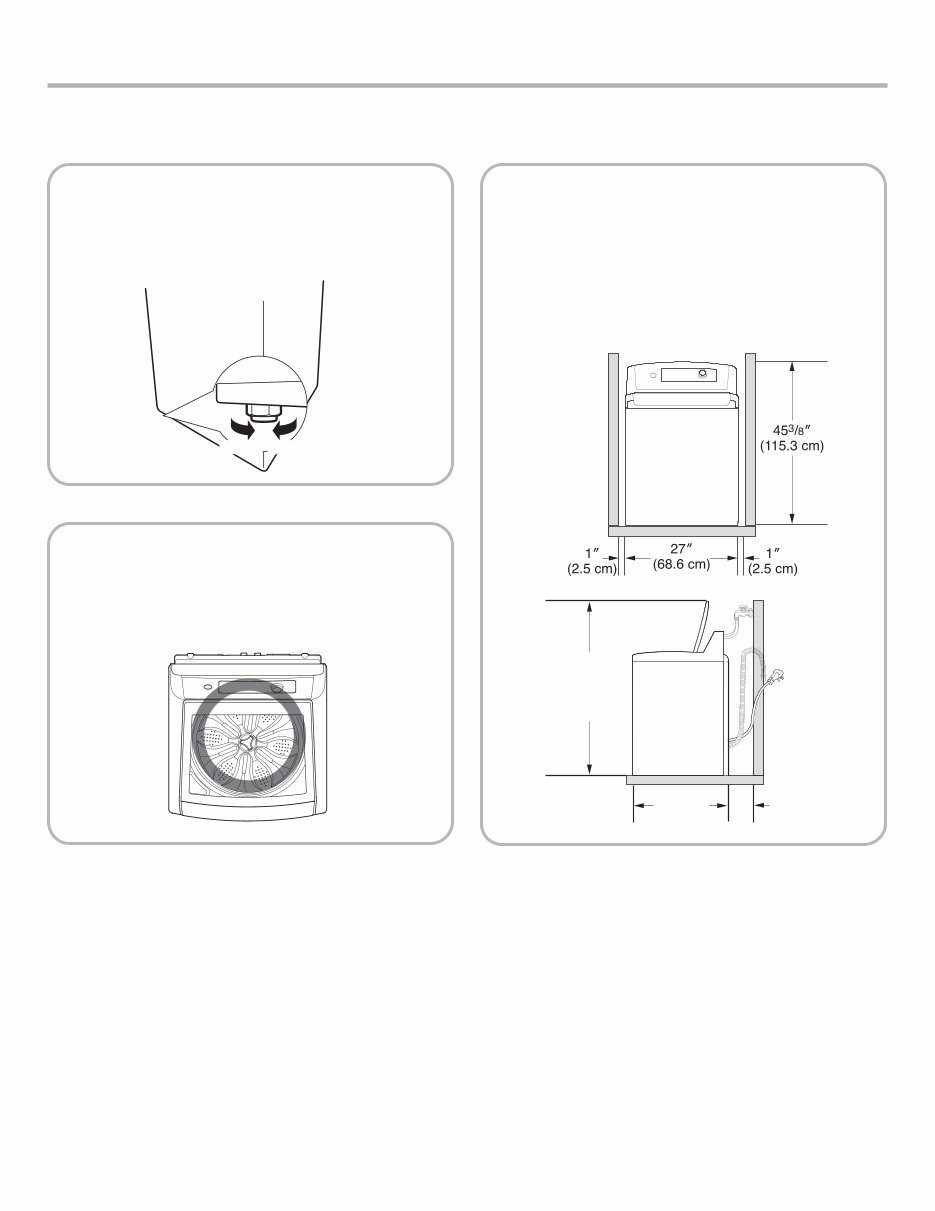
28.
13
/64″
(72.1 cm)
4″
(10 cm)
55.
13
/16″
(141.7 cm)
(with lid
open)
6
7 5
Lower Raise
Confirming level
• Place the washer in original position,
confirming the level.
Horizontal setting
• Lift the front of the washer and adjust
level by turnings the adjustable legs
clockwise or using the adjusting plate.
Distance between the drain hose
and the wall
• Distance between the drain hose and
the wall should be more than 4 inches
(10 cm,) and the distance between any
other part and the wall should be more
than 1 inches (2.5 cm.)
Do not install the washer in the following places.
• Where the washer is exposed to direct sunlight.
• Near a heater or heating appliance.
• Where the washer is exposed to freezing temperatures.
• In damp environments such as bathrooms or harmful environments.
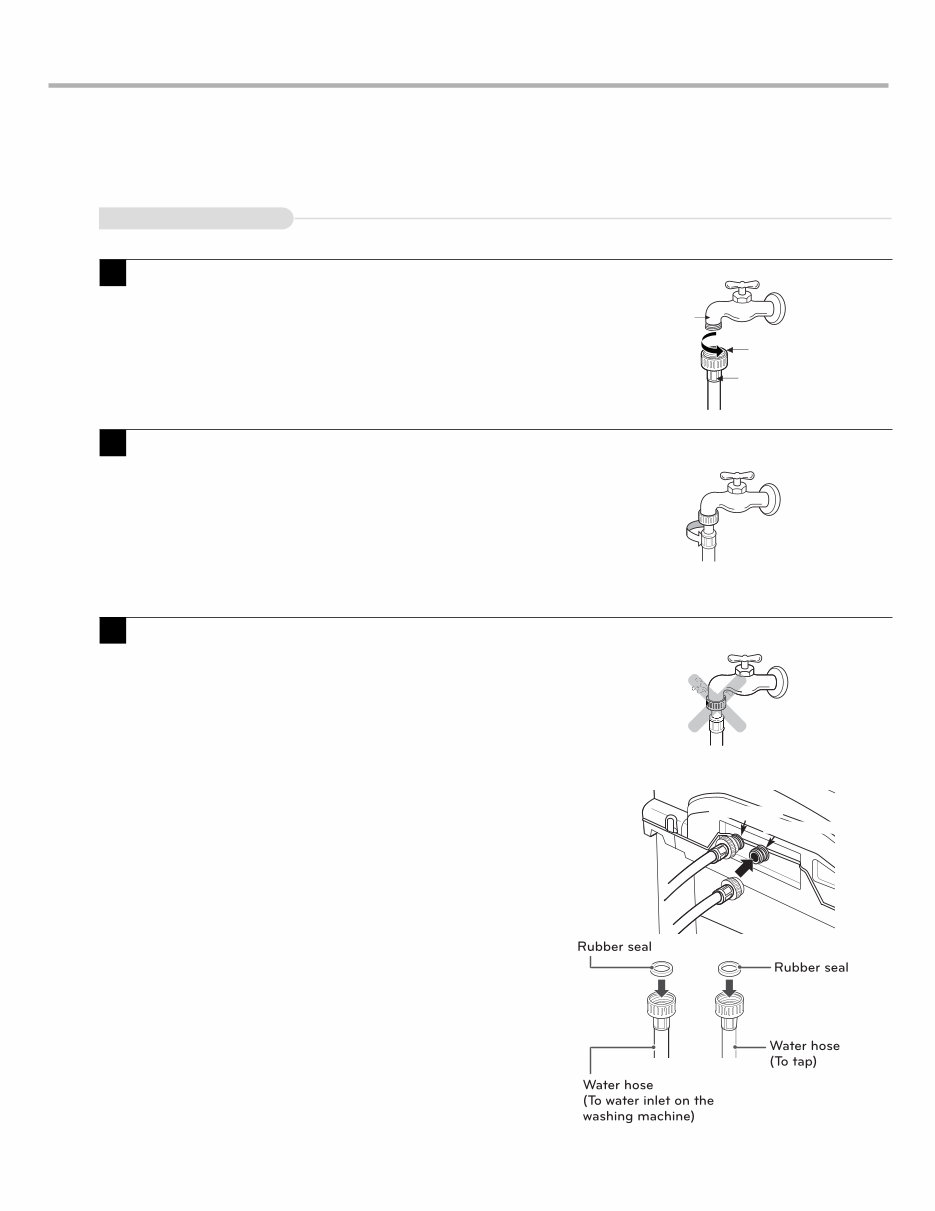
1 Attach the water supply hose to the tap.
Push the water supply hose up so that the rubber packing
within the hose can adhere completely to the tap.
2 Connect the water supply hose to the tap.
Connect the water supply hose to the tap and then tighten it by
screwing it to the right.
3 Check water leakage.
After connecting the hose, open the tap to check for
any water leakage.
Connecting Water Supply Hose to the Machine
• Connect the water supply hose to inlet valve of
the washing machine, and then lock it by turning
the hose connecting part.
• Check to see if there is a rubber seal inside the
connector.
• A new washing machine should be installed with
new hoses. The old hoses should not be reused.
• Replace hoses every 5 years.
Screw Type
Water tap
Rubber Seal
Water Supply Hose
Cold water inlet
Hot water inlet
2-2. CONNECTING WATER SUPPLY HOSE
6
Before connecting the water supply hose to the water tap, check the hose type and then choose the
correct instruction here below.
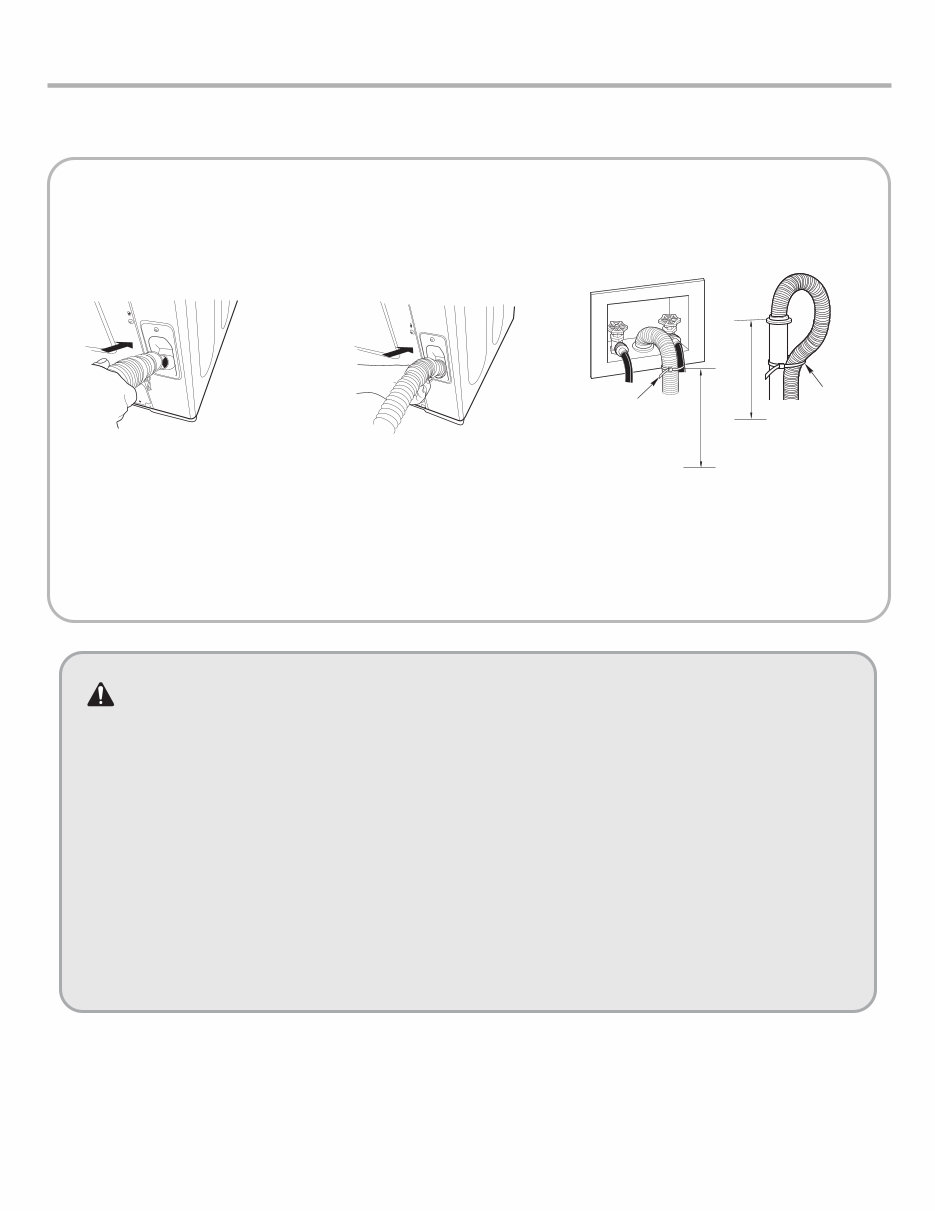
7
2-3. CONNECT THE DRAIN HOSE
35"~47" (0.9~1.2m)
35"~47" (0.9~1.2m)
• Connect the drain hose to the
outlet of the drain pump located at
the rear of the washing machine.
Attach the clip to the drain hose.
• And then push it toward the body of
the washing machine as indicated
by the arrow.
• Check that the drain hose is hung
up over the edge of the laundry tub.
• Do not use an extension hose.
NOTE : • The drain hose should always be properly secured to the drain or standpipe. Failure to secure
the drain hose properly can result in flooding and property damage.
• The end of the drain hose should be placed 39" (99 cm) above the floor.
• The drain must be installed in accordance with any applicable local codes and regulations.
• Make sure that the water lines are not stretched, pinched, crushed, or kinked.
• Do not insert the drain hose more than 12” (30 cm) into the drain pipe to avoid siphoning and
odor build-up.
Cable Tie
Cable Tie
WARNING:
• The washer should never be installed or stored in a location subject to freezing temperatures. If the
washer was exposed to freezing temperatures prior to installation, allow it to stand at room
temperature for several hours before use. Damage to the water lines and internal mechanisms of
the washer can result.
• Water supply pressure must be between 14.5 psi and 116 psi (100 ~ 800kPa) If the water supply
pressure is more than 116 psi, a pressure reducing valve must be installed. If you have
uncontrolled water temperature and pressure you should fit a temperature and pressure relief valve
to ensure that water temperature and water pressure remain within the safe limits. Consult a
plumber or electrician if you are unable to adjust water temperature and or pressure. Failure to do
so can result in damage to the machine.
• Plug the power cord of washer into a properly grounded outlet. Failure to do this can result in shock
or serious injury.
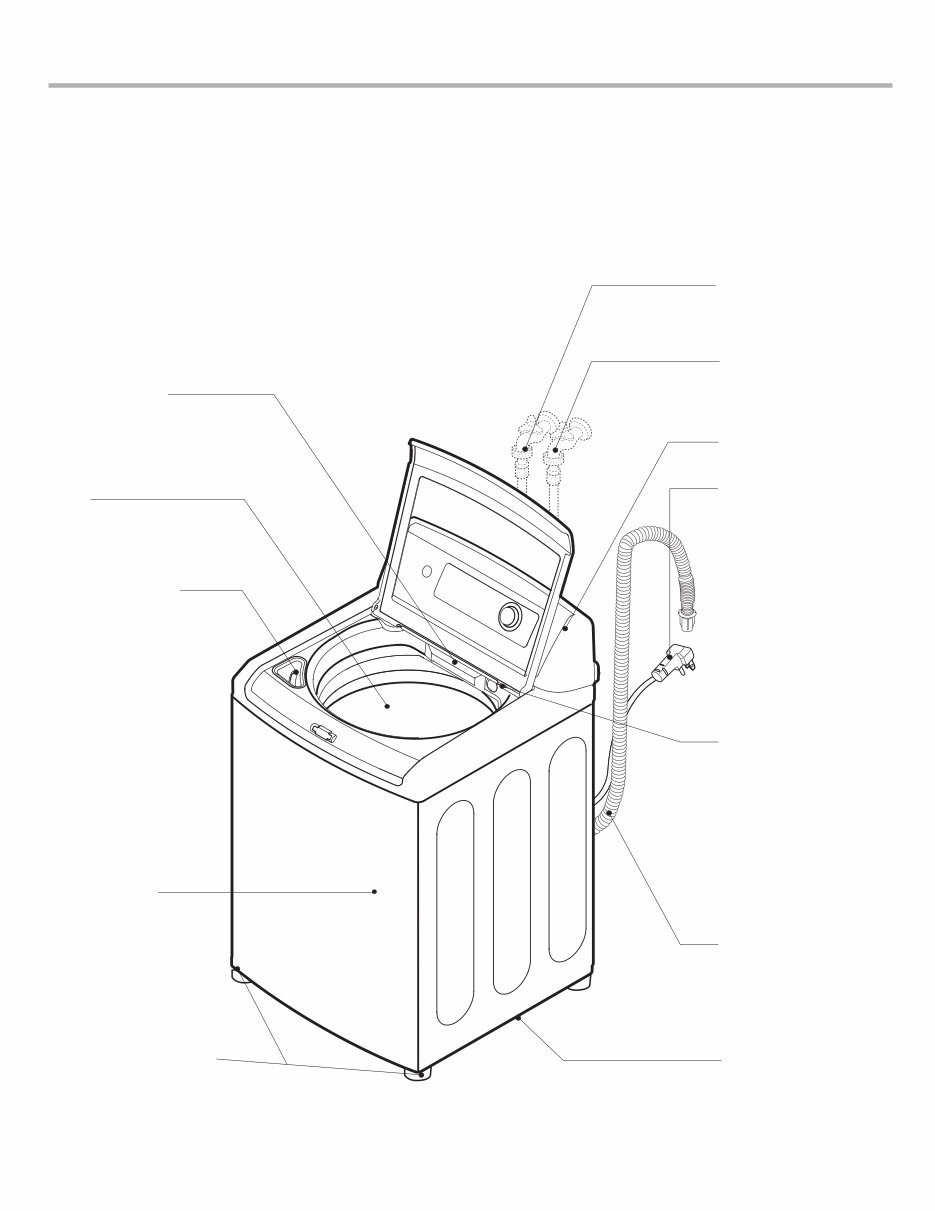
8
3. OPERATING INSTRUCTION
3-1. IDENTIFICATION OF PARTS
Powder detergent
Box for delayed
washing/softener additves box
INLET HOLE FOR
BLEACH
Washing Wing
(unique with lnner Tub)
LEVELLING LEGS
Use to level the washing
machine for correct balance
spin operation.
TUB
COLD WATER SUPPLY
HOSE
HOT WATER SUPPLY
HOSE
Make sure the water
does not leak.
POWER PLUG
If the supply cord is
damaged, it must be
replaced by the
manufacturer
or its service agents
or similarly qualified
person in order to
avoid a hazard.
FUNCTION SELECTOR
BASE
DRAIN HOSE
Be sure the drain hose
is properly installed on
the drain before
operating the washer.
SMART RINSE WITH
JET SPRAY
This washer is designed
to save rinse water by
using a jet spray rinse
system in the
Normal/Casual and
Heavy Duty cycles.
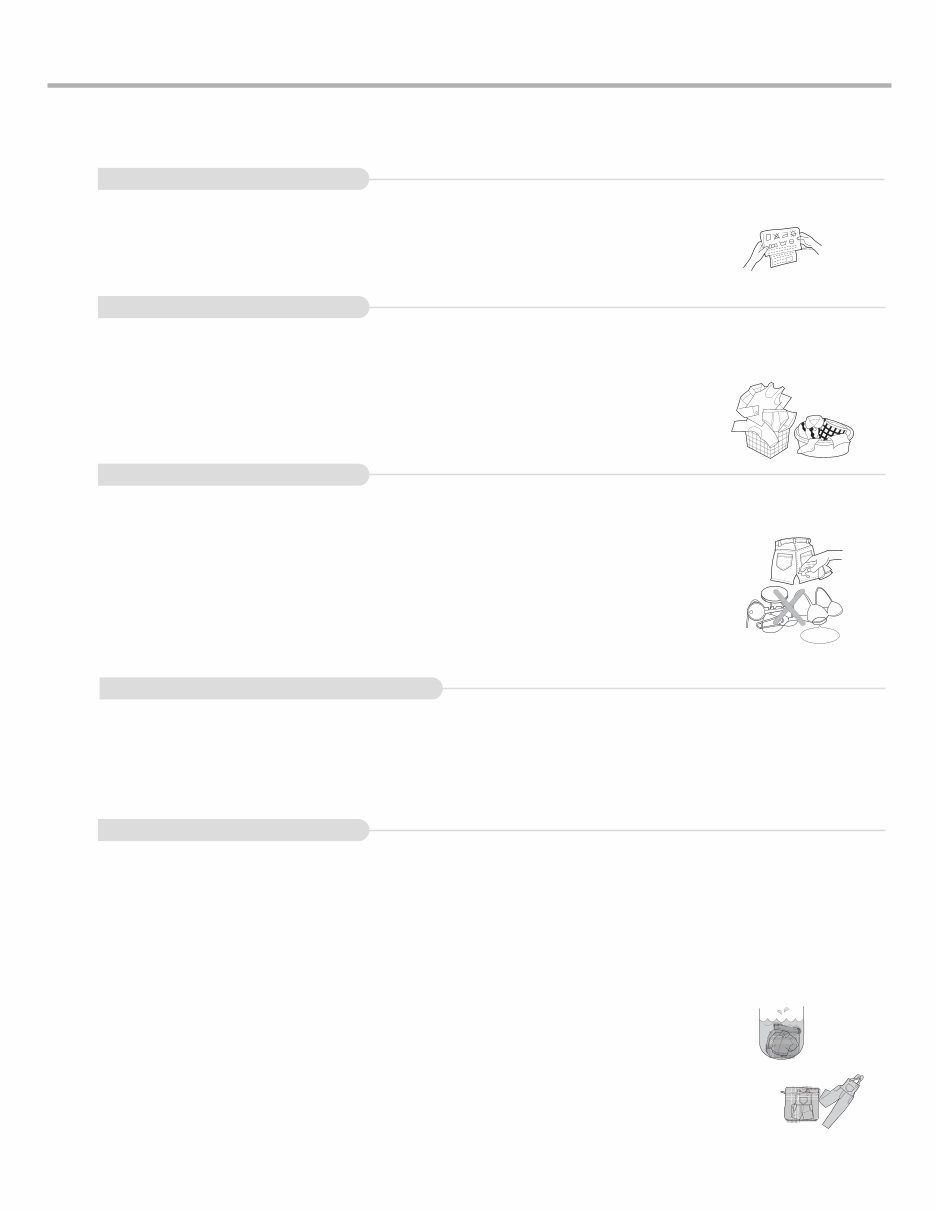
9
3-2. BEFORE STARTING TO WASH
Care Labels
• Look for a care label on your clothes.
This will tell you about the fabric content of your garment and how it should be washed.
Sort clothes into loads that can be washed with the same wash cycle, water temperature,
and spin speed.
Sorting
To get the best results, different fabrics need to be washed in different ways.
• SOIL (Heavy, Normal, Light) Separate clothes according to the type and amount of soil.
• COLOR (Whites, Lights, Darks) Separate white fabrics from colored fabrics.
• LINT (Lint producers, Collectors) Separate lint producers and lint collectors.
Lint Producers Terry cloth, Chenille, Towels, Diapers
Lint Collectors Synthetics, Corduroy, Permanent Press, Socks
Check before Loading
• Check all pockets to make sure that they are empty. Things such as nails, hairclips, matches,
pens, coins, and keys can damage both your washer and your clothes.
• Mend any torn garments or loose buttons. Tears or holes may become larger during washing.
• Remove belts, underwires, etc. to prevent damage to the machine or your clothes.
• Pretreat any dirt and stains.
• Make sure the clothes are washable in water.
• Check the washing instructions.
• Remove any paper or tissue in the pockets.
• underwire
Loading
Do not wash fabrics containing flammable materials (waxes, cleaning fluids, etc.).
Load Size
The WATER LEVEL should just cover the clothes. Adjust the load size
accordingly. Loosely load clothes no higher than the top row of holes in the
washer tub. To add items after washer has started, press the Start button and
submerge additional items. Close the lid and press the Start button again to restart.
※ Do not wash waterproofed fabrics (such as skiing outfits, diapers, or nappy
auto seat covers.)
Light and Large-sized clothing
Clothes like downs and woolens are lightweight, large, and float easily. Use a nylon net and
wash them in a small amount of water. If the laundry floats during the wash cycle, it may
become damaged. Use dissolved detergent to prevent the detergent from clumping.
※ Do not wash water-proof textilles (Skling outfit, baby diaper, nappy automobile seat covers.)
Long laundry items
Use nylon bag nets for long, delicate items. For laundry with long strings or long length, a bag will prevent
tangling during washing. Fasten zippers, hooks, and strings to make sure that these items don't snag on
other clothes.
※ The nylon washing bag is not supplied by Kenmore.
Pretreatment on stains or heavy soil
• Pretreat shirt collars and cuffs with a pre-wash product or liquid detergent when placing them in the washer.
Before washing treat special stains with bar soaps, liquid detergent, or a paste of water and powdered detergent.
• Use a pretreat soil and stain remover.
Treat stains AS SOON AS POSSIBLE. The longer they are left, the harder they are to remove.
(For more detail refer to page 14-15)
WIRE

10
1) Using Water
Water Temperature
• The machine sets the appropriate temperature automatically according to the wash program .
You can override the preset selection by pressing the water temperature icon. Touch the arrow buttons up or
down until your desired temperature setting is displayed.
• The temperature of the water impacts the effectiveness of all laundry additives and therefore, the cleaning results.
• We recommend temperatures of:
- HOT 120°F (120-140°F) White items, diapers, underclothing and heavily soiled, colorfast items.
- WARM 90°F (85-105°F) Most items
- COLD 66°F (65-75°F) Only very bright colors with light soil.
• When washing in COLD water additional steps may be needed:
- Adjust detergent amount and pre-dissolve detergent in WARM water
- Pretreat spots and stains
- Soak heavily soiled items
- Use appropriate bleach
* Temperature below 18°C (65°F) will not activate laundry additives and may cause lint, residue, poor cleaning, etc.
In addition, detergent manufactures and care labels define COLD water as 26~29°C (80-85°F).
If the temperature of the water in the tub is too cold for your hands, the detergent will not activate and clean
effectively.
Note
If iron is present in the water, the clothes may become an all-over yellow or they may be stained with brown or
orange spots or streaks. Iron is not always visible. Installation of water softener or an iron filter may be
necessary for severe cases.
You're Reading a Preview
What's Included?
Lifetime Access
Fast Download Speeds
Online & Offline Access
Access PDF Contents & Bookmarks
Full Search Facility
Print one or all pages of your manual
$36.99
$48.99
Viewed 12 Times Today


Secure transaction
What's Included?
Lifetime Access
Fast Download Speeds
Online & Offline Access
Access PDF Contents & Bookmarks
Full Search Facility
Print one or all pages of your manual
$36.99
$48.99
This service and repair manual for the LG WT5170HW top load Washer is an essential resource for troubleshooting and repairing your washing machine. It contains detailed specifications, installation instructions, operating instructions, service information, component testing information, exploded view, and replacement part list.
- Specifications
- Installation Instructions
- How to Adjust Level
- Connecting Water Supply Hose
- Connect the Drain Hose
- Operating Instructions
- Identification of Parts
- Before Starting to Wash
- Function of Each Button
- Washing Programs
- Care and Maintenance
- Service Information
- Wiring Diagram
- Schematic Diagram
- Test Operation Without Water
- Troubleshooting Methods for Common Washing Problems
- Troubleshooting Methods According to Error Message
- Troubleshooting Without Error Codes
- Component Testing Information
- Filter Assembly (Line Filter)
- Door Lock Switch Assembly
- Stator Assembly
- Pump Motor Assembly
- Inlet Valve Assembly
- Heater Assembly
- Thermistor Assembly
- Exploded View
- Replacement Part List
This manual is in English and consists of 54 pages. It is a high-resolution, official manual that provides step-by-step instructions and illustrations for effective repair and service. With instant access upon payment, you can start your repairs within minutes without any shipping delays.


