FOREWORD This manual is designed to serve as an instruction for Diesel generator engine and Power Unit engine of DOOSAN series (P158LE /P180LE /P222LE, PU158TI/ PU180TI/ PU222TI). The engines are 4 strokes, 2 valves per cylinder, V-type, and direct injection mode and thus, are also satisfying with various features required as generator and power unit engine such as quiet operation, economical fuel consumption, durability in high speed operation and so forth. We are very confident that these engine series are quite superior to any high speed engines in economy and efficiency. However, high performance and long life cycle will be accomplished when a proper handling and administration of periodic inspections and maintenance should be observed. Readers are desired to know for your reference that those kinds of maintenance matters are explained here in detail by means of figures and diagrams. In this manual, the following symbols are used to indicate the type of service operations to be performed. Removal Adjustment Installation Cleaning Disassembly Pay close attention-Important Reassembly Tighten to specified torque Align the marks Use special tools of manufacturer's Directional Indication Lubricate with oil Inspection Lubricate with grease Measurement If you have any question or recommendation in connection with this manual, please do not hesitate to contact our head office, dealers or authorized service shops near by your location for any services. For the last, the contents of this instruction manual may be changed without prior notice for some quality improvement. Thank you. Doosan Infracore Co., Ltd. Jan. 2008
CONTENTS 1. Safety Regulations & Engine Specifications 1.1. Safety regulations ............................................................................................................................... 1 1.2. Engine Specification ........................................................................................................................... 5 1.3. Engine Assembly .............................................................................................................................. 11 2. Technical Information 2.1. Engine Model and Serial Number ..................................................................................................... 19 2.2. Engines Characteristic ...................................................................................................................... 20 2.3. Troubleshooting ................................................................................................................................ 41 2.4. Operation tip ..................................................................................................................................... 51 3. Disassembly and Reassembly of Major Components 3.1. Engine Disassembly ......................................................................................................................... 52 3.2. Inspection ......................................................................................................................................... 62 3.3. Engine Reassembly .......................................................................................................................... 81 3.4. Breaking-In ....................................................................................................................................... 98 4. Commissioning and Operation 4.1. Preparations ..................................................................................................................................... 99 4.2. Starting ............................................................................................................................................. 99 4.3. Running in ...................................................................................................................................... 100 4.4. During operation ............................................................................................................................. 100 4.5. Shutting down ................................................................................................................................. 100 4.6. Maintenance and Care ................................................................................................................... 101 5. Maintenance of Major Components 5.1. Fuel Injection System ..................................................................................................................... 105 5.2. Cooling System .............................................................................................................................. 126 5.3. Lubricating System ......................................................................................................................... 129 5.4. Turbo Charger ................................................................................................................................ 131 5.5. Installation ...................................................................................................................................... 140 5.6. Air Cleaner ...................................................................................................................................... 143 5.7. Tightening Cylinder Head Bolts ...................................................................................................... 145 5.8. V-belts ............................................................................................................................................ 146 6. Special Tool List ................................................................................................................................. 149 Appendix Parts & After Service Center Worldwide Network
Safety Regulations & Engine Specifications - 1 - 1. Safety Regulations & Engine Specifications 1.1. Safety Regulations 1.1.1. General notes Handling diesel engines and the necessary resources is no problem when the personnel commissioned with operation and maintenance are trained accordingly and use their common sense. This summary is a compilation of the most important regulations, These are broken down into main sections which contain the information necessary for preventing injury to persons, damage to property and pollution. In addition to these regulations those dictated by the type of engine and its site are to be observed also. IMPORTANT : If despite all precautions, an accident occurs, in particular through contact with caustic acids, fuel penetrating the skin, scalding from oil, antifreeze being splashed in the eyes etc, consult a doctor immediately. 1.1.2. Regulations designed to prevent accidents 1) During commissioning, starting and operation Before putting the engine into operation for the first time, read the operating instructions carefully and familiarize yourself with the “critical” points, If you are unsure, ask your DHI representative. For reasons of safety we recommend you attach a notice to the door of the engine room prohibiting the access of unauthorized persons and that you draw the attention of the operating personal to the fact that they are responsible for the safety of persons who enter the engine room. The engine must be started and operated only by authorized personnel. Ensure that the engine cannot be started by unauthorized persons. When the engine is running, do not get too close to the rotating parts. Wear close-fitting clothing. Do not touch the engine with bare hands when it is warm from operation risk of bums. Exhaust gases are toxic. Comply with the instructions for the installation of DHI Diesel engines which are to be operated in enclosed spaces. Ensure that there is adequate ventilation and air extraction. Keep vicinity of engine, ladders and stairways free of oil and grease. Accidents caused by slipping can have serious consequences.
Safety Regulations & Engine Specifications - 2 - 2) During maintenance and care Always carry out maintenance work when the engine is switched off. If the engine has to be maintained while it Is running, e.g. changing the elements of change-over filters, remember that there is a risk of scalding. Do not get too close to rotating parts. Change the oil when the engine is warm from operation. CAUTION : There is a rise of burns and scalding. Do not touch oil drain plug or oil filters with bare hands. Take into account the amount of oil in the sump. Use a vessel of sufficient size to ensure that the oil will not overflow. Open the coolant circuit only when the engine has cooled down. If opening while the engine is still warm is unavoidable, comply with the instructions in the chapter “Maintenance and Care”. Neither tighten up nor open pipes and hoses (lube oil circuit, coolant circuit and any additional hydraulic oil circuit) during the operation. The fluids which flow out can cause injury. Fuel is inflammable. Do not smoke or use naked lights in its vicinity. The tank must be filled only when the engine is switched off. When using compressed air, e.g. for cleaning the radiator, wear goggles. Keep service products (anti-freeze) only in containers which can not be confused with drinks containers. Comply with the manufacturer’s instructions when handling batteries. CAUTION : Accumulator acid is toxic and caustic. Battery gases are explosive. 3) When carrying out checking, setting and repair work Checking, setting and repair work must be carried out by authorized personnel only. Use only tools which are in satisfactory condition. Worn open-end wrench slip. which could lead to Injury. When the engine is hanging on a crane, no-one must be allowed to stand or pass under it. Keep lifting gear in good condition. When working on parts which contain asbestos, comply with the notes at the end of this chapter. When checking injectors do not put your hands under the jet of fuel. Do not inhale atomized fuel. When working on the electrical system disconnect the battery earth cable first. Connect it up again last in prevent short circuits.
Safety Regulations & Engine Specifications - 3 - 1.1.3. Regulations designed to prevent damage to engine and premature wear 1) Never demand more of the engine than it was designed to yield for its intended purpose. Detailed information on this can be found in the sales literature. The injection pump must not be adjusted without prior written permission of DHI. 2) If faults occur, find the cause immediately and have it eliminated in order to prevent more serious of damage. 3) Use only genuine DHI spare parts. DHI will accept no responsibility for damage resulting from the installation of other parts which are supposedly “just as good”. 4) In addition to the above, note the following points. Never let the engine run when dry, i.e. without lube oil or coolant. Use only DHI-approved service products (engine oil , anti-freeze and anticorrosion agent). Pay attention to cleanliness. The Diesel fuel must be free of water. See “Maintenance and care”. Have the engine maintained at the specified intervals. Do not switch off the engine immediately when it is warm, but let it run without load for about 5 minutes so that temperature equalization can take place. Never put cold coolant into an overheated engine. See “Maintenance and care”. Do not add so much engine oil that the oil level rises above the max. marking on the dipstick. Do not exceed the maximum permissible tilt of the engine. Serious damage to the engine may result if these instructions are not adhered to. Always ensure that the testing and monitoring equipment (for battery charge, oil pressure, coolant temperature) function satisfactorily. Comply with instructions for operation of the alternator. See “Commissioning and operation”. Do not let the raw water pump run dry, If there is a risk of frost, drain the pump when the engine is switched off. 1.1.4. Regulations designed to prevent pollution 1) Engine oil, filter elements, fuel filters Take old oil only to an oil collection point. Take strict precautions to ensure that oil does not get into the drains or into the ground. The drinking water supply could be contaminated. Filter elements are classed as dangerous waste and must be treated as such. 2) Coolant Treat undiluted anti-corrosion agent and / or antifreeze as dangerous waste. When disposing of spent coolant comply with the regulations of the relevant local authorities. 1.1.5. Notes on safety in handling used engine oil Prolonged or repeated contact between the skin and any kind of engine oil decreases the skin. Drying, irritation or inflammation of the skin may therefore occur. Used engine oil also contains dangerous substances which have caused skin cancer in animal experiments. If the basic rules of hygiene and health and safety at work are observed, health risks are not to the expected as a result of handling used engine oil.
Safety Regulations & Engine Specifications - 4 - Health precautions : Avoid prolonged or repeated skin contact with used engine oil. Protect your skin by means of suitable agents (creams etc.) or wear protective gloves. Clean skin which has been in contact with engine oil. - Wash thoroughly with soap and water, A nailbrush is an effective aid. - Certain products make it easier to clean your hands. - Do not use petrol, Diesel fuel, gas oil, thinners or solvents as washing agents. After washing apply a fatty skin cream to the skin. Change oil-soaked clothing and shoes. Do not put oily rags into your pockets. Ensure that used engine oil is disposed of properly. - Engine oil can endanger the water supply - For this reason do not let engine oil get into the ground, waterways, the drains or the sewers. Violations are punishable. Collect and dispose of used engine oil carefully. For information on collection points please contact the seller, the supplier or the local authorities. 1.1.6. General repair instructions 1. Before performing service operation, disconnect the grounding cable from the battery for reducing the chance of cable damage and burning due to short-circuiting. 2. Use covers for preventing the components from damage or pollution. 3. Engine oil and anti-freeze solution must be handled with reasonable care as they cause paint damage. 4. The use of proper tools and special tools where specified is important to efficient and reliable service operation. 5. Use genuine DOOSAN parts necessarily. 6. Used cotter pins, gaskets, O-rings, oil seals, lock washer and self-lock nuts should be discarded and new ones should be prepared for installation as normal function of the parts can not be maintained if these parts are reused. 7. To facilitate proper and smooth reassemble operation, keep disassembled parts neatly in groups. Keeping fixing bolts and nut separate is very important as they vary in hardness and design depending on position of installation. 8. Clean the parts before inspection or reassembly. Also clean oil ports, etc. using compressed air to make certain they are free from restrictions. 9. Lubricate rotating and sliding faces of parts with oil or grease before installation. 10. When necessary, use a sealer on gaskets to prevent leakage. 11. Carefully observe all specifications for bolts and nuts torques. 12. When service operation is completed, make a final check to be sure service has been done property.
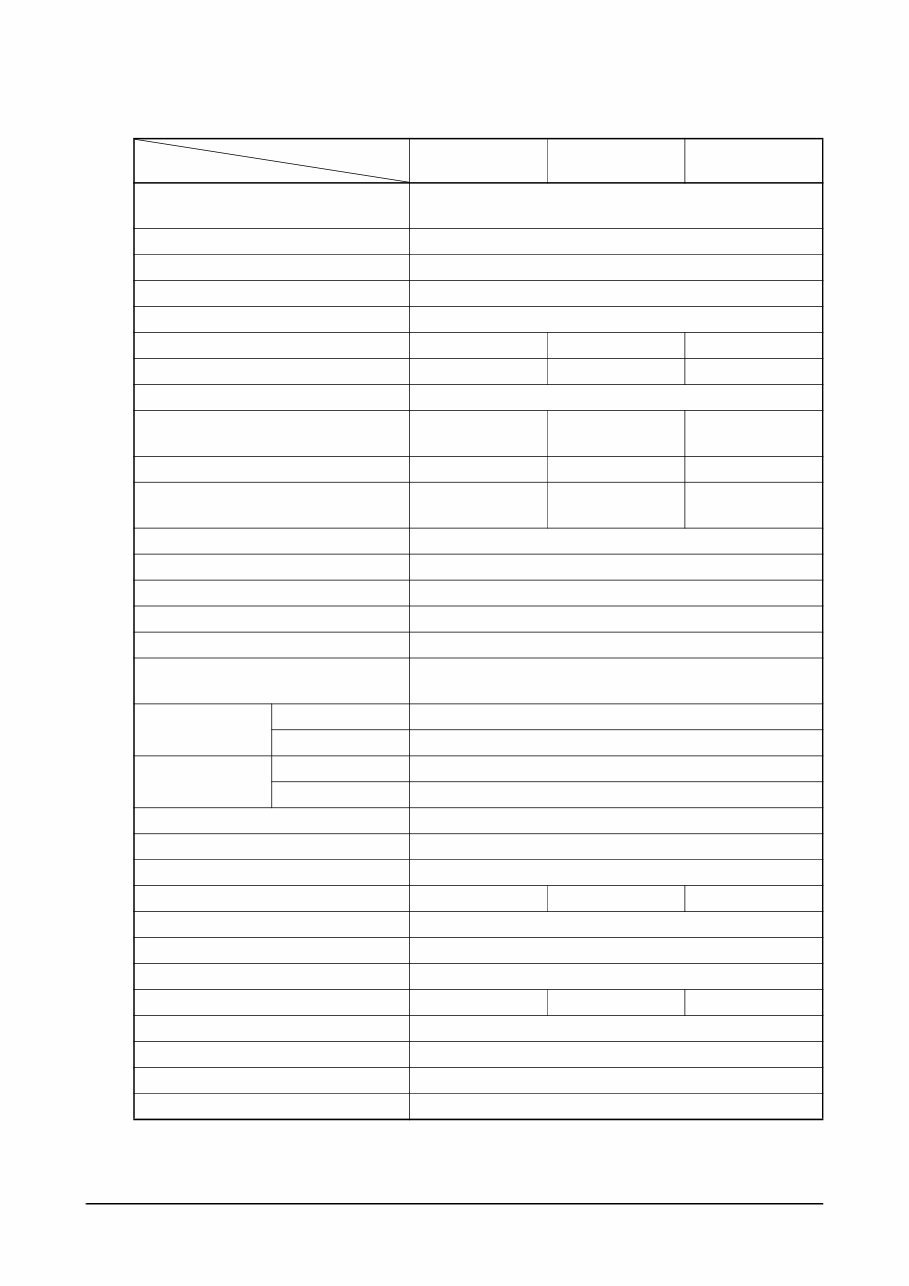
Safety Regulations & Engine Specifications - 5 - 1.2. Engine Specification 1.2.1. Specification for generator engine Engine Model Items P158LE series P180LE series P222LE series Engine type Water-cooled, 4 cycle Vee type Turbo charged & intercooled Combustion chamber type Direct injection type Cylinder liner type Wet type, chromated or casting liner Timing gear system Gear driven type No. of piston ring Compression ring 2, oil ring 1 No. of cylinder-bore × stroke (mm) 8 – 128 × 142 10 – 128 × 142 12 – 128 × 142 Total piston displacement (cc) 14,618 18,273 21,927 Compression ratio P158LE/-1/-2, P180LE/-1, P222LE/-1 => 15.0 : 1 P158LE-S/-III, P180LE-S/-II, P222LE-S/-II => 14.6 : 1 P222LE-II(EAYQD) => 14.0 : 1 Engine dimension (length × width × height) (mm) 1,484 × 1,389 × 1,161.5 1,557 × 1,389 × 1,248 1,717 × 1,389 × 1,288 Engine dry weight (kg) P158LE/-1/-2 : 950 P158LE-S/-III : 961 P180LE/-1 : 1,175 P180LE-S/-II : 1,188 P222LE/-1 : 1,575 P222LE-S/-II : 1,591 Fuel injection order 1-5-7-2-6-3-4-8 1-6-5-10-2-7-3-8-4-9 1-12-5-8-3-10-6-7- 2-11-4-9 Injection pump type Bosch in-line P type Governor type Electrical type Injection nozzle type Multi-hole type Fuel injection pressure (kg/cm 2 ) 285 Compression pressure (kg/cm 2 ) 28 (at 200 rpm) Intake and exhaust valve clearance (at cold) (mm) 0.3 / 0.4 Intake valve Open at 24° (B.T.D.C) Close at 36° (A.B.D.C) Exhaust valve Open at 63° (B.B.D.C) Close at 27° (A.T.D.C) Lubrication method Fully forced pressure feed type Oil pump type Gear type Oil filter type Full-flow, cartridge type Lubricating oil capacity (max./min.) (lit) 21 / 17 35 / 28 40 / 33 Oil cooler type Water cooled Water pump Centrifugal type driven by belt Cooling Method Pressurized circulation Cooling water capacity (engine only) (lit) 20 21 23 Thermostat type Wax pallet type (71 ~ 85 °C) Alternator voltage – capacity (V – A) 24 – 45 Starting Motor voltage – output (V – kW) 24 – 7.0 Battery capacity (V – AH) 24 – 200
Safety Regulations & Engine Specifications - 6 - 1.2.2. Specification for power unit engine Engine Model Items PU158TI PU180TI PU222TI Engine type Water-cooled, 4 cycle Vee type Turbo charged & intercooled Combustion chamber type Direct injection type Cylinder liner type Wet type, chromated or casting liner Timing gear system Gear driven type No. of piston ring Compression ring 2, oil ring 1 No. of cylinder-bore × stroke (mm) 8 – 128 × 142 10 – 128 × 142 12 – 128 × 142 Total piston displacement (cc) 14,618 18,273 21,927 Compression ratio 15 : 1 Engine dimension (length × width × height) (mm) 1,484 × 1,389 × 1,161.5 1,557 × 1,389 × 1,248 1,717 × 1,389 × 1,288 Engine dry weight (kg) 950 1,175 1,575 Fuel injection order 1-5-7-2-6-3-4-8 1-6-5-10-2-7-3-8-4-9 1-12-5-8-3-10-6-7- 2-11-4-9 Injection pump type Bosch in-line P type Governor type Mechanical type Injection nozzle type Multi-hole type Fuel injection pressure (kg/cm 2 ) 285 Compression pressure (kg/cm 2 ) 28 (at 200 rpm) Intake and exhaust valve clearance (at cold) (mm) 0.3 / 0.4 Intake valve Open at 24° (B.T.D.C) Close at 36° (A.B.D.C) Exhaust valve Open at 63° (B.B.D.C) Close at 27° (A.T.D.C) Lubrication method Pressurized circulation Oil pump type Gear type Oil filter type Full-flow, cartridge type Lubricating oil capacity (max./min.) (lit) 21 / 17 35 / 28 40 / 33 Oil cooler type Water cooled Water pump Centrifugal type driven by belt Cooling Method Pressurized circulation Cooling water capacity (engine only) (lit) 20 21 23 Thermostat type Wax pallet type (71 ~ 85 °C) Alternator voltage – capacity (V – A) 24 – 45 Starting Motor voltage – output (V – kW) 24 – 7.0 Battery capacity (V – AH) 24 – 200
Doosan Generator & Power Unit Diesel Engine P158LE P180LE P222LE PU158TI PU180TI PU222TI Operation Maintenance Service Manual provides in-depth and detailed instructions for working on your Doosan engine. Whether you are a professional mechanic or a DIY enthusiast, this manual offers valuable resources to save on repair costs and maintain your investment in top condition.
The manual covers a wide range of topics, including safety regulations, engine specifications, assembly, technical information, troubleshooting, operation, disassembly and reassembly of major components, maintenance, and care. It also includes a special tool list and appendix for easy reference.
Designed for easy access, this manual is available in .PDF format for viewing on Windows PC, Mac, tablet, or smartphone. You can print the necessary sections or the entire manual for offline use.
With instant access upon payment, there are no shipping costs or waiting for delivery. The manual is readily available for use, offering convenience and efficiency.
For any specific manual needs, our customer support team is ready to assist you in finding the required resources from our extensive online database.
Thank you for visiting our page, and have a nice day!
Reviews
Q&A
Recently Viewed
5,521,897Happy Clients
2,594,462eManuals
1,120,453Trusted Sellers
15Years in Business
Price:
Actual Price:
Doosan Generator & Power Unit Diesel Engine P158LE P180LE P222LE PU158TI PU180TI PU222TI Operation Maintenance Service Manual












 Lifetime Access




