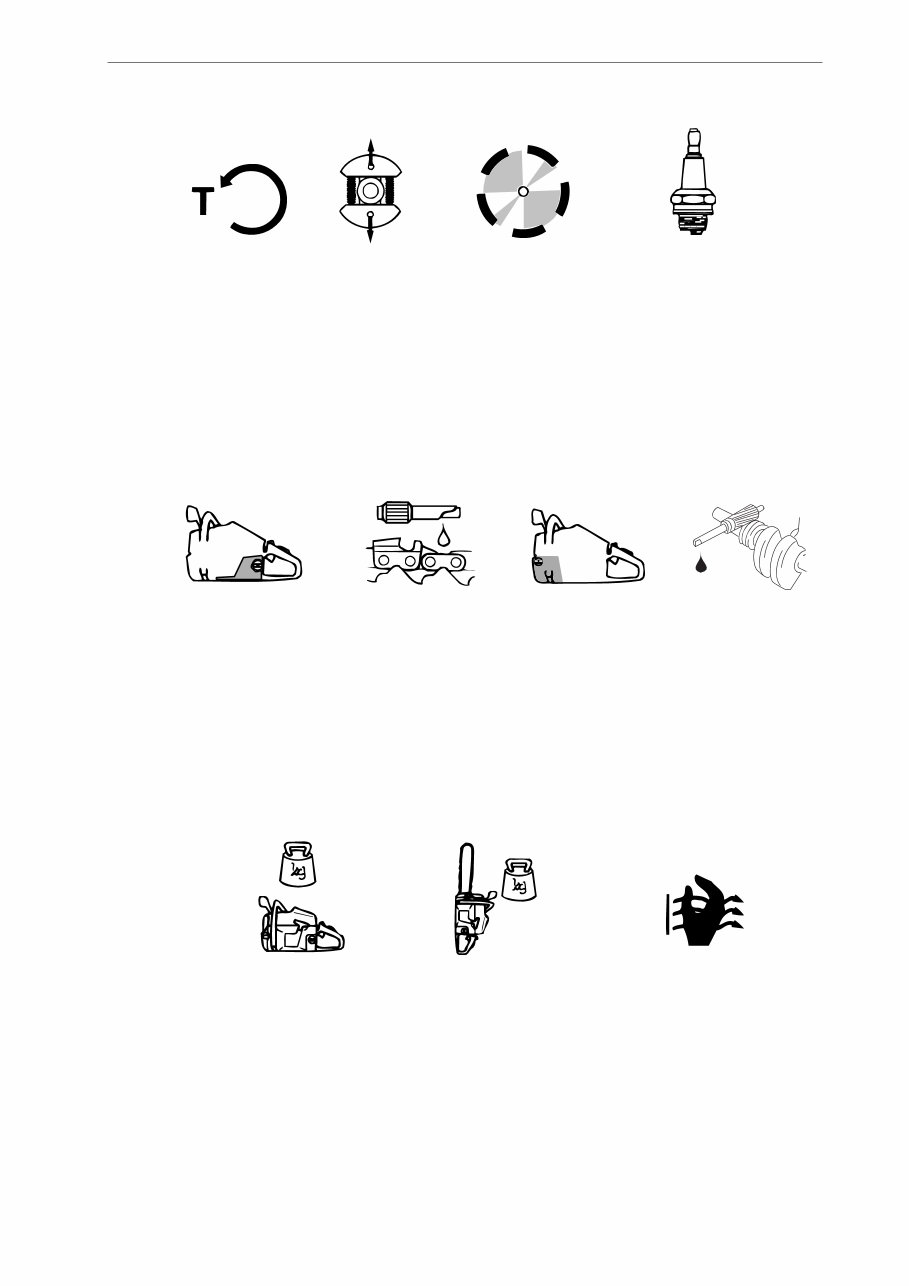
2 – English Arrangement of the manual This workshop manual can be used in two different ways. • To repair a specific sub-assembly on a chainsaw. • To dismantle and reassemble a complete chainsaw. Repairing a specific sub-assembly If a specific sub-assembly on the chainsaw needs to be repaired: 1. Look up the page referring to the relevant sub- assembly. 2. Follow the instructions under the headings: Removal/Dismantling Cleaning and inspection Refitting/Reassembly Dismantling and reassembling the entire chainsaw If the entire chainsaw is to be dismantled, follow the instructions under the heading “Removal/ Dismantling”. Work through the manual and follow the instruc- tions given in each section under the heading “Removal/Dismantling”. Then follow all the “Cleaning and inspection” instructions in each section. Working from the back of the manual, follow all the instructions under the headings “Refitting/ Reassembly” in reverse order. Each of the sections covering removal/dismantling and refitting/reassembly include the relevant lubrication instructions and bolt torques for each stage of repair. Construction and function This chapter gives a simple description of the chainsaw carburettor and its various parts. Introduction Troubleshooting These pages describe the most common faults that affect a chainsaw. They are divided into four different groups with the most likely faults de- scribed first. Repair instructions The section that describes how to repair the chainsaw consists of detailed, step-by-step instruc- tions. It explains in detail the special tools, lubri- cants and bolt torques that are needed when working on each component. This workshop manual covers the following chainsaw models: 340 345 346XP 350 351 353
English – 3 General instructions This workshop manual gives detailed instructions on how to troubleshoot, repair and test a chainsaw. This section also describes the various safety precautions that should be taken when carrying out repairs. The workshop manual has been written for person- nel who are assumed to have general experience of repairing and servicing chainsaws. Workshops where chainsaws are repaired must be equipped with safety equipment that meets local regulations. No-one should carry out repairs on a chainsaw until they have read and understood the contents of this workshop manual. Chainsaws are type-approved to meet the relevant safety legislation, but this only applies when the saw is fitted with the cutting equipment specified in the user’s manual. The fitting of any other equip- ment, or of accessories or parts that are not approved by Jonsered, could mean that the saw no longer meets these safety requirements and the person who carried out the work may be held responsible for its non-conformance. In this workshop manual the following boxes indicate where caution should be taken. Special instructions The fuel that is used in a chainsaw poses the following hazards: • The fuel and its fumes are toxic. • May cause irritation to skin or eyes. • May cause breathing difficulties. • Highly flammable. When using compressed air the air jet should never be pointed at the body. Air can be forced into the bloodstream and cause fatal injury. Wear ear protection when testing saws. After testing a saw do not touch the silencer until it has cooled down. The silencer gets very hot and you may burn yourself. Wear protective gloves when working on the silencer. The guide bar, chain and clutch cover (chain brake) must be fitted before the saw is started. If not, the clutch may come loose and cause injury. Poor chain lubrication can result in failure of the chain, which could cause serious or fatal injury. Take care to ensure that the spring inside the starter assembly does not fly out and cause injury. Wear eye protection. If the spring is under com- pression when the pulley is removed it could fly out and cause injury. Before removing the tensioning spring from the chain brake, ensure that the brake is in the on position, otherwise the spring may fly out and cause injury. After completing the repair the chain brake must be tested, see “Chain brake – reassembly \ Operating test”. Always consider the fire risk. A chainsaw can produce sparks that could start a fire. Inspect the chain catcher and replace it if it is damaged. WARNING! The warning text warns of the risk of personal injury if the instruc- tions are not followed. NOTE! The warning text warns of the risk of material damage if the instructions are not followed. Safety regulations
4 – English Special tools 4 5 8 11 12 10 1 2 3 14 6 9 7 13
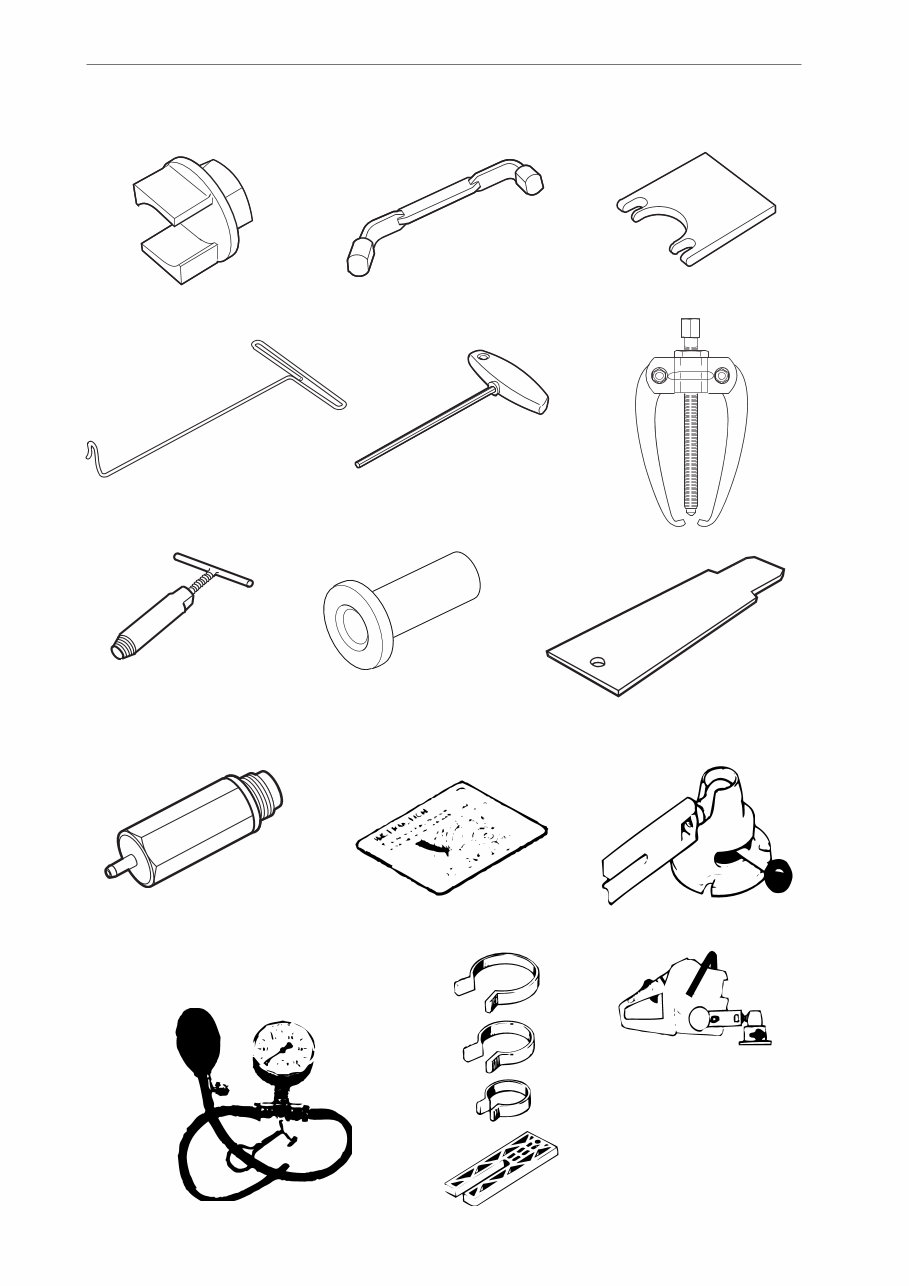
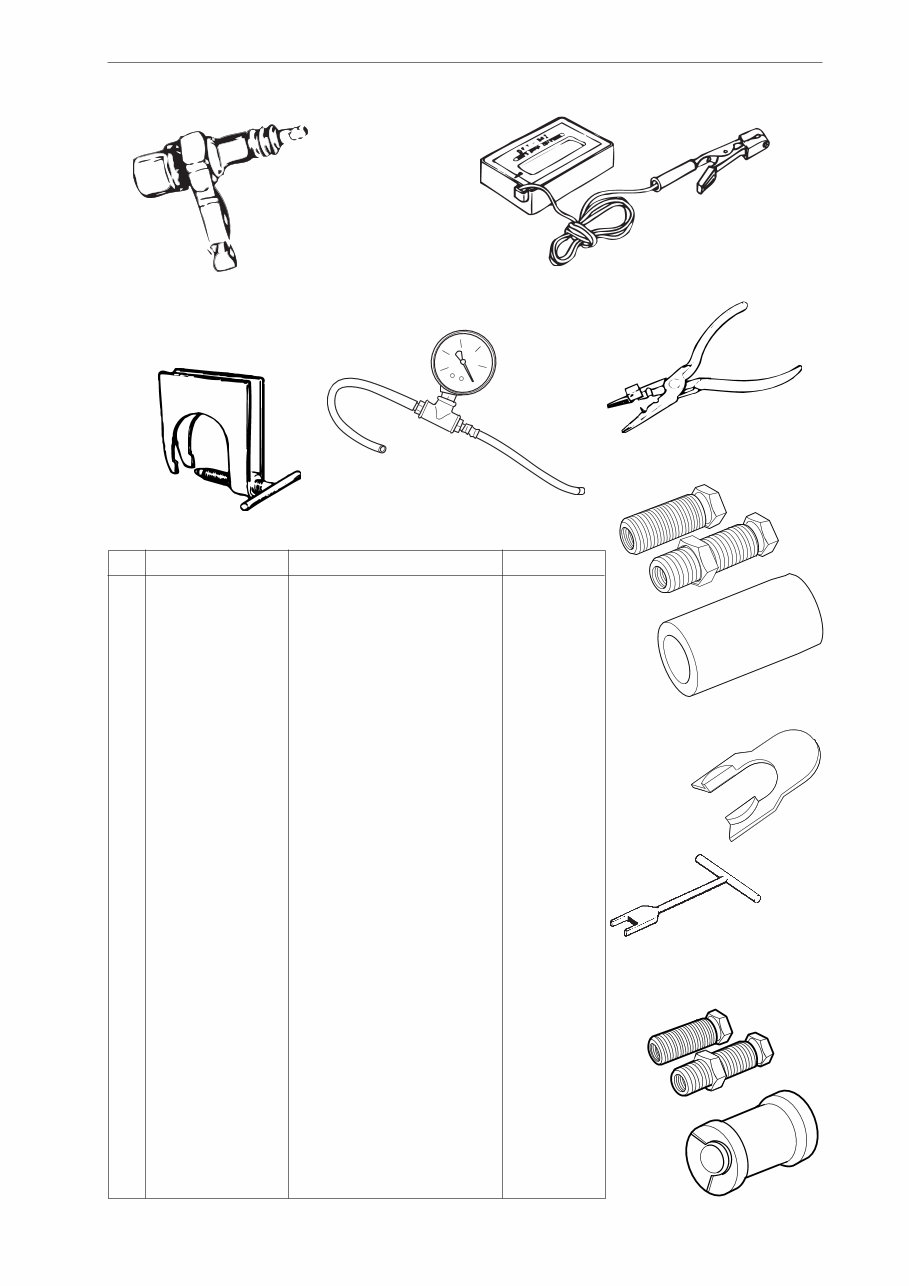
English – 5 Item Description Used for Order no. 1 Clutch tool Centrifugal clutch 502 54 16-01 2 Piston stop Locking crankshaft 502 54 15-01 3 Stop plate Locating intake gaiter 502 54 17-01 4 Fuel filter hook Withdrawing the fuel filter 502 50 83-01 5 Allen key For M5 bolts 502 50 18-01 6 Puller Frame bearing 504 90 90-02 7 Removal tool Remove seal from clutch side 502 50 55-01 8 Mandrel, sealing ring Removing crankshaft 502 54 21-01 9 Cover plate Sealing during pressure testing 502 54 11-02 10 Pressure tester Connection to cylinder 503 84 40-02 11 Feeler gauge Adjusting ignition module 502 51 34-02 12 Clamp stand Clamping the saw 502 51 02-01 13 Pressure gauge Pressurisation during testing 502 50 38-01 14 Piston fitting kit Fitting piston 502 50 70-01 15 Test plug Checking ignition module 502 71 13-01 16 Rev counter Adjusting carburettor 502 71 14-01 17 Removal tool Removing crankshaft 502 51 61-01 18 Vacuum gauge Vacuum test 502 50 37-01 19 Assembly pliers Fitting spark plug guard 502 50 06-01 20a Sleeve Fitting crankshaft 502 50 30-18 20b Shaft extension Flywheel side 502 50 30-18 20c Shaft extension Clutch side 502 50 30-18 21 Stop plate Removing crankshaft 502 54 18-01 22 Assembly tool Assembling spring, chain brake 502 50 67-01 23 Crankshaft tool Fitting crankshaft seal 502 50 30-16 Special tools 15 16 20 b 21 19 17 20 c 20 a 18 22 23
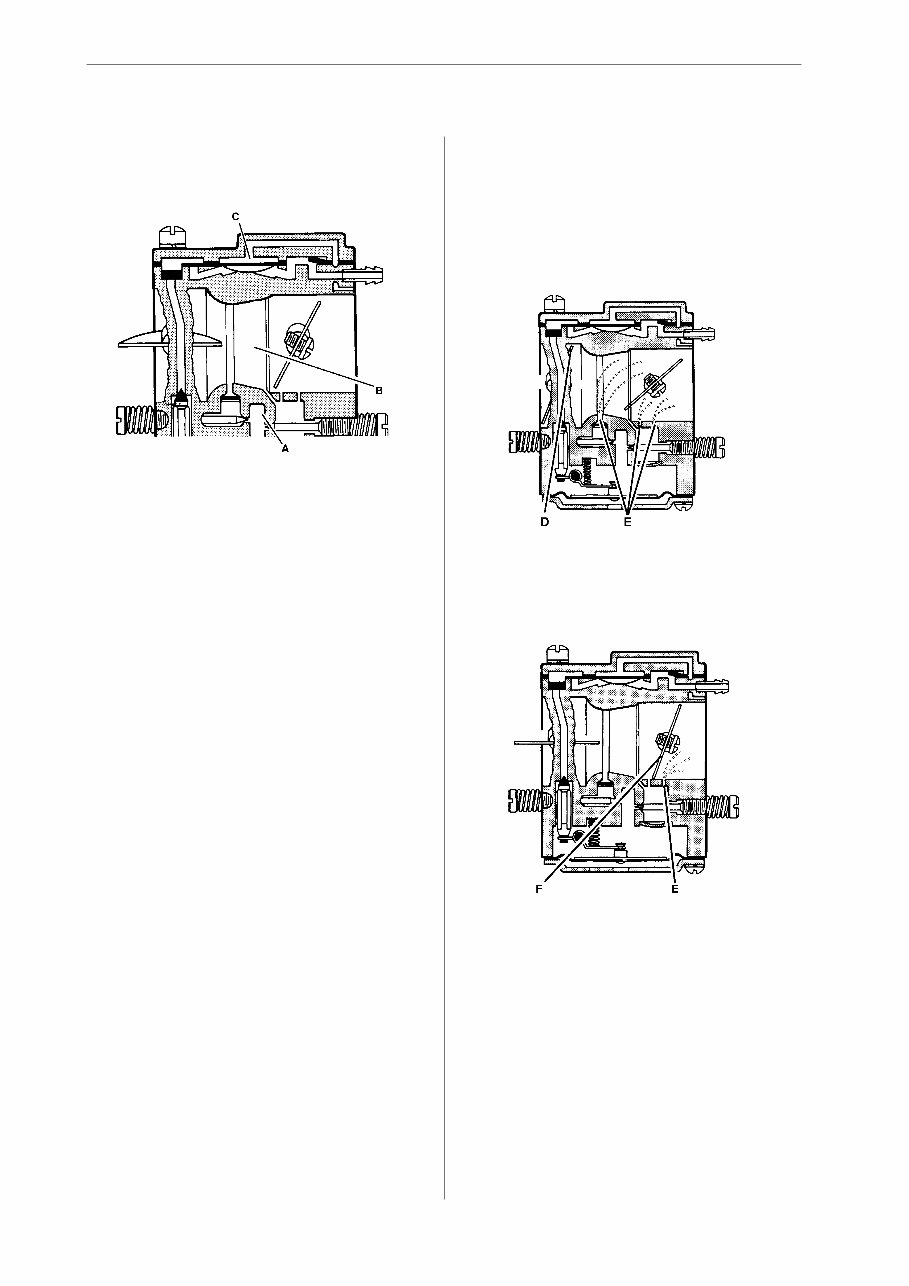
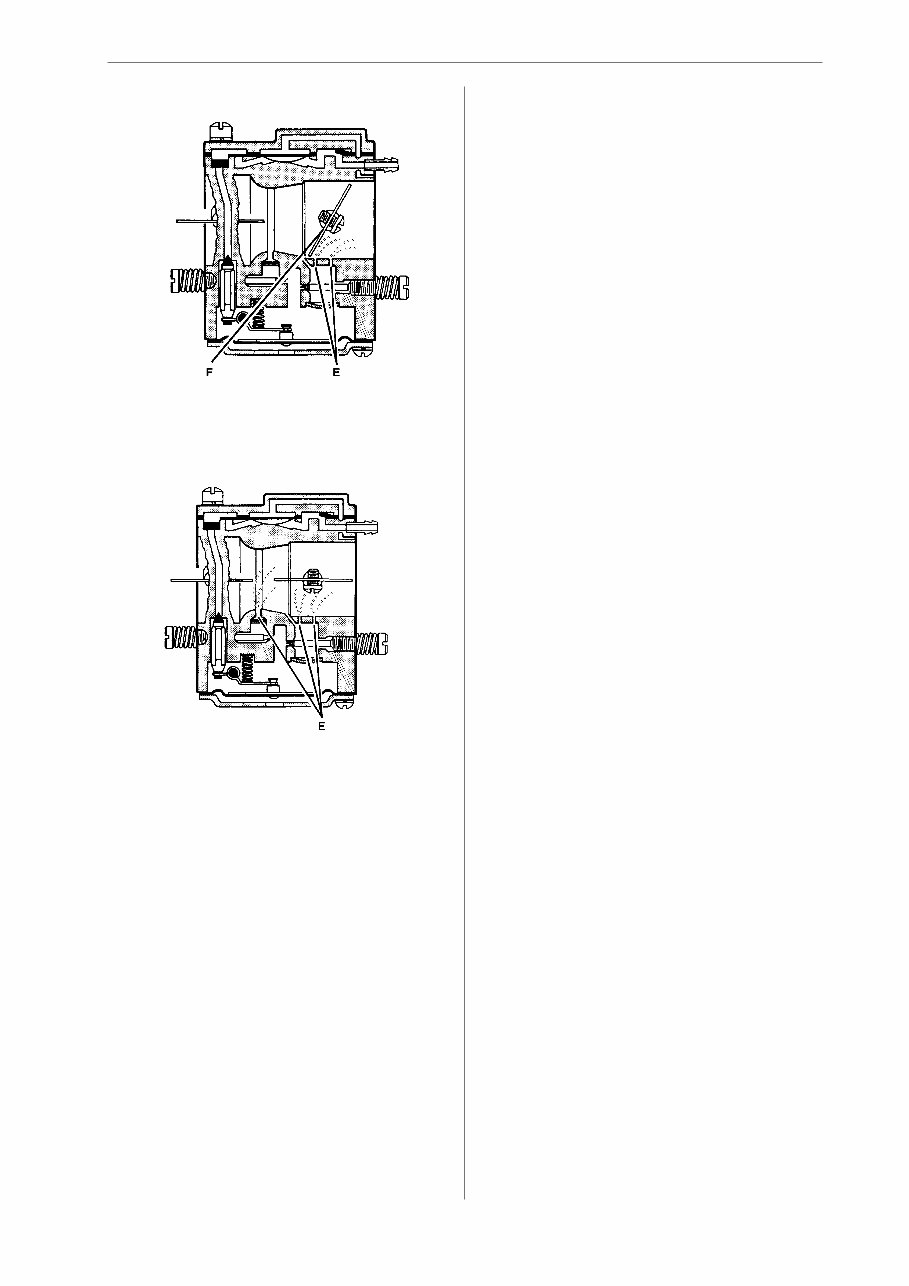
8 – English The carburettor works in different ways depending on the setting: • Cold start mode • Idling mode • Part throttle mode • Full throttle mode In the cold start mode the choke valve (D) is completely closed. This increases the vacuum in the carburettor so that fuel is sucked through the diffuser jets faster (E). In idling mode the throttle valve (F) is closed. Air is sucked through an aperture in the throttle valve and a small amount of fuel is supplied through the diffuser jet (E). Construction and function Carburettor The carburettor consists of three sub-systems: • The metering unit (A) which contains the jets and the fuel control mechanism. This measures out the right amount of fuel to suit the speed of the saw and the power demand. • The mixing unit (B) consists of the choke, diffuser jets and throttle valve. This is where the air and fuel are mixed to create a flammable mixture. • The pump unit (C) pumps fuel from the tank to the metering system inside the carburettor. One side of the pump diaphragm is connected to the crankcase and pulses as a result of pressure changes in the crankcase. The other side of the diaphragm sucks in the fuel.
English – 9 Construction and function In part throttle mode the throttle valve (F) is par- tially open. Fuel is supplied through the diffuser jets (E). In full throttle mode both valves are open and fuel is supplied through all the diffuser jets (E).
These comprehensive manuals cover the Husqvarna 340, 345, 346XP, 350, 351, and 353 chainsaw models. They provide easy-to-read exploded views for effortless identification, careful disassembly, accurate adjustment, and correct repairs.
All sections are neatly organized in Adobe Acrobat, featuring clean, sharp images that are scalable to several times their normal size. The manuals include numerous crystal-clear illustrations, specifications, plenty of pictures, step-by-step instructions, and special tool information.
These manuals are akin to the original paper manuals for the specified chainsaw models, with the added benefit of being easily accessible in digital format. Users can zoom in, print, save, and conveniently access the content without the need to carry around a bulky binder.
The material is resold with permission and is copyrighted for personal or single use only. All rights remain with the respective owners.
For any assistance or queries, customers are encouraged to contact the seller for prompt support. The manuals are designed for multiple uses, allowing users to view, print, and save them for future reference.




 Lifetime Access