Contents Section 1. Safety and General Information ............................................................................. Section 2. Tools & Aids ............................................................................................................. Section 3. Troubleshooting ...................................................................................................... Section 4. Air Cleaner and Air Intake System ......................................................................... Section 5. Fuel System and Governor ..................................................................................... Section 6. Lubrication System ................................................................................................. Section 7. Electrical System and Components ...................................................................... Section 8. Disassembly............................................................................................................. Section 9. Inspection and Reconditioning .............................................................................. Section 10. Reassembly............................................................................................................ Section 11. Emission Compliance Systems............................................................................ 1 2 3 4 5 6 7 8 9 10 11
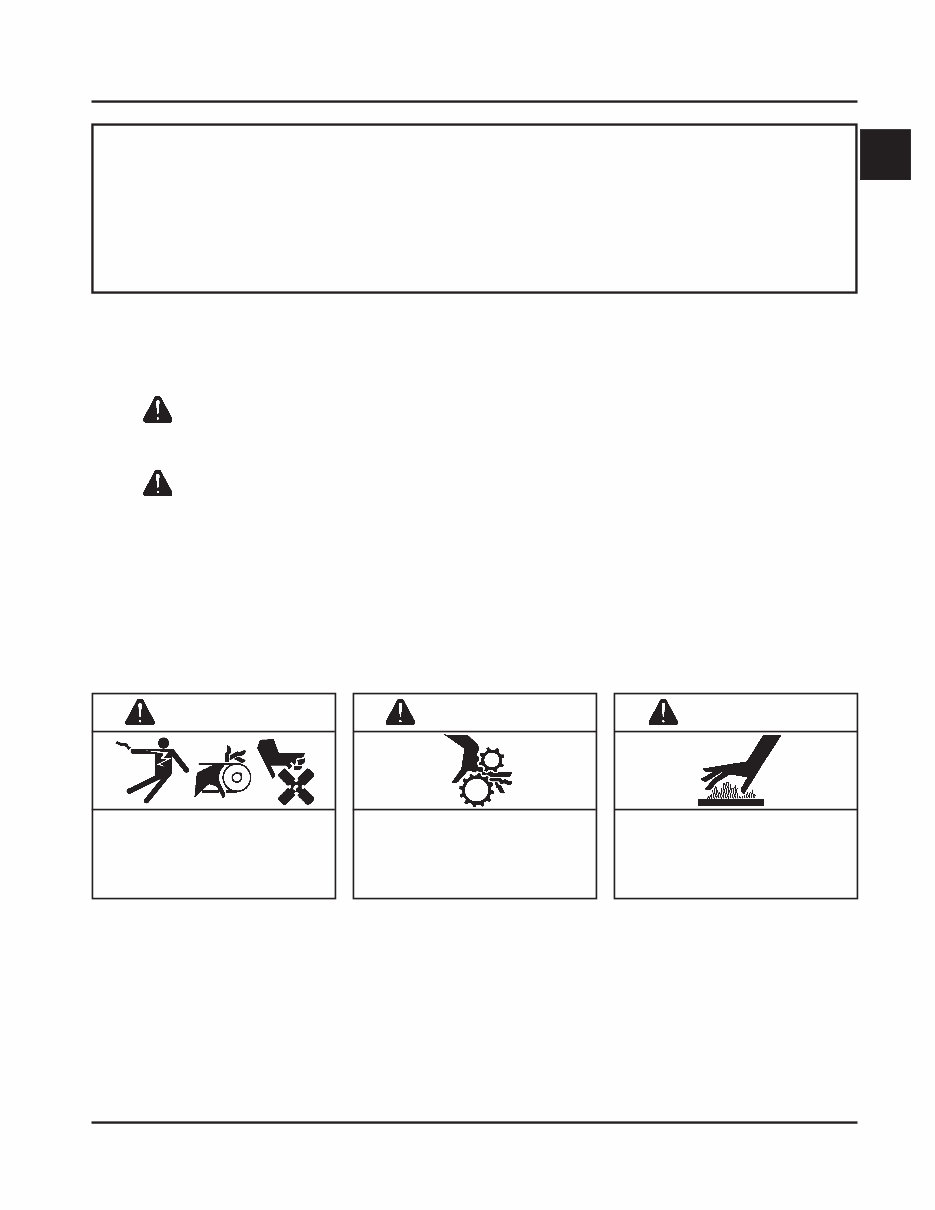
1.1 1 Section 1 Safety and General Information Safety Precautions To ensure safe operation please read the following statements and understand their meaning. Also refer to your equipment manufacturer's manual for other important safety information. This manual contains safety precautions which are explained below. Please read carefully. WARNING Warning is used to indicate the presence of a hazard that can cause severe personal injury, death, or substantial property damage if the warning is ignored. CAUTION Caution is used to indicate the presence of a hazard that will or can cause minor personal injury or property damage if the caution is ignored. NOTE Note is used to notify people of installation, operation, or maintenance information that is important but not hazard-related. For Your Safety! These precautions should be followed at all times. Failure to follow these precautions could result in injury to yourself and others. Rotating Parts can cause severe injury. Stay away while engine is in operation. WARNING Rotating Parts! Keep hands, feet, hair, and clothing away from all moving parts to prevent injury. Never operate the engine with covers, shrouds, or guards removed. Hot Parts can cause severe burns. Do not touch engine while operating or just aſter stopping. WARNING Hot Parts! Engine components can get extremely hot from operation. To prevent severe burns, do not touch these areas while the engine is running, or immediately aſter it is turned off. Never operate the engine with heat shields or guards removed. Accidental Starts can cause severe injury or death. Disconnect and ground spark plug leads before servicing. WARNING Accidental Starts! ǯ ¢ ǯ Before working on the engine or equipment, disable the engine as follows: 1) Disconnect the spark plug lead(s). 2) Disconnect negative (-) baery cable from baery.
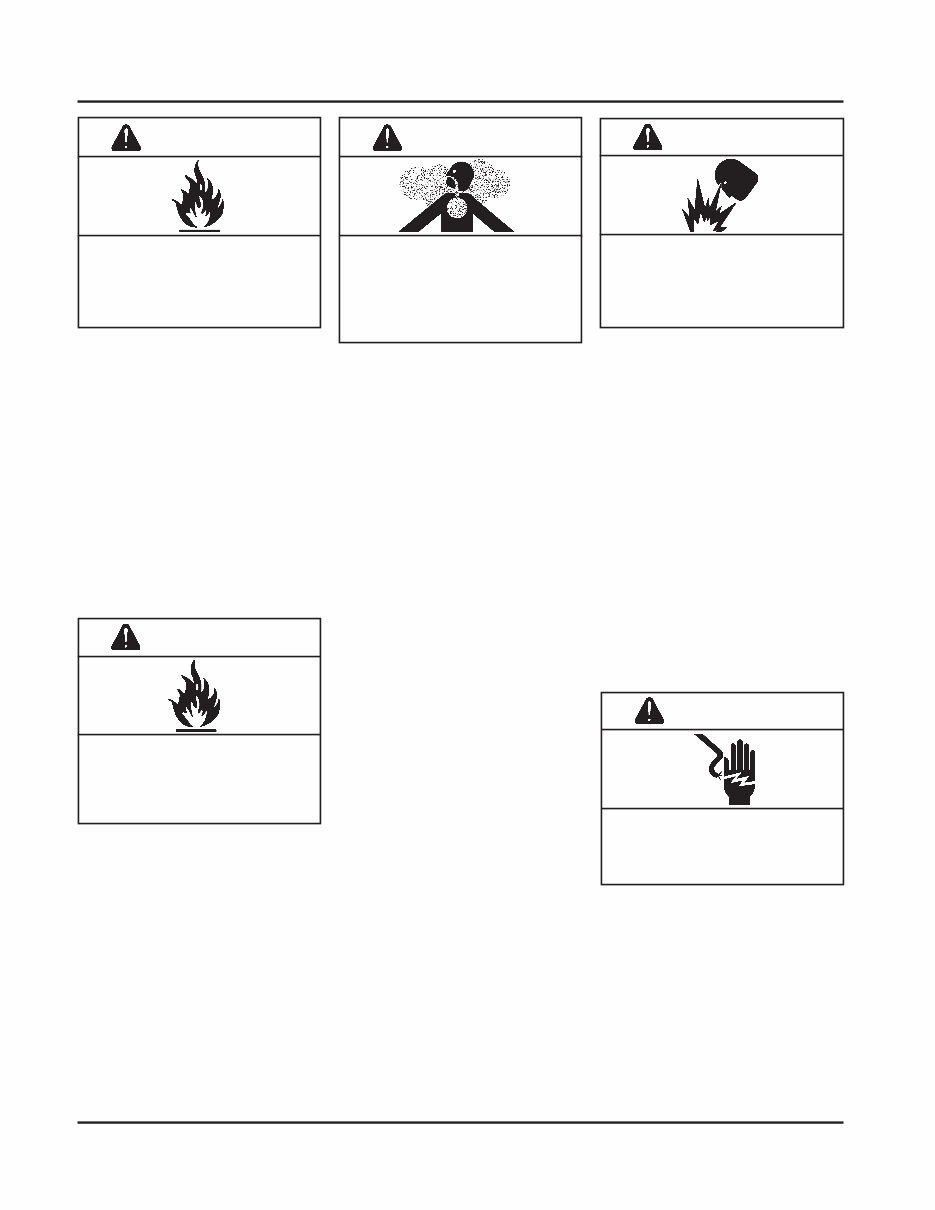
1.2 Section 1 Safety and General Information Carbon Monoxide can cause severe nausea, fainting or death. Avoid inhaling exhaust fumes, and never run the engine in a closed building or confined area. WARNING Electrical Shock can cause injury. Do not touch wires while engine is running. CAUTION Lethal Exhaust Gases! Engine exhaust gases contain poisonous carbon monoxide. Carbon monoxide is odorless, colorless, and can cause death if inhaled. Avoid inhaling exhaust fumes, and never run the engine in a closed building or confined area. Explosive Gas! Baeries produce explosive hydrogen gas while being charged. To prevent a fire or explosion, charge baeries only in well ventilated areas. Keep sparks, open flames, and other sources of ignition away from the baery at all times. Keep baeries out of the reach of children. Remove all jewelry when servicing baeries. Before disconnecting the negative (-) ground cable, make sure all switches are OFF. If ON, a spark will occur at the ground cable terminal which could cause an explosion if hydrogen gas or gasoline vapors are present. Electrical Shock! Never touch electrical wires or components while the engine is running. They can be sources of electrical shock. Explosive Fuel can cause fires and severe burns. Do not fill the fuel tank while the engine is hot or running. WARNING Explosive Fuel! Gasoline is extremely flammable and its vapors can explode if ignited. Store gasoline only in approved containers, in well ventilated, unoccupied buildings, away from sparks or flames. Do not fill the fuel tank while the engine is hot or running, since spilled fuel could ignite if it comes in contact with hot parts or sparks from ignition. Do not start the engine near spilled fuel. Never use gasoline as a cleaning agent. Cleaning Solvents can cause severe injury or death. Use only in well ventilated areas away from ignition sources. WARNING Flammable Solvents! Carburetor cleaners and solvents are extremely flammable. Keep sparks, flames, and other sources of ignition away from the area. Follow the cleaner manufacturer’s warnings and instructions on its proper and safe use. Never use gasoline as a cleaning agent. WARNING Explosive Gas can cause fires and severe acid burns. Charge baery only in a well ventilated area. Keep sources of ignition away.
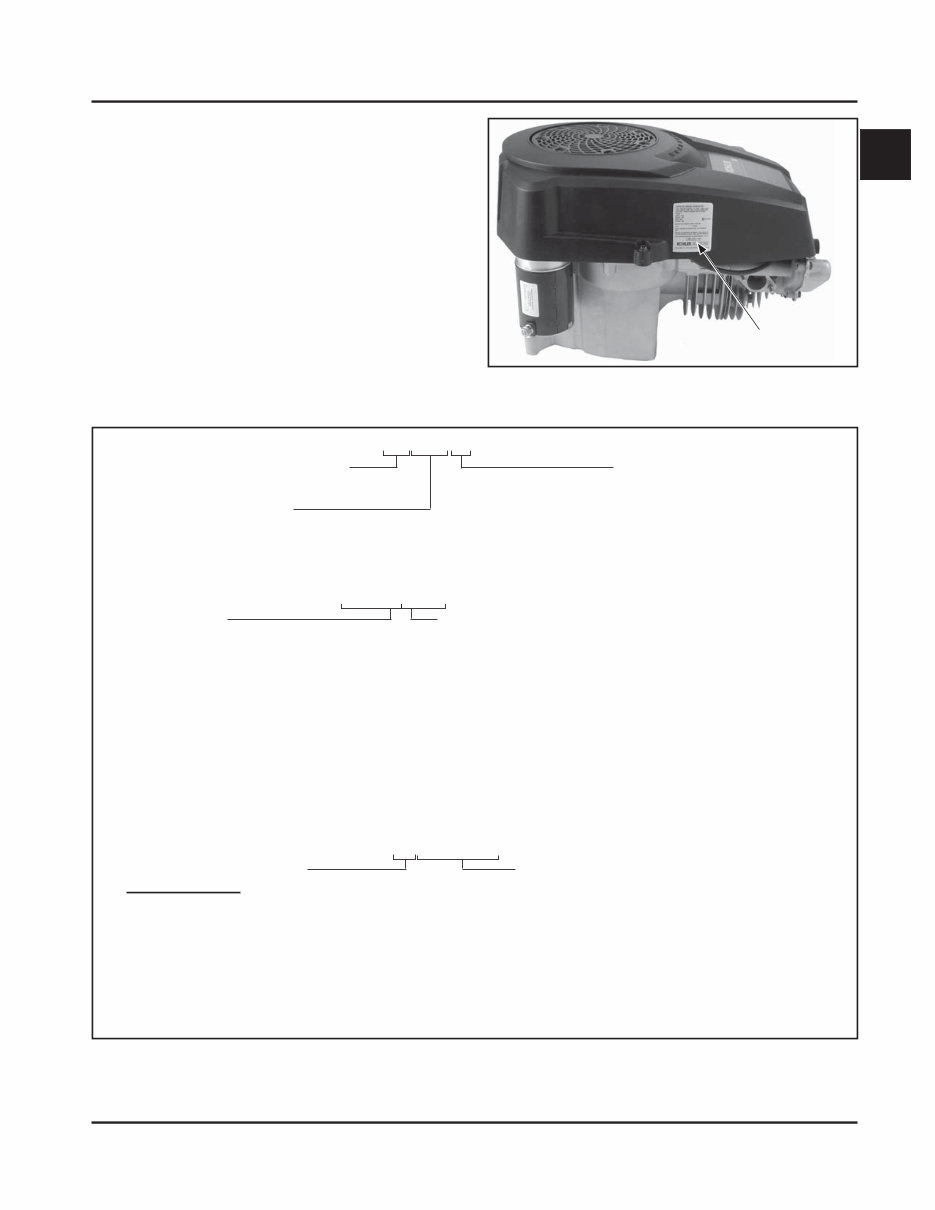
1.3 Section 1 Safety and General Information 1 A. Model No. Courage Vertical Shaft Engine Numerical Designation Version Code 6 (OHFWULF 6WDUW First spec written in this model series B. Spec. No. Engine Model Model 69 69 69 69 69 69 69 69 C. Serial No. Year Manufactured Code Code Year Factory Code 3205810334 Engine Identification Numbers When ordering parts, or in any communication involving an engine, always give the Model, Specification, and Serial Numbers of the engine. The engine identification numbers appear on a decal affixed to the engine shrouding. See Figure 1-1. An explanation of these numbers is shown in Figure 1-2. Figure 1-2. Explanation of Engine Identification Numbers. SV540-0001 Figure 1-1. Engine Identification Decal Location. Identification Decal SV 540 S
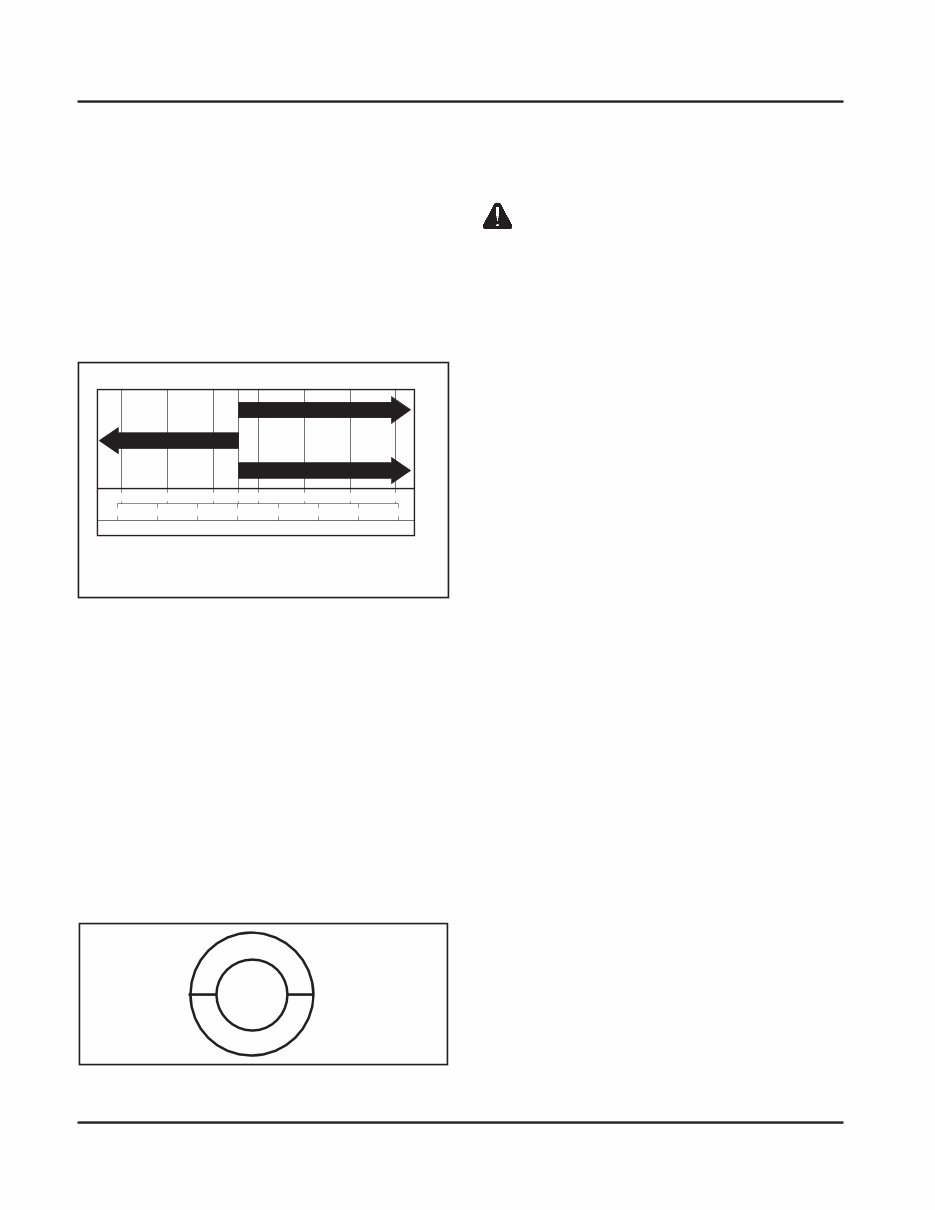
1.4 Section 1 Safety and General Information Oil Recommendations Using the proper type and weight of oil in the crankcase is extremely important, as is checking oil daily and changing oil regularly. Failure to use the correct oil or using dirty oil causes premature engine wear and failure. Oil Type Use high-quality detergent oil of API (American Petroleum Institute) service class SJ or higher. Select the viscosity based on the air temperature at the time of operation as shown below. NOTE: Using other than service class SJ or higher oil or extending oil change intervals longer than recommended can cause engine damage. NOTE: Synthetic oils meeting the listed classifications may be used with oil changes performed at the recommended intervals. However to allow piston rings to properly seat, a new or rebuilt engine should be operated for at least 50 hours using standard petroleum based oil before switching to synthetic oil. A logo or symbol on oil containers identifies the API service class and SAE viscosity grade. See Figure 1-3. Refer to Section 6 - Lubrication System for detailed oil check, oil change, and oil filter change procedures. Fuel Recommendations WARNING: Explosive Fuel! Gasoline is extremely flammable and its vapors can explode if ignited. Store gasoline only in approved containers, in well ventilated, unoccupied buildings, away from sparks or flames. Do not fill the fuel tank while the engine is hot or running, since spilled fuel could ignite if it comes in contact with hot parts or sparks from ignition. Do not start the engine near spilled fuel. Never use gasoline as a cleaning agent. General Recommendations Purchase gasoline in small quantities and store in clean, approved containers. A container with a capacity of 2 gallons or less with a pouring spout is recommended. Such a container is easier to handle and helps eliminate spillage during refueling. Do not use gasoline leſt over from the previous season, to minimize gum deposits in your fuel system and to ensure easy starting. Do not add oil to the gasoline. Do not overfill the fuel tank. Leave room for the fuel to expand. Fuel Type For best results use only clean, fresh, unleaded gasoline with a pump sticker octane rating of 87 (R+M)/2 or higher. In countries using the Research Octane Number (RON), it should be 90 octane minimum. Leaded gasoline is not recommended and must not be used on EFI engines or on other models where exhaust emissions are regulated. Gasoline/Alcohol Blends Gasohol (up to 10% ethyl alcohol, 90% unleaded gasoline by volume) is approved as a fuel for Kohler engines. Other gasoline/alcohol blends including E20 and E85 are not to be used and not approved. Any failures resulting from use of these fuels will not be warranted. Gasoline/Ether Blends Methyl Tertiary Butyl Ether (MTBE) and unleaded gasoline blends (up to a maximum of 15% MTBE by volume) are approved as a fuel for Kohler engines. Other gasoline/ether blends are not approved. Figure 1-3. Oil Container Logo. SAE 10W-30 A P I S E R V I C E S J 5W-20, 5W-30 RECOMMENDED SAE VISCOSITY GRADES 10W-30 Kohler 10W-30 °F -20 0 20 32 40 60 80 100 °C -30 -20 -10 0 10 20 30 40 TEMPERATURE RANGE EXPECTED BEFORE NEXT OIL CHANGE * Use of synthetic oil having 5W-20 or 5W-30 rating is acceptable, up to 4°C (40°F) ** Synthetic oils will provide better starting in extreme cold below 23°C (-10°F) ** *
1.5 Section 1 Safety and General Information 1 Periodic Maintenance WARNING: Accidental Starts! ǯ ¢ ǯ Before working on the engine or equipment, disable the engine as follows: 1) Disconnect the spark plug lead(s). 2) Disconnect negative (-) baery cable from baery. Maintenance Schedule Normal maintenance, replacement or repair of emission control devices and systems may be performed by any repair establishment or individual; however, warranty repairs must be performed by a Kohler authorized service center. Storage If the engine will be out of service for two months or more, use the following storage procedure: 1. Clean the exterior surfaces of the engine. 2. Change the oil and oil filter while the engine is still warm from operation. See Change Oil and Oil Filter in Section 6. 3. The fuel system must be completely emptied, or the gasoline must be treated with a stabilizer to prevent deterioration. If you choose to use a stabilizer, follow the manufacturer’s recommendations, and add the correct amount for the capacity of the fuel system. Fill the fuel tank with clean, fresh gasoline. Run the engine for 2-3 minutes to get stabilized fuel into the carburetor. To empty the system, run the engine until the tank and system are empty. 4. Due to the deep recess around the spark plug, blow out the cavity with compressed air. Remove the spark plug. The spark plug is most accessible when the blower housing is removed for cleaning. Add one tablespoon of engine oil into the spark plug hole. Install the plug, but do not connect the plug lead. Crank the engine two or three revolutions. Connect the plug lead. 5. Reinstall the blower housing, if removed previously, and torque the blower housing screws to 7.5 N·m (65 in. lb.). 6. Store the engine in a clean, dry place. ¹Perform these maintenance procedures more frequently under extremely dusty, dirty conditions. ²Have a Kohler Engine Service Dealer perform this service. Daily or Before Starting Engine Maintenance Required Frequency • Fill fuel tank. • Check oil level. • Check air cleaner for dirty¹, loose, or damaged parts. • Check air intake and cooling areas, clean as necessary¹. Annually or Every 25 Hours • Service precleaner element¹ (if equipped). • Service air cleaner element¹ (if not equipped with precleaner). • Replace air cleaner element¹ (if equipped with precleaner). • Change oil and filter (more frequently under severe conditions). • Remove cooling shroud and clean cooling areas. • Check that all fasteners are in place and components are properly secured. • Replace fuel filter. • Check spark plug condition and gap. • Have valve lash checked/adjusted 2 . Every 200 Hours Annually or Every 100 Hours Every 500 Hours • Have bendix starter drive serviced². • Replace spark plug.
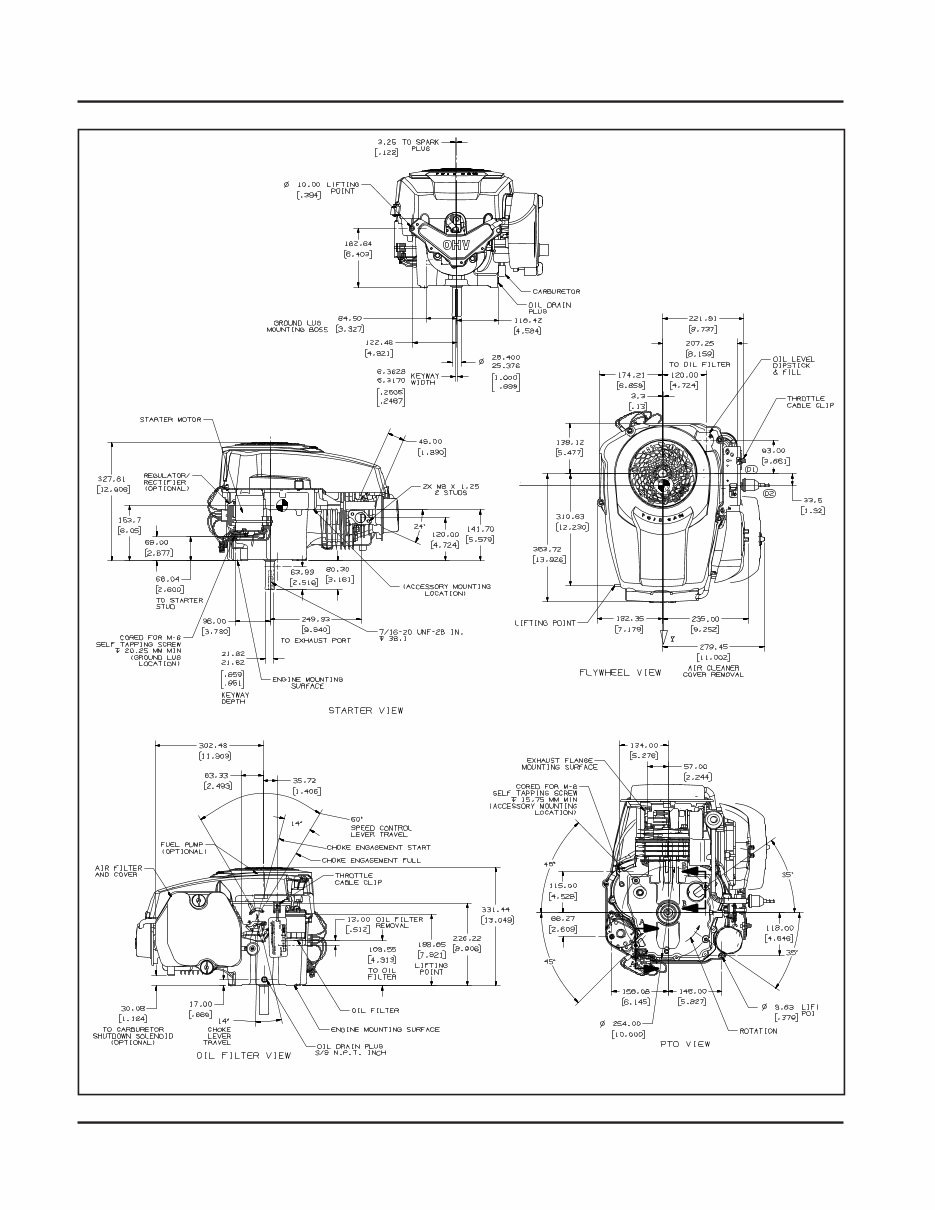
1.6 Section 1 Safety and General Information Figure 1-4. Typical Engine Dimensions. VALVE COVER VIEW Dimensions in millimeters. Inch equivalents shown in ().
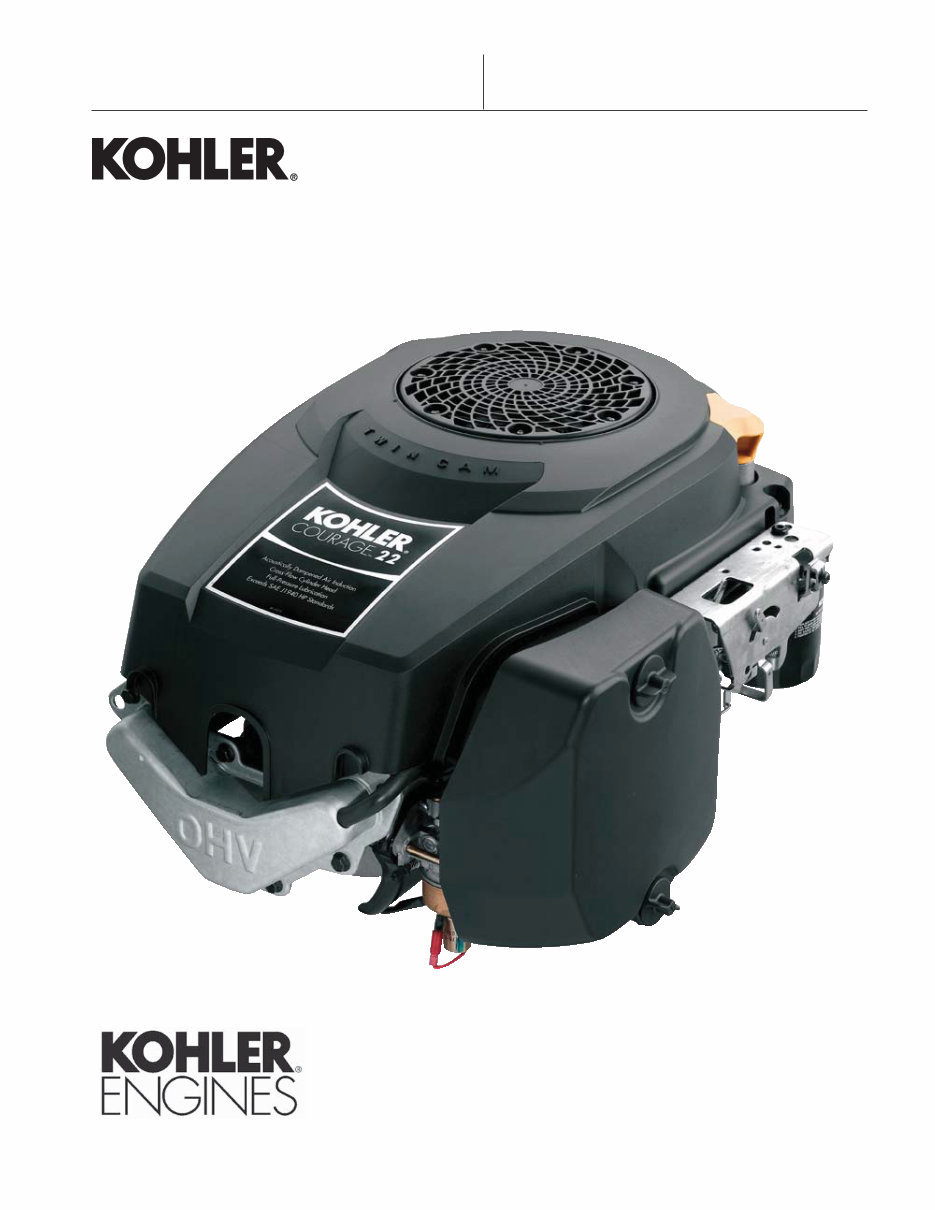
The Kohler Courage SV470 SV480 SV530 SV540 SV590 SV600 SV620 Vertical Crankshaft Engine Service Repair Manual is a comprehensive resource suitable for both professional mechanics and DIY enthusiasts. It contains easy-to-read text sections accompanied by high-quality diagrams and instructions, covering a wide range of topics to assist in engine repair and maintenance.
The manual covers essential areas such as safety, maintenance, specifications, tools and aids, and troubleshooting.
It also includes detailed information on the air cleaner and intake, fuel system, governor system, lubrication system, electrical system, starter system, emission compliant systems, as well as disassembly, inspection, and service procedures.
File Format: PDF
Compatibility: All Versions of Windows & Mac
Language: English
Requirements: Adobe Reader
Having this manual at hand will provide you with the necessary guidance to effectively and efficiently perform maintenance and repairs on your Kohler Courage SV470 SV480 SV530 SV540 SV590 SV600 SV620 Vertical Crankshaft Engine. It is a valuable resource that can save you time and money, while also enhancing your understanding of your engine's intricacies. Additionally, the manual's printable feature ensures convenient access to the information you need.







 Lifetime Access