



Cummins Holset HE431V Turbo Service Repair Manual
What's Included?
 Lifetime Access
Fast Download Speeds
Online & Offline Access
Access PDF Contents & Bookmarks
Full Search Facility
Print one or all pages of your manual
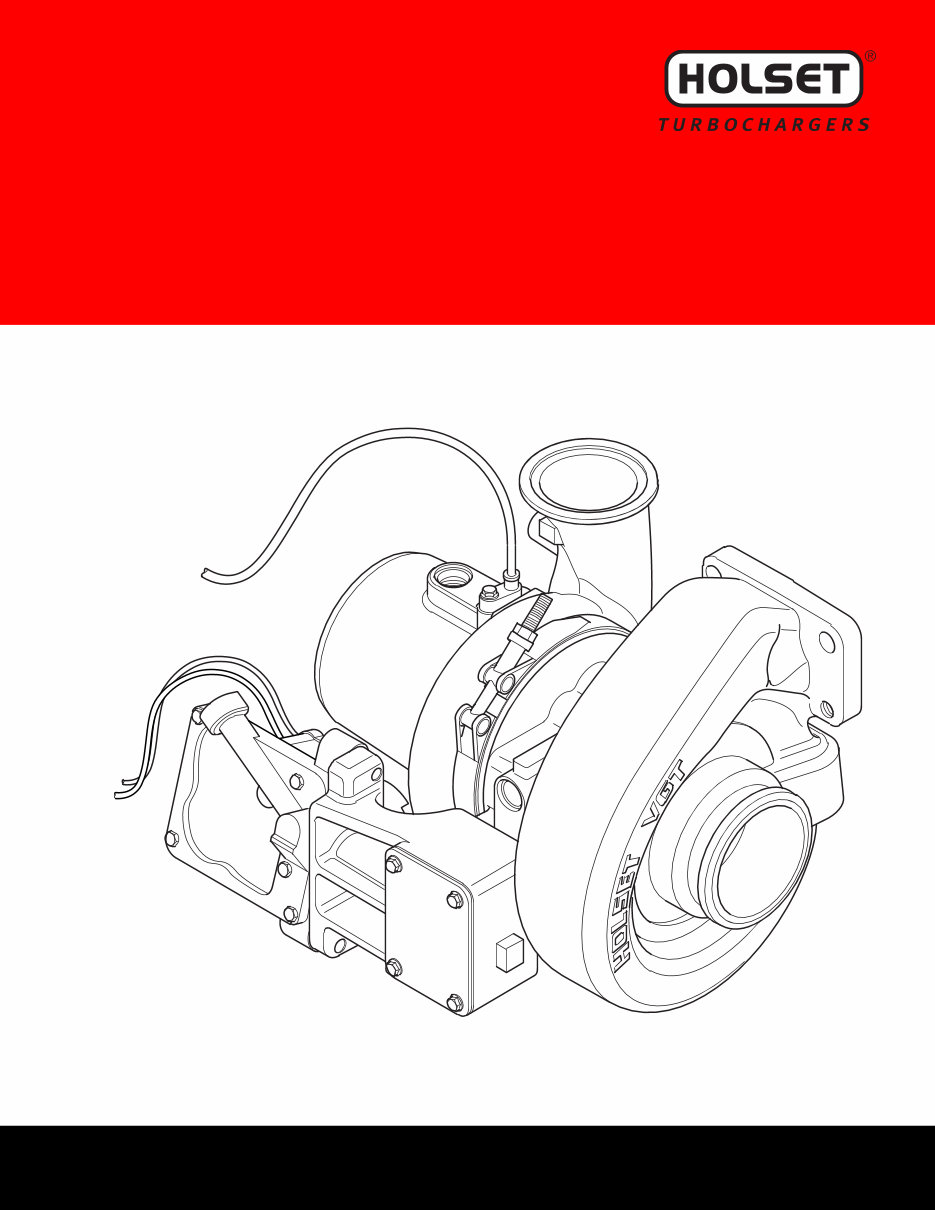
Holset HE341Ve
Service Manual
Copyright 2007, Cummins Turbo Technologies Ltd. All rights reserved.
VGT, Command Valve and Super MWE are trade marks of Cummins Turbo Technologies Ltd.
Holset and the Holset Logo are registered trade marks of Cummins Turbo Technologies Ltd.
Cummins and the Cummins logo are registered trade marks of Cummins Inc.

HE341Ve Service Manual Foreword
Foreword
This publication was written to assist with turbocharger installation, maintenance and overhaul .
The specifications and procedures in this manual are based on information in effect at the time of publication.
Holset Service reserves the right to make any changes at any time without obligation. If differences are found
between your turbocharger and the information in this manual, contact your local Holset approved agent.
The latest technology and the highest quality standards are used in the manufacture of Holset Turbochargers.
When replacement parts are needed, we recommend using only genuine Holset parts.

HE341Ve Service Manual Table of Contents
Table of Contents
1: Introduction
About the Manual . . . . . . . . . . . . . . . . . . . . . . . . . . . . . . . . . . . . . . . . . . . . . . . . . . 1:1
How to Use the Manual . . . . . . . . . . . . . . . . . . . . . . . . . . . . . . . . . . . . . . . . . . . . . 1:1
How to Order Holset Original Parts . . . . . . . . . . . . . . . . . . . . . . . . . . . . . . . . . . . . . 1:1
Description and Operation of Turbocharger . . . . . . . . . . . . . . . . . . . . . . . . . . . . 1:2
General Information . . . . . . . . . . . . . . . . . . . . . . . . . . . . . . . . . . . . . . . . . . . 1:2
Introduction to Variable Geometry Turbochargers . . . . . . . . . . . . . . . . . . . . . 1:2
Notes, Cautions and Warnings . . . . . . . . . . . . . . . . . . . . . . . . . . . . . . . . . . . 1:4
Installation Data . . . . . . . . . . . . . . . . . . . . . . . . . . . . . . . . . . . . . . . . . . . . . . . . . . 1:5
Installation Checklist . . . . . . . . . . . . . . . . . . . . . . . . . . . . . . . . . . . . . . . . . . . . . . 1:6
Symbols . . . . . . . . . . . . . . . . . . . . . . . . . . . . . . . . . . . . . . . . . . . . . . . . . . . . . . . . 1:7
2: Component Identification
Turbocharger Identification . . . . . . . . . . . . . . . . . . . . . . . . . . . . . . . . . . . . . . . . . 2:1
Dataplate and CHRA (Core) of Turbocharger . . . . . . . . . . . . . . . . . . . . . . . . 2:1
Installation Options . . . . . . . . . . . . . . . . . . . . . . . . . . . . . . . . . . . . . . . . . . . . 2:2
Exploded Views . . . . . . . . . . . . . . . . . . . . . . . . . . . . . . . . . . . . . . . . . . . . . . . . . . 2:3
Component List . . . . . . . . . . . . . . . . . . . . . . . . . . . . . . . . . . . . . . . . . . . . . . . . . . 2:4
Purchasable Service Tools . . . . . . . . . . . . . . . . . . . . . . . . . . . . . . . . . . . . . . . . . 2:5
3: Troubleshooting and Diagnosis
Fault Finding Chart . . . . . . . . . . . . . . . . . . . . . . . . . . . . . . . . . . . . . . . . . . . . . . . 3:1
4: Component Testing and Replacement
Service Tools . . . . . . . . . . . . . . . . . . . . . . . . . . . . . . . . . . . . . . . . . . . . . . . . . . . . 4:1
On Engine Checks . . . . . . . . . . . . . . . . . . . . . . . . . . . . . . . . . . . . . . . . . . . . . . . . 4:3
Bearing Clearance . . . . . . . . . . . . . . . . . . . . . . . . . . . . . . . . . . . . . . . . . . . . . . . . 4:8
Position Sensor Check and Removal . . . . . . . . . . . . . . . . . . . . . . . . . . . . . . . . . 4:9
Position Sensor Replacement . . . . . . . . . . . . . . . . . . . . . . . . . . . . . . . . . . . . . . . 4:11
Actuator Check and Removal . . . . . . . . . . . . . . . . . . . . . . . . . . . . . . . . . . . . . . . 4:12
VG Mechanism Check . . . . . . . . . . . . . . . . . . . . . . . . . . . . . . . . . . . . . . . . . . . . . 4:14
Remote Actuator Check . . . . . . . . . . . . . . . . . . . . . . . . . . . . . . . . . . . . . . . . . . . 4:15
Actuator Replacement . . . . . . . . . . . . . . . . . . . . . . . . . . . . . . . . . . . . . . . . . . . . . 4:16
Speed Sensor Check and Removal . . . . . . . . . . . . . . . . . . . . . . . . . . . . . . . . . . 4:19
Speed Sensor Replacement . . . . . . . . . . . . . . . . . . . . . . . . . . . . . . . . . . . . . . . . 4:20
6: Service Data Sheets
HX Range Service Data Sheets . . . . . . . . . . . . . . . . . . . . . . . . . . . . . . . . . . . . . . . 6:1

HE341Ve Service Manual Introduction
1:1
About the Manual
The procedures in this manual were developed to instruct in the correct overhaul of the Holset HE341Ve
turbocharger for optimum performance and minimum maintenance operation.
How to Use the Manual
The manual is split into sections designed to provide service information in a logical sequence. The manual
contains links to help the user navigate between relevant sections. Users who are unfamilier with navigating in
PDF documents are refered to Navigating in PDF documents in the Adobe® Acrobat® Reader™ help file.
Contents is an interactive page with links to all the sections. It can be accessed from any page
in the manual by clicking this icon.
Section 1 defines the layout of the manual, introduces the reader to the operation of the turbocharger
and presents important installation guidelines.
Sections 2, 3 and 4 concentrate on Turbocharger Component Identification, Troubleshooting and
Diagnosis, Component Testing and Replacement.
Section 5 identifies the Service and Overhaul procedures to be followed in the unlikley event of a
major turbocharger malfunction. (This section is not available for the HE341V e turbocharger
range at the present time)
Section 6 quantifies build data to ensure the turbocharger will continue to operate to Holset Service
standard on completion of overhaul.
Manual sections 1 to 5 where applicable, appear as a self extracting compressed file which is organised
according to the steps needed to most easily and correctly maintain the operation of the turbocharger. Users
are required to download this file to hard disk. Section 6 has its own file identity and resides at
www.holset.co.uk. so that Holset can update the Service Data as changes occur. The links between manual
and service data are active only when the user is connected to the Internet.
Chapter 6 has an expiry date to encourage users to discard outdated saved or printed versions and always
access the latest information available at www.holset.co.uk.
When using the manual on-line this icon will link to Holset’s website to help find your nearest agent
for advice and how to order Holset original parts.
How to Order Holset Original Parts
To make sure of optimum performance, certain items must be discarded during disassembly and replaced with
new for re-assembly. These items are indicated in the Service and Overhaul section with the use of a
*
symbol.
All items showing a
*
are available in a basic overhaul kit.
To get the correct parts for your turbocharger, refer to the ‘component identification’ section of this manual to
help you find the following information:
1) Refer to the exploded view and component list to define the major components to be replaced.
2) Refer to the turbocharger’s dataplate which will be found on the compressor housing or actuator to
define the identifying information about your turbocharger build standard.
3) Contact your local Holset agent with componant identification nos. and dataplate assembly no., serial
no. and turbocharger type.
4) With this information, your local agent can provide you with the optimum kit of parts for re-assembling
your turbocharger for continued long life operation.

HE341Ve Service Manual Introduction
Description and Operation of Turbocharger
1:2
General Information
A turbocharger is a mechanical device which uses the engine’s exhaust gases to force more air into the engine
cylinders. Hot exhaust gas energy is used to turn a turbine wheel and shaft. At the other end of the shaft is the
compressor impeller (or compressor wheel), which draws in air and forces it into the engine cylinders.
Supplying increased air mass flow to the engine provides improved engine performance, lower exhaust smoke
density, improved operating economy and altitude compensation. The turbocharger has proven to be one of the
most beneficial devices for improving engine performance. It performs its job very well, as long as it is properly
cared for.
Introduction to Variable Geometry Turbochargers
The need for Variable Geometry
The turbocharger on your vehicle’s engine is of a very advanced type, which varies the effective size of its
turbine in response to the driver’s demands. Under all conditions of driving, the turbine is electronically
controlled to change the amount of air supplied to the engine, to ensure maximum performance, lowest fuel
consumption and minimum exhaust emission levels.
When rapid vehicle acceleration is required, the turbocharger will produce air for the engine more quickly than
a conventional unit, thus eliminating turbocharger lag and giving improved vehicle drivability. As the engine and
turbocharger run in, and eventually start to wear, the combination of the variable turbine and its associated
electronic control, will change its characteristic to keep to the original performance and emission levels over a
wide range of ambient temperatures and altitude.
The importance of correctly installing a V ariable Geometry turbocharger
The bearing housing of your turbocharger and the variable geometry actuator both contain an internal liquid
cooled jacket. The purpose of these is to reduce the operating temperature of the housings, to improve the
operating environment of the position sensor and DC motor and reduce the high soak temperatures produced
when the engine is switched off after being heavily loaded. The addition of liquid cooling has meant that there
are two pairs of pipe connections to the turbocharger, to bring coolant to the housings and to take it away. It is
important to observe the correct installation of these pipes, so that the circulation of the coolant is in the correct
direction, or the effectiveness of the cooling system will be lost and severe damage may result.
HE341Ve Service Manual Introduction
1:3
The advantages of a Variable Geometry (VG) Turbocharging system
You may already have experience of the effect of a Wastegate turbocharger on the performance of your
vehicle.
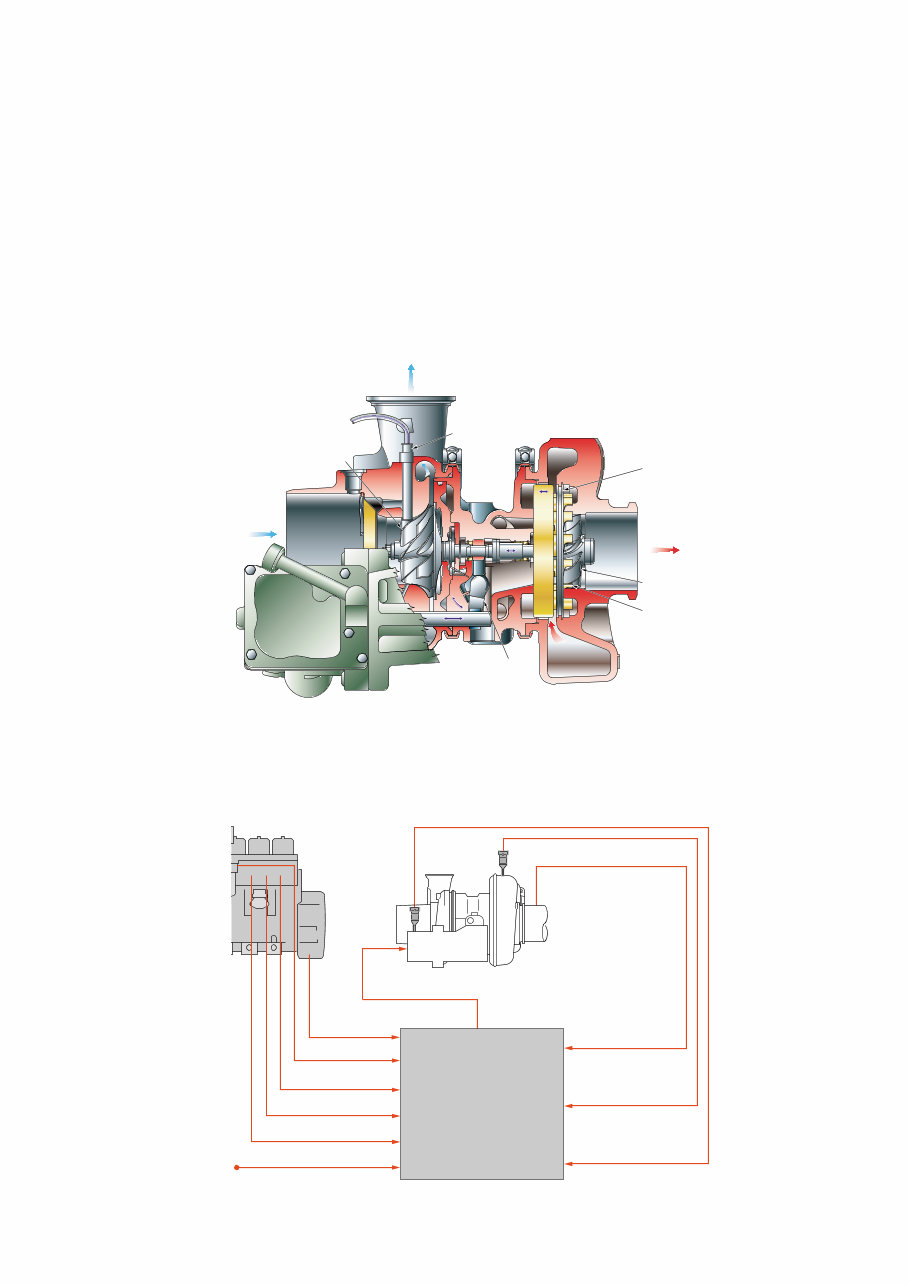
The advantage of Variable Geometry over a Wastegate system is that all the exhaust gas flows through the
turbine wheel to increase net turbine power output. In addition, turbine power can be set to provide just
sufficient energy to drive the compressor at the desired boost level wherever the engine is operating. Speed,
actuator position and pressure sensors feedback information to the Engine Control Module to provide the
necessary control. As the name suggests a Wastegate turbocharger allows exhaust gas to by-pass the turbine
wheel. This by-passed gas contains energy which is lost to the turbine wheel. Wastegate turbochargers have
no feedback controls.
The Holset VG system works by controlling the width of a nozzle guiding the gas flow into the turbine wheel.
Control is achieved using an electric actuator powered by the vehicle system. The Engine Control Module
continually senses the position of the actuator mechanism, engine operating condition and driver demands. It
signals the actuator DC motor to move the actuator rod to a new position which slides the nozzle ring and
blades relative to the fixed shroud plate. This movement varies the area through which exhaust gas enters the
turbine wheel blades.
Exhaust Gas
Boost Air
Outlet
Air Inlet
Exhaust Outlet
Boost Air Outlet
Speed
Sensor
Turbine
Compressor
Operating
Yoke
Sliding Nozzle Ring
and Blades Extended
Fixed
Shroud
Plate
Turbocharger Speed
Exhaust Outlet Pressure
Actuator Position
Actuator Control Signal
Engine Control Module (ECM)
Engine Speed
Throttle Demand
Exhaust Manifold Pressure
Inlet Manifold
Pressure & Temperature
Contains pre-set data on
airflow requirements for
any fuel quantity injected
at any engine speed,
with built-in safety
features for excessive
boost, smoke or
turbocharger speed.
Fuel Injection Pump Information
Ambient Pressure and Temperature

HE341Ve Service Manual Introduction
1:4
Notes, Cautions and Warnings
Notes, Cautions and Warnings are used in this manual to emphasise important or critical instructions.
Note
Information which is essential to highlight.
Caution
Maintenance or Service procedures which if not strictly followed, will result in damage or destruction of the
turbocharger.
Warning
Maintenance or Service procedures which if not correctly followed will result in personal injury or loss of life.
Note
Holset Service receives many turbocharger returns that are no fault found. Before assuming the turbocharger
is not performing to specification always refer to the engine diagnostic system and the troubleshooting
diagnostic procedures of this manual.
Warning
Turbocharger surface temperature during operation can achieve 700°C (1300°F). The designated
turbocharger weighs up to 18.3 kg (40.5 lb) and is fitted with external parts that are sensitive to manual
handling. They include electrical wiring and connectors.
Caution
This variable geometry turbocharger has been factory balanced using the core balance process.
Service overhaul/repair must be carried out by Holset Engineering to ensure the variable geometry system is
correctly rebuilt. It is important to note that operating a turbocharger with rotor or core balance level greater
than design limits could cause turbocharger or engine failure.
Warning
Some parts are manufactured in fluoroelastomers (eg Viton) or similar that require special treatment in the case
of repair and service after fire.
Note
Holset turbochargers can be remanufactured using recovered parts. Where it is necessary to dispose of
components or whole turbochargers, an environmentally responsible process such as recycling should be
used, with due regard to local laws.
Caution
Orientation of the turbine housing of a variable geometry turbocharger is factory set. Any attempt to
re-orientate the housing can cause severe damage to the VG mechanism and may void warranty.

HE341Ve Service Manual Introduction
Installation Data
1:5
1. Holset Service receives many turbocharger returns that are no fault found. Before assuming the
turbocharger is not performing to specification always refer to the engine diagnostic system and the fault
finding chart of this manual to make all the recommended health checks.
2. It is important that intake and exhaust systems are fitted in accordance with the recommendations of
the Equipment and Engine manufacturers. Limiting mass inertia loading is critical to turbocharger whole
life operation. Maximum engine vibration input must not exceed 10g.
3. The air filter must remove particles greater than 5μm at an efficiency of 95% and be of sufficient capacity
to match the air consumption of the engine. Recommended filters should always be used with a pressure
drop indicator. Intake systems must be capable of withstanding depressions up to 6.9 kPa (1.0 lbf/in
2
).
4. Hose and clip connections of intake manifold systems must be capable of withstanding the turbocharger
pressure ratio. V band clamps are preferred and must be used above 3:1 pressure ratio.
5. Exhaust systems must be capable of operating at exhaust back pressures of up to 10 kPa (1.5 lbf/in
2
).
This limit is increased to 13.4 kPa (2.0 lbf/in
2
) if a catalytic converter is fitted. Exhaust brake applications
are permitted to impose 450 kPa (65.3 lbf/in
2
) back pressure.
6. Oil should be filtered to 10μm with efficiency of 60% TWA (Time Weighted Average) /20 μm with efficiency
of 85% TWA. Efficiency assessed using ISO Standard 4572/SAE J 1858.
7. The oil quality must be as specified by the engine manufacturer and will be a minimum API SE - CD
(MIL - L - 2104C) specification. Improved life can be obtained by using super high performance diesel
(SHPD) oils, particularly in industrial applications which use extended oil drain periods.
8. Normal oil temperature is 95+/-5°C (203+/-9° F). It should not exceed 120°C (248°F) under any operating
condition.
9. Any pre-lube oil must be clean and meet the minimum CD classification.
10. The orientation of turbine housing, bearing housing and compressor cover is fixed according to
application. During installation, do not attempt to rotate these components as it may affect the operation of
the variable geometry actuating mechanism and may void warranty. Inclined turbocharger installation is
not recommended. If an installed angle is necessary, oil inlet centreline must be +/- 10 degrees from
vertical and rotor centreline +/- 5 degrees from horizontal.
11. Holset permits oil return pipes to decline at an overall angle of not less than 30 degrees below horizontal.
All turbocharger applications require a pipe of internal diameter greater than 19 mm which has integrated
connectors. To ensure oil returns into the engine under all operating conditions, the return connection
into the engine sump must not be submerged and the outlet flange of the turbocharger must be 50 mm
above the maximum oil level of the engine sump pan. Crankcase pressure should be limited ideally to 0.8
kPa (0.12 lbf/in
2
) but 1.4 kPa (0.20 lbf/in
2
) can be accepted by reference to Holset.
12. Oil pressure of 150 kPa (20 lbf/in
2
) must show at the oil inlet within 3 - 4 seconds of engine firing to
prevent damage to turbocharger bearing system. A flexible supply pipe is recommended.
13. The minimum oil pressure when the engine is on load must be 210 kPa (30 lbf/in
2
). Normal maximum
operating pressure is 500 kPa (72 lbf/in
2
) although 600 kPa (88 lbf/in
2
) is permitted during cold start up.
Under idling conditions pressure should not fall below 70 kPa (10 lbf/in
2
).
14. Recommended oil flows for the turbochargers are 2 litre/min at idle and 3 litre/min above maximum torque
speed.
15. Ensure recommended coolant flows for the separate turbocharger and actuator circuits are achieved:
Turbocharger: 3 litre/min at idle and 5 litre/min above max torque speed
Actuator: 1 litre/min at idle and 3 litre/min above max torque speed
16. Do not use liquid gasket substances or thread sealant as any excess can enter the turbocharger oil
and coolant systems to obstruct flow.
Note:
100 kPa = 1 bar (14.5037 lbf/in
2
=psi).

HE341Ve Service Manual Introduction
Installation Checklist
1:6
1. Always understand why the original turbocharger needs replacing before fitting another unit.
2. Check the turbocharger dataplate to ensure the Part No. is correct for the engine/application.
3. Check the engine exhaust, intake and aftercooler systems are clean and without obstruction i.e. free from
oil, gasket pieces, dust/dirt/carbon or foreign objects.
4. Replace the oil and air filters using replacement parts specified by the equipment manufacturer.
5. Change the engine oil using the type specified by the engine manufacturer.
6. Check that the turbocharger oil inlet and drain pipes and connectors are clean, free from obstruction and
will not leak under pressure. Before re-installing flexible pipes always ensure any burnt-on lacquer or other
adhered material is removed from internal bores. If in doubt, always fit new pipes.
7. Check that the coolant pipes of water cooled bearing housing applications and connectors are clean, free
from obstruction and will not leak under pressure.
8. To pre-lube the turbocharger bearings, pour some clean engine oil into the oil inlet and rotate the
turbocharger rotor assembly by hand.
9. Check that the exhaust manifold flange is flat and undamaged. Mount the turbocharger on the flange and
check that the turbine inlet gasket fits properly without obstructing the gas passages. Torque fasteners to
engine manufacturer's recommendation.
10. Assemble the air intake and boost outlet connections. Check that the connections are secure and will
not leak in use.
11. Check the exhaust system is fitted using the original mounting arrangement provided by the equipment
manufacturer. Always re-fit any supports/brackets back in position to ensure the system is correctly
supported.
12. Assemble the exhaust system to the turbine housing outlet. Check that the gasket/connection is secure
and will not leak in use.
13. Assemble any coolant pipes and check that the connections are secure, without obstruction and will not
leak in use.
14. Assemble the turbocharger oil inlet pipe and check that the connection is clean, secure and will not leak in
use.
15. Check all clamps and fasteners are correctly tightened to the torque recommended by the equipment
manufacturer.
16. Make the electrical connections between VG actuator motor, sensors and engine control module (ECM).
17. Make any ECM checks recommended by the engine manufacturer.
18. Crank the engine WITHOUT firing until engine oil flows out of the turbocharger drain flange.
19. Assemble the oil drain pipe and check that the connection is secure, without obstruction and will not leak in
use.
20. Start the engine and run at idle speed for approximately 1 minute so that the oil supply system is fully
operational.
21. Accelerate the engine and check that there are no leaks/obstructions of air/oil/coolant/gas under pressure.
22. Check that no hose or connection deforms under normal operation.
23. Before switching off the engine, leave it running at idle speed for at least 1 minute to cool the turbine.

Symbole - Deutsch
In diesem Handbuch werden die folgenden Symbole verwendet, die wesentliche Funktionen hervorheben. Die
Symbole haben folgende Bedeutung:
WARNUNG - Unterhaltungs und Wartungsverfahren müssen genau befolgt werden, da ein
Nichtbeachten zu Personenschäden oder tödlichen Verletzungen führt.
ACHTUNG - Falls Unterhaltungs und Wartungsverfahren nicht genau beachtet werden, kann der
Turbolader dadurch beschädigt oder zerstört werden.
AUSBAU bzw. ZERLEGEN.
EINBAU bzw. ZUSAMMENBAU.
INSRPEKTION erforderlich.
Teil oder Baugruppe REINIGEN.
DIMENSION - oder ZEITMESSUNG.
Teil oder Baugruppe ÖLEN.
WERKZEUGGRÖSSE wird angegeben.
ANZUG auf vorgeschriebenes Drehmoment erforderlich.
Sicherstellen, daß die AUSWUCHTMARKEN an der Rotor-Baugruppe richtig ausgerichtet sind.
Elektrische MESSUNG DURCHFÜRHREN.
Weitere Informationen an anderer Stelle bzw. in anderen Handbüchern.
Schutzkleidung muß immer getragen werden.
Deutet an, daß Teile schwer sein können.
Website-Verzeichnis mit Ihrem nächsten Holset-Händler.
Gehe zu Inhalt
HE341Ve Service Manual Introduction
Symbols
1:7
KG
You're Reading a Preview
What's Included?
Lifetime Access
Fast Download Speeds
Online & Offline Access
Access PDF Contents & Bookmarks
Full Search Facility
Print one or all pages of your manual
$41.99
$54.99
Viewed 70 Times Today


Secure transaction
What's Included?
Lifetime Access
Fast Download Speeds
Online & Offline Access
Access PDF Contents & Bookmarks
Full Search Facility
Print one or all pages of your manual
$41.99
$54.99
The Holset HE431V Service Repair Manual provides comprehensive guidance for turbocharger installation, maintenance, and overhaul. This manual is an invaluable resource for both professional mechanics and DIY enthusiasts seeking to understand and work on the Holset HE431V turbocharger.


