June 2006 Copyright 2006 Komatsu Printed in USA DataKom Publishing Division 00-1 CEBM017100 Shop Manual CK30-1 COMPACT TRACK LOADER This material is proprietary to Komatsu America Corp. and is not to be reproduced, used, or disclosed except in accordance with written authorization from Komatsu America Corp. It is our policy to improve our products whenever it is possible and practical to do so. We reserve the right to make changes or add improvements at any time without incurring any obligation to install such changes on products sold previously. Due to this continuous program of research and development, periodic revisions may be made to this publication. It is recommended that customers contact their distributor for information on the latest revision. SERIAL NUMBERS CK30-1 A30001 and UP SK1020-5N, SK1020-5NA
CK30-1 00-2 CONTENTS CONTENTS Page 10. STRUCTURE AND FUNCTION....................................................................................... 10-1 20. TESTING AND ADJUSTING ........................................................................................... 20-1 30. REMOVAL AND INSTALLATION ................................................................................... 30-1 40. MAINTENANCE STANDARD.......................................................................................... 40-1 90. OTHER ...................................................................................................................... 90-1
CK30-1 00-3 REVISED PAGES REVISED PAGES The affected pages are indicated by the use of the following marks. It is requested that necessary actions be taken to these pages according to table below. Pages having no marks are those previously revised or made additions. Symbol Indication Action required Q Page to be newly Add q Page to be replaced Replace ( ) Page to be delete Discard Symbol Page Time of revision Symbol Page Time of revision Symbol Page Time of revision Symbol Page Time of revision Symbol Page Time of revision 00-1 00-2 00-3 00-4 00-5 00-6 00-7 00-8 00-9 00-10 00-11 00-12 00-13 00-14 00-15 00-16 00-17 00-18 00-19 00-20 00-21 00-22 00-23 00-24 10-1 10-2 10-3 10-4 10-5 10-6 10-7 10-8 10-9 10-10 10-11 10-12 10-13 10-14 10-15 10-16 10-17 10-18 10-19 10-20 10-21 10-22 10-23 10-24 10-25 10-26 10-27 10-28 10-29 10-30 10-31 10-32 10-33 10-34 10-35 10-36 10-37 10-38 10-39 10-40 10-41 10-42 10-43 10-44 10-45 10-46 10-47 10-48 10-49 10-50 10-51 10-52 10-53 10-54 10-55 10-56 10-57 10-58 10-59 10-60 10-61 10-62 10-63 10-64 10-65 10-66 10-67 10-68 10-69 10-70 10-71 10-72 10-73 10-74 10-75 10-76 10-77 10-78 10-79 10-80 10-81 10-82 10-83 10-84 10-85 10-86 10-87 10-88 10-89 10-90 10-91 10-92 10-93 10-94 10-95 10-96 10-97 10-98 10-99 10-100 10-101 10-102 10-103 10-104 10-105 10-106 10-107 10-108 20-1 20-2 20-3 20-4 20-5 20-6 20-7 20-8 20-9 20-10 20-11 20-12 20-13 20-14 20-15 20-16 20-17 20-18 20-19 20-20 20-21 20-22 20-23 20-24 20-25 20-26 20-27 20-28 20-29 20-30 20-31 20-32 20-33 20-34 20-35 20-36 20-37 20-38 30-1 30-2 30-3 30-4 30-5 30-6 30-7 30-8 30-9 30-10 30-11 30-12 30-13 30-14 30-15 30-16 30-17 30-18 30-19 30-20 30-21 30-22 30-23 30-24 30-25 30-26 30-27 30-28 30-29 30-30 30-31 30-32 30-33 30-34 30-35 30-36 30-37 30-38 30-39
CK30-1 00-4 REVISED PAGES Symbol Page Time of revision Symbol Page Time of revision Symbol Page Time of revision Symbol Page Time of revision Symbol Page Time of revision 30-40 30-41 30-42 30-43 30-44 30-45 30-46 30-47 30-48 30-49 30-50 30-51 30-52 30-53 30-54 30-55 30-56 30-57 30-58 30-59 30-60 30-61 30-62 30-63 30-64 30-65 30-66 30-67 30-68 30-69 30-70 30-71 30-72 30-73 30-74 30-75 30-76 30-77 30-78 30-79 30-80 30-81 30-82 30-83 30-84 30-85 30-86 30-87 30-88 30-89 30-90 30-91 30-92 30-93 30-94 40-1 40-2 40-3 40-4 40-5 40-6 40-7 40-8 40-9 40-10 40-11 40-12 40-13 40-14 40-15 40-16 40-17 40-18 40-19 40-20 40-21 40-22 40-23 40-24 40-25 40-26 40-27 40-28 40-29 40-30 90-1 90-2 90-3 90-4 90-5 90-6
CK30-1 00-5 k SAFETY k IMPORTANT SAFETY NOTICE Proper service and repair is extremely important for the safe operation of your machine. The service and repair techniques recommended by Komatsu Utility and describe in this manual are both effective and safe methods of operation. Some of these operations require the use of tools specially designed by Komatsu Utility for the purpose. To prevent injury to workers, the symbol kis used to mark safety precautions in this manual. The cautions accompanying these symbols should always be carefully followed. If any danger arises or may possibly arise, first consider safety, and take necessary steps to face. GENERAL PRECAUTIONS Mistakes in operation extremely dangerous. Read all the Operation and Maintenance Manual carefully BEFORE operating the machine. 1. Before carrying out any greasing or repairs, read all the precautions written on the decals which are suck on the machine. 2. When carrying out any operation, always wear safety shoes and helmet. Do not wear loose work clothes, or clothes with buttons missing. • Always wear safety glasses when hitting parts with a hammer. • Always wear safety glasses when grinding parts with a grinder, etc. 3. If welding repairs are needed, always have a trained, experienced welder carry out the work. When carrying out welding work, always wear welding gloves, apron, glasses, cap and other clothes suited for welding work. 4. When carrying out any operation with two or more workers, always agree on the operating procedure before starting. Always inform your fellow workers before starting any step of the operation. Before starting work, hang UNDER REPAIR signs on the controls in the operator’s compartment. 5. Keep all tools in good condition and learn the correct way to use them. 6. Decide a place in the repair workshop to keep tools and removed parts. Always keep the tools and parts in their correct places. Always keep the work area clean and make sure that there is no dirt or oil on the floor. Smoke only in the areas provided for smoking. Never smoke while working. PREPARATIONS FOR WORK 7. Before adding or making any repairs, park the machine on hard, level ground, and block the wheels to prevent the machine from moving. 8. Before starting work, lower outrigger, bucket or any other work equipment to the ground. If this is not possible, use blocks to prevent the work equipment from falling down. In addition, be sure to lock all the control levers and hang warning sign on them. 9. When disassembling or assembling, support the machine with blocks, jacks or stands before starting work. 10. Remove all mud and oil from the steps or other places used to get on and off the machine. Always use the handrails, ladders or steps when getting on or off the machine. Never jump on or off the machine. If it is impossible to use the handrails, ladders or steps, use a stand to provide safe footing. PRECAUTIONS DURING WORK 11. When removing the oil filler cap, drain plug or hydraulic pressure measuring plugs, loosen them slowly to prevent the oil from spurting out. Before disconnecting or removing components of the hydraulic circuit and engine cooling circuit, first remove the pressure completely from the circuit. 12. The water and oil in the circuits are not hot when the engine in stopped, so be careful not to get burned. Wait for the oil water to cool before carrying out any work on the cooling water circuits. 13. Before starting work, remove the leads from the battery. Always remove the lead from the negative ( – ) terminal first. k SAFETY
CK30-1 00-6 k SAFETY 14. When raising heavy components, use a hoist or crane. Check that the wire rope, chains and hooks are free from damage. Always use lifting equipment which has ample capacity. Install the lifting equipment at the correct places. Use a hoist or crane and operate slowly to prevent the component from hitting any other part. Do not work with any part still raised by the hoist or crane. 15. When removing covers which are under internal pressure or under pressure from a spring, always leave two bolts in position on opposite sides. Slowly release the pressure, then slowly loosen the bolts to remove. 16. When removing components, be careful not to break or damage the wiring. Damage wiring may cause electrical fires. 17. When removing piping, stop the fuel or oil from spilling out. If any fuel or oil drips on to the floor, wipe it up immediately. Fuel or oil on the floor can cause you to slip, or can even start fires. 18. As a general rule, do not use gasoline to wash parts. In particular, use only the minimum of gasoline when washing electrical parts. 19. Be sure to assemble all parts again in their original places. Replace any damage parts with new parts. When installing hoses and wires, be sure that they will not be damaged by contact with other parts when the machine is being operated. 20. When installing high pressure hoses, make sure that they are not twisted. Damaged tubes are dangerous, so be extremely careful when installing tubes for high pressure circuits. Also, check that connecting parts are correctly tightened. 21. When assembling or installing parts, always use specified tightening torques. When installing the parts which vibrate violently or rotate at high speed, be particulary careful to check that they are correctly installed. 22. When aligning two holes, never insert your fingers or hand. 23. When measuring hydraulic pressure, check that the measuring tool is correctly assembled before taking any measurement. 24. Take sure when removing or installing tracks. When removing the track, the track separates suddenly, so never let anyone stand at either end of the track.
CK30-1 00-7 FOREWORD FOREWORD This shop manual has been prepared as an aid to improve the quality of repairs by giving the operator an accurate understanding of the product and by showing him the correct way to perform repairs and make judgements. Make sure you understand the contents of this manual and use it to full effect at every opportunity. This shop manual mainly contains the necessary technical information for operations performed in a service workshop. The manual is divided into chapters on each main group of components; these chapters are further divided into the following sections. STRUCTURE AND FUNCTION This section explains the structure and function of each component. It serves not only to give an understanding of the structure, but also serves as reference material for troubleshooting. TESTING AND ADJUSTMENTS This sections explains checks to be made before and after performing repairs, as well as adjustments to be made at completion of the checks and repairs. Troubleshooting charts correlating «Problems» to «Causes» are also included in this section. REMOVAL AND INSTALLATION This section explains the order to be followed when removing, installing, disassembling or assembling each component, as well as precautions to be taken for these operations. STANDARD MAINTENANCE This section gives the judgement standards when inspecting disassembled parts. NOTE The specifications contained in this shop manual are subject to change at any time and without any notice. Contact your Komatsu Utility distributor for the latest information.
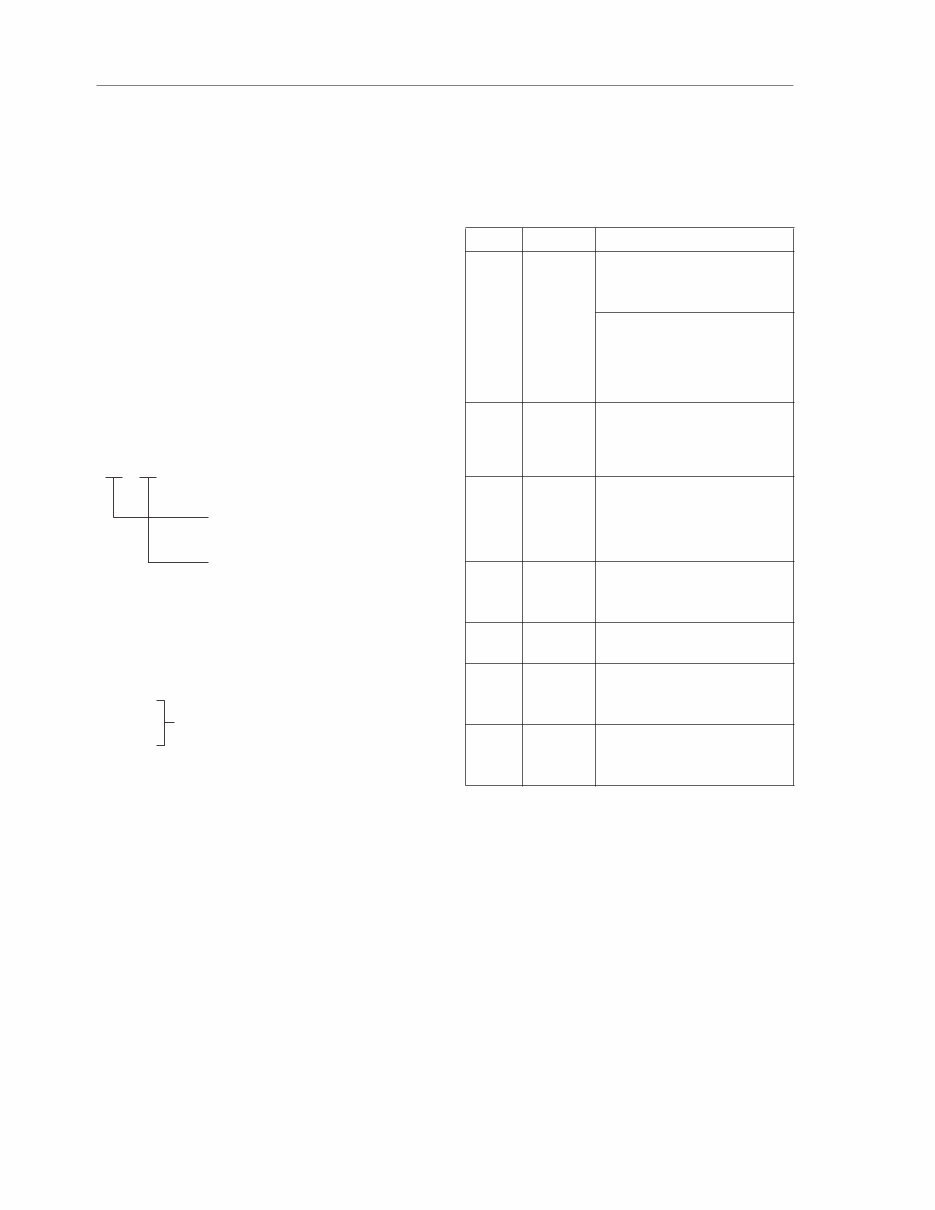
CK30-1 00-8 HOW TO READ THE SHOP MANUAL HOW TO READ THE SHOP MANUAL VOLUMES Shop manual are issued as a guide to carry out repairs. These various volumes are designed to avoid duplicating the same information. DISTRIBUTION AND UPDATING Any additions, amendments or other changes will be sent to Komatsu Utility distributors. Get the most up-to- date information before you start any work. FILING METHOD 1. See the page number on the bottom of the page. File the pages in correct order. 2. Following examples show you how to read the page number. Example: 3. Additional pages: additional pages are indicated by a hyphen (–) and number after the page number. Fle as in the example. Example: REVISED EDITION MARK When a manual is revised, an edition mark is recorded on the bottom outside corner of the pages. REVISIONS Revised pages are shown on the LIST OF REVISED PAGES between the title page and SAFETY page. SYMBOLS In order to make the shop manual greatly chelpful, important points about safety and quality are marked with the following symbols. 10 3 Item number (10. Structure and Function) Consecutive page number for each item - 10-4 10-4-1 10-4-2 10-5 Added pages Symbol Item Remarks k Safety Special safety precautionsare necessary whenperforming the work. Extra special safety precautions are necessary when performing the work because it is under internal pressure. a Caution Special technical precautions or other precautions for preserving standards are necessary when performing the work. 4 Weight Weight of parts or systems. Caution necessary when selecting hoisting wire, or when working posture is important, etc. 3 Tightening torque Parts that require special attention for the tightening torque during assembly. 2 Coat Parts to be coated with adhesives and lubricants etc. 5 Oil, water Places where oil, water or fuel must be added, and their quantity. 6 Drain Places where oil or water must be drained, and quantity to be drained.
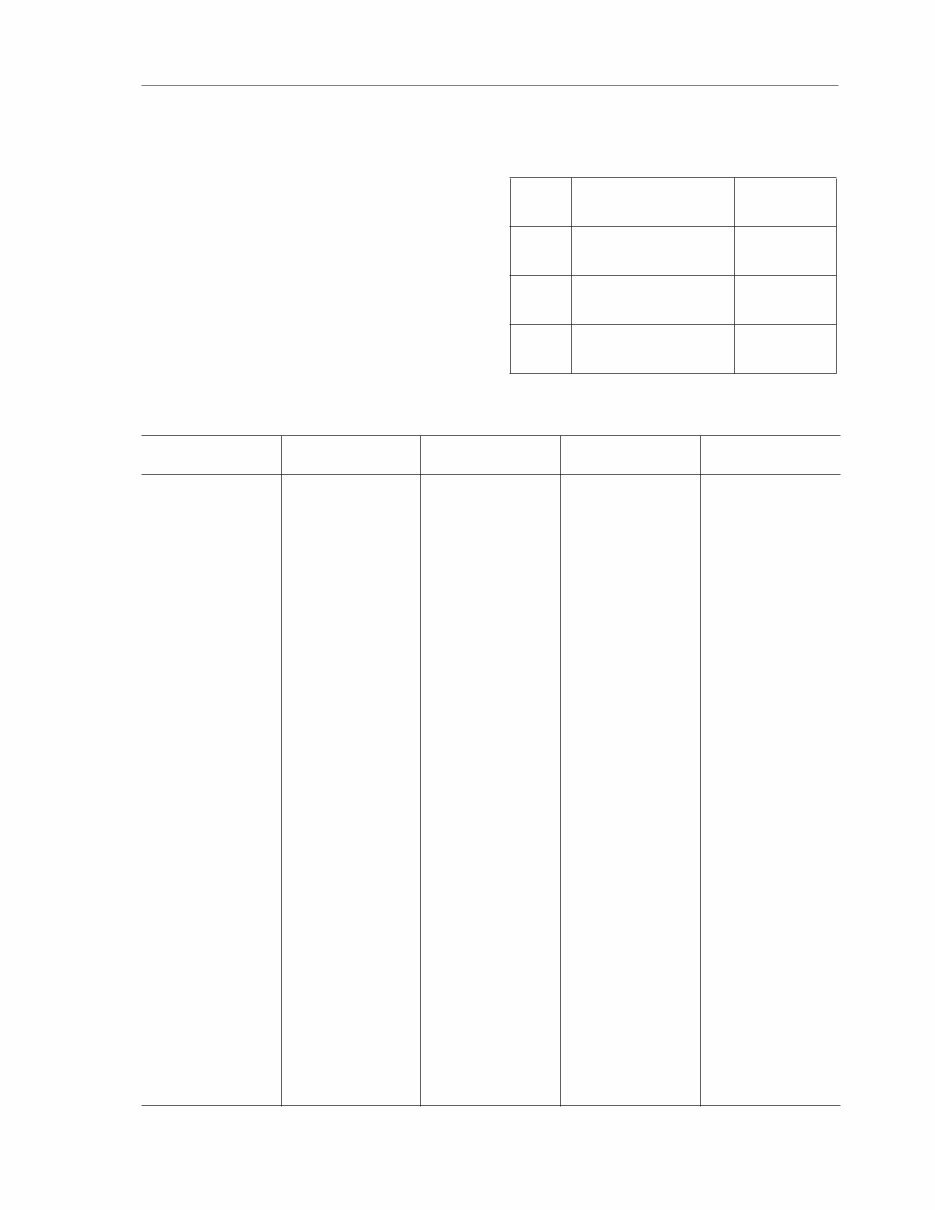
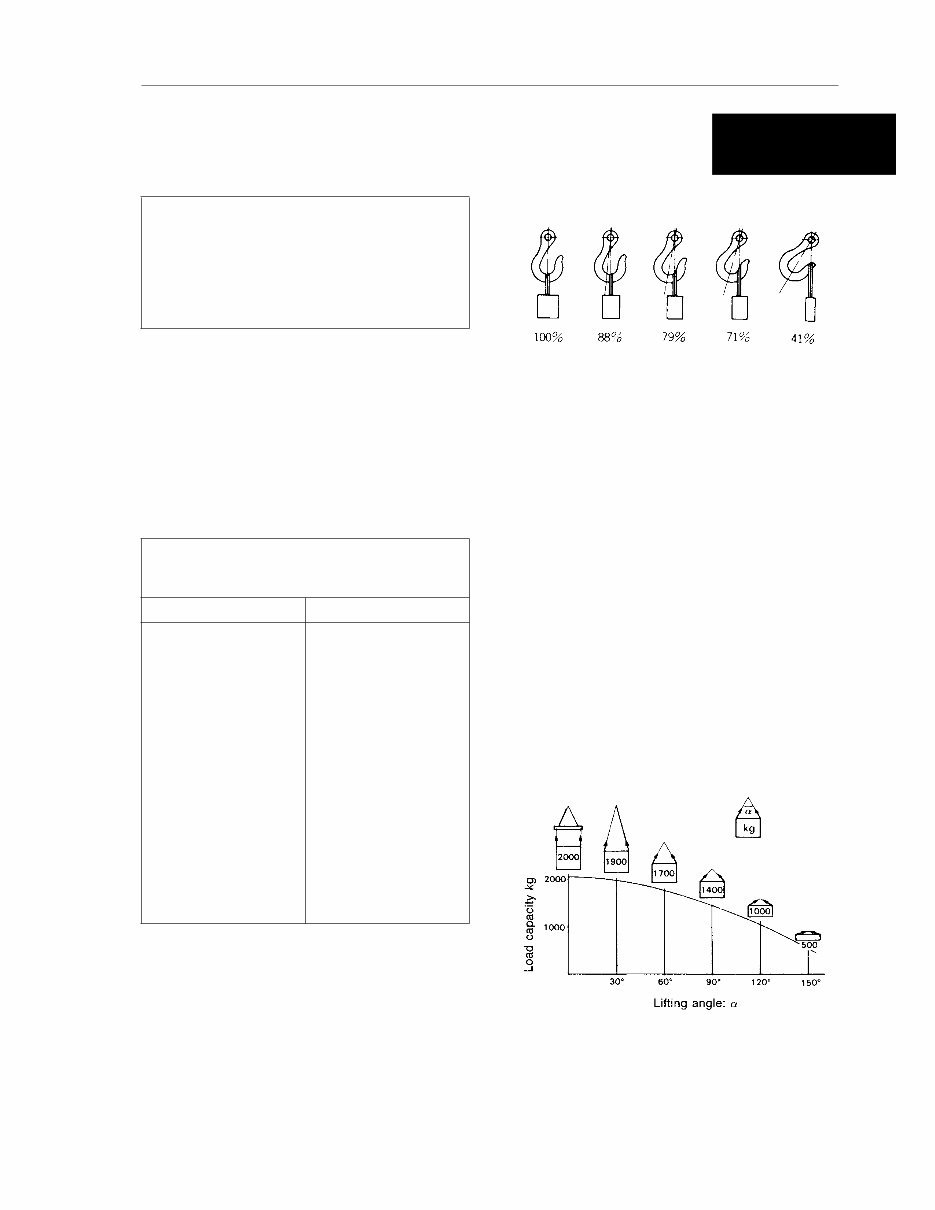
CK30-1 00-9 HOISTING INSTRUCTIONS HOISTING INSTRUCTIONS 4 1. If a part cannot be smoothly removed from the machine by hoisting, the following checks should be made: • Check for removal of all bolts fastening the part to the relative parts. • Check for any part causing interference with the part to be removed. 2. Wire ropes 1) Use adequate ropes depending on the weight of parts to be hoisted, referring to the table below: The allowable load value is estimated to be one- sixth or one-seventh of the breaking strength of the rope used. 2) Sling wire ropes from the middle portion of the hook. Slinging near the edge of the hook may cause the rope to slip off the hook during hoisting, and a serious accident can result. Hooks have maximum strength at the middle portion. 3) Do not sling a heavy load with one rope alone, but sling with two or more ropes symmetrically wound on to the load. kSlinging with one rope may cause turning of the load during hoisting, untwisting of the rope, or slipping of the rope from its original winding position on the load, which can cause dangerous accidents. 4) Do not sling a heavy load with ropes forming a wide hanging angle from the hook. When hoisting a load with two or more ropes, the force subjected to each rope will increase with the hanging angles. The table below shows the variation of allowable load (kg) when hoisting is made with two ropes, each of which is allowed to sling up to 1000 kg vertically, at various handing angles. When two ropes sling a load vertically, up to 2000 kg of total weight can be suspended. This weight becomes 1000 kg when two ropes make a 120° hanging angle. On the other hand, two ropes are subjected to an excessive force as large as 4000 kg if they sling a 2000 kg load at a lifting angle of 150°. k Heavy parts (25 kg or more) must be lifted with a hoist etc. In the Removal and Installation section, every part weighing 25 kg or more is clearly indicated with the symbol 4 WIRE ROPES (Standard «S» or «Z» twist ropes without galvanizing) Rope diameter (mm) Allowable load (tons) 10.0 11.2 12.5 14.0 16.0 18.0 20.0 22.4 30.0 40.0 50.0 60.0 1.0 1.4 1.6 2.2 2.8 3.6 4.4 5.6 10.0 18.0 28.0 40.0
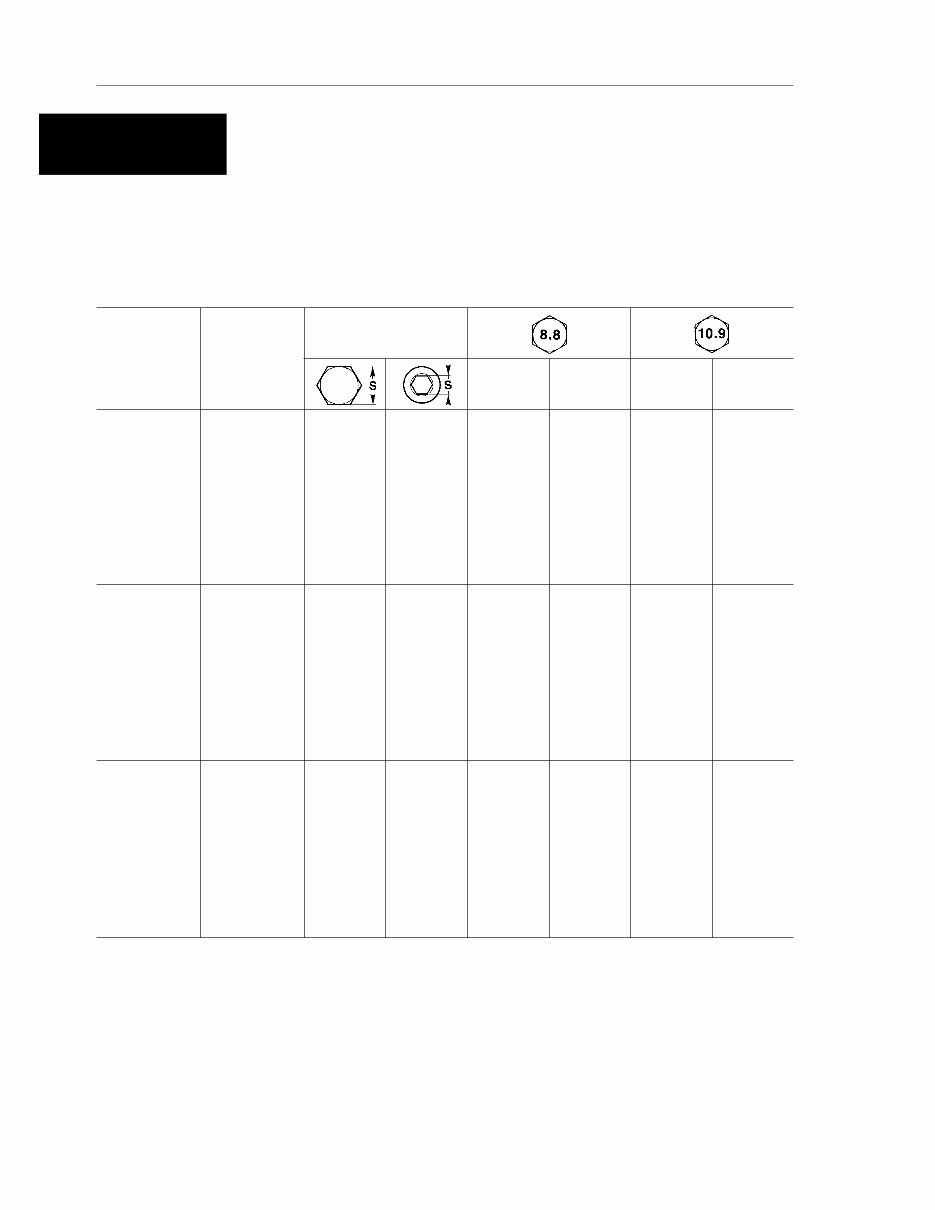
CK30-1 00-10 STANDARD TIGHTENING TORQUE STANDARD TIGHTENING TORQUE 3 The following charts give the standard tightening torques of bolts and nuts. Exceptions are given in section of «Disassembly and Assembly». 1. STANDARD TIGHTENING TORQUE OF BOLTS AND NUT This torque table does not apply to bolts or nuts which have to fasten nylon or other parts non-ferrous metal washer. a Nm (newton meter): 1 Nm = 0.102 kgm Thread diameter of bolts (mm) Pitch of bolts (mm) Width across flat (mm) kgm Nm kgm Nm 6 8 10 12 14 1 1.25 1.5 1.75 2 10 13 17 19 22 8 6 8 10 12 0.96±0.1 2.3±0.2 4.6±0.5 7.8±0.8 12.5±1 9.5±1 23±2 45±4.9 77±8 122±13 1.3±0.15 3.2±0.3 6.5±0.6 11±1 17.5±2 13.5±1.5 32.2±3.5 63±6.5 108±11 172±18 16 18 20 22 24 2 2.5 2.5 2.5 3 24 27 30 32 36 14 14 17 17 19 19.5±2 27±3 38±4 52±6 66±7 191±21 262±28 372±40 511±57 644±70 27±3 37±4 53±6 73±8 92±10 268±29 366±36 524±57 719±80 905±98 27 30 33 36 39 3 3.5 3.5 4 4 41 46 50 55 60 19 22 24 27 ---- 96±10 131±14 177±20 230±25 295±33 945±100 1287±140 1740±200 2250±250 2900±330 135±15 184±20 250±27 320±35 410±45 1329±140 1810±190 2455±270 3150±350 4050±450
You're Reading a Preview
What's Included?
Lifetime Access
Fast Download Speeds
Online & Offline Access
Access PDF Contents & Bookmarks
Full Search Facility
Print one or all pages of your manual
$31.99
Komatsu CK30-1 Skid Steer Loader Service Repair Workshop Manual (SN: A30001 and up)
This is a comprehensive service repair workshop manual for the Komatsu CK30-1 Skid Steer Loader. The manual contains easy-to-read text sections with high-quality diagrams and instructions, making it suitable for both do-it-yourself enthusiasts and experienced mechanics. It provides step-by-step instructions and detailed exploded pictures and diagrams to efficiently complete the required job.
The Komatsu CK30-1 Skid Steer Loader Service Repair Workshop Manual covers every single detail of the machine, including structure and function, testing and adjusting, removal and installation, maintenance standards, and more.
Model Name and Series:
Komatsu CK30-1¨A30001 and up
Service Repair Manual Covers:
Structure and Function
Testing and Adjusting
Removal and Installation
Maintenance Standard
Others
And More......
File Format: .PDF
Compatibility: All Versions of Windows & Mac
Language: English
Requirements: Adobe Reader & Win
This manual is printable, allowing you to save on postage and packaging costs. It is a valuable resource to ensure the proper functioning of your vehicle.
Reviews
Q&A
Recently Viewed
5,521,897Happy Clients
2,594,462eManuals
1,120,453Trusted Sellers
15Years in Business
Price:
Actual Price:
Komatsu CK30-1 Skid Steer Loader Service Repair Workshop Manual (SN: A30001 and up)








 Lifetime Access




