VOLVO EC17C COMPACT Excavator Service and Repair Manual
What's Included?
Lifetime Access
Fast Download Speeds
Offline Viewing
Access Contents & Bookmarks
Full Search Facility
Print one or all pages of your manual
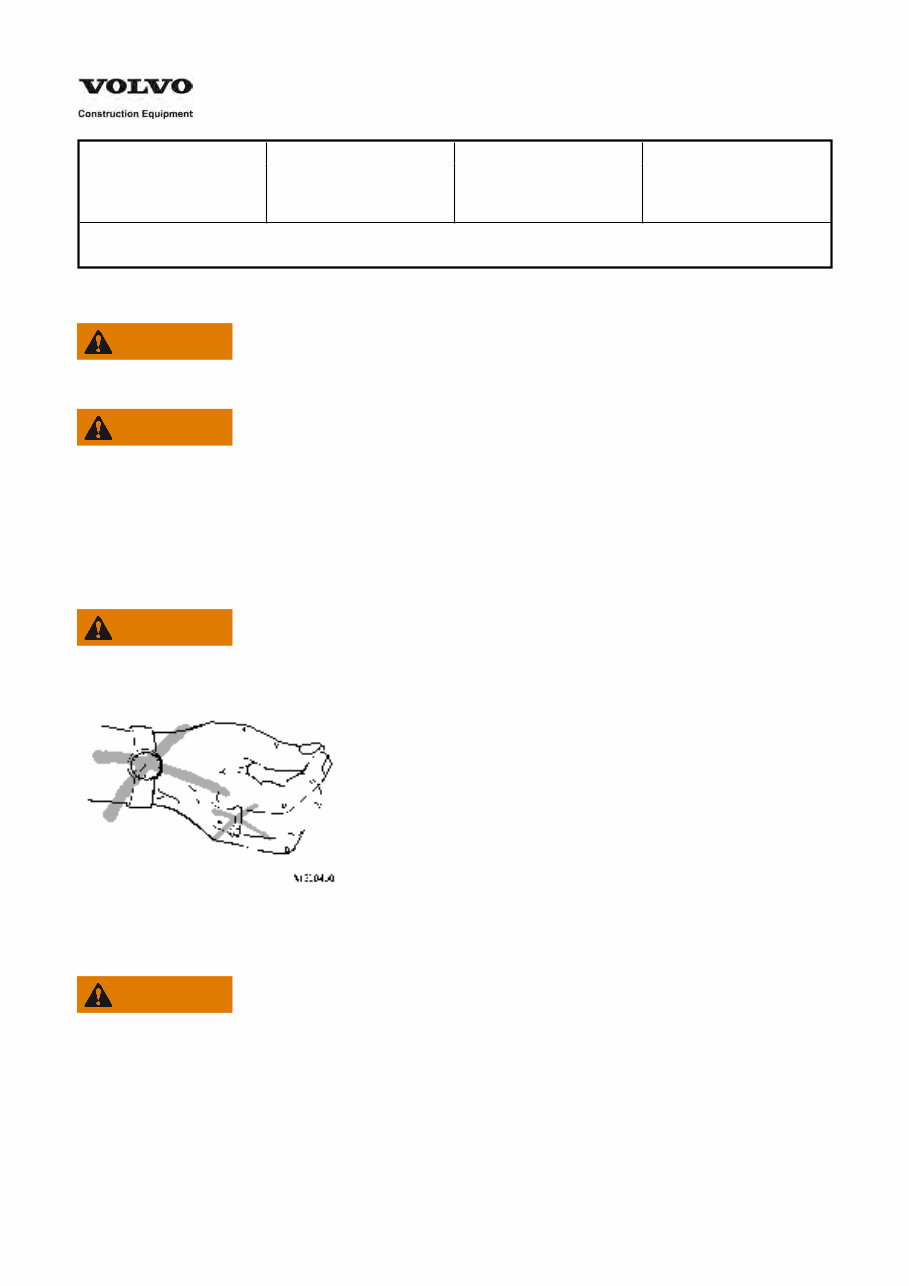
Service Information Document Title: Function Group: Information Type: Date: Electrical system, special instructions for servicing, general Service Information 2014/4/17 Profile: CEX, EC17C [GB] Electrical system, special instructions for servicing, general WARNING No changes may be made to the electrical system without prior approval from Volvo. Changes may affect machine functions and can result in risks for personal injury or machine damage. WARNING Carelessness when working with the electrical system may result in risks of serious personal injuries as well as machine damage. When working on the electrical system, the following instructions as well as instructions in respective section must be followed carefully. Also read instructions in Section Safety and in the Operator's Manual. WARNING Always remove watches, rings, bracelets and other metallic objects from the body before starting to work on the electrical system. Figure 1 WARNING Never boost-start the machine by connecting directly to the starter motor. This may result in uncontrolled machine movements. When using another machine to boost-start, it must not touch the machine that is being started. Never test if a cable/connection is supplied with electric power by producing "spark". This may permanently damaged electrical/electronic components.
Service Information Document Title: Function Group: Information Type: Date: Electrical system, special instructions for servicing, electrical components, batteries Service Information 2014/4/17 Profile: CEX, EC17C [GB] Electrical system, special instructions for servicing, electrical components, batteries WARNING During rapid charging of batteries, always remove the cell caps. During charging, an explosive mixture of oxygen and hydrogen is formed. A short-circuit, open flame or spark near the battery can cause a powerful explosion. Always turn off the charging current before disconnecting the charging clamps. Ventilate well, especially if the battery is being charged in a confined area. The battery electrolyte contains corrosive sulphuric acid. Remove spilled electrolyte from the skin immediately. Wash with soap and plenty of water. If electrolyte has splashed into the eyes or on any other sensitive body part, rinse immediately with plenty of water and contact a physician immediately. WARNING The batteries could explode due to the current surge if a fully charged battery is connected to a completely discharged battery. Since the batteries contain sulphuric acid, this could result in personal injuries. WARNING Never charge a frozen battery. Explosion hazard! Never disconnect the main electric current or disconnect battery cables when the engine is running. The battery's minus connection must always be disconnected before removing or installing components and connections in the electrical system. NOTE! Incorrect handling may cause damage to, for example, control unit/ECU which results in downtime. Fully charged batteries must be used when checking the electrical system. If the batteries are not fully charged, charge them or replace with new batteries. During battery charging, the battery terminal cables must always be disconnected from the battery. When changing batteries connected in series, the batteries should have the same capacity (for example, 150 Ah). The batteries should be of the same age (equally good). The reason for this is that the charging current required to give the battery a certain charge varies with the age of the battery. Only batteries may be used as assistant starting devices. An auxiliary starter unit and/or batteries connected in series to assist when starting may result in high (excess) voltage and can seriously damage electronic/electric components.
Service Information Document Title: Function Group: Information Type: Date: Electrical system, special instructions for servicing, electronic components Service Information 2014/4/17 Profile: CEX, EC17C [GB] Electrical system, special instructions for servicing, electronic components If a connector on any of the data buses has been damaged, the bus must be replaced. Note that the two cables included in each data bus are paired and twisted in order to protect them from electrical interference. Cabling must only be repaired by trained personnel. As an alternative, the entire cable harness can be completely replaced. NOTE! Electronic equipment is sensitive and may easily be damaged by electro-magnetic fields and/or by static electricity from tools or the human body. Therefore, always follow the instructions below when performing work involving electronic components. The following instructions must be followed in order to meet the requirements for electro-magnetic compatibility (EMC). Connections to an electronic component must never be disconnected when the unit is supplied with electric power, this may damage the electronics. Discharge any static electricity in tools before servicing the electrical system by touching the tool to a metallic machine part that is connected to the frame. Never touch the connector pins on electronic units. Avoid touching circuit boards when servicing the electrical system. If this is necessary – only hold the circuit board by the edges. Never touch individual electronic components. Make sure that ground cables are securely connected when replacing units. Never replace paired, twisted cabling with paired, non-twisted cabling.
Service Information Document Title: Function Group: Information Type: Date: Electrical system, special instructions for servicing, action when working on machine Service Information 2014/4/17 Profile: CEX, EC17C [GB] Electrical system, special instructions for servicing, action when working on machine For electric welding on the machine, the battery cables must be disconnected and the connectors must be unplugged from the control units. During blasting work on the machine, work very carefully to prevent damage to electrical cabling and components. Never aim the water jet directly at electrical components when using a high-pressure washer. This is especially important when using a combination of warm water and degreasing agents. Before drilling or making any other holes in the machine, all electrical components in the area must be located with great accuracy. NOTICE Drilling and other modifications to the cab structure are forbidden! The reason is that the ROPS protection may not function as intended if the cab structure is modified.
Service Information Document Title: Function Group: Information Type: Date: Troubleshooting, general 302 Service Information 2014/4/17 Profile: CEX, EC17C [GB] Troubleshooting, general The “Troubleshooting” section describes how troubleshooting is performed for symptoms and malfunction related to the machine’s electrical system. There is also information about the functions of the different electrical components, measuring values and possible malfunction detection. The starting point of all troubleshooting is that there is some type of trouble symptom or malfunction. Malfunctions can be indicated by: Red central warning flashes Buzzer sounds Detection of a malfunction symptom When a malfunction is suspected or has been confirmed, it is important to identify the cause as soon as possible. The first step in troubleshooting is to gather information from the operator concerning the malfunction symptoms. Then, attempt to pin-point the cause by performing checks in a certain order. The different checking steps are: Perform basic check Troubleshoot using a symptom guide
Get your hands on the VOLVO EC17C Compact Excavator Service and Repair Manual, your go-to resource for fixing issues in your vehicle. Whether you're a professional mechanic or a DIY enthusiast, these VOLVO CONSTRUCTION Repair Manuals provide comprehensive instructions and procedures to help you tackle repairs with confidence. The manual contains technical data, diagrams, a complete list of parts, and illustrations, making it easy for even novice mechanics to follow along. It covers a wide range of sections and includes hundreds of photos, making it an invaluable tool for maintaining and repairing your vehicle.
Whether you're dealing with articulated haulers, backhoe loaders, compact excavators, asphalt compactors, soil compactors, compact wheel loaders, excavators, motor graders, tracked pavers, wheeled pavers, pipelayers, road wideners, screeds, skid steer loaders, or wheel loaders, this manual has got you covered. It provides step-by-step instructions, diagrams, wiring schematics, and specifications to facilitate easy repairs. The manual is not generic but vehicle-specific, the same one used by dealership technicians.
It covers a wide range of topics including maintenance, engine, control system, mechanical, fuel service specifications, emission control, and much more. This service repair manual is compatible with all versions of Windows and Mac, and it's printable, allowing you to easily access the information you need. With this manual, you can save time and gain a deeper understanding of your vehicle, empowering you to handle repairs on your own. Say goodbye to flipping through books and rely on this comprehensive manual for all your repair needs.
Recently Viewed
5,521,897Happy Clients
2,594,462eManuals
1,120,453Trusted Sellers
15Years in Business
Price:
Actual Price:
VOLVO EC17C COMPACT Excavator Service and Repair Manual



 Lifetime Access