FOREWORD This manual, which is written for engineers who service the machine, describes procedures for disassembly and as- sembly, inspection and maintenance, and troubleshooting, as well as maintenance reference values and an outline of the specifications. Refer to this manual during daily work to improve your services. Note that the information is subject to change without notice due to design modifications made to the machine from time to time by the manufacturer. Directional terms: front, rear, left, right In this manual, the “front” refers to the end of the machine where the dozer blade is mounted, while the “rear” refers to the other end where the travel motor is mounted. The “right” or “left” refers to the side viewed by a person sitting in the operator’s seat. Machine serial number The machine serial number is stamped on the identification plate. Be sure to include this number when sending a report or inquiry or when ordering parts. Control of manual Appoint a person in charge of keeping the manuals up to date in your company and inform us of the person’s name for our records. Any revisions or additions to this manual will be sent to the person. Symbols used in this manual The symbols used in this manual have the following meanings. Indicates the machine serial number. Means “Refer to the section quoted.” Indicates the mass of the equipment or machine. Means “Tighten to the torque specified here.” Indicates the use of thread-locking compound. Indicates the use of grease. Manual structure This manual consists of the following parts. 1. Safety 2. Service data 3. Function 4. Disassembly and assembly 5. Troubleshooting 6. Other
1-1 SAFETY Safety alert symbol ..................................................... 1-2 Safety precautions ...................................................... 1-3 Cautions when working............................................... 1-9 1
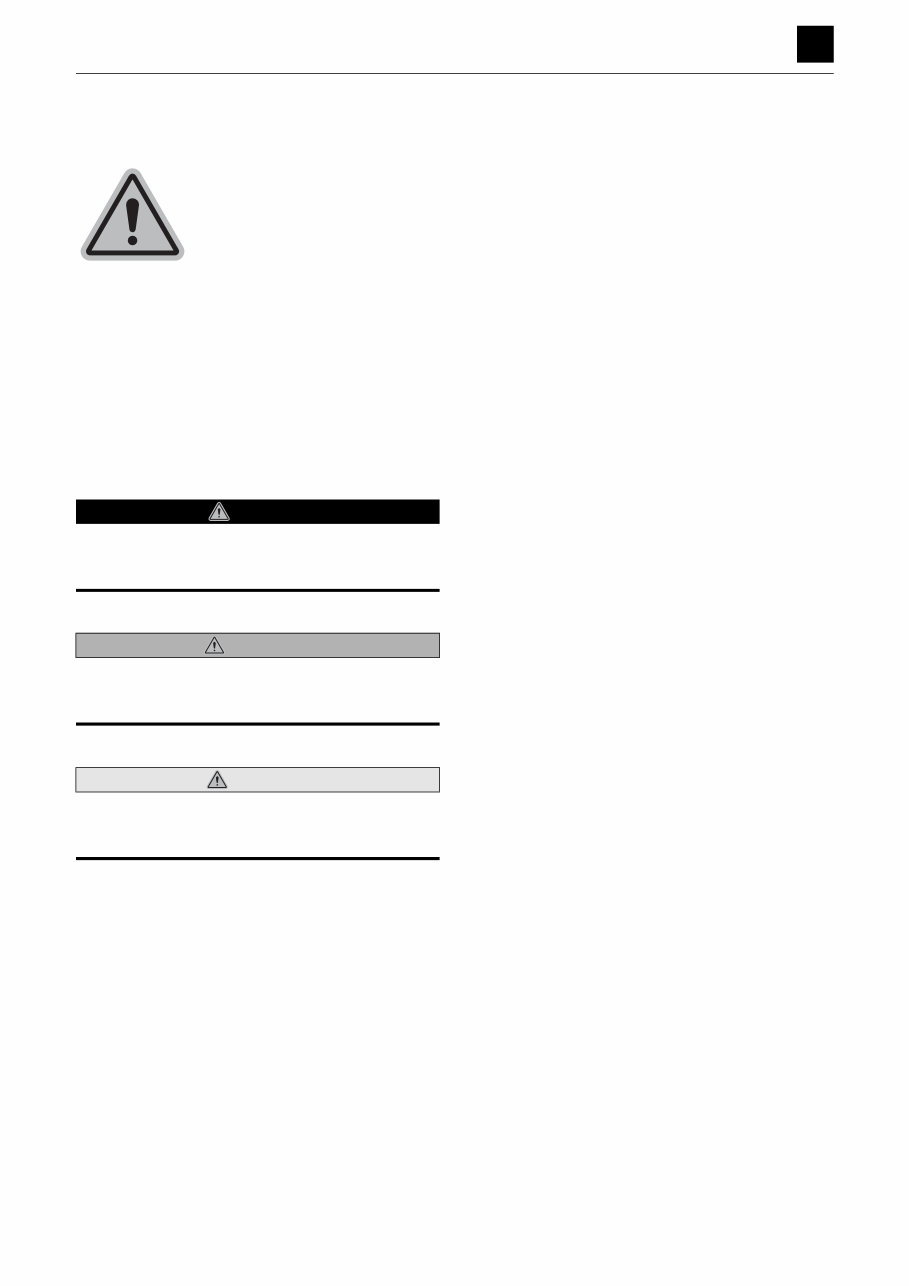
SAFETY SAFETY ALERT SYMBOL 1-2 1 SAFETY ALERT SYMBOL Safety label Safety labels are used to alert operators or other people exposed to the risks of injury or damage. There are the following three types of labels. Read the labels carefully as they are important for your safety. IMPORTANT: The word “IMPORTANT” is used to alert operators and maintenance personnel about situations which could result in damage to the machine and its com- ponents. This manual is intended for trained and qualified person- nel only. Warnings or cautions described in this manual do not necessarily cover all safety measures. It is also im- possible to cover all hazards and risks which may be as- sociated with the maintenance of the machine in every environment. For maintenance work, each person must take adequate safety precautions against possible haz- ards in the respective working environment. This symbol represents the safety alert. The message that follows the symbol contains important information re- garding human safety. Read and understand the message to avoid personal injury or death. DANGER The word “DANGER” indicates an imminently hazardous situation which, if not avoided, is likely to result in serious injury or death. WARNING The word “WARNING” indicates a potentially hazardous situation which, if not avoided, could result in serious inju- ry or death. CAUTION The word “CAUTION” indicates a potentially hazardous situation which, if not avoided, may result in minor or moderate injury.
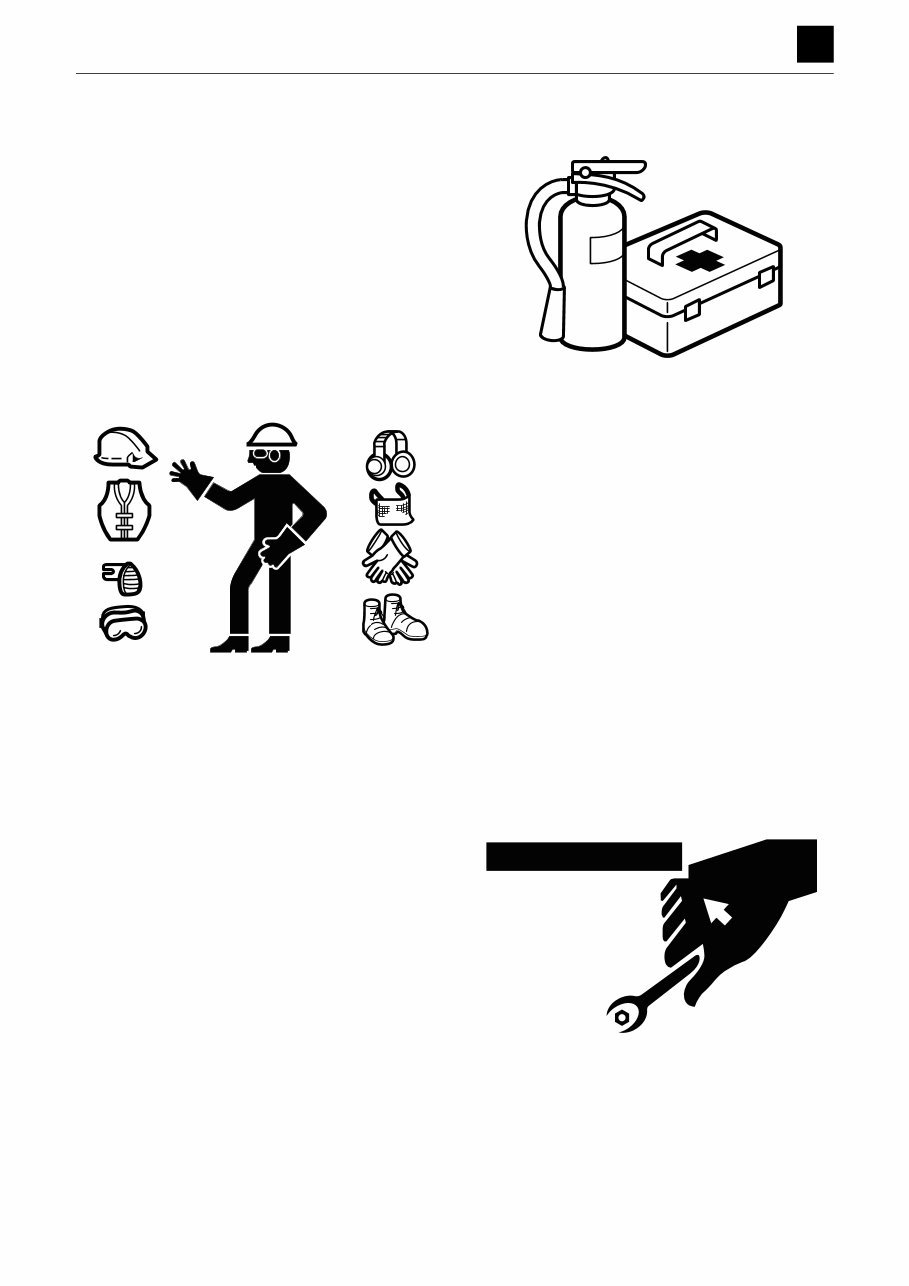
SAFETY SAFETY PRECAUTIONS 1-3 1 SAFETY PRECAUTIONS Observe all safety rules • Operation, inspection and maintenance of this ma- chine must be performed only by a trained and quali- fied person. • All rules, regulations, precautions and safety proce- dures must be understood and followed when per- forming operation, inspection and maintenance of this machine. • Do not perform any operation, inspection or mainte- nance of this machine when under the influence of al- cohol, drugs, medication, fatigue or insufficient sleep. Wear safe clothing and protective gear • Do not wear loose clothing or any accessory that can catch on the controls or the moving parts of the ma- chine. • Do not wear clothing stained with oil or grease that can easily catch fire. • Wear protective gear such as helmet, safety shoes, protective goggles, respirator, gloves and earmuffs, as appropriate, depending on the work involved. Es- pecially make sure to wear protective eye-wear and mask when working with a grinding/polishing/sanding machine, hammer or compressed air, as metal frag- ments or other objects could scatter in such an envi- ronment. • Wear hearing protectors when operating the machine. Loud and prolonged noise can damage or destroy your hearing. Install an extinguisher and a first aid kit • Install an extinguisher to fight a fire, and learn how to use it. • Prepare a first aid kit and keep it at a designated place. • Decide on the procedures to be used in case of fire or other hazards. • Decide on and take note of the contact(s) in case of emergency. Place a “Do not operate” alert sign Serious injury or death may result if an unauthorized per- son starts the engine or touches the controls during in- spection or maintenance. • Before performing maintenance, stop the engine, re- move the key and store it in a safe place. • Prominently display a “Do not operate” alert sign on places such as the starter switch and the control lever. Place another sign outside of the machine as neces- sary. Use the correct tools Do not use damaged or weakened tools or tools de- signed for other purposes. Use only the correct tools for the work involved. 1BAA01Z 1BAA02Z 1BAA03Z
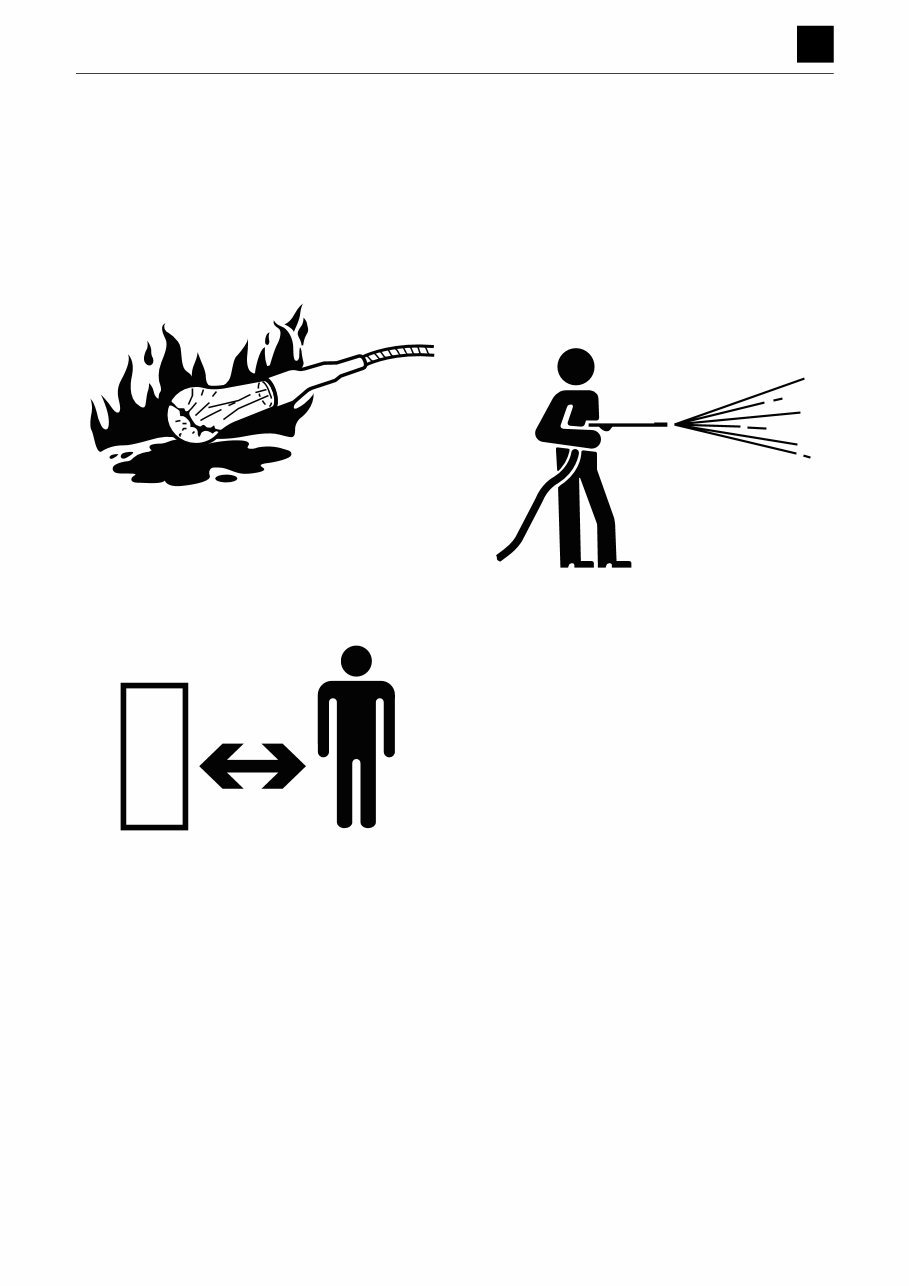
SAFETY SAFETY PRECAUTIONS 1-4 1 Regularly replace the safety-critical parts • Regularly replace fuel hoses to prevent a fire hazard. Hoses wear out over time, even if they do not show any symptom of wear. • Regardless of the replacement schedule, replace im- mediately if a symptom of wear is found. Explosionproof lighting To prevent an ignition or explosion, use explosion-proof lights when inspecting fuel, oil, coolant or battery fluid. Prohibit access by unauthorized persons Do not allow unauthorized personnel in the work area while working. Take particular care that no unauthorized person is present when grinding, welding or using a hammer. Prepare the work area • Select a level and firm ground on which to perform maintenance work. Make sure that the work area is light enough and well ventilated. • Straighten any obstacle or dangerous object, remove any spill of oil or grease and clean the work area. When the canopy is tilted up • If the canopy is raised or lowered while the engine is moving, the machine may accidentally start moving, resulting in severe injury to the maintenance person- nel. Make sure that the working equipment has been lowered to the ground and the engine has been turned off before raising/lowering the canopy. • When the canopy is tilted up, firmly secure the canopy with a stopper to prevent it from falling. Keep the machine clean • Clean the machine before performing maintenance and try to keep it clean. • Before washing, cover the electrical parts with vinyl to prevent water from entering, as this could cause a short-circuit or malfunction. Do not use water or steam to wash the battery, sensors, connectors or the opera- tor’s seat area. Stop the engine before performing maintenance Make sure the engine is stopped before starting inspec- tion or maintenance. If maintenance must be performed with the engine running, always work as a 2-person team, communicating with each other. • One of them must sit at the operator’s seat and stop the engine whenever necessary. He/she must take care not to touch the lever or pedal unless necessary. • The one who performs maintenance must make sure to keep his/her body or clothing away from the moving part of the machine. 1BAA04Z 1BAA05Z 1BAA06Z
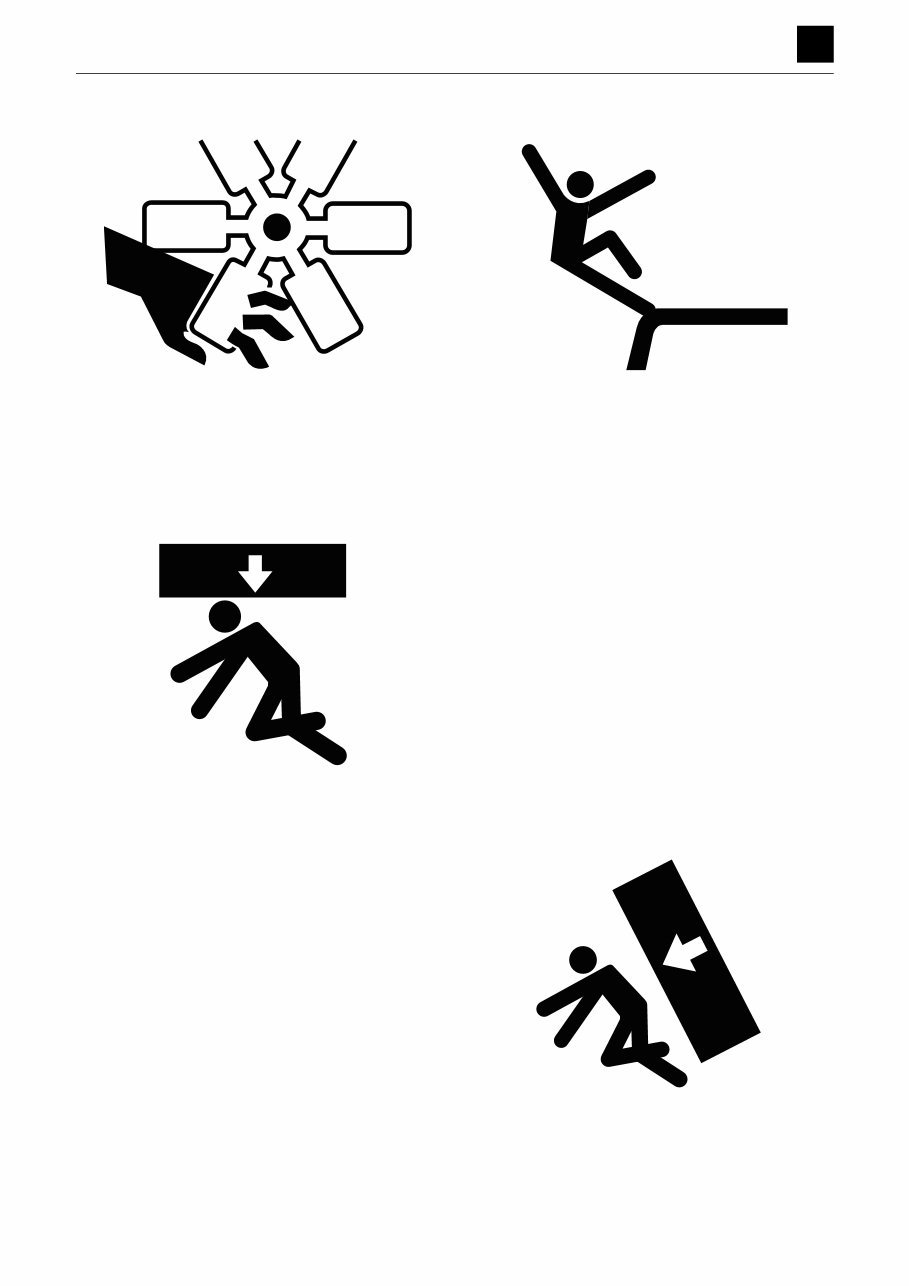
SAFETY SAFETY PRECAUTIONS 1-5 1 Keep clear of the moving fan and belt • Any object that can be easily caught in moving parts must be kept away. • If a hand or tool becomes trapped in the fan or fan belt, you could lose your finger. Do not touch the fan or belt while they are moving. When working under the machine • Before performing maintenance or repairs under the machine, set all movable equipment against the ground or in the lowermost position. • Place chocks under the crawler tracks to secure the machine. • If it is unavoidably necessary to work under the raised machine or working equipment, be sure to firmly sup- port it by using an arm stopper, wooden block, stand or safety brace. Never go under the raised machine or working equipment without such protection measures. When working on the machine • To prevent slipping/falling from machine, clear the footing and observe the following: a. Do not spill oil or grease on the machine. b. Keep the machine tidy and clean. c. Be careful when walking around the machine. • Never jump down from the machine. Climb up/down the ladder (steps) holding the handrail to support your weight in a three point secure stance (hand and feet). • Wear protective gear according to the work involved. Securing the working equipment When replacing/repairing the bucket teeth or side cutter, secure the relevant equipment to prevent any accidental movement. Secure the engine hood and guard when they are open Firmly secure the machine when the engine hood or guard is left open. Do not keep the hood or guard open on a windy day or if the machine is parked on a slope. Place heavy components in a stable position When it is necessary to temporally place a heavy compo- nent, such as the hoe attachment, on the ground during removal or installation, be sure to place it in a stable po- sition. 1BAA07Z 1BAA08Z 1BAA09Z 1BAA10Z
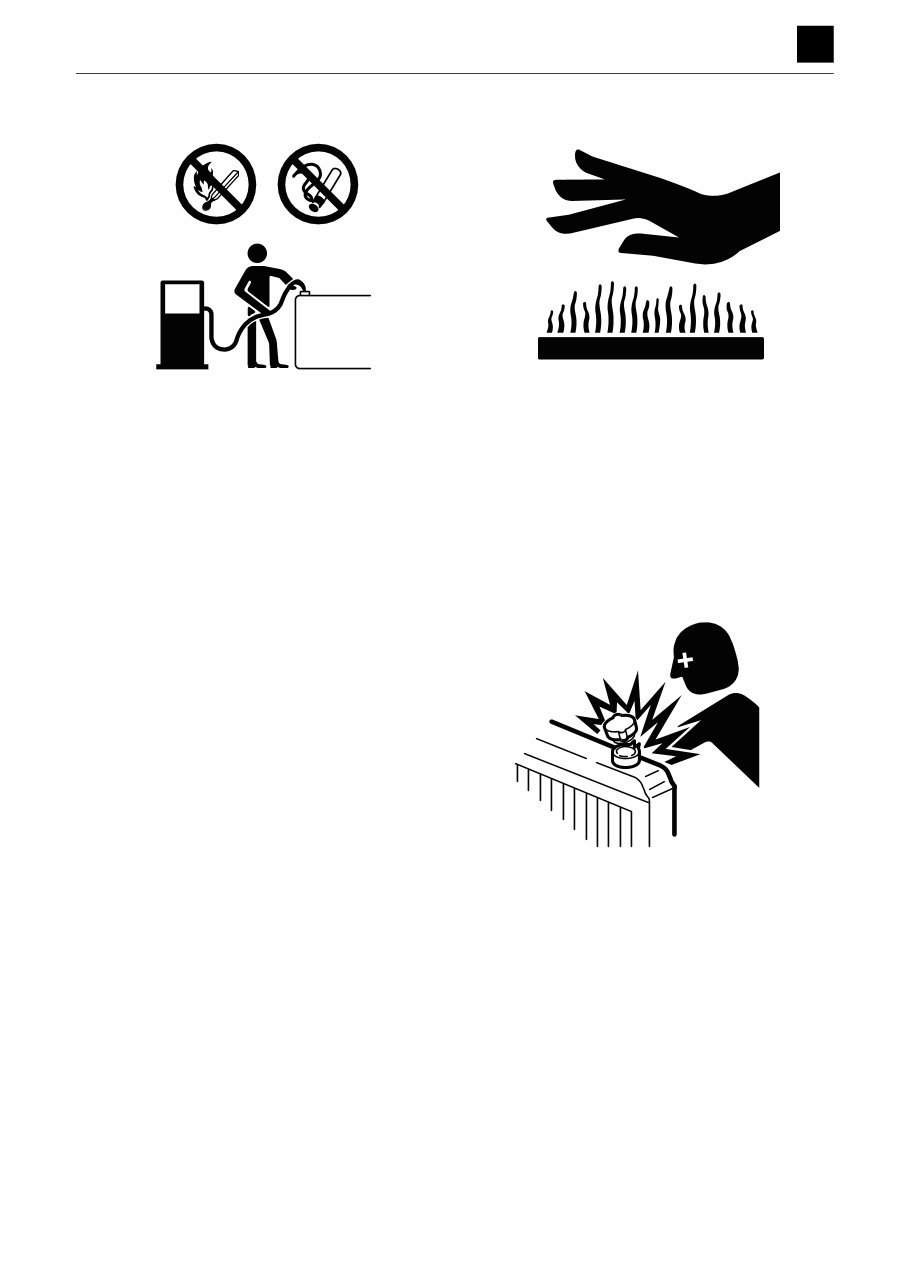
SAFETY SAFETY PRECAUTIONS 1-6 1 Caution when filling with fuel or oil • Keep away from heat, sparks and flame while filling with fuel or oil. • Never remove the fuel cap or try to fuel when the en- gine is running or still hot. • Maintain control of the fuel filler nozzle when filling the tank. • Refill with fuel or oil outdoors or in a well ventilated place, with the engine turned off. • Clean up spilled fuel or oil immediately. • Do not overfill the tank. • Firmly tighten the fuel cap or oil cap. If the fuel cap is lost, replace it only with the original manufacturer’s ap- proved cap. Use of a non-approved cap without prop- er venting may result in pressurization of the tank. • Never use fuel for cleaning. • Use the correct grade of fuel for the operating season. Handling of hoses Oil leak or fuel leak can cause a fire. • Do not twist, bend or hit the hoses. • Never use twisted, bent or cracked pipes, tubes or hoses; otherwise, they may burst. • Retighten loose connections. Be careful with hot and pressurized components Before performing inspection and maintenance, stop the engine and allow the machine to cool down. • The engine, muffler, radiator, hydraulic lines, sliding parts and many other parts of the machine are hot im- mediately after the engine is stopped. Wait until it cools before making any inspection or adjustments. • The engine coolant, hydraulic oil and other oils are also hot and under high pressure. Touching these liq- uids will cause burns. Handling of radiator Do not remove the radiator cap when the coolant is hot. Wait until it cools down, and then remove the radiator cap by loosening it slowly to release the internal pressure. 1BAA11Z 1BAA12Z 1BAA13Z
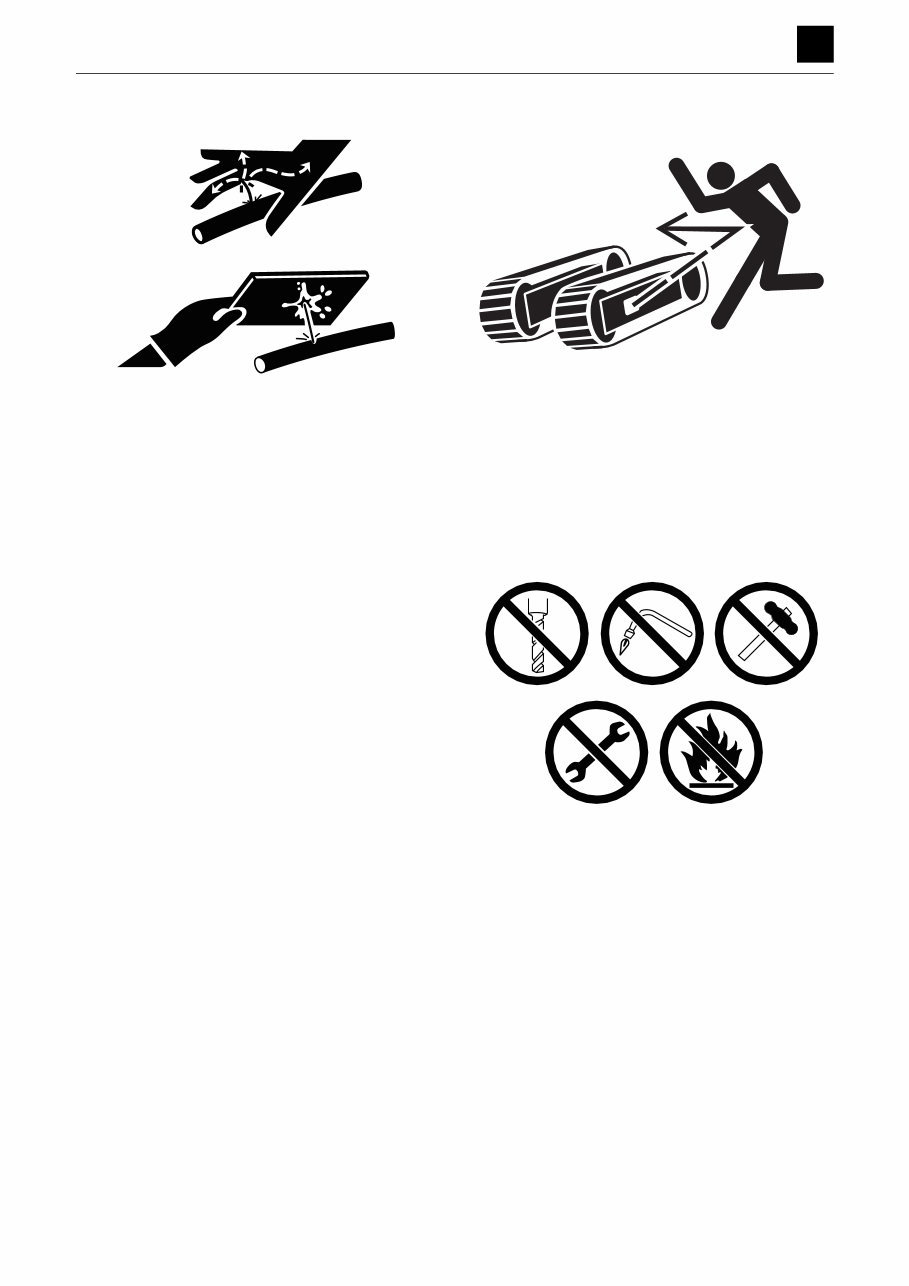
SAFETY SAFETY PRECAUTIONS 1-7 1 Be careful with oils under pressure Pressure is maintained in the hydraulic circuit long after the engine has been shut down. • Do not fill with, dispose of fuel/oil, or perform the in- spection and maintenance until the internal pressure is completely released. • The hydraulic oil escaping from a small hole can be hazardous if contacted. It is under high enough pres- sure to penetrate the skin or eyes and cause serious injury. If leak is suspected, protect your eyes and skin by wearing protective glasses and thick gloves to search for a leak. Also use a paperboard or plywood to keep your skin from oil spurting. If oil penetrates the skin, it must be surgically removed within a few hours by a doctor familiar with this type of injury. Release internal pressure before working on the hydraulic system Oil may spurt out if caps or filters are removed or pipes are disconnected before releasing the pressure in the hydraulic system. • Gradually loosen the vent plug to release the internal pressure of the hydraulic oil tank. • Move all the control levers and pedals several times in all directions to release the pressure from the circuit of the working equipment (for link type controls). • When removing plugs or screws, or when disconnect- ing hoses, stand to the side and loosen them slowly to gradually release the internal pressure before remov- ing. Be careful with grease under pressure In the track adjuster, the grease has been injected under high pressure. If the tension is adjusted without following the prescribed procedure, the grease discharge valve may fly off, resulting in injury. • Loosen the grease discharge valve slowly. • Do not put your face, arms, legs or body in front of the grease discharge valve. Handling of the accumulator Be sure to handle the high-pressure nitrogen gas en- closed in the accumulator with care according to proce- dure. If handled incorrectly, it could explode and cause serious injury. Strictly observe the following precautions: • Do not disassemble. • Do not allow flame near it or throw it into a fire. • Do not drill, weld or fuse. • Do not subject it to physical shock such as hitting, roll- ing or dropping. • Before disposing of the unit, the sealed gas must be drained. Contact your sales or service dealer for help with this. Disconnect the battery Disconnect the wiring from the both terminals (+ and -) on the battery before working on the electrical system or doing electric welding. Otherwise, short-circuit and ex- plosion of the battery can result. 1BAA14Z 1BAA15Z 1BAA16Z
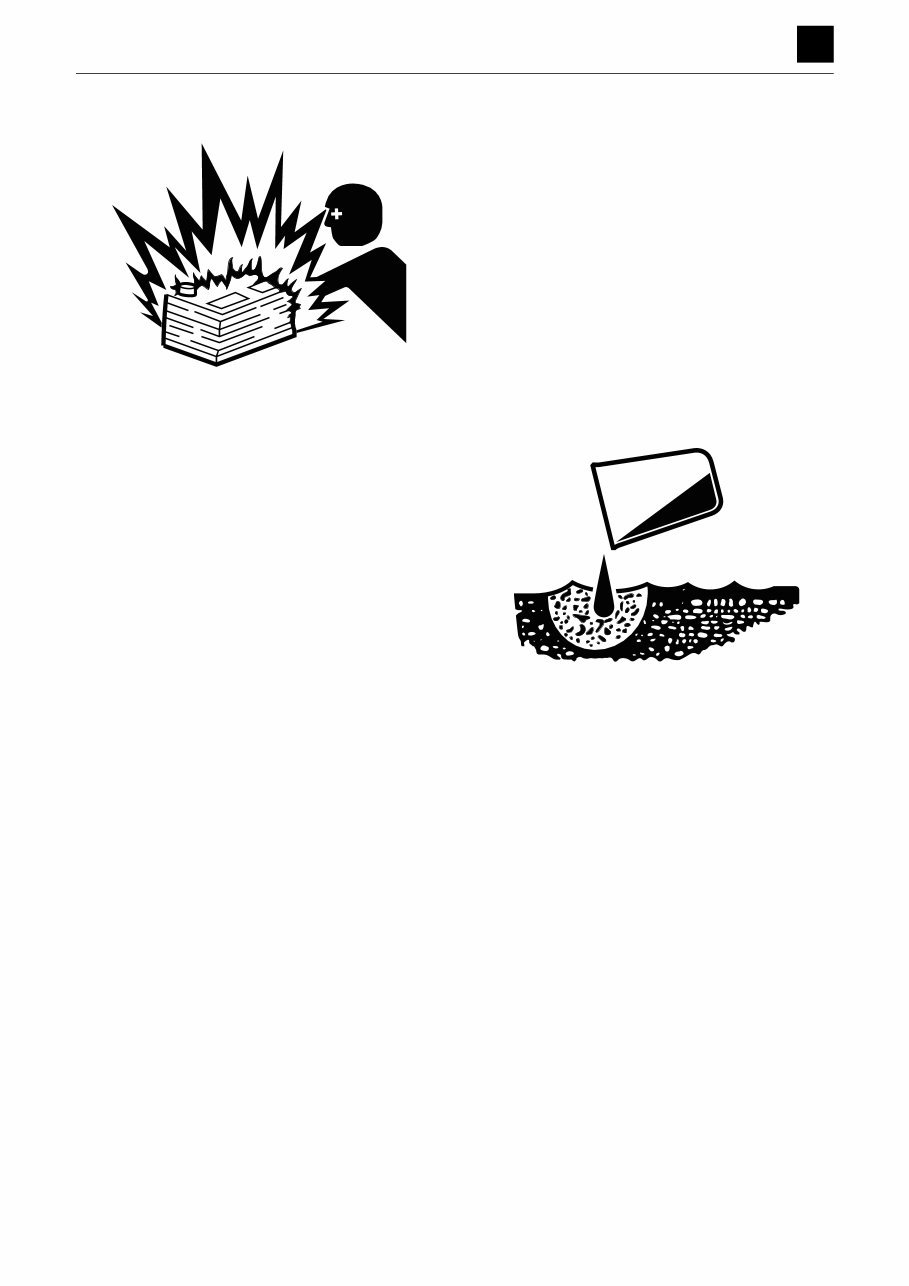
SAFETY SAFETY PRECAUTIONS 1-8 1 Use caution when handling batteries • Batteries contain sulfuric acid which will damage eyes or skin if contacted. • If eye contact occurs, flush immediately with clean water and get prompt medical attention. • If accidentally swallowed, drink large quantities of water or milk and call a physician immediately. • If acid contacts skin or clothing, wash off immedi- ately with a lot of water. • Wear protective glasses and gloves when working with batteries. • Batteries generate flammable hydrogen gas which may explode. Keep away from flame and sparks. • Do not use or charge the battery when the electrolyte level is lower than the lower limit: otherwise, it could cause an explosion. • Be sure to stop the engine by turning off the starter switch before inspecting or handling the battery. • Be careful not to let metal tools (or any metal objects) such as a hammer or spanner come into contact with the battery terminals. • When disconnecting the battery wiring, always discon- nect it from the earth side (-). When connecting, con- nect the earth side last. • Loose battery terminals may result in sparks. Be sure to fasten terminals tightly. • Make sure the battery caps are tightened securely. • Do not charge a battery or jump-start the engine if the battery is frozen; otherwise it may explode. Warm the frozen battery to 15°C (59°F) before use. Have a service agent repair welding cracks or other damage Ask a service agent to make any repairs that require welding. If the agent is unavailable, make sure the weld- ing is done by a qualified person in a properly equipped workplace. Checks after maintenance • Gradually raise the engine speed from low idle to max- imum and check that no oil or water is leaking from the parts serviced. • Move the controls and check that the machine is oper- ating properly. Disposing of wastes • Always collect oil that is drained from the machine in containers. Improperly disposed waste oil can cause environmental harm. • Follow appropriate laws and regulations when dispos- ing of harmful objects such as oil, fuel, coolant, sol- vent, filters and batteries. 1BAA17Z 1BAA18Z
You're Reading a Preview
What's Included?
Lifetime Access
Fast Download Speeds
Online & Offline Access
Access PDF Contents & Bookmarks
Full Search Facility
Print one or all pages of your manual
$36.99
TAKEUCHI TB216 MINI Excavator Service Repair Manual
This is a comprehensive Service Repair Manual for the TAKEUCHI TB216 MINI EXCAVATOR. It contains detailed information about maintenance, assembly, disassembly, and servicing of your TAKEUCHI MINI EXCAVATOR.
Serial No. 216100002
Contents:
SAFETY
SERVICE DATA
FUNCTION
DISASSEMBLY AND ASSEMBLY
TROUBLESHOOTING
ENGINE
Model Specification: TAKEUCHI TB216 MINI EXCAVATOR
Book No. CC7E000
Language: English
Total Pages: 276
File Format: PDF
Requirements: Adobe Reader
Compatible: All Versions of Windows & Mac
This manual contains information, data, specs, diagrams, actual real photo illustrations, and schemes specific to this model. It is invaluable for diagnosing, repairing, and maintaining TAKEUCHI machinery.
All manuals are compatible with Windows 7, Vista 32 and 64, XP, ME, 98, NT, 2000, and Mac.
Upon receipt of your payment, you can find, print, use, and then dispose of it. The manual includes numerous pictures and diagrams for easy reference. All pages are printable, allowing you to run off what you need and take it with you into the garage or workshop. By following the step-by-step instructions, you can save money by doing your own repairs, regardless of your skill level.
Recently Viewed
5,521,897Happy Clients
2,594,462eManuals
1,120,453Trusted Sellers
15Years in Business
Price:
Actual Price:
TAKEUCHI TB216 MINI Excavator Service Repair Manual







 Lifetime Access