




Section
1001
Safety, general information and standard torque data
84402832 NA - May 2011

84402832 NA - May 2011
CONTENTS
GENERAL INFORMATION........................................................................... 3
Safety ............................................................................................. 4
ROPS Judgment Method ............................................................................ 6
Standard Torque Data For Cap Screws And Nuts ...................................................... 10
84402832 NA - May 2011
1001-1
Copyright © 2011 CNH FRANCE S.A.
PRINTED IN FRANCE
84402832 NA - May 2011
1001-2
Copyright © 2011 CNH FRANCE S.A.
PRINTED IN FRANCE

Safety, general information and standard torque data
GENERAL INFORMATION
CLEANING
Clean all metal parts except bearings, in a suitable cleaning solvent or by steam cleaning.
Do not use caustic soda for steam cleaning.
After cleaning, dry and put oil on all parts.
Clean oil passages with compressed air.
Clean bearings in a suitable cleaning solvent,
dry the bearings completely and put oil on the bearings.
INSPECTION
Check all parts when the parts are disassembled.
Replace all parts that have wear or damage.
Small scoring or grooves can be removed with a hone or crocus cloth.
Complete a visual inspection for indications of wear, pitting and the replacement of parts necessary to prevent early
failures.
BEARINGS
Check bearings for easy action.
If bearings have a loose fit or rough action replace the bearing.
Wash bearings with a suitable cleaning solvent and permit to air dry.
DO NOT DRY BEARINGS WITH COMPRESSED AIR.
NEEDLE BEARINGS
Before you press needle bearings in a bore always remove any metal protrusions in the bore or edge of the bore.
Before you press bearings into position put petroleum jelly on the inside and outside diameter of the bearings.
GEARS
Check all gears for wear and damage.
Replace gears that have wear or damage.
Oil seals, O-rings and gaskets.
Always install new oil seals, O-rings and gaskets.
Put petroleum jelly on seals and O-rings.
SHAFTS
Check all shafts that have wear or damage.
Check the bearing and oil seal surfaces of the shafts for damage.
SERVICE PARTS
Always install genuine Case service parts.
When ordering refer to the
Parts Catalogue for the correct part number of the genuine Case replacement items.
Failures due to the use of other than genuine Case replacement parts are not covered by warranty.
LUBRICATION
Only use the oils and lubricants specified in the Operator’s or Service Manuals.
Failures due to the use of non-specified oils and lubricants are not covered by warranty.
84402832 NA - May 2011
1001-3
Safety, general information and standard torque data
Safety
This symbol means ATTENTION! BECOME ALERT! YOUR SAFETY IS INVOLVED.
The message that follows the symbol contains important information about safety.
Carefully read the message.
Make sure you fully understand the causes of possible injury or death.
To prevent injury always follow the Warning, Caution and Danger notes in this section and throughout the manual.
Put the warning tag shown below on the key for the key switch when servicing or repairing the machine.
One warning tag is supplied with each machine.
Additional tags are available from your service parts supplier.
WARNING
Read the operator's manual to familiarize yourself with the correct control functions.
WARNING
Operate the machine and equipment controls from the seat position only.
Any other method could result in serious injury.
WARNING
This is a one man machine, no riders allowed.
WARNING
Before starting engine, study Operator’s Manual safety messages.
Read all safety signs on machine.
Clear the area of other persons.
Learn and practice safe use of controls before operating.
It is your responsibility to understand and follow manufacturers instructions on machine operation, ser-
vice and to observe pertinent laws and regulations.
Operator's and Service Manuals may be obtained from your CASE dealer.
WARNING
If you wear clothing that is too loose or do not use the correct safety equipment for your job, you can
be injured.
Always wear clothing that will not catch on objects.
Extra safety equipment that can be required includes hard hat, safety shoes, ear protection, eye or face
protection, heavy gloves and reflector clothing.
WARNING
When working in the area of the fan belt with the engine running, avoid loose clothing if possible, and
use extreme caution.
WARNING
When doing checks and tests on the equipment hydraulics, follow the procedures as they are written.
DO NOT change the procedure.
WARNING
When putting the hydraulic cylinders on this machine through the necessary cycles to check operation
or to remove air from a circuit, make sure all people are out of the way.
WARNING
Use insulated gloves or mittens when working with hot parts.
84402832 NA - May 2011
1001-4
Safety, general information and standard torque data
WARNING
Lower all attachments to the ground or use stands to safely support the attachments before you do any
maintenance or service.
WARNING
Pin sized and smaller streams of hydraulic oil under pressure can penetrate the skin and result in serious
infection.
If hydraulic oil under pressure does penetrate the skin, seek medical treatment immediately.
Maintain all hoses and tubes in good condition.
Make sure all connections are tight.
Make a replacement of any tube or hose that is damaged or thought to be damaged.
DO NOT use your hand to check for leaks, use a piece of cardboard or wood.
WARNING
When removing hardened pins such as a pivot pin, or a hardened shaft, use a soft head (brass or bronze)
hammer or use a driver made from brass or bronze and a steel head hammer.
WARNING
When using a hammer to remove and install pivot pins or separate parts using compressed air or using
a grinder, wear eye protection that completely encloses the eyes (approved goggles or other approved
eye protectors).
WARNING
Use suitable floor (service) jacks or chain hoist to raise wheels or tracks off the floor.
Always block machine in place with suitable safety stands.
WARNING
When servicing or repairing the machine, keep the shop floor and operator's compartment and steps
free of oil, water, grease, tools, etc.
Use an oil absorbing material and/or shop cloths as required.
Use safe practices at all times.
WARNING
Some components of this machine are very heavy.
Use suitable lifting equipment or additional help as instructed in this Service Manual.
WARNING
Engine exhaust fumes can cause death.
If it is necessary to start the engine in a closed place, remove the exhaust fumes from the area with an
exhaust pipe extension.
Open the doors and get outside air into the area.
WARNING
When the battery electrolyte is frozen, the battery can explode if (1), you try to charge the battery, or (2),
you try to jump start and run the engine.
To prevent the battery electrolyte from freezing, try to keep the battery at full charge.
If you do not follow these instructions, you or others in the area can be injured.
84402832 NA - May 2011
1001-5
Safety, general information and standard torque data
ROPS Judgment Method
1. Purpose
Check against the ROPS judgment criteria to judge whether the machine satisfies the ROPS criteria or not.
The weight and boom of the machine greatly effects whether the ROPS judgment criteria is satisfied or not.
The ROPS test assumes that the weight being used is the weight of the machine when the maximum number of
selectable options are mounted (as of 2009).
However, depending on the derivative machinery or the order details, the weight and boom position may differ
from the assumed weight or position.
2. Criteria for judging whether a machine satisfies the ROPS criteria
1) Weight
The weight must not be over the weight shown below for each class.
If the weight is exceeded, there is a danger that the cab could be damaged and the operator could die or
sustain a serious injury when the machine falls over.
If the weight exceeds the stipulated weight, the machine will not satisfy the ROPS criteria.
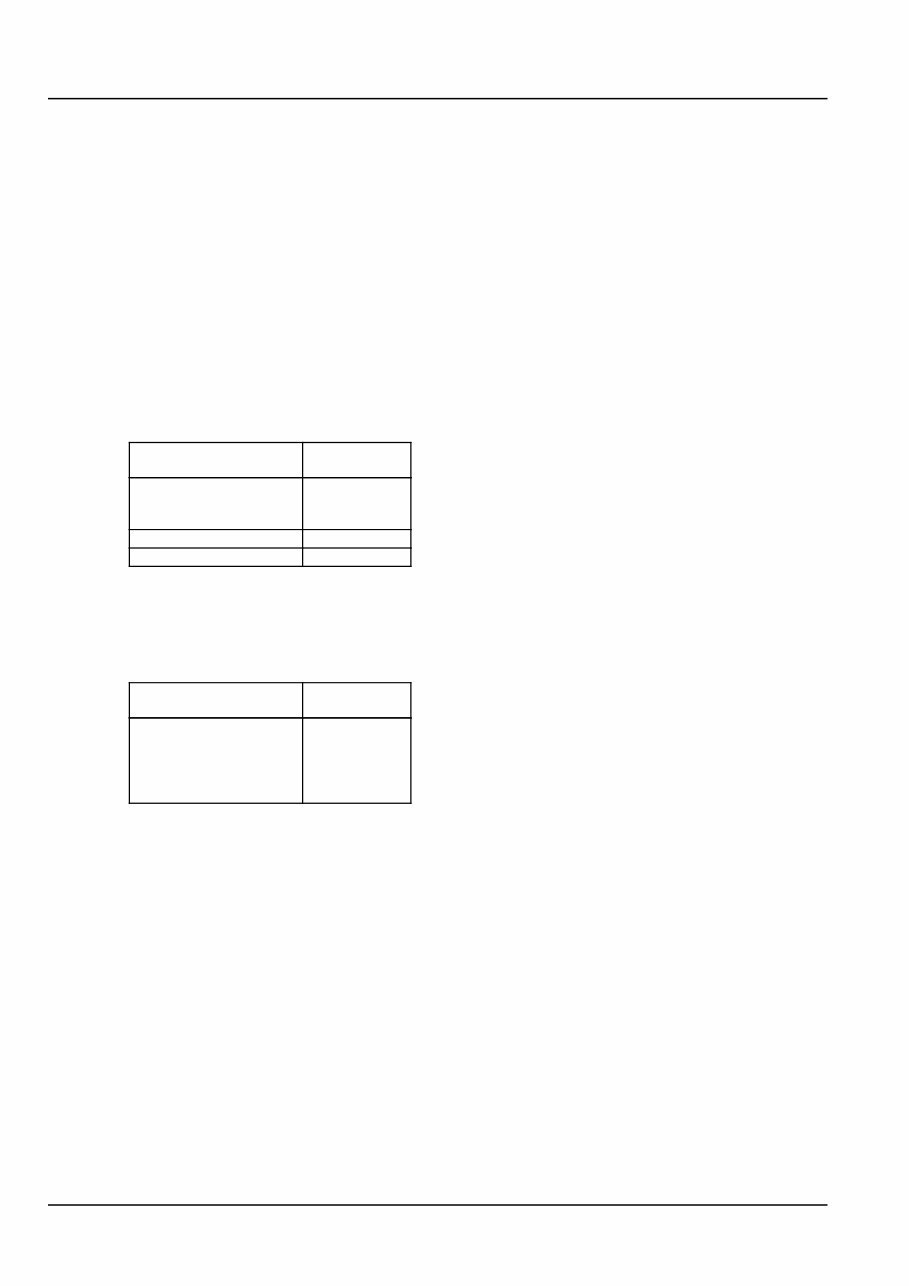
• Weight (C series model)
To satisfy the ROPS criteria, the weight must not be over the indicated weight. (The below weights are
the weights indicated on the nameplate within the ROPS cab)
Machine body total
weight
Class
31000 kg or less
CX250C
CX250CLR
CX300C
40000 kg or less CX370C
50000 kg or less CX470C
* The ROPS test assumes that the CX470C has a cage guard (alone).
• Weight (B series model)
To satisfy the ROPS criteria, the weight must not be over the indicated weight. (The below weights are
the weights indicated on the nameplate within the ROPS cab)
Machine body total
weight
Class
25000 kg or less
CX130B
CX160B
CX180B
CX210B
CX230B
84402832 NA - May 2011
1001-6
Safety, general information and standard torque data
2) Boom position
WARNING
• If the machine has been modified so that the boom position has been lowered, the machine
will not satisfy the ROPS criteria.
• It is necessary to consult with our company if it is possible that the boom's position has been
lowered by modification.
• The extent to which a boom position has moved cannot be determined in the same way for
all machines.
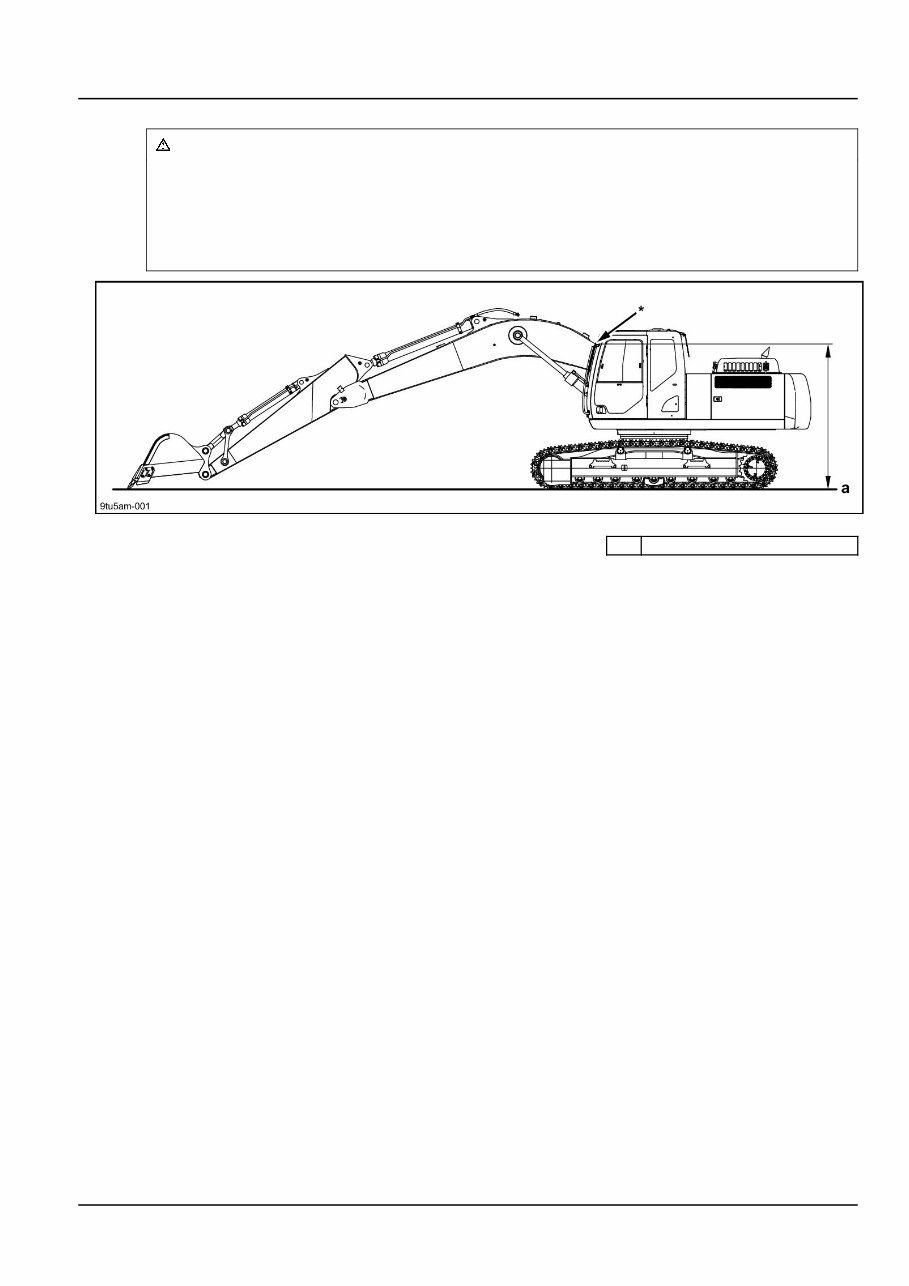
a Ground point
With the tip of the bucket in contact with the ground surface at maximum work radius, if the position (* in the
diagram) that overlaps with the cab when viewed from the side is markedly lower than that of a standard
machine (standard arm), the machine will not satisfy the ROPS criteria.
Also, with a machine body with a cab mounted that can withstand up to 31 tons, the effect of mounting a
24 ton machine, which is near the restriction weight, and a 21 ton machine to the same cab will not be the
same.
84402832 NA - May 2011
1001-7
You're Reading a Preview
What's Included?
 Lifetime Access
Fast Download Speeds
Online & Offline Access
Access PDF Contents & Bookmarks
Full Search Facility
Print one or all pages of your manual
$71.99
Case CX350C Tier 4 Crawler Excavator Service Manual
Viewed 89 Times Today

What's Included?
Lifetime Access
Fast Download Speeds
Online & Offline Access
Access PDF Contents & Bookmarks
Full Search Facility
Print one or all pages of your manual
$71.99

Secure transaction
What's Included?
Lifetime Access
Fast Download Speeds
Online & Offline Access
Access PDF Contents & Bookmarks
Full Search Facility
Print one or all pages of your manual
Description
The Case CX350C Tier 4 Crawler Excavator Service Manual, with part number 84402832, provides essential technical information for the maintenance and repair of the excavator. It includes safety guidelines, general information, and standard torque data necessary for both professional mechanics and DIY enthusiasts.
- Removal and Installation of Engine Assembly
- Removal and Installation of Fuel Tank
- Electrical and Engine Basic Functions
- Removal and Installation of Shoe Assembly
- Removal and Installation of Travel Motor
- Overall view
- Removal and Installation of Counterweight
- Electrical Schematics
- Hydraulic Schematic
- Specifications
This manual, available in English, consists of 1950 pages and is compatible with both Windows and Mac platforms. It is a valuable resource for understanding the intricacies of the excavator's components and systems.


