1 CONTENT 1 GENERAL INSTRUCTIONS 3 INTRODUCTION 3 SAFETY INSTRUCTIONS 4 ENVIRONMENTAL MEASURES AND HEALTH PRECAUTIONS 7 PRODUCT IDENTIFICATION 9 TORQUES SPECIFICATIONS 12 SERVICING INSTRUCTIONS 15 HOURMETER 15 SERVICING INTERVAL 16 FLUIDS AND LUBRICANTS 18 FLUIDS AND LUBRICANT CAPACITES AND SPECIFICATIONS 21 2 DESCRIPTION OF THE MACHINE 23 3 THE ENGINE 37 REMOVAL OF THE ENGINE FROM THE MACHINE WITH THE TRAVEL PUMP 39 4 DRUM 69 REMOVAL OF THE HYDRAULIC MOTOR OF VIBRATION 69 REMOVAL OF THE HYDRAULIC MOTOR OF TRAVEL 81 REPLACEMENT OF RUBBERIZED METAL PIECES ON THE DRUM 107 REPLACEMENT OF THE SEAL ON THE DAMPING PLATE ON THE MACHINE 139 REMOVAL OF DRUMS FROM THE FRAME OF THE MACHINE 153 REMOVAL OF THE ECCENTRIC FROM THE DRUM 195 INSTALLATION OF THE DRUM ON THE FRAME OF THE MACHINE 207 5 STEERING JOINT 217 REMOVAL OF THE STEERING JOINT FROM THE MACHINE 217 REMOVAL OF THE STEERING JOINT 231 INSTALLATION OF THE STEERING JOINT 241 6 HYDRAULICS 253 REMOVAL OF THE TRAVEL PUMP AND THE CLUTCH 253 REMOVAL OF THE PUMPS OF VIBRATION AND OF STEERING 271 REMOVAL OF THE OIL COOLER 281 REMOVAL OF STEERING HYDRAULIC MOTOR FROM THE MACHINE 295 REMOVAL OF THE STEERING HYDRAULIC MOTOR 303 INSTALLATION OF THE STEERING HYDRAULIC MOTOR 309 REMOVAL OF THE SERVOSTEERING 313 REMOVAL OF THE HYDRAULIC TANK 319 REPLACEMENT OF THE ELECTROMAGNET VALVE OF VIBRATION ON THE MACHINE 331 REMOVAL OF THE HYDRAULIC LOOP FILTER 335 REPLACEMENT OF FILTER CARTRIDGE AND OIL 339 DISASSEMBLY OF SUCTION STRAINER 345 SCHEMATICS OF THE HYDRAULIC LOOP 349 HYDRAULIC OF DRIVE 352 LINEAR VALVES 354 HYDRAULIC OF VIBRATION 355 HYDRAULIC OF STEERING 358 FLUSHING AND DRAIN 360 7 CONTROL OF GAS 361 REMOVAL OF BOWDEN CABLE OF GAS CONTROL 361 REMOVAL OF TRAVEL LEVER ON THE CONTROL PANEL 365 REMOVAL OF TRAVEL PULL ROD 373 8 PLATFORM 383 REMOVAL OF THE PLATFORM 383 REMOVAL OF RUBBERIZED METAL PIECES OF THE PLATFORM 389 DV201 - DV202 - DV204 Vibratory Rollers
2 9 THE SEAT 397 REMOVAL OF THE SWITCH ON THE SEAT 397 10 THE WATER TANK 405 REMOVAL OF THE FRONT TANK FROM THE FRAME OF THE MACHINE 405 REMOVAL OF THE REAR TANK FROM THE FRAME OF THE MACHINE 409 11 SPRINKLING 415 REMOVAL OF THE SPRINKLING PUMP 415 12 ROPS FRAME 419 REMOVAL OF THE PROTECTIVE ROPS FRAME 419 13 ELECTRICAL WIRING 423 FUSE BOX 425 BATTERIES 427 EXCHANGE BULB 429 ALTERNATOR 435 STARTER 439 SCHEME OF THE ELECTRICAL INSTALLATION 443 FONCTIONAL DESCRIPTION 448 14 APPENDICES 453 TEST POSTS 453 TOWING THE MACHINE 455 TROUBLESHOOTING 463 LIST FIXTURES 483 CONTENT DV201 - DV202 - DV204 Vibratory Rollers
1 - GENERAL INSTRUCTIONS 3 INTRODUCTION This series of Vibratory Rollers is suitable for compac- tion of all kinds of ground and for large and average- scale site pretaration in highway construction (construc- tion of highways, railways, airports), in hydro-engineer- ing (construction of dams), in building construction (industrial areas, ports), and the like. These machines are manufactured in compliance with the latest developments and standards, which ensure their safe function. If the machine is used incorrectly, by untrained opera- tors or for other purposes than those stipulated within, there is a danger of an accident or damage to the equipment or injury to personnel. The main purpose of this manual is to give the informa- tion necessary for carrying out assembly and disas- sembly of the machine as well as service repairs of main assemblies of the equipment. It contains technical and installation data, instructions on how to adjust the machine and how to use special tools, fixtures and aids. The manufacturer continuously seeks to make product improvements on the basis of experience and latest developments in the field. For this reason, the manufacturer may make some changes in drawings, descriptions and designs in this manual.
1 - GENERAL INSTRUCTIONS 4 SAFETY INSTRUCTIONS GENERAL SAFETY INSTRUCTIONS The following safety instructions must be observed by ALL personnel repairing the machine. 1. Repairs may be carried out by skilled, trained and experienced personnel only. 2. When performing repairs, always use our service manual. Special instructions for the assembly work are given in individual chapters of this manual. 3. Before putting the machine into operation familiar- ize yourselves with the machine controls as explained in the “Operator’s Manual” and make sure that you are completely familiar with the machine. 4. Do not use the machine if you do not fully under- stand all controls and until this know how the machine works. 5. Familiarize yourself with the area where you will work. 6. Do not carry out any redesign work or modifica- tions on the machine because you could compro- mise the safety of the equipment. 7. Original parts and accessories have been designed especially for this machine. 8. Installation and use of spare parts not supplied by the manufacturer of the machine or not authorized by them can have negative effects on operational characteristics and safe operation of the machine. REPAIRING AND INSPECTING THE MACHINE 1. Wear working clothes and boots. 2. Use gloves when handling oils, fuel or coolant. 3. Protect your eyes with a full face shield when han- dling the battery. 4. Place the equipment on a flat and firm surface before starting repair. Secure the machine to pre- vent spontaneous movement. 5. Secure the frame of the machine and the drum to prevent rotation using a locking pin and a draw bar. 6. Before starting work remove the starter switch key, disconnect the batteries and let hot parts cool down. 7. Attach a "Do not operate" warning note to the steering wheel and leave it there for the duration of the service work. 8. Wash the equipment thoroughly. If you use steam, do not expose electrical components and insula- tion directly to the steam, otherwise cover them beforehand. 9. Keep all parts absolutely clean when dismantling, mounting, and servicing each assembly. Protect removed parts from getting soiled. 10. Clean the surface of dismantled parts and do the necessary to ensure adequately dust-free working conditions and a suitable storage area. 11. Be careful when handling cleaning agents. Do not use fuel or other easy inflammable materials for cleaning. 12. Dry the cleaned parts and immediately cover with anti-corrosive protective oil, never install corroded parts. 13. Tools, hoists, safety equipment on chains, and other additional items must be serviceable and in good condition. 14. Use hoists and fasteners (ropes, chains) that have sufficient lifting capacity and are in good condition. 15. Make sure that there is enough fresh air supply when starting up the equipment in an enclosed area.
1 - GENERAL INSTRUCTIONS 5 16. Before operating the equipment make sure there is nobody on the machine or close by. Starting up of the machine must always be announced with an audible alarm, also after any pause in operation before the equipment is restarted. Those present on the machine and dangerously close by must leave the machine after the alarm has been sounded. 17. Do not adjust moving equipment. 18. When working (adjusting) on a running engine, avoid touching hot and rotating parts. During work on a running engine, another person must be present that can easily access the emergency switch and must be in contact at all times with the person performing the adjustment, to be able to switch off the engine immediately when necessary. 19. Use only approved makes of motor, gear and hydraulic oil and coolant. WORKING ON HYDRAULIC CIRCUITS 1. Make sure that no hydraulic circuit is under pres- sure before opening it. Hydraulic oil leaks under pressure may penetrate your skin and cause seri- ous injury. 2. Mark all parts, hoses and pipes before removing them. 3. Do not operate hydraulic pumps and hydraulic motors without oil. 4. There is danger of being scalded when handling hot oil. 5. Do not warm oil to temperatures above 160°C (320°F), oil or its fumes may ignite. 6. For cleaning and wiping hydraulic parts use lint free material. 7. When reassembling parts use hydraulic oil, not grease, as a lubricant. 8. Clean screws and bolts carefully before installa- tion, wash hoses and pipes and blow through them using compressed air. 9. Always use new seals and packing in sealing areas during re-installation. 10. Fill new components with hydraulic oil before installation. 11. Rinse the hydraulic circuit after replacing a hydrau- lic component; clean the hydraulic reservoir as well. 12. Replace the oil filter cartridge. 13. Fill the hydraulic circuit with clean oil of the recom- mended viscosity, but only when the engine has been stopped. 14. Wipe off excess oil. 15. Check connections for tightness and any oil leaks, before applying pressure to the system. 16. Do not adjust safety valves. 17. After all work has been finished, recheck all con- nections and replace all safety items. 18. After finishing the work put all protective devices back in place. 19. After putting the machine into operation. • Check the level in the hydraulic reservoir. • Check the output pressure of hydraulic pumps if they have been replaced as well as safety valve pressure. Carry out the measurements at a tem- perature of 40°C (104°F). WORKING ON THE FUEL SYSTEM Mixtures of gasoline and diesel (winter fuel) are as inflammable as gasoline. 1. Do not refuel in closed areas. 2. Wipe off excess fuel. 3. Do not smoke when working on the fuel system and do not use open frames. There is a danger of fire.
1 - GENERAL INSTRUCTIONS 6 WORKING ON ELECTRICAL WIRING 1. Disconnect the battery when carrying out any repairs on the charging circuit to avoid accidental short-circuits. 2. When dismantling, first disconnect the cable from the negative pole (-), then the cable from the posi- tive one (+). 3. Do not disconnect batteries when the engine is running. 4. Connect the “minus” pole of the battery to the chassis and the “plus” pole to terminal “B+” from the alternator. Opposite connection will cause the whole semi-conductor device to be destroyed. 5. When starting with an auxiliary external supply, do not disconnect the supply before is the battery the machine is charging. Make sure of the starting volt- age of the auxiliary external supply, (for 24 V). 6. Do not put the alternator into no-load operation, i.e. with the wire disconnected from the “+” terminal and connected to the “D+” terminal. 7. Do not check the presence of voltage in the wire by sparking it on the chassis of the equipment. 8. Do not do anything that produces sparks. 9. When handling batteries, use protective rubber gloves and full face protection. 10. Protect your skin and clothes from stains caused by electrolyte or lead particles. 11. If electrolyte gets into your eyes, rinse them with running water for 15 minutes. Then see a doctor as soon as possible. 12. When electrolyte stains your skin or clothes, take off your clothes, wash the stained area with soapy water or with a solution of baking soda and water and see a doctor. 13. In the event of accidentally swallowing electrolyte, drink as much milk or water as possible or a solu- tion of milk of magnesia and immediately see a doctor. 14. Never pour distilled water into the cells unless the operation of the machine or charging outside the machine follows. In this case, the battery would discharge rapidly. 15. Never add sulfuric acid (H 2 SO 4 ). 16. Do not overturn the batteries because electrolyte could run out of the air vents in the battery. 17. If acid (electrolyte) is spilled, rinse the area with water and neutralize it with lime. 18. When the batteries are being charged, hydrogen is released and, mixed with air, makes an explosive, easily combustible mixture. Do not use open flames and do not smoke. WELDING ON THE MACHINE Before starting arc welding, disconnect all parts with semi-conductors from electrical wiring, i.e.: • engine alternator, • hourmeter, • control unit under the instrument panel, • ground both the supply and the machine that is being repaired, • protect the supply point against moisture, • place the ground terminal close to the welded joint, • when parts are welded or when the machine is in the suspended position, insulate the point of current transfer to avoid current entering the hoist, or use a non-conducting rope. SEALS 1. Always use new seals. 2. You can obtain seals kits in spare part form. HARDWARE TORQUE 1. Use a torque wrench to obtain correct hardware torque. 2. Fastening screw and nut are tightened according to the table. 3. Screw grades are shown normally on the screw head. 4. Hardware torque is given in the tables. 5. Threaded connections for hydraulics are tightened as specified in the tables. 6. The given hardware torque specifications are valid for dry screw threads. 7. Use new self-locking nuts only.
1 - GENERAL INSTRUCTIONS 7 ENVIRONMENTAL MEASURES AND HEALTH PRECAUTIONS When repairing the machine, observe the general prin- ciples of health protection and environment protection, along with all laws, regulations, and guidelines related to these problems, as applicable to the territory where the machine is used. HYGIENE 1. Oil products, coolants, battery acids, and paints including thinners can be harmful to your health and they can cause serious injury. 2. It is necessary to always observe safety and health instructions enclosed with products and use per- sonal protective aids when handling them. 3. Personnel in contact with these products during servicing must observe the general principles relat- ing to conservation and keep in mind safety and health guidelines as given by manufacturers of such products, especially the following: • protect the eyes and skin when working with batteries, • protect the skin when handling oil products, paint, and coolants, • workers should wash their hands properly after finishing their work and apply proper healing hand lotions, • when working with the cooling system it is nec- essary to observe the instructions in the manu- als supplied with the machine. 4. Oil products, coolants, batteries, and paint includ- ing organic thinners as well as cleaners and pre- servatives should be always stored in their original packaging and properly labeled. Do not store such products in unlabeled bottles and other containers because there is a danger of confusion. Confusion with food or drinks is especially dangerous. 5. If your skin or eyes are accidentally splashed or fumes inhaled, apply first aid immediately. In case of accidental consumption of such products see your doctor immediately. ECOLOGICAL PRECAUTIONS 1. Contents of machine systems and some parts of the machine, when no longer in use, represent great risks to the environment. 2. The following products especially belong to this category: • both organic and synthetic lubricating materials, oils and fuel, • coolants, • battery acids and batteries themselves, • cleaning agents and preservatives, • all removed filters and filter elements, • all used and discarded hydraulic and fuel hoses, rubber - metals and the other elements exposed to the above products. 3. The above parts and materials must be handled, after they had been discarded, in accordance with prevailing national/regional regulations on environ- mental protection and in conformance with direc- tives relating to health conservation. 4. When hydraulic liquids, fuel, cooling systems and their components are being removed it is neces- sary to prevent spillage on the ground by using retaining vessels and by plugging all openings. 5. In the event of leakage, the contaminated area- must be immediately dried with sawdust, or similar absorbing material. 6. Contaminated dirt must be removed to prevent fur- ther contamination. The soil and absorbing mate- rial must be disposed of safely.
1 - GENERAL INSTRUCTIONS 8 FIRE PRECAUTIONS 1. From a fire risk point of view, the flammable liquids used are divided into the following risk classes II. Risk class - oil IV. Risk class - mineral oils - lubricants - anti-freeze 2. The place where oil is being changed must not be situated in an area where there is danger of explo- sions or fire. 3. Notices showing that smoking and open flames are not allowed must be installed there. 4. The receptacles used to catch drained flammable liquids must be of adequate capacity. 5. Portable fire extinguishers must be available. 6. Oil and oil products should be handled in special containers, e.g.: metal barrels, drums or cans. 7. Liquid containers must be properly shut and sealed when stored. 8. The containers should have an air vent. They should be always be stored with the air vent up and there must be measures taken to prevent leakage. 9. The containers must be labeled with indelible inscriptions showing their contents and flammabil- ity class.
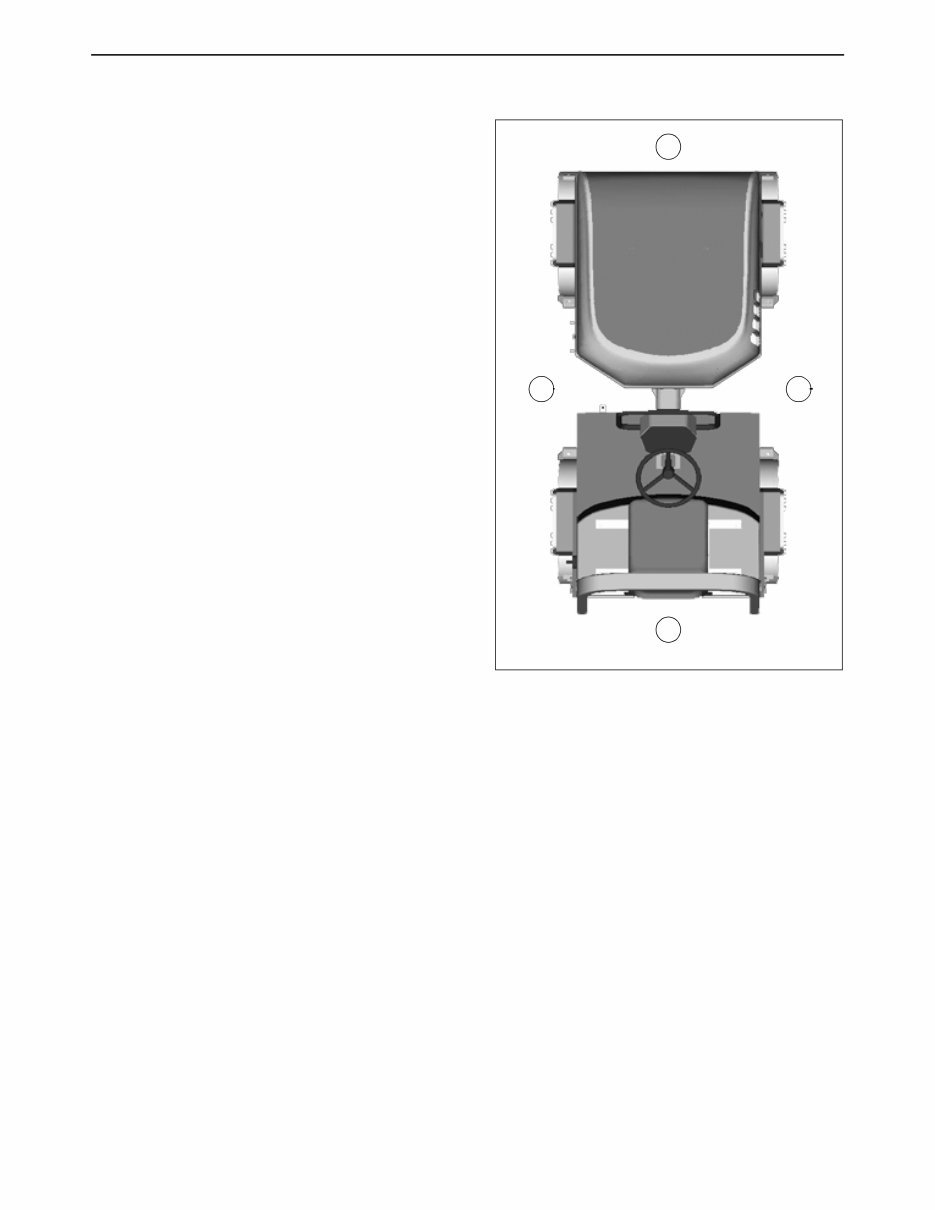
1 - GENERAL INSTRUCTIONS 9 RIGHT, LEFT, FRONT AND REAR OF THE MACHINE As used in this manual, the terms "right", "left", "front" and "rear" indicate the sides of the machine as seen from the operator's seat. A. FRONT B. REAR C. RIGHT-HAND SIDE D. LEFT-HAND SIDE A B C D CF02F552 1
The Case DV201, DV202, DV204 Compactors Repair Manual is an essential guide for repairing these compactors, suitable for both professional mechanics and DIY enthusiasts. It provides detailed instructions for removal, installation, disassembly, and assembly of the equipment.
Key features of this repair manual include an electrical wiring diagram for easy troubleshooting, a hydraulic schematic for understanding the hydraulic system, and a diagnostic section for quick problem resolution. Additionally, the specification section offers all necessary information about the compactors, ensuring correct and efficient repairs.
For added convenience, torque values are included to ensure proper tightening of components.











 Lifetime Access




