1999-2000 ENGINES 3.0L V6 ENGINE IDENTIFICATION Vehicle Identification Number (VIN) is located on top left end of instrument panel, visible through windshield. Engine code is eighth character from left of VIN. See ENGINE IDENTIFICATION CODES table. ENGINE IDENTIFICATION CODES ADJUSTMENTS VALVE CLEARANCE ADJUSTMENT Engines are equipped with hydraulic valve lifters. No adjustment is required. TROUBLE SHOOTING To trouble shoot mechanical engine components, see appropriate table in TROUBLE SHOOTING article in GENERAL INFORMATION. REMOVAL & INSTALLATION FUEL PRESSURE RELEASE NOTE: For repair procedures not covered in this article, see ENGINE OVERHAUL PROCEDURES article in GENERAL INFORMATION. Application Code 3.0L Z CAUTION: When battery is disconnected, vehicle computer and memory systems may lose memory data. Driveability problems may exist until computer systems have completed a relearn cycle. See appropriate article under COMPUTER RELEARN PROCEDURES in GENERAL INFORMATION. NOTE: For reassembly reference, label all electrical connectors, vacuum hoses and fuel lines before removal. Also place mating marks on engine hood and other major assemblies before removal. WARNING: Residual fuel pressure may be present in fuel system when engine is off. To avoid fire hazard, wrap a shop towel around fuel fitting before disconnecting fuel lines. 2000 Saab 9-5 1999-2000 ENGINES 3.0L V6 2000 Saab 9-5 1999-2000 ENGINES 3.0L V6
To release fuel pressure, disconnect fuel lines at fuel pressure regulator and fuel injection manifold. ENGINE Removal 1. Remove engine covers. Remove battery. Unhook front electrical distribution box from battery shelf. Disconnect cruise control cable from throttle lever. Remove positive terminal block from battery shelf. Remove clamp for positive battery cable. Remove vacuum hose from clamps on battery shelf. 2. Remove battery cable conduit clips. Unbolt battery shelf. Raise battery shelf slightly and disconnect cruise control electrical connector. Remove battery shelf with cruise control module and cable. 3. Release throttle cable from bracket. Snap out control rod, release bracket, and fold to one side. Remove hose clamps between inlet pipes and intake manifold, and between resonator and Mass Airflow (MAF) sensor. Slightly lift inlet pipes. Disconnect vacuum hoses and electrical connectors. Remove pipes and resonators. 4. Disconnect secondary air injection hoses from check valves. Cut cable tie at resonator bracket. Remove seal from detachable bulkhead plate. Remove cover and disconnect washer hoses. Disconnect fuel pipe clamps from detachable bulkhead plate. Remove bolts and lift up plate. 5. Disconnect Motronic Electronic Control Module (ECM) electrical connector. Pull wiring through to engine compartment. Remove detachable bulkhead plate. Disconnect wiring from torque arm engine mounting. Lift off power steering servo oil reservoir and remove torque arm. Turn tensioner pulley forward and release tension load. Move belt to one side. 6. Remove power steering pump. Remove clamp from servo pipe. Move pump and reservoir to one side. On A/T equipped vehicles, disconnect gear selector cable. Disconnect transmission cooling lines and drain fluid. Plug hoses. On all vehicles, disconnect rear HO2S sensor connector. Disconnect fuel hoses. See FUEL PRESSURE RELEASE . Loosen expansion tank cap. 7. Raise and support front of vehicle. Remove both front wheels. Disconnect steering knuckles from MacPherson struts. Remove inner CV joint boot clamps. Pull CV joints apart. Cover CV joint halves. Raise vehicle further. Remove clamp holding HO2S, knock sensor, and crankshaft position sensor wiring to cylinder block. Disconnect HO2S, knock sensor, and crankshaft position sensor electrical connectors. 8. Remove front exhaust pipe. Remove center air shield. Drain coolant. Loosen lower and upper A/C compressor retaining bolts. On A/T equipped vehicles, move oil cooling lines forward. On all vehicles, lower vehicle. 9. Remove upper radiator hose from engine. Drain coolant from hose. Remove lower radiator hose from engine and move hose forward. Remove heat exchanger hoses. Remove expansion tank hose. Lift up power steering servo pump and oil reservoir. Remove brake servo vacuum hose from intake manifold. 10. Disconnect positive battery cable from positive terminal block. Disconnect battery ground cable from gearbox. Remove remaining bolts on A/C compressor. Disconnect rear and right engine mounts. Install Extender (83 94 439) on hood gas springs to hold hood open. 11. Hook Lifting Yoke (83 92 409) onto an engine lift and engine. Remove left engine mount. Lift entire powertrain a short distance and remove resonator bracket. Remove entire powertrain. NOTE: Remove engine and transaxle as a unit. Engine is removed through bottom of vehicle. 2000 Saab 9-5 1999-2000 ENGINES 3.0L V6
Installation 1. Install multi-groove belt, ensuring it runs under right engine mount. Carefully lower powertrain into engine compartment, ensuring engine is aligned with engine mounts. 2. Install resonator bracket. Install engine mount bolts. To install remaining components, reverse removal procedure. INTAKE & EXHAUST MANIFOLDS REAR CYLINDER HEAD Removal 1. Disconnect negative battery cable. Raise and support vehicle. Remove 2 bolts securing rear exhaust pipe to exhaust manifold. Remove center air shield. Drain coolant. Lower vehicle. Remove engine covers. Disconnect all components attached to intake manifold. Remove intake manifold bolts. Remove throttle body preheater hoses, crankcase ventilation hose, and vacuum hoses from intake manifold. 2. Disconnect IAC valve connector. Remove fuel pressure regulator hose. Remove wiring harness conduit under throttle body. Disconnect throttle position indicator connector and ignition coil. Disconnect throttle body connector. Lift off intake manifold. Plug holes with paper. 3. Unplug injector connector. Disconnect camshaft position sensor. Disconnect fuel lines and plug connectors. Remove bolts securing center intake manifold complete with fuel rail and place it to one side. Mark lower section of intake manifold for reassembly reference. Remove lower intake manifold. Plug holes with paper. Remove coolant manifold and bend aside. Disconnect spark plug wires. 4. Remove HO2S sensor from its holder. Remove crankcase ventilation housing. Plug holes with paper. Remove steering servo oil reservoir. Disconnect wiring from torque arm engine mount. Remove torque arm. Remove power steering servo line clamp from torque arm engine mount. Remove engine mount. Remove upper hose from expansion tank. Remove upper part of generator air intake. 5. Slightly loosen crankshaft pulley bolts. Remove multi-groove belt, belt tensioner, power steering servo pump, water pump pulley, and timing cover. Remove crankshaft pulley (do not remove center bolt). Put cylinder No. 1 at TDC of compression stroke. Align matching marks on camshaft sprockets and timing cover, and crankshaft. Lock camshaft sprockets in place. 6. Mark direction of rotation, and camshaft/crankshaft alignment marks on timing belt. Release belt tension and remove belt. Turn crankshaft back 60 degrees BTDC. Remove bracket holding upper adjusting roller and tensioning roller. 7. Remove timing cover, using care not to damage "O" rings. Remove cylinder head camshaft sprockets and unscrew timing cover bolts from cylinder head. Camshaft sprockets are marked 1 and 2. NOTE: For intake manifold and exhaust manifold removal and installation, see appropriate cylinder head removal and installation procedure. WARNING: Ensure wrench used to remove camshaft sprockets does not have jaws that are too long. There is a risk of damaging casting, causing tappet to jam. 2000 Saab 9-5 1999-2000 ENGINES 3.0L V6
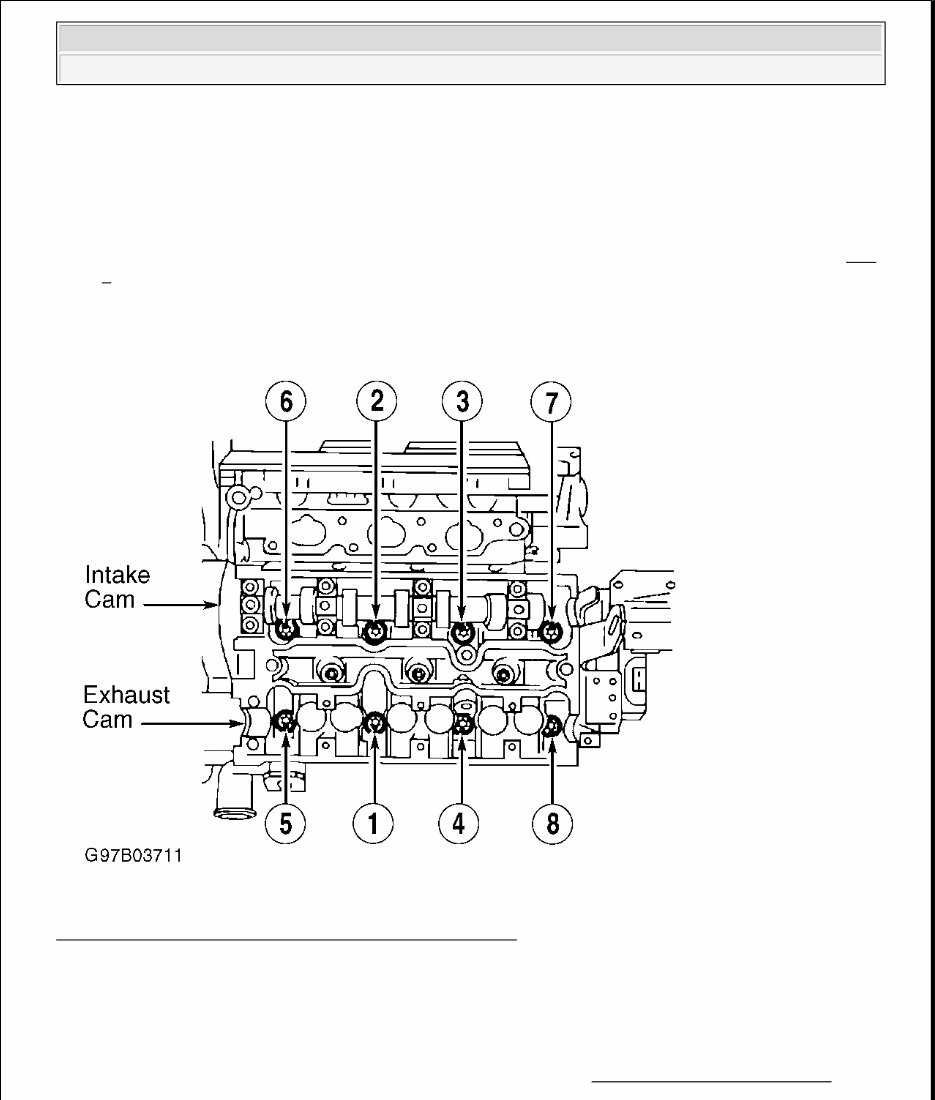
8. Loosen exhaust camshaft bearing cap bolts in stages, one to one-half turn at a time. Remove camshaft seal and lift out exhaust camshaft. 9. Loosen cylinder head bolts one-quarter, then one-half turn. Remove cylinder head bolts in order. See Fig. 1 . Remove cylinder head. Use care when placing cylinder head aside as intake camshaft is still in place and valve stems could be bent. Remove intake camshaft, exhaust manifold and tappets. Fig. 1: Cylinder Head Bolt Tightening/Loosening Sequence Courtesy of SAAB-SCANIA OF AMERICA, INC. Installation 1. Position crankshaft at 60 degrees BTDC. Clean all contact surfaces and install head gasket. Ensure gasket is installed with mark OBEN/TOP facing upward. Install exhaust manifold and tappets. Place cylinder head in position. Torque NEW bolts in order, to specification. See TORQUE SPECIFICATIONS . See Fig. 1 . NOTE: Intake camshaft removal is not necessary. 2000 Saab 9-5 1999-2000 ENGINES 3.0L V6
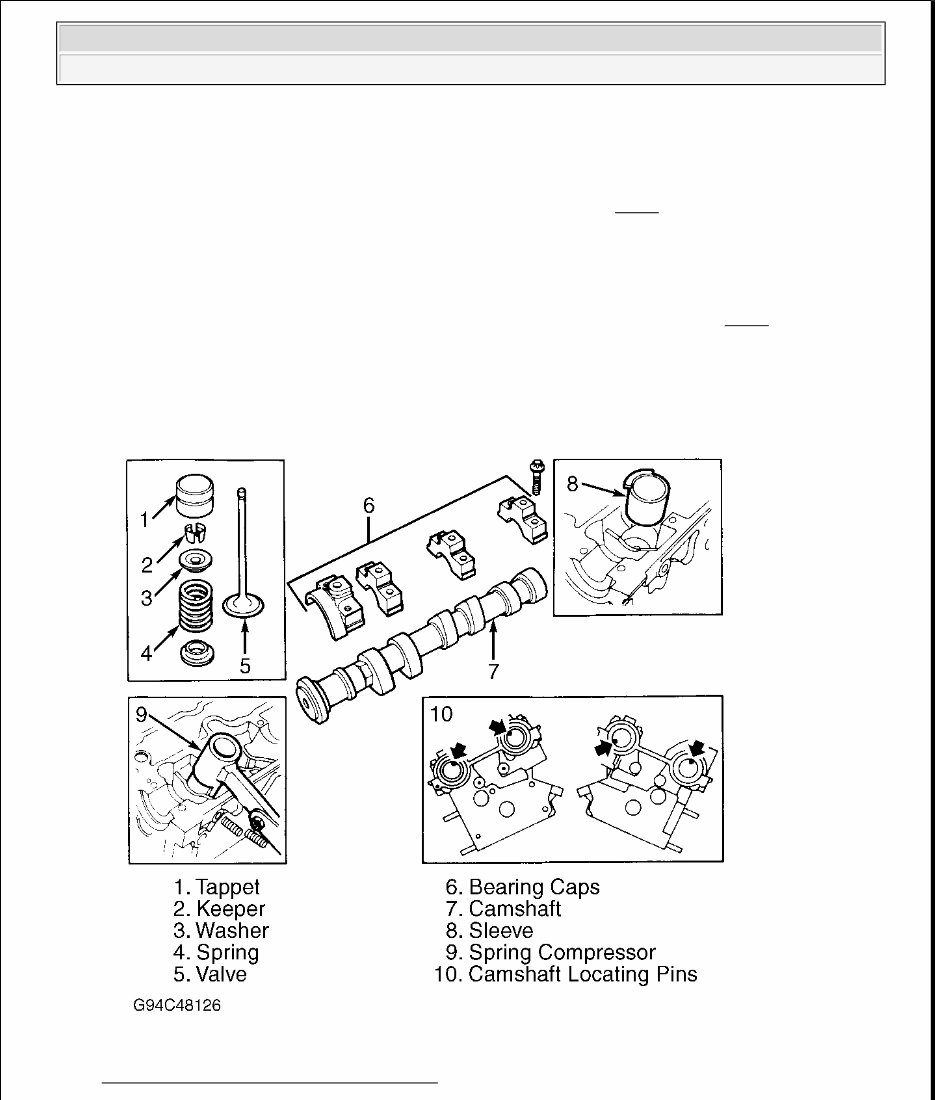
2. Install camshafts and lubricate with oil. Note markings on bearing caps and cylinder head. Install bearing caps and tighten bolts in sequence, working outward. Lubricate seal lips and install gasket, camshaft bolt and washer. Install timing cover retaining screws in cylinder head. Ensure locating pins are correctly positioned. Install camshaft sprockets in relation to locating pins. See Fig. 2 . 3. Install tensioning roller and upper adjusting roller. Install Locking Tool (KM-800-1) on No. 1 and No. 2 camshaft sprockets, and Locking Tool (KM-800-2) on No. 3 and No. 4 camshaft sprockets. Turn crankshaft to just before zero degrees and install Locking Tool (KM-800-10) on crankshaft. Carefully turn crankshaft in direction of engine rotation until arm is against water pump flange. Tighten arm. 4. Install timing belt. Install Belt Holder (KM-800-30) to hold timing belt in place. See Fig. 3 . Adjust tensioning roller by hand to prevent belt from slipping out of cogs. Install crankcase ventilation housing and oxygen sensor connector in its holder. Ensure "O" rings are in valve cover and wipe clean. To install remaining components, reverse removal procedure. Fig. 2: Removing Valve Train Components Courtesy of SAAB-SCANIA OF AMERICA, INC. 2000 Saab 9-5 1999-2000 ENGINES 3.0L V6
The 2005 Saab 9-5 Service & Repair Manual is your essential guide for maintaining, servicing, diagnosing, and repairing your 2005 Saab 9-5. Developed with the same precision used by company engineers, this manual provides comprehensive, step-by-step instructions, technical data, and detailed illustrations to help you confidently tackle repairs and maintenance tasks in your vehicle.
Designed specifically for the 2005 Saab 9-5, this PDF manual covers everything from engine and mechanical systems to electrical and interior components. Whether you are a professional mechanic or a DIY enthusiast, you will benefit from clear diagrams, wiring schematics, and complete repair procedures that ensure accurate and reliable information.
Compatible with all versions of Windows and Mac and viewable using Adobe Reader and similar applications, the manual is easy to access and print, making it a convenient tool for your garage. It includes detailed coverage of repairs such as maintenance, engine and control systems, fuel service specifications, brake control, steering, and much more.
With the 2005 Saab 9-5 Service & Repair Manual, save time and money while gaining the expertise you need to keep your vehicle in top condition. Say goodbye to flipping through bulky books or the exclusive reliance on a mechanic—this manual provides the support and guidance necessary for effective DIY car maintenance and repairs.
Key topics covered include:
Maintenance
Engine
Control System
Mechanical
Fuel Service Specifications
Emission Control
Intake Exhaust Cooling
Lube
Ignition Starting Charging
Auto Transmission Clutch
Manual Transmission
Transfer Propeller Shaft
Drive Shaft
Differential
Axle Suspension
Tire & Wheel
Brake Control
Brake
Parking Brake
Steering Column
Power Steering
Air Condition
Suppl Restraint System
Seat Belt
Engine Immobilizer
Cruise Control
Wiper & Washer
Door Lock
Meter Audio/Visual
Horn
Windshield/Glass Mirror
Instrument Panel
Seat
Engine Hood/ Door
Exterior & Interior
Electrical
Multiplex/ Can Communication
And much more...
Invest in the 2005 Saab 9-5 Service & Repair Manual today and enjoy the convenience and satisfaction of repairing your vehicle right the first time.



 Lifetime Access