AIR SUSPENSION Fault finding - Introduction 38F - 2 38F V3 MR-379-X70-38F000$124_eng.mif MASTER Phase 1 and 2 138F AIR SUSPENSION Fault finding - Introduction 1. SCOPE OF THIS DOCUMENT This document presents the fault finding procedure applicable to all computers with the following specifications: 2. PREREQUISITES FOR FAULT FINDING Documentation type Fault finding procedures (this manual): – Assisted fault finding (integrated into the diagnostic tool), Dialogys. Wiring Diagram – Visu-Schéma (CD-ROM), paper. Type of diagnostic tools – CLIP Special tooling required 3. RECAP To run fault finding on the vehicle's computers, switch on the ignition in fault finding mode (+ after ignition feed). Vehicle: Master phases 1 and 2 Function concerned: Controlled suspension Special tooling required Multimeter SUS_V04_PRELI Suspension pneumatique - X70ph2 v2.0 MR-379-X70-38F000$124_eng.mif
AIR SUSPENSION Fault finding - Introduction 38F 38F - 3 V3 MR-379-X70-38F000$124_eng.mif MASTER Phase 1 and 2 Faults Faults are classed as either present or stored (having appeared in a certain situation and then disappeared, or being still present but not diagnosed in the current situation). The present or stored status of faults should be taken into consideration when the diagnostic tool is switched on after the + after ignition feed (without any system components being active). Present faults must be dealt with according to the procedure specified in the Interpretation of faults section. For stored faults, note the faults displayed and follow the instructions in the Notes section. If the fault is confirmed when the notes are applied, the fault is present. In this case, deal with the fault. If the fault is not confirmed, carry out some basic checks. Check: – The electrical lines on which there is a fault; – The connectors on these lines (corrosion, bent pins, etc.); – The resistance of the faulty component; – The condition of the wires (insulation melted or split, chafing, etc.). Conformity check The aim of the conformity check is to check statuses and parameters that do not produce a fault display on the diagnostic tool when they are inconsistent. Therefore, this stage is used to: – carry out fault finding on faults that do not have a fault display, and which may correspond to a customer complaint. – check that the system is operating correctly and that there is no risk of a fault recurring after repairs. This section features the fault finding procedures for statuses and parameters, and the conditions for checking them. If a status is not behaving normally or a parameter is outside the permitted tolerance values, consult the corresponding fault finding page. Customer complaints - Fault finding chart If the check using the diagnostic tool is satisfactory but the customer complaint is still present, the fault should be treated as a customer complaint. A summary of the overall procedure to follow is provided on the following page in the form of a flow chart. Suspension pneumatique - X70ph2 v2.0
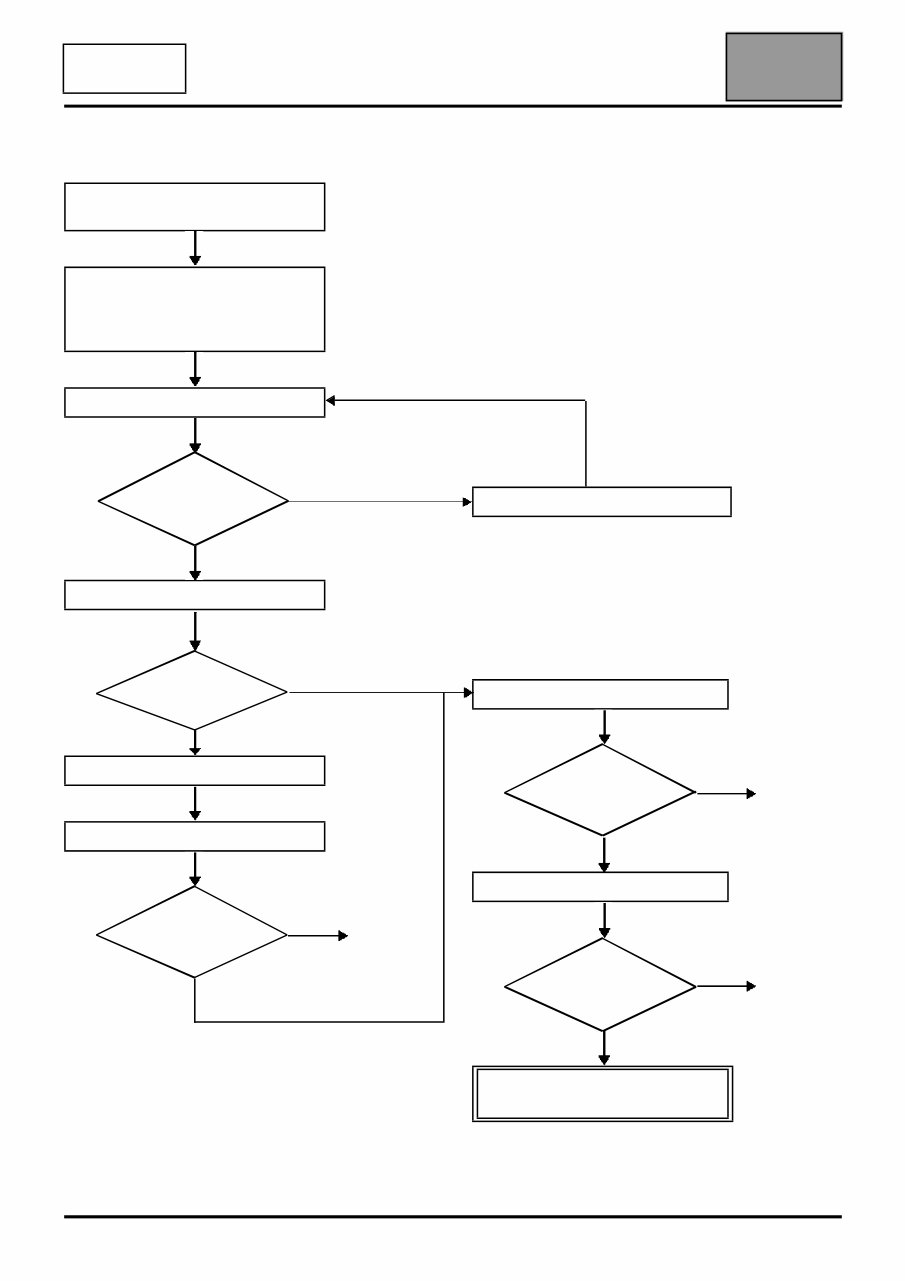
AIR SUSPENSION Fault finding - Introduction 38F V3 MR-379-X70-38F000$124_eng.mif MASTER Phase 1 and 2 4. FAULT FINDING PROCEDURE Check the battery charge and the condition of the fuses Print the system fault finding log (available on CLIP and in the Workshop Repair Manual or Technical Note) Connect CLIP Dialogue with computer? no yes Read faults Faults present no yes Deal with present faults Deal with stored faults The cause is still present no Fault solved yes See ALP 1 Conformity check The cause is still present no Fault solved Use Fault Finding Charts (ALPs) The cause is still present no Fault solved Contact Techline with the completed fault finding log Suspension pneumatique - X70ph2 v2.0
AIR SUSPENSION Fault finding - Introduction 38F 38F - 5 V3 MR-379-X70-38F000$124_eng.mif MASTER Phase 1 and 2 5. FAULT FINDING LOG You will always be asked for this log: – when requesting technical assistance from Techline, – for approval requests when replacing parts for which approval is mandatory, – to be attached to monitored parts for which reimbursement is requested. The log is needed for warranty reimbursement, and enables better analysis of the parts removed. 6. SAFETY ADVICE All work on components requires that the safety rules be obeyed to prevent damage or injury: – Check the battery voltage to avoid incorrect operation of computer functions. – Use the appropriate tools. IMPORTANT! IMPORTANT Any fault on a complex system requires thorough fault finding with the appropriate tools. The FAULT FINDING LOG, which should be completed during the procedure, enables you to keep track of the procedure which is carried out. It is an essential document when consulting the manufacturer. IT IS THEREFORE MANDATORY TO FILL OUT A FAULT FINDING LOG EACH TIME FAULT FINDING IS CARRIED OUT. Suspension pneumatique - X70ph2 v2.0
This 2004 Renault Master II Service and Repair Manual is the ultimate guide for maintaining and repairing your vehicle. Whether you are a professional mechanic or a DIY enthusiast, this manual provides comprehensive information and step-by-step instructions to help you keep your Renault Master II in top-notch condition.
The manual covers various models of the Renault Master II, including:
Renault Master II 2004
Renault Master II 2.2 dCi
Renault Master II 2.5 dCi
Renault Master II 3.0 dCi
Renault Master II 2.8 DTi
Renault Master II 2.2 HDi
Renault Master II 2.5 HDi
Renault Master II 3.0 HDi
With this manual, you will have access to detailed instructions and illustrations for various maintenance tasks, such as engine repair, electrical system troubleshooting, brake system maintenance, and much more. You'll also find valuable information on vehicle specifications, diagnostic codes, and recommended repair procedures.
Invest in this 2004 Renault Master II Service and Repair Manual to ensure that your vehicle remains in optimal condition and to save on costly repairs. Whether you're a professional technician or a Renault owner, this manual is a must-have resource for anyone working on or looking to understand the Renault Master II.




 Lifetime Access