


Before driving
Introduction 2
Instrumentation 6
Controls and features 18
Seating and safety restraints 88
Starting and driving
Starting 127
Driving 132
Roadside emergencies 156
Servicing
Maintenance and care 178
Capacities and specifications 226
Customer assistance 234
Reporting safety defects 246
Index 247
All rights reserved. Reproduction by any means, electronic or mechanical including
photocopying, recording or by any information storage and retrieval system or translation
in whole or part is not permitted without written authorization from Ford Motor Company.
Ford may change the contents without notice and without incurring obligation.
Copyright © 1999 Ford Motor Company
Contents
1
The following warning may be required by California law:
CALIFORNIA Proposition 65 Warning
WARNING: Engine exhaust, some of its constituents, and
certain vehicle components contain or emit chemicals known to
the State of California to cause cancer and birth defects or other
reproductive harm. In addition, certain fluids contained in vehicles and
certain products of component wear contain or emit chemicals known
to the State of California to cause cancer and birth defects or other
reproductive harm.
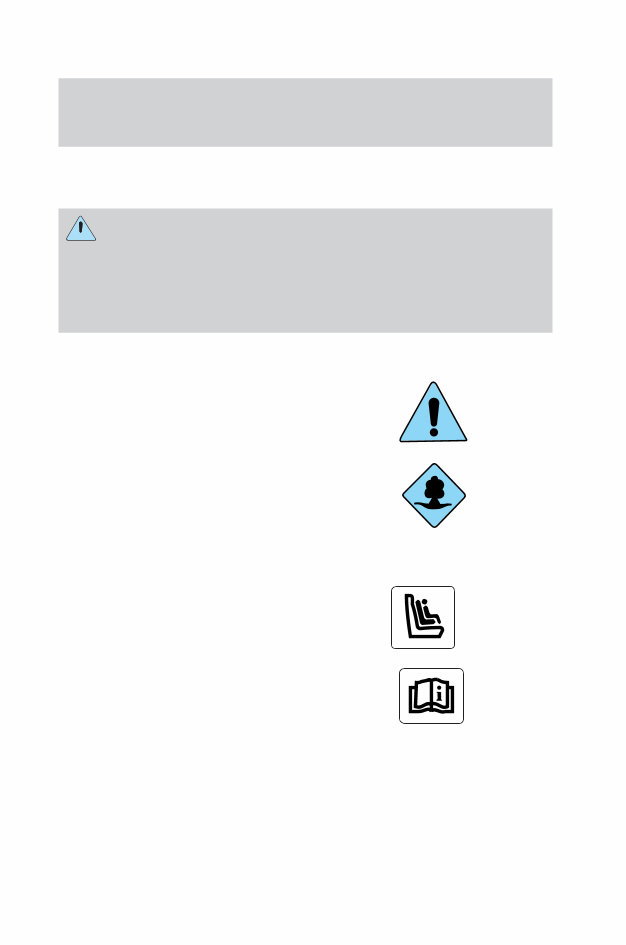
ICONS
Indicates a safety alert. Read the
following section on Warnings.
Indicates vehicle information related
to recycling and other
environmental concerns will follow.
Correct vehicle usage and the
authorized disposal of waste
cleaning and lubrication materials are significant steps towards
protecting the environment.
Indicates a message regarding child
safety restraints. Refer to Seating
and safety restraints for more
information.
Indicates that this Owner Guide
contains information on this subject.
Please refer to the Index to locate
the appropriate section which will
provide you more information.
WARNINGS
Warnings provide information which may reduce the risk of personal
injury and prevent possible damage to others, your vehicle and its
equipment.
Introduction
2
BREAKING-IN YOUR VEHICLE
There are no particular breaking-in rules for your vehicle. During the
first 1 600 km (1 000 miles) of driving, vary speeds frequently. This is
necessary to give the moving parts a chance to break in.
INFORMATION ABOUT THIS GUIDE
The information found in this guide was in effect at the time of printing.
Ford may change the contents without notice and without incurring
obligation.
SPECIAL NOTICES
Using your vehicle with a snowplow
Do not use this vehicle for snowplowing.
Using your vehicle as an ambulance
Do not use this vehicle as an ambulance.
Your vehicle is not equipped with the Ford Ambulance Preparation
Package.
Notice to owners of pickup trucks and utility type vehicles
Utility vehicles have a significantly higher rollover rate than
other types of vehicles.
Before you drive your vehicle, please read this Owner’s Guide carefully.
Your vehicle is not a passenger car. As with other vehicles of this type,
failure to operate this vehicle correctly may result in loss of control or an
accident.
Be sure to read Driving off road in the Driving chapter as well as the
“Four Wheeling” supplement included with 4WD and utility type vehicles.
Introduction
3
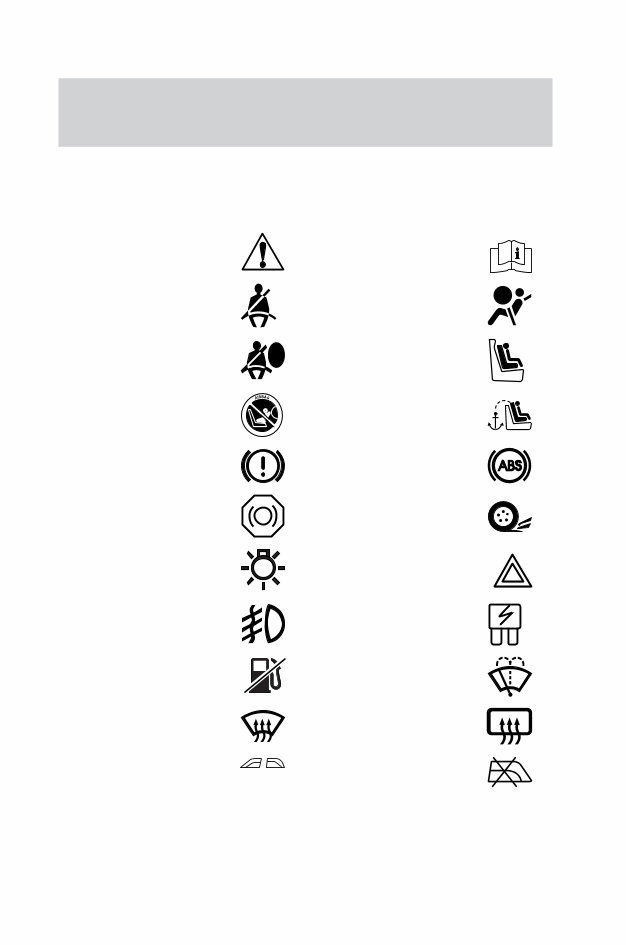
These are some of the symbols you may see on your vehicle.
Vehicle Symbol Glossary
Safety Alert See Owner’s Guide
Fasten Safety Belt Air Bag-Front
Air Bag-Side Child Seat
Child Seat Installation
Warning
Child Seat Tether
Anchorage
Brake System Anti-Lock Brake System
Brake Fluid -
Non-Petroleum Based
Traction Control
Master Lighting Switch Hazard Warning Flasher
Fog Lamps-Front Fuse Compartment
Fuel Pump Reset Windshield Wash/Wipe
Windshield
Defrost/Demist
Rear Window
Defrost/Demist
Power Windows
Front/Rear
Power Window Lockout
Introduction
4
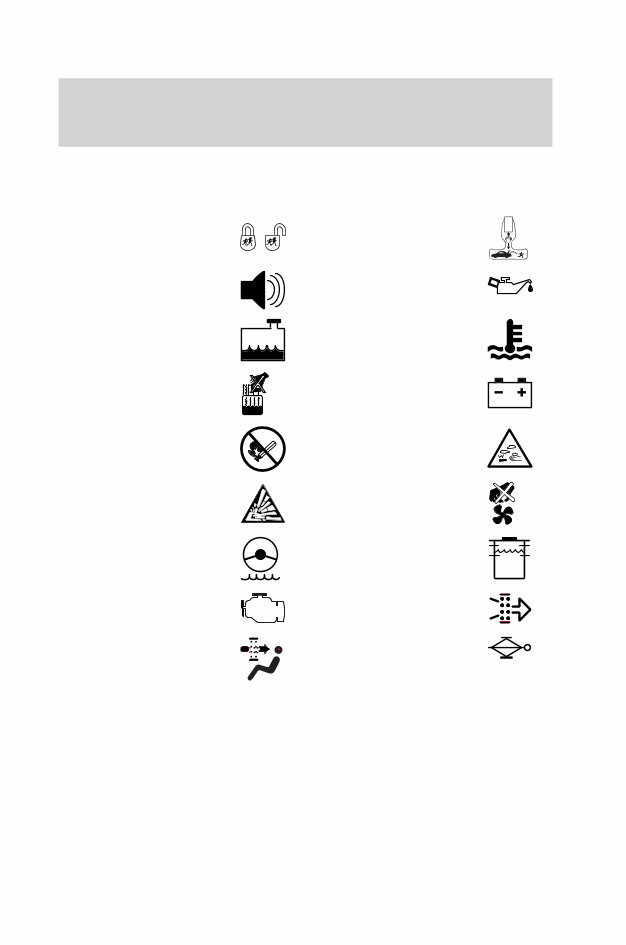
Vehicle Symbol Glossary
Child Safety Door
Lock/Unlock
Interior Luggage
Compartment Release
Symbol
Panic Alarm Engine Oil
Engine Coolant
Engine Coolant
Temperature
Do Not Open When Hot Battery
Avoid Smoking, Flames,
or Sparks
Battery Acid
Explosive Gas Fan Warning
Power Steering Fluid
Maintain Correct Fluid
Level
MAX
MIN
Emission System Engine Air Filter
Passenger Compartment
Air Filter
Jack
Introduction
5
NEXT
MODE
L
C E
L
H
F
MPH RPMX1000
NAVIGATOR
km/h km/h
D P RN D 2
LOW
FUEL
BRAKE
SELECT
RESET
DOOR
AJAR
4X4
LOW
RANGE
CK
SUSP
SERVICE
ENGINE
SOON
THEFT
20
40
60
80
60
40
20
00
H
H
INT 2
INT 1
OFF
RESUME
SET ACCEL
COAST
OFF ON
HOOD
PEDALS
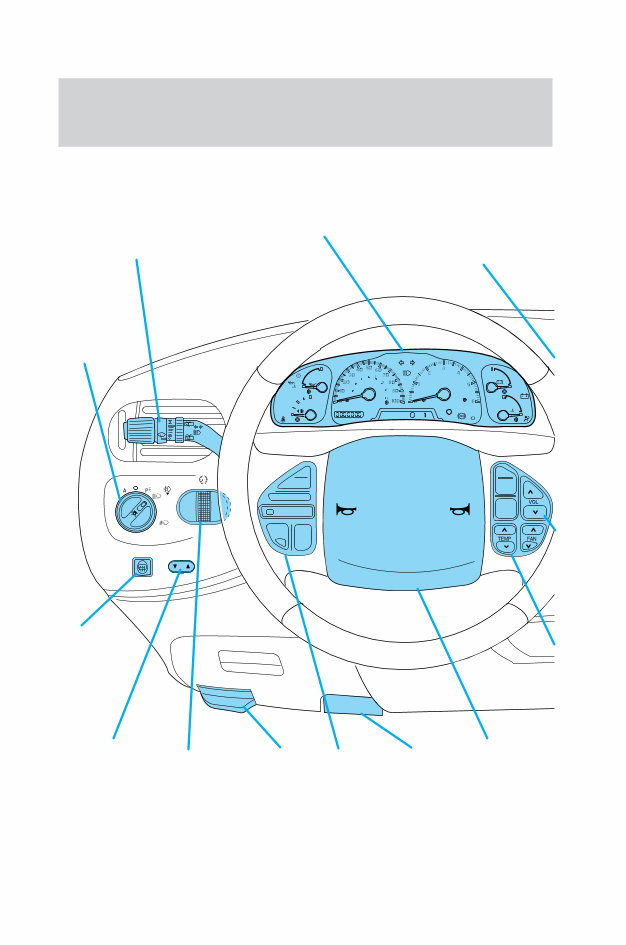
Driver air
bag
(pg. 112)
Hood
release
(pg. 179)
Speed
control
(pg. 54)
Parking
brake release
(pg. 134)
Instrument
panel dimmer
switch
(pg. 19)
Rear window
defroster
control
(pg. 21)
Headlamp
control
(pg. 18)
Turn signal and
wiper/washer control
(pg. 60)
Instrument cluster
(pg. 8)
Gearshift (includes
overdrive button)
(pg. 141)
Power adjustable
foot pedals
(pg. 74)
Instrumentation
6
SCAN
VOL
PUSH ON
REW
1
FF
2
SIDE 1.2
3 4
COMP
5
SHUFF
6
AUTO TUNE SEEK
SEL
BAL
FADE
MUTE
FM AM
EJ
BASS
TREB
CD TAPE RDS
H M
OUTSIDE TEMP
OFF
AUTOMATIC
MAX A/C VENT PNL FLR FLOOR FLR DEF DEF
HI
LO
OVERDRIVE OFF
4H A4WD
4L
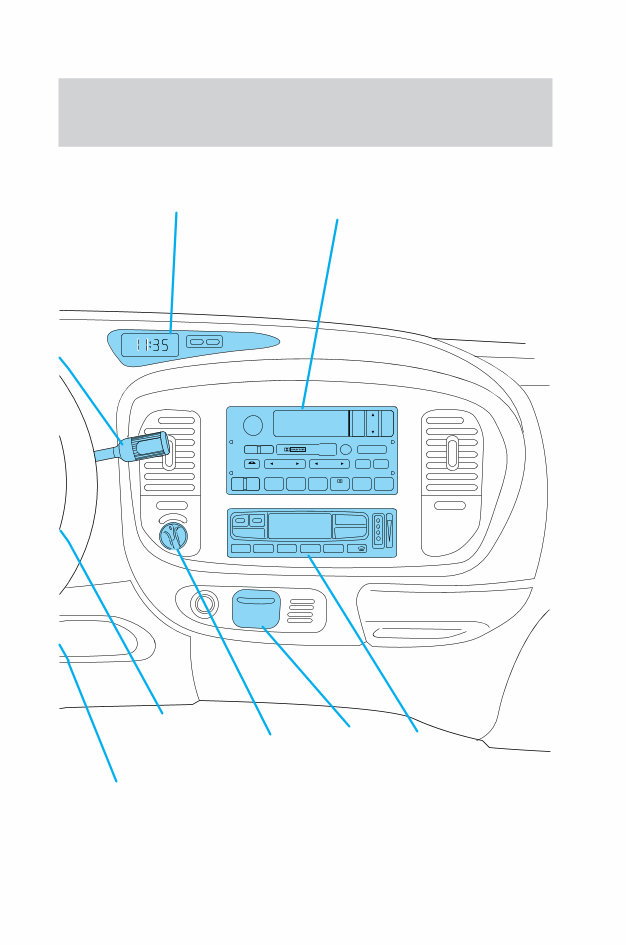
Auxiliary climate
controls
(pg. 61)
Clock
(pg. 24)
Electronic sound system
(pg. 25)
Climate
control
system
(pg. 43)
Auxiliary
power
point
(pg. 23)
Radio controls
(pg. 61)
4wd control*
(pg. 143)
*if equipped
Instrumentation
7
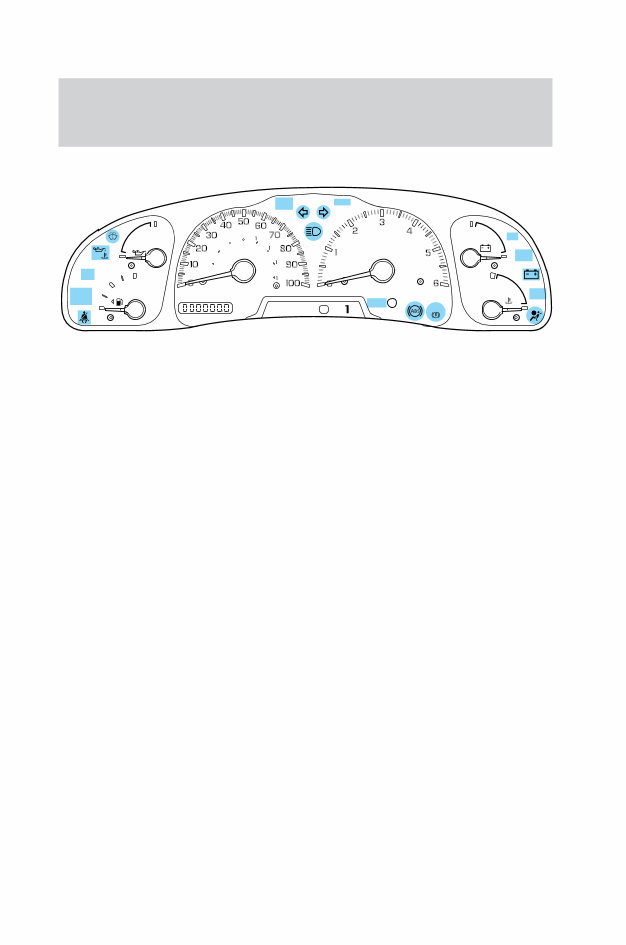
WARNING LIGHTS AND CHIMES
Low fuel
Illuminates as an early reminder of a
low fuel condition indicated on the
fuel gauge (refer to Fuel Gauge in
this chapter for more information).
When refueling, after the light
comes on, the amount of fuel that is added will be less than the
advertised capacity since there is fuel still in the tank. The ignition must
be in the ON position for this lamp to illuminate. The lamp will also
illuminate for several seconds after the ignition is turned to the ON
position regardless of the fuel level to ensure your bulb is working.
Service engine soon
Your vehicle is equipped with a
computer that monitors the engine’s
emission control system. This
system is commonly known as the
On Board Diagnostics System (OBD
II). The OBD II system protects the
environment by ensuring that your vehicle continues to meet
government emission standards. The OBD II system also assists the
service technician in properly servicing your vehicle.
The Service Engine Soon indicator light illuminates when the ignition is
first turned to the ON position to check the bulb. If it comes on after the
engine is started, one of the engine’s emission control systems may be
malfunctioning. The light may illuminate without a driveability concern
being noted. The vehicle will usually be drivable and will not require
towing.
L
C E
L
H
F
MPH RPMX1000
NAVIGATOR
km/h km/h
D P RN D 2
LOW
FUEL
BRAKE
SELECT
RESET
DOOR
AJAR
4X4
LOW
RANGE
CK
SUSP
SERVICE
ENGINE
SOON
THEFT
20
40
60
80
60
40
20
00
H
H
LOW
FUEL
SERVICE
ENGINE
SOON
Instrumentation
8

What you should do if the Service Engine Soon light illuminates
Light turns on solid:
This means that the OBD II system has detected a malfunction.
Temporary malfunctions may cause your Service Engine Soon light to
illuminate. Examples are:
1. The vehicle has run out of fuel. (The engine may misfire or run
poorly.)
2. Poor fuel quality or water in the fuel.
3. The fuel cap may not have been properly installed and securely
tightened.
These temporary malfunctions can be corrected by filling the fuel tank
with high quality fuel of the recommended octane and/or properly
installing and securely tightening the gas cap. After three driving cycles
without these or any other temporary malfunctions present, the Service
Engine Soon light should turn off. (A driving cycle consists of a cold
engine startup followed by mixed city/highway driving.) No additional
vehicle service is required.
If the Service Engine Soon light remains on, have your vehicle serviced
at the first available opportunity.
Light is blinking:
Engine misfire is occurring which could damage your catalytic converter.
You should drive in a moderate fashion (avoid heavy acceleration and
deceleration) and have your vehicle serviced at the first available
opportunity.
Under engine misfire conditions, excessive exhaust temperatures
could damage the catalytic converter, the fuel system, interior
floor coverings or other vehicle components, possibly causing a fire.
Air bag readiness
Momentarily illuminates when the
ignition is turned ON. If the light
fails to illuminate, continues to flash
or remains on, have the system
serviced immediately.
Instrumentation
9
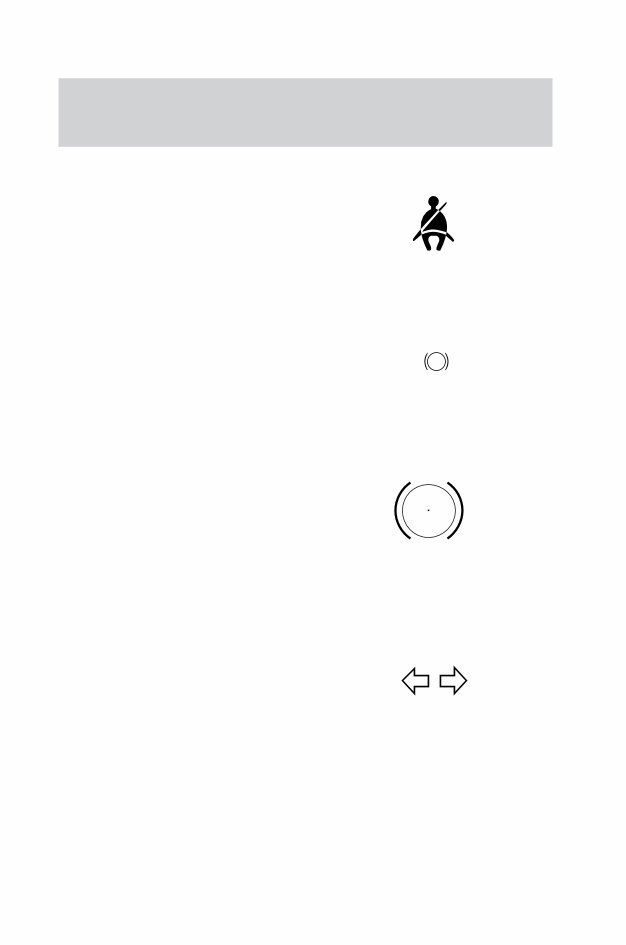
Safety belt
Momentarily illuminates when the
ignition is turned to the ON position
to remind you to fasten your safety
belts. For more information, refer to
the Seating and safety restraints
chapter.
Brake system warning
Momentarily illuminates when the
ignition is turned to the ON
position. Also illuminates if the
parking brake is engaged. If the
brake warning lamp does not
illuminate at these times, seek service immediately. Illumination after
releasing the parking brake indicates low brake fluid level and the brake
system should be inspected immediately.
Anti-lock brake system (ABS)
Momentarily illuminates when the
ignition is turned to the ON
position. If the light remains on,
continues to flash or fails to
illuminate, have the system serviced
immediately. With the ABS light on, the anti-lock brake system is
disabled and normal braking is still effective unless the brake warning
light also remains illuminated with the parking brake released.
Turn signal
Illuminates when the left or right
turn signal or the hazard lights are
turned on. If one or both of the
indicators stay on continuously or
flash faster, check for a burned-out
turn signal bulb. Refer to Exterior bulbs in the Maintenance and care
chapter.
!
BRAKE
ABS
Instrumentation
10
You're Reading a Preview
What's Included?
 Lifetime Access
Fast Download Speeds
Online & Offline Access
Access PDF Contents & Bookmarks
Full Search Facility
Print one or all pages of your manual
$24.99
2000 Lincoln Navigator Owners Manual
Viewed 16 Times Today

What's Included?
Lifetime Access
Fast Download Speeds
Online & Offline Access
Access PDF Contents & Bookmarks
Full Search Facility
Print one or all pages of your manual
$24.99

Secure transaction
What's Included?
Lifetime Access
Fast Download Speeds
Online & Offline Access
Access PDF Contents & Bookmarks
Full Search Facility
Print one or all pages of your manual
Description
The LINCOLN NAVIGATOR 2000 Owners Manual is a comprehensive guide for operating and maintaining the LINCOLN NAVIGATOR 2000 model. It offers clear and concise instructions, easy-to-understand diagrams, and information on vehicle controls and features. Additionally, it provides troubleshooting tips, proper maintenance guidelines, and important safety information.
- Clear and concise instructions
- Easy-to-understand diagrams and illustrations
- Information on vehicle controls and features
- Troubleshooting tips and solutions
- Proper guidelines for vehicle maintenance
- Important safety information
Whether you are a professional mechanic or a DIY enthusiast, this owners manual is an essential tool for maximizing the potential of your LINCOLN NAVIGATOR 2000. It equips you with the knowledge to understand the vehicle's features, maintain it properly, and ensure safety on the road.


