3261 Jaguar XJ6 LIVING WITH YOUR JAGUAR XJ6 Introduction Page 0•4 Notes for UK readers Page 0•4 Safety first! Page 0•5 Roadside repairs Introduction Page 0•6 If your car won’t start Page 0•6 Jump starting Page 0•7 Wheel changing Page 0•8 Identifying leaks Page 0•9 Towing Page 0•9 Weekly checks Introduction Page 0•10 Underbonnet check points Page 0•10 Engine oil level Page 0•11 Coolant level Page 0•11 Brake fluid level Page 0•12 Screen washer fluid level Page 0•12 Power steering fluid level Page 0•13 Wiper blades Page 0•13 Tyre condition and pressure Page 0•14 Battery Page 0•15 Bulbs and fuses Page 0•15 Lubricants, fluids and tyre pressures Page 0•16 MAINTENANCE Routine maintenance and servicing Page 1•1 Servicing specifications Page 1•2 Maintenance schedule Page 1•3 Maintenance procedures Page 1•6 Contents
3261 Jaguar XJ6 REPAIRS & OVERHAUL Engine and associated systems Engine in-car repair procedures Page 2A•1 Engine removal and overhaul procedures Page 2B•1 Cooling, heating and air conditioning systems Page 3•1 Fuel and exhaust systems Page 4•1 Engine electrical systems Page 5•1 Emissions and engine cone control systems Page 6•1 Transmission Automatic transmission Page 7•1 Drivetrain Page 8•1 Brakes and suspension Braking system Page 9•1 Suspension and steering systems Page 10•1 Body equipment Bodywork and fittings Page 11•1 Body electrical systems Page 12•1 Wiring diagrams Page 12•16 REFERENCE Dimensions and weights Page REF•1 Jacking and vehicle support Page REF•1 Radio/cassette unit anti-theft system - precaution Page REF•1 Conversion factors Page REF•2 Use of English Page REF•3 Buying spare parts and vehicle identification Page REF•4 General repair procedures Page REF•5 Tools and working facilities Page REF•6 MOT test checks Page REF•8 Fault finding Page REF•12 Glossary of technical terms Page REF•18 Index Page REF•22 Contents
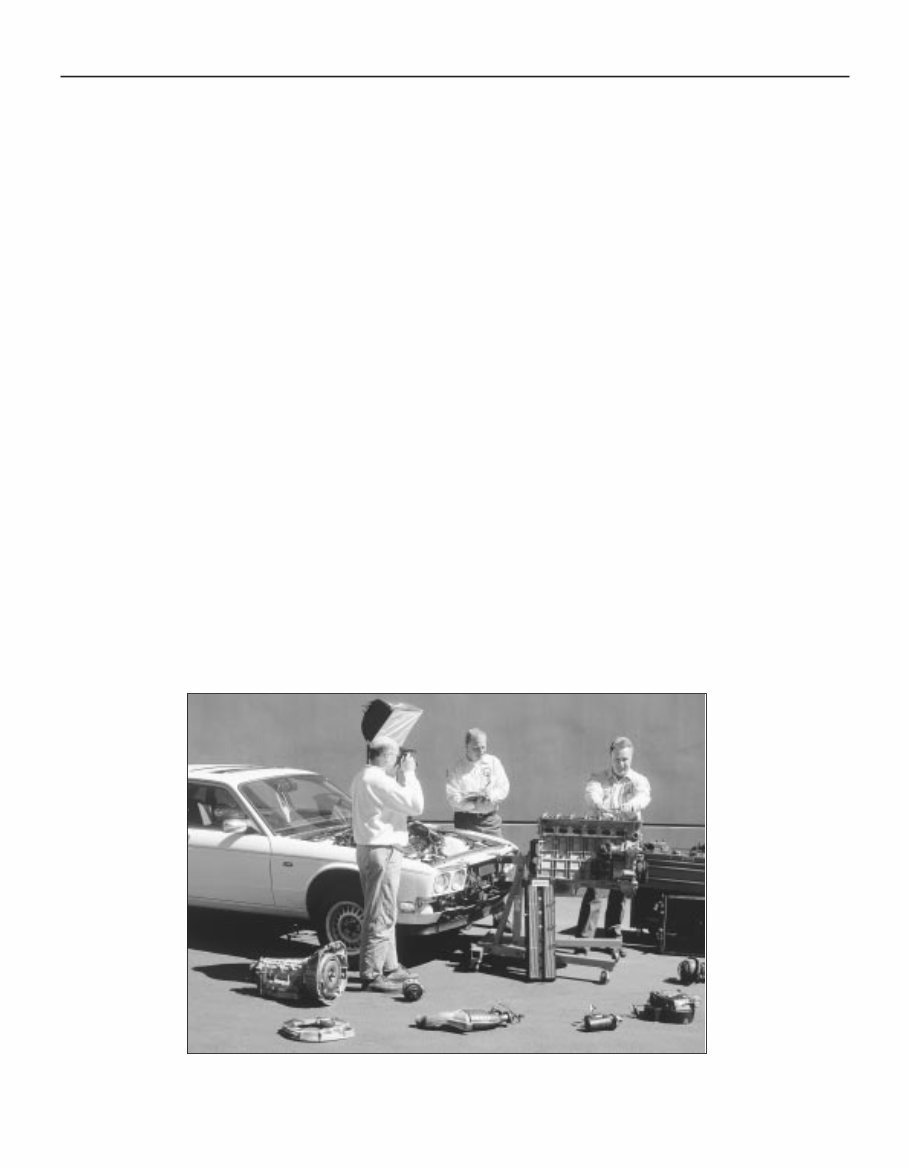
These models are equipped with dual overhead cam in-line six- cylinder engines. The engines feature a computer-controlled ignition system and electronic fuel injection. Transmissions are a four-speed automatic equipped with a lock-up torque converter. The transmission is mounted to the back of the engine, and power is transmitted to the fully independent rear axle through a two-piece propshaft. The differential is bolted solidly to a frame crossmember and drives the wheels through driveshafts equipped with inner and outer U-joints. The front suspension is fitted with upper and lower control arms, coil springs and shock absorbers. The rear suspension is an independent type suspension which also have coil spring/shock absorber assemblies and a lower control arm. The rear driveshaft acts as the upper control arm. Power-assisted Anti-lock Brake Systems (ABS) with four-wheel disc brakes are standard equipment on all Jaguar XJ6 models covered in this manual. Power rack-and-pinion steering is also standard equipment. Your Jaguar manual The aim of this manual is to help you get the best value from your vehicle. It can do so in several ways. It can help you decide what work must be done (even should you choose to get it done by a garage). It will also provide information on routine maintenance and servicing, and give a logical course of action and diagnosis when random faults occur. However, it is hoped that you will use the manual by tackling the work yourself. On simpler jobs it may even be quicker than booking the car into a garage and going there twice, to leave and collect it. Perhaps most important, a lot of money can be saved by avoiding the costs a garage must charge to cover its labour and overheads. The manual has drawings and descriptions to show the function of the various components so that their layout can be understood. Tasks are described and photographed in a clear step-by-step sequence. Notes for UK readers Because this manual was originally written in the US, its layout differs from our UK-originated manuals. The preliminary and reference sections have been re-written specifically for the UK market, and the maintenance schedule has been amended to suit UK vehicles. However, it will be noticed that some references to components remain in the US style; the UK equivalent of US components and various other US words is given in the Section headed “ Use of English”. It should be remembered that the project vehicle used in the main Chapters of this manual was a left-hand drive US model; therefore, the position of the steering wheel, steering column and pedals, etc. will be on the opposite side of the vehicle on UK models. References to “right” and “left” will need to be considered carefully to decide which applies to UK models (eg the headlight dipped beams should be adjusted to dip to the left of the headlight vertical line described in Chapter 12, instead of to the right on US models). In other instances, no reference is made to the location of a particular item, but that item may be located on the opposite side of the vehicle on UK models. Reference to the underbonnet photos at the start of Chapter 1 will give the reader the location of the engine compartment components on UK models. All specifications in the main Chapters of the manual appear in Imperial form; the equivalent metric values can be calculated using the “Conversion factors” page. The only other major difference between UK and US models is in the level of emission control equipment fitted to the vehicle. To meet the strict emission standards present in the US, all vehicles for that market are fitted with various emission control systems (see Chapter 6), most of which are not fitted to the corresponding UK model, especially so on early models. Therefore, a lot of the information contained in Chapter 6 is not applicable to UK models. Acknowledgements Thanks are due to Jean Preis, Rich Wilson and Ray Marcuse of Silver Star Jaguar (Thousand Oaks, CA), Rick Calaci of Conejo Imports (Newbury Park, CA) and Jim Strohmeier and Jonathan Lund of British Motor Cars (Thousand Oaks, CA), for providing valuable technical information. Technical writers who contributed to this project include Jeff Kibler, Robert Maddox and Jay Storer. We take great pride in the accuracy of information given in this manual, but vehicle manufacturers make alterations and design changes during the production run of a particular vehicle of which they do not inform us. No liability can be accepted by the authors or publishers for loss, damage or injury caused by any errors in, or omissions from, the information given. 0•4 Introduction 3261 Jaguar XJ6 Haynes mechanic, author and photographer with 1989 Jaguar XJ6
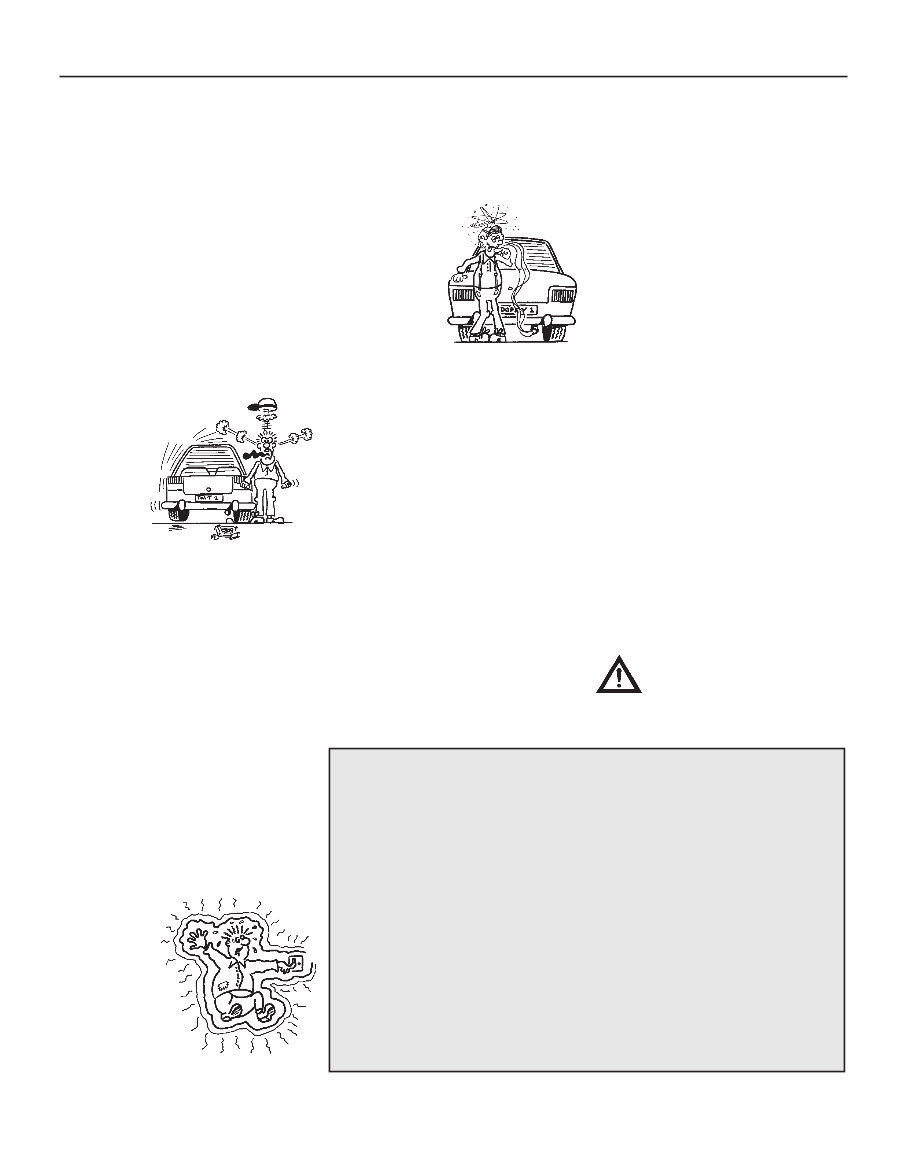
3261 Jaguar XJ6 Safety first! 0•5 Working on your car can be dangerous. This page shows just some of the potential risks and hazards, with the aim of creating a safety-conscious attitude. General hazards Scalding • Don’t remove the radiator or expansion tank cap while the engine is hot. • Engine oil, automatic transmission fluid or power steering fluid may also be dangerously hot if the engine has recently been running. Burning • Beware of burns from the exhaust system and from any part of the engine. Brake discs and drums can also be extremely hot immediately after use. Crushing • When working under or near a raised vehicle, always supplement the jack with axle stands, or use drive-on ramps. Never venture under a car which is only supported by a jack. • Take care if loosening or tightening high- torque nuts when the vehicle is on stands. Initial loosening and final tightening should be done with the wheels on the ground. Fire • Fuel is highly flammable; fuel vapour is explosive. • Don’t let fuel spill onto a hot engine. • Do not smoke or allow naked lights (including pilot lights) anywhere near a vehicle being worked on. Also beware of creating sparks (electrically or by use of tools). • Fuel vapour is heavier than air, so don’t work on the fuel system with the vehicle over an inspection pit. • Another cause of fire is an electrical overload or short-circuit. Take care when repairing or modifying the vehicle wiring. • Keep a fire extinguisher handy, of a type suitable for use on fuel and electrical fires. Electric shock • Ignition HT voltage can be dangerous, especially to people with heart problems or a pacemaker. Don’t work on or near the ignition system with the engine running or the ignition switched on. • Mains voltage is also dangerous. Make sure that any mains-operated equipment is correctly earthed. Mains power points should be protected by a residual current device (RCD) circuit breaker. Fume or gas intoxication • Exhaust fumes are poisonous; they often contain carbon monoxide, which is rapidly fatal if inhaled. Never run the engine in a confined space such as a garage with the doors shut. • Fuel vapour is also poisonous, as are the vapours from some cleaning solvents and paint thinners. Poisonous or irritant substances • Avoid skin contact with battery acid and with any fuel, fluid or lubricant, especially antifreeze, brake hydraulic fluid and Diesel fuel. Don’t syphon them by mouth. If such a substance is swallowed or gets into the eyes, seek medical advice. • Prolonged contact with used engine oil can cause skin cancer. Wear gloves or use a barrier cream if necessary. Change out of oil- soaked clothes and do not keep oily rags in your pocket. • Air conditioning refrigerant forms a poisonous gas if exposed to a naked flame (including a cigarette). It can also cause skin burns on contact. Asbestos • Asbestos dust can cause cancer if inhaled or swallowed. Asbestos may be found in gaskets and in brake and clutch linings. When dealing with such components it is safest to assume that they contain asbestos. Special hazards Hydrofluoric acid • This extremely corrosive acid is formed when certain types of synthetic rubber, found in some O-rings, oil seals, fuel hoses etc, are exposed to temperatures above 400 0 C. The rubber changes into a charred or sticky substance containing the acid. Once formed, the acid remains dangerous for years. If it gets onto the skin, it may be necessary to amputate the limb concerned. • When dealing with a vehicle which has suffered a fire, or with components salvaged from such a vehicle, wear protective gloves and discard them after use. The battery • Batteries contain sulphuric acid, which attacks clothing, eyes and skin. Take care when topping-up or carrying the battery. • The hydrogen gas given off by the battery is highly explosive. Never cause a spark or allow a naked light nearby. Be careful when connecting and disconnecting battery chargers or jump leads. Air bags • Air bags can cause injury if they go off accidentally. Take care when removing the steering wheel and/or facia. Special storage instructions may apply. Diesel injection equipment • Diesel injection pumps supply fuel at very high pressure. Take care when working on the fuel injectors and fuel pipes. Warning: Never expose the hands, face or any other part of the body to injector spray; the fuel can penetrate the skin with potentially fatal results. Remember... DO • Do use eye protection when using power tools, and when working under the vehicle. • Do wear gloves or use barrier cream to protect your hands when necessary. • Do get someone to check periodically that all is well when working alone on the vehicle. • Do keep loose clothing and long hair well out of the way of moving mechanical parts. • Do remove rings, wristwatch etc, before working on the vehicle – especially the electrical system. • Do ensure that any lifting or jacking equipment has a safe working load rating adequate for the job. A few tips DON’T • Don’t attempt to lift a heavy component which may be beyond your capability – get assistance. • Don’t rush to finish a job, or take unverified short cuts. • Don’t use ill-fitting tools which may slip and cause injury. • Don’t leave tools or parts lying around where someone can trip over them. Mop up oil and fuel spills at once. • Don’t allow children or pets to play in or near a vehicle being worked on.
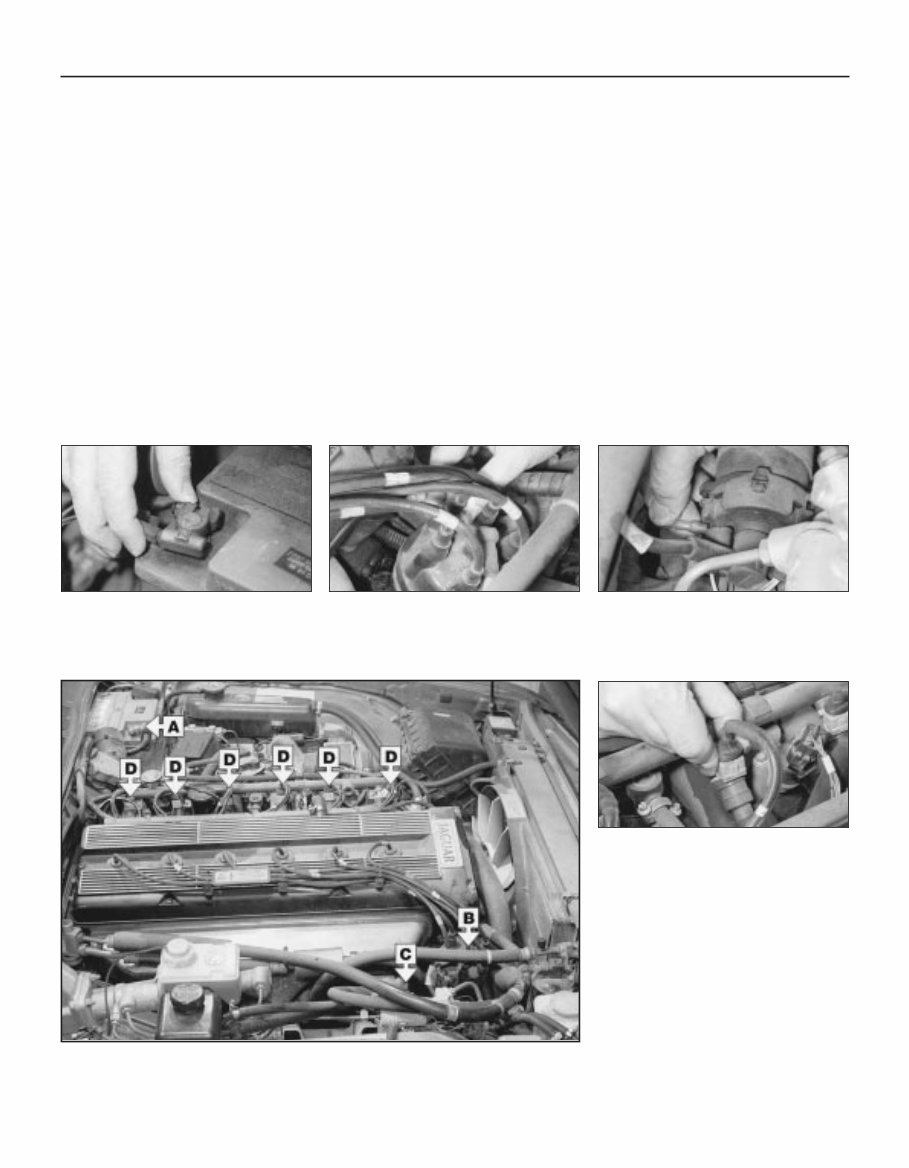
3261 Jaguar XJ6 0•6 Roadside repairs The following pages are intended to help in dealing with common roadside emergencies and breakdowns. You will find more detailed fault finding information at the back of the manual, and repair information in the main chapters. If your car won’t start and the starter motor doesn’t turn M If it’s a model with automatic transmission, make sure the selector is in ‘P’ or ‘N’. M Open the bonnet and make sure that the battery terminals are clean and tight. M Switch on the headlights and try to start the engine. If the headlights go very dim when you’re trying to start, the battery is probably flat. Get out of trouble by jump starting (see next page) using a friend’s car. If your car won’t start even though the starter motor turns as normal M Is there fuel in the tank? M Is there moisture on electrical components under the bonnet? Switch off the ignition, then wipe off any obvious dampness with a dry cloth. Spray a water-repellent aerosol product (WD-40 or equivalent) on ignition and fuel system electrical connectors like those shown in the photos. Pay special attention to the ignition coil wiring connector and HT leads. Check the condition and security of the battery connections. A Check that the spark plug HT leads are securely connected by pushing them onto the plugs and distributorery connections. B Check that the HT leads and wiring connectors are securely connected to the ignition coil. C Check that the wiring connectors are securely connected to the injectors and various fuel system sensors and switches. D Check that electrical connections are secure (with the ignition switched off) and spray them with a water dispersant spray like WD40 if you suspect a problem due to damp
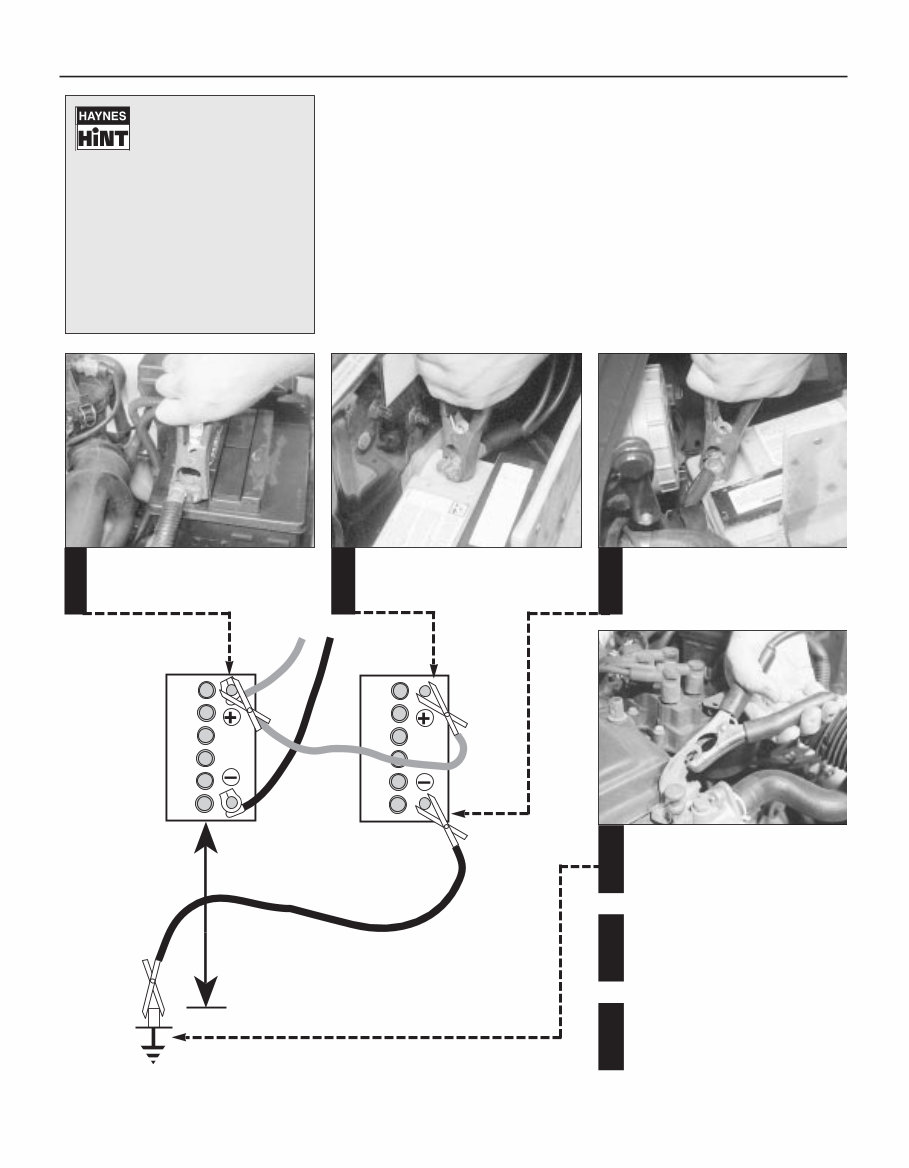
3261 Jaguar XJ6 Roadside repairs 0•7 When jump-starting a car using a booster battery, observe the following precautions: 4 Before connecting the booster battery, make sure that the ignition is switched off. 4 Ensure that all electrical equipment (lights, heater, wipers, etc) is switched off. 4 Take note of any special precautions printed on the battery case. 4 Make sure that the booster battery is the same voltage as the discharged one in the vehicle. 4 If the battery is being jump-started from the battery in another vehicle, the two vehicles MUST NOT TOUCH each other. 4 Make sure that the transmission is in neutral (or PARK, in the case of automatic transmission). Jump starting will get you out of trouble, but you must correct whatever made the battery go flat in the first place. There are three possibilities: 1) The battery has been drained by repeated attempts to start, or by leaving the lights on. 2) The charging system is not working properly (alternator drivebelt slack or broken, alternator wiring fault or alternator itself faulty). 3) The battery itself is at fault (electrolyte low, or battery worn out). Connect one end of the red jump lead to the positive (+) terminal of the flat battery Connect the other end of the red lead to the positive (+) terminal of the booster battery Connect one end of the black jump lead to the negative (-) terminal of the booster battery Connect the other end of the black jump lead to a bolt or bracket on the engine block, well away from the battery, on the vehicle to be started 1 2 3 4 Make sure that the jump leads will not come into contact with the fan, drivebelts or other moving parts of the engine 5 Start the engine using the booster battery, then with the engine running at idle speed, disconnect the jump leads in the reverse order of connection 6 Jump starting
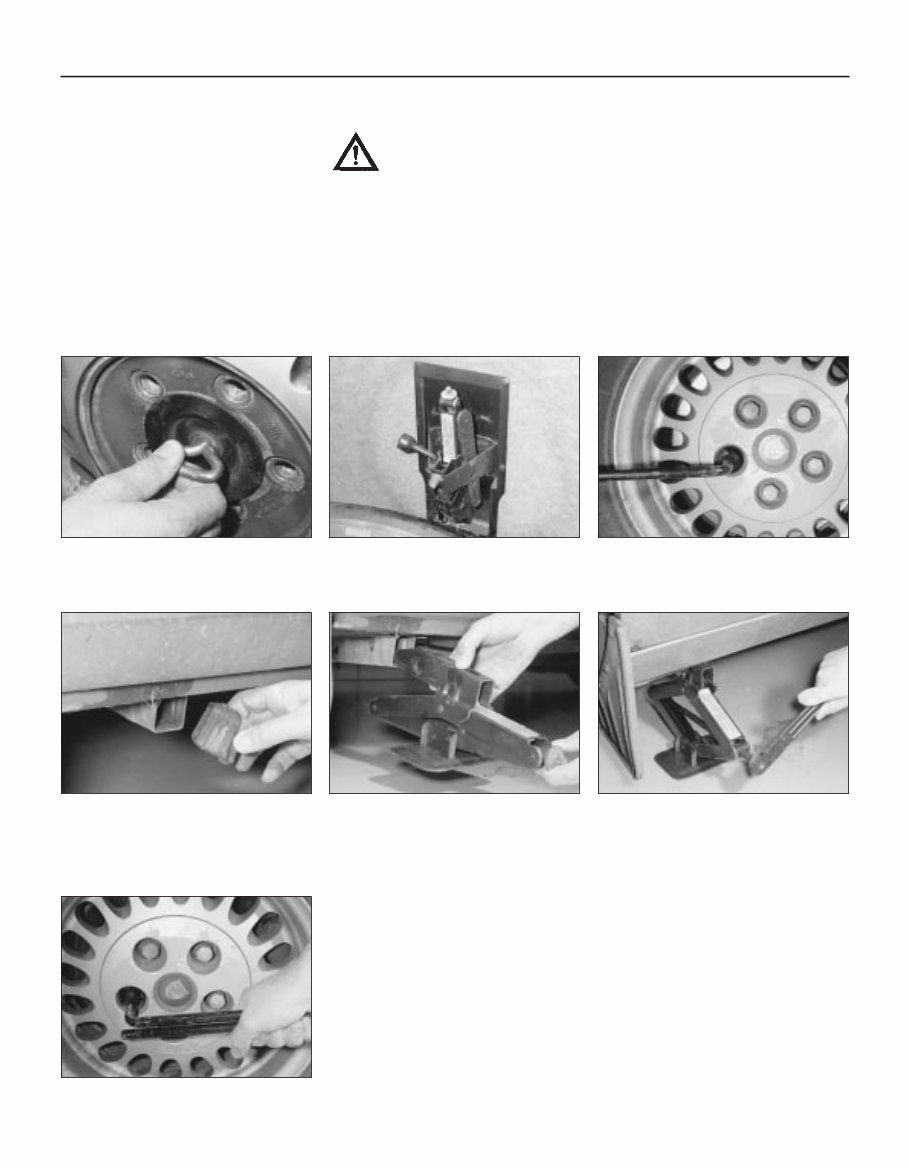
3261 Jaguar XJ6 0•8 Roadside repairs The spare wheel and tools are stored in the boot. Remove the carpet cover then unscrew the retainer and lift out the spare wheel from the boot. Wheel changing Some of the details shown here will vary according to model. For instance, the location of the spare wheel and jack is not the same on all cars. However, the basic principles apply to all vehicles. Warning: Do not change a wheel in a situation where you risk being hit by other traffic. On busy roads, try to stop in a lay-by or a gateway. Be wary of passing traffic while changing the wheel – it is easy to become distracted by the job in hand. Finally... M Remove the wheel chocks. M Check the tyre pressure on the wheel just fitted. If it is low, or if you don’t have a pressure gauge with you, drive slowly to the nearest garage and inflate the tyre to the right pressure. M Have the damaged tyre or wheel repaired as soon as possible. Remove the plastic cover from the end of the vehicle jack lifting point tube, nearest to the wheel that is being changed. Slide the lifting bracket of the jack fully into the lifting point tube. Make sure the jack is located on firm ground. Raise the jack until the wheel is raised clear of the ground. Unscrew the wheel nuts and remove the wheel. Fit the spare wheel and screw on the nuts. Lightly tighten the nuts then lower the vehicle to the ground. With the vehicle on the ground, remove the trim cap (where fitted) and slacken each wheel nut by half a turn. Remove the jack and wheelbrace its holder which is located behind the spare wheel. 1 2 3 4 Securely tighten the wheel nuts in a diagonal sequence then (where necessary) refit the wheel trim cap. Stow the tolls and punctured wheel and back in the luggage compartment and secure them in position. Note that the wheel nuts should be slackened and retightened to the specified torque at the earliest possible opportunity. 7 5 6 Preparation M When a puncture occurs, stop as soon as it is safe to do so. M Park on firm level ground, if possible, and well out of the way of other traffic. M Use hazard warning lights if necessary. M If you have one, use a warning triangle to alert other drivers of your presence. M Apply the handbrake and engage first or reverse gear (or Park on models with automatic transmission. M Chock the wheel diagonally opposite the one being removed – a couple of large stones will do for this. M If the ground is soft, use a flat piece of wood to spread the load under the jack. Changing the wheel
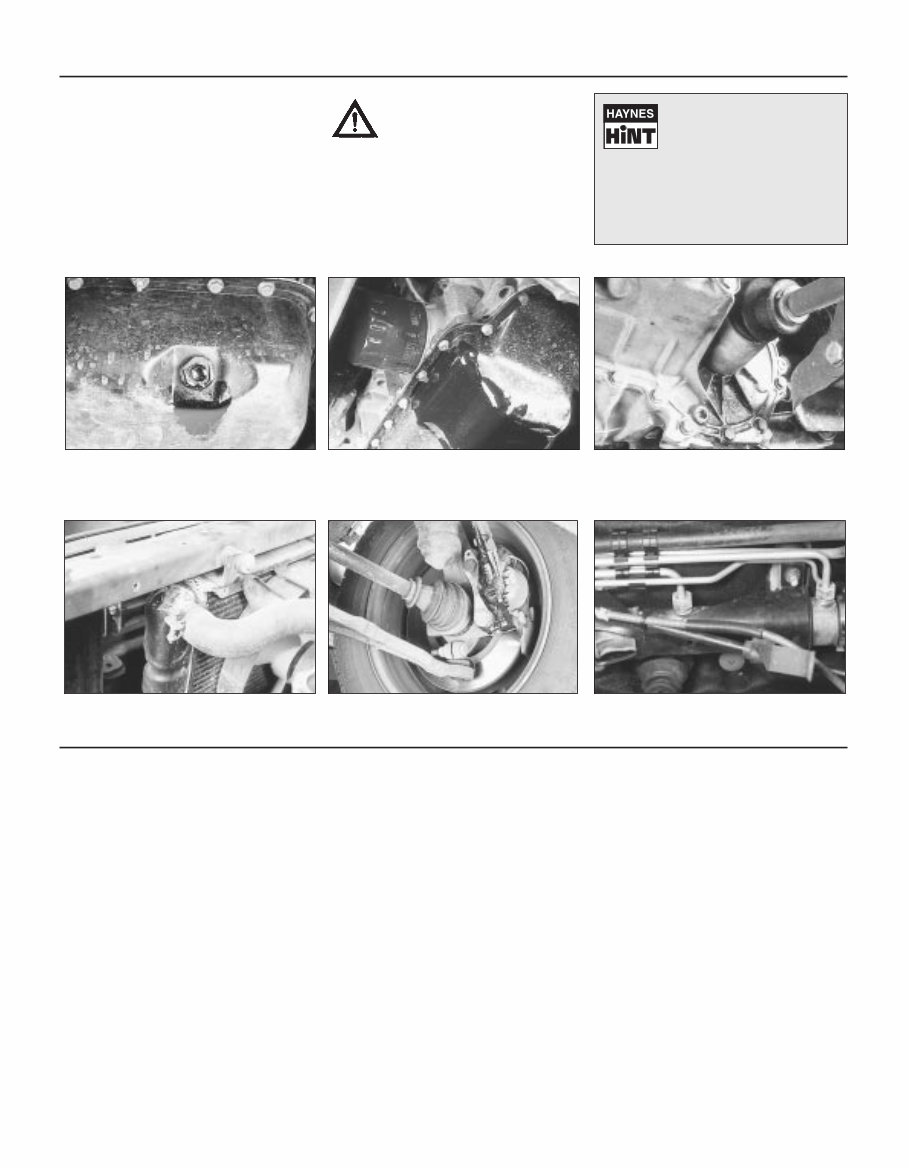
3261 Jaguar XJ6 Roadside repairs 0•9 When all else fails, you may find yourself having to get a tow home – or of course you may be helping somebody else. Long-distance recovery should only be done by a garage or breakdown service. For shorter distances, DIY towing using another car is easy enough, but observe the following points: M Use a proper tow-rope – they are not expensive. The vehicle being towed must display an ‘ON TOW’ sign in its rear window. M Always turn the ignition key to the ‘on’ position when the vehicle is being towed, so that the steering lock is released, and that the direction indicator and brake lights will work. M Only attach the tow-rope to the towing eyes provided. On some models with energy- absorbing bumpers there are no front towing eyes; on these vehicles the tow-rope should be attached around the rear arm of the lower control arm so that the rope passes on the inside of the coil spring. M Before being towed, release the handbrake and select neutral on the transmission. M Note that greater-than-usual pedal pressure will be required to operate the brakes, since the vacuum servo unit is only operational with the engine running. M On models with power steering, greater- than-usual steering effort will also be required. M The driver of the car being towed must keep the tow-rope taut at all times to avoid snatching. M Make sure that both drivers know the route before setting off. M Only drive at moderate speeds and keep the distance towed to a minimum. Drive smoothly and allow plenty of time for slowing down at junctions. M On models with automatic transmission, special precautions apply. If in doubt, do not tow, or transmission damage may result. Caution: On models with automatic transmission, if the vehicle is to be towed with its rear wheels on the ground, and extra 1.7 litres of fluid should be added to the transmission, prior to towing (this extra fluid must be drained before driving the vehicle). Even with the extra fluid added to the transmission, do not tow the vehicle at speeds in excess of 30 mph (50 kmh) or for a distance of greater than 15 miles (25 km). If towing speed/distance are to exceed these limits, then the vehicle must be towed with its rear wheels off the ground. Towing Puddles on the garage floor or drive, or obvious wetness under the bonnet or underneath the car, suggest a leak that needs investigating. It can sometimes be difficult to decide where the leak is coming from, especially if the engine bay is very dirty already. Leaking oil or fluid can also be blown rearwards by the passage of air under the car, giving a false impression of where the problem lies. Warning: Most automotive oils and fluids are poisonous. Wash them off skin, and change out of contaminated clothing, without delay. The smell of a fluid leaking from the car may provide a clue to what’s leaking. Some fluids are distinctively coloured. It may help to clean the car and to park it over some clean paper as an aid to locating the source of the leak. Remember that some leaks may only occur while the engine is running. Sump oil Gearbox oil Brake fluid Power steering fluid Oil from filter Antifreeze Engine oil may leak from the drain plug... ...or from the base of the oil filter. Leaking antifreeze often leaves a crystalline deposit like this. Gearbox oil can leak from the seals at the inboard ends of the driveshafts. A leak occurring at a wheel is almost certainly brake fluid. Power steering fluid may leak from the pipe connectors on the steering rack.
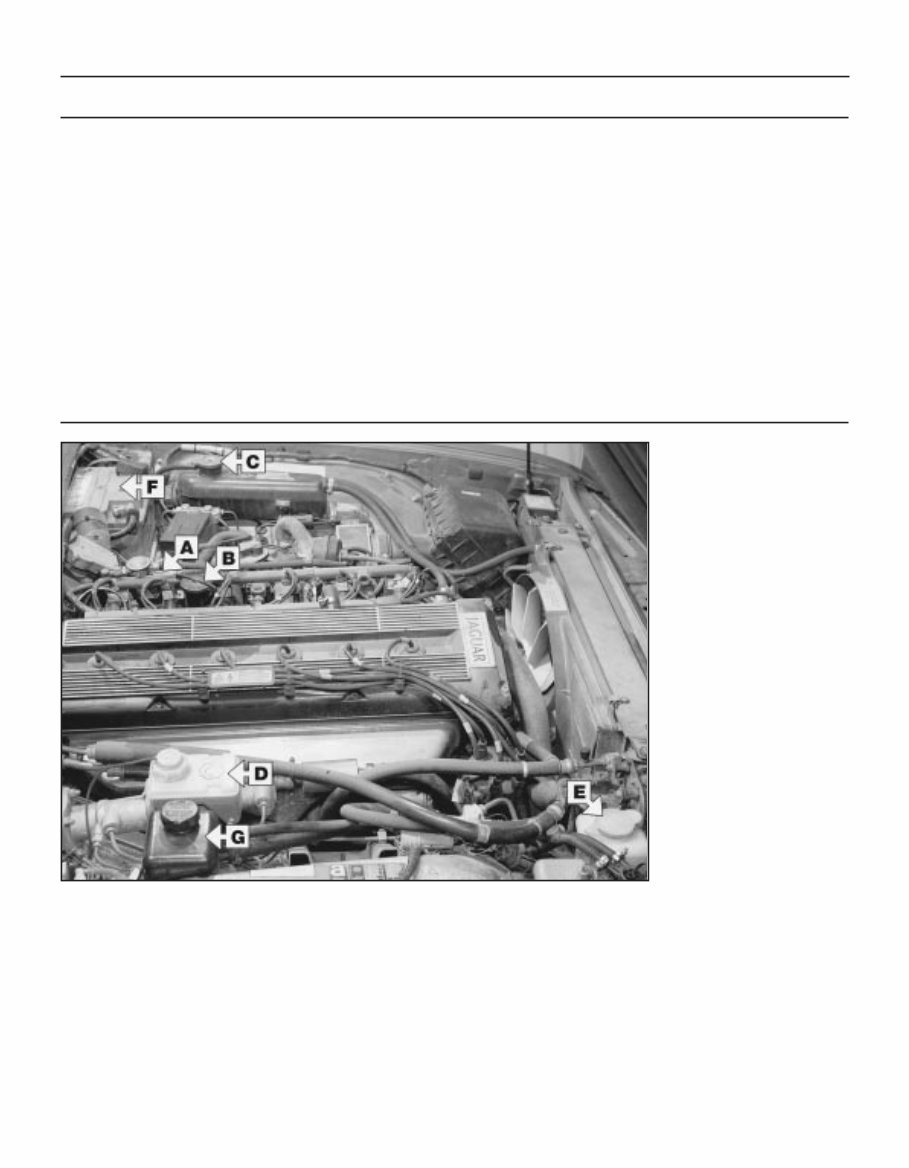
3261 Jaguar XJ6 0•10 Weekly checks There are some very simple checks which need only take a few minutes to carry out, but which could save you a lot of inconvenience and expense. These "Weekly checks" require no great skill or special tools, and the small amount of time they take to perform could prove to be very well spent, for example; M Keeping an eye on tyre condition and pressures, will not only help to stop them wearing out prematurely, but could also save your life. M Many breakdowns are caused by electrical problems. Battery-related faults are particularly common, and a quick check on a regular basis will often prevent the majority of these. M If your car develops a brake fluid leak, the first time you might know about it is when your brakes don't work properly. Checking the level regularly will give advance warning of this kind of problem. M If the oil or coolant levels run low, the cost of repairing any engine damage will be far greater than fixing the leak, for example. Introduction § 3.6 litre engine (others similar) Viewed from right-hand side A Engine oil level dipstick B Engine oil filler cap C Coolant expansion tank D Brake fluid reservoir E Screen washer fluid reservoir F Battery G Power steering fluid reservoir Underbonnet check points
The Jaguar XJ6 1987 Full Service Repair Manual is a comprehensive guide for maintaining and repairing the Jaguar XJ6 model of the year 1987. Whether you are a car enthusiast or a professional mechanic, this manual provides all the necessary information and step-by-step instructions to keep your Jaguar XJ6 in top condition.
This manual covers a wide range of topics related to the Jaguar XJ6 1987 model, including:
Engine maintenance and repair
Transmission and drivetrain
Suspension and steering
Brakes and ABS system
Electrical system and wiring diagrams
Heating and air conditioning
Body and interior
And much more!
With detailed illustrations and clear explanations, this manual makes it easy to diagnose and fix any issues that may arise with your Jaguar XJ6 1987. It also includes valuable tips and tricks to ensure efficient and effective repairs.
Whether you need to perform routine maintenance tasks or tackle complex repairs, the Jaguar XJ6 1987 Full Service Repair Manual is a reliable companion that will guide you every step of the way.



 Lifetime Access