

VELOSTER(JS) > 2020 > G 2.0 MPI > Emission Control System
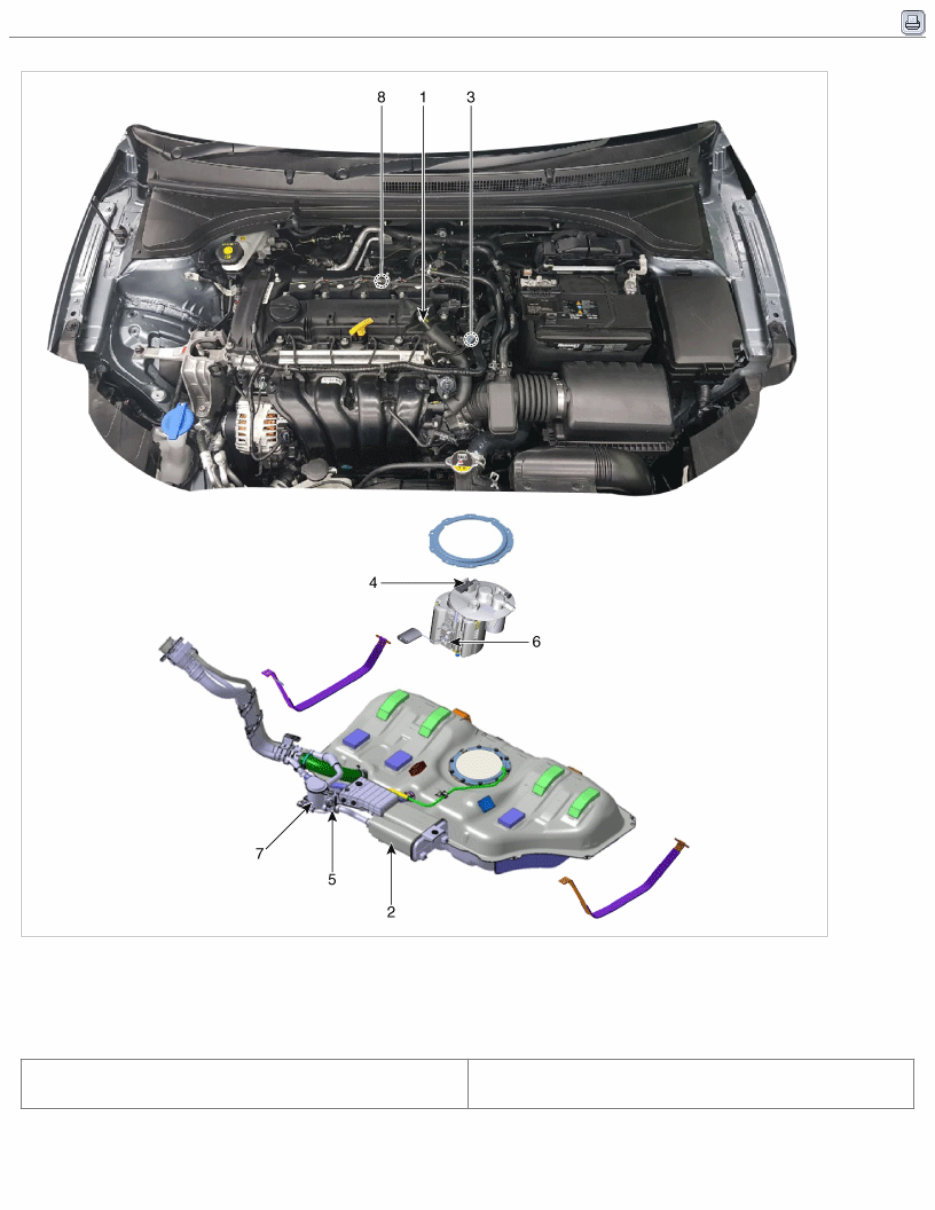
- Components Location
1. PCV valve
2. Canister
3. Purge control solenoid valve (PCSV)
4. Fuel Tank Pressure Sensor (FTPS)
5. Canister Close Valve (CCV)
6. Fuel Level Sensor (FLS)
7. Fuel Tank Air Filter
8. Catalytic Converter (WCC / UCC)
1. PCV Valve
3. Purge Control Solenoid Valve (PCSV)
2. Canister
7. Fuel Tank Air Filter
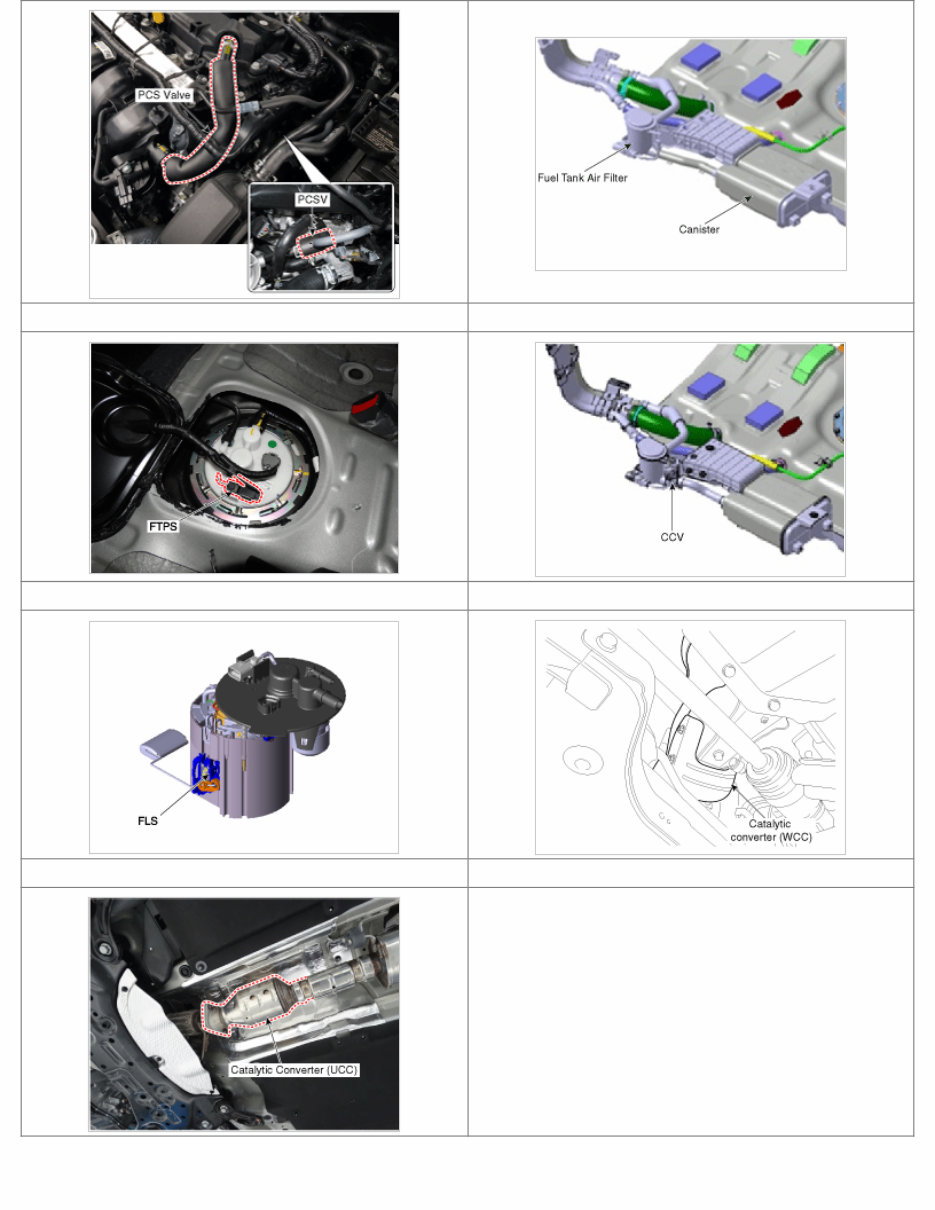
4. Fuel Tank Pressure Sensor (FTPS) 5. Canister Close Valve (CCV)
6. Fuel Level Sensor (FLS) 8. Catalytic Converter (WCC)
8. Catalytic Converter (UCC)

VELOSTER(JS) > 2020 > G 2.0 MPI > Emission Control System
- Description
Emissions Control System consists of three major systems.
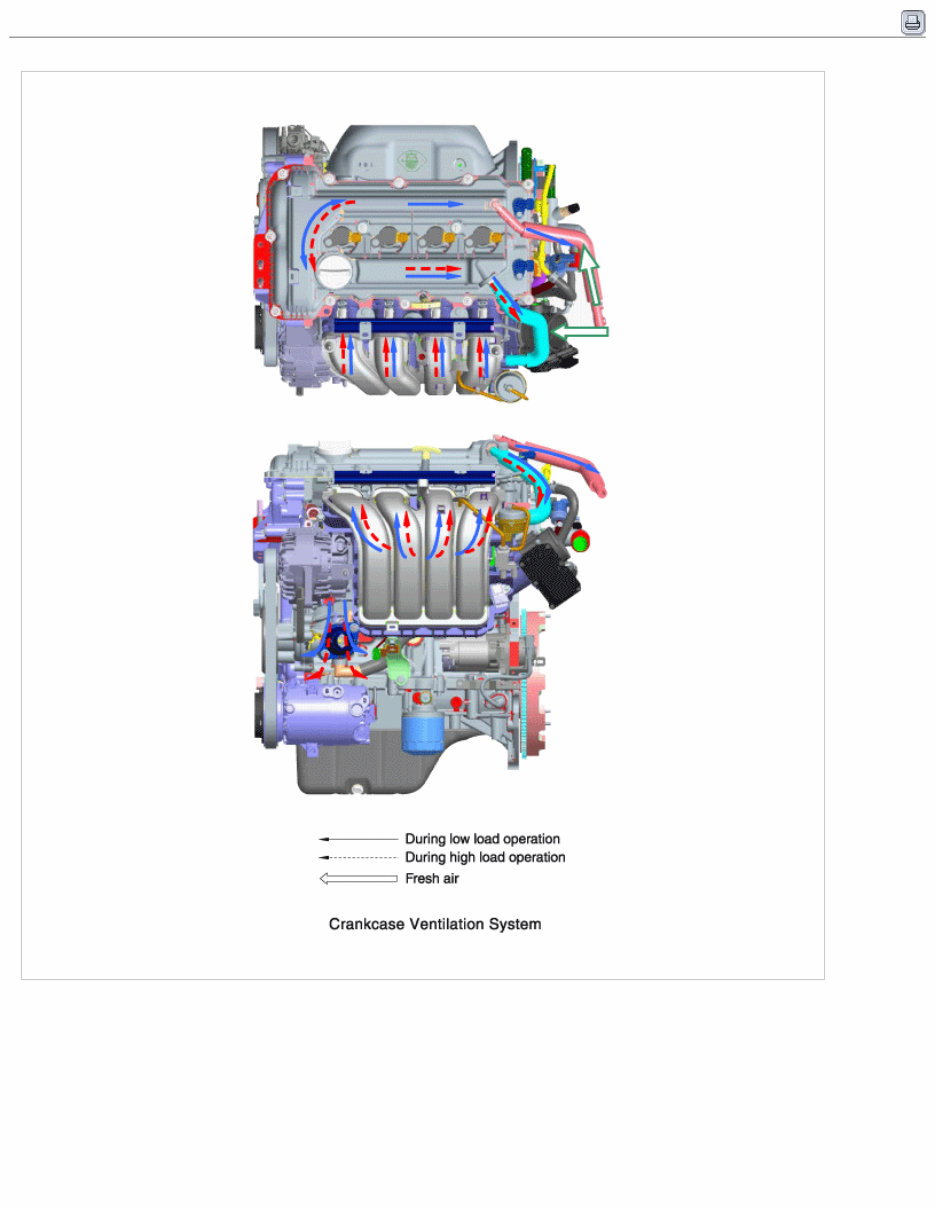
– The Crankcase Emission Control System prevents blow-by gas from releasing into the atmosphere. This system
recycles gas back into the intake manifold (Closed Crankcase Ventilation Type).
– The Evaporative Emission Control System prevents evaporative gas from releasing into the atmosphere. This system
burns gas at appropriate engine operating condition after gathering it in the canister.
– The Exhaust Emission Control System converts the three pollutants [hydrocarbons (HC), carbon monoxide (CO), and
oxides of nitrogen (NOx)] into harmless substances by using the 3-way catalytic converter.
VELOSTER(JS) > 2020 > G 2.0 MPI > Emission Control System
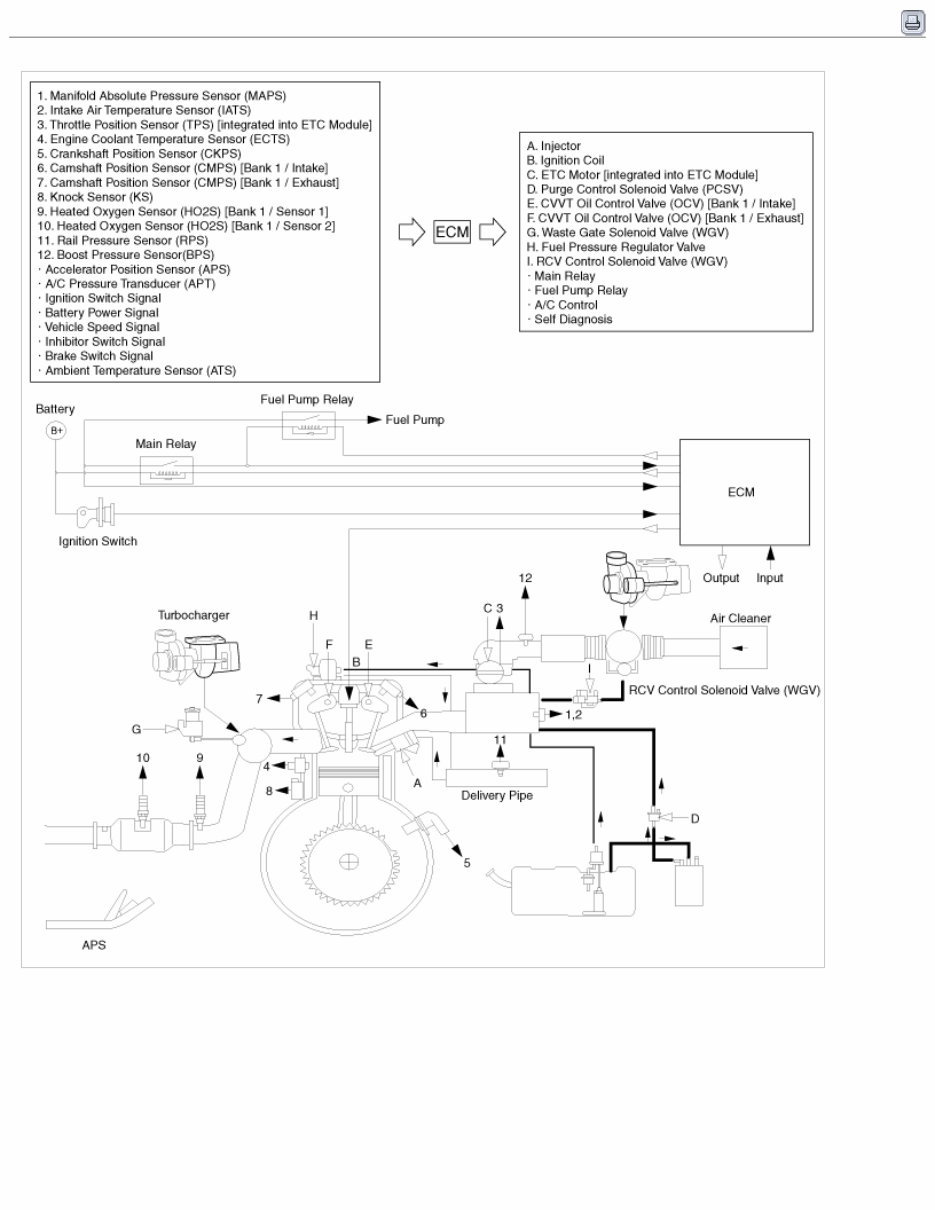
- Schematic Diagram
VELOSTER(JS) > 2020 > G 2.0 MPI > Emission Control System
- Specifications
Purge Control Solenoid Valve (PCSV)
▷ Specification
Item Specification
Coil Resistance (Ω) 22.0 - 26.0 [20°C (68°F)]
Fuel Tank Pressure Sensor (FTPS)
▷ Type : Piezo-Resistive Pressure Sensor
▷ Specification
Pressure
[kPa (kgf/cm², in H2O)
Output Voltage (V)
-6.67 (-0.068, -26.8) 0.5
0 2.5
+6.67 (+0.068, +26.8) 4.5
Canister Close Valve (CCV)
▷ Specification
Item Specification
Coil Resistance (Ω) 19.8 - 21.8 [20°C (68°F)]
- Tightening Torques
Item kgf.m N.m lb-ft
Positive Crankcase Ventilation (PCV) Valve installation 0.8 - 1.2 7.8 - 11.8 5.8 - 8.7
Canister installation bolt 1.0 - 1.5 9.8 - 14.7 7.2 - 10.8

VELOSTER(JS) > 2020 > G 2.0 MPI > Emission Control System
- Troubleshooting
Symptom Suspect area
Engine will not start or hard to start Vapor hose damaged or disconnected
Engine hard to start Malfunction of the Purge Control Solenoid Valve
Rough idle or engine stalls
Vapor hose damaged or disconnected
Malfunction of the PCV valve
Rough idle Malfunction of the Evaporative Emission Control System
Excessive oil consumption Positive crankcase ventilation line clogged
VELOSTER(JS) > 2020 > G 2.0 MPI > Emission Control System
- Inspection
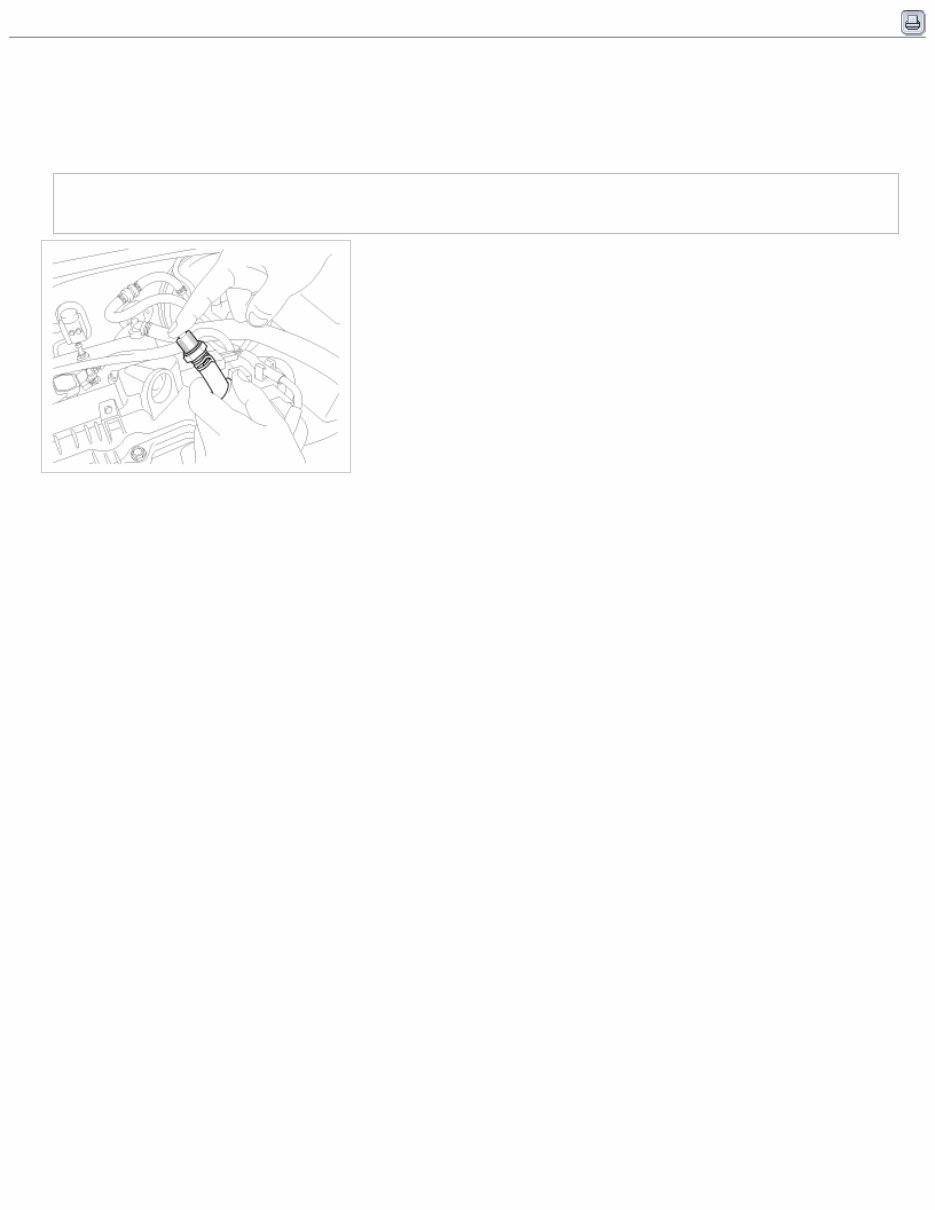
1. After disconnecting the vapor hose from the PCV valve, remove the PCV valve.
2. Reconnect the PCV valve to the vapor hose.
3. Run the engine at idle, then put a finger over the open end of the PCV valve and make sure that intake manifold
vacuum can be felt.
• The plunger inside the PCV valve will move back and forth at vacuum.
4. If the vacuum is not felt inspect PCV operation, if operating correctly clean or replace the vapor hose.
VELOSTER(JS) > 2020 > G 2.0 MPI > Emission Control System
- Schematic Diagram
VELOSTER(JS) > 2020 > G 2.0 MPI > Emission Control System
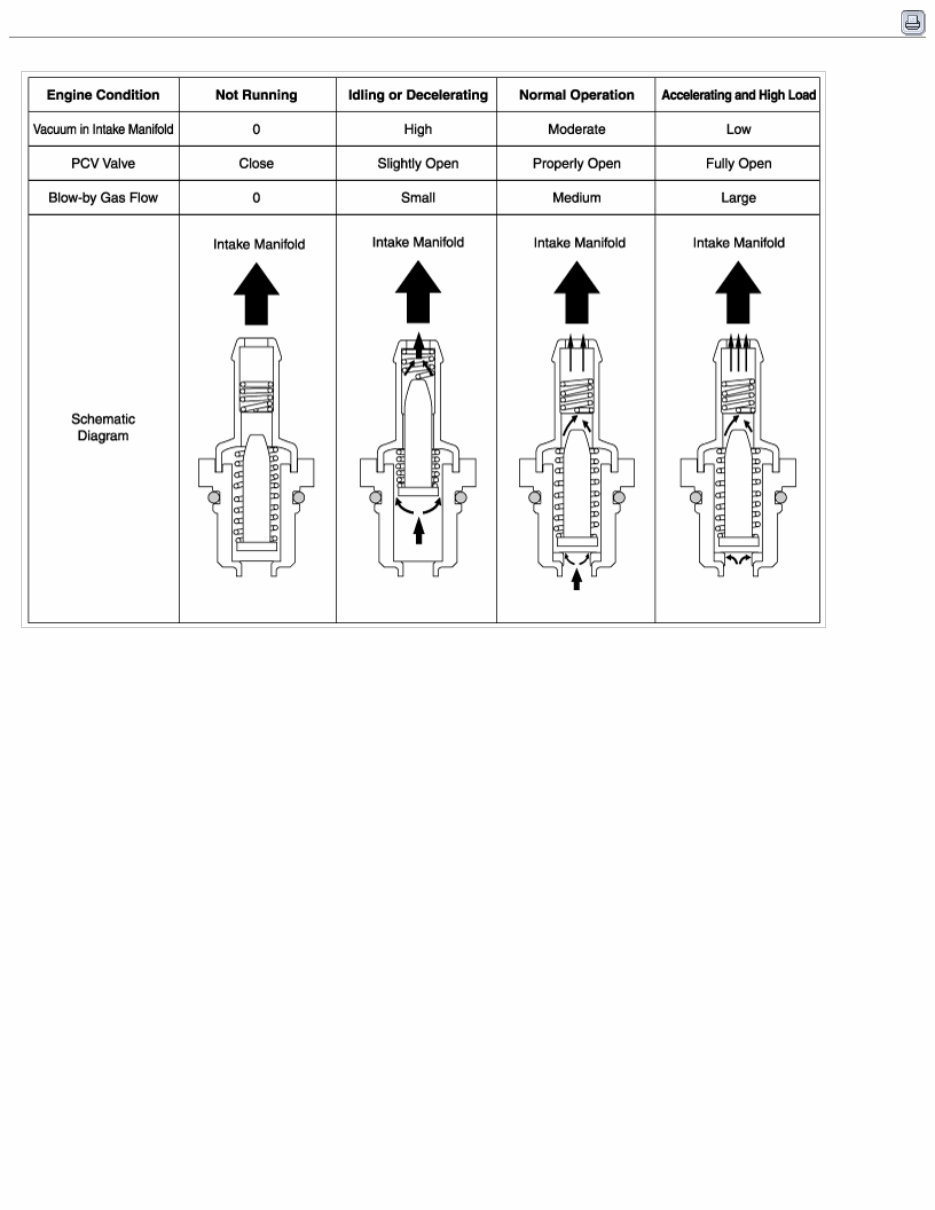
- Operation Principle
VELOSTER(JS) > 2020 > G 2.0 MPI > Emission Control System
- Removal
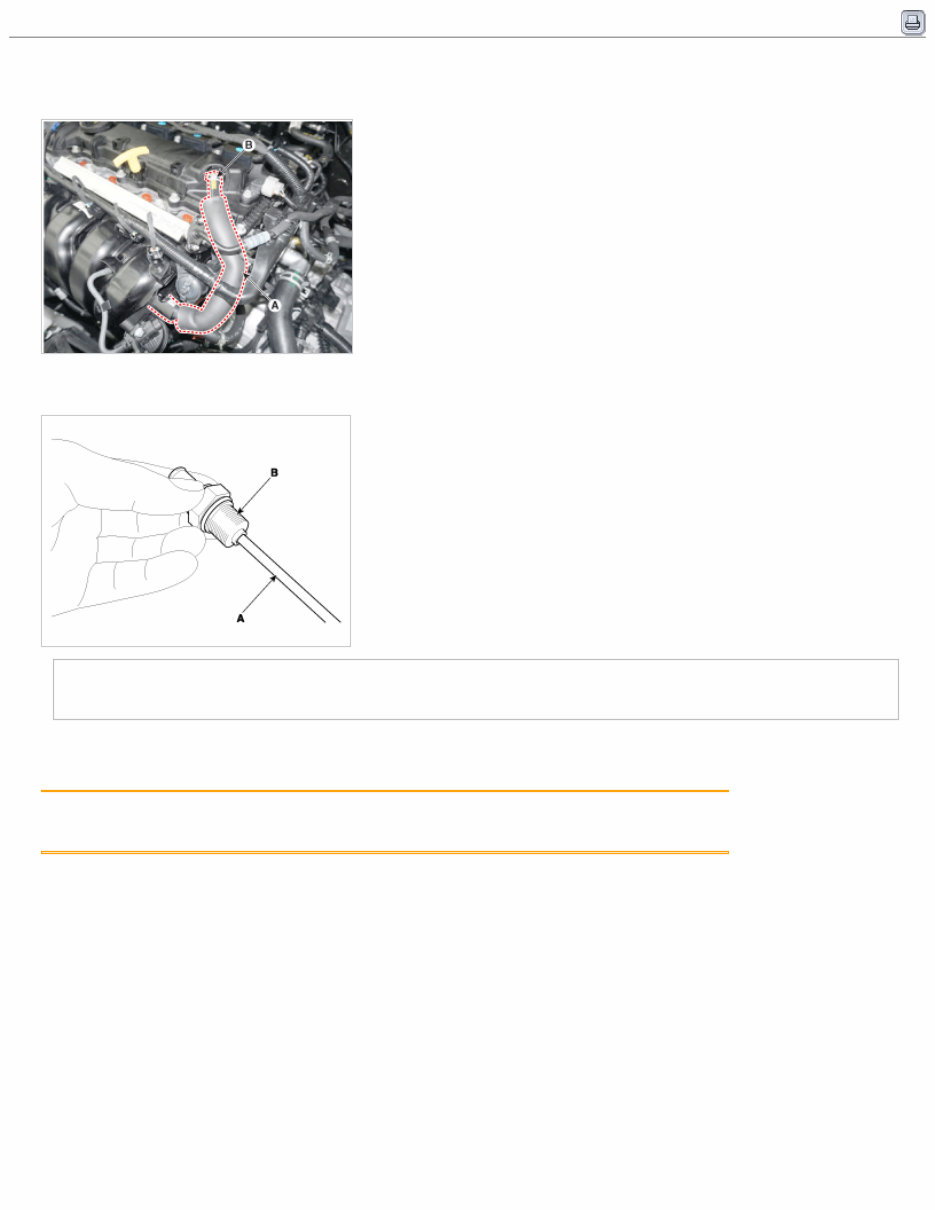
1. Disconnect the vapor hose (A).
2. Remove the PCV valve (B).
- Inspection
1. Insert a thin stick (A) into the PCV valve (B) from the threaded side to check that the plunger movement.
• If the plunger does not move (PCV valve is clogged), clean or replace the valve.
- Installation
1. Installation is reverse of removal.
PCV Valve installation :
1.96 - 2.94 N.m (0.2 - 0.3 kgf.m, 1.45 - 2.17 lb-ft)
You're Reading a Preview
What's Included?
 Lifetime Access
Fast Download Speeds
Online & Offline Access
Access PDF Contents & Bookmarks
Full Search Facility
Print one or all pages of your manual
$57.99
2020 Hyundai VELOSTER (JS) G 2.0 MPI Service & Repair Manual
Viewed 30 Times Today

What's Included?
Lifetime Access
Fast Download Speeds
Online & Offline Access
Access PDF Contents & Bookmarks
Full Search Facility
Print one or all pages of your manual
$57.99

Secure transaction
What's Included?
Lifetime Access
Fast Download Speeds
Online & Offline Access
Access PDF Contents & Bookmarks
Full Search Facility
Print one or all pages of your manual
Description
The Hyundai VELOSTER (JS) G 2.0 MPI Service & Repair Manual provides comprehensive guidance for the thorough understanding and maintenance of the vehicle.
- Designed for both professional mechanics and DIY enthusiasts, this manual covers the essential procedures required for the upkeep and repair of the VELOSTER (JS) G 2.0 MPI.
- With detailed descriptions and step-by-step instructions, you'll gain hands-on knowledge of the vehicle's inner workings, enabling you to tackle complex tasks with confidence.
- Covering various aspects of maintenance, including troubleshooting, repair, and regular upkeep, this manual equips you with the technical expertise needed to get the most out of your vehicle.
- Packed with valuable information, the manual is a must-have resource for anyone seeking a deeper understanding of the VELOSTER (JS) G 2.0 MPI.
This comprehensive manual is ideal for anyone seeking authoritative guidance on the care and repair of their Hyundai VELOSTER (JS) G 2.0 MPI.


