

ELANTRA(HD) > 2010 > G 2.0 DOHC > General Information
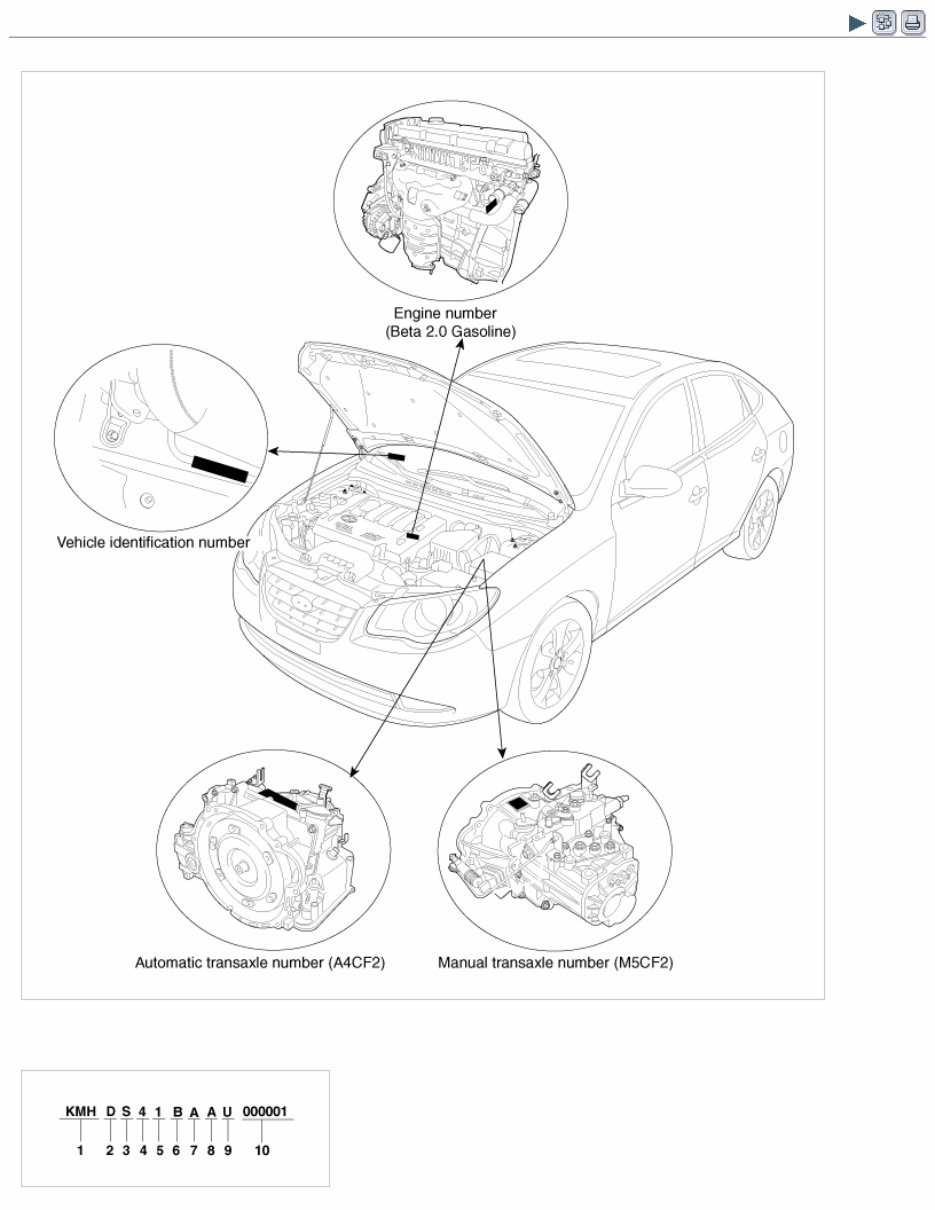
12345678910
- IDENTIFICATION NUMBER LOCATIONS
Identification Number Description
Vehicle Identification Number
1. World Manufacturer Identifier (WMI)

- KMF : Commercial vehicle (Van)
- KMH : Passenger vehicle or MPV(Multipurpose Passenger Vehicle)/SUV(Sports Utility Vehicle)/RV(Recreational
Vehicle)
- KMJ : Van
- KM8 : MPV/SUV/RV (For U.S.A, Canada, Mexico)
2. Vehicle line
- D : ELANTRA
3.
Model & Series
- S : Low grade (L)
- T : Middle grade (GLS, JSL, TAX)
- U : High grade (TOP)
4.Body/Cabin type, Gross Vehicle Weight Rating
KMF (Commercial vehicle / Van)
Except U.S.A, Canada, Mexico, Gulf Cooperation Council, China
- X : Standard Cabin / Semi-Bonnet
- Y : Double Cabin / Bonnet
- Z : Super Cabin / Box
For U.S.A, Canada, Mexico, Gulf Cooperation Council, China
- 3 : Standard Cabin Class-E 4×2 / Semi-Bonnet Class-E 4×2
- 4 : Standard Cabin Class-E 4×4 / Semi-Bonnet Class-E 4×4
- 5 : Standard Cabin Class-F 4×2 / Semi-Bonnet Class-F 4×2
- 6 : Standard Cabin Class-F 4×4 / Semi-Bonnet Class-F 4×4
- 7 : Double Cabin Class-E 4×2 / Bonnet Class-E 4×2
- 8 : Double Cabin Class-E 4×4 / Bonnet Class-E 4×4
- 9 : Double Cabin Class-F 4×2 / Bonnet Class-F 4×2
- 0 : Double Cabin Class-F 4×4 / Bonnet Class-F 4×4
- A : Super Cabin Class-E 4×2 / Box Class-E 4×2
- B : Super Cabin Class-E 4×4 / Box Class-E 4×4
- C : Super Cabin Class-F 4×2 / Box Class-F 4×2
- D : Super Cabin Class-F 4×4 / Box Class-F 4×4
KMH
- 1 : Limousine
- 2 : Sedan - 2 door
- 3 : Sedan - 3 door
- 4 : Sedan - 4 door
- 5 : Sedan - 5 door
- 6 : Coupe
- 7 : Convertible
- 8 : Wagon
- 9 : Commercial Van
- 0 : Pick-Up
KMJ
- 1 : Box
- 2 : Bonnet
- 3 : Semi-Bonnet
KM8
- 1 : Wagon 4×2 Class-A
- 2 : Wagon 4×2 Class-B
- 3 : Wagon 4×2 Class-C
- 4 : Wagon 4×2 Class-D
- 5 : Wagon 4×2 Class-E
- 6 : Wagon 4×2 Class-F
- 7 : Wagon 4×2 Class-G
- A : Wagon 4×4 Class-A
- B : Wagon 4×4 Class-B
- C : Wagon 4×4 Class-C
- D : Wagon 4×4 Class-D
- E : Wagon 4×4 Class-E
- F : Wagon 4×4 Class-F
- G : Wagon 4×4 Class-G
5. Restraint system, Brake system
KMH, KM8
Except U.S.A, Canada, Mexico
- 0 : Both side - None
- 1 : Both side - Active belt
- 2 : Both side - Passive belt
For U.S.A, Canada, Mexico
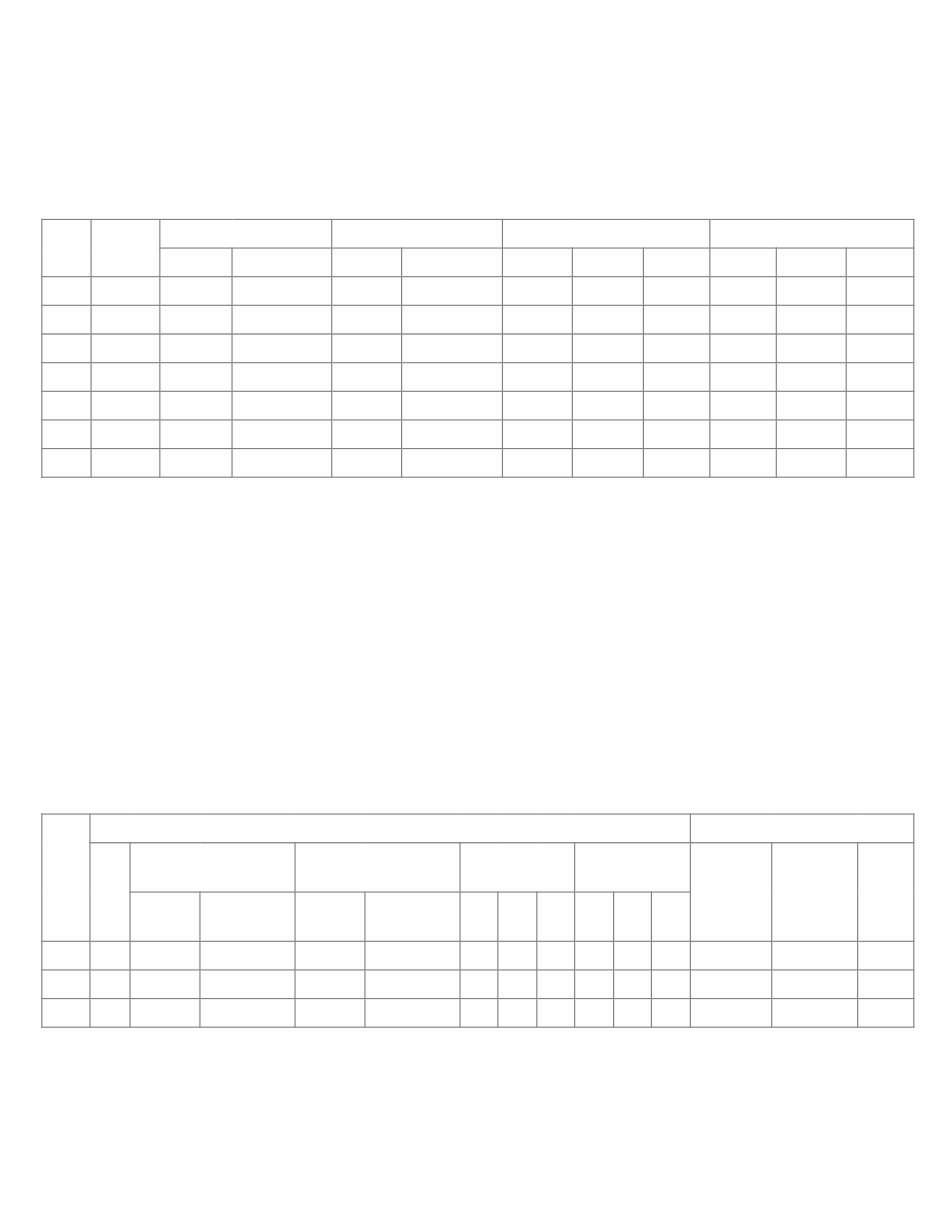
Code
Seat
belt
Front air bag Knee air bag Side air bag Curtain air bag
Driver''s Passenger''s Driver''s Passenger''s 1st row 2nd row 3rd row 1st row 2nd row 3rd row
A ○ ○ ○ × × ○ × × ○ ○ ×
B ○ ○ ○ × × × × × × × ×
C ○ ○ ○ × × ○ × × ○ ○ ○
D ○ ○ ○ × × ○ ○ × ○ ○ ×
E ○ ○ × × × × × × × × ×
F ○ ○ ○ × × ○ × × × × ×
N ○ × × × × × × × × × ×
KMJ
Except U.S.A, Canada, Mexico
- 7 : Hydraulic brake system
- 8 : Pneumatic brake system
- 9 : Mixed brake system
For U.S.A, Canada, Mexico
- X : Hydraulic brake system
- Y : Pneumatic brake system
- Z : Mixed brake system
KMF
Except U.S.A, Canada, Mexico
- 7 : Hydraulic brake system
- 8 : Pneumatic brake system
- 9 : Mixed brake system
For U.S.A, Canada, Mexico
Code
Restraint system Brake system
Seat
belt
Front air bag Knee air bag Side air bag
Curtain air
bag
Hydrauric Pneumatic Mixed
Driver''s Passenger''s Driver''s Passenger''s
1st
row
2nd
row
3rd
row
1st
row
2nd
row
3rd
row
X ○ × × × × × × × × × × ○ - -
V ○ ○ × × × × × × × × × ○ - -
W ○ ○ ○ × × × × × × × × ○ - -
6. Engine type
- D : Gasoline engine 2.0
7. Check digit or Driver’s side & Transmission
Except U.S.A, Canada, Mexico, Gulf Cooperation Council, China, Yemen
- A : LHD & MT
- B : LHD & AT
- C : LHD & MT+Transfer
- D : LHD & AT+Transfer
- E : LHD & CVT
- L : RHD & MT
- M : RHD & AT
- N : RHD & MT+Transfer
- S : RHD & AT+Transfer
- T : RHD & CVT
For U.S.A, Canada, Mexico, Gulf Cooperation Council, China, Yemen
- Check digit : 0 ~ 9, ×
8. Model year
- A : 2010, B : 2011, C : 2012, D : 2013 …
9. Plant of production
- A : Asan (Korea)
- C : Cheonju (Korea)
- U : Ulsan (Korea)
10. Vehicle production sequence number
- 000001 ~ 999999
PAINT CODE
CODE COLOR
2R Silver
5F Red Pearl
9W Sand Beige
2X Dark Blue
9F Black Pearl
7F Solid White
9A Cool Gray
9D Smoky Blue
7D Mica Purple
0T Special Color
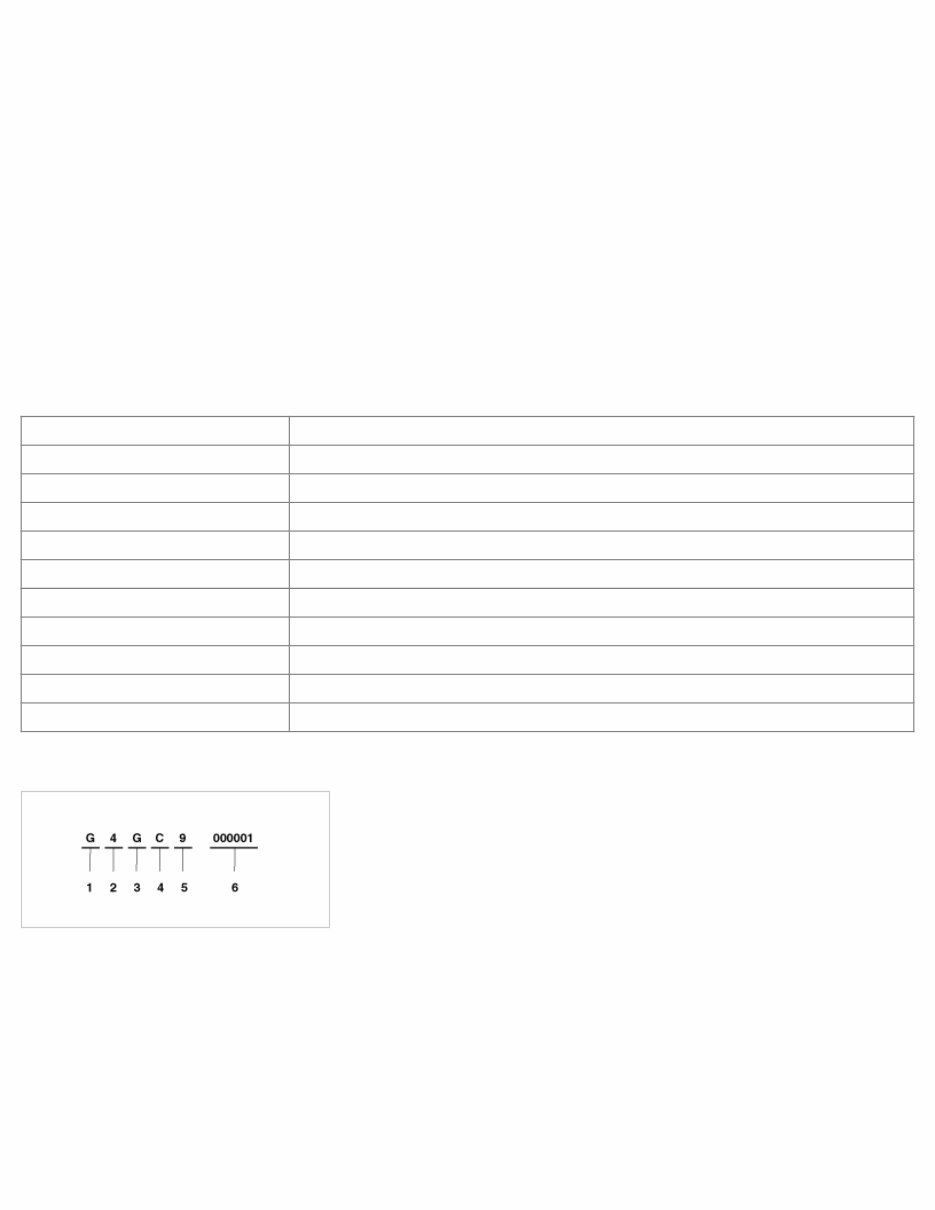
Engine Number
1. Engine fuel
– G : Gasoline
2. Engine range
– 4 : 4 cycle 4 cylinder
3~4 : Engine development order and capacity
– GC : β-engine, 1975cc (Gasoline)
5. Model year
– 9 : 2009, A : 2010, B : 2011, C : 2012, D : 2013 …
6. Engine production sequence number
– 000001 ~ 999999
Transaxle Number
Manual
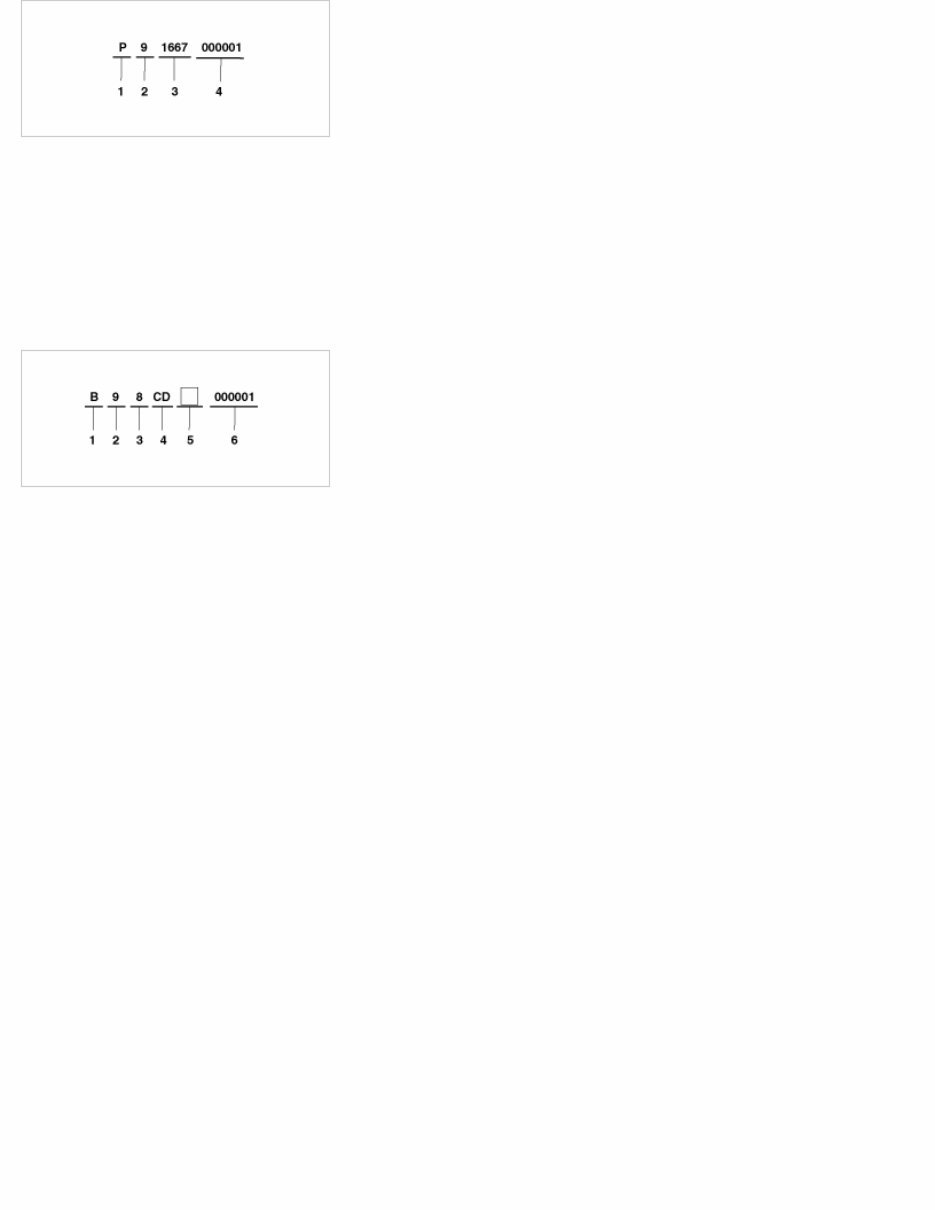
1) Model
- P : M5CF2
2) Model year
- 9 : 2009, A : 2010, B : 2011, C : 2012, D : 2013 …
3) Gear ratio
- 1667 : 4.188
4) Transaxle production sequence number
- 000001 ~ 999999
Automatic
1. Model
- B : A4CF2
2. Model year
- 9 : 2009, A : 2010, B : 2011, C : 2012, D : 2013 …
3. Gear ratio
- 8 : 3.849
4. Detailed chassification
- CD : β - 2.0
- CU : β - 2.0
5. Spare
6. Transaxle production sequence number
- 000001 ~ 999999
WARNING / CAUTION LABEL LOCATIONS
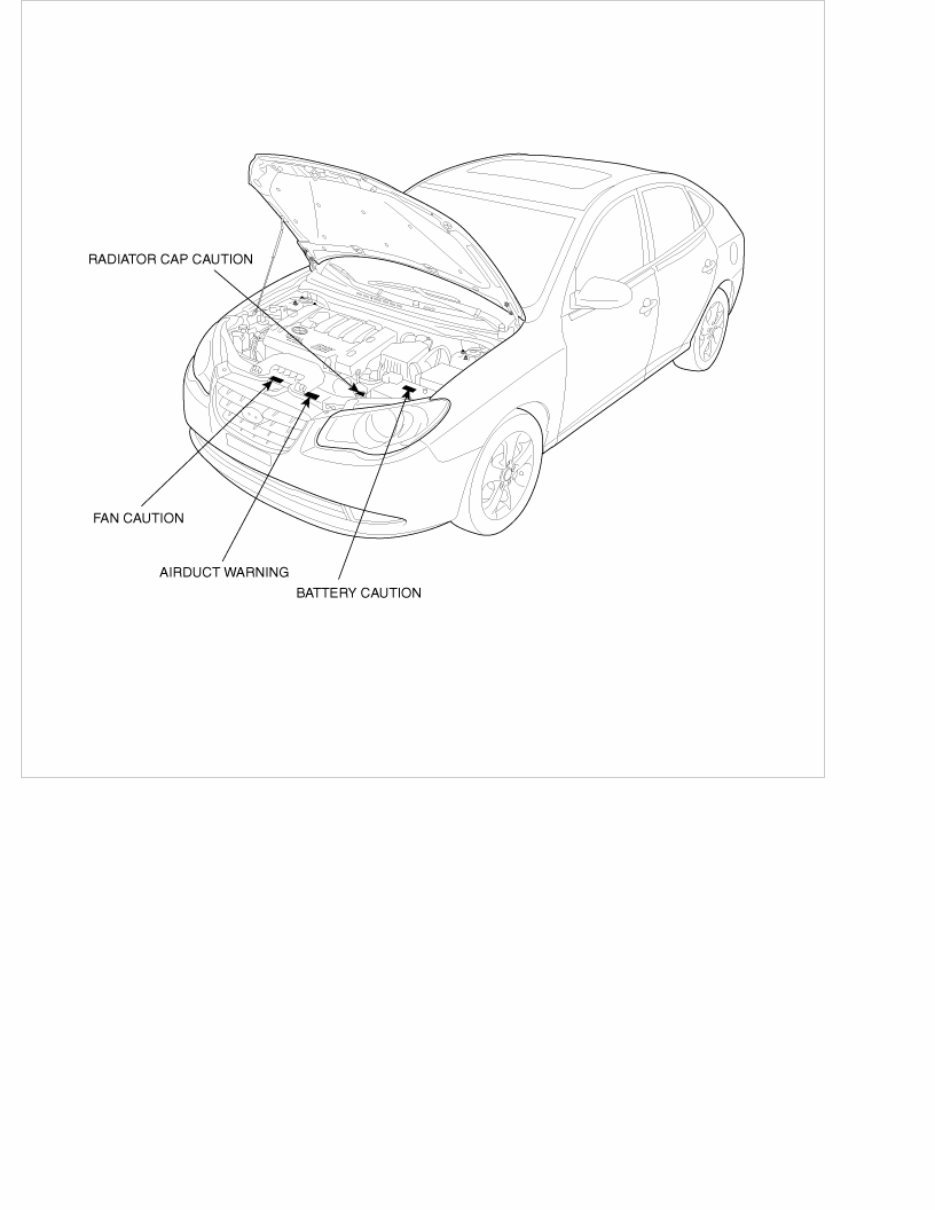
Battery Caution Label Describtion
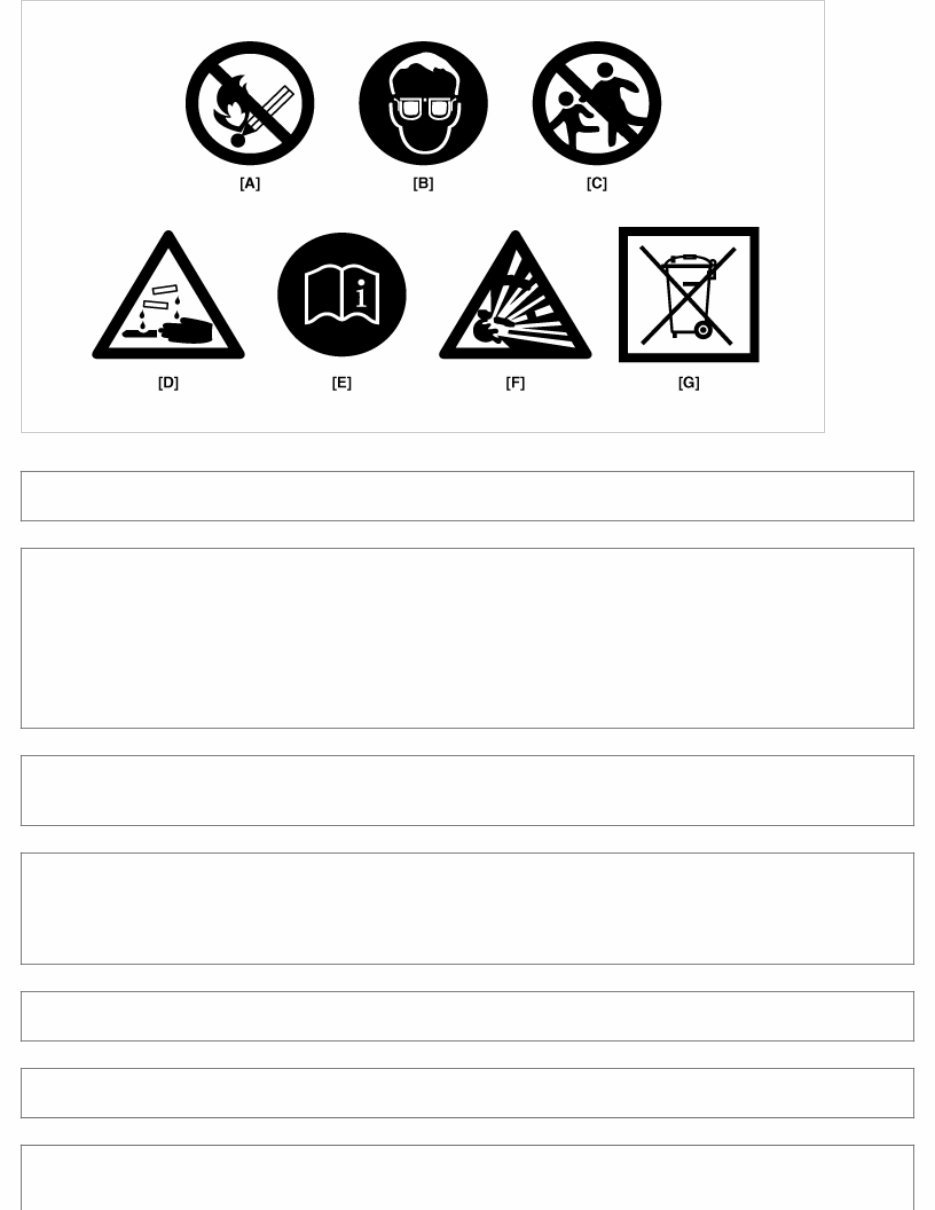
Warning / Caution Label (Cont''d)
A.
Keep lighted cigarettes and all other flames or sparks away from the battery.
B.
Wear eye protection when charging or working near a battery. Always provide ventilation when working in an enclosed
space.
• When lifting a plastic-cased battery, excesive pressure on acid to leak resulting in personal injury. Lift with a battery
carrier or with your hands on opposite corners.
• Never attempt to change the battery when the battery cables are connected.
• The electrical ignition system works with high voltage.
Never touch these components with the engine running or the ignition switched on.
C.
Keep batteries out of the reach of children because batteries contain highly corrosive SULFURIC ACID. Do not allow
battery acid to contact your skin, eyes, clothing or paint finish.
D.
If any electrolyte gets into your eyes, flush your eyes with clean water for at least 15 minutes and get immediate
medical attention. If possible, continue to apply water with a sponge or cloth until medical attention is received.
If electrolyte gets on your skin, throughly wash the contacted area. If you feel a pain or a burning sensation, get medical
attention immediately.
E.
Always read the following instructions carefully when handing a battery.
F.
Hydrogen, which is a highly combustible gas, is always presents in battery cells and may explode if ignited.
G.
An improperly disposed battery can be harmful to the environment and human health.
Always confirm local regurations for battery disposal.
Handling And Storage The Battery
Battery Itself • Batteries should be stored in cool, dry (27 degrees Celsius) places and out of
direct sunlight.
• MF batteries are tightly sealed to prevent acid leakage.
However, tilting the battery to an angle of 45 degrees can cause acid to leak
through the vents on the sides. Therefore, batteries should always be stored in
their upright positions. Prevent placing any aqueous or solid (i.e. conductors)
bodies on top of the battery.
• It is extremely dangerous to use tools, such as hammers, on the battery terminals
when connecting cables to the mounted battery.
Battery on Vehicle • When storing the vehicle for long periods of time, make sure to remove the
memory fuse at junction box to prevent natural discharging.
• Also, run the engine for battery charging within 1 month if the memory fuse
wasn''t removed from the start of vehicle storing.
If the memory fuse was removed, run the engine for battery charging within 3
months from the start of vehicle storing.
After reconnecting or recharging a discharged battery, the ESP OFF indicator may illuminate.
In this case, turn the handle half way to the left and right whilst the ignition switch is in the ON position.
Then, restart the engine after the ignition is OFF.
The ESP OFF indicator may turn OFF.
If the ESP OFF indicator does not turn OFF, have the system checked refering to DTC. (Refer to the BR group.)
LIFT AND SUPPORT POINTS
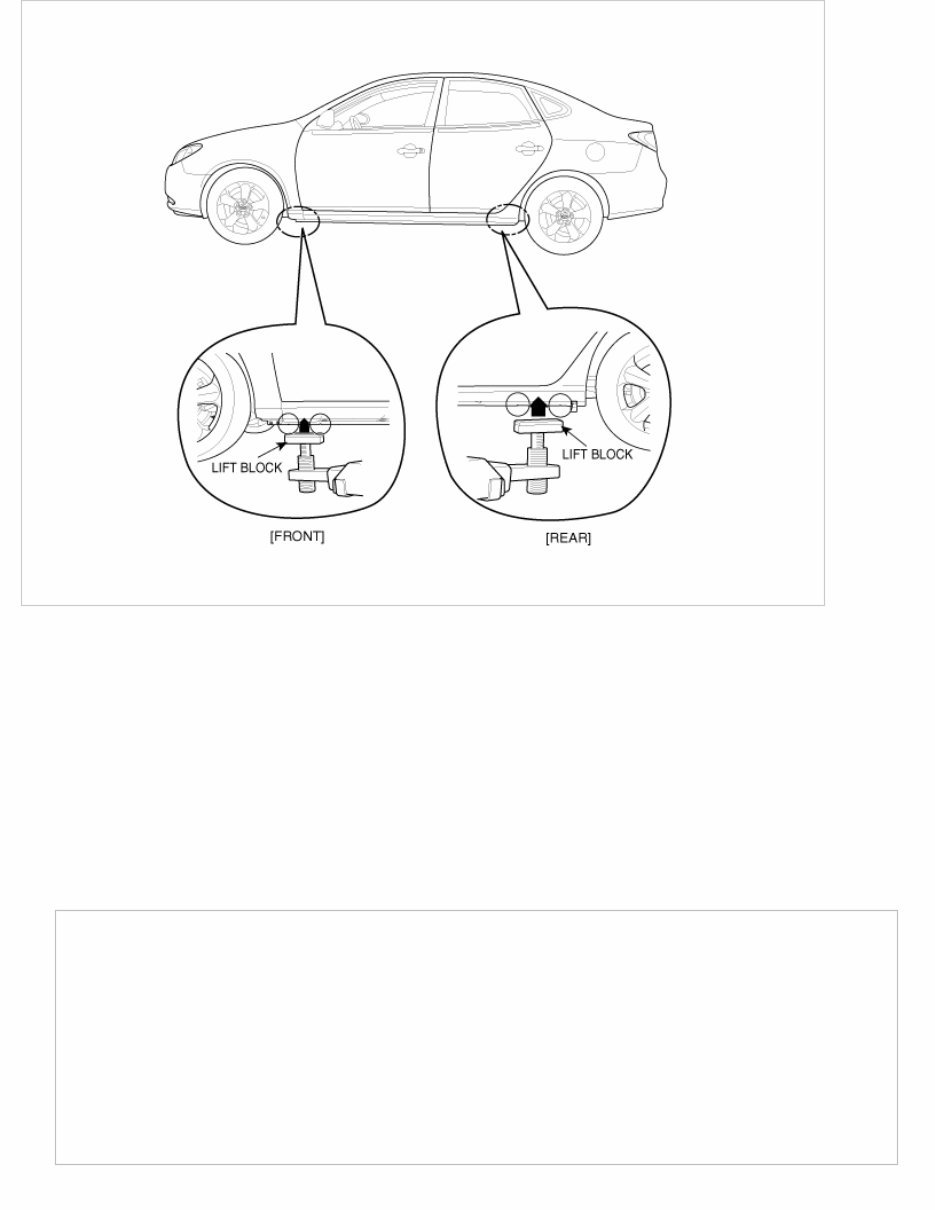
When heavy rear components such as suspension, fuel tank, spare tire, tailgate and trunk lid are to be removed,
place additional weight in the luggage area before hoisting. When substatial weight is removed from the rear of the
vehicle, the center of gravity may change and can cause the vehicle to tip forward on the hoist.
• Since each tire/wheel assembly weights approximately 30lbs (14kg), placing the front wheels in the luggage area
can assist with the weight distribution.
• Use the same support points to support the vehicle on safety stands.
1. Place the lift blocks under the support points as shown in the illustration.
2. Raise the hoist a few inches (centimeters) and rock the vehicle to be sure it is firmly supported.
3. Raise the hoist to full height to inspect the lift points for secure support.
TOWING
If the vehicle needs to be towed, call a professional towing service. Never tow vehicle with just a rope or chain. It is very
dangerous.
If the vehicle cannot be transported by flat-bed, if should be towed with the front wheels off the ground. If due to
damage, the vehicle must be toward with the front wheels on the ground, do the following :
Manual Transmission
• Release the parking brake.
• Shift the transmission to neutral
Automatic Transmission
• Release the parking brake.
• Start the engine.
• Shift to [D] position, then [N] position.
• Turn off the engine.
• The vehicle equipped with full-time 4WD should be only transported on a flat-bed.
• The CVT vehicles should be only transported on a flat-bed or towed by wheel lift towing which the wheels of
the driving axle are lifted off the ground.
• Improper towing preparation will damage the transaxle. Follow the procedure above exactly. If you cannot
shift the transaxle or start the engine(automatic transaxle), your vehicle must be transported on a flatbed.
• It is the best to tow vehicle no farther than 30km (19miles), and keep the speed below 50km/h (30mph).
(For the CVT and full-time 4WD (CVT/AT) vehicles, limit the towing distance and speed to 1.5km (1 mile)
and 15km/h (10 mph).)
• Trying to lift or tow your vehicle by the bumpers will cause serious damage to the vehicle. The bumpers are
not designed to support the vehicle''s weight.
Front :
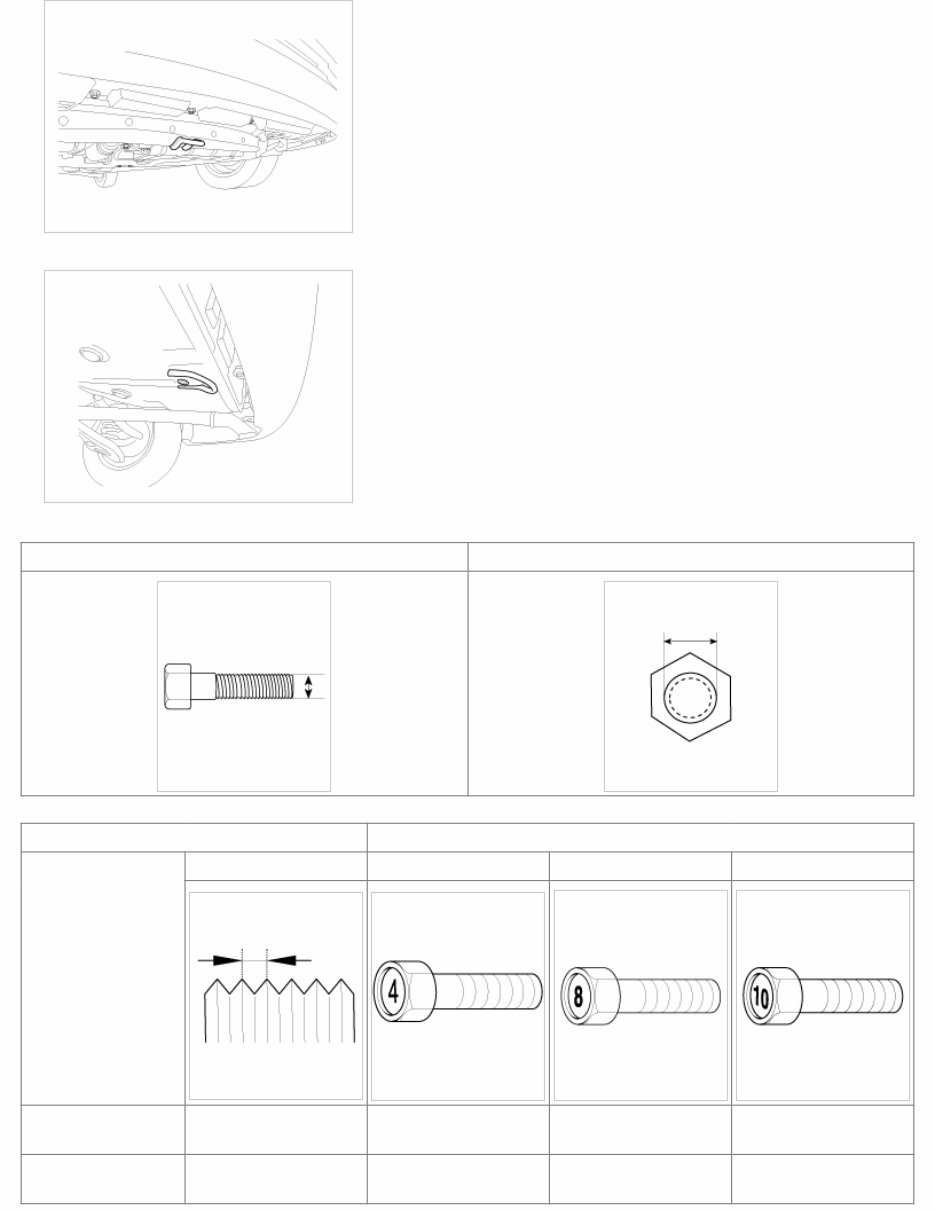
Rear :
Tightening Torque Table Of Standard Parts
BOLT (Nominal diameter) NUT (Nominal diameter)
BOLT/NUT Normal screw Torque Nm (kg.m, Ib-ft)
Nominal diameter.
(mm)
Pitch [mm (in.) ] 4T 8T 10T
M5 0.8 (0.031)
2.0 ~ 3.0 (0.2 ~ 0.3, 1.4
~ 2.2)
4.9 ~ 6.9 (0.5 ~ 0.7, 3.6
~ 5.1)
7.8 ~ 10.8 (0.8 ~ 1.1,
5.8 ~ 8.0)
M6 1 (0.039)
2.9 ~ 4.9 (0.3 ~ 0.5, 2.2
~ 3.6)
8.8 ~ 12.7 (0.9 ~ 1.3,
6.5 ~ 9.4)
13.7 ~ 18.6 (1.4 ~ 1.9,
10.1 ~ 13.7)
You're Reading a Preview
What's Included?
 Lifetime Access
Fast Download Speeds
Online & Offline Access
Access PDF Contents & Bookmarks
Full Search Facility
Print one or all pages of your manual
$31.99
2010 Hyundai ELANTRA (HD) G 2.0 DOHC Service & Repair Manual
Viewed 33 Times Today

What's Included?
Lifetime Access
Fast Download Speeds
Online & Offline Access
Access PDF Contents & Bookmarks
Full Search Facility
Print one or all pages of your manual
$31.99

Secure transaction
What's Included?
Lifetime Access
Fast Download Speeds
Online & Offline Access
Access PDF Contents & Bookmarks
Full Search Facility
Print one or all pages of your manual
Description
The Hyundai ELANTRA (HD) G 2.0 DOHC repair manual is a comprehensive guide designed for both professional mechanics and DIY enthusiasts. This manual provides detailed information on troubleshooting, repair, and maintenance procedures for the 2010 model.
- This manual covers a wide range of topics essential for maintaining and repairing the vehicle, including technical specifications, diagrams, and step-by-step instructions.
- It offers guidance on identifying and addressing common issues, as well as performing routine maintenance tasks to ensure optimal performance and extend the life of the vehicle.
- This repair manual is a valuable resource for anyone who needs in-depth knowledge to work on their Hyundai ELANTRA (HD) G 2.0 DOHC, whether a professional mechanic or a DIY enthusiast.
This manual is a fundamental resource for ensuring your vehicle runs smoothly and efficiently, and it's an essential addition to any repair shop or garage.


