

ELANTRA(XD) > 2004 > G 2.0 DOHC > General Information
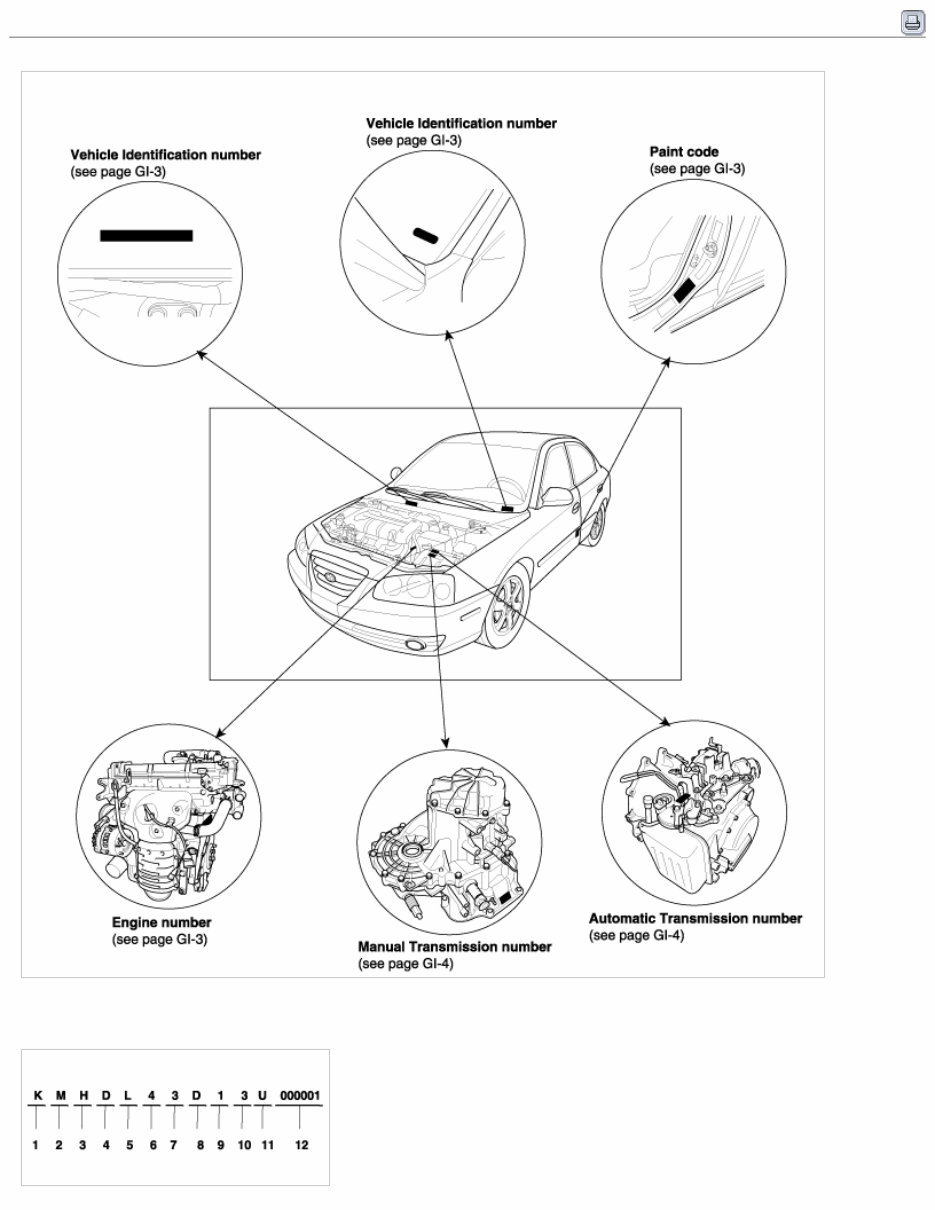
- IDENTIFICATION NUMBER LOCATIONS
IDENTIFICATION NUMBER DESCRIPTION
VEHICLE IDENTIFICATION NUMBER
1. Geographic zone
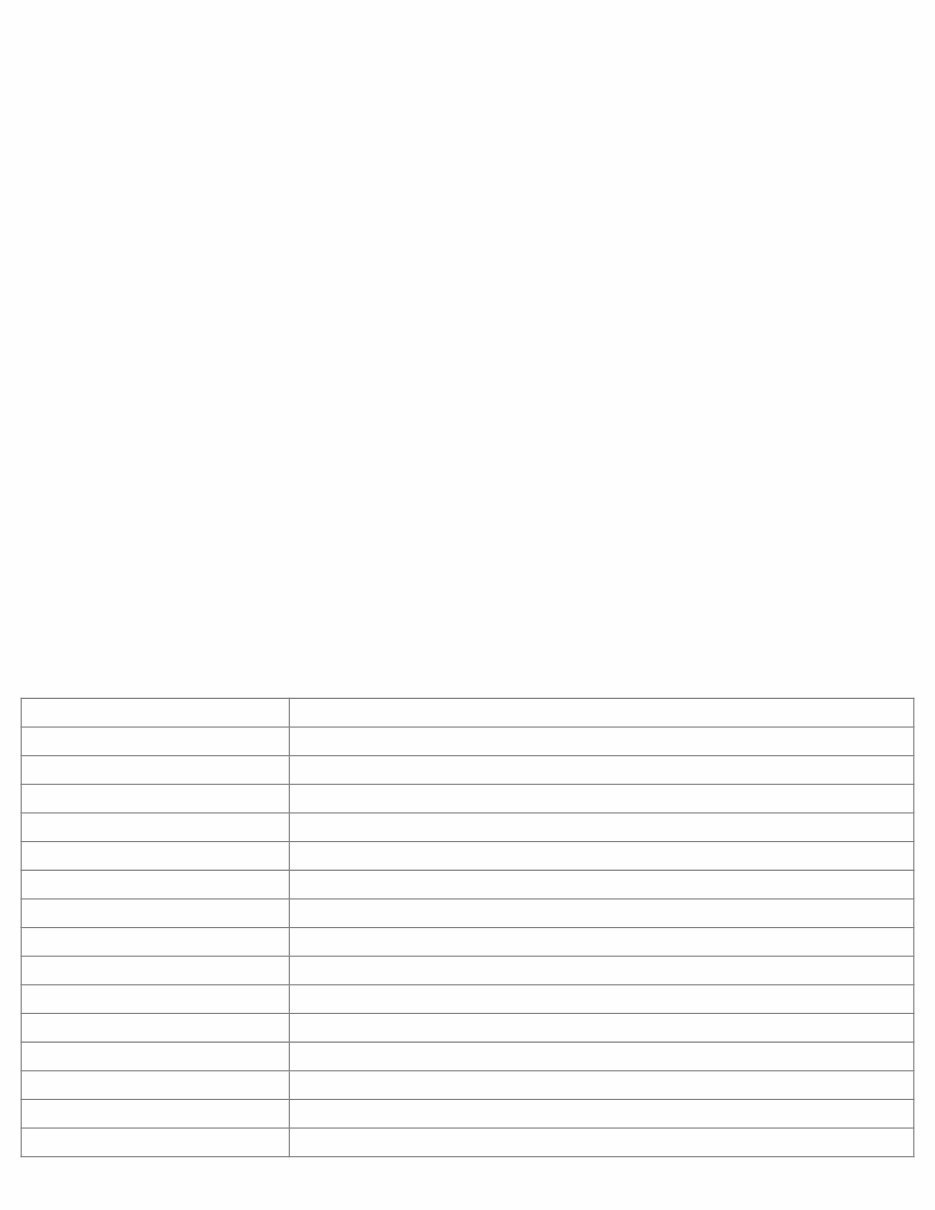
- K : Korea
2. Manufacturer
- M : Hyundai motor company
3. Vehicle type
- H : Passenger
4. Vehicle line
- D : ELANTRA
5. Model & Series
- L : STANDAD (L)
- M : DELUXE (GL)
- N: SUPER DELUXE (GLS)
6. Body type
- 4 : Sedan 4-door
- 5 : Sedan 5-door
7. Restraint system
- 3 :Driver side - Active belt and air bag
- 4 : Passenger side - Active belt or passive belt
- 5 : Depowered - Air bag
8. Engine type
- D : Gas 2.0 DOHC
9. Check digit
- 0 ~ 9, X
10. Production year
- 3 : 2003, 4 : 2004, 5 : 2005, 6 : 2006
11. Plant of production
- U : Ulsan (korea)
12. Vehicle production sequence number
- 000001 ~ 999999
PAINT CODE
CODE COLOR
NW Noble White
EB Ebony Black
LS Smart color
OT Special color
VX Samba Red
YY Sunny Yellow
TW New Sliver
SK Silver Sage
UE Gold Savor
YO Lime green
WN Dark navy blue
AH Amabile Rose
XX Exciting Blue
UL Ivy Gray
KO Premie Beige
ENGINE IDENTIFICATION NUMBER
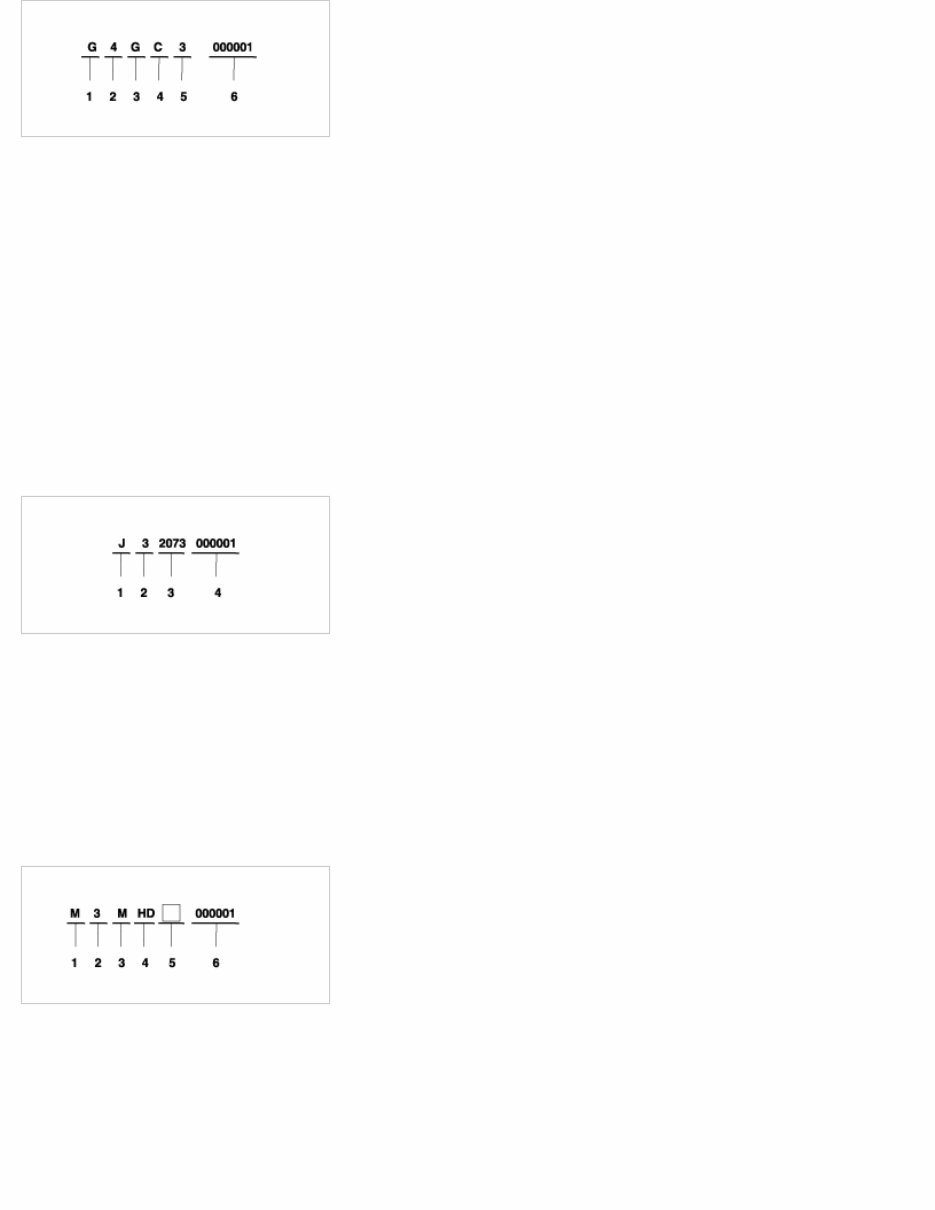
1. Engine fuel
- G : Gasoline
2. Engine range
- 4 : In line 4 cycle 4 cylinder
3. Engine development order
- G :BETA Engine
4. Engine capacity
- C : 1975cc
5. Production year
- 3 : 2003, 4 : 2004, 5 : 2005, 6 : 2006
6. Engine production sequence number
- : 000001 ~ 999999
TRANSMISSION IDENTIFICATION NUMBER
MANUAL
1) Model
- J : M5BF2
2) Production year
- 2 : 2002, 3 : 2003, 4 : 2004
- 5 : 2005, 6 : 2006, 7 : 2007
3) Gear ratio
2073 : 3.650
4) Transaxle production sequence number
- 000001 ~ 999999
AUTOMATIC
1. Modle
- M : F4A42
2. Production year
- 2 : 2002, 3 : 2003, 4 : 2004
- 5 : 2005, 6 : 2006, 7 : 2007
3. Gear ratio
M : 3.770
4. Detailed chassification
- HD : 2.0 DOHC
5. Spare
6. Transaxle production sequence number
- 000001 ~ 999999
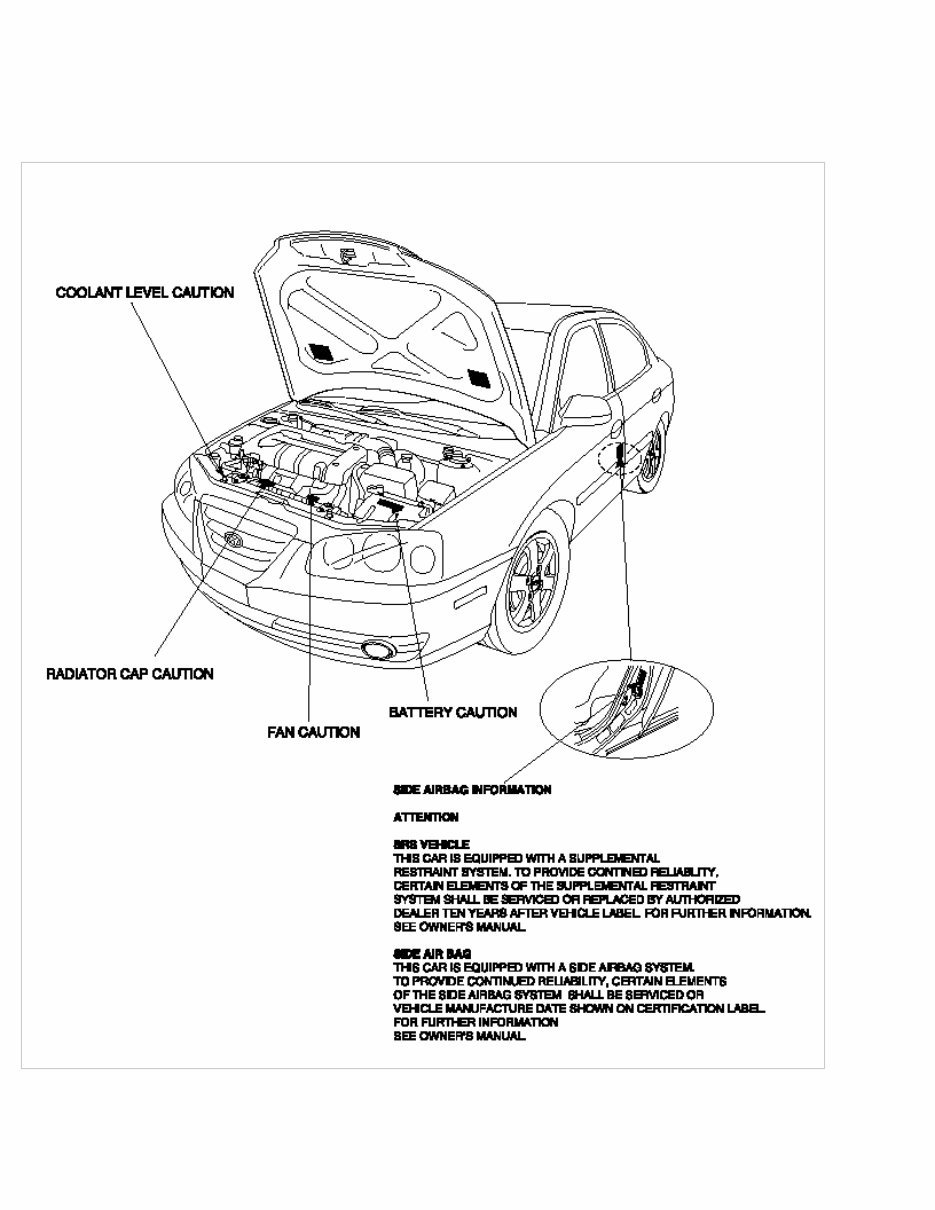
WARNING / CAUTION LABEL LOCATIONS
AIR BAG WARNING / CAUTION LABEL
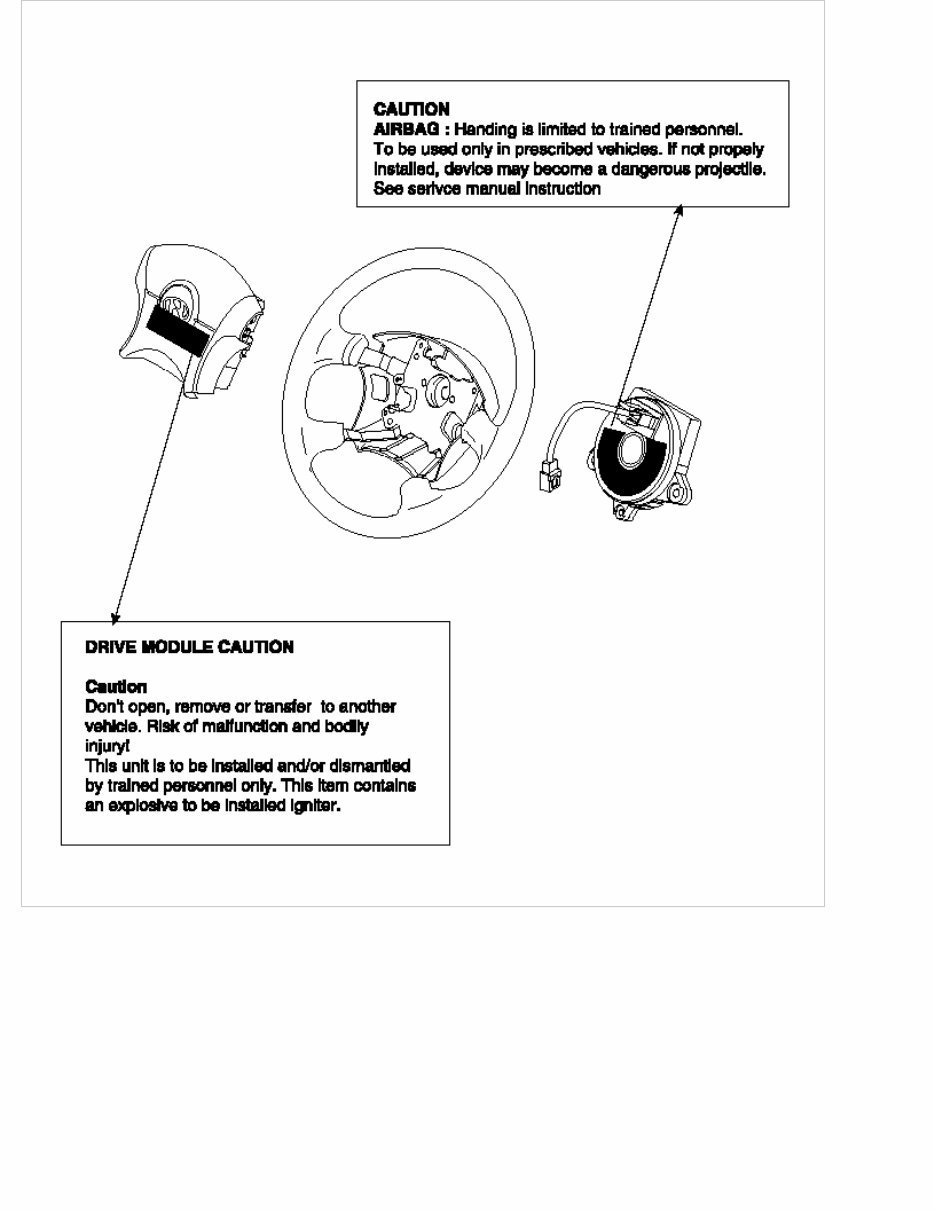
AIR BAG WARNING / CAUTION LABEL (CONT''D)
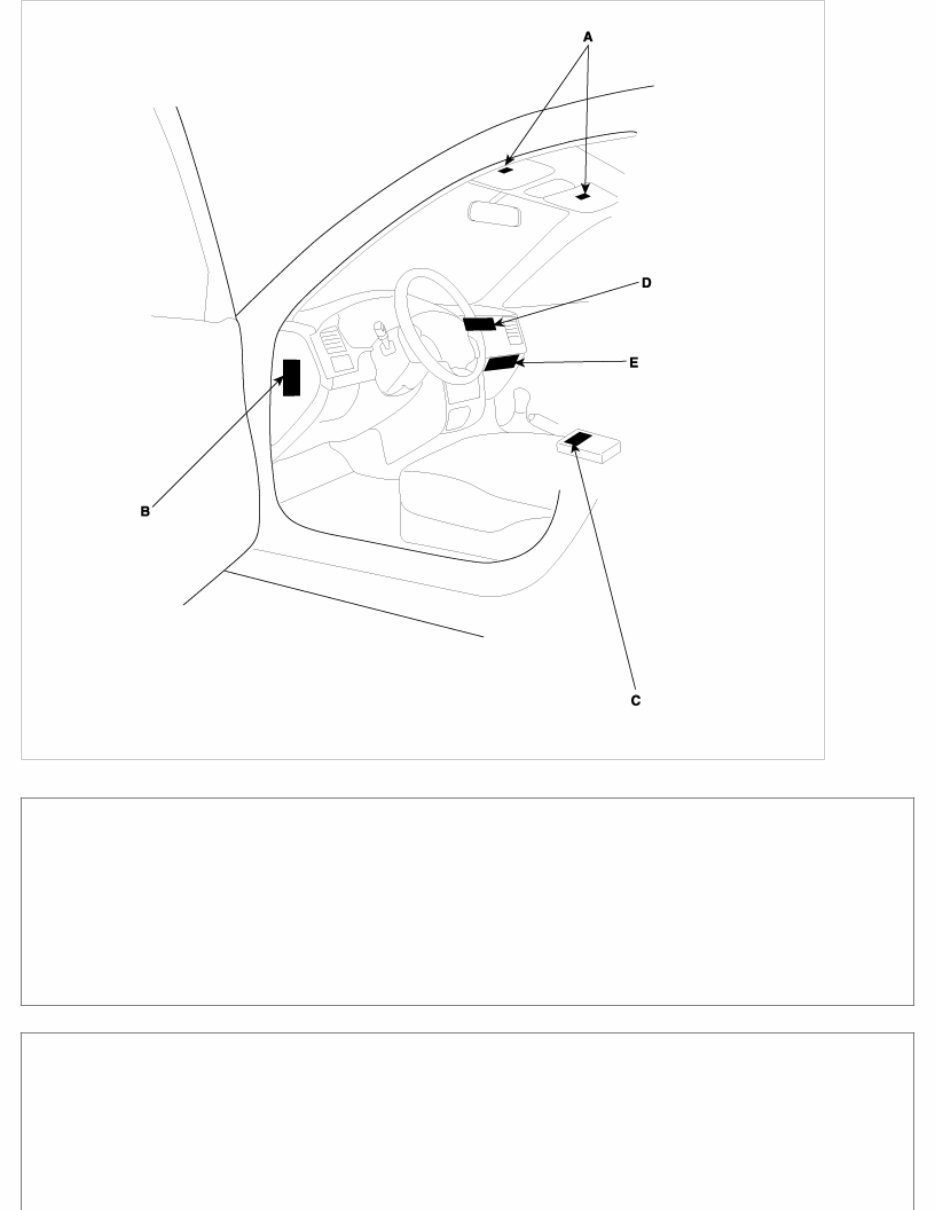
WARNING / CAUTION LABEL (cont''d)
A : SRS INFORMATION
WARNING
Death or serious can occur.
• Children 12 and under can occur.
• The back seat is the safest place for children.
• Children 12 and under can be killed by the airbag.
• Never put a rear-facing child seat in the front.
• Sit as far back as possible from the airbag.
• Always use seat belts and child restraints.
B : WARNING
SEE OWNER''S MANUAL.
This car is equipped a side airbag for each front seat.
• Do not use any accessory seat covers.
• Use of other seat covers could reduce the effect of the system.
• Do not install any accessories on the side or near the side airbag.
• Do not use excessive force on the side of the seal.
• For further information, see the owner''s manual.
C : CAUTION
AIRBAG ESPE UNIT
Detach connector before unmounting. Assemble strictly according to manual instructions.
D : PASSENGER MODULE CAUTION
CAUTION
Don''t open, remove or transfer to another vehicle. Risk of malfunction and bodily injury!
This unit is to be installed and/or dismantled by trained personnel only. This item contains an explosive to be installed
igniter.
E : SUPPLEMENTAL RESTRAINT SYSTEM (AIRBAG) INFORMATION
• The airbag is a Supplement Restraint System (SRS).
You must always wear the seat belts.
• The airbag system condition is normal when the "SRS" lamp in the cluster flashes approximately 6 times after the
ignition key is turned on and then goes off.
• If any of the following condition occur, the system must be serviced.
• "SRS" lamp does not light up when the key is turned on.
• "SRS" lamp stays lit or flashes continuously.
• The airbag has inflated.
• The airbag system must be inspected by an authorized dealer ten years after the vehicle manufacture date shown on
the certification label, located on left front door opening area.
WARNING
Failure to the above instructions may result in injury to you or other occupants in the vehicle
• See the "SRS" section in Owner''s Manual for more information about airbags.
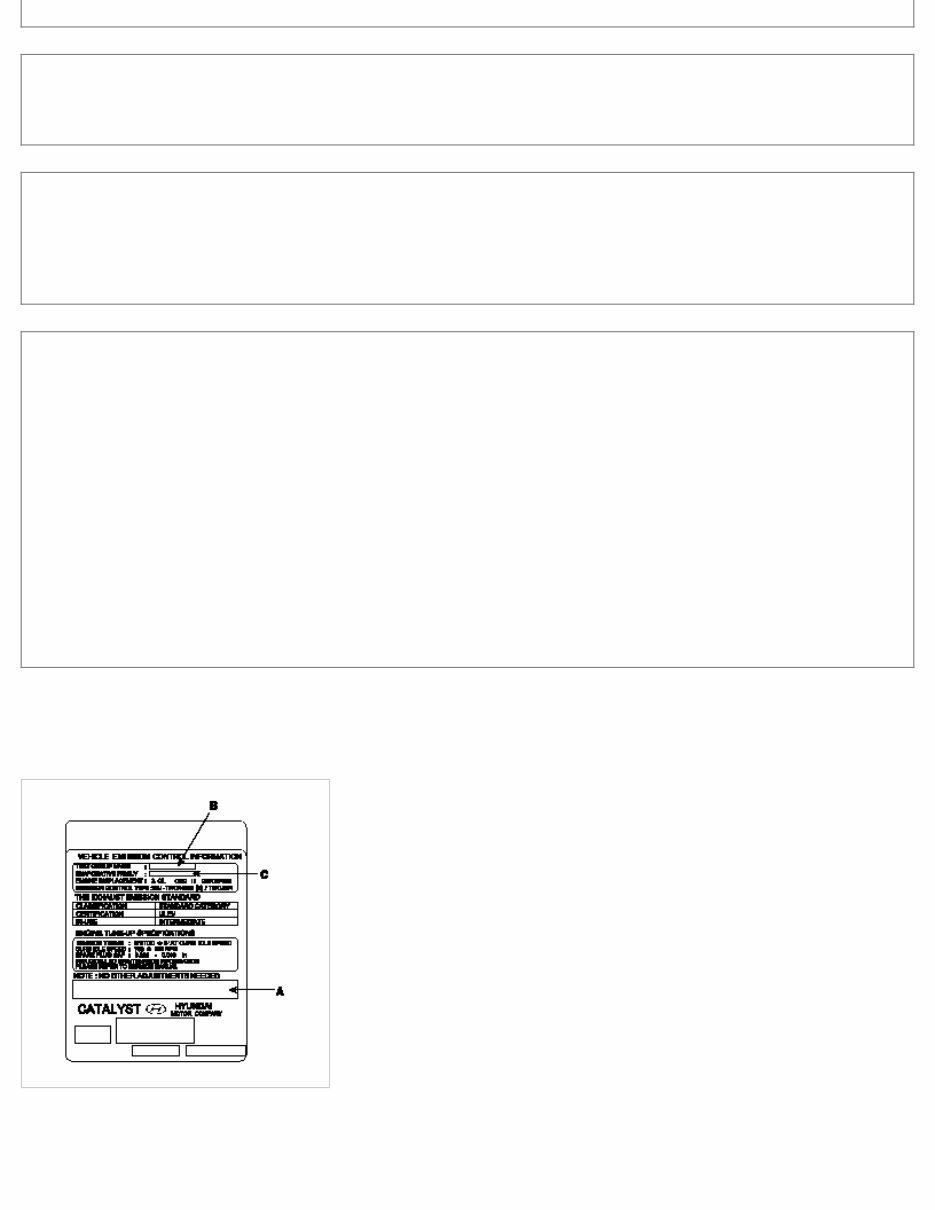
UNDER-HOOD EMISSION CONTROL LABEL
Emission Group Identification
Example :
A :
CANADA
THIS VEHICLE CONFROMS TO CANADA AND U.S EPA REGULATIONS APPLICABLE TO 2004 MODEL YEAR
NEW LEV PASSENGER CARS.
B :
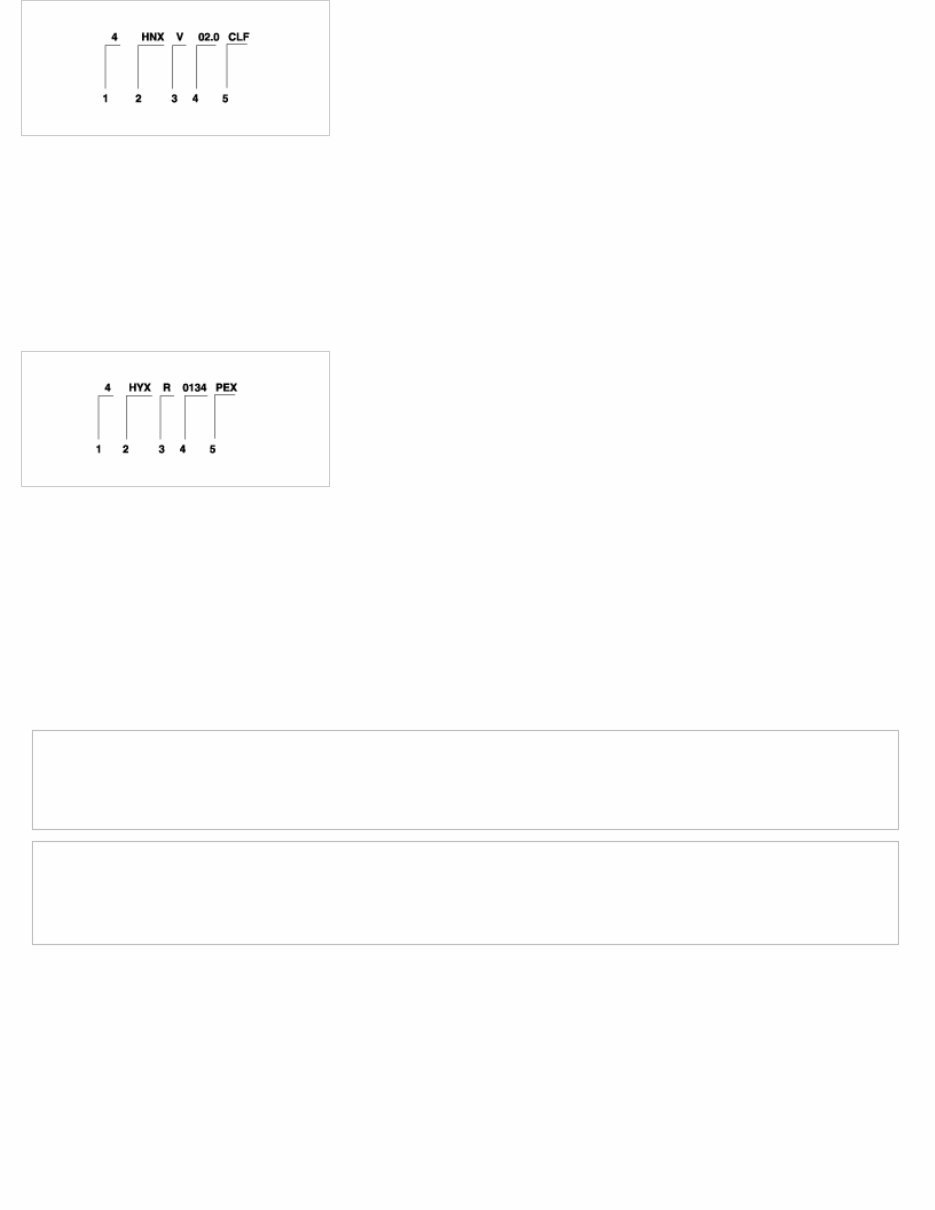
1) Model Year
- 4 : 2004
2) Manufacturer Subcode
- HYX : HYUNDAI MOTOR
3) Family Type
- V : Passenger car
4) Displacement
5) Sequence Characters.
C :
1. Model Year
- 4 : 2004
2. Manufactor Subcode
- HYX : HYUNDAI MOTOR
3. Family Type
- R : EVAP/ORVR
4. Canister Work Capacity
5. Sequence Characters.
LIFT AND SUPPORT POINTS
When heavy rear components such as suspension, fuel tank, spare tire, tailgate and trunk lid are to be removed,
place additional weight in the luggage area before hoisting. When substatial weight is removed from the rear of the
vehicle, the center of gravity may change and cam cause the vehicle to tip forward on the hoist.
• Since each tire/wheel assembly weights approximately 30lbs (14kg), placing the front wheels in the luggage area
can assist with the weight distribution.
• Use the same support points to support the vehicle on safely stands.
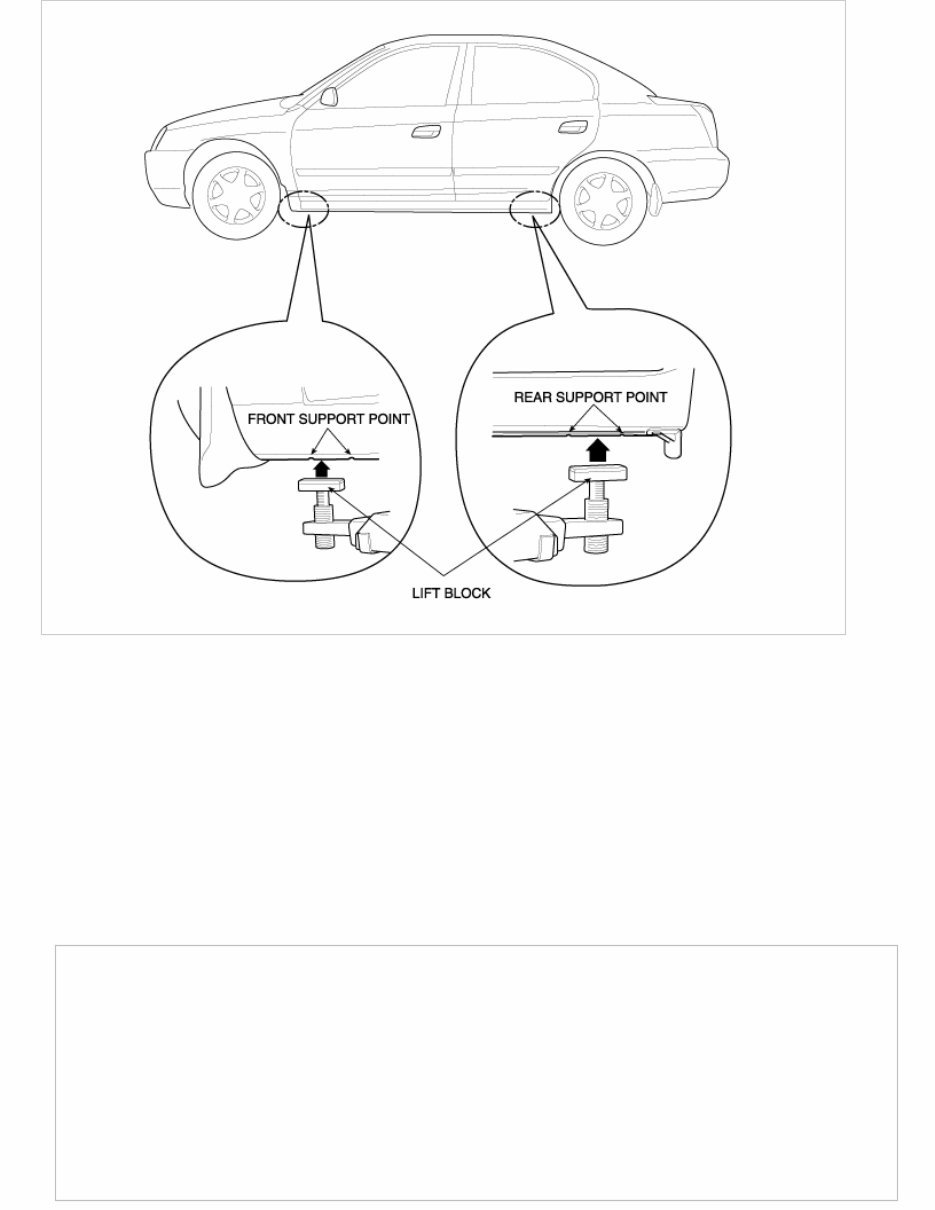
1. Place the lift blocks under the support points as shown in the illustration.
2. Raise the hoist a few inches (centimeters) and rock the vehicle to be sure it is firmly supported.
3. Raise the hoist to full height to inspect the lift points for secure support.
TOWING
If the vehicle needs to be towed, call a professional towing service. Never tow vehicle with just a rope or chain. It is very
dangerous.
If the vehicle cannot be transported by flat-bed, if should be towed with the front wheels off the ground. If due to
damage, the vehicle must be toward with the front wheels on the ground, do not following :
Manual Transmission
• Release the parking brake.
• Shift the transmission to neutral
Automatic Transmission
• Release the parking brake.
• Start the engine.
• Shift to [D] position, then [N] position.
• Turn off the engine.
• The vehicle equipped with full-time 4WD should be only transported on a flat-bed.
• The CVT vehicles should be only transported on a flat-bed or towed by wheel lift towing which the wheels of
the driving axle are lifted off the ground.
• Improper towing preparation will damage the transaxle. Follow the procedure above exactly. If you cannot
shift the transaxle or start the engine(automatic transaxle), your vehicle must be transported on a flatbed.
• It is the best to tow vehicle no farther than 30km (19miles), and keep the speed below 50km/h (30mph).
(For the CVT and full-time 4WD (CVT/AT) vehicles, limit the towing distance and speed to 1.5km (1 mile)
and 15km/h (10 mph).)
• Trying to lift or tow your vehicle by the bumpers will cause serious damage to the vehicle. The bumpers are
not designed to support the vehicle''s weight.
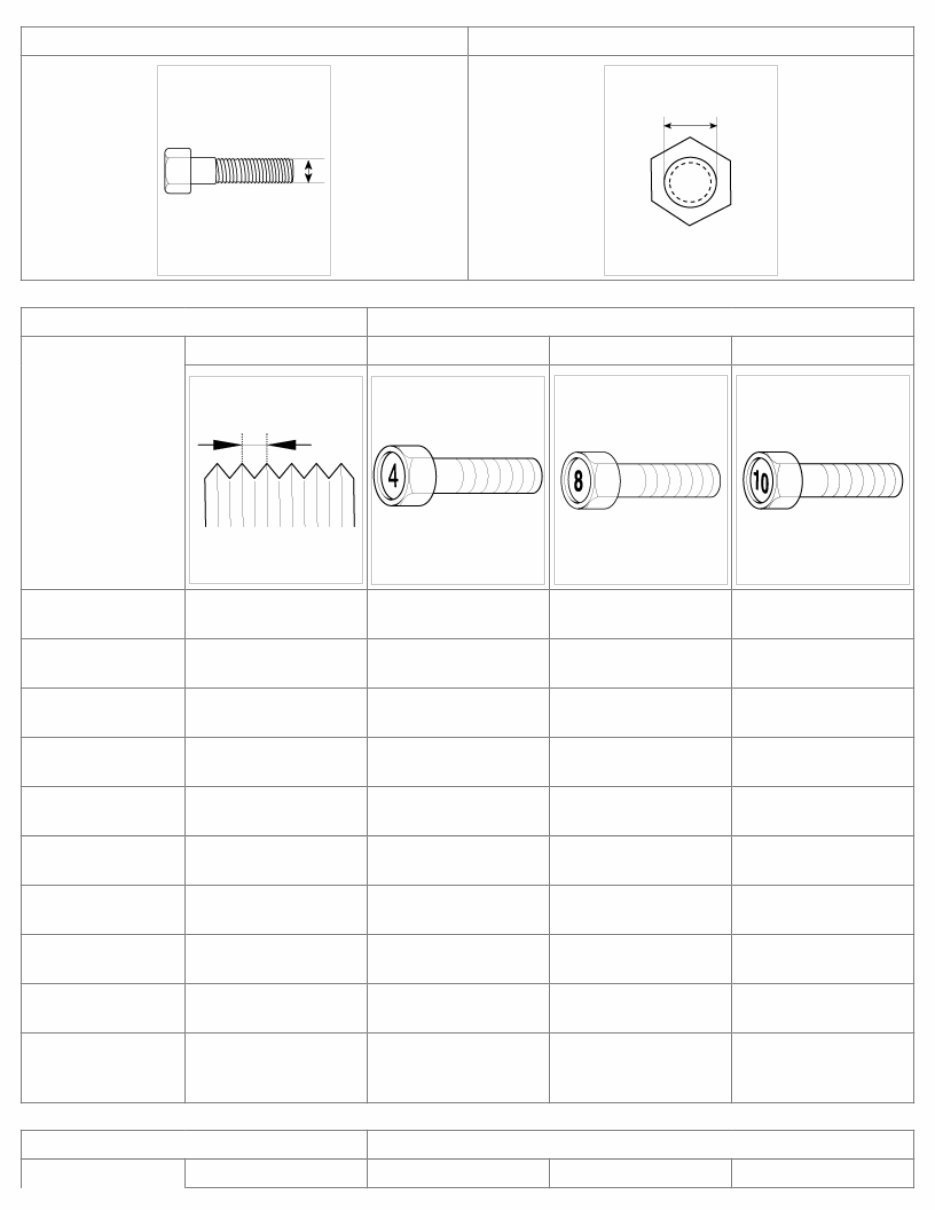
Tightening Torque Table Of Standard Parts
BOLT (Nominal diameter) NUT (Nominal diameter)
BOLT/NUT Normal screw Torque Nm (kg.m, Ib-ft)
Nominal diameter.
(mm)
Pitch [mm (in.) ] 4T 8T 10T
M5 0.8 (0.031)
2.0 ~ 3.0 (0.2 ~ 0.3, 1.4
~ 2.2)
4.9 ~ 6.9 (0.5 ~ 0.7, 3.6
~ 5.1)
7.8 ~ 10.8 (0.8 ~ 1.1,
5.8 ~ 8.0)
M6 1 (0.039)
2.9 ~ 4.9 (0.3 ~ 0.5, 2.2
~ 3.6)
8.8 ~ 12.7 (0.9 ~ 1.3,
6.5 ~ 9.4)
13.7 ~ 18.6 (1.4 ~ 1.9,
10.1 ~ 13.7)
M8 1.25 (0.049)
8.8 ~ 11.8 (0.9 ~ 1.2,
6.5 ~ 8.7)
22.6 ~ 30.4 (2.3 ~ 3.1,
16.6 ~ 22.4)
33.3 ~ 44.1 (3.4 ~ 4.5,
24.6 ~ 32.5)
M10 1.5 (0.059)
16.7 ~ 22.6 (1.7 ~ 2.3,
12.3 ~ 16.6)
45.1 ~ 60.8 (4.6 ~ 6.2,
33.3 ~ 44.8)
65.7 ~ 88.3 (6.7 ~ 9.0,
48.5 ~ 65.1)
M12 1.75 (0.068)
29.4 ~ 39.2 (3.0 ~ 4.0,
21.7 ~ 28.9)
78.5 ~ 105.9 (8.0 ~
10.8, 57.9 ~ 78.1)
114.7 ~ 154.9 (11.7 ~
15.8, 84.6 ~ 114.3)
M14 2 (0.078)
47.1 ~ 63.7 (4.8 ~ 6.5,
34.7 ~ 47.0)
125.5 ~ 169.7 (12.8 ~
17.3, 92.6 ~ 125.1)
183.4 ~ 249.1 (18.7 ~
25.4, 135.3 ~ 183.7)
M16 2 (0.078)
73.5 ~ 100.0 (7.5 ~
10.2, 54.2 ~ 73.8)
197.1 ~ 266.7 (20.1 ~
27.2, 145.4 ~ 196.7)
288.3 ~ 390.3 (29.4 ~
39.8, 212.7 ~ 287.9)
M20 2.5 (0.098)
144.2 ~ 195.2 (14.7 ~
19.9, 106.3 ~ 143.9)
396.2 ~ 535.4 (40.4 ~
54.6, 292.2 ~ 394.9)
565.8 ~ 764.9 (57.7 ~
78.0, 417.3 ~ 564.2)
M24 3 (0.118)
249.1 ~ 337.3 (25.4 ~
34.4, 183.7 ~ 248.8)
687.4 ~ 929.7 (70.1 ~
94.8, 507.0 ~ 685.7)
975.8 ~ 1320.0 (99.5 ~
134.6, 719.7 ~ 973.6)
M30 3.5 (0.137)
499.2 ~ 674.7 (50.9 ~
68.8, 368.2 ~ 497.6)
1372.9 ~ 1858.4 (140.0
~ 189.5, 1012.6 ~
1370.7)
1956.4 ~ 2647.8 (199.5
~ 270.0, 1443.0 ~
1952.9)
BOLT/NUT Thin screw Torque Nm (kg.m, Ib-ft)
Nominal diameter.
(mm)
Pitch [mm (in.) ] 4T 8T 10T
You're Reading a Preview
What's Included?
 Lifetime Access
Fast Download Speeds
Online & Offline Access
Access PDF Contents & Bookmarks
Full Search Facility
Print one or all pages of your manual
$31.99
2004 Hyundai ELANTRA (XD) G 2.0 DOHC Service & Repair Manual
Viewed 56 Times Today

What's Included?
Lifetime Access
Fast Download Speeds
Online & Offline Access
Access PDF Contents & Bookmarks
Full Search Facility
Print one or all pages of your manual
$31.99

Secure transaction
What's Included?
Lifetime Access
Fast Download Speeds
Online & Offline Access
Access PDF Contents & Bookmarks
Full Search Facility
Print one or all pages of your manual
Description
The 2004 Hyundai ELANTRA (XD) G 2.0 DOHC Service & Repair Manual provides comprehensive guidance for both professional mechanics and DIY enthusiasts. This detailed technical guide covers various aspects of the vehicle's maintenance, repair, and troubleshooting.
- Step-by-step instructions for routine maintenance tasks, such as oil changes, tire rotations, and brake pad replacements.
- Detailed diagrams and illustrations to aid in the identification and repair of various components, including electrical systems, suspension, and steering.
- Troubleshooting procedures for diagnosing common issues, such as engine misfires, cooling system leaks, and transmission problems.
- In-depth information on vehicle inspections, repairs, and maintenance tasks, including specifications, tolerances, and recommended procedures.
- Your one-stop resource for comprehensively understanding and addressing the inner workings of your 2004 Hyundai ELANTRA (XD) G 2.0 DOHC vehicle.


