


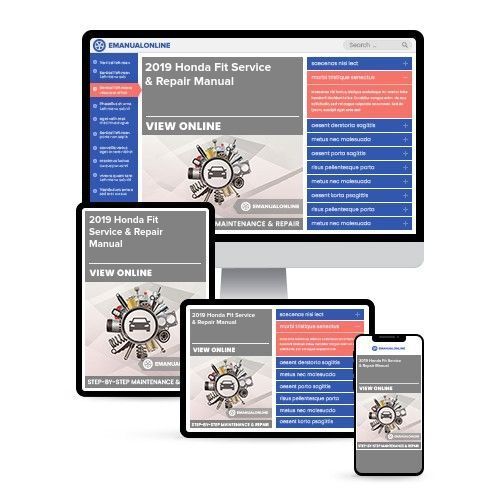
2019 Honda Fit Service & Repair Manual
What's Included?
 Lifetime Access
Fast Download Speeds
Online & Offline Access
Access PDF Contents & Bookmarks
Full Search Facility
Print one or all pages of your manual
Service Information
The service and repair information contained in this manual is intended for use by qualified, professional technicians. Attempting
service or repairs without the proper training, tools, and equipment could cause injury to you or others. It could also damage the
vehicle or create an unsafe condition.
This manual describes the proper methods and procedures for doing service, maintenance, and repairs. Some procedures require the
use of specially designed tools and dedicated equipment. Any person who intends to use a replacement part, a service procedure, or
a tool that is not recommended by Honda, must determine the risks to their personal safety and the safe operation of the vehicle.
If you need to replace any parts, always use the correct parts supplied by a Honda dealer. Never use inferior quality parts.
FOR YOUR CUSTOMER'S SAFETY
Proper service and maintenance are essential to the customer's safety and the reliability of the vehicle. Any error or oversight while
servicing a vehicle can result in faulty operation, damage to the vehicle, or injury to others.
Improper service or repairs can create an unsafe condition that can cause your customers or others to be seriously hurt or killed.
Follow the procedures and precautions in this manual and other service materials carefully.
FOR YOUR SAFETY
Because this manual is intended for the professional service technician, we do not provide warnings about many basic shop safety
practices (for example, hot parts-wear gloves). If you have not received shop safety training or do not feel confident about your
knowledge of safe servicing practices, we recommend that you do not attempt to do the procedures described in this manual.
Failure to properly follow instructions and precautions can cause you to be seriously hurt or killed.
Follow the procedures and precautions in this manual carefully.
Some of the most important general service safety precautions follow this text. However, we cannot warn you of every conceivable
hazard that can arise in doing service and repair procedures. Only you can decide whether or not you should do a given task.
IMPORTANT SAFETY PRECAUTIONS
Make sure you have a clear understanding of all basic shop safety practices, and that you are wearing appropriate clothing and
using safety equipment. When doing any service task, be especially careful of the following:
-
Read all of the instructions before you begin, and make sure you have the tools, the replacement or repair parts, and the skills
required to do the tasks safely and completely.
-
Protect your eyes by using proper safety glasses, goggles, or face shields anytime you hammer, drill, grind, or work around
pressurized air or liquids and springs, or other stored-energy components. If there is any doubt, put on eye protection.
-
Use other protective wear when necessary, such as gloves or safety shoes. Handling hot or sharp parts can cause severe
burns or cuts. Before you grab something that looks like it can hurt you, stop and put on gloves.
-
Protect yourself and others whenever you have the vehicle up in the air. Anytime you raise the vehicle, either with a lift or a
jack, make sure that it is always securely supported. Use safety stands if needed.
-
Protect yourself by wearing an approved welding helmet, gloves, and safety shoes anytime you are welding. You can receive
burns from hot parts; allow the parts to cool before working in that area.
-
Protect yourself from paints and harmful chemicals by wearing an approved respirator, eye protection, and gloves whenever
you are painting. Spray paint only in an approved paint booth that is well ventilated.
Make sure the engine is off before you begin any servicing procedures, unless the instruction tells you to do otherwise. This will
help eliminate several potential hazards:
-
Carbon monoxide poisoning from engine exhaust. Be sure there is adequate ventilation whenever you run the engine.
-
Burns from hot parts or coolant. Let the engine and exhaust system cool before working in those areas.
-
Injury from moving parts. If the instruction tells you to run the engine, be sure your hands, fingers, and clothing are out of the
way.
Gasoline vapors and hydrogen gases from batteries are explosive. To reduce the possibility of a fire or explosion, be careful when
working around gasoline or batteries:
-
Use only a nonflammable solvent, not gasoline, to clean parts.
-
Never drain or store gasoline in an open container.
-
Keep all cigarettes, sparks, and flames away from the battery and all fuel-related parts.
Service Information
The service and repair information contained in this manual is intended for use by qualified, professional technicians. Attempting
service or repairs without the proper training, tools, and equipment could cause injury to you or others. It could also damage the
vehicle or create an unsafe condition.
This manual describes the proper methods and procedures for doing service, maintenance, and repairs. Some procedures require the
use of specially designed tools and dedicated equipment. Any person who intends to use a replacement part, a service procedure, or
a tool that is not recommended by Honda, must determine the risks to their personal safety and the safe operation of the vehicle.
If you need to replace any parts, always use the correct parts supplied by a Honda dealer. Never use inferior quality parts.
FOR YOUR CUSTOMER'S SAFETY
Proper service and maintenance are essential to the customer's safety and the reliability of the vehicle. Any error or oversight while
servicing a vehicle can result in faulty operation, damage to the vehicle, or injury to others.
Improper service or repairs can create an unsafe condition that can cause your customers or others to be seriously hurt or killed.
Follow the procedures and precautions in this manual and other service materials carefully.
FOR YOUR SAFETY
Because this manual is intended for a professional service technician, we do not provide warnings about many basic shop safety
practices (for example, hot parts-wear gloves). If you have not received shop safety training or do not feel confident about your
knowledge of safe servicing practices, we recommend that you do not attempt to do the procedures described in this manual.
Failure to properly follow instructions and precautions can cause you to be seriously hurt or killed.
Follow the procedures and precautions in this manual carefully.
Some of the most important general service safety precautions follow this text. However, we cannot warn you of every conceivable
hazard that can arise in doing service and repair procedures. Only you can decide whether or not you should do a given task.
IMPORTANT SAFETY PRECAUTIONS
Make sure you have a clear understanding of all basic shop safety practices, and that you are wearing appropriate clothing and
using safety equipment. When doing any service task, be especially careful of the following:
-
Read all of the instructions before you begin, and make sure you have the tools, the replacement or repair parts, and the skills
required to do the tasks safely and completely.
-
Protect your eyes by using proper safety glasses, goggles, or face shields anytime you hammer, drill, grind, or work around
pressurized air or liquids and springs, or other stored-energy components. If there is any doubt, put on eye protection.
-
Use other protective wear when necessary, such as gloves or safety shoes. Handling hot or sharp parts can cause severe
burns or cuts. Before you grab something that looks like it can hurt you, stop and put on gloves.
-
Protect yourself and others whenever you have the vehicle up in the air. Anytime you raise the vehicle, either with a lift or a
jack, make sure that it is always securely supported. Use safety stands if needed.
-
Protect yourself by wearing an approved welding helmet, gloves, and safety shoes anytime you are welding. You can receive
burns from hot parts; allow the parts to cool before working in that area.
-
Protect yourself from paints and harmful chemicals by wearing an approved respirator, eye protection, and gloves whenever
you are painting. Spray paint only in an approved paint booth that is well ventilated.
Make sure the engine is off before you begin any servicing procedures, unless the instruction tells you to do otherwise. This will
help eliminate several potential hazards:
-
Carbon monoxide poisoning from engine exhaust. Be sure there is adequate ventilation whenever you run the engine.
-
Burns from hot parts or coolant. Let the engine and exhaust system cool before working in those areas.
-
Injury from moving parts. If the instruction tells you to run the engine, be sure your hands, fingers, and clothing are out of the
way.
Gasoline vapors and hydrogen gases from batteries are explosive. To reduce the possibility of a fire or explosion, be careful when
working around gasoline or batteries:
-
Use only a nonflammable solvent, not gasoline, to clean parts.
-
Never drain or store gasoline in an open container.
-
Keep all cigarettes, sparks, and flames away from the battery and all fuel-related parts.
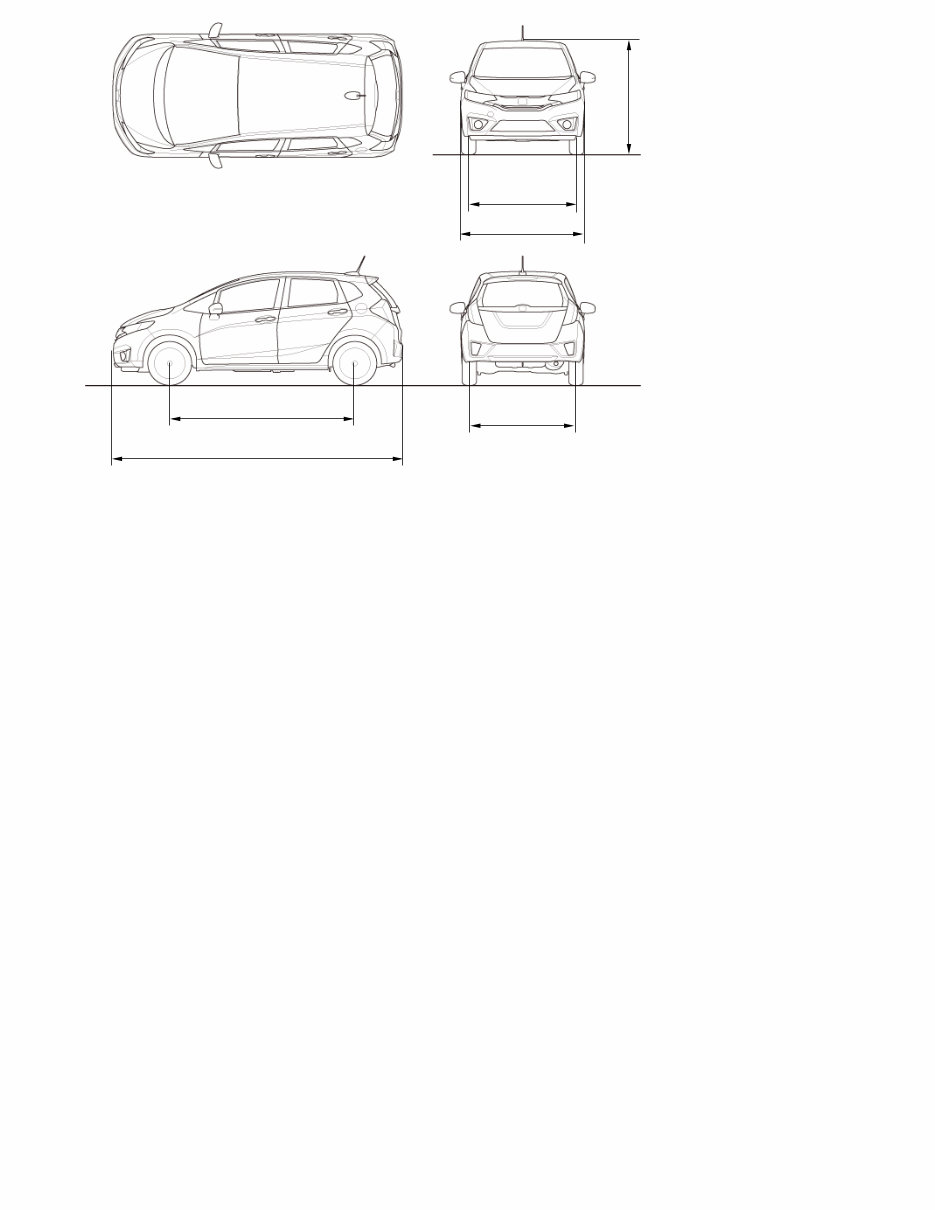
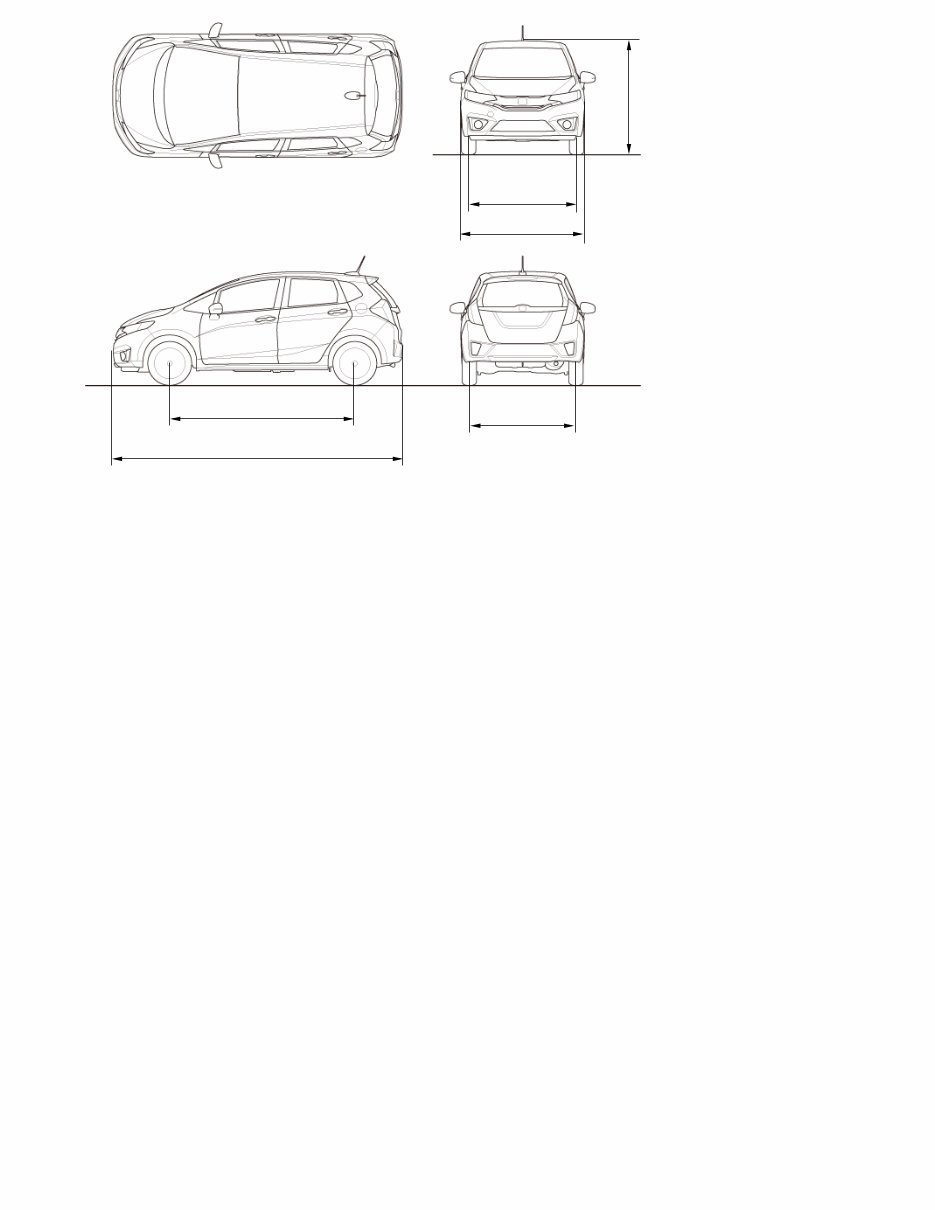
2,530 mm (99.6 in)
1,702 mm (64.0 in)*1
1,525 mm (60.0 in)
4,064 mm (160.0 in)
1,472 mm (58.0 in)*2
1,466 mm (57.7 in)*3
1,482 mm (58.3 in)*2
1,476 mm (58.1 in)*3
*1: Excluding door mirrors
*2: 15 inch wheel model
*3: 16 inch wheel model
2,530 mm (99.6 in)
1,702 mm (64.0 in)*1
1,525 mm (60.0 in)
4,064 mm (160.0 in)
1,472 mm (58.0 in)*2
1,466 mm (57.7 in)*3
1,482 mm (58.3 in)*2
1,476 mm (58.1 in)*3
*1: Excluding door mirrors
*2: 15 inch wheel model
*3: 16 inch wheel model
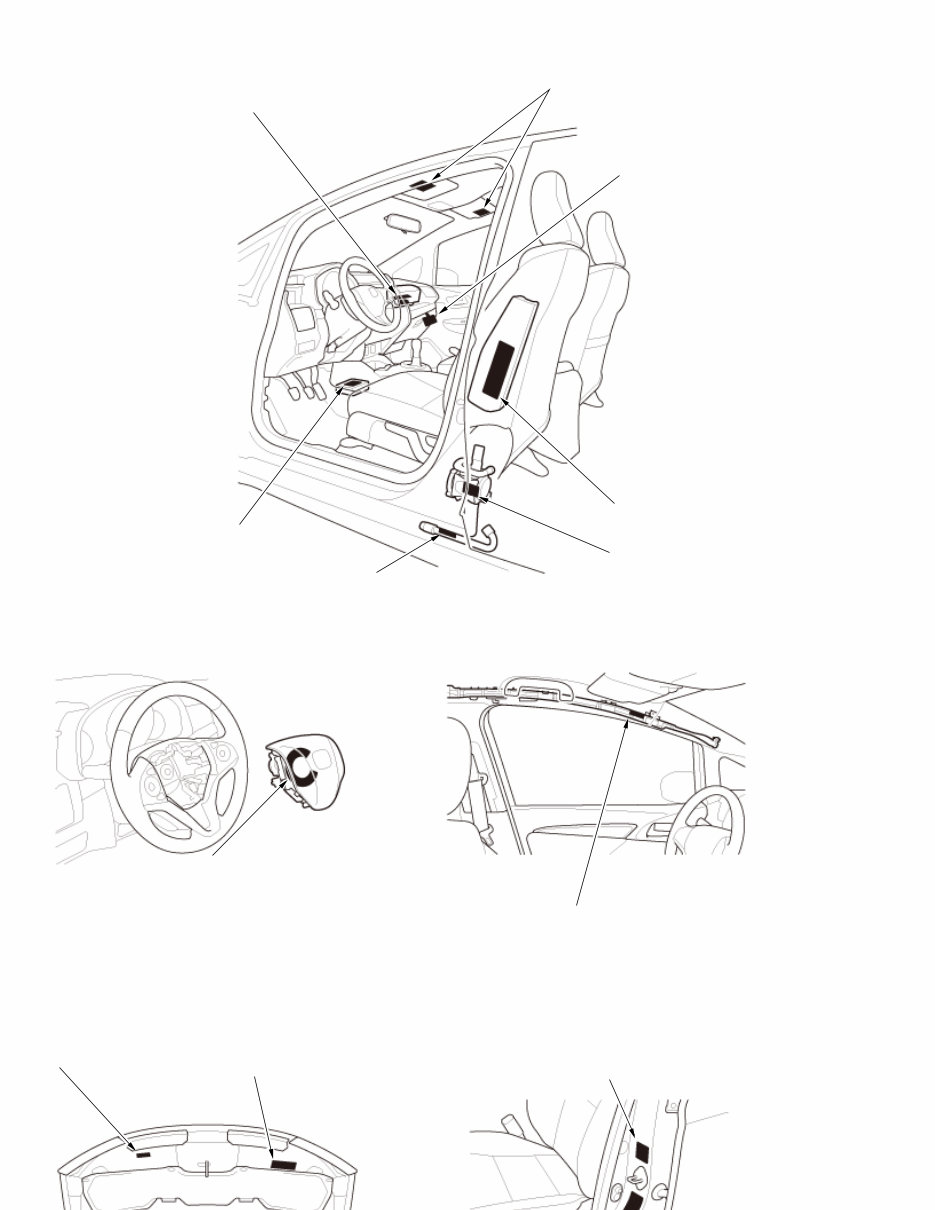
Front Passenger’s Compartment:
Steering Wheel: Front Passenger’s Compartment:
Engine Compartment: Doorjamb Area:
SRS WARNING
INFORMATION
MONITOR NOTICE
SEAT BELT
TENSIONER WARNING
SIDE AIRBAG
MODULE DANGER
PASSENGER AIRBAG
MODULE DANGER
OUTER LAP PRETENSIONER WARNING
PASSENGER AIRBAG
WARNING TAG
(CHILD SEAT)
USA models
DRIVER AIRBAG
MODULE DANGER
ROOF-SIDE AIRBAG
MODULE DANGER
AIR CONDITIONING
INFORMATION
EMISSION CONTROL
INFORMATION and
ENGINE COOLANT
INFORMATION
SIDE AIRBAG CAUTION
Located on driver's and
passenger's doorjambs
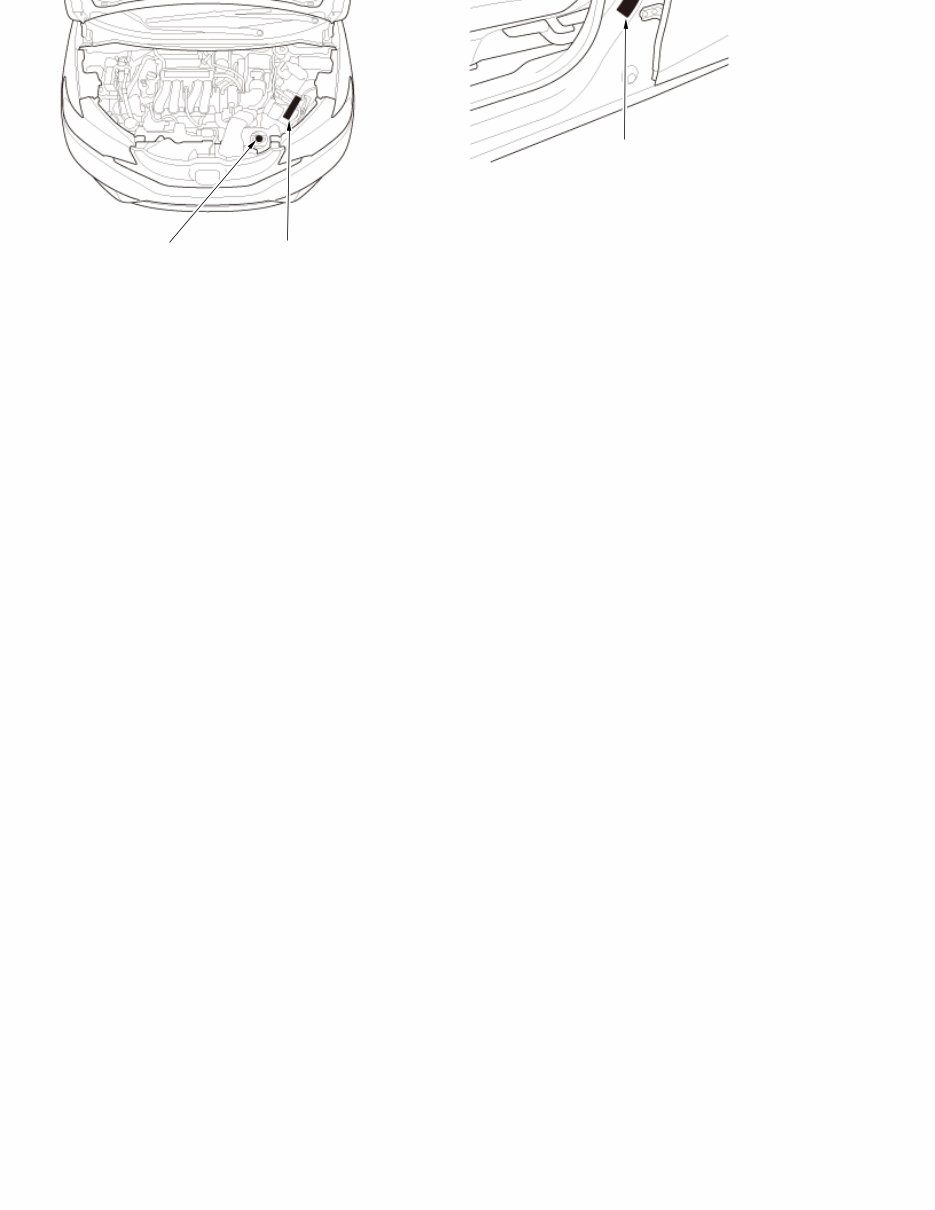
RADIATOR CAP
DANGER
12 VOLT
BATTERY
CAUTION
TIRE INFORMATION
Located on driver's
doorjamb
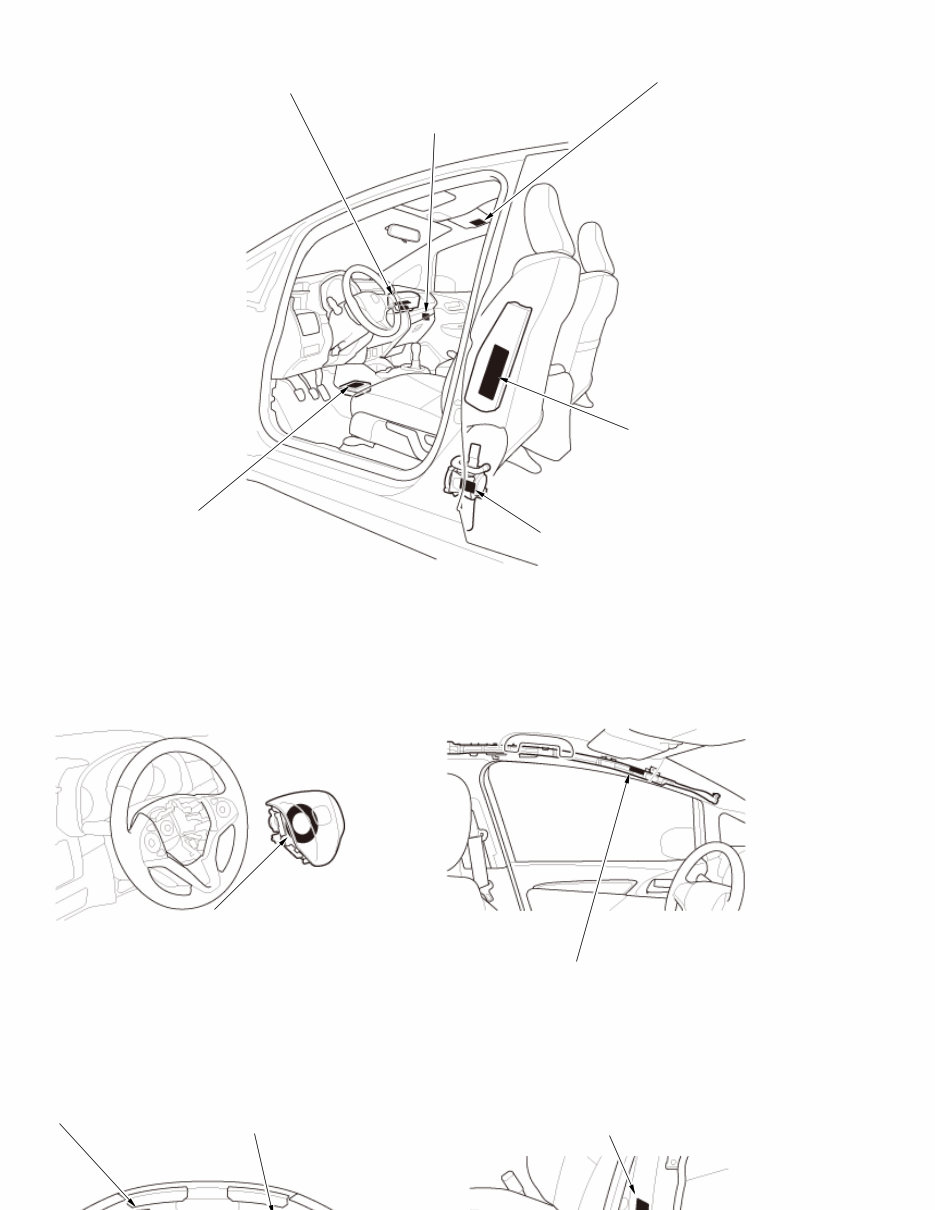
Front Passenger’s Compartment:
Steering Wheel: Front Passenger’s Compartment:
Engine Compartment: Doorjamb Area:
SRS WARNING
INFORMATION
MONITOR NOTICE
SEAT BELT
TENSIONER CAUTION
SIDE AIRBAG
MODULE DANGER
PASSENGER AIRBAG
MODULE DANGER
FRONT PASSENGER'S
AIRBAG ON/OFF
SWITCH NOTICE
Located on the side
of dashboard
DRIVER AIRBAG
MODULE DANGER
ROOF-SIDE AIRBAG
MODULE DANGER
AIR CONDITIONING
INFORMATION ENGINE COOLANT
INFORMATION
SIDE AIRBAG CAUTION
Located on driver's and
passenger's doorjambs
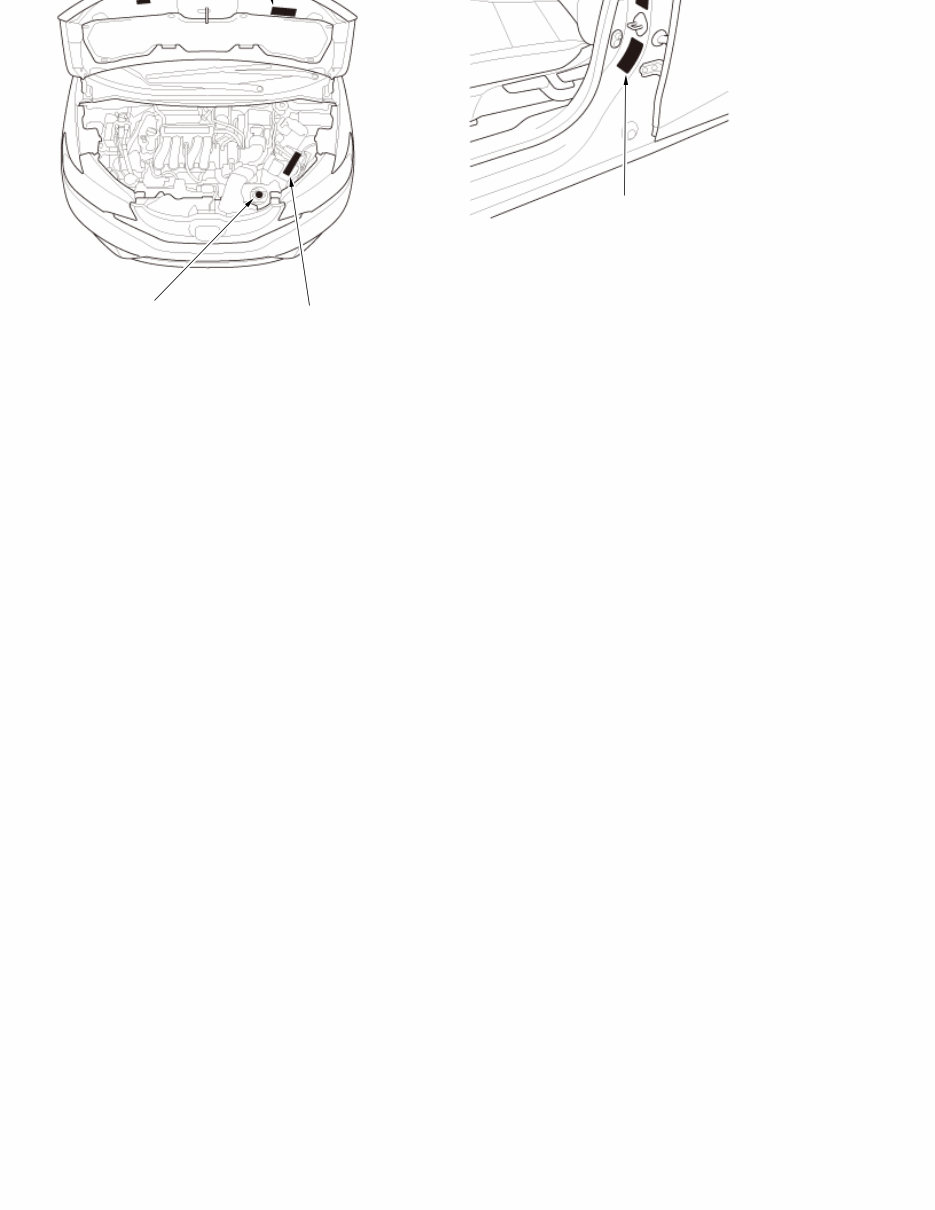
RADIATOR CAP
DANGER
12 VOLT
BATTERY
CAUTION
TIRE INFORMATION
Located on driver's
doorjamb

Item Measurement Qualification Specification
CLUTCH Type Single plate dry, diaphragm spring
MANUAL
TRANSMISSION
Type Synchronized six-speed forward, one reverse
Primary reduction Direct 1:1
Gear ratio 1st 3.461
2nd 1.869
3rd 1.235
4th 0.948
5th 0.809
6th 0.727
Reverse 3.307
Final reduction Type Single helical gear
Gear ratio 4.625
CVT Type Electronically-controlled continuously variable transmission, multi plate wet sump,
hydraulic
Primary reduction Direct 1:1
Gear ratio Low-High 2.526-0.408
Reverse 2.706-1.382
Final reduction Type Single helical gear
Gear ratio 5.44
STEERING Type Rack and pinion with electrical power-assisted
Overall ratio 13.06
Turns, lock-to-lock 2.51
Steering wheel diameter 370 mm (14.57 in)
SUSPENSION Type Front McPherson strut with stabilizer, coil spring
Rear Torsion beam, coil spring
Shock absorber Front and rear Telescopic, hydraulic, nitrogen gas-filled
TIRES Size See tire information label attached to driver's doorjamb.
BRAKES Type of service brake Front Power-assisted self-adjusting ventilated disc
Rear Power-assisted self-adjusting drum
Type of parking brake Mechanical actuating, rear wheels
AIR CONDITIONING Compressor Type Swash plate
Capacity 110.2 mL (6.72 cu in)/rev
Maximum speed 7,600 rpm
Condenser Type Corrugated fin
Evaporator Type Corrugated fin
Blower Type Ferrite type
Motor type 220 W/12 V
Speed control
(with climate
control)
Infinitely variable
Speed control
(without climate
control)
4-speed
Maximum
capacity
400 m
3
(14,126 cu ft)/h
Temperature control Air-mix type
Compressor clutch Type Dry, single plate, poly V-ribbed belt drive
Electrical power
consumption at
68 °F (20 °C)
40 W maximum at 12 V
ELECTRICAL
RATINGS
Battery 12 V-40 Ah/20 HR (12 V-32 Ah/5 HR)
Fuses Under-hood
fuse/relay box
30 A, 20 A, 15 A, 10 A, 7.5 A
12 volt battery
terminal fuse box
100 A, 80 A, 70 A
Under-dash
fuse/relay box
20 A, 15 A, 10 A, 7.5 A
Auxiliary under-
dash fuse box
70 A, 60 A, 50 A, 40 A, 30 A, 20 A, 10 A, 7.5 A
Light bulbs Headlight
(high/low)
12 V-60/55 W
Front turn signal
lights/parking
lights
12 V-28/8 W (Amber)
Front side marker
lights
12 V-3 CP

Item Measurement Qualification Specification
Side turn signal
lights
LED
Fog lights 12 V-35 W (H8)
Taillights/rear side
marker/brake
lights
LED
Rear turn signal
lights
12 V-21 W
Back-up light 12 V-21 W
High mount brake
light
LED
License plate
lights
12 V-5 W
Ceiling light 12 V-8 W
Front individual
map lights
12 V-8 W
Beverage holder
light (with climate
control)
LED
Beverage holder
light (without
climate control)
14 V-1.75 W
Cargo area light 12 V-5 W
You're Reading a Preview
What's Included?
Lifetime Access
Fast Download Speeds
Online & Offline Access
Access PDF Contents & Bookmarks
Full Search Facility
Print one or all pages of your manual
$63.99
$83.99
Viewed 72 Times Today


Secure transaction
What's Included?
Lifetime Access
Fast Download Speeds
Online & Offline Access
Access PDF Contents & Bookmarks
Full Search Facility
Print one or all pages of your manual
$63.99
$83.99
The 2019 Honda Fit Service & Repair Manual is an essential guide for both professional mechanics and DIY enthusiasts. This comprehensive manual provides detailed service and repair instructions, along with clear illustrations to assist you in maintaining, servicing, and repairing your 2019 Honda Fit. Inside, you will find:
- Step-by-step procedures for routine maintenance and service
- Detailed diagrams and technical illustrations
- Comprehensive troubleshooting guides
- In-depth specifications and capacities
- Critical information on engine, transmission, brakes, suspension, and more
Whether you are performing a simple oil change or undertaking more complex repairs, the 2019 Honda Fit Service & Repair Manual provides the essential insights you need to keep your vehicle running smoothly. Stay informed and confident with this indispensable service and repair resource.


