Service Information The service and repair information contained in this manual is intended for use by qualified, professional technicians. Attempting service or repairs without the proper training, tools, and equipment could cause injury to you or others. It could also damage the vehicle or create an unsafe condition. This manual describes the proper methods and procedures for doing service, maintenance, and repairs. Some procedures require the use of specially designed tools and dedicated equipment. Any person who intends to use a replacement part, a service procedure, or a tool that is not recommended by Honda, must determine the risks to their personal safety and the safe operation of the vehicle. If you need to replace any parts, always use the correct parts supplied by a Honda dealer. Never use inferior quality parts. FOR YOUR CUSTOMER'S SAFETY Proper service and maintenance are essential to the customer's safety and the reliability of the vehicle. Any error or oversight while servicing a vehicle can result in faulty operation, damage to the vehicle, or injury to others. Improper service or repairs can create an unsafe condition that can cause your customers or others to be seriously hurt or killed. Follow the procedures and precautions in this manual and other service materials carefully. FOR YOUR SAFETY Because this manual is intended for the professional service technician, we do not provide warnings about many basic shop safety practices (for example, hot parts-wear gloves). If you have not received shop safety training or do not feel confident about your knowledge of safe servicing practices, we recommend that you do not attempt to do the procedures described in this manual. Failure to properly follow instructions and precautions can cause you to be seriously hurt or killed. Follow the procedures and precautions in this manual carefully. Some of the most important general service safety precautions follow this text. However, we cannot warn you of every conceivable hazard that can arise in doing service and repair procedures. Only you can decide whether or not you should do a given task. IMPORTANT SAFETY PRECAUTIONS Make sure you have a clear understanding of all basic shop safety practices, and that you are wearing appropriate clothing and using safety equipment. When doing any service task, be especially careful of the following: - Read all of the instructions before you begin, and make sure you have the tools, the replacement or repair parts, and the skills required to do the tasks safely and completely. - Protect your eyes by using proper safety glasses, goggles, or face shields anytime you hammer, drill, grind, or work around pressurized air or liquids and springs, or other stored-energy components. If there is any doubt, put on eye protection. - Use other protective wear when necessary, such as gloves or safety shoes. Handling hot or sharp parts can cause severe burns or cuts. Before you grab something that looks like it can hurt you, stop and put on gloves. - Protect yourself and others whenever you have the vehicle up in the air. Anytime you raise the vehicle, either with a lift or a jack, make sure that it is always securely supported. Use safety stands if needed. - Protect yourself by wearing an approved welding helmet, gloves, and safety shoes anytime you are welding. You can receive burns from hot parts; allow the parts to cool before working in that area. - Protect yourself from paints and harmful chemicals by wearing an approved respirator, eye protection, and gloves whenever you are painting. Spray paint only in an approved paint booth that is well ventilated. Make sure the engine is off before you begin any servicing procedures, unless the instruction tells you to do otherwise. This will help eliminate several potential hazards: - Carbon monoxide poisoning from engine exhaust. Be sure there is adequate ventilation whenever you run the engine. - Burns from hot parts or coolant. Let the engine and exhaust system cool before working in those areas. - Injury from moving parts. If the instruction tells you to run the engine, be sure your hands, fingers, and clothing are out of the way. Gasoline vapors and hydrogen gases from batteries are explosive. To reduce the possibility of a fire or explosion, be careful when working around gasoline or batteries: - Use only a nonflammable solvent, not gasoline, to clean parts. - Never drain or store gasoline in an open container. - Keep all cigarettes, sparks, and flames away from the battery and all fuel-related parts.
Service Information The service and repair information contained in this manual is intended for use by qualified, professional technicians. Attempting service or repairs without the proper training, tools, and equipment could cause injury to you or others. It could also damage the vehicle or create an unsafe condition. This manual describes the proper methods and procedures for doing service, maintenance, and repairs. Some procedures require the use of specially designed tools and dedicated equipment. Any person who intends to use a replacement part, a service procedure, or a tool that is not recommended by Honda, must determine the risks to their personal safety and the safe operation of the vehicle. If you need to replace any parts, always use the correct parts supplied by a Honda dealer. Never use inferior quality parts. FOR YOUR CUSTOMER'S SAFETY Proper service and maintenance are essential to the customer's safety and the reliability of the vehicle. Any error or oversight while servicing a vehicle can result in faulty operation, damage to the vehicle, or injury to others. Improper service or repairs can create an unsafe condition that can cause your customers or others to be seriously hurt or killed. Follow the procedures and precautions in this manual and other service materials carefully. FOR YOUR SAFETY Because this manual is intended for the professional service technician, we do not provide warnings about many basic shop safety practices (for example, hot parts-wear gloves). If you have not received shop safety training or do not feel confident about your knowledge of safe servicing practices, we recommend that you do not attempt to do the procedures described in this manual. Failure to properly follow instructions and precautions can cause you to be seriously hurt or killed. Follow the procedures and precautions in this manual carefully. Some of the most important general service safety precautions follow this text. However, we cannot warn you of every conceivable hazard that can arise in doing service and repair procedures. Only you can decide whether or not you should do a given task. IMPORTANT SAFETY PRECAUTIONS Make sure you have a clear understanding of all basic shop safety practices, and that you are wearing appropriate clothing and using safety equipment. When doing any service task, be especially careful of the following: - Read all of the instructions before you begin, and make sure you have the tools, the replacement or repair parts, and the skills required to do the tasks safely and completely. - Protect your eyes by using proper safety glasses, goggles, or face shields anytime you hammer, drill, grind, or work around pressurized air or liquids and springs, or other stored-energy components. If there is any doubt, put on eye protection. - Use other protective wear when necessary, such as gloves or safety shoes. Handling hot or sharp parts can cause severe burns or cuts. Before you grab something that looks like it can hurt you, stop and put on gloves. - Protect yourself and others whenever you have the vehicle up in the air. Anytime you raise the vehicle, either with a lift or a jack, make sure that it is always securely supported. Use safety stands if needed. - Protect yourself by wearing an approved welding helmet, gloves, and safety shoes anytime you are welding. You can receive burns from hot parts; allow the parts to cool before working in that area. - Protect yourself from paints and harmful chemicals by wearing an approved respirator, eye protection, and gloves whenever you are painting. Spray paint only in an approved paint booth that is well ventilated. Make sure the engine is off before you begin any servicing procedures, unless the instruction tells you to do otherwise. This will help eliminate several potential hazards: - Carbon monoxide poisoning from engine exhaust. Be sure there is adequate ventilation whenever you run the engine. - Burns from hot parts or coolant. Let the engine and exhaust system cool before working in those areas. - Injury from moving parts. If the instruction tells you to run the engine, be sure your hands, fingers, and clothing are out of the way. Gasoline vapors and hydrogen gases from batteries are explosive. To reduce the possibility of a fire or explosion, be careful when working around gasoline or batteries: - Use only a nonflammable solvent, not gasoline, to clean parts. - Never drain or store gasoline in an open container. - Keep all cigarettes, sparks, and flames away from the battery and all fuel-related parts.
Service Information The service and repair information contained in this manual is intended for use by qualified, professional technicians. Attempting service or repairs without the proper training, tools, and equipment could cause injury to you or others. It could also damage the vehicle or create an unsafe condition. This manual describes the proper methods and procedures for doing service, maintenance, and repairs. Some procedures require the use of specially designed tools and dedicated equipment. Any person who intends to use a replacement part, a service procedure, or a tool that is not recommended by Honda, must determine the risks to their personal safety and the safe operation of the vehicle. If you need to replace any parts, always use the correct parts supplied by a Honda dealer. Never use inferior quality parts. FOR YOUR CUSTOMER'S SAFETY Proper service and maintenance are essential to the customer's safety and the reliability of the vehicle. Any error or oversight while servicing a vehicle can result in faulty operation, damage to the vehicle, or injury to others. Improper service or repairs can create an unsafe condition that can cause your customers or others to be seriously hurt or killed. Follow the procedures and precautions in this manual and other service materials carefully. FOR YOUR SAFETY Because this manual is intended for the professional service technician, we do not provide warnings about many basic shop safety practices (for example, hot parts-wear gloves). If you have not received shop safety training or do not feel confident about your knowledge of safe servicing practices, we recommend that you do not attempt to do the procedures described in this manual. Failure to properly follow instructions and precautions can cause you to be seriously hurt or killed. Follow the procedures and precautions in this manual carefully. Some of the most important general service safety precautions follow this text. However, we cannot warn you of every conceivable hazard that can arise in doing service and repair procedures. Only you can decide whether or not you should do a given task. IMPORTANT SAFETY PRECAUTIONS Make sure you have a clear understanding of all basic shop safety practices, and that you are wearing appropriate clothing and using safety equipment. When doing any service task, be especially careful of the following: - Read all of the instructions before you begin, and make sure you have the tools, the replacement or repair parts, and the skills required to do the tasks safely and completely. - Protect your eyes by using proper safety glasses, goggles, or face shields anytime you hammer, drill, grind, or work around pressurized air or liquids and springs, or other stored-energy components. If there is any doubt, put on eye protection. - Use other protective wear when necessary, such as gloves or safety shoes. Handling hot or sharp parts can cause severe burns or cuts. Before you grab something that looks like it can hurt you, stop and put on gloves. - Protect yourself and others whenever you have the vehicle up in the air. Anytime you raise the vehicle, either with a lift or a jack, make sure that it is always securely supported. Use safety stands if needed. - Protect yourself by wearing an approved welding helmet, gloves, and safety shoes anytime you are welding. You can receive burns from hot parts; allow the parts to cool before working in that area. - Protect yourself from paints and harmful chemicals by wearing an approved respirator, eye protection, and gloves whenever you are painting. Spray paint only in an approved paint booth that is well ventilated. Make sure the engine is off before you begin any servicing procedures, unless the instruction tells you to do otherwise. This will help eliminate several potential hazards: - Carbon monoxide poisoning from engine exhaust. Be sure there is adequate ventilation whenever you run the engine. - Burns from hot parts or coolant. Let the engine and exhaust system cool before working in those areas. - Injury from moving parts. If the instruction tells you to run the engine, be sure your hands, fingers, and clothing are out of the way. Gasoline vapors and hydrogen gases from batteries are explosive. To reduce the possibility of a fire or explosion, be careful when working around gasoline or batteries: - Use only a nonflammable solvent, not gasoline, to clean parts. - Never drain or store gasoline in an open container. - Keep all cigarettes, sparks, and flames away from the battery and all fuel-related parts.
Service Information The service and repair information contained in this manual is intended for use by qualified, professional technicians. Attempting service or repairs without the proper training, tools, and equipment could cause injury to you or others. It could also damage the vehicle or create an unsafe condition. This manual describes the proper methods and procedures for doing service, maintenance, and repairs. Some procedures require the use of specially designed tools and dedicated equipment. Any person who intends to use a replacement part, a service procedure, or a tool that is not recommended by Honda, must determine the risks to their personal safety and the safe operation of the vehicle. If you need to replace any parts, always use the correct parts supplied by a Honda dealer. Never use inferior quality parts. FOR YOUR CUSTOMER'S SAFETY Proper service and maintenance are essential to the customer's safety and the reliability of the vehicle. Any error or oversight while servicing a vehicle can result in faulty operation, damage to the vehicle, or injury to others. Improper service or repairs can create an unsafe condition that can cause your customers or others to be seriously hurt or killed. Follow the procedures and precautions in this manual and other service materials carefully. FOR YOUR SAFETY Because this manual is intended for the professional service technician, we do not provide warnings about many basic shop safety practices (for example, hot parts-wear gloves). If you have not received shop safety training or do not feel confident about your knowledge of safe servicing practices, we recommend that you do not attempt to do the procedures described in this manual. Failure to properly follow instructions and precautions can cause you to be seriously hurt or killed. Follow the procedures and precautions in this manual carefully. Some of the most important general service safety precautions follow this text. However, we cannot warn you of every conceivable hazard that can arise in doing service and repair procedures. Only you can decide whether or not you should do a given task. IMPORTANT SAFETY PRECAUTIONS Make sure you have a clear understanding of all basic shop safety practices, and that you are wearing appropriate clothing and using safety equipment. When doing any service task, be especially careful of the following: - Read all of the instructions before you begin, and make sure you have the tools, the replacement or repair parts, and the skills required to do the tasks safely and completely. - Protect your eyes by using proper safety glasses, goggles, or face shields anytime you hammer, drill, grind, or work around pressurized air or liquids and springs, or other stored-energy components. If there is any doubt, put on eye protection. - Use other protective wear when necessary, such as gloves or safety shoes. Handling hot or sharp parts can cause severe burns or cuts. Before you grab something that looks like it can hurt you, stop and put on gloves. - Protect yourself and others whenever you have the vehicle up in the air. Anytime you raise the vehicle, either with a lift or a jack, make sure that it is always securely supported. Use safety stands if needed. - Protect yourself by wearing an approved welding helmet, gloves, and safety shoes anytime you are welding. You can receive burns from hot parts; allow the parts to cool before working in that area. - Protect yourself from paints and harmful chemicals by wearing an approved respirator, eye protection, and gloves whenever you are painting. Spray paint only in an approved paint booth that is well ventilated. Make sure the engine is off before you begin any servicing procedures, unless the instruction tells you to do otherwise. This will help eliminate several potential hazards: - Carbon monoxide poisoning from engine exhaust. Be sure there is adequate ventilation whenever you run the engine. - Burns from hot parts or coolant. Let the engine and exhaust system cool before working in those areas. - Injury from moving parts. If the instruction tells you to run the engine, be sure your hands, fingers, and clothing are out of the way. Gasoline vapors and hydrogen gases from batteries are explosive. To reduce the possibility of a fire or explosion, be careful when working around gasoline or batteries: - Use only a nonflammable solvent, not gasoline, to clean parts. - Never drain or store gasoline in an open container. - Keep all cigarettes, sparks, and flames away from the battery and all fuel-related parts.
Service Information The service and repair information contained in this manual is intended for use by qualified, professional technicians. Attempting service or repairs without the proper training, tools, and equipment could cause injury to you or others. It could also damage the vehicle or create an unsafe condition. This manual describes the proper methods and procedures for doing service, maintenance, and repairs. Some procedures require the use of specially designed tools and dedicated equipment. Any person who intends to use a replacement part, a service procedure, or a tool that is not recommended by Honda, must determine the risks to their personal safety and the safe operation of the vehicle. If you need to replace any parts, always use the correct parts supplied by a Honda dealer. Never use inferior quality parts. FOR YOUR CUSTOMER'S SAFETY Proper service and maintenance are essential to the customer's safety and the reliability of the vehicle. Any error or oversight while servicing a vehicle can result in faulty operation, damage to the vehicle, or injury to others. Improper service or repairs can create an unsafe condition that can cause your customers or others to be seriously hurt or killed. Follow the procedures and precautions in this manual and other service materials carefully. FOR YOUR SAFETY Because this manual is intended for the professional service technician, we do not provide warnings about many basic shop safety practices (for example, hot parts-wear gloves). If you have not received shop safety training or do not feel confident about your knowledge of safe servicing practices, we recommend that you do not attempt to do the procedures described in this manual. Failure to properly follow instructions and precautions can cause you to be seriously hurt or killed. Follow the procedures and precautions in this manual carefully. Some of the most important general service safety precautions follow this text. However, we cannot warn you of every conceivable hazard that can arise in doing service and repair procedures. Only you can decide whether or not you should do a given task. IMPORTANT SAFETY PRECAUTIONS Make sure you have a clear understanding of all basic shop safety practices, and that you are wearing appropriate clothing and using safety equipment. When doing any service task, be especially careful of the following: - Read all of the instructions before you begin, and make sure you have the tools, the replacement or repair parts, and the skills required to do the tasks safely and completely. - Protect your eyes by using proper safety glasses, goggles, or face shields anytime you hammer, drill, grind, or work around pressurized air or liquids and springs, or other stored-energy components. If there is any doubt, put on eye protection. - Use other protective wear when necessary, such as gloves or safety shoes. Handling hot or sharp parts can cause severe burns or cuts. Before you grab something that looks like it can hurt you, stop and put on gloves. - Protect yourself and others whenever you have the vehicle up in the air. Anytime you raise the vehicle, either with a lift or a jack, make sure that it is always securely supported. Use safety stands if needed. - Protect yourself by wearing an approved welding helmet, gloves, and safety shoes anytime you are welding. You can receive burns from hot parts; allow the parts to cool before working in that area. - Protect yourself from paints and harmful chemicals by wearing an approved respirator, eye protection, and gloves whenever you are painting. Spray paint only in an approved paint booth that is well ventilated. Make sure the engine is off before you begin any servicing procedures, unless the instruction tells you to do otherwise. This will help eliminate several potential hazards: - Carbon monoxide poisoning from engine exhaust. Be sure there is adequate ventilation whenever you run the engine. - Burns from hot parts or coolant. Let the engine and exhaust system cool before working in those areas. - Injury from moving parts. If the instruction tells you to run the engine, be sure your hands, fingers, and clothing are out of the way. Gasoline vapors and hydrogen gases from batteries are explosive. To reduce the possibility of a fire or explosion, be careful when working around gasoline or batteries: - Use only a nonflammable solvent, not gasoline, to clean parts. - Never drain or store gasoline in an open container. - Keep all cigarettes, sparks, and flames away from the battery and all fuel-related parts.
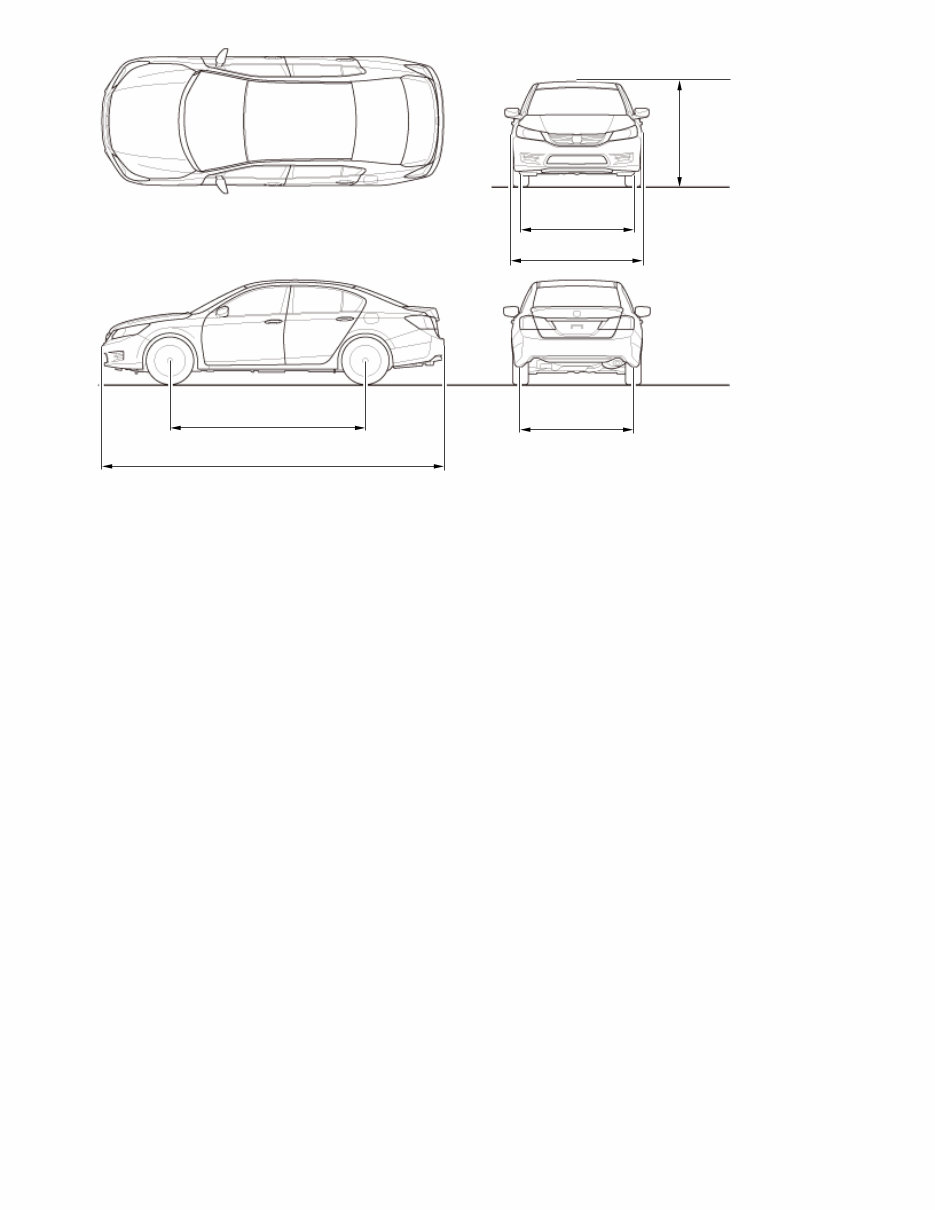
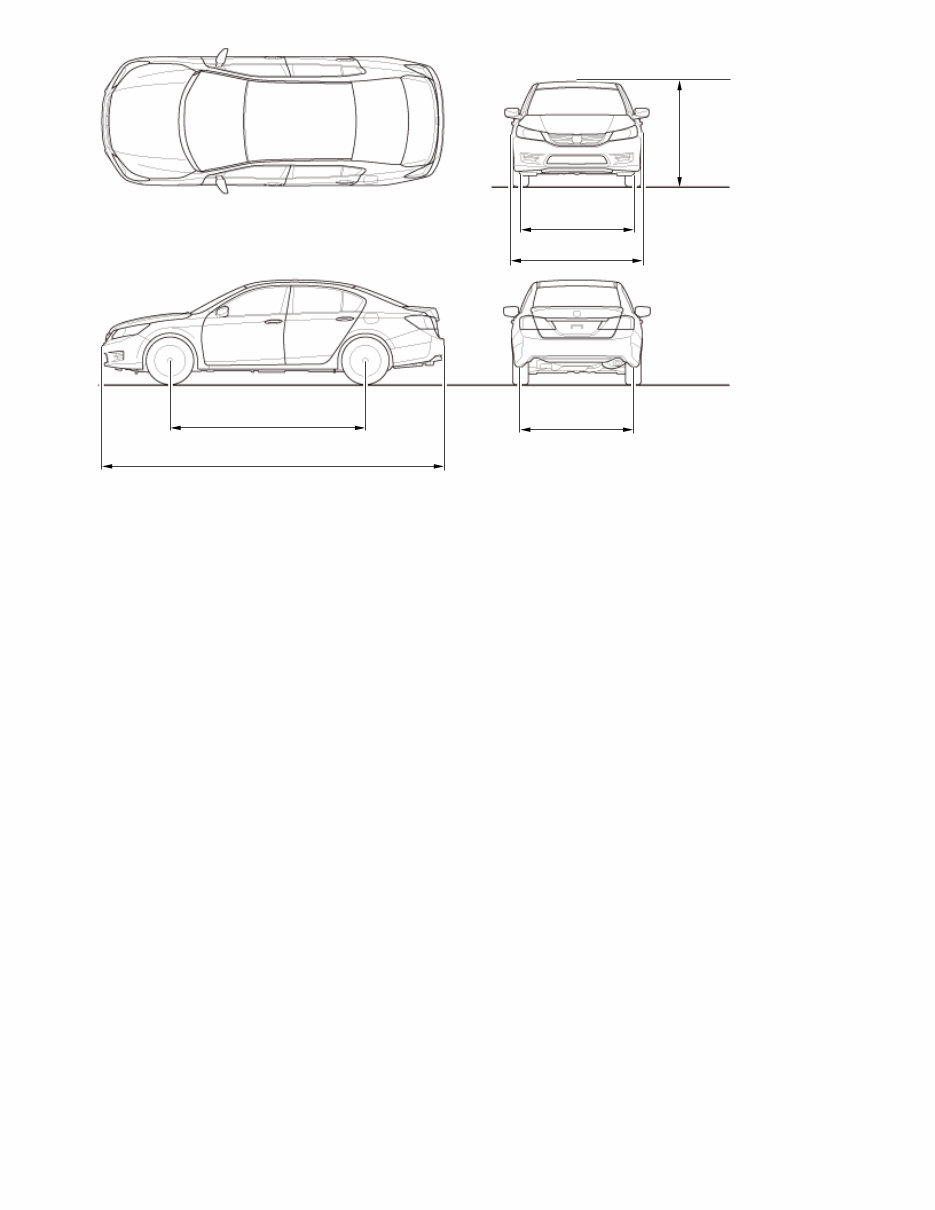
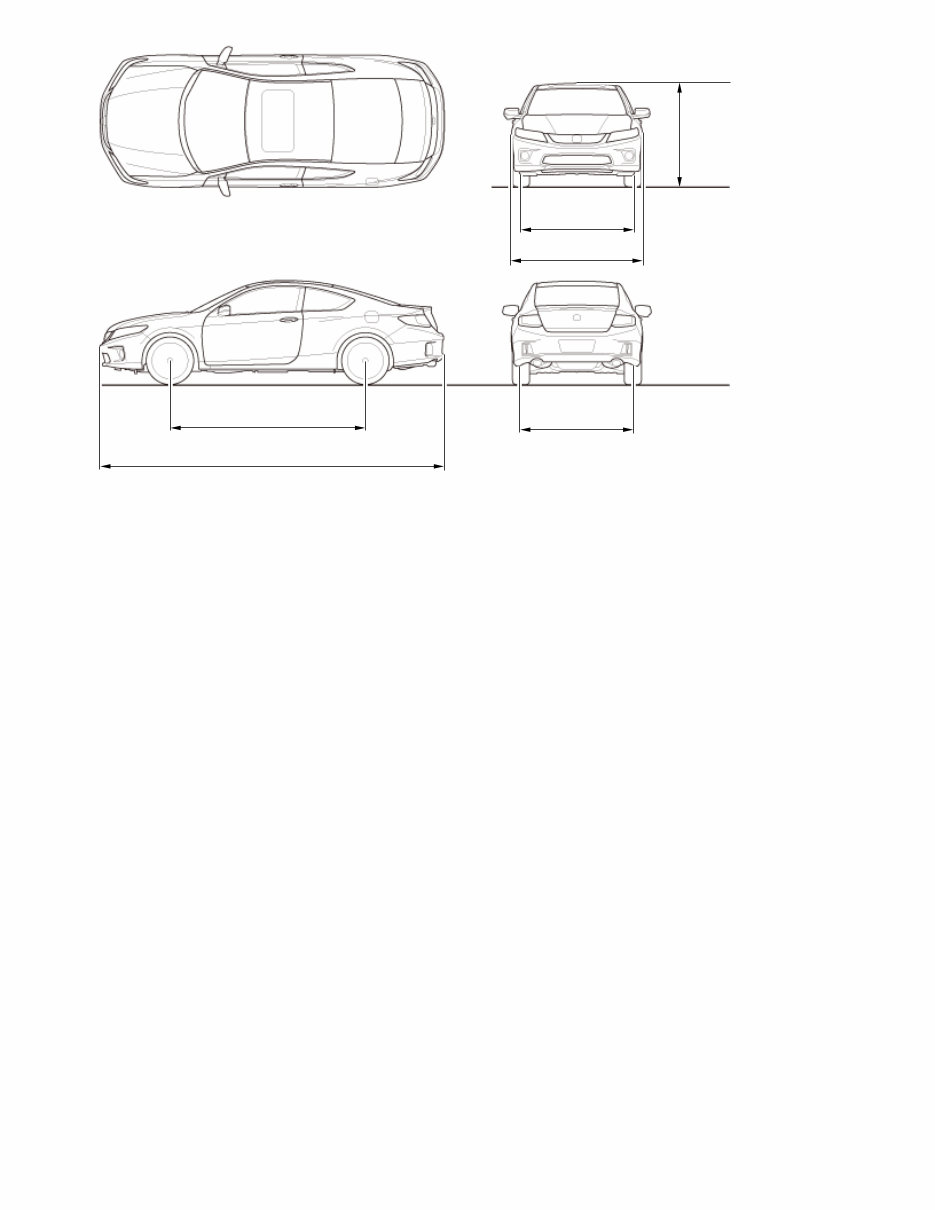
4,862 mm (191.4 in) 1,849 mm (72.8 in) 1,465 mm (57.7 in) 2,775 mm (109.3 in) 1,584-1,594 mm (62.4-62.8 in) 1,583-1,593 mm (62.3-62.4 in)
4,805 mm (189.2 in) 1,850 mm (72.8 in) 1,436 mm (56.5 in) 2,725 mm (107.3 in) 1,584 mm (62.4 in) 1,583 mm (62.3 in)
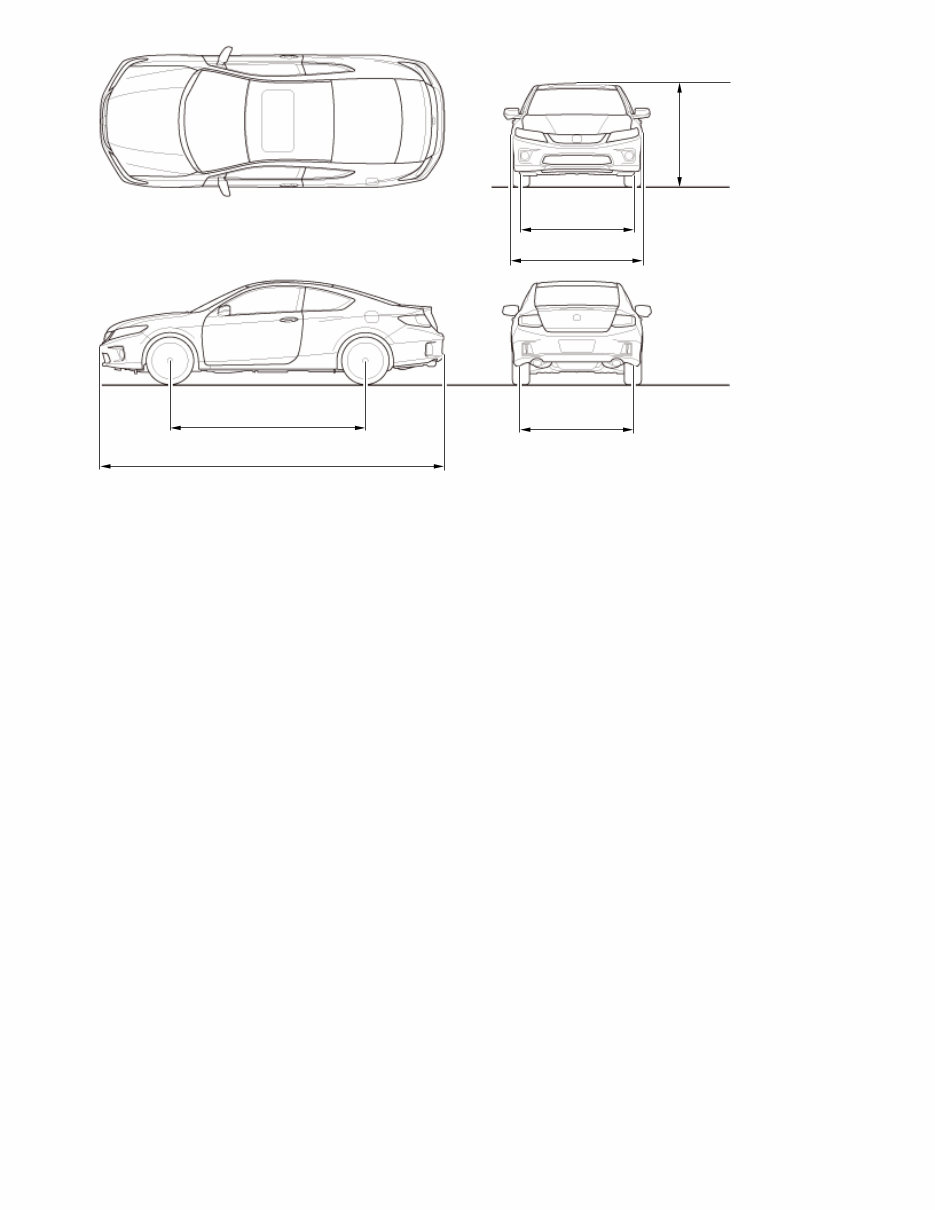
4,880 mm (192.1 in) 1,850 mm (72.8 in) 1,475 mm (58.1 in) 2,775 mm (109.3 in) 1,582-1,592 mm (62.3-62.7 in) 1,579-1,589 mm (62.2-62.6 in)
4,825 mm (190.0 in) 1,855 mm (73.0 in) 1,445 mm (56.9 in) 2,725 mm (107.3 in) 1,583 mm (62.3 in) 1,583 mm (62.3 in)
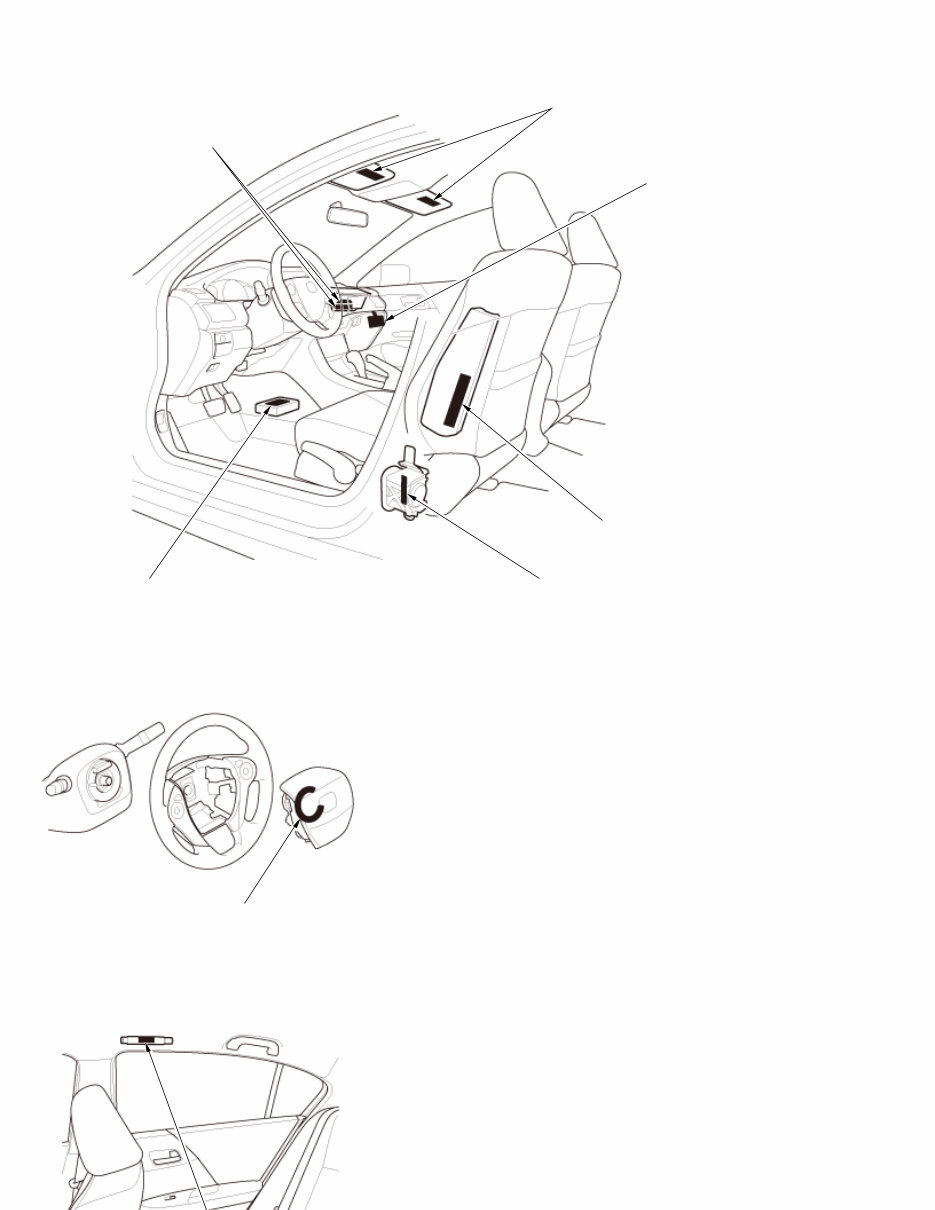
Front Passenger’s Compartment: Steering Wheel: Rear Passenger’s Compartment (4-door): SRS WARNING INFORMATION MONITOR NOTICE SEAT BELT TENSIONER WARNING SIDE AIRBAG MODULE DANGER PASSENGER AIRBAG MODULE DANGER PASSENGER AIRBAG WARNING TAG (CHILD SEAT) USA models DRIVER AIRBAG MODULE DANGER
The 2017 Honda Accord OEM Service & Repair Manual is the official, in-depth documentation used by certified Honda dealership technicians. This comprehensive guide provides complete, manufacturer-sourced procedures for the 2017 Accord, covering both sedan and coupe body styles and all available powertrain combinations, from the 2.4L four-cylinder to the powerful 3.5L V6.
For any professional mechanic or dedicated owner, this manual is the definitive resource. It contains the precise, step-by-step instructions and detailed specifications needed to correctly diagnose, service, and overhaul every system on the vehicle, from the complex "Earth Dreams" engine to the advanced driver-assistance systems.
What’s Inside the 2017 Honda Accord Service & Repair Manual
General Information & Maintenance
Includes all fundamental vehicle data, diagnostic trouble code (DTC) indexes, and factory-recommended maintenance schedules required to keep your Accord in optimal condition.
Engine Service & Overhaul
Provides complete teardown and rebuild procedures for both the 2.4L direct-injected I4 and the 3.5L V6 engines. Covers all aspects of engine mechanical service, cooling, lubrication, fuel, and emissions systems.
Transmission, Driveline & Transaxle
Detailed repair instructions for all three available transmissions (6-Speed Manual, 6-Speed Automatic, and CVT). Includes full service information for the clutch, driveshafts, and all related components.
Suspension, Steering & Brakes
Comprehensive service guides for all chassis systems. Contains step-by-step instructions for servicing the front and rear suspension, electronic power steering, and the complete brake system, including all ABS and VSA components.
Driving Support & Safety Systems
Essential for a modern vehicle, this manual contains full diagnostic and repair information for the complete Supplemental Restraint System (SRS airbags) and all Honda Sensing / Driving Support systems.
Body Repair & Electrical Systems
Features the full factory wiring diagrams and a dedicated body repair manual. This section offers detailed schematics for troubleshooting and procedures for servicing body panels, interior trim, and the HVAC system.
Why Choose This OEM Manual?
Servicing a modern vehicle with direct injection and advanced driver-assistance systems requires factory-specific data. This manual provides the official diagnostic flowcharts, specific calibration procedures for safety systems, and the complex wiring diagrams that generic guides simply cannot offer.
Digital Format & Compatibility
Delivered as a high-resolution, fully searchable PDF, this manual works seamlessly on Windows, macOS, iOS, Android, and Linux systems. It is ideal for use on a workshop computer, tablet, or can be printed for hands-on reference right at the vehicle.
Get Your 2017 Honda Accord Manual Today
Empower your workshop with the same data used by Honda's own technicians. Whether you're performing a transmission service or calibrating a lane-keep assist camera, this is the ultimate resource for keeping your 2017 Accord in factory condition.
Printable: Yes Language: English Compatibility: Windows, macOS, Linux, iOS, Android Requirements: PDF Reader



 Lifetime Access