

100-01 Identification Codes 2008 Low Cab Forward
DESCRIPTION AND OPERATION Procedure revision date: 11/20/2007
Identification Codes
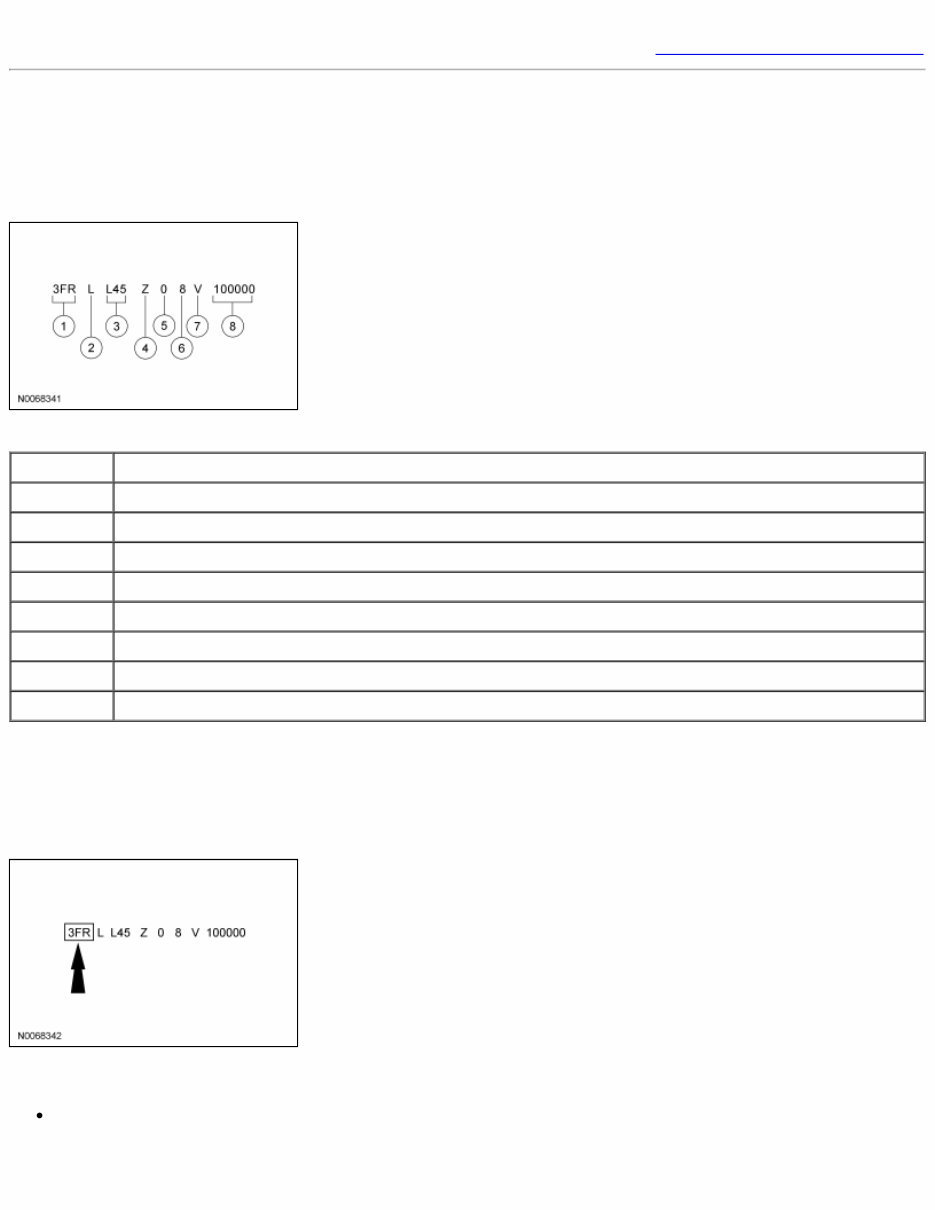
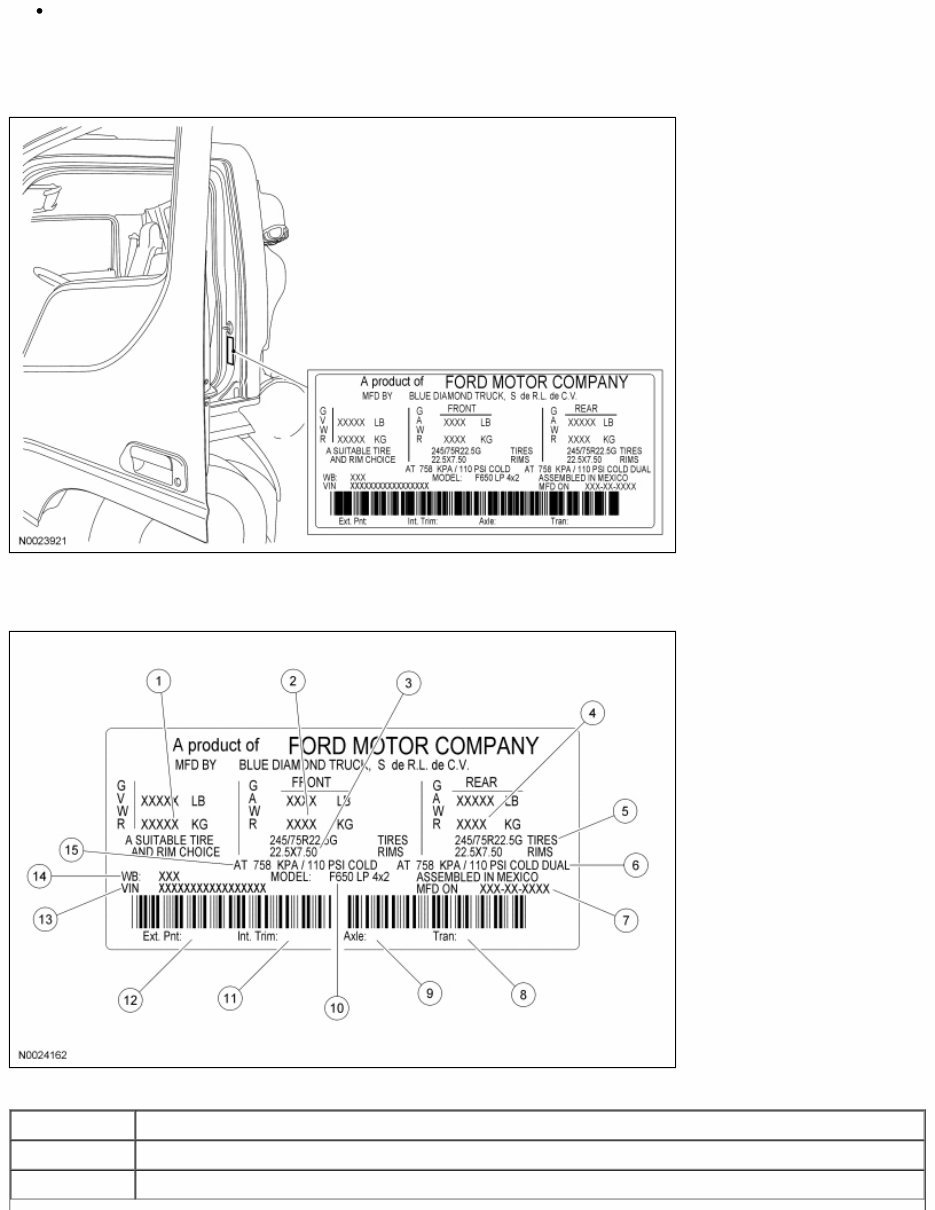
The vehicle identification number (VIN) is a 17-digit combination of letters and numbers. The VIN is found on the vehicle
information label (VIL) which is affixed to the driver door opening.
Item Description
1 World manufacturer identifier (WMI)
2 Brake type and gross vehicle weight rating (GVWR) code
3 Vehicle line, series and body type code
4 Engine type code
5 Government-assigned, computer-generated check digit
6 Model year code
7 Assembly plant code
8 Production sequence number
Vehicle Identification Number (VIN)
World Manufacturer Identifier (WMI)
The first 3 VIN positions are the world manufacturer code.
3FR — Blue Diamond Truck (Ford Motor Company joint venture), Mexico, incomplete vehicle
Brake Type and Gross Vehicle Weight Rating (GVWR)
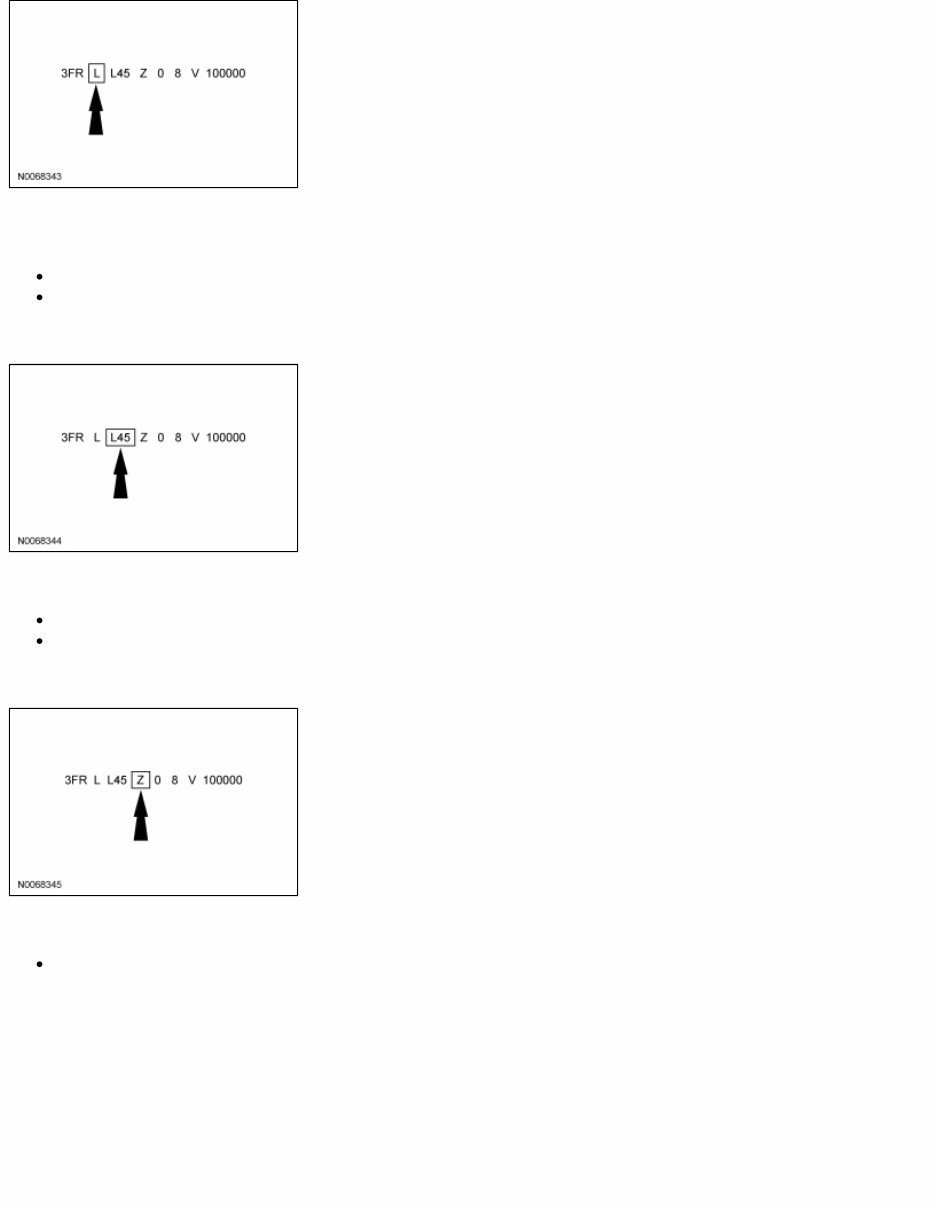
The 4th VIN position is the vehicle brake type and gross vehicle weight rating (GVWR) code (all vehicles use hydraulic
brakes).
L — 14,001-16,000 pounds GVWR with active safety belts
M — 16,001-19,500 pounds GVWR with active safety belts
Vehicle Line, Series and Body Type
Positions 5 through 7 indicate vehicle line, series and body type.
L45 — Low Cab Forward, 450 series, dual rear wheels
L55 — Low Cab Forward, 550 series, dual rear wheels
Engine Code
The 8th VIN position is the engine displacement and number of cylinders.
Z — 4.5L, International, V6, diesel
Check Digit Code
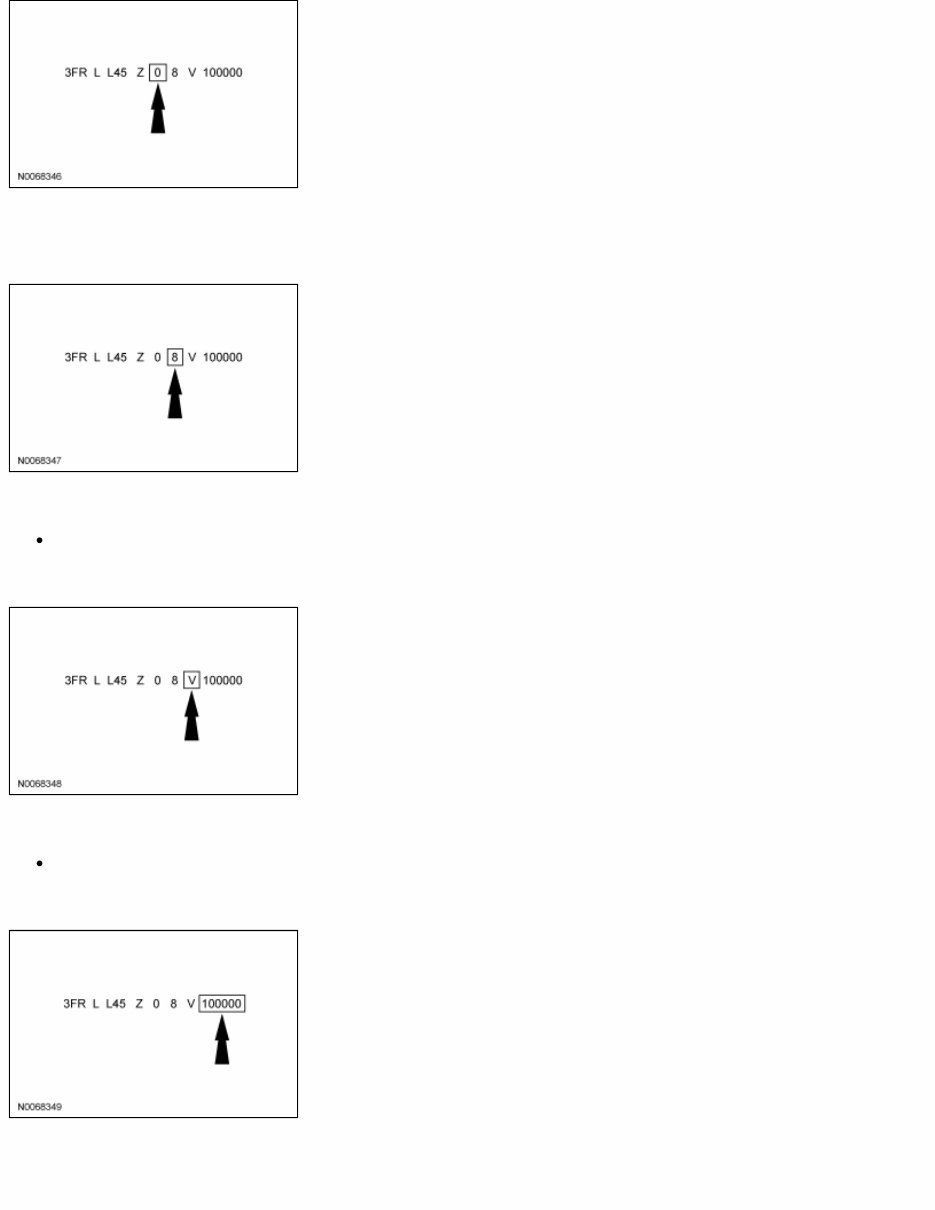
The 9th VIN position is a government-assigned, computer-generated check digit.
Model Year Code
The 10th VIN position is the model year code.
8 — 2008
Assembly Plant Code
The 11th VIN position is the assembly plant code.
V — Navistar/Ford (joint venture), Escobedo, Mexico
Sequential Build Code
The last 6 VIN positions are an alphanumeric code for the vehicle build sequence. This is also the vehicle serial and
warranty number.
100000-999999
Vehicle Identification Label (VIL)
Vehicle Identification Label (VIL) Locator
The vehicle identification label (VIL) contains the manufacturer name, the month and year of manufacture and the VIN. It
also includes GVWR.
Item Description
1 Gross vehicle weight rating (GVWR)
2 Gross axle weight rating (GAWR) (front axle)
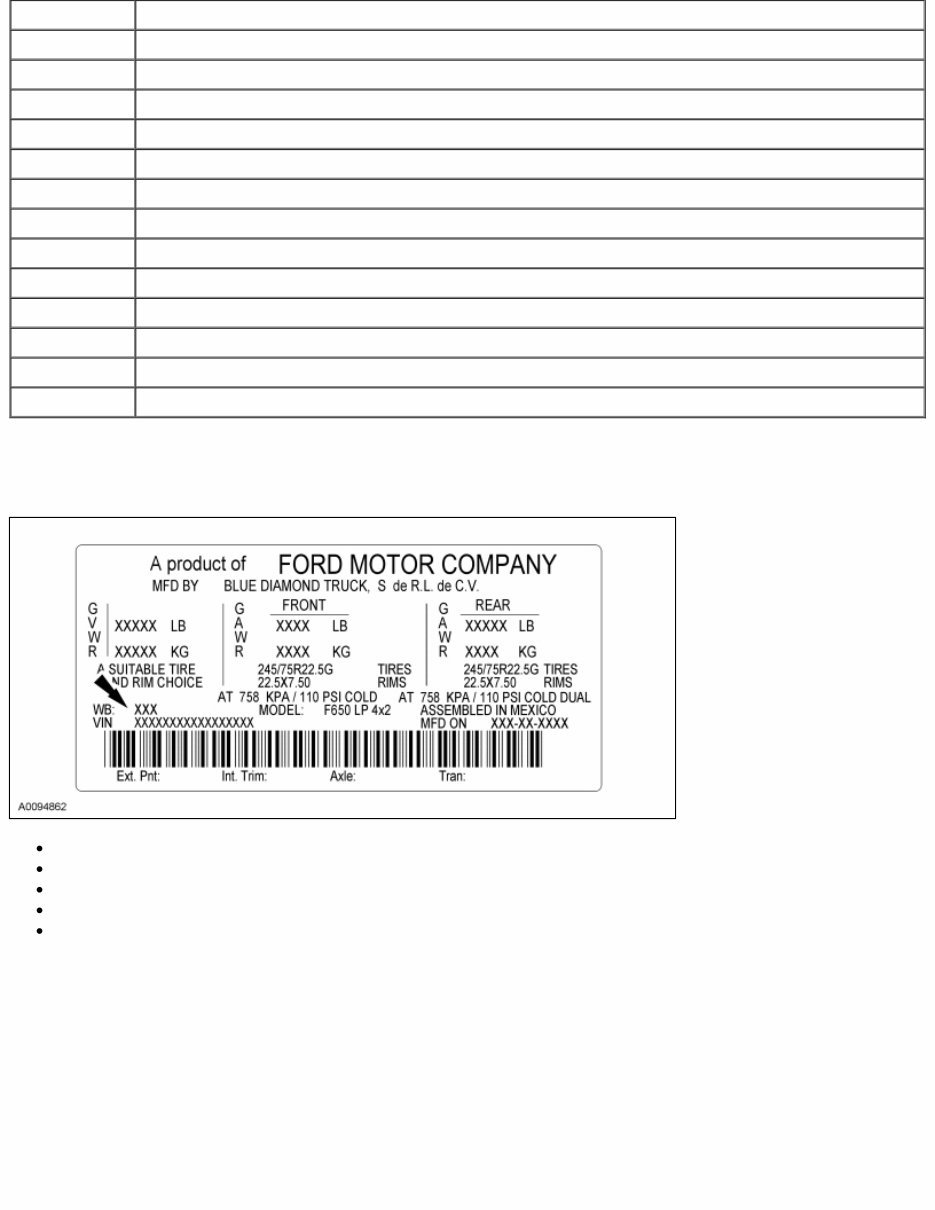
Item Description
3 Front tire and wheel information
4 GAWR (rear axle)
5 Rear tire and wheel information
6 Rear tire air pressure information
7 Date of manufacture
8 Transmission code
9 Axle code
10 Vehicle model
11 Interior trim code
12 Exterior paint code
13 Vehicle identification number (VIN)
14 Wheelbase code
15 Front tire air pressure information
Wheelbase Code
115 — 115 in (2,921 mm) wheelbase
137 — 137 in (3,479.8 mm) wheelbase
149 — 149 in (3,784.6 mm) wheelbase
167 — 167 in (4,241.8 mm) wheelbase
185 — 185 in (4,699 mm) wheelbase
Exterior Paint Code
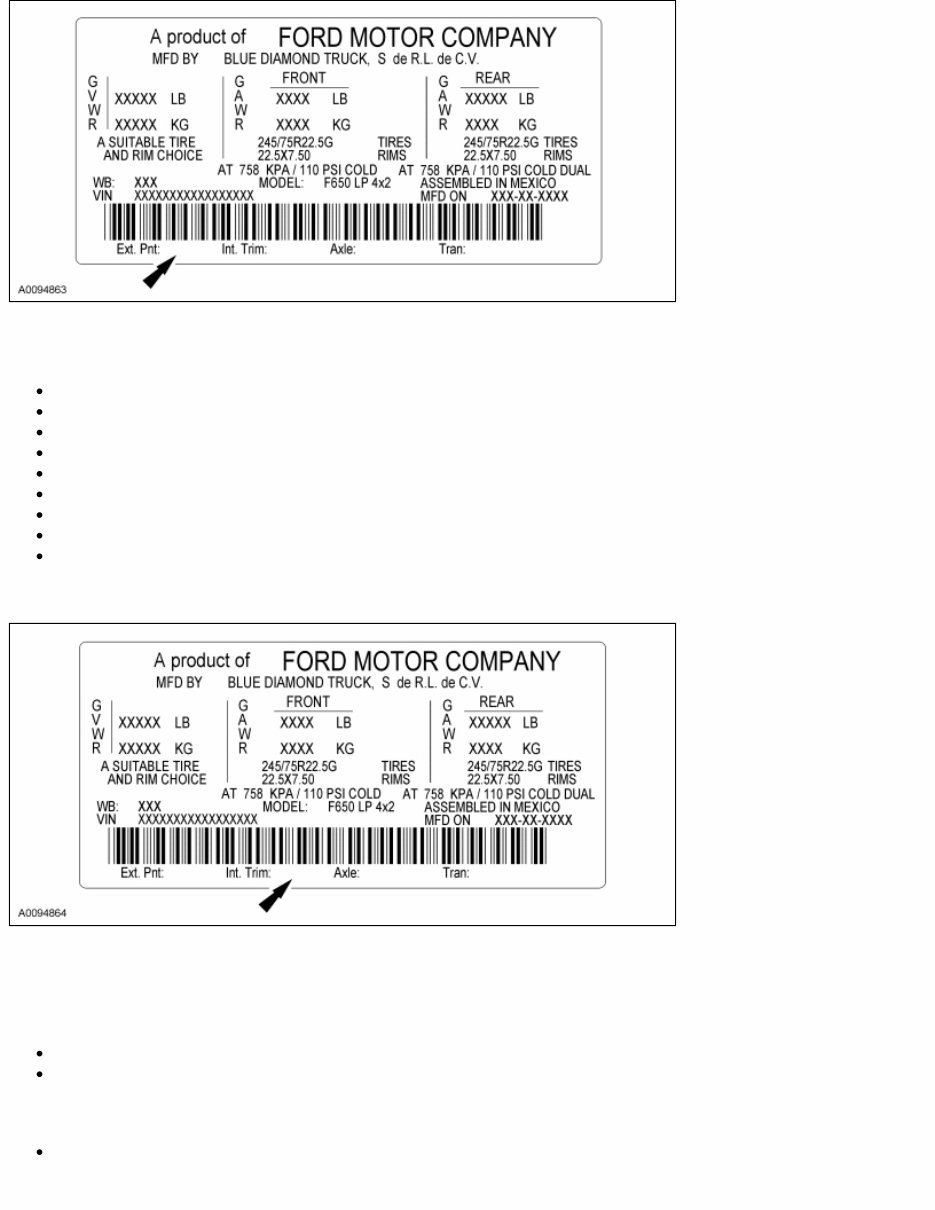
Exterior paint codes may be listed as a 2-part code. The first set of characters listed identify the vehicle primary color code.
The second set of characters listed (if applicable) identify a 2-tone or accent exterior body color.
NJ — Omaha Orange
SY — Bold Yellow
NY — School Bus Yellow
E4 — Bright Red
L2 — True Blue
GV — Holly Green
UA — Black
W1 — Winter White
YZ — Oxford White
Interior Trim
Interior trim codes are listed as a 2-part code. The first character listed identifies the trim type. The second character listed
identifies the interior trim color.
Interior Trim Type
A — Vinyl covered seats
B — Cloth covered seats with folding back
Interior Trim Color
E — Medium Flint
Axle Type
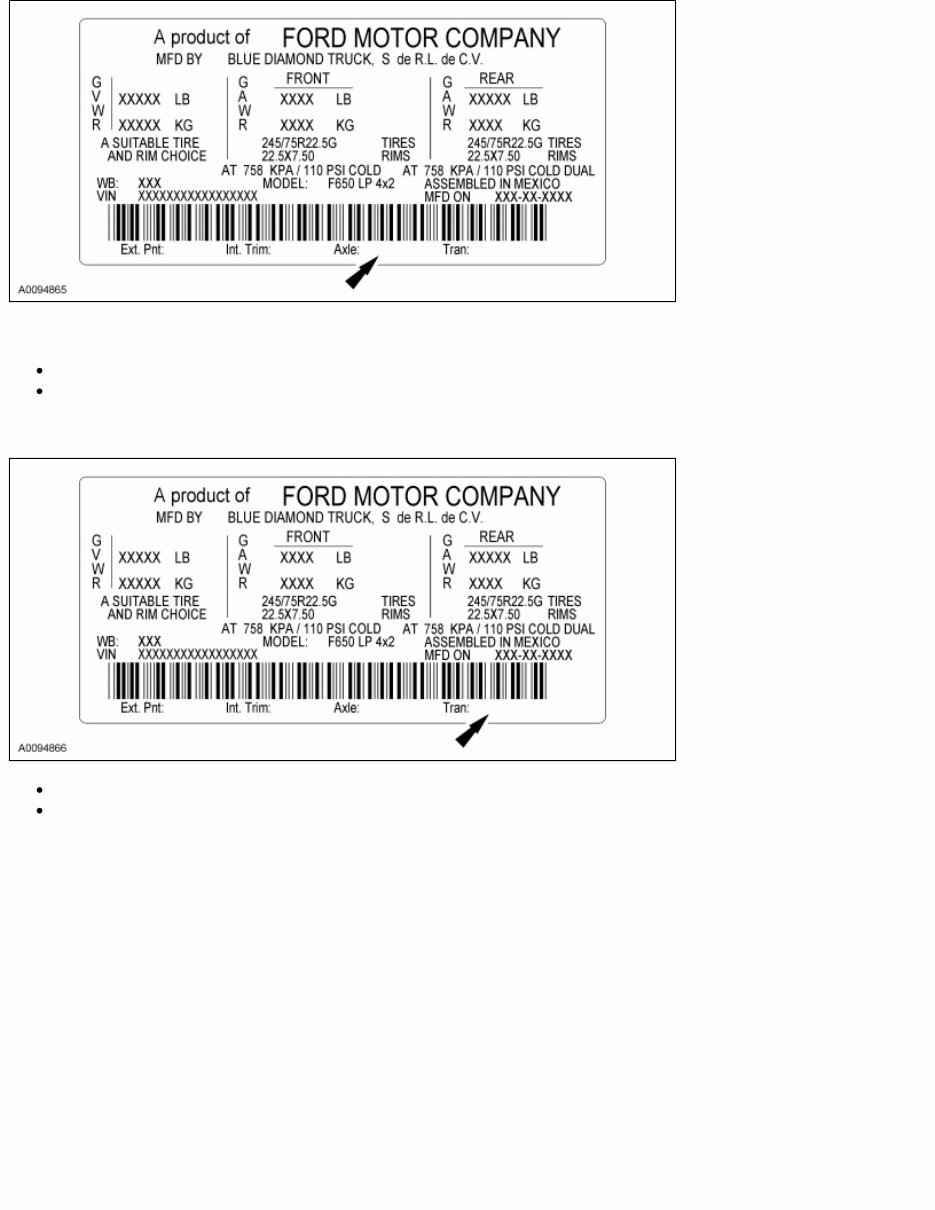
The following lists the gear ratios on rear axles.
X4G — 4.88 gear ratio
X5C — 5.38 gear ratio
Transmission Type
A — 5-speed automatic, TorqShift® automatic without power take-off (PTO) provision
B — 5-speed automatic, TorqShift® automatic with PTO provision
100-02 Jacking and Lifting 2008 Low Cab Forward
DESCRIPTION AND OPERATION Procedure revision date: 02/19/2008
Jacking and Lifting
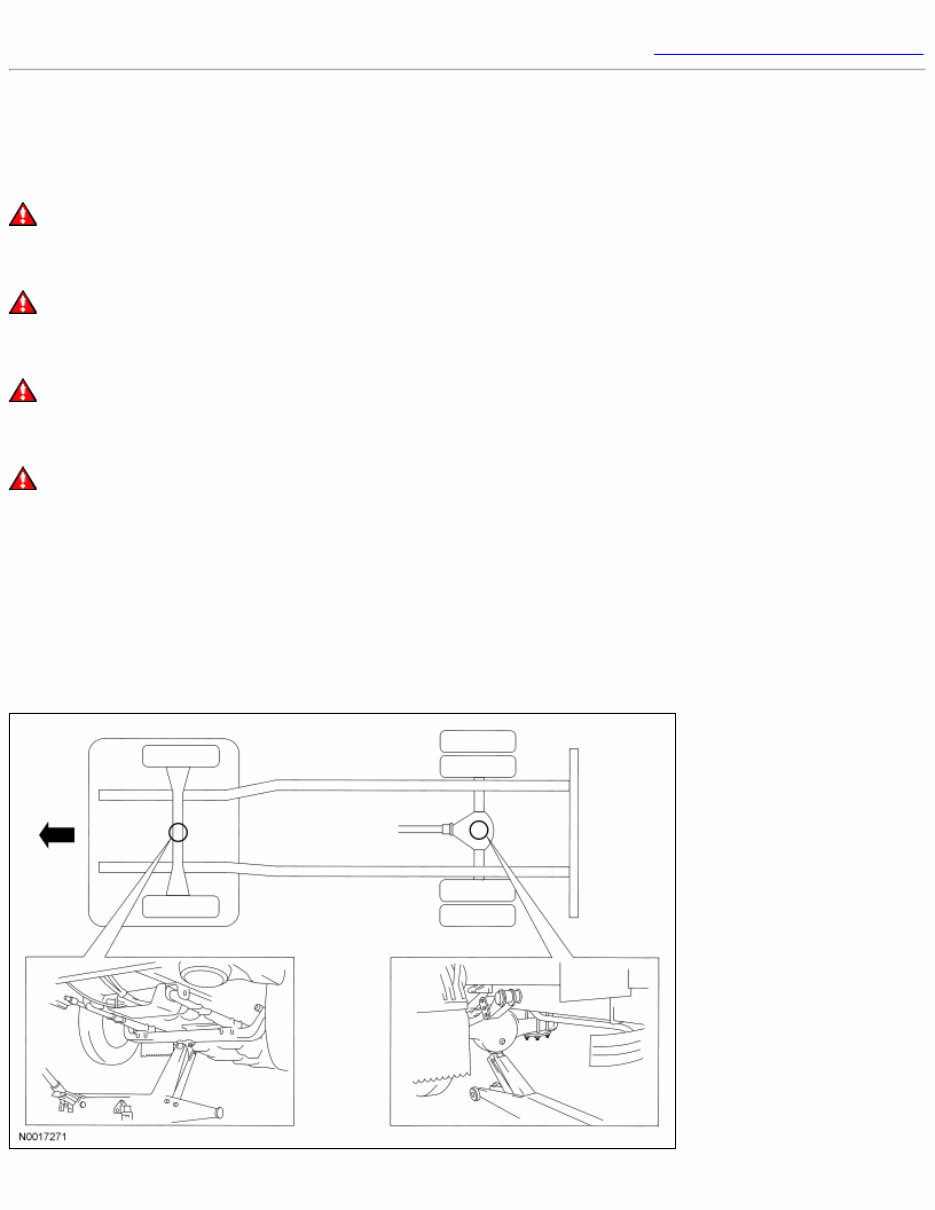
Jacking Points
WARNING: When jacking or lifting the vehicle, block all wheels remaining on the ground. Set the parking brake
if the rear wheels will remain on the ground. These actions help prevent unintended vehicle movement. Failure to
follow these instructions may result in serious personal injury.
WARNING: Never get underneath a vehicle that is supported only by a jack. The jack could unintentionally
lower. Always support vehicle with floor stands. Failure to follow these instructions may result in serious personal
injury.
WARNING: Only raise the vehicle when positioned on a hard, level surface. Attempting to raise the vehicle on an
uneven or soft surface may result in vehicle slipping or falling from the jack or jackstand. Failure to follow this
instruction may result in serious personal injury.
WARNING: Position the hoist lift arms as shown in the illustration. Incorrect positioning could result in vehicle
slipping or falling from the hoist. Failure to follow this instruction may result in serious personal injury.
NOTICE: When raising a vehicle on a twin-post hoist, use care when positioning the vehicle so that the hoisting forks
do not interfere with the suspension components, mounting brackets or stabilizer mounting brackets, if equipped. In
addition, use care in hoist positioning to avoid possible damage to the axle carrier or rear cover.
NOTICE: Damage to the suspension, exhaust or steering linkage components may occur if care is not exercised when
positioning the hoist adapters prior to lifting the vehicle.
Jacking Points
Lifting Points
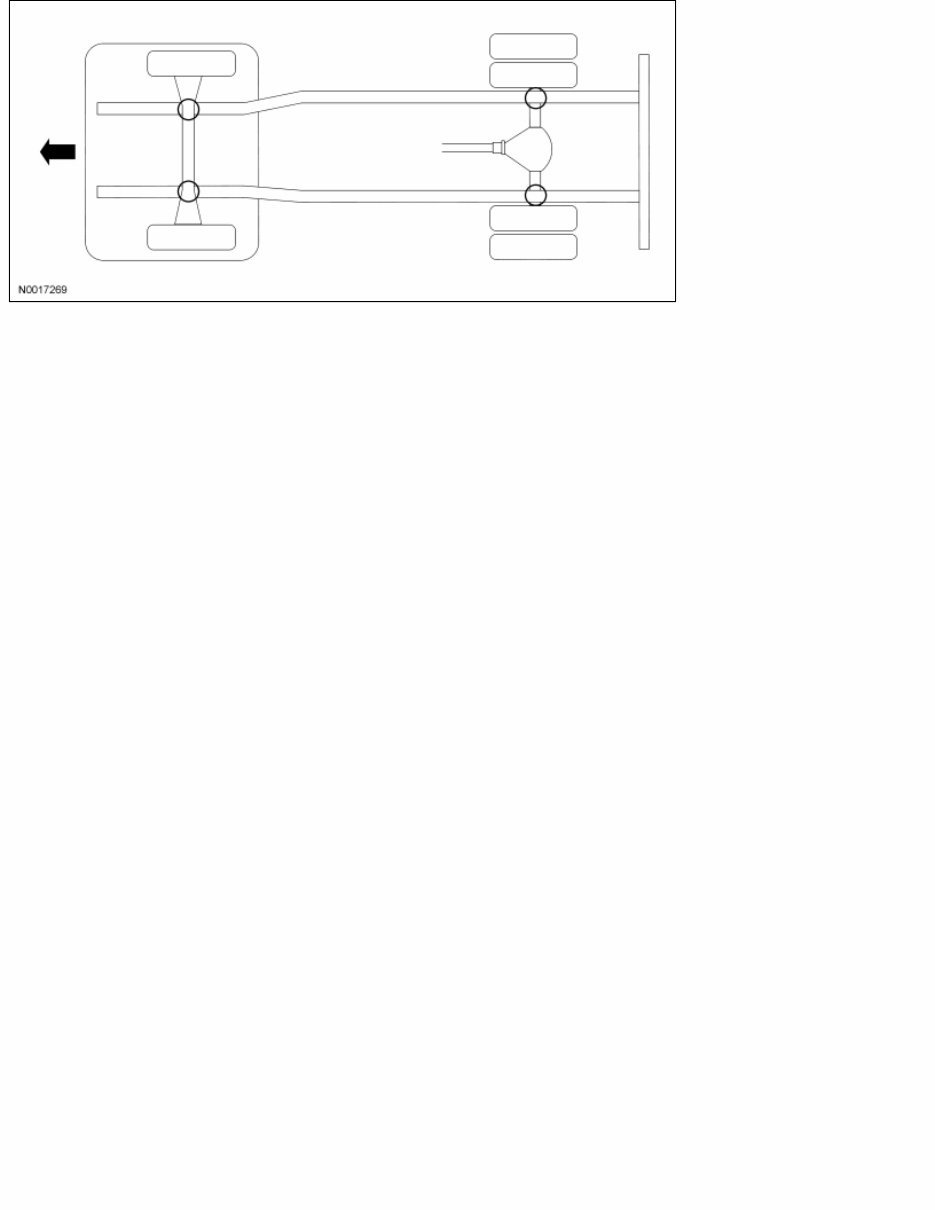
Hoist adapters for heavy-duty hoists must be positioned according to the hoist manufacturer's recommendations. Make sure
the hoist has an adequate lifting capacity for the vehicle being lifted.

100-03 Maintenance Schedule 2008 Low Cab Forward
DESCRIPTION AND OPERATION Procedure revision date: 03/19/2008
Maintenance Schedules
The maintenance schedule is designed to protect against major repairs resulting from neglect or inadequate maintenance and
to prolong the life of the vehicle.
General Maintenance Information
The maintenance schedule applies to operation of the vehicle under typical, everyday driving conditions. The maintenance
frequency in this schedule typifies what the vast majority of vehicles will require. The listed services should be carried out at
specified mileage, time or hours of operation. There are, however, additional services listed that only the noted vehicles
require.
If the vehicle is operated in one or more of the following special operating conditions, those additional services will be
required. The special operating conditions are:
driving in dusty conditions such as unpaved or dusty roads.
extensive idling, frequent stops and/or low-speed driving at below 40 km/h (25 mph).
extensive operation at or near Gross Vehicle Weight Rating (GVWR) .
There are also exceptions to the maintenance schedule which will require more frequent maintenance for some components
due to time, mileage or hour interval. Those exceptions are:
change engine oil and install a new oil filter — every 8,000 km (5,000 mi) or 200 hours.
engine coolant — every 6 years or 160,000 km (100,000 mi) initially and 3 years or 80,000 km (50,000 mi) thereafter.
engine oil for vehicles that idle extensively — every 125 hours.
fuel filters — every 400 hours or every other oil change if Bio-Diesel is used or extensively idled.
Special Operating Condition Requirements
Driving in dusty conditions such as unpaved or dusty roads:
Change engine oil and install a new oil filter every 8,000 km (5,000 mi) or 200 hours.
Inspect and lubricate the steering and suspension system every 8,000 km (5,000 mi).
Inspect the brake system and tires every 8,000 km (5,000 mi).
Install new engine- and chassis-mounted fuel filters every 16,000 km (10,000 mi) or 400 hours.
Inspect the air restriction gauge and install a new air filter as required.
Extensive idling, frequent stops and/or low-speed driving at below 40 km/h (25 mph):
Change engine oil and install a new oil filter every 8,000 km (5,000 mi) or 200 hours.
If the vehicle is idled daily for more than 10 minutes at a time, change engine oil and install a new oil filter every 125
hours.
Install new engine- and chassis-mounted fuel filters every 16,000 km (10,000 mi) or 400 hours.
Inspect and lubricate the steering and suspension system every 8,000 km (5,000 mi).
Inspect the brake system and tires every 8,000 km (5,000 mi).
Extensive operation at or near GVWR :
Change engine oil and install a new oil filter every 8,000 km (5,000 mi) or 200 hours.
Inspect the brake system and tires every 8,000 km (5,000 mi).
Install new engine- and chassis-mounted fuel filters every 16,000 km (10,000 mi) or 400 hours.
Change the axle fluid every 80,000 km (50,000 mi).
You're Reading a Preview
What's Included?
 Lifetime Access
Fast Download Speeds
Online & Offline Access
Access PDF Contents & Bookmarks
Full Search Facility
Print one or all pages of your manual
$31.99
2007 Ford Low Cab Forward Service & Repair Manual
Viewed 76 Times Today

What's Included?
Lifetime Access
Fast Download Speeds
Online & Offline Access
Access PDF Contents & Bookmarks
Full Search Facility
Print one or all pages of your manual
$31.99

Secure transaction
What's Included?
Lifetime Access
Fast Download Speeds
Online & Offline Access
Access PDF Contents & Bookmarks
Full Search Facility
Print one or all pages of your manual
Description
Suitable for both professional mechanics and DIYers, this comprehensive digital manual for the 2007 Ford Low Cab Forward provides in-depth information on the maintenance and repair of the vehicle.
- Covers troubleshooting, repair, and comprehensive maintenance procedures
- Offers detailed instructions and diagrams for common and complex tasks
- Provides technical specifications and step-by-step guides for various components
- Helps users understand and address the inner workings of the vehicle
This manual is designed to assist individuals in conducting a wide range of repairs and maintenance tasks, from routine checks to complex overhauls. Whether you're a seasoned technician or an amateur DIYer, it provides the information and guidance you need to get the job done.


