


100-00 General Information 2013 - 2014 Fusion Hybrid/Energi
Description and Operation Procedure revision date: 08/7/2023
Important Safety Instructions
COLLISION, DAMAGE OR FIRE EVENT
WARNING: Service of this electric vehicle is restricted to qualified personnel. The required qualifications vary by
region. Always observe local laws and legislative directives regarding electric vehicle service. Failure to follow this
instruction may result in serious personal injury or death.
WARNING: Before beginning any service procedure in this manual, refer to health and safety warnings in section
100-00 General Information. Failure to follow this instruction may result in serious personal injury.
For additional information, refer to: Health and Safety Precautions (100-00 General Information, Description and
Operation).
Guidance for Ford Motor Company Electric and Hybrid-Electric Vehicles Equipped With High-Voltage Batteries
(Vehicle Owner/Operator/General Public) Electric and Hybrid-Electric Vehicle Considerations In the Event of
Damage or Fire Involving an Electric Vehicle (EV) or Hybrid-Electric Vehicle (HEV):
Always assume the high-voltage battery and associated components are energized and fully charged.
Exposed electrical components, wires and high-voltage batteries present potential high-voltage shock hazards.
Venting and off-gassing, high-voltage battery vapors are potentially toxic and flammable.
Physical damage to the vehicle or high-voltage battery may result in immediate or delayed release of toxic, flammable
gases and fire.
Vehicle Information and General Safety Practices
Know the make and model of your vehicle.
Review the owner’s manual and become familiar with your vehicle’s safety information and recommended safety
practices.
Do not attempt to repair damaged electric and hybrid-electric vehicles yourself. Contact an authorized Ford Dealer or
vehicle manufacturer representative for service.
Crashes
A crash or impact significant enough to require an emergency response for conventional vehicles would also require
the same response for an electric or hybrid-electric vehicle.
If possible
Move your car to a safe, nearby location and remain on the scene.
Roll down the windows before shutting your vehicle off.
Place your vehicle in park (P), set the parking brake, switch off the vehicle, activate the hazard lights and move your
key(s) at least 5 m (5.5 yd) away from the vehicle.
Always
Call emergency assistance if needed and advise that an electric or hybrid-electric vehicle is involved.
Do not touch exposed electrical components or the engine compartment, as a shock hazard may exist.
Avoid contact with leaking fluids and gases, and remain out of the way of oncoming traffic until emergency
responders arrive.
When emergency responders arrive, tell them that the vehicle involved is an electric vehicle or hybrid vehicle.

Fires
As with any vehicle, call emergency assistance immediately if you see sparks, smoke or flames coming from the vehicle.
Exit the vehicle immediately.
Advise emergency assistance that an electric or hybrid-electric vehicle is involved.
As with any vehicle fire, do not inhale smoke, vapors or gas from the vehicle, as they may be hazardous.
Remain a safe distance from the vehicle and try to stay clear of the smoke.
Stay out of the roadway and stay out of the way of any oncoming traffic while awaiting the arrival of emergency
responders.
Post-Incident
Do not store a severely damaged vehicle with a lithium-ion battery inside a structure or within 15 m (16.4 yd) of any
structure or vehicle.
Make sure that passenger and cargo compartments remain ventilated. For example, open a window, door or trunk.
Notify your local Ford Customer Contact Centre (see your Service Portfolio) and an authorized Ford dealer as soon as
possible. There may be other steps to secure and discharge the high-voltage battery.
Call emergency assistance if you observe leaking fluids, sparks, smoke or flames, or hear gurgling or bubbling from
the high-voltage battery.
Workshop Manual
WARNING: Before beginning any service procedure in this manual, refer to health and safety warnings in section
100-00 General Information. Failure to follow this instruction may result in serious personal injury.
Refer to: Health and Safety Precautions

100-00 General Information 2013 - 2014 Fusion Hybrid/Energi
Description and Operation Procedure revision date: 03/10/2021
About this Manual
Introduction
WARNING: Before beginning any service procedure in this manual, refer to health and safety warnings in
section 100-00 General Information. Failure to follow this instruction may result in serious personal injury.
For additional information, refer to: Health and Safety Precautions (100-00 General Information, Description and
Operation).
This manual describes and directs repair procedures specified by Ford Motor Company for the vehicle. Critical health and
safety precautions are included. Anyone who deviates from these instructions risks compromising personal safety or vehicle
integrity.
SECTION CONTENT
This manual is divided into groups, each containing sections numbered based on the component part number. Section
contents may include:
Specifications
Fluid capacities, component specifications and torque values not covered in other procedures
Description and Operation
Overview of the system, component locations, and system operation
Diagnosis and Testing
Symptom charts, DTC charts and diagnostic tests
See the Diagnosis and Testing Information in this document
General Procedures
Service adjustments, electronic programming and other special procedures
Removal and Installation
Component removal and installation instructions
Removal
Component removal instructions
Installation
Component installation instructions
Disassembly and Assembly
Component disassembly and assembly instructions
Disassembly and Assembly of Subassemblies
Assembly disassembly and assembly instructions
IMPORTANT INFORMATION
Section number 100-00 General Information contains the following important information (including this document):
Critical Health and Safety Precautions - service safety precautions applicable to the entire manual.
For additional information, refer to: Health and Safety Precautions (100-00 General Information, Description and
Operation).
A Symbols Glossary - definitions of the action directed by each symbol.
For additional information, refer to: Symbols Glossary (100-00 General Information, Description and Operation).
Diagnostic Methods - support information for diagnostics.
For additional information, refer to: Diagnostic Methods (100-00 General Information, Description and Operation).

Warnings, Notices and Notes
WARNINGS
Warnings provide information to avoid personal injury and to make sure service actions on critical safety systems are
performed correctly. Warnings that apply to an entire system or workshop manual section are located in section 100-00
Description and Operation, Health and Safety Precautions.
For additional information, refer to: Health and Safety Precautions (100-00 General Information, Description and
Operation).
NOTICES (in some publications, CAUTIONS)
Notices provide information to avoid damage to the vehicle or a component.
NOTES
Notes provide information critical for a complete and effective repair.
Warnings, Notices, or Notes that apply to an entire procedure will be placed at the beginning of the procedure. Warnings,
Notices, or Notes that apply to a single step are placed at the beginning of the step. Those that apply to a group of steps will
be placed at the first step requiring it.
Safety Relevant Systems
Repair of a vehicle safety relevant system is to be achieved only by replacement of the failed component(s), unless specified
otherwise in the procedure. Repair of a vehicle safety relevant system component should not be attempted.
If directed during assembly of system components, lubricate any seal(s) only with the specified material. Failure to follow
this instruction may result in seal failure and leakage.
Specified Chemicals or Materials
Throughout this manual, chemicals or materials are specified that must be used to properly complete a service procedure or
diagnostic step. In the event a specific material is not readily available, a substitute material meeting the same specification
may be used. Ford has not reviewed third party products for compliance with environmental, health or safety regulations and
is not responsible for their use. Use of third party products is at your own risk. Additionally, such products may cause
degraded performance, premature failures, and/or vehicle component damage. All chemicals or materials used for vehicle
servicing should be checked for compliance with local environmental and health and safety regulations.
LH and RH Designations
All LH and RH designations are oriented from the driver's seat position looking forward.
Vehicle LH and RH definition
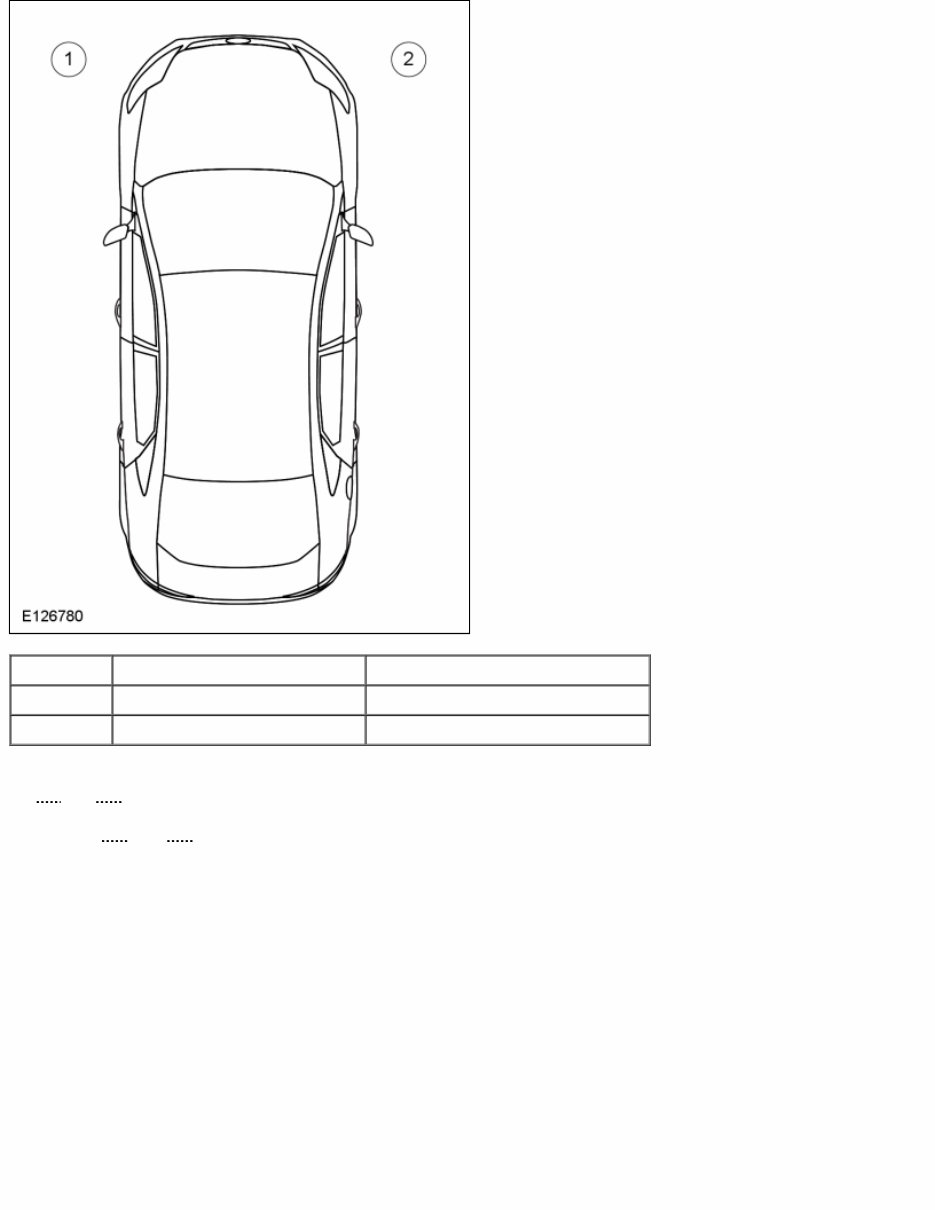
Item Part Number Description
1 — LH (left-hand)
2 — RH (right-hand)
All LH and RH engine designations are oriented from the flywheel position looking toward the crankshaft pulley.
Powertrain LH and RH definition
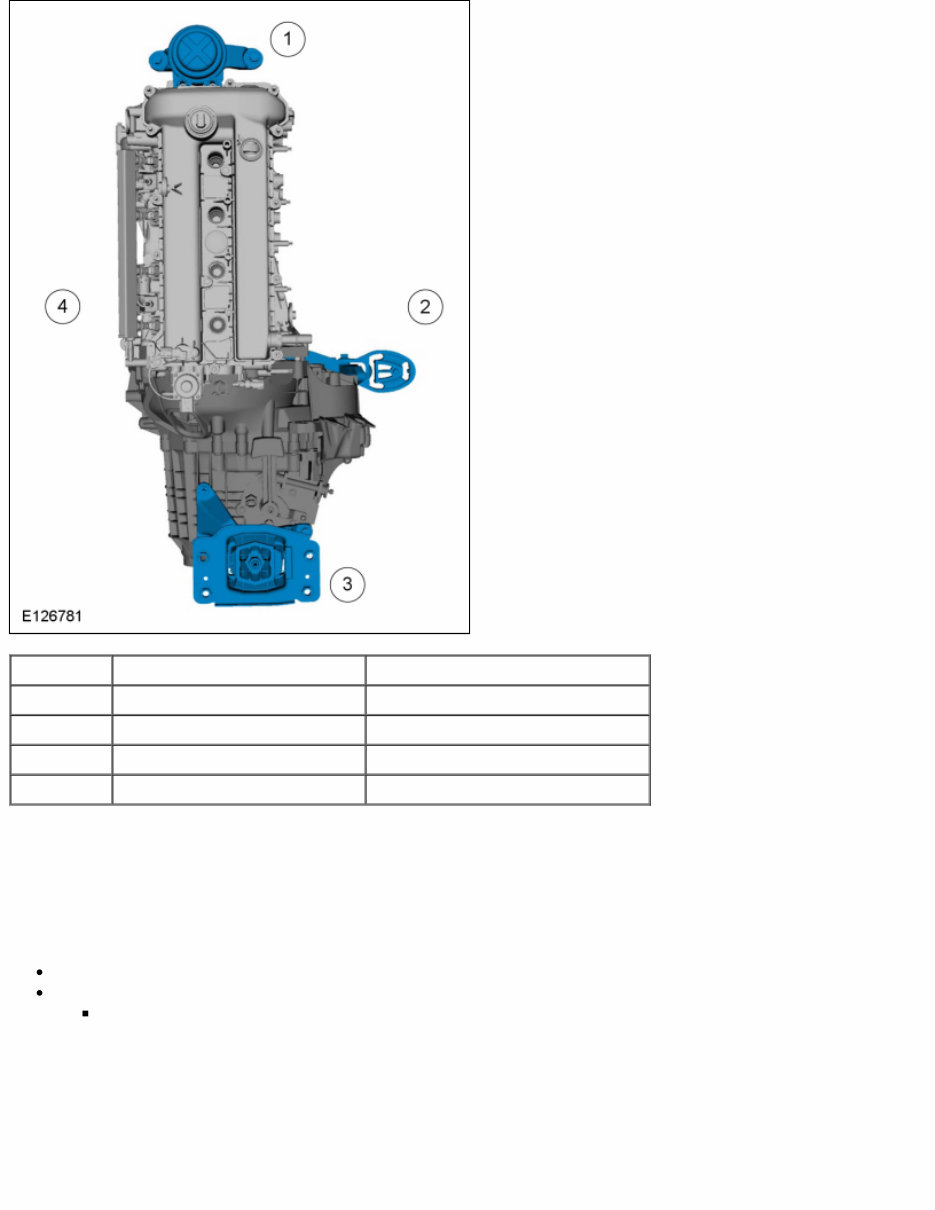
Item Part Number Description
1 — Front
2 — RH (right-hand)
3 — Rear
4 — LH (left-hand)
Standard Practices
The following rules apply, unless specified differently in the procedure:
FASTENERS
Reuse standard fasteners.
Replace fasteners with self-locking features.
Examples of fastener self-locking coatings or mechanical locking (with the locking features highlighted yellow)
are shown in the illustration.
Examples of self-locking nuts and bolts
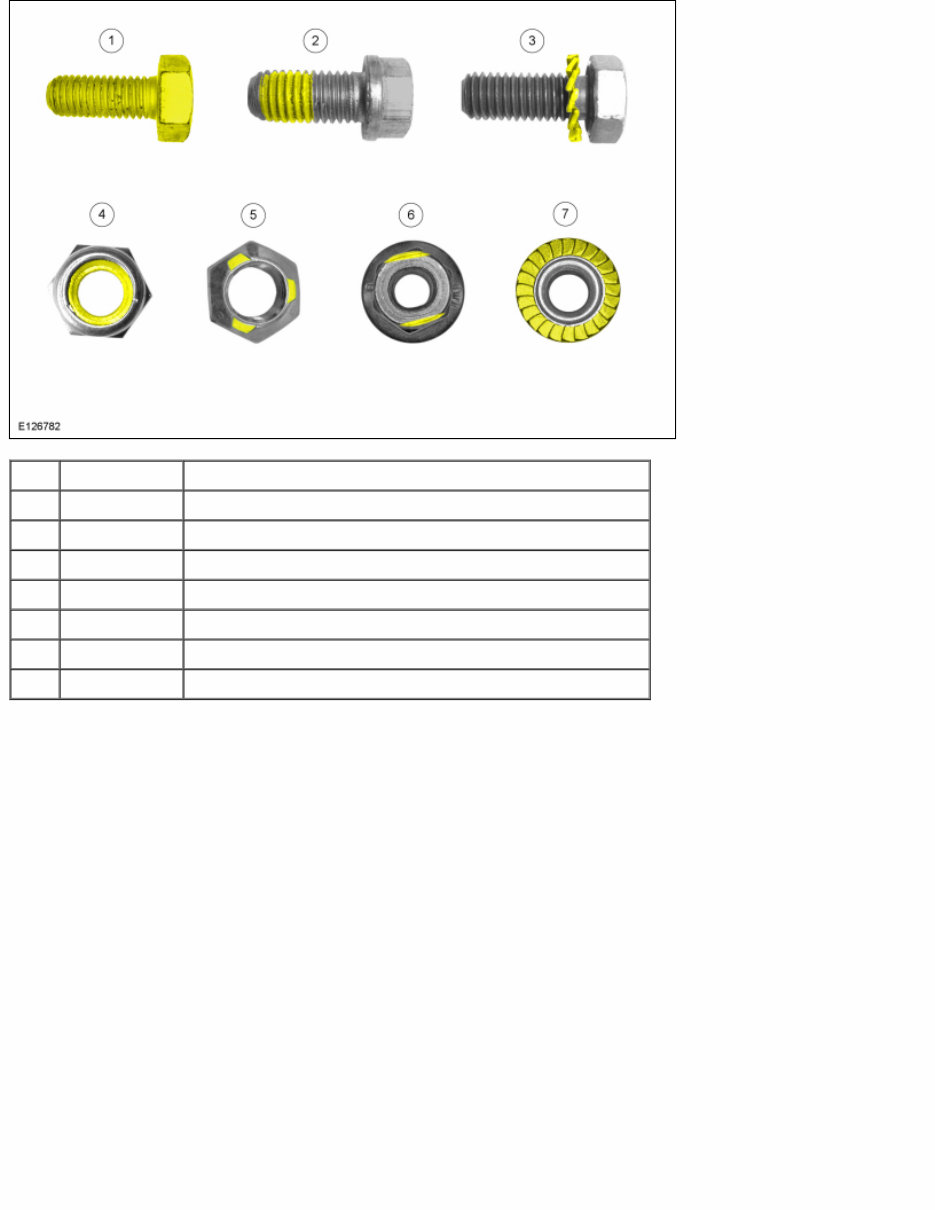
Item Part Number Description
1 — Completely coated self-locking bolt
2 — Partially coated self-locking bolt
3 — Self-locking bolt with a locking washer
4 — Self-locking nut with a plastic locking insert
5 — Self-locking nut with thread deformation (3 indentations)
6 — Self-locking nut with thread deformation (to oval shape)
7 — Self-locking nut with integrated locking ring
THREAD FORMING FASTENERS
The following is a general description of best practices to be followed during handling of thread forming fasteners and
mating components.
Manual Torque Application
Hand tools are required for installation of a thread forming fastener. Do NOT use power tools, as the possibility for over-
torqueing or stripped threads exists. If a fastener is over-torqued, the joint can fail.
Hand Start Fasteners in Reverse
To avoid the possibility of cross-threading pre-existing threads during fastener replacement, begin by first hand-inserting the
new fastener and rotating counter-clockwise. This reverse rotation allows for the location of existing fastener threads to
ensure the fastener does not cross-thread upon thread re-engagement. Once the existing fastener threads are located, hand-
start individual fasteners manually until finger tight.
Risks of Over-Torque
Consult the Workshop Manual procedure when torqueing thread forming fasteners and follow torque specification as listed.
Make sure the fastener is fully seated against the mating component with no gap during reassembly.
Corrosion
During fastener replacement, inspect both fastener and mating component for signs of rust or other corrosion. If corrosion is
found, replace corroded components with new components.
Stripped Threads
If internal (mating component) threads or external (fastener) threads appear stripped or galled, replace both fastener and
mating component. When tightening, if minimum torque is not reached, internal threads on mating component may have
stripped. Remove the fastener to inspect and replace mating component if stripped threads are found.
Face Seals
When replacing fasteners, inspect mating component surface for debris, damage, disturbance, wear, or abrasion and replace
any seals or gaskets if damage is found.
SEALS AND GASKETS
Replace seals and gaskets, unless specified differently in the procedure.
EXTERIOR TRIM PARTS
Replace exterior trim parts fastened with glue or adhesive tape, unless specified differently in the procedure.
Mechanical Procedures
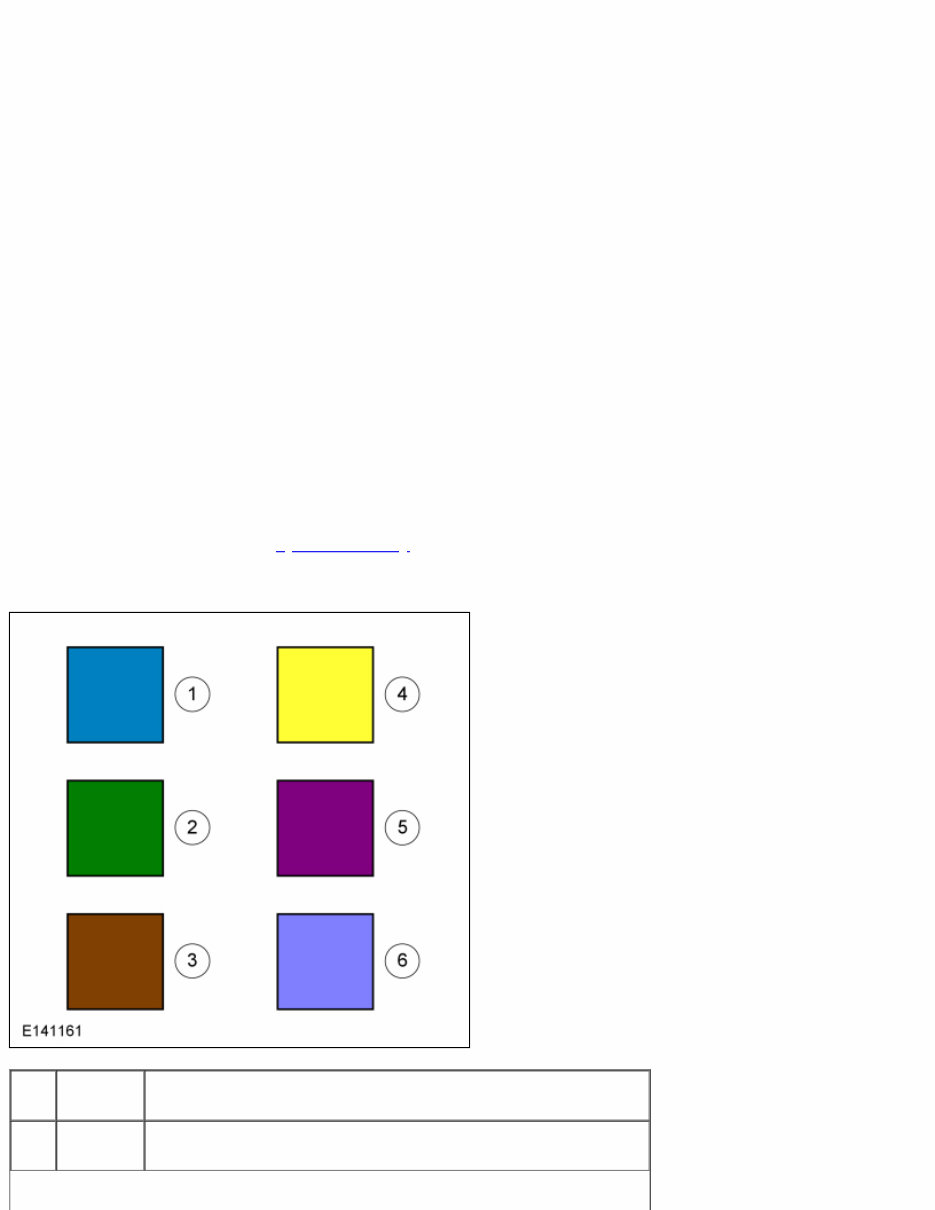
Illustrations in this manual may be used instead of written step instructions. Color-coding (see color scheme illustration) is
used to communicate the required step action or actions. Service action icons may be used to add information regarding the
required action.
For additional information, refer to: Symbols Glossary (100-00 General Information, Description and Operation).
Illustration Color-coding
Item
Part
Number Description
1 — Blue - Target or primary component to be removed/installed (or
disassembled/assembled).
2 — Green - Components that need to be removed prior to or installed
after the target/primary.
3 — Brown - Components that need to be removed prior to or installed
after the target/primary.
4 — Yellow - Components to be set aside for access, but not removed.
Also highlighted areas to inspect or adjust.
5 — Magenta - Electrical connectors and fasteners such as nuts, bolts,
clamps, or clips to be: detached, attached, loosened, moved,
removed or installed.
6 — Pale Blue - Special tool(s), general equipment, or common tools
used in an uncommon way.
Other color coding
Alternating Blue and White
Chemical, adhesive or sealer apply areas
Red
Sectioned or cut-away areas
Grey
Background components shown for location information
ILLUSTRATION TASK SEQUENCE
Components that must be removed or installed in a specific sequence are identified with a numbered callout. Any associated
step text is numbered accordingly.
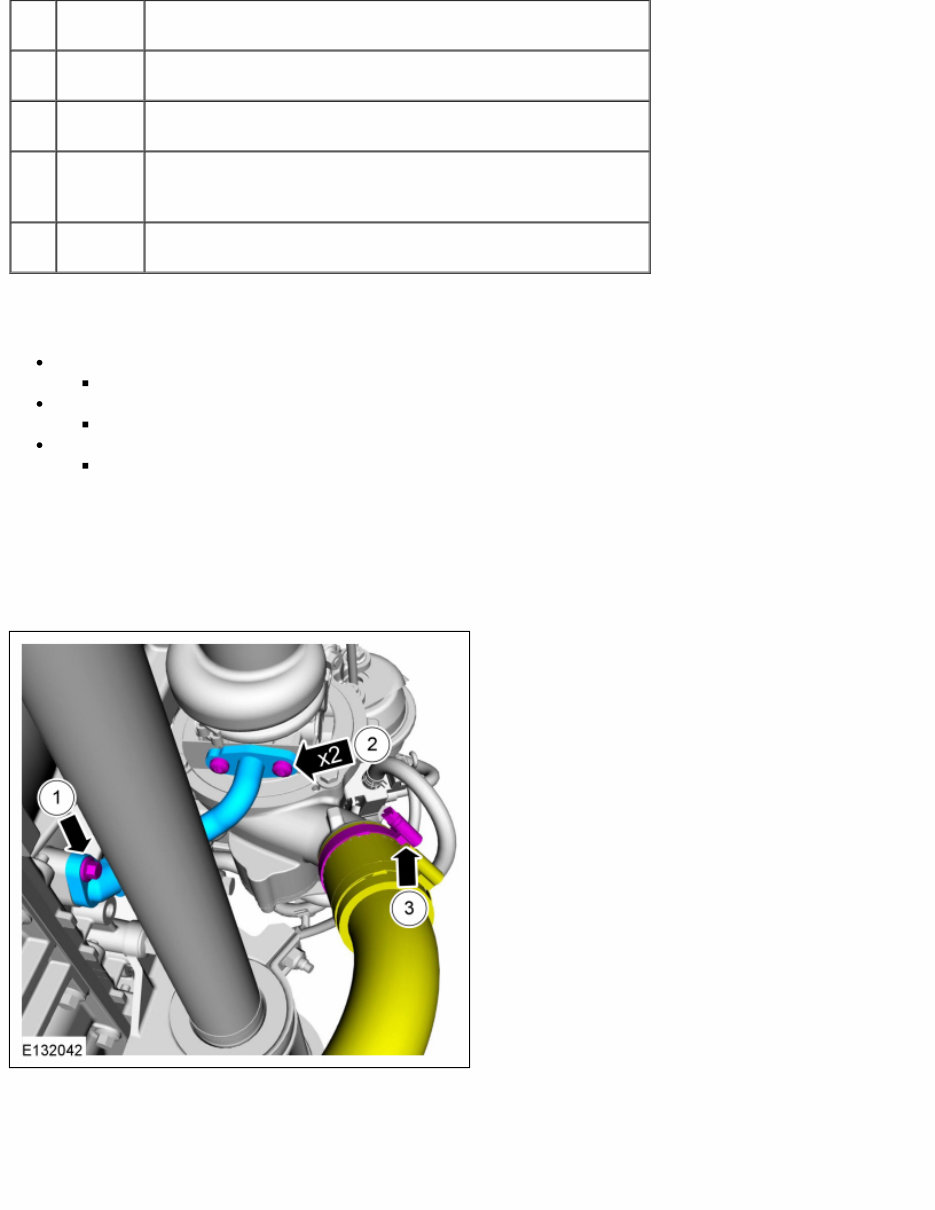
Simple procedure example showing color-coding and task sequence.
Black arrows are used to draw attention to components (usually fasteners). Arrows with multiples specified (here, x2)
identify an identical number of fasteners or items. Callouts (numbers inside circles) show a required sequence or tightening
torque.
In the illustration, the callouts indicate the removal sequence, which is reversed for installation. The yellow coloring of the
hose indicates it is to be positioned aside (not removed). Two identical (magenta-colored) fasteners are indicated by the x2
You're Reading a Preview
What's Included?
 Lifetime Access
Fast Download Speeds
Online & Offline Access
Access PDF Contents & Bookmarks
Full Search Facility
Print one or all pages of your manual
$37.99
2014 Ford Fusion Hybrid/Energi Service & Repair Manual
Viewed 25 Times Today

What's Included?
Lifetime Access
Fast Download Speeds
Online & Offline Access
Access PDF Contents & Bookmarks
Full Search Facility
Print one or all pages of your manual
$37.99

Secure transaction
What's Included?
Lifetime Access
Fast Download Speeds
Online & Offline Access
Access PDF Contents & Bookmarks
Full Search Facility
Print one or all pages of your manual
Description
The 2014 Ford Fusion Hybrid/Energi service and repair manual is a comprehensive guide designed for both professional mechanics and DIY enthusiasts. This manual provides detailed information on troubleshooting, repair, and maintenance procedures, ensuring that users can effectively diagnose and resolve issues with their vehicle.
- The manual covers a wide range of topics, including engine maintenance, electrical systems, suspension and steering, brakes, transmission, and more.
- It includes step-by-step instructions, diagrams, and specifications to help users complete repairs and maintenance tasks with confidence.
- The manual is suitable for both amateur and professional mechanics, providing a valuable resource for those who want to gain a deeper understanding of their vehicle's inner workings.
- Extensive knowledge of the Ford Fusion Hybrid/Energi is required to effectively utilize this manual, making it an essential resource for anyone looking to work on their vehicle.
Whether you're a seasoned mechanic or a DIY enthusiast, this manual provides the information you need to keep your Ford Fusion Hybrid/Energi running smoothly and efficiently.


