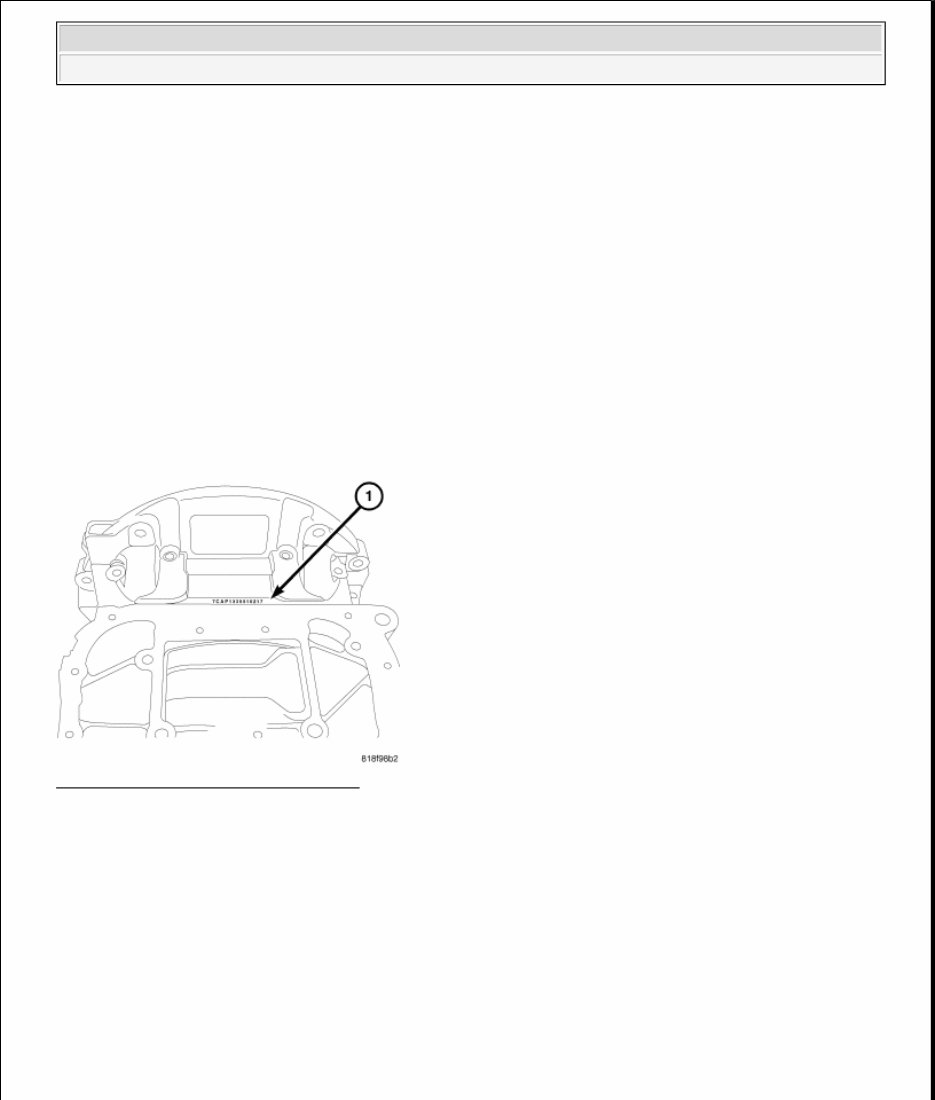
2008 ENGINE 2.4L (GPEC) - Service Information - Avenger & Sebring DESCRIPTION 2.4L ENGINE The 2.4 Liter (148 cu. in.) in-line four cylinder engine is a double over head camshaft design with mechanical lash tappets and four valves per cylinder design. This engine is NOT free-wheeling; meaning that the pistons will contact the valves in the event of a timing chain failure. The cylinders are numbered from front of the engine to the rear. The firing order is 1-3-4-2. Fig. 1: Locating Engine Serial Number Courtesy of CHRYSLER LLC The engine serial number (1) is located on the rear of the cylinder block behind the oil pan. The serial number is visible with the oil pan in place. The serial number contains engine build date information. DIAGNOSIS AND TESTING CYLINDER COMBUSTION PRESSURE LEAKAGE TEST The combustion pressure leakage test provides an accurate means for determining engine condition. Combustion pressure leakage testing will detect: Exhaust and intake valve leaks (improper seating). NOTE: Vehicle is equipped with at Global Powertrain Engine Controller (GPEC). 2008 Dodge Avenger SE 2008 ENGINE 2.4L (GPEC) - Service Information - Avenger & Sebring 2008 Dodge Avenger SE 2008 ENGINE 2.4L (GPEC) - Service Information - Avenger & Sebring
Leaks between adjacent cylinders or into water jacket. Any causes for combustion/compression pressure loss. 1. Check the coolant level and fill as required. DO NOT install the pressure cap. 2. Start and operate the engine until it attains normal operating temperature, then turn the engine OFF. 3. Clean spark plug recesses with compressed air. 4. Remove the spark plugs. 5. Remove the oil filler cap. 6. Remove the air cleaner. 7. Calibrate the tester according to the manufacturer's instructions. The shop air source for testing should maintain 483 kPa (70 psi) minimum, 1,379 kPa (200 psi) maximum, with 552 kPa (80 psi) recommended. 8. Perform the test procedures on each cylinder according to the tester manufacturer's instructions. While testing, listen for pressurized air escaping through the throttle body, tailpipe and oil filler cap opening. Check for bubbles in the coolant. 9. All gauge pressure indications should be equal, with no more than 25% leakage per cylinder. 10. FOR EXAMPLE: At 552 kPa (80 psi) input pressure, a minimum of 414 kPa (60 psi) should be maintained in the cylinder. CYLINDER COMPRESSION PRESSURE TEST The results of a cylinder compression pressure test can be utilized to diagnose several engine malfunctions. Ensure the battery is completely charged and the engine starter motor is in good operating condition. Otherwise the indicated compression pressures may not be valid for diagnosis purposes. 1. Check engine oil level and add oil if necessary. 2. Drive the vehicle until engine reaches normal operating temperature. Select a route free from traffic and other forms of congestion, observe all traffic laws, and accelerate through the gears several times briskly. 3. Remove engine cover. 4. Disconnect coil electrical connectors and remove coils. 5. Remove all spark plugs from engine. As spark plugs are being removed, check electrodes for abnormal firing indicators fouled, hot, oily, etc. Record cylinder number of spark plug for future reference. 6. Disconnect injector electrical connectors. 7. Be sure throttle blade is fully open during the compression check. 8. Insert compression gauge Adapter 8116 or the equivalent, into the #1 spark plug hole in cylinder head. Connect the 0-500 psi (Blue) pressure transducer CH7059 with cable Adapters to the DRBIII®. For Special Tool identification, see SPECIAL TOOLS . 9. Crank engine until maximum pressure is reached on gauge. Record this pressure as #1 cylinder pressure. WARNING: Do not remove the pressure cap with the system hot and under pressure because serious burns from coolant can occur. 2008 Dodge Avenger SE 2008 ENGINE 2.4L (GPEC) - Service Information - Avenger & Sebring
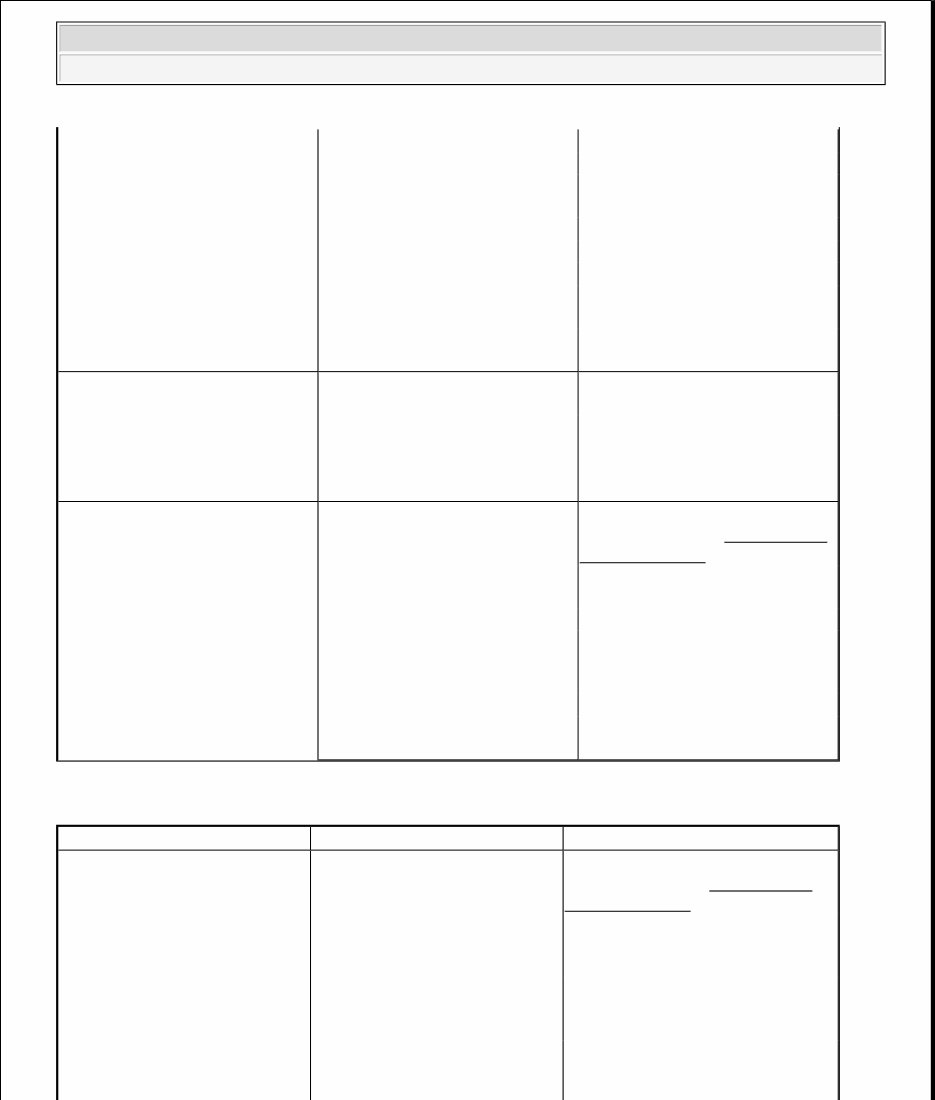
10. Repeat the previous step for all remaining cylinders. 11. Compression should not be less than 1034 kPa (150 psi) and not vary more than 25 percent from cylinder to cylinder. 12. If one or more cylinders have abnormally low compression pressures, repeat the compression test. 13. If the same cylinder or cylinders repeat an abnormally low reading on the second compression test, it could indicate the existence of a problem in the cylinder in question. The recommended compression pressures are to be used only as a guide to diagnosing engine problems. An engine should not be disassembled to determine the cause of low compression unless some malfunction is present. ENGINE DIAGNOSIS - INTRODUCTION Engine diagnosis is helpful in determining the causes of malfunctions not detected and remedied by routine maintenance. These malfunctions may be classified as either mechanical (e.g, a strange noise), or performance (e.g, engine idles rough and stalls). Refer to the ENGINE DIAGNOSIS - MECHANICAL and the ENGINE DIAGNOSIS - PERFORMANCE diagnostic charts for possible causes and corrections of malfunctions. For fuel system diagnosis, see FUEL SYSTEM article. Additional tests and diagnostic procedures may be necessary for specific engine malfunctions that cannot be isolated with the Service Diagnosis charts. Information concerning additional tests and diagnosis is provided within the following: Cylinder Compression Pressure Test. Refer to CYLINDER COMPRESSION PRESSURE TEST . Cylinder Combustion Pressure Leakage Test. Refer to CYLINDER COMBUSTION PRESSURE LEAKAGE TEST . Engine Cylinder Head Gasket Failure Diagnosis. Refer to CYLINDER HEAD GASKET . Intake Manifold Leakage Diagnosis. Refer to INTAKE MANIFOLD LEAKS . Mechanical Valve Tappet Noise Diagnosis. Refer to HYDRAULIC LASH ADJUSTER NOISE DIAGNOSIS . Engine Oil Leak Inspection. Refer to ENGINE OIL LEAK INSPECTION . ENGINE DIAGNOSIS - MECHANICAL CONDITION POSSIBLE CAUSES CORRECTION VALVETRAIN NOISE 1. High or low oil level in crankcase. 1. Check and correct engine oil level. 2. Thin or diluted oil. 2. Change oil to correct viscosity. 3. Thick oil 3. (a) Change engine oil and filter. - (b) Run engine to operating temperature. 2008 Dodge Avenger SE 2008 ENGINE 2.4L (GPEC) - Service Information - Avenger & Sebring
- (c) Change engine oil and filter again. 4. Low oil pressure. 4. (a) Check and correct engine oil level. - (b) Check pressure regulating valve. 5. Worn cam lobe. 5. Install new camshaft. 6. Worn tappet bucket. 6. Install new select fit tappet bucket. 7. Worn valve guides. 7. Replace cylinder head. 8. Excessive runout of valve seats on valve faces. 8. Grind valve seats and replace valves. CONNECTING ROD NOISE 1. Insufficient oil supply. 1. Check engine oil level. 2. Low oil pressure. 2. Check engine oil level. Inspect oil pump relief valve and spring. 3. Thin or diluted oil. 3. Change oil to correct viscosity. 4. Thick oil 4. (a) Change engine oil and filter. - (b) Run engine to operating temperature. - (c) Change engine oil and filter again. 5. Excessive bearing clearance. 5. Measure bearings for correct clearance. Repair as necessary. 6. Connecting rod journal out-of- round. 6. Replace crankshaft or grind surface. 7. Connecting rod out-of-round. 7. Replace connecting rod. 8. Misaligned connecting rods. 8. Replace bent connecting rods. MAIN BEARING NOISE 1. Insufficient oil supply. 1. Check engine oil level. 2. Low oil pressure. 2. Check engine oil level. Inspect oil pump relief valve and spring. 3. Thin or diluted oil. 3. Change oil to correct viscosity. 4. Thick oil 4. (a) Change engine oil and filter. - (b) Run engine to operating temperature. - (c) Change engine oil and filter again. 5. Excessive bearing clearance. 5. Measure bearings for correct clearance. Repair as necessary. 6. Excessive end play. 6. Check thrust bearing for wear on flanges. 7. Crankshaft journal out-of-round or worn. 7. Replace crankshaft or grind journals. 8. Loose flywheel or torque converter. 8. Tighten to correct torque. 2008 Dodge Avenger SE 2008 ENGINE 2.4L (GPEC) - Service Information - Avenger & Sebring
ENGINE DIAGNOSIS - PERFORMANCE OIL PRESSURE DROP 1. Low oil level. 1. Check engine oil level. 2. Faulty oil pressure sending unit. 2. Install new sending unit. 3. Low oil pressure. 3. Check sending unit and main bearing oil clearance. 4. Clogged oil filter. 4. Install new oil filter. 5. Worn parts in oil pump. 5. Replace balance shaft module. 6. Thin or diluted oil. 6. Change oil to correct viscosity. 7. Oil pump relief valve stuck. 7. Remove valve and inspect, clean, or replace. 8. Excessive bearing clearance. 8. Measure bearings for correct clearance. OIL LEAKS 1. Misaligned or deteriorated gaskets. 1. Replace gasket(s). 2. Loose fastener, broken or porous metal part. 2. Tighten, repair or replace the part. 3. Misaligned or deteriorated cup or threaded plug. 3. Replace as necessary. OIL CONSUMPTION OR SPARK PLUGS FOULED 1. PCV system malfunction. 1. Check system and repair as necessary. Refer to DIAGNOSIS AND TESTING . 2. Worn, scuffed or broken rings. 2. Hone cylinder bores. Install new rings. 3. Carbon in oil ring slots. 3. Install new rings. 4. Rings fitted too tightly in grooves. 4. Remove rings and check grooves. If groove is not proper width, replace piston. 5. Worn valve guide(s). 5. Replace cylinder head. 6. Valve stem seal(s) worn or damaged. 6. Replace seal(s). CONDITION POSSIBLE CAUSE CORRECTION ENGINE WILL NOT START 1. Weak battery. 1. Test battery. Charge or replace as necessary. Refer to DIAGNOSIS AND TESTING . 2. Corroded or loose battery connections. 2. Clean and tighten battery connections. Apply a coat of light mineral grease to terminals. 3. Faulty starter. 3. Test starting system. Check for codes. (Refer to Appropriate Diagnostic Information) 4. Faulty coil(s) or control unit. 4. Test and replace as needed. (Refer to Appropriate Diagnostic Information) 2008 Dodge Avenger SE 2008 ENGINE 2.4L (GPEC) - Service Information - Avenger & Sebring
The DODGE AVENGER 2008-2010 FACTORY Repair Service Manual is a comprehensive guide for owners and technicians who own or work on Dodge Avenger models manufactured from 2008 to 2010. This manual contains detailed instructions, diagrams, and illustrations to assist in the repair and maintenance of the Dodge Avenger, ensuring its optimal performance and longevity.
Dodge Avenger 2008
Dodge Avenger 2009
Dodge Avenger 2010
With this repair service manual, users can confidently address any mechanical or electrical issues within the specified model range. From routine maintenance tasks such as oil changes and brake pad replacements to more complex repairs like engine overhauls or electrical system troubleshooting, this manual provides step-by-step instructions to guide users through each process.
The manual highlights important safety precautions and offers tips and tricks to ease the repair process. It includes detailed specifications, wiring diagrams, and troubleshooting guides to help diagnose and rectify various problems. Additionally, the manual provides information on the recommended tools and equipment necessary for each repair and maintenance procedure.
Whether you are a Dodge Avenger owner looking to save on repair costs by performing tasks yourself or a professional technician searching for accurate and reliable information, the DODGE AVENGER 2008-2010 FACTORY Repair Service Manual is an essential resource to ensure the optimal performance and longevity of your Dodge Avenger vehicle.



 Lifetime Access