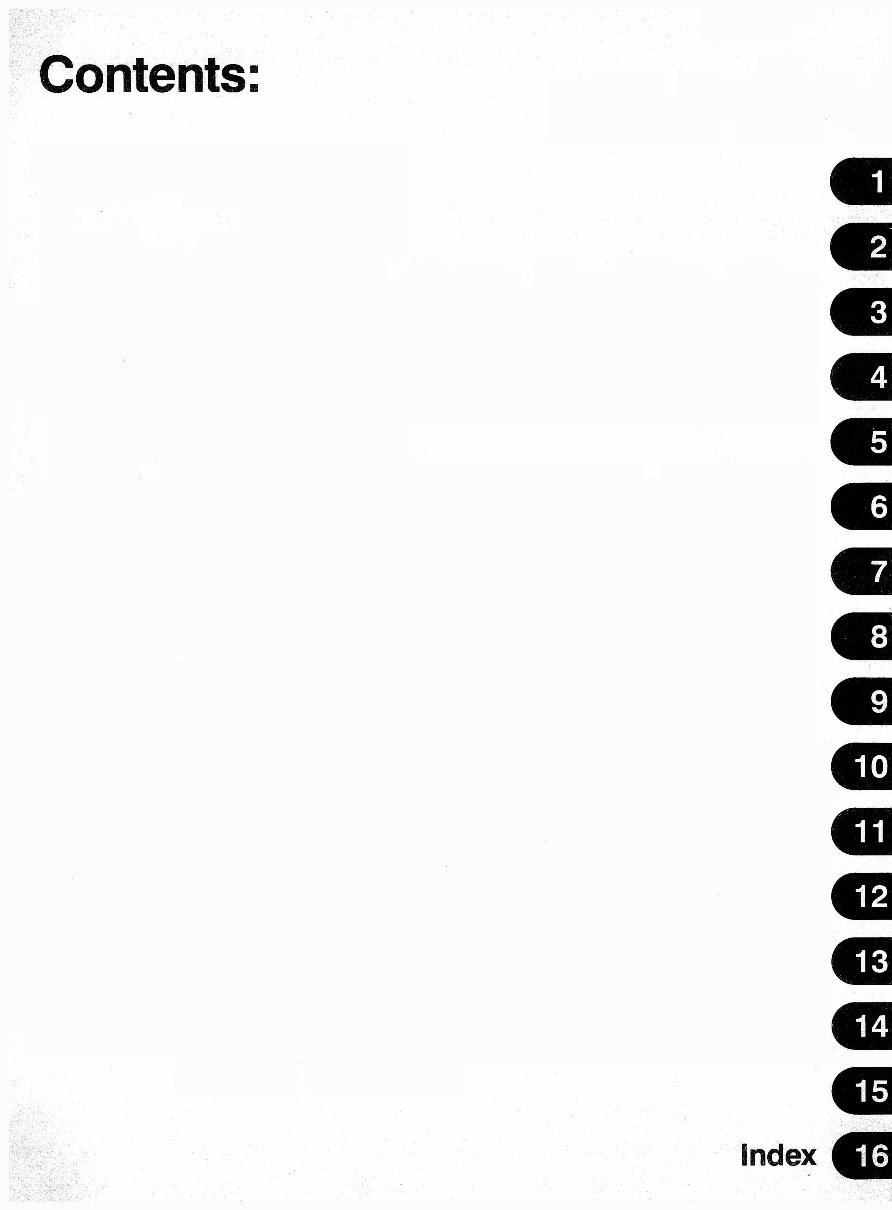
Contents: Fundamentals Lubrication and Maintenance Engine Management-Driveability Engine Ignition Fuel System Cooling System Exhaust System and Emission Controls Manual ansmission and Clutch Automatic Transmission a Driveshaft and Final Drive B ra kes a Suspension a nd Steering Body and Interior Elerical System Ihdexte
Foreword and Disclaimer For the BMW owner with basic mechanical skills and for independent auto service professionals, this manual includes many of the specifications and procedures that were available in an authorized BMW dealer service depament as this manual went to press. The BMW owner with no intention of working on his or her car will find that owning and referring to this manual will make it possible to be better informed and to more knowledgeably discuss repairs with a professional automotive technician. The BMW owner intending to do maintenance and repair should have screwdrivers, a set of metric wrenches and sockets, and metric Allen and To wrenches, since these basic hand tools are needed for most of the work described in this manual. Many procedures will also require a torque wrench to ensure that fasteners are tightened properly and in accordance with specifications. Additional information on basic tools and other tips can be found in 1 Fundamentals. In some cases, the text refers to special tools that are recommended or required to accomplish adjustments or repairs. These tools are usually identified by their BMW special tool number and illustrated. Disclaimer We have endeavored to ensure the accuracy of the information in this manual. When the vast array of data presented in the manual is taken into account, however, no claim to infallibility can be made. We therefore cannot be responsible for the result of any errors that may have crept into the text. Please also read the Important Safety Notice on the copyright page at the beginning of this book. A thorough pre-reading of each procedure, and WARNINGS and CAUTIONS at the front of the book and those that accompany the procedure is essential. Reading a procedure before beginning work will help you determine in advance the need for specific skills, identify hazards, prepare for appropriate capture and handling of hazardous materials, and the need for particular tools and replacement parts such as gaskets. Bentley Publishers encourages comments from the readers of this manual with regard to errors, and/or suggestions for improvement of our product. These communications have been and will be carefully considered in the preparation of this and other manuals. If you identify inconsistencies in the manual, you may have found an error. Please contact the publisher and we will endeavor to post applicable corrections on our website. Posted corrections (errata) should be reviewed before beginning work. Please see the following web address: http://w.BentleyPublishers.com/errata/ BMW offers extensive warranties, especially on components of the fuel delivery and emission control systems. Therefore, before deciding to repair a BMW that may be covered wholly or in part by any warranties issued by BMW of North America, LLC, consult your authorized BMW dealer. You may find that the dealer can make the repair either free or at minimum cost. Regardless of its age, or whether it is under warranty, your BMW is both an easy car to service and an easy car to get serviced. So if at any time a repair is needed that you feel is too difficult to do yourself, a trained BMW technician is ready to do the job for you. Bentley Publishers vii
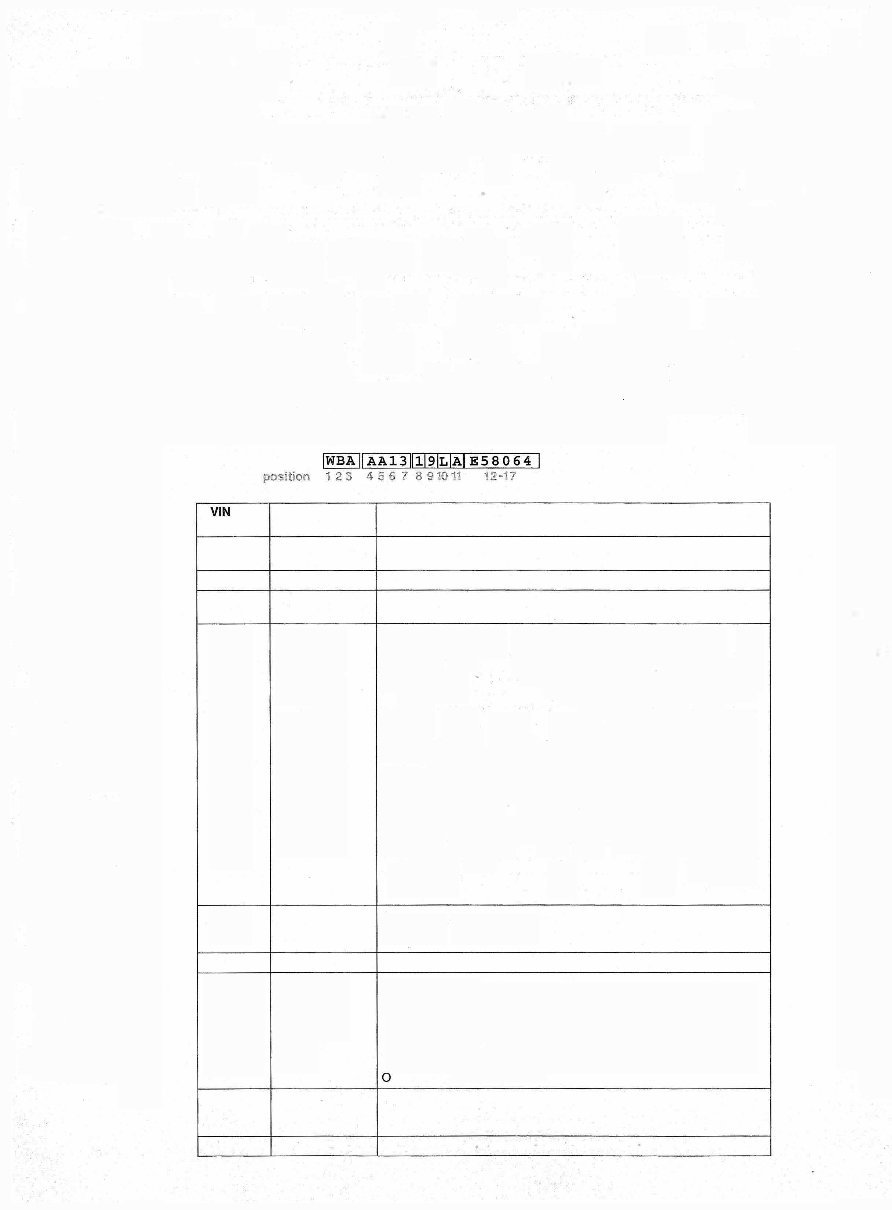
Vehicle Identification and VIN Decoder Vehicle Identification Number (VIN), decoding Some of the information in this manual applies only to cars of a particular model year or range of years. For example, 1984 refers to the 1984 model year but does not necessarily match the calendar year in which the car was manufactured or sold. To be sure of the model year of a particular car, check the Vehicle Identification Number (VIN) on the car. The VIN is a unique sequence of 17 characters assigned by BMW to identify each individual car. When decoded, the VIN tells the country and year of manufacture; make, model and serial number; assembly plant and even some equipment specifications. The BMW VIN is on a plate mounted on the top of the dashboard, on the driver's side where the number can be seen through the windshield. The 10th character is the model year code. The letters I, 0, Q and U are not used for model year designation for US cars. Examples: E for 1984, F for 1985, G for 1986, H for 1987, etc. The table below explains some of the codes in the VIN for E30 cars. Sample VIN: VIN Descript ion Decoding informat ion position 1 Country of W Germany Manufacture 2 Manufacturer B BMWAG 3 Manufacturing A BMW division S BMWMotorspo 4-7 Series, model AK74 318i, 4-cylinder 1.8 liter (M10) AK84 318iA, 4-cylinder 1.8 liter (M10) AJ93 318i, 4-cylinder 1.8 liter (M42) AF93 318is, 4-cylinder 1.8 liter (M42) BA73 318i, Convertible, 4-cylinder (M42) AA13 325i, 6-cylinder 2.5 liter (M20) AA23 325iA, 6-cylinder 2.5 liter (M20) AD13 325is, 6-cylinder 2.5 liter (M20) AD23 325isA, 6-cylinder 2.5 liter (M20) AB54 325ele5, 6-cylinder 2.7 liter (M20) AB64 325eNesA, 6-cylinder 2.7 liter (M20) AE54 325, 6-cylinder 2.7 liter (M20) AE64 325A, 6-cylinder 2.7 liter (M20) BB13 325i Convertible, 6-cylinder 2.5 liter (M20) BB23 325iA Conveible, 6-cylinder 2.5 liter (M20) AK03 M3, 4-cylinder 2.3 liter (S14) AB93 325ix, 6-cylinder 2.5 liter (M20) AB03 325ixA, 6-cylinder 2.5 liter (M20) AE93 325ix 4-door, 6-cylinder 2.5 liter (M20) AE03 325ixA 4-door, 6-cylinder 2.5 liter (M20) 8 Restraint system 0 Manual belts 1 Manual belts with supplemental restraint 2 Manual belts with dual SRS airbags 9 Check digit o - 9 or X, calculated by NHTSA 10 Model year E 1984 F 1985 G 1986 H 1987 J 1988 K 1989 L 1990 0 European model 11 Assembly plant A, F,G, K Munich, Germany B,C,D Dingolfing, Germany E,J Regensburg, Germany 12-17 Serial number Sequential production number for specific vehicle
Please read these warn i ngs and caut i ons before proceed i ng w i th ma i ntenance and repa i r work. WARNINGS- See also CAUONS on next page. • Read the important safety notice on the copyright page at the beginning of the book. • Some repairs may be beyond your capability . skills, tools and equipment, or a suitable workplace for any proce- dure described in this manual, we suggest you leave such repairs to an authorized BMW dealer service department or other quali- fied shop. e A thorough pre-reading of each procedure, and the WARNINGS and CAUTIONS that accompany the procedure is essential. Posted corrections (errata) should also be reviewed before beginning work. Please see w.BentleyPlishers.com/errata/ BMW is constantly improving its cars. Sometimes these changes, both in parts and specifications, are made applicable to earlier models. Therefore, before starting any major jobs or repairs to components on which passenger safety may depend, consult your authorized BMW dealer about Technical Bulletins that may have been issued. • Do not re-use any fasteners that are worn or deformed in nor- mal use. Many fasteners are designed to be used only once and become unreliable and may fail when used a second time. This includes, but is not limited to, nuts, bolts, washers, self-locking nuts or bolts, circlips and cotter pins. Always replace these fasten- ers with new parts. e Never work under a lifted car unless it is solidly supported on stands deSigned for the purpose. Do not support a car on cinder blocks, hollow tiles or other props that may crumble under contin- uous load. Never work under a car that is supported solely by a jack. Never work under the car while the engine is running. o If you are going to work under a car on the ground, make sure that the ground is level. Block the wheels to keep the car from roil- ing. Disconnect the battery negative (-) terminal (ground strap) to prevent others from starting the car while you are under it. Never run the engine unless the work area is well ventilated. Carbon monoxide kills. Finger rings, bracelets and other jewelry should be removed so that they cannot cause electrical shorts, get caught in running machinery, or be crushed by heavy parts. � Tie long hair behind your head. Do not wear a necktie, a scarf, loose clothing, or a necklace when you work near machine tools or running engines. If your hair, clothing, or jewelry were to get caught in the machinery, severe injury could result. • Do not attempt to work on your car if you do not feel well. You increase the danger of injury to yourself and others if you are tired, upset or have taken medication or any other substance that may keep you from being fully alert. • Illuminate your work area adequately but safely. Use a portable safety light for working inside or under the car. Make sure the bulb is enclosed by a wire cage. The hot filament of an accidentally bro- ken bulb can ignite spilled fuel, vapors or oil. • Catch draining fuel, oil, or brake fluid in suitable containers. Do not use food orheverage containers that might mislead someone into drinking from them. Store flammable fluids away from fire haz- ards. Wipe up spills at once, but do not store the oily rags, which can ignite and burn spontaneously. • Always observe good workshop practices. Wear goggles when you operate machine tools or work with battery acid. Gloves or other protective clothing should be worn whenever the job requires working with harmful substances. ® Greases, lubricants and other automotive chemicals contain toxic substances, many of which are absorbed directly through the skin. Read the manufacturer's instructions and warnings carefully. Use hand and eye protection. Avoid direct skin contact. • Disconnect the battery negative (-) terminal (ground strap) whenever you work on the fuel system or the electrical system. Do not smoke or work near heaters or other fire hazards. Keep an approved fire extinguisher handy. • Friction materials (such as brake pads or shoes or clutch discs) contain asbestos fibers or other friction materials. Do not create dust by grinding, sanding, or by cleaning with compressed air. Avoid breathing dust. Breathing any friction material dust can lead to serious diseases and may result in death. @ Batteries give off explosive hydrogen gas during charging. Keep sparks, lighted matches and open flame away from the top of the battery. If hydrogen gas escaping from the cap vents is ignited, it will ignite gas trapped in the cells and cause the battery to explode. • Battery acid (electrolyte) can cause severe burns. Flush contact area with water, seek medical attention. • Connect and disconnect battery cables, jumper cables or a bat- tery charger only with the ignition switched off. Do not disconnect the battery while the engine is running. s Do not quick-charge the battery (for boost starting) for longer than one minute. Wait at least one minute before boosting the bat- tery a second time. $ Do not allow battery charging voltage to exceed 16.5 volts. If the battery begins producing gas or boiling violently, reduce the charg- ing rate. Boosting a sulfated battery at a high rate can cause an explosion. • The air conditioning system is filled with chemical refrigerant, which is hazardous. The C system should be serviced only by trained technicians using approved refrigerant recovery/recycling equipment, trained in related safety precautions, and familiar with regulations governing the discharging and disposal of automotive chemical refrigerants. continued on next page -ix
Please read these warnings and .cautions before proceeding with maintenance and repair work. WARNINGS- (continued) ® Do not expose any part of the C system to high temperatures such as open flame. Excessive heat will increase system pressure and may cause the system to burst. , Some aerosol tire inflators are highly flammable. Be extremely cautious when repairing atire that may have been inflated using an aerosol tire inflator. Keep sparks, open flame or other sources of ignition away from the tire repair area. Inflate and deflate the tire at least four times before breaking the bead from the rim. Completely remove the tire from the rim before aempting any repair. @ Connect and disconnect a battery charger only with the battery charger switched off. ® Sealed or "maintenance free" batteries should be slow-charged only, at an amperage rate that is approximately 10% of the battery's ampere-hour (Ah) rating. CAUTIONS- See also WARNGS on previous page. @ If you lack the skills, tools and equipment, or a suitable workshop for any procedure described in this manual, we suggest you leave such repairs to an authorized BMW dealer or other qualified shop. e BMW is constantly improving its cars and sometimes these changes, both in parts and specifications, are made applicable to earlier models. Therefore, part numbers listed in this manual are for reference only. Always check with your authorized BMW dealer parts department for the latest information. e Before starting a job, make certain that you have all the necessary tools and parts on hand. Read all the instructions thoroughly, and do not attempt shortcuts. Use tools appropriate to the work and use only replacement parts meeting BMW specifications. Makeshift tools, parts and procedures will not make good repairs e Use pneumatic and electric tools only to loosen threaded parts and fasteners. Never use these tools to tighten fasteners, especially on light alloy parts. Always use a torque wrench to tighten fasteners to the tightening torque specification listed. ® Be mindful of the environment and ecology. Before you drain the crankcase, find out the proper way to dispose of the oil. Do not pour oil onto the ground, down a drain, or into a stream, pond or lake. Dis- pose of in accordance with Federal, State and Local laws. @ The control module for the anti-lock brake system (ABS) cannot withstand temperatures from a paint-drying booth or a heat lamp in excess of 203°F (95°C) and should not be subjected to temperatures in excess of 185°F (85°C) for more than two hours. Do not allow baery charging voltage to exceed 16.5 volts. If the battery begins producing gas or bOiling violently, reduce the charg- ing rate. Boosting a sulfated battery at a high charging rate can cause an explosion. • The ignition system produces high voltages that can be fatal. Avoid contact with exposed terminals and use extreme care when working on a car with the engine running or the ignition switched on. e Place jack stands only at locations specified by manufacturer. The vehicle liſting jack supplied with the vehicle is intended for tire changes only. A heavy duty floor jack should be used to liſt vehicle before installing jack stands. See 2 lubrication and Maintenance. @ Aerosol cleaners and solvents may contain hazardous or deadly vapors and are highly flammable. Use only in a well ventilated area. Do not use on hot surfaces (engines, brakes, etc.). o Do not remove coolant reservoir or radiator cap with the engine hot. Danger of burns and engine damage. ® Before doing any electrical welding on cars equipped with ABS, disconnect the battery negative (-) terminal (ground strap) and the ABS control module connector. Always make sure ignition is off before disconnecting battery. Label battery cables before disconnecting. On some models, battery cables are not color coded. e Disconnecting the battery may erase fault code(s) stored in control module memory. Using special BMW diagnostic equip- ment, check for fault codes prior to disconnecting the battery cables. e If a normal or rapid charger is used to charge battery, the battery must be disconnected and removed from the vehicle in order to avoid damaging paint and upholstery. ® Do not quick-charge the battery (for boost starting) for longer than one minute. Wait at least one minute before boosting the bat- tery a second time. @ Connect and disconnect a battery charger only with the battery charger switched off. e Sealed or "maintenance free" batteries should be slow-charged only, at an amperage rate that is approximately 10% of the battery's ampere-hour (Ah) rating. e Do not allow battery charging voltage to exceed 16.5 volts. If the battery begins producing gas or bOiling violently, reduce the charg- ing rate. Boosting a sulfated battery at a high charging rate can cause an explosion.
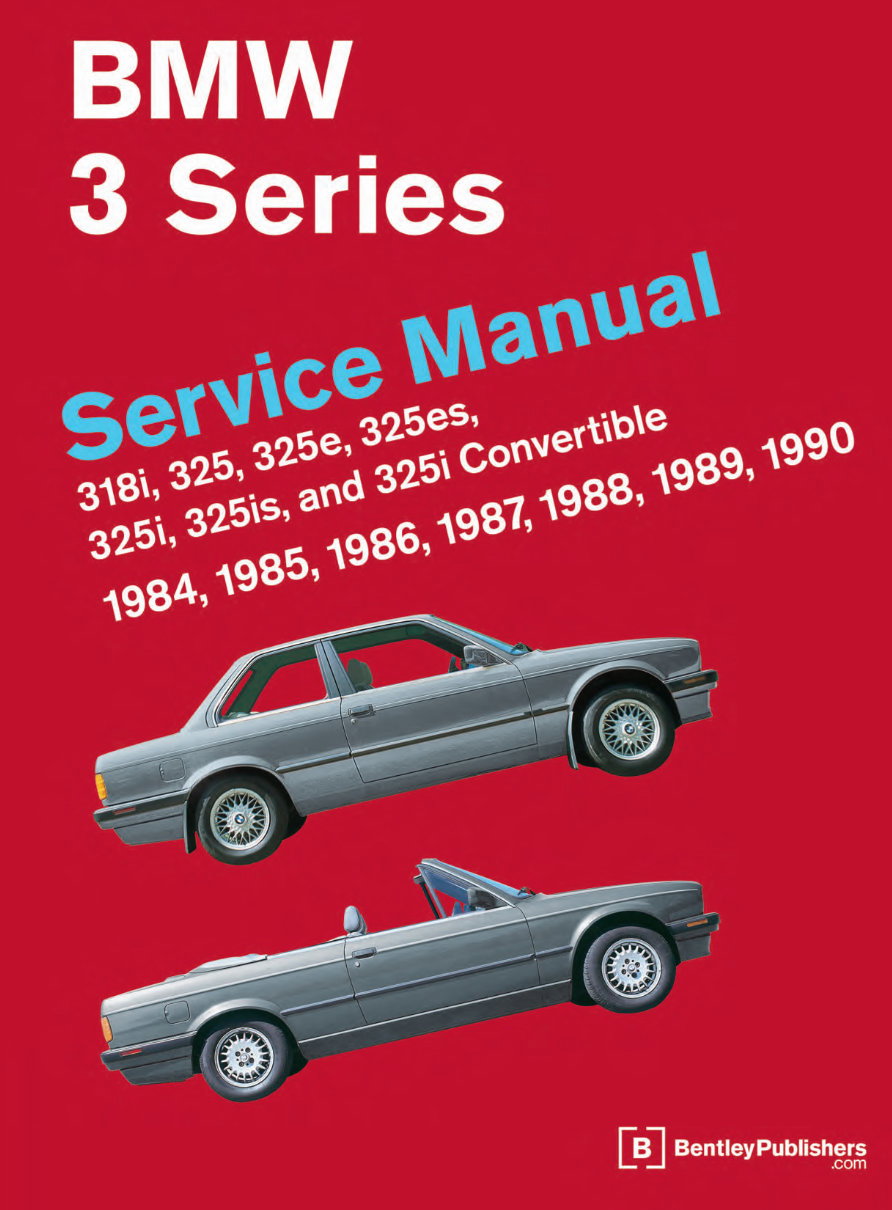
Get instant access to a comprehensive Workshop Service and Repair Manual for the BMW 3 Series (E30) covering production years 1984 to 1990. This manual is invaluable for professional mechanics and DIY enthusiasts alike.
Models Covered:
BMW 318i
BMW 325
BMW 325e
BMW 325es
BMW 325i
BMW 325is
BMW 325 Convertible
This detailed manual includes everything needed for repair, maintenance, rebuild, refurbishment, or restoration of your vehicle. It covers diagnostic and repair procedures, accompanied by numerous photos and illustrations to guide you through each process. The manual is printable, allowing you to have the necessary information on hand in your garage or workshop.
Contents:
Fundamentals
Lubrication and Maintenance
Engine Management - Driveability
Engine
Ignition
Fuel System
Exhaust System and Emission Controls
Manual Transmission and Clutch
Automatic Transmission
Driveshaft and Final Drive
Brakes
Suspension and Steering
Body and Interior
Electrical System
Index
Product Details:
File Format: PDF
Compatibility: All Versions of Windows & Mac
Language: English
Printable: Yes, without any restriction
Delivery: A download link will appear on the checkout page after payment is complete
Requirements: Adobe Reader
Investing in the right repair manual for your vehicle can save you money and provide valuable knowledge about your vehicle. Opt for instant download to save on repair and maintenance costs, eliminating the need for shipping and waiting for a physical textbook to arrive.
Don't hesitate any longer! Get this manual now to complete all your repairs today and get full value for your money.
Reviews
Q&A
Recently Viewed
5,521,897Happy Clients
2,594,462eManuals
1,120,453Trusted Sellers
15Years in Business
Price:
Actual Price:
1984-1990 BMW 3 Series E30 (318i, 325, 325e, 325es, 325i, 325is, 325 Convertiable) Service Repair Manual ( Perfect for the DIY p









 Lifetime Access