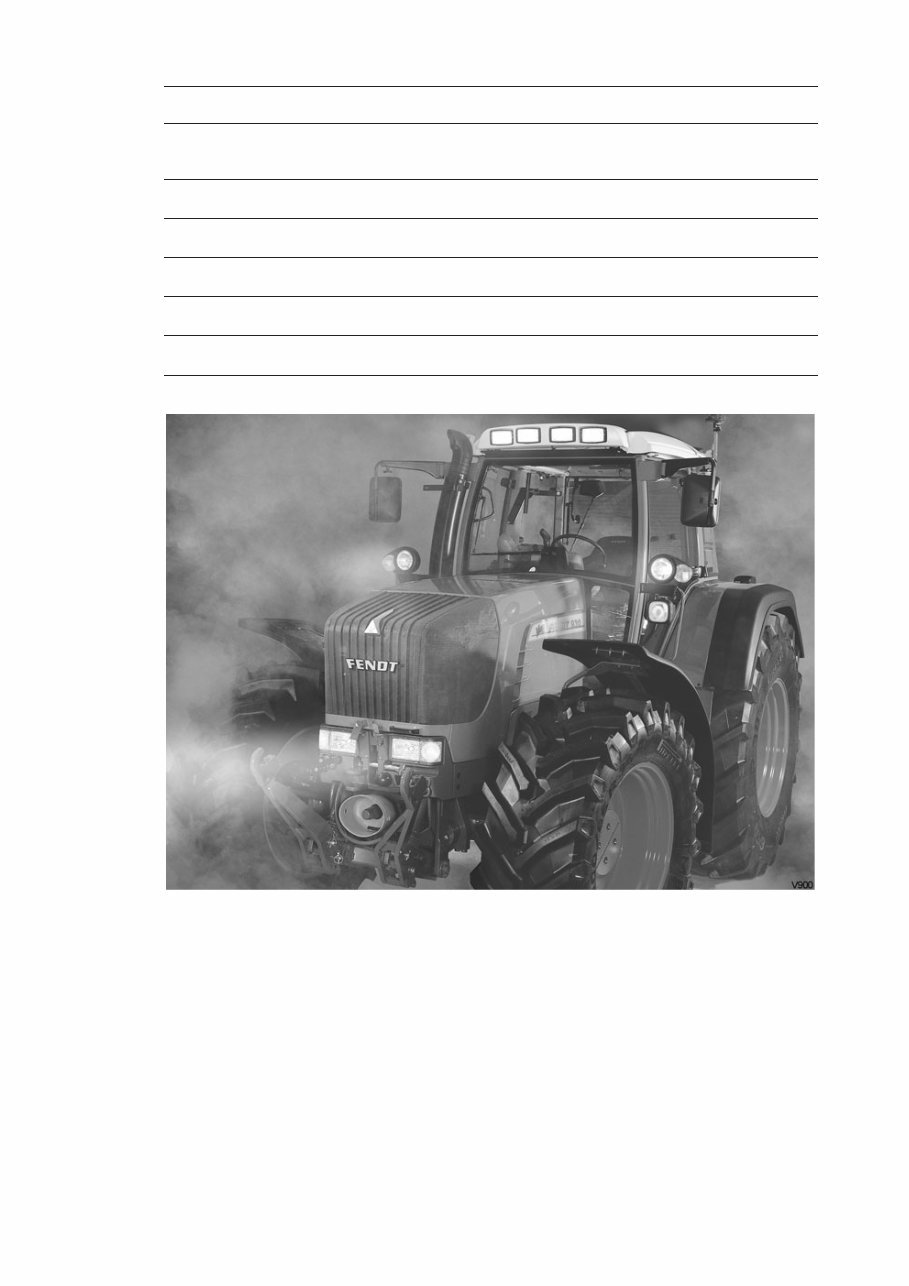
OPERATING MANUAL FENDT 916 Vario 920 Vario 924 Vario 926 Vario 930 Vario 930.000.000.014 Englisch
Vehicle delivery Vehicle pre-delivery inspection by the Service Workshop For information, technical date etc. refer to Service Schedule. Check oil level, top up if necessary. Engine, transmission, axle drives, front axle differential, hub drives, front PTO, lift shaft lubrication. Fill the hydraulic system with additional oil for external consumers as per customer order. Check fluid level, and top up if necessary. Cooling system, clutch operation, brake actuation, air conditioning if installed. Grease vehicle as per Lubrication Chart, lubricate all joints. Check steering and toe-in. Check tyre pressures. Check that wheel nuts are firmly attached. Test electrical system. Check fault memory. Check battery charge status. Check the function and settings of the lighting and signalling system. Fill up with diesel, use pre-filter if necessary. Check that brakes are working effectively. Information to be given on vehicle delivery Draw attention to safety instructions within the Operating Manual and on the vehicle itself. Information on keeping to countryu-specific regulations regarding vehicle speed and trailer braking systems. Explain the following features in detail - see index - and show how they are operated. See also separate vehicle delivery test log. Operating controls, transmission, multiple display, initial start-up, starting, and switching off, fault display, code table, clearing the warning and fault messages. Explain "Important Information on Service and Maintenance". See inside back cover. Hand over tool box accessories. Fill in warranty and delivery card and forward immediately to the factory. For 50 km/h version, draw attention to the required regular vehicle inspections (country-specific). Vehicle type ............................. Chassis No. ............................. After-Sales Service Vehicle delivered on . . . . . . . . . . . . . . . Signature of mechanic . . . . . . . . . . . . . . . . .
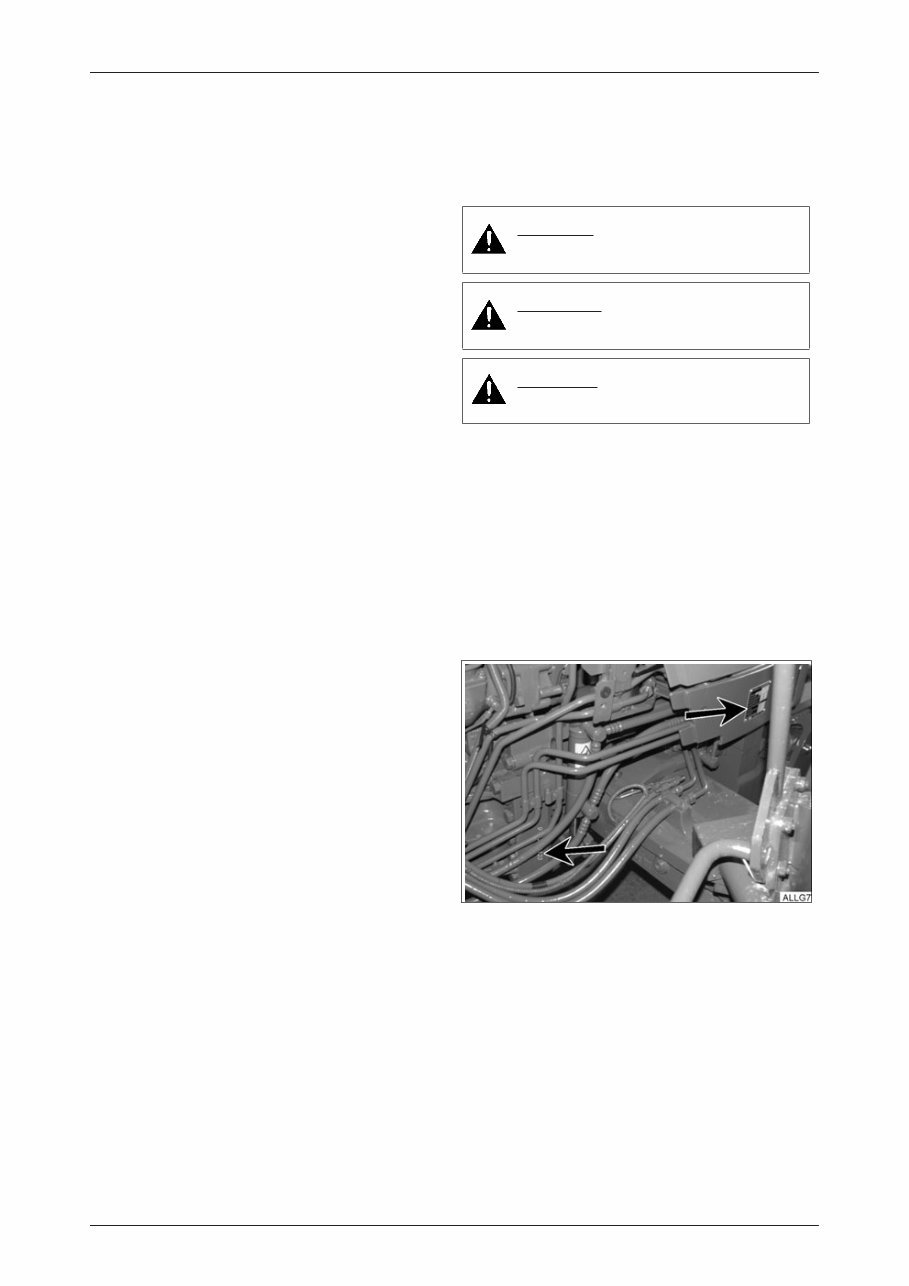
4 Customer-notes Text-module Dear Customer, Please note the following: ● Before using the tractor, carefully read through this Manual to familiarize yourself with all operating controls and their functions before you begin work. This also applies to the operating instructions of the implement manufacturer. ● Follow all the operating and maintenance in- structions. If you do so, your tractor will give you many years of economic and trouble-free operation. You will find an overview of all maintenance operations in the Service Sche- dule in this Manual. ● Maintenance and repair work should be car- ried only at your service workshop. see also the "Important service and maintenance infor- mation". Text-module Authorised use This tractor is designed only for normal agricultu- ral operations or similar purposes, for example in municipal applications. Any other type of use is considered unauthori- sed. The manufacturer will not be liable for any damage resulting from such uses, which will be entirely at the owner's risk. Authorised use also means fulfilling the opera- ting, service and maintenance conditions set out by the manufacturer. Operation, maintenance and repair of the tractor is restricted to persons who are familiar with this kind of work and aware of the inherent dangers. All relevant accident prevention regulations and all generally accepted health & safety standards and road traffic regulations must be observed The manufacturer does not accept liability for da- mage resulting from unauthorised modifications. Text-module Marking of places that affect your safety Make sure that any other users have read all the safety instructions as well. The various levels of safety instructions can be distinguished as follows: Text-module The Operating Manual is an integral part of the vehicle package and must be passed on to any subsequent owner in the event of resale. The at- tention of the new owner should be drawn to this information. If this Manual is lost or damaged and you need a new one, please contact your Fendt dealer, There you will be able to purchase a replace- ment. Vehicle Identification Number Operation_Pic_number:ETpicture-module Text-module The Vehicle Identification Number is on the right frame and also stamped on the rating plate. Text-module All specifications in the Manual are subject to the usual tolerances. We reserve the right to make design changes as part of technical further deve- lopment, without making alterations to this Ma- nual. The drawings and illustrations in the ma- nual are used for function description, some of the items shown are not necessarily included in the vehicle delivery contents. DANGER: Risk of serious accident. WARNING: Risk of injury. CAUTION: Possible risk of injury.
5 NUMERICAL INDEX SAFETY INSTRUCTIONS ...............9 OPERATION....................................14 1. Driver seat ................................................14 1.1 Super deluxe seat ......................................14 2. Display instruments and operating controls.....................................................15 2.1 Front controls .............................................15 2.2 Glow and starter switch..............................16 2.3 Combination switch ....................................16 2.4 Steering wheel adjustment.........................16 2.5 Quick reverse .............................................16 2.6 Dashboard .................................................17 2.7 Indication of fluid levels ..............................18 2.8 Operating status display ............................18 2.9 Multiple display ..........................................19 2.10 Operating controls, right.............................19 2.11 Multi-function armrest ................................20 2.12 Operating console, right side .....................21 2.13 Vario terminal .............................................22 2.14 Camera function.........................................26 2.15 Quick Jump ................................................26 2.16 Cab top section, front .................................28 2.17 Cab top right side .......................................28 2.18 Power outlets .............................................29 2.19 Reset function ............................................31 3. Heating and ventilation ...........................31 3.1 Heater with 3-speed blower .......................31 3.2 Auxiliary ventilation in cab roof ..................32 3.3 Air conditioning ..........................................32 4. Rearwiew mirror .......................................33 5. Start-up .....................................................33 5.1 Daily check.................................................33 5.2 Cold weather operation ..............................34 5.3 Tool box .....................................................34 6. Starting and stopping the engine ...........34 6.1 Memory function ........................................34 6.2 Starting the engine .....................................35 6.3 Jump starting .............................................36 6.4 Tow-starting ...............................................37 6.5 Stopping the engine ...................................37 6.6 Stopping and immobilising the tractor ........37 7. Vario transmission...................................37 7.1 Joystick ......................................................37 7.2 Neutral position ..........................................37 7.3 Selecting acceleration rates .......................38 7.4 Driving mode selector ................................39 7.5 Driving the tractor.......................................40 7.6 Changing direction of travel .......................42 7.7 Programmed changes of travel direction ...43 7.8 Cruise control .............................................44 7.9 Load limit control ........................................46 7.10 Storing engine speeds ...............................47 7.11 Towing instructions ....................................48 8. Fuel consumption measurement............48 8.1 Activating fuel consumption measurement .............................................48 9. Tractor Management System (TMS) .......49 9.1 Engine management system .....................50 9.2 Accelerator mode .......................................50 9.3 Setting engine speed range .......................51 10. PTO............................................................53 10.1 Rear PTO ...................................................53 10.2 Engaging and disengaging rear PTO.........54 10.3 Front PTO ..................................................55 10.4 Engaging and disengaging front PTO........56 10.5 Calibrating rear and front PTO coupling ....56 11. Four wheel drive (4-WD) ..........................58 12. Differential lock ........................................58 13. Front axle suspension .............................59 14. Power lift and PTO automatic mode ......60 14.1 Power lift automatic mode..........................60 14.2 PTO automatic mode .................................61 14.3 PTO automatic mode with power lift ..........62 15. Brakes .......................................................63 15.1 Foot brake ..................................................63 15.2 Hand brake ................................................63 15.3 Trailer brake ...............................................64 15.4 Engine brake ..............................................64 16. Steering.....................................................65 16.1 Steering wheel adjustment.........................65 17. Hydraulics.................................................65 17.1 General notes on hydraulic operations ......65 17.2 Valve locking ..............................................66 17.3 Valve equipment ........................................67 17.4 Operating the valves ..................................67 17.5 Priority function ..........................................69 17.6 Setting the valves.......................................70 17.7 External valve actuation .............................73 17.8 Hydraulic connectors .................................74 18. Electronic lifting gear control, rear ........75 18.1 Controls......................................................75 18.2 EPC safety lock..........................................76 18.3 Control panel functions ..............................77 18.4 Working with the EPC ................................79 18.5 Electronic slip control .................................81 18.6 Electro-hydraulic external control...............83
6 NUMERICAL INDEX 18.7 Electronic power lift control / double action operation (EPC/DA) ...................................84 18.8 Implement socket .......................................85 19. Three-point link ........................................85 19.1 Lower links .................................................85 19.2 Extendable lifting struts ..............................86 19.3 Mechanical side locks ................................87 19.4 Top link ......................................................87 20. Front power lift .........................................88 20.1 Lower links .................................................88 20.2 Standard version ........................................89 20.3 Comfort version..........................................90 21. Trailing devices ........................................96 21.1 Calculation of trailer weights ......................96 21.2 Trailer bracket ............................................97 21.3 Hitching a trailer manually..........................97 21.4 Automatic trailer coupling...........................98 21.5 Ball coupling, drawbar, piton fix .................99 21.6 Hydraulic trailer hitch ...............................102 22. Compressed air system ........................104 22.1 Operating .................................................104 22.2 Maintenance ............................................105 23. Additional ballasting..............................106 23.1 Front ballast .............................................106 23.2 Front/rear load weights ............................106 23.3 Wheel weights..........................................107 23.4 Water ballasting of tyres ..........................107 24. Track adjustment ...................................108 24.1 Lighting wide vehicle ................................108 24.2 Rear axle stub ..........................................108 25. Twin tyres ...............................................110 25.1 Conditions for use ....................................110 25.2 Twin tyres.................................................110 26. On-board computer ...............................111 26.1 Setting the clock.......................................111 26.2 Adjusting speed indicator .........................111 26.3 Fault display .............................................112 26.4 Selecting tyre size ....................................112 26.5 Backup indicators.....................................113 27. Computer ................................................114 27.1 Computer functions ..................................114 27.2 Select main menu ....................................114 27.3 Setting measurement and counting direction ...................................................115 27.4 Manually triggered measuring and counting ...................................................115 27.5 Operating automatic measurement and counting ...................................................116 28. Storing the settings ...............................117 28.1 Setting that can be saved ........................117 28.2 Saving names and settings ......................118 28.3 Calling up settings....................................119 29. Implement control ..................................120 29.1 Assigning control terminal ........................120 29.2 Loading the implement software for implement control ....................................122 29.3 Setting up the control terminal for implement control ....................................123 29.4 Operating the implement with the joystick .....................................................124 29.5 Implement diagnosis function ..................125 30. Variotronic Ti ..........................................126 30.1 Functions .................................................126 30.2 Triggers ....................................................126 30.3 Menu functions.........................................127 30.4 Operating .................................................129 30.5 Storing data..............................................133 30.6 Retrieving stored data ..............................134 30.7 Changing operational sequences manually ..................................................134 30.8 Changing relative factors .........................135 30.9 Modifying configuration lists .....................136 30.10 Function indicator on the main menu .......138 30.11 Menu colours ...........................................138 30.12 Messages for information.........................138 CARE AND MAINTENANCE ......139 1. General....................................................139 2. Opening the bonnet ...............................139 3. Engine oil change ..................................140 3.1 Draining engine oil ...................................140 3.2 Replacing the engine oil filter ...................140 3.3 Filling with engine oil ................................141 3.4 Checking engine oil level .........................141 4. Fuel system ............................................142 4.1 Replacing the fuel filter ............................142 4.2 Bleeding the fuel system..........................143 4.3 Fuel prefilter .............................................143 5. Dry air filter .............................................144 5.1 Vacuum check .........................................144 5.2 Removing/installing the main cartridge ....144 5.3 Cleaning the main cartridge .....................145 5.4 Replacing safety cartridge .......................145 6. Cooling system ......................................145 6.1 Cleaning the cooling system ....................145 6.2 Checking the coolant level .......................146 6.3 Replacing coolant ....................................146 6.4 Cleaning the cooling/heating system .......146 7. V belt .......................................................147 7.1 Right hand V belt .....................................147 7.2 Left V-belt.................................................147 8. Brake and clutch system.......................148
7 NUMERICAL INDEX 9. Front PTO ...............................................149 10. Transmission and axle drives...............149 10.1 Changing the transmission oil ..................149 10.2 Checking the transmission oil level ..........150 10.3 Changing the oil in the axle drives ...........151 11. Four-wheel drive axle ............................151 11.1 Changing the oil in the front axle differential gear ........................................151 11.2 Replacing the oil in front axle hub drives .152 11.3 Front axle suspension ..............................152 12. Power lift .................................................153 13. Hydraulic system ...................................153 13.1 Checking oil level in hyrdraulic system ....153 13.2 Changing the hydraulic oil........................154 13.3 Hydraulic oil filter......................................154 14. Steering...................................................156 15. Front wheels ...........................................156 15.1 Checking toe-in ........................................156 16. Heating and ventilation .........................157 16.1 Removing the heater fan filter ..................157 16.2 Replacing the roof fan filter ......................157 16.3 Replacing the recirculating air filter ..........158 17. Air conditioning .....................................158 17.1 Condenser ...............................................158 17.2 Compressor V-belt ...................................159 18. Windshield washer system ...................159 19. Cleaning the tractor ...............................159 19.1 Clean the cab's air spring bellows............159 20. Electrical and electronic systems ........160 20.1 Battery......................................................160 20.2 Alternator .................................................160 20.3 Electrowelding..........................................160 20.4 Adjusting the headlights ...........................160 20.5 Adjusting the auxiliary headlampss..........161 20.6 Auxiliary lights, Xenon headlights ............161 20.7 Additional installation of electrical and electronic equipment................................162 21. Fuses.......................................................163 21.1 Fuse holder X050.....................................164 21.2 Fuse holder X051.....................................165 21.3 Fuse holder F060 - F067 .........................166 21.4 Fuse holder (A013) ..................................167 22. Wiring diagrams .....................................168 22.1 Legend for circuit diagrams......................168 22.2 Colour coding for electric wires ................171 22.3 Wiring diagrams .......................................171 IMPLEMENTS ...............................204 1. Reversing device ...................................204 FAULTS AND REMEDIAL ACTIONS........................................205 1. Warning and fault messages ................205 1.1 Warning messages ..................................205 1.2 Fault messages........................................211 1.3 Clearing a warning or fault message .......215 1.4 General faults...........................................216 2. Variotronic Ti fault messages ...............223 3. Warning and information messages for implement settings ..........................227 4. Flame starting system faults ................228 5. Fault code tables....................................229 6. Emergency operation ............................245 TECHNICAL DATA.......................247 1. Technical data ........................................247 2. Tyre pressures .......................................251 3. Tyre combinations .................................252 4. Fuel and lubricants Vario 916 - 930 ......253 4.1 Bio-diesel .................................................254 4.2 Bio hydraulic oil ........................................254 5. Lubrication chart....................................255 5.1 Filling points .............................................255 5.2 Lubrication points .....................................256
8 NUMERICAL INDEX
9 SAFETY INSTRUCTIONS Safety and accident prevention regulations Safety signs on the machine must be replaced if damaged or lost. WARNING: Before every operation, check the tractor for road worthiness and operational safety. Carefully read the Manual and observe all safety instructions. General safety and accident prevention regulations Text-module ETNum-list Carrying passengers Text-module ETNum-list 1. Follow the general safety and accident prevention regulations, as well as the safety information in this manual. 2. When driving on public roads, follow the usual traffic regulations! 3. Before starting work, familiarise yourself with all operating controls and their functions. Don't wait until after you have started working! 4.Start the engine from the driver seat only. Do not attempt to start by shorting across the starter terminals, as this can cause the tractor to move immediately! 5. Before starting up, check the area is clear (e.g. children). Ensure that nothing obstructs vision. 6. Never leave the engine running in a confined space! 7. The driver should wear close-fitting clothing. Avoid wearing loose-fitting garments! 8.Take extra care when handling fuel - serious fire hazard. Never re-fuel in the presence of sparks or naked flames. Do not smoke when re-fuelling. 9. Before re-fuelling, turn off the engine and remove the ignition key. Do not re-fuel in confined spaces. Clean up spillages immediately! 10.To avoid fire hazard, keep the tractor clean. 11.Beware of leaking brake fluid and battery acid (these are toxic and corrosive). 1. Passenger should be carried only if the tractor is fitted with an appropriate passenger seat. 2. Do not carry passengers in any other other circumstances. Driving the tractor Text-module ETNum-list Front loader operation Text-module 1. Driving speed must always be adapted to the current situation. Avoid sudden cornering when driving uphill or downhill, or across gradients. Disengage the differential lock when cornering. Never disengage the clutch to shift gears when travelling downhill! 2. Make sure all trailers and implements are properly hitched. Driving characteristics, steering and braking are affected by mounted implements, trailers and ballast weight. Therefore, always ensure that there is adequate steering and braking capacity. 3. Observe the maximum permissible gross vehicle weight, axle loads and tyre load capacity, especially if heavy implements are attached. 4. When negotiating bends with implements connected or hitched up, always allow for the overhang and oscillating weight of the implement. 1. Never allow anyone to stand in the hazard area, or within the working range of the front loader. Keep the area clear of bystanders at all times. Do not operate the front loader unless there is a clear view of the entire working area - illuminate the area if necessary. 2. It is not permitted to use the standard loader (as supplied) as a working platform. If using the loader with a special working platform, additional safety measures are required. 3. Do not handle round bales, pallets etc. unless the loader is suitably equipped for this purpose. If loading objects that cannot be secured and may fall off, do not use the front loader unless the driving seat is protected by a robust canopy.
10 SAFETY INSTRUCTIONS ETNum-list 4. When the front loader is raised, the risk of the tractor tipping over is greater, and the braking effect at the rear axle may also be reduced. Adapt your driving style and ensure adequate ballasting at the rear. For additional loading, we recommend attaching the Fendt 870 kg additional weight at the three-point link - fit wheel weights and fill the tyres if necessary. 5. Keep a safe distance from high-voltage cables. 6. When on public roads, bring the front loader into the transport position and secure it. Keep a maximum distance of 3.5 m between the implement and the centre of the steering wheel. If the forward projection exceeds 3.5 m, appropriate measures must be taken to guarantee safe traffic conditions (e.g. use people on foot acting as guides or mirrors at road junctions). Transporting equipment or materials with a front loader working implement, e.g. a scoop, is not permitted when travelling on public roads. 7. Danger from unintended lowering of the front loader. Always secure hydraulic lever at the end of operation. Before leaving the tractor, completely lower the front loader to the ground. 8. For safety reasons the front loader should be mounted and removed by one person only , the driver himself. 9. Always keep hands away from the crushing and cutting areas while parts may still be moving. 10. Detach the front loader with the attached implement (bucket, fork) only on firm and level ground. Always use the supports provided. 11.The front loader must be parked and secured in such a way as to prevent unauthorised persons or children from causing it to tip over . 12.When mounting the front loader, connect all hydraulic connections including the auxiliary return, if equipped in this way. Always connect hydraulic hose for cylinder load pressure to +. Take great care not to confuse connections since this may cause accidents through reversed functions, e.g. lifting instead of lowering. Before fitting the multiple coupler, remove the load from hydraulic hoses and unplug rear hydraulic connections, lower the power lift and operate only via EPC. Hydraulic fluid interflow can create danger from unintentional equipment motion. Leaving the tractor Text-module ETNum-list Mounted and trailing equipment Text-module ETNum-list PTO operation Text-module ETNum-list 1. Make sure the tractor is properly secured against running off (parking brake, wheel chocks). Switch off the engine and apply the hand brake! 2. Remove the ignition key and lock the cab if necessary. 3. Never leave the tractor unattended while the engine is running. 4. Never leave the cab while the tractor is in motion. 5. Completely lower the mounted implement before leaving the tractor. 1. Only attach implements and trailers using the prescribed devices. 2. Use only trailers which comply with the country-specific regulations. Do not exceed maximum vertical bearing load. Ensure that the tractor-trailer brake system is functioning correctly. 3.Take special care when hitching trailers or implements! 4. Secure trailers and implements to prevent them rolling. Make sure that detached implements and components are safely parked. 5. Be sure all protection devices are correctly attached and in the safety position before operating the tractor. 6. When using the power lift, always remain well outside the travel range of the three-point link attachment! 1. Always switch off the engine, before fitting or removing the drive shaft. The PTO shaft must be in 0-position. 2. During PTO operations, allow no-one in the vicinity of the rotating PTO or drive shaft. 3. Make sure drive shaft and PTO are equipped with protective guards and sleeves. 4. After switching off the PTO, the attached implement may continue running due to the flywheel mass. In this case, do not go near the implement. Approach it only when it has come to a complete standstill. 5. When the drive shaft is removed, cover the PTO shaft with its protective cap.
You're Reading a Preview
What's Included?
Lifetime Access
Fast Download Speeds
Online & Offline Access
Access PDF Contents & Bookmarks
Full Search Facility
Print one or all pages of your manual
$36.99
Fendt 916 920 924 926 930 Vario Operating Manual INSTANT
Fendt 916 920 924 926 930 Vario Operating Manual is an electronic manual that provides comprehensive information for the maintenance and repair of the following models:
Fendt 916 Vario (From chassis number 9167001)
Fendt 920 Vario (From chassis number 9207001)
Fendt 924 Vario (From chassis number 9247001)
Fendt 926 Vario (From chassis number 9267001)
Fendt 930 Vario (From chassis number 9302001)
This manual covers a wide range of topics including drive seat, display instruments, heating and ventilation, start-up procedures, engine operation, transmission, fuel consumption measurement, tractor management system, PTO, 4-WD, differential lock, and more. It also includes detailed information on hydraulics, electronic control systems, on-board computer, implements, faults and remedial actions, technical data, and wiring diagrams.
The manual is written in a step-by-step format, making it easy for both professional mechanics and DIY enthusiasts to use for repairs and maintenance, potentially saving on expenses. The file format is compatible with all versions of Windows and Mac, and it requires Adobe Reader for access.
Reviews
Q&A
Recently Viewed
5,521,897Happy Clients
2,594,462eManuals
1,120,453Trusted Sellers
15Years in Business
Price:
Actual Price:
Fendt 916 920 924 926 930 Vario Operating Manual INSTANT












 Lifetime Access