Contents INTRODUCTION DISTRIBUTION SYSTEMS A POWER PRODUCTION B TRAVELLING D BODY AND STRUCTURE E FRAME POSITIONING F WORKING ARM H FIELD PROCESSING L SQ-044V1 2 12/10/2004
INTRODUCTION Legal advice ( - A.10.A.10) 67, 67XL All repair and maintenance works listed in this manual must be carried out only by qualied dealership personnel, strictly complying with the instructions given; and using, whenever possible, the special tools. Anyone who carries out the above operations without complying with the procedures shall be responsible for the subsequent damages.The manufacturer and all the organizations of its distribution chain, including - without limitation - national, regional, or local dealers, reject any responsibility for damages due to the anomalous behavior of parts and/or components not approved by the manufacturer himself, including those use for the servicing or repair of the product manufactured or marketed by the manufacturer. In any case, no warranty is given or attributed on the product manufactured or marketed by the manufacturer in case of damages due to an anomalous behavior or parts and/or components not approved by the manufacturer. The information in this manual is up-to-date at the date of the publication. It is the policy of the manufacturer for continuous improvement. Some information could not be updated due to modications of a technical or commercial type, as well as the suit the law regulations of different countries. In cast of disagreement, refer to your Sales and Service Networks. SQ-044V1 2 12/10/2004 3
INTRODUCTION Foreword ( - A.10.A.40) 67, 67XL ASIST linked to Technical Information This manual has been produced by a new technical information system which is part of ASIST. This new system is designed to deliver technical information electronically through ASIST, also on CDROM and in paper manuals. A coding system called ICE has been developed to link the technical information to ASIST and to other Product Support functions e.g. Warranty. Technical information is written to support the maintenance and service of the functions or systems on a customers machine. When a customer has a concern on his machine it is usually because a function or system on his machine is not working at all, is not working efciently, or is not responding correctly to his commands. When you refer to the technical information in this manual to resolve that customers concern, you will nd all the information classied using the new ICE coding, according to the functions or systems on that machine. Once you have located the technical information for that function or system then you will nd all the mechanical, electrical or hydraulic devices, components, assemblies and sub-assemblies for that function or system. You will also nd all the types of information that have been written for that function or system, the technical data (specications), the functional data (how it works), the diagnostic data (fault codes and troubleshooting) and the service data (remove, install adjust, etc.). By integrating this new ICE coding into technical information and ASIST, you will be able to search and retrieve just the right piece of technical information you need to resolve that customers concern on his machine. This is made possible by attaching 3 categories to each piece of technical information during the authoring process. The rst category is the Location, the second category is the Information Type and the third category is the Product: • LOCATION - is the component or function on the machine, that the piece of technical information is going to describe e.g. Fuel tank. • INFORMATION TYPE - is the piece of technical information that has been written for a particular component or function on the machine e.g. Capacity would be a type of Technical Data that would describe the amount of fuel held by the Fuel tank. • PRODUCT - is the model that the piece of technical information is written for. Every piece of technical information will have those 3 categories attached to it. You will be able to use any combination of those categories to nd the right piece of technical information you need to resolve that customers concern on his machine. That information could be: • the description of how to remove the cylinder head • a table of specications for a hydraulic pump • a fault code • a troubleshooting table • a special tool How to Use this Manual This manual is divided into Sections. Each Section is then divided into Chapters. Contents pages are included at the beginning of the manual, then inside every Section and inside every Chapter. An alphabetical Index is included at the end of a Chapter. Page number references are included for every piece of technical information listed in the Chapter Contents or Chapter Index. Each Chapter is divided into four Information types: • Technical Data (specications) for all the mechanical, electrical or hydraulic devices, components and, assemblies. • Functional Data (how it works) for all the mechanical, electrical or hydraulic devices, components and assemblies. SQ-044V1 2 12/10/2004 4
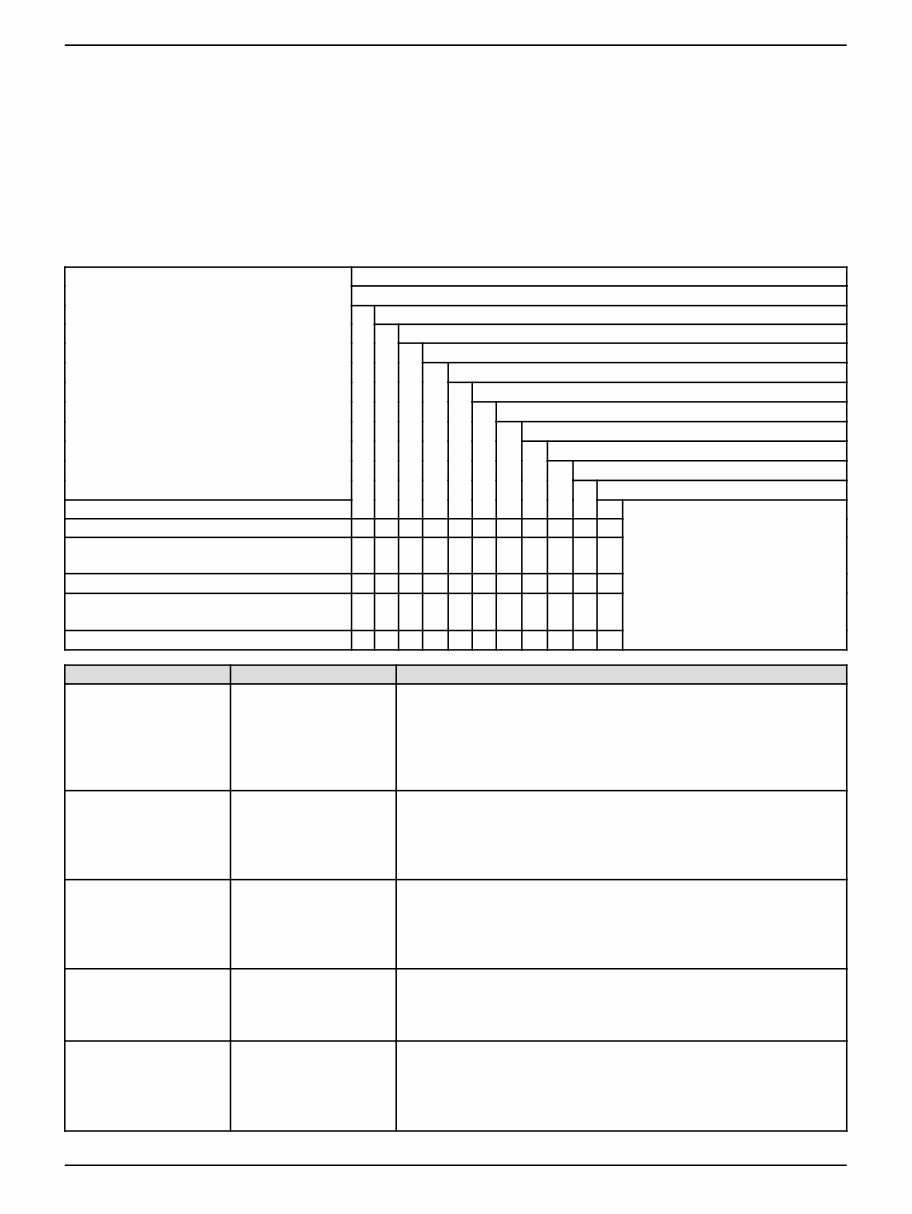
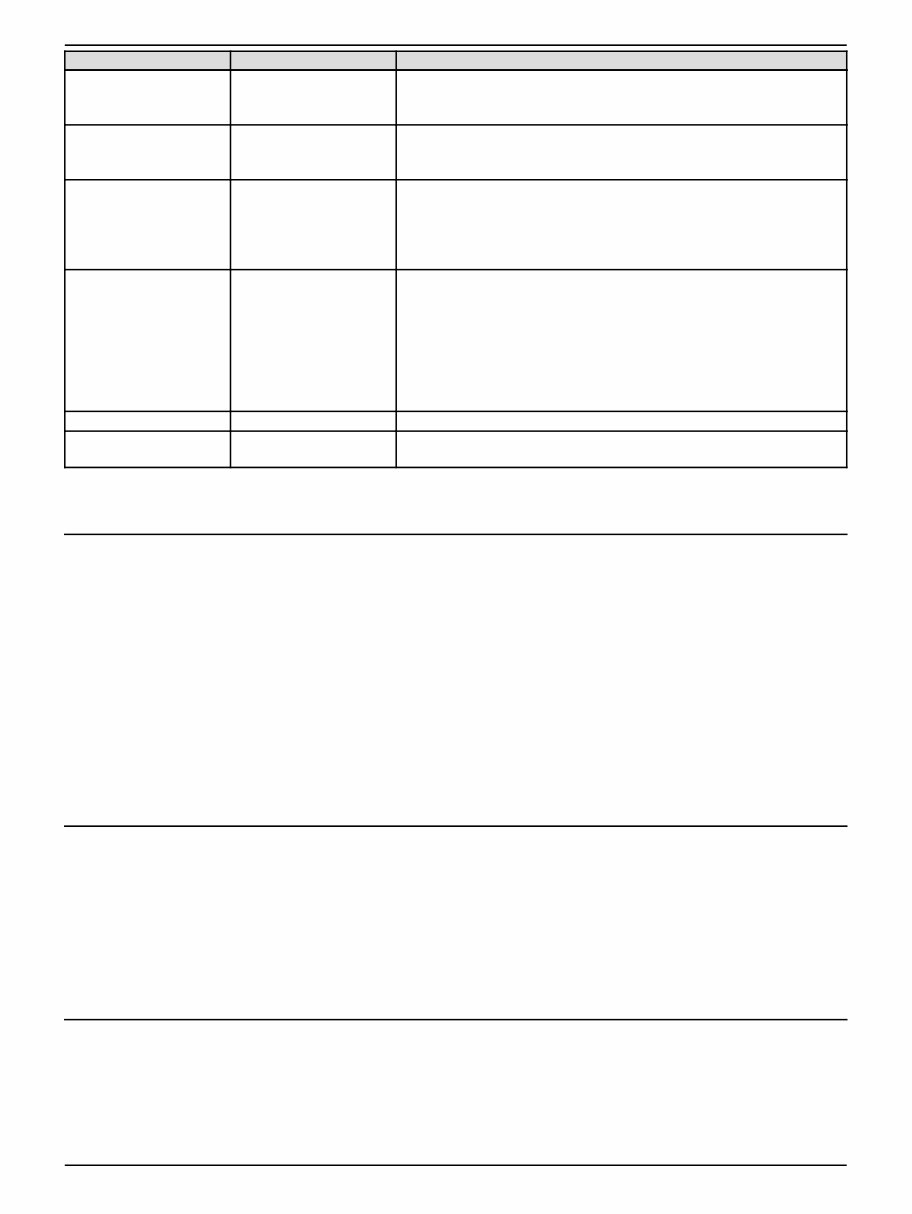
INTRODUCTION • Diagnostic Data (fault codes, electrical and hydraulic troubleshooting) for all the mechanical, electrical or hydraulic devices, components and assemblies. • Service data (remove disassembly, assemble, install) for all the mechanical, electrical or hydraulic devices, components and assemblies. Sections Sections are grouped according to the main functions or a systems on the machine. Each Section is identied by a letter A, B, C etc. The amount of Sections included in the manual will depend on the type and function of the machine that the manual is written for. Each Section has a Contents page listed in alphabetic/numeric order. This table illustrates which Sections could be included in a manual for a particular product. SECTION A - Distribution Systems B - Power Production C - Power Train D - Travelling E - Body and Structure F - Frame Positioning G - Tool Positioning H - Working Arm J - Tools and Couplers K - Crop Processing L - Field Processing PRODUCT Tractors X X X X X X X X Vehicles with working arms: backhoes, excavators, skid steers, ..... X X X X X X X X X Combines, forage harvesters, balers, .... X X X X X X X X Seeding, planting, oating, spraying equipment, .... X X X X X X X X X Mounted equipment and tools, ..... X X X X SECTION LETTER DESCRIPTION DISTRIBUTION SYSTEMS A This Section covers the main systems that interact with most of the functions of the product. It includes the central parts of the hydraulic, electrical, electronic, pneumatic, lighting and grease lubrication systems. The components that are dedicated to a specic function are listed in the Chapter where all the technical information for that function is included. POWER PRODUCTION B This Section covers all the functions related to the production of power to move the machine and to drive various devices. In the case of a pulled-type machine, this Section covers the power take-off function where power is provided from the towing machine. POWER TRAIN C This Section covers all the functions related to the transmission of power from the engine to the axles and to internal or external devices. This Section also covers the power take-off function where power is provided to the pull-type machine and additional Process Drive functions. TRAVELLING D This Section covers all the functions related to moving the machine, including tracks, wheels, steering and braking. It covers all the axles both driven axles and non-driven axles, including any axle suspension. BODY AND STRUCTURE E This Section covers all the main functions and systems related to the structure and the body of the machine, including the frame, the shields, the operators cab and the platform. The functions related to the positioning of the machine frame are included in Section F, Frame Positioning. SQ-044V1 2 12/10/2004 5
INTRODUCTION SECTION LETTER DESCRIPTION FRAME POSITIONING F This Section covers all the main functions and systems related to positioning of the machine frame or to positioning the attachment on the supporting machine frame. TOOL POSITIONING G This Section covers all the functions related to the nal and/or automatic positioning of the tool once the tool is positioned using the Working Arm or the machine frame. WORKING ARM H This Section covers all the functions related to the articulated or single arms mounted on the front or rear of the machine. A working arm can have various tools and quick couplers mounted on to it. The tools and quick couplers are included in Section J, Tools and Couplers. TOOLS AND COUPLERS J This Section covers all the functions related to the specic tools that mount on the front, rear or beside the machine. The tools described here can be mounted with the positioning systems (lifting, side shift, swing) listed in Section G Tool Positioning. This Section covers all the quick coupling systems, located between the tool and the positioning system. The tools used for eld preparation, soil preparation and treatment, planting and seeding are included. CROP PROCESSING K This Section covers all the functions related to crop processing. FIELD PROCESSING L This Section covers all the eld processing functions of the machine. This manual contains these sections. Contents INTRODUCTION DISTRIBUTION SYSTEMS A POWER PRODUCTION B TRAVELLING D BODY AND STRUCTURE E FRAME POSITIONING F WORKING ARM H FIELD PROCESSING L Your manual contains these Sections. The contents of each Section are explained over the following pages. Section Contents SECTION A, DISTRIBUTION SYSTEMS Contents DISTRIBUTION SYSTEMS - A LIGHTING SYSTEM A.40.A 67, 67XL This Section covers the main systems that interact with most of the functions of the product. It includes the central parts of the hydraulic, electrical, electronic, pneumatic, lighting and grease lubrication systems. The components that are dedicated to a specic function are listed in the Chapter where all the technical information for that function is included. SECTION B, POWER PRODUCTION Contents POWER PRODUCTION - B PTO POWER IN B.90.A 67, 67XL This section covers all the functions related to the production of power to move the machine and to drive various devices. In the case of a pulled-type machine, this Section covers the power take-off function where power is provided from the towing machine SQ-044V1 2 12/10/2004 6
INTRODUCTION SECTION D, TRAVELLING Contents TRAVELLING - D REAR AXLE D.12.A 67, 67XL WHEELS AND TRACKS Wheels D.50.C 67, 67XL This Section covers all the functions related to moving the machine, including tracks, wheels, steering and braking. It covers all the axles both driven axles and non-driven axles, including any axle suspension. SECTION F, FRAME POSITIONING Contents FRAME POSITIONING - F TRAVELLING Folding F.10.E 67, 67XL STABILISING Working stabilising F.20. 67, 67XL This Section covers all the main functions and systems related to the positioning of the machine frame or to positioning the attachment on the supporting machine frame. SECTION H, WORKING ARM Contents WORKING ARM - H BOOM tilt H.20.C 67, 67XL BOOM Unfold H.20.G 67, 67XL HITCH Front Hitch H.10.B 67, 67XL BOOM Levelling H.20.H 67, 67XL BOOM Stabilising H.20.J 67, 67XL This Section covers all the functions related to the articulated or single arms mounted on the front or rear of the machine. A working arm can have various tools and quick couplers mounted on to it. SECTION L, FIELD PROCESSING Contents FIELD PROCESSING - L SPRAYING L.20A 67, 67XL SPRAYING Pressure system L.20.B 67, 67XL SPRAYING Plumbing system L.20.C 67, 67XL SPRAYING End marker L.20.D 67, 67XL This Section covers all the eld processing functions of the machine. SQ-044V1 2 12/10/2004 7
The New Holland 67, 67XL, 67XLT Sprayers Repair Manual is a comprehensive resource for maintaining and repairing these powerful machines. It provides detailed instructions for removal, installation, disassembly, and assembly of various components. Additionally, the manual includes an electrical wiring diagram and hydraulic schematic, facilitating easy troubleshooting of electrical or hydraulic issues. Diagnostic information, specifications, and torque values are also provided to ensure accurate repairs.
This manual is indispensable for both professional mechanics and DIY enthusiasts, offering essential guidance for keeping the sprayers in optimal condition. Whether you're tackling repairs in a professional setting or as a hobbyist, this manual equips you with all the necessary information.









 Lifetime Access